DOI:
10.1039/C5RA01059D
(Paper)
RSC Adv., 2015,
5, 33878-33884
Zn2+ mediated solvent free solid state red emitting fluorescent complex formation in a mortar–pestle along with living cell imaging studies†
Received
19th January 2015
, Accepted 30th March 2015
First published on 30th March 2015
Abstract
An acridone based highly Zn2+ selective, cell-permeable turn-on fluorescence probe (AAS) shows yellow fluorescence at 560 nm (λex, 445 nm) in dry methanol/DMSO up to 100 μM Zn2+. At higher Zn2+ concentration (>100 μM in dry methanol) AAS yields a red solid polymeric complex having strong emission at 605 nm. Interestingly, the red solid polymer also appears at relatively lower Zn2+ concentration (>50 μM) in water. The lowest detection limit of AAS is 0.1 nM Zn2+. AAS is employed for fluorescence bio-imaging of Zn2+ in human MCF 7 breast cancer cells and HeLa cells. Moreover, AAS develops an orange colour detectable by the naked eye in the presence of trace Zn2+ in a mixture of various common cations and anions in the solid state (requires no solvent). Hence, this method is extremely green and interference free. AAS can be employed as a laboratory indicator for detection of Zn2+ in real samples and live cells.
1. Introduction
Zinc plays an important role in cell growth,1 apoptosis and metabolism,2 gene expression, signal transduction,3,4 regulation of endocrine,5 and immune and neuronal functions implicated in the pathophysiology of depression.6 Severe Zn deficiencies cause developmental anomalies in human and animals while an increased Zn level causes high cytotoxicity in the context of acute brain injury.7 The role of Zn2+ in prostate cancer cells, ER-positive MCF-7 breast cancer cells, human melanoma cells and many other important biological processes demands its accurate trace level measurement in biological systems. Evidence for a zinc uptake transporter in human prostate cancer cells has already been established.8 Expression of the zinc transporter ZnT4 decreases in the progression from early prostate disease to invasive prostate cancer.9 In the prostate, zinc is believed to help with reproductive functions by aiding in the accumulation of citrate, a component of semen and has a protective role against development and progression of prostate cancer.10,11 However, recent observations indicate that high supplemental zinc intake is associated with an increased risk of advanced prostate cancer (PCa).11–14 Tamoxifen, a non-steroidal, selective estrogen receptor modulator (SERM) has been used as an antagonist for treatment of estrogen receptor (ER)-positive breast cancer. It has been found that Zn2+ mediates tamoxifen-induced autophagy and cell death in MCF-7 breast cancer cell line.15 Several probes can monitor low mobile Zn2+ concentration for in vivo testing via living cell-imaging.16,17 As Zn2+ concentration varies with physiological environments, viz. 12 μM in serum and 0.1–0.5 μM in gray matter and the brain, the development of a nontoxic interference free Zn2+ sensor with concentration tunable emission properties is highly demanded. Visible light excitation minimizes photo damage and background interference from auto-fluorescence of biological samples.18,19 Zn2+ sensors are primarily based on fluorescein, coumarin, di-picolyl amine etc.20–25 Substituted benzoxazole derivative sensing Zn2+ via excited-state intramolecular proton transfer (ESIPT) is also reported.26 Acridone alkaloids having varieties of biological activities viz. anticancer, antimicrobial, antiviral and anti-parasitic properties27 have been used for labelling and fluorescence-based assays for their chemical inertness and resistance to photo-bleaching. Acridones can also detect bio-molecules and, are used to measure Lewis acidity of cations28 and monitoring of enzyme activity.29 Recently, we have reported heme-interacting acridone derivative that can prevent free heme-mediated protein oxidation and degradation, markers for heme-induced oxidative stress.27 In contrast to fluorescein, dansyl, anthracene and rhodamine moieties, mostly used in chemosensors, acridone is highly resistant to photo-bleaching. Our ongoing effort for improved sensors16,30 have resulted a new acridone derivative, (E)-4-(2-hydroxybenzylideneamino)acridin-9(10H)-one (AAS) for selective sensing of Zn2+ under solvent free condition. To the best of our knowledge, this is the first report on visible light excitable, Zn2+ assisted polymeric complex formation which gives intense solid state red emission (orange in naked eye) of AAS. Naked eye detection of a colorless d10 cation (Zn2+) under solvent free and interference free condition is a significant and challenging contribution to green chemistry. Cd2+ interferes in dry test for Zn2+ detection in solid state.31 Visible light excitation and strong red emission are highly desirable in vivo application. We have been successful to cluster all the desired properties in a single probe, AAS. Moreover, AAS–Zn2+ system having solid state red fluorescence may be useful in optoelectronic applications.
2. Experimental section
2.1 General information of materials and methods
All metal cation were used as either their nitrate or their chloride salts and the anions as their Na salts. Other chemicals were of analytical reagent grade and used without further purification except when specified. Milli-Q Milipore 18.2 MΩ cm−1 water was used throughout all experiments. A JASCO (model V-570) UV-vis spectrophotometer was used for recording UV-vis spectra. FTIR spectra were recorded on a JASCO FTIR spectrophotometer (model FTIR-H2O). Mass spectra were carried out using a QTOF Micro YA 263 mass spectrometer in ES positive mode. 1H NMR spectra were recorded using a Bruker Avance 300 (300 MHz) inDMSO-d6 whereas 13C NMR spectra were recorded using a Bruker Avance 500 (125 MHz) in DMSO-d6. Melting point was measured with a VEEGO digital melting point apparatus. Elemental analysis was performed using a Perkin-Elmer CHN-Analyzer with the first 2000-Analysis kit. Steady-state fluorescence emission and excitation spectra were recorded with a Hitachi-Hitachi F-4500 spectrofluorometer. A Systronics digital pH meter (model 335) was used to measure the solution pH. Either 50 mM HCl or KOH was used for pH adjustment.
2.2 Synthesis of ligand AAS
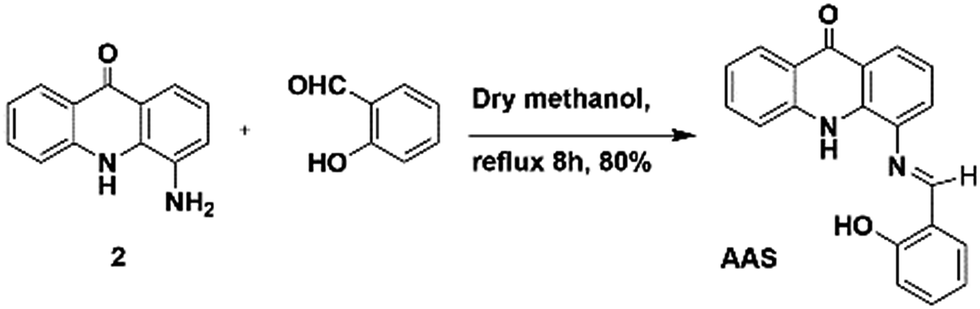
Scheme 1 presents the synthetic protocol of AAS. 4-Amino acridone, the signalling unit is synthesized following our published procedure.27 The acridone based ligand AAS can be synthesised by the Schiff's base formation between 4-amino acridone (2) with salicylaldehyde.
 |
| | Scheme 1 Synthetic protocol of AAS. | |
320 mg of 2 (1.508 mmol) and 0.116 mL of salicylaldehyde (1.508 mmol) were taken in 10 mL of dry methanol and refluxed under argon for 6 h. A yellow solid precipitate was obtained. Filtered the solid and washed with cold methanol, dried in vacuum to obtain 375 mg (yield ∼ 80%) of AAS as a yellow solid. 1H NMR (Fig. S1†) (300 MHz, DMSO-d6): δ 6.97 (d, 2H, J = 8.1 Hz, d), 7.23 (m, 2H, e), 7.44 (m, 1H, f), 7.53 (d, 1H, J = 7.5 Hz, g), 7.69 (m, 1H, h), 7.89 (d, 2H, J = 8.1 Hz, i), 8.11 (d, 1H, J = 9.9 Hz, j), 8.19 (d, 1H, J = 8.1 Hz, k), 8.98 (s, 1H, c), 10.87 (s, 1H, b), 11.53 (s, 1H, a); 13C NMR (Fig. S2†) (125 MHz, DMSO-d6) δ 118.96, 121.36, 122.59, 123.85, 124.44, 126.09, 126.52, 127.43, 128.35, 129.31, 131.22, 137.30, 138.69, 139.13, 140.65, 144.73, 146.15, 164.91, 168.56, 182.07; HRMS (Fig. S3†), m/z (M + H)+ calculated for C20H14N2O2: 315.3453, found: 315.3453. IR (neat) λmax 3392.78, 1598.98, 1521.83, 1452.39, 1332.81, 1274.94, 744.52 (Fig. S4†).
2.3 Synthesis of 2-(2-aminophenylamino)benzoic acid (1)
A mixture of 1,2-phenylenediamine (2 g, 18.50 mmol), 2-chloro benzoic acid (2.89 g, 13.08 mmol), powdered Cu (200 mg), Cu2O (200 mg), trans 1,2-cyclohexyldiamine (10 mol%) and K2CO3 (3.873 g, 27.75 mmol) in diglyme (30 mL) were heated under reflux for 8 h. Excess diglyme was removed by distillation and the mixture poured into 1 L of hot water. Then 10 mL of 6(N) HCl was added to the mixture. The bluish black solid formed was filtered, washed and collected. The crude acid was dissolved in aqueous KOH, boiled in presence of activated charcoal and filtered. On acidification of the filtrate with HCl, a bluish black solid precipitate of 1 was obtained 1.26 g (yield ∼ 30%). Rf: 0.41 (2% methanol in dichloromethane); mp: 125–127 °C; 1H NMR (Fig. S5†) (300 MHz, DMSO-d6) δ 6.67 (m, 1H), 6.76 (m, 1H), 7.19 (d, 2H, J = 7.2 Hz), 7.32 (d, 2H, J = 7.2 Hz), 7.39 (d, 1H, J = 6.9 Hz), 7.89 (d, 1H, J = 6.6 Hz), 9.18 (s, 1H); HRMS (Fig. S6†) m/z (M + H)+ calculated for C13H12N2O2N: 229.2545, found: 229.2543.
2.4 Synthesis of 4-amino acridone (2)
400 mg (1.75 mmol) of 1 was taken in a round bottom flask to which 5 mL of Eaton's reagent was added. The mixture was heated under stirring condition in nitrogen atmosphere for 2 h, whereby the mixture turned to yellow colour. Then the reaction mixture was poured into 500 mL cold water and made alkaline by liquor ammonia. The greenish yellow precipitate formed was filtered, washed with water and dried. The crude solid was purified by silica gel column chromatography using 15% MeOH in dichloromethane as eluent to obtain 2 (238 mg, yield ∼ 65%) as light green solid. Rf: 0.3 (10% methanol in dichloromethane); mp: 300 °C; IR (neat) νmax 3410.26, 1680.05, 1506.46, 1452.45, 1230.63, 1128.39; 1H NMR (Fig. S7†) (300 MHz, DMSO-d6) δ 6.90 (m, 2H), 7.10 (m, 1H), 7.40 (m, 1H), 7.60 (m, 2H), 8.11 (dd, 1H, J = 8.25, 1.05 Hz), 10.522 (bs, 1H); HRMS (Fig. S8†) m/z (M + H)+ calculated for C13H10N2O: 211.2393, found: 211.2365.
An alternative route for compound 1 following two steps reaction sequences via 2-((2-nitrophenyl)amino)benzoic acid (1A) was also adopted (Scheme S1, ESI†). In this route, 2-nitroaniline was condensed with 2-chlorobenzoic acid using Ullmann reaction to obtain 1A and subsequent reduction of the nitro group in presence of SnCl2 in methanol resulted compound 1 in good yields. 1H NMR, 13C NMR, TOF-MS and ATIR (Fig. S1–10†) are used for its structure elucidation (Scheme 2).
 |
| | Scheme 2 Synthetic route of 4-amino acridone (2). | |
3. Results and discussion
3.1 Effects of Zn2+ on spectroscopic properties of AAS
Emission properties of AAS have been observed in HEPES buffered aqueous methanol (0.1 M, water–methanol, 97.5![[thin space (1/6-em)]](https://www.rsc.org/images/entities/char_2009.gif) :2.5, v/v, pH 7.4). The pattern is almost same to that of dry methanol; however emission intensities and wavelengths are slightly different (Fig. S20, ESI†). In presence of Zn2+, the emission band of AAS is red shifted in MeOH, DMSO and mixed solvents (water–methanol/DMSO, 97.5:2.5, v/v). In dry methanol, the red shift is about 18 nm (AAS: λem, 542 nm; AAS–Zn2+ adduct: λem, 560 nm). Additionally, at higher Zn2+ concentration, AAS forms a red precipitate in dry methanol which shows solid state red fluorescence (λem, 605 nm). The red polymer gradually forms upon addition of water in methanol solution of the Zn2+–AAS adduct. Solvent and pH, two influential parameters have been optimized to study the photo-physical properties of AAS and its Zn2+ adduct shows the emission intensities of the systems is highly solvent dependent (Fig. S11, ESI†). Interestingly, emission intensity of free AAS increases with increasing water content up to ∼35% (v/v) followed by gradual decrease to the minimum at 97.5% (v/v, λex = 445 nm, Fig. S12, ESI†). On the other hand, emission intensity of AAS–Zn2+ system decreases gradually with increasing water percentage (Fig. S13, ESI†). However, AAS–Zn2+ system have always higher emission intensity than free AAS. Fluorescence titrations have been performed both in dry and aqueous methanol (97.5:2.5, v/v) to have deeper insight of role of water on AAS–Zn2+ interaction. Changes in the fluorescence spectra of AAS upon addition of Zn2+ in dry methanol are presented in Fig. 1. Lowest detection limit of AAS is 0.0001 μM of Zn2+. The emission intensities gradually increase with increasing Zn2+ (Fig. S18, ESI†), the linear region of the plot, (inset, Fig. S18, ESI†) is useful for determination of unknown Zn2+ concentration. In presence of Zn2+, emission intensity of free AAS enhances ∼41.36 fold in dry methanol whereas in 97.5% water–methanol (v/v), enhancement is ∼8.42 fold. Fig. S19 (ESI†) shows the colour changes of AAS upon gradual addition of Zn2+ in dry methanol whereas Fig. S21 (ESI†) shows the colour changes of AAS in presence of Zn2+ in HEPES buffered media under hand held UV lamp. Here, the linearity is observed up to 10 μM Zn2+ (Fig. S22, ESI†).
:2.5, v/v, pH 7.4). The pattern is almost same to that of dry methanol; however emission intensities and wavelengths are slightly different (Fig. S20, ESI†). In presence of Zn2+, the emission band of AAS is red shifted in MeOH, DMSO and mixed solvents (water–methanol/DMSO, 97.5:2.5, v/v). In dry methanol, the red shift is about 18 nm (AAS: λem, 542 nm; AAS–Zn2+ adduct: λem, 560 nm). Additionally, at higher Zn2+ concentration, AAS forms a red precipitate in dry methanol which shows solid state red fluorescence (λem, 605 nm). The red polymer gradually forms upon addition of water in methanol solution of the Zn2+–AAS adduct. Solvent and pH, two influential parameters have been optimized to study the photo-physical properties of AAS and its Zn2+ adduct shows the emission intensities of the systems is highly solvent dependent (Fig. S11, ESI†). Interestingly, emission intensity of free AAS increases with increasing water content up to ∼35% (v/v) followed by gradual decrease to the minimum at 97.5% (v/v, λex = 445 nm, Fig. S12, ESI†). On the other hand, emission intensity of AAS–Zn2+ system decreases gradually with increasing water percentage (Fig. S13, ESI†). However, AAS–Zn2+ system have always higher emission intensity than free AAS. Fluorescence titrations have been performed both in dry and aqueous methanol (97.5:2.5, v/v) to have deeper insight of role of water on AAS–Zn2+ interaction. Changes in the fluorescence spectra of AAS upon addition of Zn2+ in dry methanol are presented in Fig. 1. Lowest detection limit of AAS is 0.0001 μM of Zn2+. The emission intensities gradually increase with increasing Zn2+ (Fig. S18, ESI†), the linear region of the plot, (inset, Fig. S18, ESI†) is useful for determination of unknown Zn2+ concentration. In presence of Zn2+, emission intensity of free AAS enhances ∼41.36 fold in dry methanol whereas in 97.5% water–methanol (v/v), enhancement is ∼8.42 fold. Fig. S19 (ESI†) shows the colour changes of AAS upon gradual addition of Zn2+ in dry methanol whereas Fig. S21 (ESI†) shows the colour changes of AAS in presence of Zn2+ in HEPES buffered media under hand held UV lamp. Here, the linearity is observed up to 10 μM Zn2+ (Fig. S22, ESI†).
 |
| | Fig. 1 Changes in the fluorescence spectra of AAS (10 μM) upon gradual addition of Zn2+ (0.0001, 0.0005, 0.001, 0.005, 0.01, 0.05, 0.1, 0.5, 1.0, 2.0, 3.0, 4.0, 5.0, 6.0, 8.0, 10.0, 15.0, 25.0, 30.0, 40.0, 50.0, and 100.0 μM) in dry methanol. Inset: lower concentration (0.0001 μM to 1.0 μM). | |
The absorbance of free AAS (at 409 nm) decreases with increasing amount of water (Fig. S28, ESI†). In presence of Zn2+, absorbance of AAS decreases at 414 nm, and increases at 522 nm with increasing water content (Fig. S29, ESI†). In presence of Zn2+ (in methanol), the absorbance of AAS is red shifted from 409 nm to 460 nm along with two isosbestic points at 424 nm and 265 nm (Fig. 2).
 |
| | Fig. 2 Changes in the absorbance of AAS (10 μM) upon gradual addition of Zn2+ in dry methanol (free AAS, 0.0005, 0.005, 0.05, 0.5, 1.0, 3.0, 5.0, 8.0, 10.0, 15.0, 30.0, 40.0, 50.0, and 100.0 μM Zn2+, from bottom to top). | |
Plot of absorbance vs. concentration of Zn2+ have yielded a sigmoidal curve with a linear region up to 10 μM Zn2+ (Fig. S30, ESI†). The naked eye yellow colour changes are observed consistently upon addition of Zn2+ (Fig. S31, ESI†). On the other hand, in aqueous methanol, the band at 409 nm gradually decreases with the appearance of three new bands at 348 nm, 482 nm and 517 nm respectively due to complexation between AAS and Zn2+ (Fig. S32, ESI†). Corresponding naked eye colour changes due to gradual addition of Zn2+ and time dependent colour changes of the AAS–Zn2+ complex under UV-lamp are shown in Fig. 3.
 |
| | Fig. 3 Naked eye color change of AAS (10 μM) in water, HEPES buffer (0.1 M, pH 7.4) upon gradual addition of Zn2+ (μM) at room temperature (top) and formation of red color AAS–Zn2+ complex as a function of time (min) in water–methanol (97.5:2.5, v/v, [Zn2+] = 100 μM, [AAS] = 10 μM) under UV-lamp. | |
3.2 Effects of pH on spectroscopic properties of AAS
The emission intensities of free AAS and AAS–Zn2+ systems are almost equal at lower pH (up to pH 4.0) (Fig. S14, ESI†). Free AAS shows slight fluorescence enhancement above pH 4.0 and gradually decreases above pH 6.0. Whereas the emission intensity of AAS–Zn2+ system gradually increases with pH, reaching maximum in the pH range 7.0 to 9.0 and finally decreases above pH 9.0. Probably, at higher pH, precipitation of Zn2+ occurs while at lower pH, H+ competes with Zn2+ for binding with AAS.
3.3 Determination of the binding constant of the AAS–Zn2+ complex
Job's plot (Fig. S23, ESI†) indicates 2:1 (AAS:Zn2+, mol ratio) stoichiometry of the AAS–Zn2+ adduct. In dry methanol, the equilibrium binding constant of AAS for Zn2+ is 3.049 × 10⁵ M−1/2 as measured using Benesi–Hildebrand32 equation (Fig. S24, ESI†).
3.4 Zn2+ binding selectivity of AAS
Emission properties of AAS with common cations viz. Na+, K+, Ca2+, Mg2+, Mn2+, Ni2+, Cr3+, Fe3+, Al3+, Zn2+, Cu2+, Co2+, Hg2+, Pb2+ and Cd2+ have been investigated both in dry methanol (Fig. 4) and HEPES buffered (0.1 M, pH, 7.4) water–methanol (97.5:2.5, v/v) media. Fig. 1 reveals that emission intensity of AAS significantly enhanced in presence of Zn2+. Colours of AAS in presence of different cations under UV light as well as through naked eye are shown in Fig. S15 (ESI†). No significant interferences have been found from common cations as mentioned supra (Fig. S16, in ESI†).
 |
| | Fig. 4 Fluorescence spectra of AAS (10 μM) in presence of common cations (100 μM) in dry methanol: (1) free AAS, (2) Na+, (3) K+, (4) Ca2+, (5) Mg2+, (6) Mn2+, (7) Ni2+, (8) Cr3+, (9) Fe3+, (10) Al3+, (11) Cu2+, (12) Co2+, (13) Hg2+, (14) Pb2+, (15) Cd2+ and (16) Zn2+; λex = 445 nm. Inset: respective emission intensities. | |
Furthermore AAS is also highly Zn2+ selective in presence of common anions (viz. PO43−, AsO43−, AcO−, F−, Cl−, Br−, I−, NO3−, NO2−, SO42−and SCN−) and no anion interference was observed during detection of Zn2+ (Fig. S17 and inset of Fig. S17 in ESI†).
3.5 Solid state fluorescence property of AAS–Zn2+ complex
The AAS–Zn2+ adduct have a strong solid state red fluorescence at 605 nm. In dry methanol, the yellow colour AAS turns red in presence of high Zn2+ concentration (>100 μM) while the same phenomenon is observed in aqueous methanol (water–methanol, 97.5:2.5, v/v) at >50 μM Zn2+. In solid state, AAS and AAS–Zn2+ adduct have emissions at 545 nm and 605 nm respectively (Fig. S25, ESI†). Naked eye and UV irradiated colours of solid AAS and AAS–Zn2+ adduct are shown in Fig. S26 (in ESI†). Mortar–pestle grinding of solid AAS with traces of Zn2+ salt also generates visibly orange colour complex having red fluorescence (Fig. 5).
 |
| | Fig. 5 (a) Naked eye colour of free AAS and (b) after mortar–pestle grinding with Zn2+ in presence of other common cations, (c) colour of AAS in presence of Zn2+ under UV light and (d) colour of AAS under UV light with Zn2+ in presence of other common cations. AAS shows slight yellowish-green colour under UV light (Fig. S26(c) in ESI†). | |
Thus AAS is an excellent ligand for detection of Zn2+ in real sample by Mortar–pestle grinding or by a dipstick probe for the detection of Zn2+ in water, completely avoiding organic solvents. For this purpose AAS was adsorbed on alumina, a slurry of which was coated on a thermoplastic stick as support. Solid state detection of Zn2+ also performed also in presence of various common anions (Fig. S27 in ESI†). Thus, AAS can be employed as a laboratory indicator for detection of Zn2+ in real sample.
3.6 Zn2+ binding modes of AAS
Solvent dependent and Zn2+ concentration regulated differential interaction between AAS and Zn2+ is also nicely demonstrated by 1H NMR titration in DMSO-d6 (Fig. 6) which reveals 0.02 ppm (δ = 11.531 to 11.552) downfield shift of –NH of acridone, 0.016 ppm downfield shift of –OH and 0.034 ppm upfield shift of imine proton upon addition of 2.5 equivalent Zn2+ to AAS indicating interaction of these donor sites with Zn2+ leading to chelation enhanced fluorescence (CHEF). Upon addition of water to the Zn2+–AAS complex or at higher Zn2+ concentration, the keto form predominates, responsible for red shift of the emission band from 560 nm (dry methanol) to 565 nm (aqueous methanol). Addition of 0.1 mL D2O to 0.5 mL DMSO-d6 solution of AAS–Zn2+ adduct results a new peak at 10.12 ppm, assigned to a new –NH proton(s) arising due to keto–enol tautomerism. Thus the imine bond is lost leading to free rotation feasible. The –NH proton of acridone further downfield shifted to 11.72 ppm. Further addition of 0.2 mL D2O, complete the appearance of the new proton. 1H NMR of the isolated red complex (DMSO-d6, in spite of its very poor solubility) shows only one –NH proton at 9.21 ppm (Fig. S33, ESI†), demonstrating that –NH proton of acridone also takes part into keto–enol tautomerism (acridine). These type of molecules have the molecular structure to give ESIPT.33 Mass spectrum also support the adduct formation involving two AAS units with one Zn2+ in dry methanol. In presence of water, one H2O acts as a linker between two AAS–Zn2+ units (Fig. S34 and S35 respectively, ESI†), which support the polymer formation. Thermogravimetric analyses (TGA) of AAS and AAS–Zn2+ complex (Fig. S37 and S38, ESI†) are distinctly different. Loss of H2O between 102.8 °C and 168.0 °C corresponding to ∼4.64% weight loss clearly establishes our proposed AAS–Zn2+ adduct (Fig. S38, ESI†). Since EDTA is a good Zn2+ chelator, decomplexation of the red solid would be expected upon washing with EDTA solution but the red solid remain unchanged by EDTA solution. Thus we expected the red solid may be a polymeric complex. The plausible binding mechanism of AAS with Zn2+ has been shown in Fig. 7. AAS is weak emitter due to ICT process. Addition of Zn2+ in dry methanol inhibits ICT to produce CHEF. Upon addition of water to the system, an intermediate state is observed where imine bond breaks and imine N centre gets protonated. When amount of water is relatively high, then complete proton transfer from –OH to imine –N centre occurs34 (Fig. S39, ESI†). At higher Zn2+ or water concentration, deprotonation of OH leading to formation of C![[double bond, length as m-dash]](https://www.rsc.org/images/entities/char_e001.gif) O occurs and subsequently the red complex polymer forms (Fig. 7). Fig. S33 (ESI†) reveals that the polymeric AAS–Zn2+ complex have no –OH or acridone–NH protons. So, it is electrically neutral and gets precipitated in polar solvent. Life time measurement experiment of AAS, [AAS–Zn2+] and [AAS–Zn2+–Water] with addition of water also supports the involvement of ESIPT process (Fig. S40 in ESI†).
O occurs and subsequently the red complex polymer forms (Fig. 7). Fig. S33 (ESI†) reveals that the polymeric AAS–Zn2+ complex have no –OH or acridone–NH protons. So, it is electrically neutral and gets precipitated in polar solvent. Life time measurement experiment of AAS, [AAS–Zn2+] and [AAS–Zn2+–Water] with addition of water also supports the involvement of ESIPT process (Fig. S40 in ESI†).
 |
| | Fig. 6 1H NMR spectral changes of AAS after interacting with Zn2+: (I) free AAS; (II) AAS + 0.5 equivalent Zn2+; (III) AAS + 2.5 equivalent Zn2+; (IV) AAS + 2.5 equivalent Zn2+ + 0.1 mL D2O; (V) AAS + 2.5 equivalent Zn2+ + 0.3 mL D2O. 1H NMRs are recorded in 0.5 mL DMSO-d6. “S” is the new ‘NH’ proton. | |
 |
| | Fig. 7 Plausible binding mechanism of AAS with Zn2+. | |
3.7 DFT calculation and theoretical study
DFT calculations are performed to better understand the possible binding modes of AAS with Zn2+. The optimized geometries of AAS (Fig. 8) and AAS–Zn2+ adduct (Fig. 9) are generated using 3-21G/B3LYP basis sets respectively of Gaussian 09 software.35 In free AAS the HOMO lies in acridone ring and the LUMO spreads over in the salicylaldehyde imine part (Fig. S41†). On complexation the energy of individual HOMO and LUMO decreases and the energy gap between the highest occupied molecular orbital (HOMO) and lowest unoccupied molecular orbital (LUMO) also decreases, thus there is an increase in the stability of the whole system (Fig. S41†). Hence, the observed red shift in the absorption spectra of AAS–Zn2+ can be explained in the terms of decreased band gap of HOMO and LUMO.
 |
| | Fig. 8 Energy optimised structures of AAS and AAS–Zn2+. | |
 |
| | Fig. 9 Fluorescence microscope images of (I) human breast cancer MCF7 cell and (II) HeLa cell: (a) and (b) are bright field and fluorescence images of cells after 30 min incubation with Zn2+ (50 μM); (c) and (d) are bright field and fluorescence images of Zn2+ (50 μM) incubated cells after 2 h treatment with AAS (10 μM). | |
3.8 Cell culture study
To further demonstrate the practical application of the probe, we carried out experiments in living cells (detail in ESI†). AAS is very efficient to detect intracellular Zn2+ in human breast cancer cell, MCF7 and HeLa cells under normal and fluorescence microscope (Fig. 9). Incubation of cells with Zn2+ (50 μM) for 30 min. at 37 °C was followed by the addition of AAS (10 μM) after washing three times with media and then was incubated further for another 2 h. The enhancement of fluorescence was observed (Fig. 9). The results suggest that AAS can penetrate the cell membrane and can be used for imaging of Zn2+ in living cells. Furthermore, we have investigated the cell permeability of AAS in presence and absence of an intracellular zinc chelator TPEN, the results shows that AAS is cell permeable and can be used to detect intracellular zinc ion concentration (Fig. S42, in ESI†). In presence of TPEN, the fluorescence of [AAS–Zn2+] completely diminished due to the unavailability of Zn2+ ion in cells.
3.9 Cytotoxicity of AAS
Further, the cytotoxicity of AAS on MCF7 and HeLa cells was determined by a conventional MTT assay (details in ESI, Fig. S43†), which revealed that, upon exposure to a 10 μM concentration of AAS (a concentration that was comparable to that used for confocal imaging studies; Fig. 8) for 12 h, ∼90% of the cells remained viable. This nullified the possibility of any significant cytotoxic influence of the reagent AAS on HeLa cells. Therefore, it may be concluded that AAS could be used as a viable chemosensor for Zn2+ in biological samples.
4. Conclusion
Thus, an acridone based probe generates solid state red fluorescence in presence of trace level Zn2+ having naked eye orange color in presence of all the other cation and anion including biologically important ones. Interference free detection of Zn2+ in real sample and live cells is possible. The polymeric red emitting AAS–Zn2+ complex may be useful as optoelectronic materials.
Acknowledgements
Authors acknowledge Dr R. Banerjee (IICT, Hyderabad) for cell imaging studies. A. Ghosh and S. Mandal are thankful to UGC, New Delhi and A. Sahana to CSIR, New Delhi for providing fellowships. S. Adhikari acknowledges the SERB-DST (project no. SR/S1/OC-101/2012) for financial support.
Notes and references
- R. S. MacDonald, J. Nutr., 2000, 130, 1500S–1508S CAS.
- R. B. Franklin and L. C. Costello, J. Cell. Biochem., 2009, 106, 750–757 CrossRef CAS PubMed.
- E. L. Que, D. W. Domsille and C. J. Chang, Chem. Rev., 2008, 108, 1517–1549 CrossRef CAS PubMed.
- E. Cohen-Kfir, W. Lee, S. Eskandari and N. Nelson, Proc. Natl. Acad. Sci. U. S. A., 2005, 102, 6154–6159 CrossRef CAS PubMed.
- V. Petkovic, M. C. Miletta, A. Eblé, D. I. Iliev, G. Binder, C. E. Flück and P. E. Mullis, Endocrinology, 2013, 154, 4215–4225 CrossRef CAS PubMed.
- W. Swardfager, N. Herrmann, G. Mazereeuw, K. Goldberger, T. Harimoto and K. L. Lanctôt, Biol. Psychiatry, 2013, 74, 872–878 CrossRef CAS PubMed.
- S. J. Lee and J. Y. Koh, Mol. Brain, 2010, 3, 30 CrossRef PubMed.
- L. C. Costello, Y. Liu, J. Zou and R. B. Franklin, J. Biol. Chem., 1999, 274, 17499–17504 CrossRef CAS PubMed.
- S. M. Henshall, D. E. H. Afar, K. K. Rasiah, L. G. Horvath, K. Gish, I. Caras, V. Ramakrishnan, M. Wong, U. Jeffry and J. G. Kench, Oncogene, 2003, 22, 6005–6012 CrossRef CAS PubMed.
- L. C. Costello, R. B. Franklin, P. Feng, M. Tan and O. Bagasra, Cancer, Causes Control, 2005, 16, 901–915 CrossRef PubMed.
- E. Ho and Y. Song, Curr. Opin. Clin. Nutr. Metab. Care, 2009, 12, 640–645 CrossRef CAS PubMed.
- A. S. Om and K. W. Chung, J. Nutr., 1996, 126, 842–848 CAS.
- M. F. Leitzmann, M. J. Stampfer, K. Wu, G. A. Colditz, W. C. Willett and E. L. Giovannucci, J. Natl. Cancer Inst., 2003, 95, 1004–1007 CrossRef CAS PubMed.
- S. Y. Park, L. R. Wilkens, J. S. Morris, B. E. Henderson and L. N. Kolonel, Prostate, 2013, 73, 261–266 CrossRef CAS PubMed.
- J. J. Hwang, H. N. Kim, J. Kim, D. H. Cho, M. J. Kim, Y. S. Kim, Y. Kim, S. J. Park and J. Y. Koh, BioMetals, 2010, 23, 997–1013 CrossRef CAS PubMed.
- A. Sahana, A. Banerjee, S. Lohar, S. Panja, S. K. Mukhopadhyay, J. S. Matalobos and D. Das, Chem. Commun., 2013, 49, 7231–7233 RSC.
- T. Hirano, K. Kikuchi, Y. Urano, T. Higuchi and T. Nagano, J. Am. Chem. Soc., 2000, 122, 12399–12400 CrossRef CAS.
- R. Weissleder, Nat. Biotechnol., 2001, 19, 316–317 CrossRef CAS PubMed.
- L. Yuan, W. Lin, K. Zheng, L. He and W. Huang, Chem. Soc. Rev., 2013, 42, 622–661 RSC.
- S. C. Burdette, G. K. Walkup, B. Spingler, R. Y. Tsien and S. J. Lippard, J. Am. Chem. Soc., 2001, 123, 7831–7841 CrossRef CAS PubMed.
- Z. Xu, X. Liu, J. Panb and D. R. Spring, Chem. Commun., 2012, 48, 4764–4766 RSC.
- L. Xue, C. Liu and H. Jiang, Org. Lett., 2009, 11, 1655–1658 CrossRef CAS PubMed.
- S. Goswamia, S. Das, K. Aich, D. Sarkar and T. K. Mondal, Tetrahedron Lett., 2013, 54, 6892–6896 CrossRef PubMed.
- S. Goswami, A. K. Das, K. Aich, A. Manna, S. Maity, K. Khanra and N. Bhattacharyya, Analyst, 2013, 138, 4593–4598 RSC.
- S. Goswami, A. K. Das, B. Pakhira, S. B. Roy, A. K. Maity, P. Saha and S. Sarkar, Dalton Trans., 2014, 43, 12689–12697 RSC.
- Y. Xu, L. Xiao, S. Sun, Z. Pei, Y. Pei and Y. Pang, Chem. Commun., 2014, 50, 7514–7516 RSC.
- C. Pal, M. K. Kundu, U. Bandyopadhyay and S. Adhikari, Bioorg. Med. Chem. Lett., 2011, 21, 3563–3567 CrossRef CAS PubMed.
- S. Fukuzumi and K. Ohkubo, J. Am. Chem. Soc., 2002, 124, 10270–10271 CrossRef CAS PubMed.
- J. A. Smith, R. M. West and M. Allen, J. Fluoresc., 2004, 14, 151–171 CrossRef CAS.
- D. Karak, A. Banerjee, A. Sahana, S. Guha, S. Lohar, S. Adhikari and D. Das, J. Hazard. Mater., 2011, 188, 274–280 CrossRef CAS PubMed.
- A. I. Vogel, A text book of Macro and Semimicro Qualitative Inorganic Analysis, 4th edn, 1953 Search PubMed.
- H. A. Benesi and J. H. Hildebrand, J. Am. Chem. Soc., 1949, 71, 2703–2707 CrossRef CAS.
- G. Liu, B. Li and J. Shao, J. Inclusion Phenom. Macrocyclic Chem., 2014, 78, 97–102 CrossRef CAS PubMed.
- S. Guha, S. Lohar, A. Sahana, A. Banerjee, D. A. Safin, M. G. Babashkina, M. P. Mitoraj, M. Bolte, Y. Garcia, S. K. Mukhopadhyay and D. Das, Dalton Trans., 2013, 42, 10198–10207 RSC.
- M. Frisch, G. Trucks, H. Schlegel, G. Scuseria, M. Robb and J. Cheeseman, et al., Gaussian 09, revision A.01, Gaussian, Inc, Wallingford, CT, 2009 Search PubMed.
Footnote |
| † Electronic supplementary information (ESI) available. See DOI: 10.1039/c5ra01059d |
|
| This journal is © The Royal Society of Chemistry 2015 |
Click here to see how this site uses Cookies. View our privacy policy here.