
Weiyi Wu
ab,
Zhao-Hong Huangc and
Teik-Thye Lim*ab
aSchool of Civil and Environmental Engineering, Nanyang Technological University, 50 Nanyang Avenue, Singapore 639798, Singapore. E-mail: cttlim@ntu.edu.sg; Fax: +65-6791-0676; Tel: +65-6790-6933
bNanyang Environment & Water Research Institute (NEWRI), Nanyang Technological University, 1 Cleantech Loop, CleanTech One, Singapore 637141, Singapore
cSingapore Institute of Manufacturing Technology, 71 Nanyang Drive, 638075, Singapore
First published on 30th March 2015
In this study, novel Sb-doped SnO2 electrodes with a polyetrafluoroethylene (PTFE) composite were fabricated by pulse electrodeposition. In this process, vertically aligned TiO2 nanotubes (TiO2-NTs) formed by anodization of Ti plates served as the substrate for SnO2 eletrodeposition. Comparing with the conventional SnO2-Sb electrodes, TiO2-NTs/SnO2-Sb-PTFE electrodes have higher oxygen evolution potential, improved surface hydrophobicity, superior hydroxyl radical (HO˙) generation and enhanced electrocatalytic activity by incorporation of PTFE nanoparticles. Field emission scanning electron microscopy (FESEM) shows that the surfaces of the PTFE composite electrodes exhibit a microspherical structure. Energy-dispersive X-ray spectroscopy (EDS) confirms the uniform distribution of Sn, Sb, F and C on TiO2-NTs/SnO2-Sb-PTFE surfaces. More importantly, the electrodes exhibit a distinctive improvement of oxygen evolution potential (OEP) from 2.0 to 2.4 V (vs. Ag/AgCl). The electrochemical impedance of TiO2-NTs/SnO2-Sb-PTFE also decreases significantly compared with Ti/SnO2-Sb(conventional). The electrocatalytic performance of TiO2-NTs/SnO2-Sb-PTFE compared with Ti/SnO2-Sb(conventional) and TiO2-NTs/SnO2-Sb were investigated using phenol as the model pollutant. The effects of initial solution pH and types of supporting electrolyte were investigated. The removal efficiency of total organic carbon (TOC), specific UV absorbance at 254 nm (SUVA254), mineralization current efficiency (MCE) and energy consumption (Ec) with respect to different PTFE loadings on the electrodes were investigated. The anodic leaching of Sn ions was also studied under different conditions.
Recently, increasing efforts have been put forward to using mixed metal oxides (MMOs) as anode materials to remove various types of recalcitrant organic pollutants.5–8 Among the MMOs, antimony doped SnO2 (SnO2-Sb) has been demonstrated to be a very promising material with several advantages such as relatively high oxygen evolution overpotential, easy preparation, low cost and superior performance for the electrochemical oxidation of organic compounds. Pollutants such as phenol and phenolic compounds can be readily oxidized at SnO2-Sb anode comparing with Pt and other MMO anodes, favoring complete oxidation of pollutants to CO2 and H2O.9–11 However, the short service life of SnO2-Sb electrode resulting from the weak adhesion between Ti substrate and SnO2
12,13 or the formation of nonstoichiometry SnO(2−x)14 has represented an insurmountable barrier to its commercial applications.
Various attempts have been made to overcome this problem and improve the electrocatalytic performance of SnO2-Sb electrodes. One approach is to develop doped SnO2-Sb electrodes by including some noble or transition metal ions (Bi, Ir, Fe, Ni, Eu, La, Ce, Ru or Gd, etc.) into the precursor solutions or electrodeposition bath.15–24 By introducing dopants improvement of the electrocatalytic performances of SnO2 electrodes would be obtained. However, there are still some remarkable limitations of this approach. For example, the presence of Ce did not lead to higher removal of pollutant although the service lifetime was enhanced.22 The incorporation of Eu reduced the grain sizes of SnO2-Sb but the increase of oxygen vacancies of SnO2 was undesirable for its electrocatalytic performance.18 Moreover, the introduction of Ir led to a lower oxygen evolution potential (OEP).23 Therefore, it is important to develop highly stable SnO2-Sb electrode without sacrificing its electrocatalytic activity.
Recently, SnO2 electrodes with nanostructured and microstructured design have drawn much interest. One of the most important approaches is by employing highly ordered substrate.10,25,26 Highly ordered vertically aligned TiO2 nanotubes (TiO2-NTs) can be prepared by anodization of Ti substrates, with mean pore diameters ranging from 100 to 220 nm. With the property of large surface area, TiO2-NTs can serve as tubular template wherein SnO2-Sb are implanted aiming to obtain improved loading capacity of Ti substrate.27 TiO2-NTs/SnO2-Sb prepared by pulse electrodeposition has been verified to have distinctive oxygen evolution potential of about 2.4 V vs. SCE and show remarkable better electrocatalytic activity compared with the SnO2-Sb electrode prepared by sol–gel method.28 Meanwhile, polymers are attractive materials to introduce specific properties of metal oxide anodes. Polypyrrole and polyetrafluoroethylene (PTFE) composites have been used to introduce the hydrophobicity of PbO2 electrode and obtained improved OEP and electrocatalytic activity.29,30 In other work, TiN composite has also been incorporated on SnO2-Sb electrode for improved electrocatalytic activity.31
In the present work, novel TiO2-NTs/SnO2-Sb-PTFE composite electrodes were fabricated by pulse electrodeposition for the first time to obtain the larger specific surface area and hydrophobic electrode surface. The surface morphology, crystalline structure and electrochemical properties of the novel electrodes were investigated. The capability of HO˙ generation on the electrodes were also evaluated. Phenol was selected as the model pollutant to investigate the performance of as-prepared electrodes. The effects of pH and supporting electrolytes (Na2SO4 and NaCl) on the process efficiency were investigated, with a proposed mechanism presented to depict the electrochemical oxidation processes in different electrolytes. Sn ions leaching of TiO2-NTs/SnO2-Sb-PTFE was also studied under different conditions of electrochemical oxidation to evaluate its feasibility for environmental application.
:
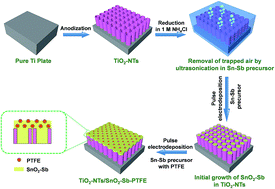
1 v/v), NaF (0.5 wt%) and Na2SO4 (0.2 M). Anodization experiments were carried out at a voltage of 30 V for 240 min with continuous magnetic stirring. Finally, the prepared substrates were annealed at 500 °C for 90 min at both a heating and cooling rate of 1 °C min−1 to get vertically aligned TiO2-NTs.
The initial deposition of SnO2-Sb was conducted in the above electrolyte. A pulse current with an anodic pulse (5 mA cm−2, 50 ms), a cathodic pulse (−5 mA cm−2, 5 ms) and a relaxation time (0 mA cm−2, 1 s) was applied at 40 °C for 15 min. After that, the electrode was put into electrolytes consisted of 0.1 M SnCl2·2H2O, 0.02 M SbCl3, a certain concentration of hydrochloric acid and plural PTFE dispersions (0, 1.5, 4.5 and 13.5 mL L−1) using the same pulse electrodeposition method for 2 h. A 0.05 wt% (3-aminopropyl)trimethoxysilane solution was added in the electrolyte to lower the surface tension. The resulting electrodes were marked as TiO2-NTs/SnO2-Sb, TiO2-NTS/SnO2-Sb-PTFE(1.5), TiO2-NTS/SnO2-Sb-PTFE(4.5) and TiO2-NTS/SnO2-Sb-PTFE(13.5) with respect to the different concentrations of PTFE in the electrodeposition baths.
The conventional Ti/SnO2-Sb electrode having the same nominal surface area was prepared by thermochemical decomposition according to the literature.32
The electrocatalytic performance of the electrodes were evaluated by measurement of total organic carbon (TOC) and specific ultra-violet absorbance at wavelength of 254 nm (SUVA254). SUVA254 is defined as the UV absorbance at wavelength of 254 nm normalized by dissolved organic carbon (DOC) concentration, which is equivalent to the determined TOC since the solutions were crystal clear. The TOC of the samples were measured by a TOC analyzer (TOC-L/CPH, Shimadzu). The UV absorbance of the samples at wavelength of 254 nm were determined by a UV-Vis spectrophotometer (UV 9000, Metash). HO˙ was quantitatively determined by high-performance liquid chromatography (HPLC, Perkin-Elmer Series 200) with DMSO trapping according to literature.33 The organic acids intermediates of phenol oxidation were qualitatively determined by ion chromatography (IC, Thermo Scientific Dionex ICS-2100). Atomic absorption spectroscopy (AAS, Perkin-Elmer AAnalyst 100) was used to analyze the leached Sn ions in the solutions after 6 h bulk electrolysis.
The completely electrochemical oxidation of phenol can be expressed as:
| C6H6O + 11H2O → 6CO2 + 28H+ + 28e− | (1) |
At given time t, the mineralization current efficiency (MCE) of the electrochemical oxidation process can be calculated by the following equation:34
![]() | (2) |
![]() | (3) |
485 C mol−1) and V is the volume of solution (dm3). For phenol oxidation, nC and ne are 28 and 6 respectively.
The specific energy consumption (Ec, kW h kg per TOC) can be calculated as follows:
![]() | (4) |
| Electrode | OEP (V vs. Ag/AgCl) | Service lifetime (h) | Current density without phenola (mA cm−2) | Current density with phenola (mA cm−2) | ΔCurrent density (mA cm−2) | Contact angle (°) |
|---|---|---|---|---|---|---|
| a Current densities were measured at the potential of 3.0 V vs. Ag/AgCl. | ||||||
| Conventional Ti/SnO2-Sb | 2.0 | 6.4 | 8.32 | 10.54 | 2.22 | 67.7 |
| TiO2-NTs/SnO2-Sb | 2.1 | 28 | 8.47 | 11.60 | 3.13 | 77.0 |
| TiO2-NTs/SnO2-Sb-PTFE(1.5) | 2.2 | 51 | 10.29 | 14.71 | 4.42 | 106.7 |
| TiO2-NTs/SnO2-Sb-PTFE(4.5) | 2.4 | 98 | 10.21 | 16.55 | 6.34 | 126.1 |
| TiO2-NTs/SnO2-Sb-PTFE(13.5) | 2.4 | 103 | 9.36 | 12.41 | 3.05 | 134.2 |
Elements of Ti, Sn, Sb, F, C and O were detected by EDS on TiO2-NTs/SnO2-Sb-PTFE electrodes. Fig. 3 shows the uniform distribution of elements Sn, Sb, F and C on TiO2-NTs/SnO2-Sb-PTFE(4.5) by elemental mapping. The atomic percentages of the elements are investigated and listed in Table 2. There is still a small portion of Ti detected on the electrode surfaces. However, more amount of Ti was detected on the conventional Ti/SnO2-Sb (1.15%), which is possibly due to the cracks of the electrode leading to the exposure of Ti substrate. Sb/Sn ratios of TiO2-NTs/SnO2-Sb-PTFE electrodes are around 4%, while the value is 2.6% on the conventional Ti/SnO2-Sb. It should be noted that when the PTFE loading in the electrodeposition bath increases 3 times from 4.5 mL L−1 to 13.5 mL L−1, the real atomic percentage of F in the electrode surface only increases by a factor of 1.8 (from 0.58% to 1.08%). It indicates that PTFE loading of TiO2-NTs/SnO2-Sb-PTFE(13.5) has reached a saturation level and further increase of PTFE in the electrodepositon bath would not result in higher PTFE content in the electrode surface.
| Electrode | Surface elemental composition (atomic%) | |||||
|---|---|---|---|---|---|---|
| Ti | Sn | Sb | C | F | O | |
| Conventional Ti/SnO2-Sb | 1.15 | 32.3 | 0.84 | — | — | 66.7 |
| TiO2-NTs/SnO2-Sb | 0.76 | 32.1 | 1.33 | — | — | 65.8 |
| TiO2-NTs/SnO2-Sb-PTFE(1.5) | 0.61 | 33.3 | 1.28 | 0.12 | 0.22 | 64.5 |
| TiO2-NTs/SnO2-Sb-PTFE(4.5) | 0.52 | 32.3 | 1.41 | 0.30 | 0.58 | 64.9 |
| TiO2-NTs/SnO2-Sb-PTFE(13.5) | 0.48 | 32.4 | 1.22 | 0.57 | 1.08 | 64.3 |
The contact angle of TiO2-NTs (Fig. 2a) is very low (below 10°) and shows its super hydrophilic property. Both the conventional Ti/SnO2-Sb and TiO2-NTs/SnO2-Sb have hydrophilic surface (contact angles 67.7° and 77° respectively). For TiO2-NTs/SnO2-Sb-PTFE, because of the strong hydrophobicity of PTFE, its surface wetting property prominently changes and the contact angles are 106.7°, 126.7° and 134.2° respectively with the increasing PTFE loading.
Fig. 4 compares the XRD patterns of various electrodes. TiO2 is indexed to anatase phase with diffraction peaks at 2θ = 25.6°, 38.1° and 48.3°. The diffraction peaks at 2θ = 26.8°, 34.1° and 52.0° are indexed to the (110), (101) and (211) planes of SnO2. No obvious peaks of Sb are detected due to the incorporation of Sb into the SnO2 crystals. The intensities of (101) and (211) peaks for SnO2 of conventional Ti/SnO2-Sb and TiO2-NTs/SnO2-Sb are similar. However, the intensity of (110) peak is much stronger in the conventional TiO2-NTs/SnO2-Sb, indicating a preferred orientation of SnO2 along (110) direction. The diffraction peak at 2θ = 18.2° suggests that PTFE has been successfully incorporated in the electrode surface coating. The higher PTFE loading, the stronger the peak intensity.
![]() | ||
| Fig. 5 Cyclic voltammetric curves of the electrodes in 0.5 M Na2SO4 with potential range of 0.3–3.0 V vs. Ag/AgCl and scan rate of 50 mV s−1. | ||
The anodic polarization of the electrodes was studied at a constant potential of 1.4 V and 3.0 V vs. Ag/AgCl to investigate their electrocatalytic activities towards phenol. At 1.4 V which is below the OEP, no background current was observed either in the presence or absence of phenol, suggesting phenol cannot be oxidized at this potential. When the potential was set as 3.0 V, the current densities of the five electrodes ranged from 8.32 mA cm−2 to 10.29 mA cm−2 in 0.5 M Na2SO4 (Table 1). However, after the addition of 5 mM phenol, there were drastic increases of the current densities. The increment of current density of TiO2-NTs/SnO2-Sb-PTFE(4.5) (6.34 mA cm−2) was significantly greater than that of conventional Ti/SnO2-Sb (2.22 mA cm−2) and TiO2-NTs/SnO2-Sb (3.13 mA cm−2), revealing its superior electrocatalytic activity towards phenol. Nevertheless, the value was much smaller in TiO2-NTs/SnO2-Sb-PTFE(13.5) (3.05 mA cm−2) compared with TiO2-NTs/SnO2-Sb-PTFE(4.5). Such phenomenon is attributed to their differences of surface morphology. The particle size of SnO2-Sb on TiO2-NTs/SnO2-Sb-PTFE(4.5) is much smaller, indicating more active sites for the oxidation of phenol to take place, so that the electrocatalytic activity is improved.
EIS studies were carried out to further investigate the electrochemical impedance of the novel electrodes. Fig. 6a shows the Nyquist plots of the electrodes. As shown in the figure, well developed semicircle patterns are observed, which suggested that mass diffusion control is negligible.21 TiO2-NTs substrate is non-conductive with an electrochemical impedance larger than 20
000 Ω. After partial reduction of TiO2-NTs substrate and pulse electrodeposition of SnO2-Sb, the electrochemical impedance decreased significantly. Equivalent circuit module Rs(RctQ) was employed to better interpret the EIS results (Fig. 6b). The simulation values of the electrochemical parameters are given in Table 3. In this circuit model, Rs represents the uncompensated ohmic resistance between the working electrode and reference electrode, Rct is the charge transfer resistance, and Q is the constant phase element (CPE) of double layer. The values of n are all in the range of 0.75–1 representing the performance of the electrodes are close to pure capacitors. Comparing with the conventional Ti/SnO2-Sb, Rs of TiO2-NTs/SnO2-Sb decreases by the employment of TiO2-NTs substrate, suggesting better conductivity. Slight increases of Rs are observed at TiO2-NTs/SnO2-Sb-PTFE electrodes. This is probably due to the property of PTFE which is non-conductive. Despite the slight increases of Rs, it should be noted that the charge transfer resistances decrease significantly at TiO2-NTs/SnO2-Sb-PTFE electrodes. TiO2-NTs/SnO2-Sb-PTFE(4.5) has a lowest Rct of only 54.13 Ω cm−2, which is only 38% and 53% that of conventional Ti/SnO2-Sb and TiO2-NTs/SnO2-Sb by pulse electrodeposition. Lower Rct results in the faster electron transfer on electrode surface, indicating an improvement of electrocatalytic activity by incorporation of PTFE nanoparticles. Meanwhile, the Rs of TiO2-NTs/SnO2-Sb-PTFE(4.5) (5.30 Ω cm−2) is also smaller than that of the conventional Ti/SnO2-Sb (5.89 Ω cm−2). Thus, TiO2-NTs/SnO2-Sb-PTFE(4.5) is expected to exhibits much better electrocatalytic activity. Moreover, the TiO2-NTs/SnO2-Sb-PTFE electrodes showed higher capacitance, which can result from electrochemically active surface area of the coatings.35
![]() | ||
| Fig. 6 (a) Nyquist plots of the electrodes and simulation curves of the EIS results (inset is the Nyquist plot of TiO2-NTs) and (b) equivalent circuit model Rs(RctQ). | ||
| Electrodes | Rs (error%) (Ω cm−2) | Rct (error%) (Ω cm−2) | n | CPE (error%) (mF cm−2) |
|---|---|---|---|---|
| Conventional Ti/SnO2-Sb | 5.89 (0.48) | 139.57 (0.74) | 0.923 | 0.54 (0.59) |
| TiO2-NTs/SnO2-Sb | 4.32 (1.26) | 101.45 (0.633) | 0.941 | 0.52 (1.12) |
| TiO2-NTs/SnO2-Sb-PTFE(1.5) | 7.71 (3.41) | 69.64 (6.44) | 0.757 | 1.96 (16.47) |
| TiO2-NTs/SnO2-Sb-PTFE(4.5) | 5.30 (2.31) | 54.13 (3.77) | 0.814 | 1.04 (11.90) |
| TiO2-NTs/SnO2-Sb-PTFE(13.5) | 6.97 (2.32) | 98.62 (5.49) | 0.746 | 2.14 (9.74) |
![]() | ||
| Fig. 7 TOC concentration and SUVA254 as a function of time during phenol degradation at: (a) pH 3; (b) pH 7; (c) pH 11. | ||
The SUVA254 degradation of the 5 electrodes is represented in the inset of Fig. 7. SUVA254 is strongly correlated with the aromatic extent of pollutants. The higher the SUVA254, the higher degree of aromaticity of the dissolved organic compounds.36 Increase of SUVA254 in the first hour using Ti/SnO2-Sb(conventional), TiO2-NTs/SnO2-Sb and TiO2-NTs/SnO2-Sb-PTFE(13.5) as anodes shows that the cleavage reaction of aromatic ring is not favored despite the TOC decreases. The main aromatic intermediates of phenol involves catechol, hydroquinone and benzoquinone.37 When using TiO2-NTs/SnO2-Sb-PTFE(4.5) and TiO2-NTs/SnO2-Sb-PTFE(1.5) as anodes, the SUVA254 decreased readily during the 6 h electrochemical oxidation, indicating phenol and aromatic intermediates undergo ring cleavage reactions. IC measurements showed that they were subsequently oxidized to aliphatic acids including maleic acid, oxalic acid, acetic acid and formic acid. Finally, they can be completely degraded to CO2 and H2O. The final SUVA254 after 6 h electrochemical oxidation is 0.098 SUVA254,0 on TiO2-NTs/SnO2-Sb-PTFE(4.5), which is only 29% and 46% that of Ti/SnO2-Sb(conventional) and TiO2-NTs/SnO2-Sb. This result suggests that TiO2-NTs/SnO2-Sb-PTFE(4.5) has the merit of fully alleviating the aromatic intermediates into mineral acids, which are biodegradable and environmentally more benign.
Fig. 9a shows the MCE of different electrodes for electrocatalytic oxidation of phenol. The highest MCE was obtained on TiO2-NTs/SnO2-Sb-PTFE(4.5) (17.8% at 1 h and 11.6% at 6 h). Therefore, TiO2-NTs/SnO2-Sb-PTFE(4.5) exhibits the highest efficiency for electrocatalytic oxidation of phenol. As shown in Fig. 9b, TiO2-NTs/SnO2-Sb-PTFE(4.5) has the lowest Ec among the 5 electrodes. The Ec of TiO2-NTs/SnO2-Sb-PTFE(4.5) to reach 60% TOC removal is 49 kW h kg per TOC, which is only 0.68 time that of Ti/SnO2-Sb(conventional) and 0.78 time that of TiO2-NTs/SnO2-Sb. On the basis of above analysis, TiO2-NTs/SnO2-Sb-PTFE(4.5) appears to be the most optimal electrode with the most TOC removal and SUVA254 decrease, highest MCE and lowest energy consumption.
| H2O → HO˙ + H+ + e− | (5) |
Given that the redox potential of HOaq˙/H2O is 2.59 V at pH 0 at the standard condition, the relationship between solution pH and redox potential of HOaq˙/H2O can be calculated by Nernst equation:
| Eo(HOaq˙/H2O) = 2.59–0.059 pH | (6) |
Thus, the values of Eo(HOaq˙/H2O) are 2.41, 2.18 and 1.94 at pH 3, 7 and 11. Therefore, higher TOC removal can be achieved in low pH range. However, in the basic solution with pH 11, the decrease of TOC removal is at a greater extent using TiO2-NTs/SnO2-Sb-PTFE(4.5) (82%) as anode than those using conventional Ti/SnO2-Sb (64%) and TiO2-NTs/SnO2-Sb (73%). This is probably because the electrocatalytic oxidation of phenol with TiO2-NTs/SnO2-Sb-PTFE(4.5) relies more on HO˙ generation. Hence, the phenol oxidation is greatly influenced when the oxidative power of HO˙ reduces in the basic solution.
| Cl− → Cl˙ + e− | (7) |
| 2Cl˙ → Cl2 | (8) |
| Cl2 + 2H2O → 2HClO + 2H+ + 2e− | (9) |
| HClO → ClO− + H+ | (10) |
![]() | ||
| Fig. 10 TOC concentration and SUVA254 as a function of time during phenol degradation at: (a) pH 7; (b) pH 3; (c) pH 11. | ||
Fig. 11 shows the schematic illustration of electrochemical oxidation of phenol using TiO2-NTs/SnO2-Sb-PTFE(4.5) and the conventional Ti/SnO2-Sb as anodes in 0.05 M Na2SO4 and 0.1 M NaCl. Since Cl2 can only present in the solution in very low pH (usually <1), the main reactive chlorine species for phenol oxidation are Cl˙, HClO and ClO−. Although the oxidative power of Cl˙ (2.2 V), HClO (1.63 V) and ClO− (0.90 V) are lower than that of HO˙ (2.59 V), their advantages of massive production and longer lifetime over HO˙ make them degrade phenol more effectively. However, for TiO2-NTs/SnO2-Sb-PTFE(4.5) electrode which has superior generation of free HO˙ due to its hydrophobic surface, the TOC removal of phenol is inhibited by the following competing reactions:38
| Cl− + HO˙ → Cl˙ + OH− | (11) |
| Cl2 + HO˙ → HClO + Cl− | (12) |
![]() | ||
| Fig. 11 Schematic illustration of electrochemical oxidation of phenol in 0.05 M Na2SO4 and 0.1 M NaCl using (a) conventional Ti/SnO2-Sb and (b) TiO2-NTs/SnO2-Sb-PTFE(4.5). | ||
The Cl− and Cl2 played the role of HO˙ scavengers so that TOC removal by free HO˙ is not favorable. Therefore, the TOC removal efficiency decreases in 0.1 M NaCl. All of the 3 electrodes obtain faster SUVA254 decrease in the presence of NaCl in the first 2 h (Fig. 10). This is because reactive chlorine tends to react with electron rich moieties such as of aromatic intermediates,39 hence, the aromatic rings open more easily. However, after 2 h the decrease of SUVA254 of phenol with TiO2-NTs/SnO2-Sb-PTFE(4.5) is slower in 0.1 M NaCl than that in 0.05 M Na2SO4, indicating the inhibition of phenol degradation by less amount of HO˙.
![]() | ||
| Fig. 12 Leached Sn ions concentration (±S.D) after 6 h electrochemical oxidation in (a) 0.05 M Na2SO4 and (b) 0.1 M NaCl (insets are the final pH of solutions after 6 h electrochemical oxidation). | ||
The Sn ions leaching can be further inhibited using 0.1 M NaCl as supporting electrolyte (Fig. 12b). Cl2 can be generated at anode surface without H+ generation, but the solution H+ is consumed at the cathode to form H2. Thus, there is an increase of solution pH after 6 h of electrochemical oxidation. Therefore, Sn ions are not likely to be leached out. Lowest Sn ions concentration was detected to be only 2 × 10⁻⁶ M at basic solution with initial pH 11 using TiO2-NTs/SnO2-Sb-PTFE(4.5). In general, the TiO2-NTs/SnO2-Sb-PTFE can effectively inhibit the leaching of Sn ions through the presence of PTFE layer.
| This journal is © The Royal Society of Chemistry 2015 |