DOI:
10.1039/C4RA16441E
(Paper)
RSC Adv., 2015,
5, 15870-15879
Diverse zinc(II) coordination assemblies built on divergent 4,2′:6′,4′′-terpyridine derivatives: syntheses, structures and catalytic properties†
Received
15th December 2014
, Accepted 26th January 2015
First published on 27th January 2015
Abstract
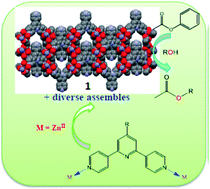
A series of metal–organic architectures (compounds 1–5) based on zinc salts and four 4′-substituted 4,2′:6′,4′′-tpys including two new ligands have been synthesized and structurally characterized. The ligands L1–L4 with various 4′-substituents on 4,2′:6′,4′′-tpy react with Zn(OAc)2·2H2O to yield assemblies 1–4 containing either 1-D polymeric chains (1–3) or a discrete dinuclear complex (4). X-ray structural analysis revealed that although similar 1-D polymeric chains were observed in both 1 and 3, the 3-D packing modes were essentially different. The chains in 1 were stacked to form a network structure with microporous channels that were not present in 3. In contrast, 4 was a discrete dinuclear complex containing a paddle-wheel {Zn2(μ-OAc)4} motif, although another minor component possibly coexists in the bulk sample as revealed by the PXRD studies. Crystals of 5 were prepared from the reaction between L4 and ZnI2 and its X-ray structure revealed a 1-D polymeric chain with a wave-like structure. Phase-pure compounds 1–3 and 5 were tested for the catalytic transesterification of phenyl acetate with alcohols, and the results indicated that 1 was the most active catalyst for this reaction, affording the new ester product in 95% yield at 50 °C under neat conditions, while other catalysts also catalysed the reaction with modest yields. Several different alcohols were examined as substrates for 1-catalysed transesterification and it was found that the size of substrates has important influence on the catalytic efficiency. In addition, amine additives were found to remarkably promote the catalytic efficiency of the less active catalyst 3. The structure–catalytic activity relationship was discussed in detail based on the catalytic data obtained.
Introduction
4,2′:6′,4′′-Terpyridine (4,2′:6′,4′′-tpy), a divergent analogue of the classic chelating 2,2′:6′,2′′-terpyridine (2,2′:6′,2′′-tpy) ligand, has been attracting considerable attention from chemists in recent years,1,10–20 due to its facile synthesis and its ability to form versatile coordination polymers and networks upon reacting with metal ions.1 Typically, various 4′-substituted 4,2′:6′,4′′-tpy ligands can be readily obtained by using a one-pot synthetic procedure and choosing suitable synthetic precursors; this allows the facile tuning of the chemical structures and electronic properties of the ligands as well as their complexes. Consequently, novel metal–organic architectures including metallocycles, polycatenated metallocapsule, one-dimensional (1-D) chains, two- or three-dimensional (2-D, 3-D) networks have been obtained, resulting from the subtle choice of 4,2′:6′,4′′-tpy ligands with different substituents on the 4′-position and metal ions of different coordination geometries.1–23 However, the fact that other factors including reaction conditions (solvents, temperature and stoichiometry etc.), crystallization methods and counter anions also have great influence on the structures of the resulting assemblies indicates that we are still far from understanding and controlling the assembly process.
A general finding from all of the known supramolecular structures involving 4,2′:6′,4′′-tpy derivatives is that the central pyridine ring of the 4,2′:6′,4′′-tpy motif remains non-coordinated,1–23 and this has inspired simple applications of related ZnII- or MnII-coordination polymers as acid/base colorimetric and fluorescent sensors,6,7 and the attempted N-alkylation on a 1-D ZnII-coordination polymer.7 However, to the best of our knowledge, the catalytic applications of metal complexes or coordination polymers built from 4,2′:6′,4′′-tpy derivatives are far unexplored, in contrast to the well-known capability of metal complexes derived from 2,2′:6′,2′′-tpy ligands in homogeneous catalysis.24–30 We envisioned that in the metal–organic assembles of a 4,2′:6′,4′′-tpy ligand, the metal-binding sites would offer a Lewis acidic reaction centre and the non-bound central pyridine rings provide an additional basic site, and thus acid/base bifunctional catalytic activity can be anticipated. Indeed, bifunctional catalysis has proven to be a powerful tool in numerous organic transformations.31,32 In addition, the ease of synthesis and modification on the 4′-position of a 4,2′:6′,4′′-tpy backbone makes the catalytic reactivity of the corresponding metal assembles readily tunable.
To further explore the self-assembly behaviour and their material applications, we wish to extend the existing 4,2′:6′,4′′-tpy ligand family and investigate their potential in heterogeneous catalysis while combined with various metal salts. Therefore, in this work we report the syntheses of two new 4′-substituted 4,2′:6′,4′′-tpy ligands (L2 and L4, Scheme 1) and the reactions of ligands L1–4 with Zn(OAc)2 and ZnI2 salts. As a result, the synthesis and crystal structures of five new ZnII-organic assembles, namely, [{Zn2(L1)(OAc)4·1.5MeOH}n] (1), [{Zn(L2)(OAc)2}n] (2), [{Zn2(L3)(OAc)4}n] (3), [Zn2(L4)2(OAc)4] (4) and [{Zn(L4)I2}n] (5) were described and their structures were discussed in comparison with previously reported results.1 We also report our efforts for the first time on the catalytic applications of these new assembles for the transesterification of phenyl acetate with alcohols under heterogeneous conditions, in order to understand the structure–catalytic activity relationship in metal assembles of 4,2′:6′,4′′-tpys.
 |
| | Scheme 1 The molecular structures of ligands L1–4 studied in this work. | |
Experimental section
General
Solvents and reagents were purchased from Fisher or Sigma-Aldrich in the US. All reactions were performed under ambient conditions (no inert atmosphere). Solution electronic absorption spectra were recorded on a Shimadzu UV-1800 spectrophotometer, and FT-IR spectra were measured on a Shimadzu 8400S instrument with solid samples using a Golden Gate ATR accessory. 1H and 13C NMR spectra were obtained at room temperature on a Bruker III 400 MHz spectrometer with TMS as an internal standard. FAB-MS spectra were recorded on a JOEL HX110 mass spectrometer using FAB (fast atom bombardment) technique. GC-MS analysis was carried out on a Shimadzu GCMS-QP2010S gas chromatograph mass spectrometer. Elemental Analyses were performed by Midwest Microlab LLC in Indianapolis. Powder X-ray diffraction (PXRD) was performed with a Bruker D8 Discover microdiffractometer with the General Area Detector Diffraction System (GADDS) equipped with a VÅNTEC-2000 2D detector. The X-ray beam was monochromated with a graphite crystal (λ Cu-Kα = 1.54178 Å) and collimated with a 0.5 mm capillary (MONOCAP). The sample-to-detector distance was 150 mm. The step times 300 s for 1–3 and 600 s for 4 were applied. The integrated 1D pattern was analyzed by the software DIFFRACplus EVA.33 The simulated powder pattern was calculated by the software Mercury v. 2.4.34 Ligands L1 and L3 were synthesized according to previously published procedures.8,9
Ligand L2
In a 250 cm3 round-bottom flask, 4-acetylpyridine (3.63 g, 30.0 mmol) was added to a solution of pyridine-2-carbaldehyde (1.61 g, 15.0 mmol) in EtOH (50 cm3). KOH pellets (1.68 g, 30 mmol) were then added, followed by aqueous NH3 (25%, 80 cm3). The resulting orange-brown solution was stirred at room temperature for 25 h, during which time a grey suspension formed. The solid was collected by filtration, washed with H2O and EtOH and dried in vacuo over P2O5. L2 was isolated as a white solid (2.03 g, 43.7%). 1H NMR (400 MHz, DMSO-d6) δ 8.83 (d, J = 4.5 Hz, 1H), 8.81 (s, 2H), 8.79 (d, J = 6.0 Hz, 4H), 8.49 (d, J = 8.0 Hz, 1H), 8.31 (d, J = 6.0 Hz, 4H), 8.07 (td, J = 7.8, 1.5 Hz, 1H), 7.57 (dd, J = 7.2, 4.9 Hz, 1H). 13C NMR (101 MHz, DMSO-d6) δ 154.6, 153.0, 150.5 (4C), 150.0, 148.8, 145.2, 137.7, 124.8, 122.0, 121.1 (4C), 118.3 ppm. UV-vis λmax/nm (3.05 × 10⁻⁵ mol dm−3, CH2Cl2–MeOH) 248 (ε/103 dm3 mol−1 cm−1 24.0), 310 (5.93). FT-IR (solid, cm−1): 3025m, 1587s, 1557s, 1539s, 1507s, 1473s, 1444w, 1417w, 1394s, 1311w, 1298w, 1213w, 1167w, 1060m, 996s, 823s, 778s, 731s, 669m, 635s, 613m. FAB-MS: m/z 310.28 [M]+ (calc. 310.12). Anal. calcd for C20H14N4: C 77.40, H 4.55, N 18.05%. Found C 77.46, H 4.51, N 18.09%.
Ligand L4
Ligand L4 was prepared by the same procedure as that for 2 except that piperonal (2.25 g, 15.0 mmol) was used instead of pyridine-2-carbaldehyde. L4 was isolated as a white solid (3.36 g, 63.4%). 1H NMR (400 MHz, DMSO-d6) δ 8.85–8.63 (m, 4H), 8.43 (s, 2H), 8.38–8.29 (m, 4H), 7.80 (d, J = 1.9 Hz, 1H), 7.69 (dd, J = 8.2, 1.9 Hz, 1H), 7.13 (d, J = 8.1 Hz, 1H), 6.15 (s, 2H, HCH2). 13C NMR (101 MHz, DMSO-d6) δ 154.3, 150.3 (4C), 149.7, 148.7, 148.3, 145.3, 130.7, 121.8, 121.2 (4C), 118.4, 108.8, 107.7, 101.6 ppm. UV-vis λmax/nm (2.95 × 10⁻⁵ mol dm−3, CH2Cl2–MeOH) 237 (ε/103 dm3 mol−1 cm−1 46.4), 271 (34.1), 311 (22.4). FT-IR (solid, cm−1): 2871w, 2777w, 1593s, 1558m, 1505s, 1488s, 1447m, 1419w, 1400s, 1250s, 1219m, 1112w, 1050s, 998w, 949m, 848s, 828m, 809s, 669w, 630s. FAB-MS: m/z 353.25 [M]+ (calc. 353.12). Anal. calcd for C22H15N3O2: C 74.78, H 4.28, N 11.89%. Found C 74.93, H 4.27, N 11.97%.
[{Zn2(L1)(OAc)4·1.5MeOH}n] (1)
A solution of L1 (31.0 mg, 0.100 mmol) in MeOH–C6H5Cl (10 cm3, 1
:
4, v/v) was placed in a test tube. A mixture of MeOH and C6H5Cl (5 cm3, 1
:
1, v/v) was layered on the top of this solution, followed by a solution of Zn(OAc)2·2H2O (87.2 mg, 0.400 mmol) in MeOH (10 cm3). The tube was sealed and allowed to stand at room temperature for a week, during which time X-ray quality colourless crystals grew on the bottom of the tube. The crystals were collected by decanting the solvent and were washed with MeOH and dried in air. Yield: 20.5 mg (29.0% based on L1). FT-IR (solid, cm−1) 1638s, 1617s, 1591s, 1426s, 1223m, 1067m, 1027m, 850s, 825s, 665s, 650m, 619s, 522s. Anal. calcd for C28H26N4O8Zn2·1.5CH3OH: C 48.85, H 4.45, N 7.72%. Found C 48.32, H 4.15, N 7.76%.
[{Zn(L2)(OAc)2}n] (2)
A solution of Zn(OAc)2·2H2O (43.6 mg, 0.200 mmol) in MeOH (5 cm3) was added to a solution of L2 (31.0 mg, 0.100 mmol) in CH2Cl2–MeOH (10 cm3, v/v, 3
:
1). The reaction mixture was stirred at room temperature for 10 min, and was then filtered, the clear filtrate was left to stand at room temperature for 3 days upon slow evaporation, colourless crystals were collected by filtration, washed with MeOH, and dried in air. Yield: 35.6 mg, 72.4% based on L2. FT-IR (solid, cm−1) 1616s, 1558m, 1540m, 1507w, 1472m, 1457w, 1378s, 1326s, 1221m, 1066m, 1027w, 926w, 847s, 782s, 729m, 669s, 649s, 617m, 515s. Anal. calcd for C24H20N4O4Zn: C 58.37, H 4.08, N 11.35%. Found C 58.01, H 4.06, N 11.32%.
[{Zn2(L3)(OAc)4}n] (3)
The synthetic procedure is similar to that of 1, except that the ligand was L3 (35.2 mg, 0.100 mmol). Orange crystals of 3 was obtained after two weeks. Yield: 62.3 mg (86.7% based on L3). FT-IR (solid, cm−1) 1639s, 1618s, 1590s, 1530m, 1427s, 1210w, 1067s, 1029m, 847s, 813s, 664s, 652w, 620s, 521m. Anal. calcd for C31H32N4O8Zn2: C 51.76, H 4.48, N 7.79%. Found C 51.85, H 4.52, N 7.76%.
[Zn2(L4)2(OAc)4] (4)
The synthetic procedure is similar to that of 2, except that the ligand was L4 (35.3 mg, 0.100 mmol). Colourless blocks of 4 was obtained after a week. Yield: 42.2 mg (78.9% based on L4). FT-IR (solid, cm−1) 2988br, 1615s, 1597s, 1558m, 1539m, 1505s, 1449m, 1417s, 1375s, 1324s, 1248s, 1118w, 1063m, 1026s, 928w, 849m, 838s, 814s, 731w, 681s, 669s, 648s, 617m, 563s. Anal. calcd for C52H42N6O12Zn2·CH3OH: C 57.57, H 4.19, N 7.60%. Found C 57.07, H 4.03, N 7.54%.
[{Zn(L4)I2}n] (5)
The synthetic procedure is similar to that of 1, except that L4 (35.3 mg, 0.100 mmol) and ZnI2 (31.8 mg, 0.100 mmol) were used. Colourless crystals of 5 were collected by decanting the solvent after two weeks, which were washed with MeOH and dried in the air. Yield: 45.6 mg (68.0%). FT-IR (solid, cm−1) 2872w, 1609s, 1597s, 1558w, 1534m, 1500s, 1489s, 1446w, 1410s, 1249s, 1217s, 1062m, 1043m, 1021s, 937m, 917m, 861m, 831s, 801s, 741w, 689m, 645s. Anal. calcd for C22H15I2N3O2Zn·0.2H2O: C 39.29, H 2.25, N 6.25%. Found C 39.08, H 2.30, N 6.21%.
General procedure for catalytic transesterification
Under typical conditions, the reactions were performed in flasks fitted with water circulated condensors. 1.0 mmol of phenyl acetate, 0.01 mmol of ZnII catalysts (1 mol% based on the ligands) were placed in the flask, to which 4.0 cm3 of 1-butanol was added. The reaction was heated to 50 °C for 18 h under rigorous stirring, after which the reaction mixture was filtered and the filtrate diluted with dichloromethane and then analyzed by GC-MS. The yield for each reaction was obtained by using the internal standard method.
Crystal structure determinations
Suitable crystals of 1–5 were mounted on Cryoloops with Paratone-N oil. Data were collected at 100 K with a Bruker APEX II CCD using Mo-Kα radiation and corrected for absorption with SADABS and structures solved by direct methods. All non-hydrogen atoms were refined anisotropically by full-matrix least squares on F2. Hydrogen atoms were found from Fourier difference maps and refined isotropically, otherwise they were placed in calculated positions with appropriate riding parameters. For structure 1 diffused solvent was treated using Platon program SQUEEZE,35 and a void volume of 285 Å3 with electron count of 108 was treated as six molecules of methanol; Unit cards of instruction files were adjusted to address changes in chemical formula, molecular mass, density and F000 values. ORTEP and molecular packing figures were drawn with the program Mercury v. 2.4.34 Refinement details are summarized in Table 1.†
Table 1 Crystallographic data and structure refinement for compounds 1–5
| Compound |
1 |
2 |
3 |
4 |
5 |
| R1 = Fo − Fc/Fo. wR2 = [w(Fo2 − Fc2)2/w(Fo)2]1/2. |
| Formula |
C14H13N2O4Zn·0.75CH3OH |
C24H20N4O4Zn |
C31H32N4O8Zn2 |
C52H42N6O12Zn2 |
C22H15I2N3O2Zn |
| Formula weight |
362.67 |
493.81 |
719.35 |
1073.66 |
672.54 |
| Crystal system |
Monoclinic |
Monoclinic |
Monoclinic |
Triclinic |
Monoclinic |
| Space group |
C2/c |
P2(1)/n |
C2/c |
P![[1 with combining macron]](https://www.rsc.org/images/entities/char_0031_0304.gif) |
P2(1)/c |
| a/Å |
26.0536(19) |
8.2156(10) |
26.7024(17) |
10.8145(15) |
10.0987(6) |
| b/Å |
14.9913(11) |
19.161(2) |
14.8976(10) |
13.5094(19) |
11.3461(5) |
| c/Å |
8.1639(6) |
13.7259(18) |
8.0841(5) |
16.680(2) |
18.6487(10) |
| α/° |
90 |
90 |
90 |
102.930(4) |
90 |
| β/° |
107.153(2) |
103.651(4) |
106.816(2) |
93.543(4) |
103.791(2) |
| γ/° |
90 |
90 |
90 |
102.850(4) |
90 |
| U/Å3 |
3046.8(4) |
2099.7(4) |
3078.4(3) |
2299.6(6) |
2075.18(19) |
| Dc/Mg m−3 |
1.581 |
1.562 |
1.552 |
1.551 |
2.153 |
| Z |
8 |
4 |
4 |
2 |
4 |
| μ/mm−1 |
1.637 |
1.211 |
1.616 |
1.118 |
4.184 |
| T/K |
100(2) |
100(2) |
100(2) |
100(2) |
100(2) |
| Reflections/unique |
3214/2404 |
4314/3653 |
3168/2569 |
9477/5930 |
4280/3908 |
| Parameters |
194 |
300 |
209 |
653 |
271 |
| R1a, wR2b [I > 2σ(I)] |
0.0464, 0.1117 |
0.0421, 0.1103 |
0.0386, 0.0772 |
0.0508, 0.1062 |
0.0326, 0.0956 |
| R1a, wR2b (all data) |
0.0698, 0.1204 |
0.0507, 0.1162 |
0.0551, 0.0833 |
0.1028, 0.1261 |
0.0367, 0.0985 |
| GOF |
1.070 |
1.048 |
1.065 |
1.000 |
1.092 |
Results and discussion
Synthesis and characterization
Ligands L2 and L4 were prepared in moderate or good yields by a procedure similar to that for other 4,2′:6′,4′′-tpy ligands reported in the literature.1,5–8 The reactions of 4-acetylpyridine with pyridine-2-carbaldehyde or piperonal in the presence of KOH followed by addition of aqueous NH3 afforded L2 and L4 as white solids after isolation by filtration, respectively. Mass spectroscopy revealed peak envelops at m/z 353.26 and 310.28 that matched with those calculated. 1H and 13C NMR spectra of both L2 and L4 were recorded in DMSO-d6 and are consistent with the molecular structures as illustrated in Scheme 1. In the 1H NMR spectrum of L4, The peak for CH2 protons on the benzodioxole ring was observed at 6.15 ppm as a singlet. Reacting ligands L1–4 with Zn(OAc)2·2H2O by using either solution reactions or layering technique gave crystals of 1–4 that were suitable for X-ray structural analysis, while good-quality single crystals of 5 involving ZnI2 were obtained in good yield by the layering technique. The bulk samples of 1–5 are insoluble in water and common organic solvents including alcohols, except that 4 is slightly soluble in dichloromethane or chloroform.
All compounds were characterized by FT-IR spectroscopy and elemental analysis, and structurally determined by X-ray crystallography. The PXRD patterns of 1–3 revealed the bulk crystalline samples were single phase, in agreement with the results from single-crystal structural analysis (see ESI†). However, PXRD profile of the bulk sample of crystal 4 contains a few peaks from another phase, indicating the coexistence of a minor component with a structure different from 4. The crystals of 5 experienced decomposition upon exposure to the air and no significant PXRD peaks were observed. The crystal refinement results for 1–5 are summarized in Table 1.
Structural description
Although Zn(OAc)2-containing coordination polymers of 4,2′:6′,4′′-tpy ligands were exclusively synthesized from the solution reactions in the literature,1,6,7,21–23 attempts to obtain single crystals of 1 by reacting L1 with Zn(OAc)2·2H2O in both CHCl3–MeOH and CH2Cl2–MeOH solutions were unsuccessful. Instead, X-ray quality crystals of 1 were harvested by the layering technique, in spite of low yield. Thus, careful layering a methanol solution of Zn(OAc)2·2H2O onto a solution of L1 in MeOH–C6H5Cl, separated by a MeOH–C6H5Cl solvent mixture afforded colourless crystals of 1. 1 crystallizes in the monoclinic space group C2/c as a one-dimensional coordination polymer with a molecular formula of {Zn2(L1)(OAc)4·1.5MeOH}n (Table 1). However, the quality of the structure prevented the solvent molecules from being accurately modelled, and so the data were treated using the program SQUEEZE.35 An ORTEP representation of the repeat unit is depicted in Fig. 1a. In the repeat structural unit, a paddle-wheel {Zn2(μ-OAc)4} motif is observed, which links the ligand L1 with two of its terminal pyridine-N atoms through its apical positions to form an infinite zig-zag chain (Fig. 1b), reminiscent of those formed between Zn(OAc)2·2H2O and 4′-phenyl-4,2′:6′,4′′-terpyridine, 4′-(4-bromophenyl)-4,2′:6′,4′′-terpyridine, or 4′-(4-methylthiophenyl)-4,2′:6′,4′′-terpyridine.6,7 All bond lengths and angles are similar to those reported and listed in the caption of Fig. 1.6,7 The ligand displays a C2-symmetry and the atom N1ii is generated by the symmetry code: −x + 1, y, −z + 3/2. The C2-axis runs through atoms N2, C9 and N3, although the pyridine ring with N3 is slightly out of the plane formed by the almost coplanar 4,2′:6′,4′′-tpy domain. Each ZnII centre is bound to four oxygen atoms of acetate groups and one pyridine-N atom of ligand L1, and is in a square pyramidal coordination environment. The Zn–Zn distance of 2.9046(8) Å in the {Zn2(μ-OAc)4} unit is close to those for known compounds with the same structural motif.6,7 It is, however, worth noting that only two of the three terminal pyridine-N atoms are involved in the coordination with metal centres, remaining the 4-pyridyl group on the 4′-position non-coordinated, and so was the central pyridine. According to previous work, the tripodal ligand L1 tends to coordinate with metal salts such as ZnCl2 or ZnI2 by all three terminal pyridine N atoms, allowing the formation of metallocapsules or cage-like structures.9 While the observation that in 1 atom N3 remains non-coordinated is unexpected, this increases the possibility of 1 to have an extra basic site for catalysis as we assumed previously (vice infra). The fact that the 4′-(4-pyridyl) group of L1 remained uncoordinated could be tentatively attributed to the existence of acetate counter anions, which favoured the formation of 1-D coordination chains or discrete complexes, rather than more complex network structures in all related examples.6,7,20 The 3-D packing mode exhibits ordered arrangements of 1-D polymeric chains through π-stacking of tpy domains along the crystallographic c-axis. As a result, a microporous network was formed with non-coordinated pyridine-N pointing to the inner channels that have a dimension of approximately 6.0 × 7.0 Å2 and are mainly filled with the solvent methanol molecules (Fig. 1b).
 |
| | Fig. 1 (a) The repeat unit in 1 with ellipsoids plotted at the 40% probability level, and H atoms omitted for clarity. Selected bond parameters: Zn1–O2i = 2.028(3), Zn1–O1 = 2.037(3), Zn1–O3 = 2.043(3), Zn1–N1 = 2.045(3), Zn1–O4i = 2.067(2), Zn1–Zn1i = 2.9046(8) Å; N1–Zn1–Zn1i = 176.14(8), O2–Zn1–O1i = 160.59(11), O3–Zn1–O4i = 160.52(10), O2i–Zn1–N1 = 100.85(11), O1–Zn1–N1 = 98.50(11), O3–Zn1–N1 = 98.37(10)°. Symmetry code: i = −x + 1/2, −y + 3/2, −z; ii = −x + 1, y, −z + 3/2. (b) The 3-D space-filling mode of 1 through π⋯π stacking of tpy domains showing a microporous framework viewed down the b-axis. | |
Reacting Zn(OAc)2·2H2O with ligand L2 in a CH2Cl2–MeOH solution after evaporation of the solution for 3 days afforded colorless crystals of 2 that are suitable for X-ray diffraction analysis. Elemental analysis data is consistent with an empirical formula of Zn(L2)(OAc)2. This is obviously different from that for 1, in which a 2
:
1 metal–ligand ratio was found. X-ray structural analysis confirmed unambiguously the formation of one-dimensional coordination polymer {Zn(L2)(OAc)2}n with the repeat structural unit shown in Fig. 2a. Unlike 1, only mononuclear Zn centres are observed in the polymeric chain of 2 and each Zn atom is in a distorted tetrahedral coordination environment, being bonded to two ligands and two acetate ions. The Zn–O distances (1.919(2) ad 1.9318(19) Å) are remarkably shorter than those in 1. The tpy domain is essentially planar and the torsion angle between the least square planes of pairs of adjacent pyridine rings is 4.12°. The 2-pyridyl group on the 4′-position of 4,2′:6′,4′′-tpy remains unoccupied. The torsion angle between the least square planes of 2-pyridine and the central pyridine ring is 9.59°, rather smaller than that found between the non-coordinated 4-pyridine and the central pyridine ring in 1 (30.15°). Although the {Zn2(μ-OAc)4} cluster was often observed in ZnII-coordination polymers with 4,2′:6′,4′′-tpy derivatives,6,7 it was reported that a conversion from [Zn2(L)(OAc)4]n to [Zn(L)(OAc)2]n (L represents 4′-phenyl-4,2′:6′,4′′-terpyridine) had occurred during the process of crystallization, and the extended structure of 2 is mimicking that of [Zn(L)(OAc)2]n, possessing a helical twist as shown in Fig. 2b. Helical chains in the crystals with both P- and M-chirality were found to arrange alternately through π-stacking interactions between the pyridine rings, resulting in a quite condensed molecular packing mode as observed in the 3-D space-filling diagram of the crystal structure (Fig. 2c).
 |
| | Fig. 2 (a) The repeat unit in 2 with ellipsoids plotted at the 40% probability level, and H atoms omitted for clarity. Selected bond parameters: Zn1–O3 = 1.919(2), Zn1–O1 = 1.9318(19), Zn1–N1 = 2.058(2), Zn1–N4i = 2.051(2) Å; N1–Zn1–N4i = 106.59(9), N1–Zn1–O3 = 110.18(9), N1–Zn1–O1 = 98.46(8), O1–Zn1–O3 = 127.04(9)°. Symmetry code: a = −x + 3/2, y + 1/2, −z + 1/2. (b) The structure of a helical chain with M-chirality observed in 2. (c) The 3-D space-filling representation along the crystallographic a axis, showing the compact packing in the crystals. | |
Reaction of L3 with Zn(OAc)2·2H2O by the layering technique similar to that for crystal growth of 1 gave crystals of 3 in high yield. Elemental analysis of the crystalline sample of 3 revealed an empirical formula of Zn2(L3)(OAc)4 and X-ray structural analysis confirmed that 3 is isomorphic to 1 that was described previously, although the 4′-substituent (4-dimethylaminophenyl group) on 4,2′:6′,4′′-tpy in ligand L3 is obviously different from that of L1 (4-pyridyl group). An ORTEP structure of the repeat unit in 3 is shown in Fig. 3a and partial bond parameters are given in the caption. The 1-D polymeric zigzag chains in 3 run along the crystallographic a-axis and pack through π-stacking interactions between the aromatic rings, thereby mimicking those observed in 1. However, the presence of 4-dimethylaminophenyl group on ligand L3 has important consequences on the 3-D packing mode of polymeric chains in 3. As seen in Fig. 3b, extra π-stacking interactions were found between the 4-dimethylaminophenyl units of 1-D chains from adjacent layers except for those between the 4,2′:6′,4′′-tpy domains, which resulted in a significantly different 3-D arrangement of chains in 3 than that in 1 as viewed down the crystallographic b-axis (Fig. 1b and 3b). No co-crystallized solvent molecules were found in the crystal packing, owing to the more condensed network structure in 3 (Fig. 3c).
 |
| | Fig. 3 (a) The repeat unit in 3 with ellipsoids plotted at the 40% probability level, and H atoms omitted for clarity. Selected bond lengths: Zn1–N1 = 2.025(2), Zn1–O1 = 2.045(2), Zn1–O2 = 2.046(2), Zn1–O3 = 2.049(2), Zn1–O4 = 2.043(2), Zn1–Zn1i = 2.8924(7) Å. Symmetry code: i = −x + 1/2, −y + 3/2, −z. (b) The 3-D packing in 3 viewed down the b-axis highlighting the π-stacking between the 4-dimethylaminophenyl units with red and blue spheres. (c) The space-filling representation showing the compact packing mode in the crystals. | |
Slow evaporation of a reaction mixture of L4 with Zn(OAc)2·2H2O in CH2Cl2–MeOH solution over a period of one week gave colorless blocks that matched with the formula of Zn(L4)(OAc)2 based on elemental analysis. X-ray structural analysis of a good-quality single crystal picked from the bulk sample revealed a discrete dinuclear molecule with a component of Zn2(L4)2(OAc)4 (4), different from the polymeric structures found in 1–3 (Fig. 4). However, PXRD measurement of the bulk sample indicated that the crystalline solid possibly contains another minor component and we were unable to determine other possible single-crystal structures in the solid due to the difficulty of separation. The presence of another possible phase in this sample is not surprising, as it was recently discussed in detail that the competition between polymers and discrete complexes based on 4,2′:6′,4′′-tpy ligands and zinc(II) acetate often occurs.11 Therefore, a coordination polymer with the same metal–ligand composition (1
:
1 ratio) might have formed with a small amount during the crystallization of 4. In 4, the paddle-wheel type {Zn2(μ-OAc)4} motif is observed again and it links two ligands with one of the terminal N atoms. The Zn–Zn distance (2.9258(6) Å) is slightly longer than that in polymer 1, while all Zn–O bond lengths fall in the range of values for similar {Zn2(μ-OAc)4} motifs found in 1 and 3. Molecules of 4 further assemble into 2-D sheets through π-stacking interactions between the tpy domains along the crystallographic c-axis (Fig. 4b). It is unexpected that in 4, except for the central pyridine-N atom, one of terminal N atoms is non-coordinated and L4 behaves in fact as a monodentate ligand. The bulk sample of 4 is poorly soluble in common organic solvent, except in DMF or DMSO.
 |
| | Fig. 4 (a) The ORTEP structure of the dinuclear complex 4 with ellipsoids plotted at the 40% probability level, and H atoms omitted for clarity. Selected bond parameters: Zn1–O5 = 2.014(2), Zn1–O9 = 2.026(2), Zn1–O3 = 2.029(3), Zn1–N1 = 2.032(3), Zn1–O7 = 2.087(3), Zn1–Zn2 = 2.9258(6), Zn2–O8 = 2.020(3), Zn2–O6 = 2.028(2), Zn2–O10 = 2.034(2), Zn2–O4 = 2.052(3), Zn2–N4 = 2.034(3) Å; O5–Zn1–O9 = 160.08(10), O5–Zn1–O3 = 90.39(12), O3–Zn1–O9 = 90.16(11), O5–Zn1–N1 = 103.59(10), O3–Zn1–N1 = 101.69(11)°. (b) The packing mode in the unit cell showing the π-stacking between the pyridine rings shown as filled spheres. (c) The 3-D space-filling representation showing compact molecular packing. | |
Given the uncommon assembly of ligand L4 with Zn(OAc)2·2H2O, we next examined the reaction of L4 with zinc iodide. Layering a methanolic solution of ZnI2 onto the CH2Cl2–MeOH solution of L4 resulted in the formation of colourless crystals of 5 that were suitable for single-crystal X-ray diffraction. Structural analysis revealed that the structure of 5 is a 1-D coordination polymer with the formula of {Zn(L4)I2}n, in which each ZnI2 unit is bound to two distinct ligands with terminal pyridine-N atoms (Fig. 5). Each Zn atom is in a slightly distorted tetrahedral coordination environment and the bond lengths and angles are unexceptional (see the caption of Fig. 5). The coordination polymeric chains were found to be wave-like and run through the crystallographic c-axis, with all the 4′-position substituents of the ligand pointing to the same direction. The Zn–Zn distance between the closest peaks of the wave is 18.649 Å (Fig. 5b). Again, π-stacking interactions between the tpy domains of the chains assemble 1-D chains into a compact network, similar to those observed in structures 2 and 3 (Fig. 3c and 4c). It is noteworthy that the wave-like chain in 5 is a remarkable exception from those observed for related zinc dihalide and acetate assembles with other 4′-arene-substituted 4,2′:6′,4′′-tpys, in which chains are exclusively racemic or homochiral helical structures.1–4
 |
| | Fig. 5 (a) The repeat unit in 5 with ellipsoids plotted at the 40% probability level, and H atoms omitted for clarity. Selected bond parameters: Zn1–N1 = 2.080(4), Zn1–N3i = 2.084(4), Zn1–I1 = 2.5338(7), Zn1–I2 = 2.5608(7), C21–O1 = 1.386(6), C20–O1 = 1.424(7), C20–O2 = 1.414(7), C19–O2 = 1.396(6) Å; N1–Zn1–N3i = 99.26(16), N1–Zn1–I1 = 107.80(12), N1–Zn1–I2 = 106.81(12), N3i–Zn1–I1 = 110.22(12), N3i–Zn1–I2 = 106.09(11), I1–Zn1–I2 = 123.87(2)°. Symmetry code: a = x, −y + 1/2, z − 1/2. (b) The packing mode in 5 revealing the pairs of helical chains pack through π-stacking between the tpy domains. | |
Catalytic transesterification
Catalytic transesterification is an important, atom-economy transformation for generating diverse esters with different chemical structures.36–38 Although a variety of transition metal complexes have proven to be active catalysts for transesterification under homogeneous conditions,39,40 the recently reported μ4-oxo-tetranuclear zinc cluster complex Zn4(OCOCF3)6O serves as one of the most efficient catalyst for this transformation.40 In addition, ZnII-based coordination polymers have also been extensively explored for the heterogeneous transesterification of a variety of esters,41–44 highlighting the potential of zinc(II) assembles in carrying out this important catalytic transformation. However, zinc(II) coordination polymers derived from 4,2′:6′,4′′-tpy ligands were not studied yet for this type of catalysis. We were therefore interested in ascertaining whether or not the zinc(II) assembles of 1–3 and 5 were active catalysts for the transesterification of ester substrates. 4 was not tested because of its phase impurity. Solid samples of zinc(II) compounds were used to catalyse the tranesterification of phenyl acetate with 1-butanol and several other alcohols (Scheme 2). All reactions were performed on a 1.0 mmol scale using 1 mol% of the solid catalysts (calculated based on the ligands) over a period of 18 h under conditions as indicated in Table 2. The yields of new ester products were determined by GC-MS analysis while using 1,2,4-trimethylbenzene as an internal standard, and the catalytic results are summarized in Table 2. Initially, when compound 1 was used to catalyse the reaction of phenyl acetate with 1-butanol at room temperature, only trace product of 1-butyl acetate was detected after a reaction period of 18 h (entry 1, Table 2). However, we were pleased to find that heating the reaction to 50 °C leads to a drastic improvement of the reactivity and 95% yield was obtained through the GC analysis (entry 2, Table 2), which is comparable to those results for other ZnII-containing catalysts reported under similar conditions in the literature.37–40 Accordingly, other compounds were also examined for this reaction under the same condition. It was found that other compounds gave inferior results than 1, catalysing the transesterification of phenyl acetate in 13–66% yields (entries 3–5, Table 2). In contrast, the previously reported analogue [Zn2(L)(OAc)4]n with a phenyl group at the 4′-position of terpyridine showed also modest reactivity under the same conditions. The controlled reactions without a catalyst or using Zn(OAc)2 as a catalyst gave only trace amount or low conversion of the ester-converted product (entries 9 and 10, Table 2). Low conversions were also obtained when the reaction was conducted in solvents such as acetonitrile, n-hexane or tetrahydrofuran than that under neat conditions (entries 11–13, Table 2). Methanol and 1-hexanol were also found to be good substrates for the transesterification catalysed by 1, while 2-propanol showed poorer reactivity (entries 14–16, Table 2). The larger alcohol, benzylic alcohol was found to be even less reactive under neat condition, and the bulky tert-butanol gave almost no conversion of corresponding ester product (entries 17 and 18, Table 2).
 |
| | Scheme 2 Transesterification of phenyl acetate with 1-butanol catalysed by zinc(II) compounds. | |
Table 2 Catalytic transesterification of phenyl acetate with alcoholsa
| Entry |
Catalyst |
Solvent |
Alcohols |
Yieldb [%] |
| Condition: 1 mmol of phenyl acetate, 0.01 mmol (1 mol%) of catalyst and 4 mL of alcohols under neat conditions, 50 °C, 18 h. Yields based on GC-MS analysis. Reaction run at room temperature. DMAP (5 mol%) added. Triethylamine (5 mol%) added. DMAP (5 mol%) was used as a catalyst. 2 mol% L1 and Zn(OAc)2·2H2O were employed. |
| 1c |
1 |
Neat |
1-Butanol |
2 |
| 2 |
1 |
Neat |
1-Butanol |
95 |
| 3 |
2 |
Neat |
1-Butanol |
66 |
| 4 |
3 |
Neat |
1-Butanol |
33 |
| 5 |
5 |
Neat |
1-Butanol |
13 |
| 6d |
3 |
Neat |
1-Butanol |
99 |
| 7e |
3 |
Neat |
1-Butanol |
98 |
| 8f |
DMAP |
Neat |
1-Butanol |
6 |
| 9 |
None |
Neat |
1-Butanol |
5 |
| 10 |
Zn(OAc)2 |
Neat |
1-Butanol |
25 |
| 11 |
1 |
CH3CN |
1-Butanol |
4 |
| 12 |
1 |
n-Hexane |
1-Butanol |
56 |
| 13 |
1 |
THF |
1-Butanol |
39 |
| 14 |
1 |
Neat |
Methanol |
99 |
| 15 |
1 |
Neat |
1-Hexanol |
92 |
| 16 |
1 |
Neat |
2-Propanol |
30 |
| 17 |
1 |
Neat |
Benzylic alcohol |
15 |
| 18 |
1 |
Neat |
tert-Butanol |
5 |
| 19g |
L1/Zn(OAc)2 |
Neat |
1-Butanol |
35 |
It is worth stating that the different reactivity of ZnII-containing assembles is relevant to their diverse solid-state structures as we discussed above. The catalytic results appeared relatively better while using catalysts 1 and 2 (95% and 66% yields, respectively) than using 3 and 5 (33% and 13% yields). We have confirmed that in the structures of compounds 1 and 2, additional non-coordinating terminal pyridine rings were present except for the central pyridine ring, and these provided extra basic sites in the catalysts, in addition to the Lewis acidic metal centres and could have assisted to activate the substrates during the catalysis. It was recently reported that the basic additives, 4-dimethylaminopyridine (DMAP) or other amines drastically increased the catalytic activity of a Zn4(OCOCF3)6O cluster for transesterifcation.40,45 Indeed, when 5 mol% DMAP or triethylamine was added to the reaction mixture containing catalyst 3, almost quantitative conversions were observed (entries 6 and 7, Table 2). Controlled experiment showed that DMAP alone was not an effective catalyst for this reaction (entry 8, Table 2). Moreover, compared to 2 the higher catalytic activity of 1 could be attributed to the microporous channels (∼6.0 × 7.0 Å2) present in the network of 1, which allowed substrate molecules to access internal catalytically active sites. This is also consistent with the fact that substrates of larger size showed inferior catalytic reactivity (entries 14–18, Table 2). However, it was unclear whether the reactions were run heterogeneously, albeit the poor solubility of these assembles in alcohols. The UV-vis spectra of filtered solutions of crystalline samples dispersed in n-butanol at room temperature showed only negligible absorption peaks in the region of 200–800 nm, while a saturated n-butanol solution of 1 at 50 °C revealed obvious absorption bands identical to the free ligand absorption (see ESI†), indicating the partial dissociation of the coordination polymer under the catalytic conditions. Thus, a dissociation–reassembly process might have taken place during the catalytic reactions. Nevertheless, the structure of 1 should still play an important role in promoting catalytic reactivity, as a controlled experiment employing a L1/Zn(OAc)2 (2 mol%) mixture in n-butanol was found to be much less efficient than using 1 (entry 2 vs. 19, Table 2).
Conclusions
Two new 4′-substituted 4,2′:6′,4′′-tpy ligands L2 and L4 have been synthesized and characterized. The assembly between these ligands along with another two known ligand analogs and zinc salts (Zn(OAc)2 and ZnI2) afforded four coordination polymeric networks and one discrete dimeric complex (compounds 1–5). X-ray structural determination confirmed the structural diversity in the resulting metal assembles. Although the same metal source Zn(OAc)2 was used for the syntheses of 1–4, different coordination assembles were revealed. In the structures of 1, 3 and 4, the paddle-wheel {Zn2(μ-OAc)4} motif was exclusively observed. The ligands in 1 and 3 adopt similar coordination mode and form 1-D polymeric chains. However, the 3-D packing structures in the crystals differ remarkably from each other, due to the different 4′-substituted groups on 4,2′:6′,4′′-tpy. A microporous network was found in 1, while chains stack compactly together through π⋯π interactions in 3 without porosity. The structure of 4 contains a discrete dinuclear complex, in contrast to those of 1 and 3. The mononuclear {Zn(OAc)2} motif observed in 2 connects to ligand L2 to result in the 1-D helical chain. This is in contrast to the structure as seen in 5, in which the {ZnI2} units assemble ligand L4 into a wave-like polymeric chain with no helical twisting.
All zinc(II) coordination assembles were evaluated as catalysts for the transesterification of phenyl acetate with alcohols. The results indicated that compound 1 was the most active catalyst, affording the converted ester product in high yield, while much lower conversions were observed with all other compounds. We have tentatively attributed this to the fact that the solid-state structure of 1 contains both non-coordinated terminal pyridine that could act as an internal base for catalysis and microporous channels that allow substrates with suitable molecular sizes to access the metal centres. The interesting structure–catalytic activity relationship found in this work shall shed lights on the design of more active, selective coordination polymer catalysts based on novel polypyridine ligands. We are currently in the course of exploring other transition metal complexes or coordination polymers of a variety of 4,2′:6′,4′′-tpy derivatives for catalytic organic transformations.
Acknowledgements
We thank the American Chemical Society Petroleum Research Fund for a New Investigator Award (#54247-UNI3), a PSC-CUNY award (no. 67312-0045) from the Research Foundation of the City University of New York and a CUNY Collaborative Incentive Research Grant (CIRG#80209-06) for financial support. WC acknowledges the Program for Professor of Special Appointment (Eastern Scholar) at Shanghai Institutions of Higher Learning.
Notes and references
- C. E. Housecroft, Dalton Trans., 2014, 43, 6594 RSC and references therein.
- G. W. V. Cave and C. L. Raston, J. Supramol. Chem., 2002, 2, 317 CrossRef CAS.
- L. Hou and D. Li, Inorg. Chem. Commun., 2005, 8, 190 CrossRef CAS PubMed.
- X.-Z. Li, M. Li, Z. Li, J.-Z. Hou, X.-C. Huang and D. Li, Angew. Chem., Int. Ed., 2008, 47, 6371 CrossRef CAS PubMed.
- E. C. Constable, G. Zhang, C. E. Housecroft, M. Neuburger and J. A. Zampese, CrystEngComm, 2009, 11, 2279 RSC.
- E. C. Constable, G. Zhang, E. Coronado, C. E. Housecroft and M. Neuburger, CrystEngComm, 2010, 12, 2139 RSC.
- E. C. Constable, G. Zhang, C. E. Housecroft, M. Neuburger and J. A. Zampese, CrystEngComm, 2010, 12, 2146 RSC.
- E. C. Constable, G. Zhang, C. E. Housecroft, M. Neuburger and J. A. Zampese, CrystEngComm, 2010, 12, 3733 RSC.
- E. C. Constable, G. Zhang, C. E. Housecroft and J. A. Zampese, CrystEngComm, 2011, 13, 6864 RSC.
- E. C. Constable, C. E. Housecroft, S. Vujovic and J. A. Zampese, CrystEngComm, 2014, 16, 3494 RSC.
- Y. M. Klein, E. C. Constable, C. E. Housecroft, J. A. Zampese and A. Crochet, CrystEngComm, 2014, 16, 9915 RSC.
- Y. M. Klein, E. C. Constable, C. E. Housecroft and A. Prescimone, Inorg. Chem. Commun., 2014, 49, 41 CrossRef PubMed.
- E. C. Constable, C. E. Housecroft, A. Prescimone, S. Vujovic and J. A. Zampese, CrystEngComm, 2014, 16, 8691 RSC.
- Y. M. Klein, E. C. Constable, C. E. Housecroft and J. A. Zampese, Polyhedron, 2014, 81, 98 CrossRef PubMed.
- F. Yuan, X. Wang, H.-M. Hu, S.-S. Shen, R. An and G.-L. Xue, Inorg. Chem. Commun., 2014, 48, 26 CrossRef CAS PubMed.
- E. C. Constable, C. E. Housecroft, S. Vujovic and J. A. Zampese, CrystEngComm, 2014, 16, 328 RSC.
- X.-L. Yang, Y.-Q. Shangguan, H.-M. Hu, B. Xu, B.-C. wang, J. Xie, F. Yuan, M.-L. Yang, F.-X. Dong and G.-L. Xue, J. Solid State Chem., 2014, 216, 13 CrossRef CAS PubMed.
- B. Xu, J. Xie, H.-M. Hu, X.-L. Yang, F.-X. Dong, M.-L. Yang and G.-L. Xue, Cryst. Growth Des., 2014, 14, 1629 CAS.
- P. Yang, M.-S. Wang, J.-J. Shen, M.-X. Li, Z.-X. Wang, M. Shao and X. He, Dalton Trans., 2014, 43, 1460 RSC.
- M.-S. Wang, M.-X. Li, X. He, M. Shao and Z.-X. Wang, Inorg. Chem. Commun., 2014, 42, 38 CrossRef CAS PubMed.
- E. C. Constable, C. E. Housecroft, M. Neuburger, J. Schönle, S. Vujovic and J. A. Zampese, Polyhedron, 2013, 60, 120 CrossRef CAS PubMed.
- E. C. Constable, C. E. Housecroft, S. Vujovic, J. A. Zampese, A. Crochet and S. R. Batten, CrystEngComm, 2013, 15, 10068 RSC.
- E. C. Constable, C. E. Housecroft, M. Neuburger, J. Schönle, S. Vujovic and J. A. Zampese, Polyhedron, 2013, 62, 260 CrossRef CAS PubMed.
- A. Winter, G. R. Newkome and U. S. Schubert, ChemCatChem, 2011, 3, 1384 CrossRef CAS.
- N. Kaveevivitchai, R. Chitta, R. Zong, M. El Ojaimi and R. P. Thummel, J. Am. Chem. Soc., 2012, 134, 10721 CrossRef CAS PubMed.
- D. Chao and W.-F. Fu, Chem. Commun., 2013, 49, 3872 RSC.
- R. Shrestha, S. C. M. Dorn and D. J. Weix, J. Am. Chem. Soc., 2013, 135, 751 CrossRef CAS PubMed.
- K. Kamata, A. Suzuki, Y. Nakai and H. Nakazawa, Organometallics, 2012, 31, 3825 CrossRef CAS.
- Y. Gao, R. H. Crabtree and G. W. Brudvig, Inorg. Chem., 2012, 51, 4043 CrossRef CAS PubMed.
- J. Delgado, Y. Zhang, B. Xu and I. R. Epstein, J. Phys. Chem. A, 2011, 115, 2208 CrossRef CAS PubMed.
- F. Yang, D. Zhao, J. Lan, P. Xi, L. Yang, S. Xiang and J. You, Angew. Chem., Int. Ed., 2008, 47, 5646 CrossRef CAS PubMed.
- K. Lang, J. Park and S. Hong, Angew. Chem., Int. Ed., 2012, 51, 1620 CrossRef CAS PubMed.
- DOFFRACplus EVA (version 15), Software Package for Powder Diffraction, Bruker AXS Inc., Madison, WI, 2009 Search PubMed.
- Mercury: Visualization and analysis of crystal structures. C. F. Macrae, P. R. Edgington, P. McCabe, E. Pidcock, G. P. Shields, R. Taylor, M. Towler and J. van de Streek, J. Appl. Crystallogr., 2006, 39, 453 CrossRef CAS.
- A. L. Spek, Acta Crystallogr., Sect. D: Biol. Crystallogr., 2009, 65, 148 CrossRef CAS PubMed.
- J. Otera, Chem. Rev., 1993, 93, 1449 CrossRef CAS.
- G. A. Grasa, R. Singh and S. P. Nolan, Synthesis, 2004, 971 CAS.
- L. S. Felices, E. C. Escudero-Adan, J. Benet-Buchholz and A. W. Kleij, Inorg. Chem., 2009, 48, 846 CrossRef PubMed.
- M. Hatano, Y. Furuya, T. Shimmura, K. Moriyama, S. Kamiya, T. Maki and K. Ishihara, Org. Lett., 2011, 14, 430 CrossRef PubMed.
- Y. Maegawa, T. Ohshima, Y. Hayashi, K. Agura, T. Iwasaki and K. Mashima, ACS Catal., 2011, 1, 1178 CrossRef CAS and references therein.
- J. W. Shin, J. M. Bae, C. Kim and K. S. Min, Inorg. Chem., 2013, 52, 2265 CrossRef CAS PubMed.
- H. Kwak, S. H. Lee, S. H. Kim, Y. M. Lee, E. Y. Lee, B. K. Park, E. Y. Kim, C. Kim, S.-J. Kim and Y. Kim, Eur. J. Inorg. Chem., 2008, 408 CrossRef CAS.
- B. K. Park, G. H. Eom, S. H. Kim, H. Kwak, S. M. Yoo, Y. J. Lee, C. Kim, S.-J. Kim and Y. Kim, Polyhedron, 2010, 29, 773 CrossRef CAS PubMed.
- I. H. Hwang, J. M. Bae, W.-S. Kim, Y. D. Jo, C. Kim, Y. Kim, S.-J. Kim and S. Huh, Dalton Trans., 2012, 41, 12759 RSC.
- K. Mashima, Y. Hayashi, K. Agura and T. Ohshima, Pure Appl. Chem., 2014, 86, 335 CrossRef CAS.
Footnote |
| † Electronic supplementary information (ESI) available. CCDC 1017546–1017550. For ESI and crystallographic data in CIF or other electronic format. See DOI: 10.1039/c4ra16441e |
|
| This journal is © The Royal Society of Chemistry 2015 |
Click here to see how this site uses Cookies. View our privacy policy here.