Nano zirconia catalysed one-pot synthesis of some novel substituted imidazoles under solvent-free conditions

Shivam Bajpai, Sundaram Singh* and Vandana Srivastava
Department of Chemistry, Indian Institute of Technology (BHU), Varanasi-221 005, U.P., India. E-mail: sundaram.apc@itbhu.ac.in; Tel: +91 9451658650

Received 11th December 2014 , Accepted 3rd March 2015

First published on 4th March 2015


Abstract

A highly efficient method for the synthesis of substituted imidazoles from a multicomponent reaction of isatin derivatives with ammonium acetate and aromatic aldehydes under solvent-free conditions has been established. The reaction is supposed to proceed via nano ZrO2-catalyzed C[double bond, length as m-dash]O bond activation, followed by the formation of a diamine intermediate and its condensation with ZrO2 activated isatin derivatives. Because of the simple and readily available starting materials, the ease of operation, and the high bioactivity of imidazoles, this strategy can be broadly applied to medical chemistry. The recyclability of the nano ZrO2 catalyst is another advantage of the proposed methodology.

Introduction

An increase in regulatory limitations on the use, manufacture and disposal of perilous organic solvents has focused attention on the development of non-hazardous alternatives, such as solvent-less syntheses, multicomponent reactions and reusable heterogeneous catalysts for the sustainable development of chemical enterprises. These organic reactions possess many advantages over traditional reactions in organic solvents. For example, solvent-less, multicomponent reactions with reusable heterogeneous catalysts reduce the consumption of environmentally hazardous solvents and minimize the formation of other waste products. The reactions occur under mild conditions, and usually involve easier workup procedures and simpler equipment. Moreover, they may allow access to compounds that normally require harsh reaction conditions.1

Recently, nanostructured materials have become attractive candidates for use as heterogeneous catalysts in various organic transformations, particularly because they meet the goals of green and sustainable chemistry. Scientists have made significant advances in the synthesis of well defined nanostructured materials in recent years. Among these are novel approaches that have permitted the rational design and synthesis of highly active and selective nanostructured catalysts by controlling the structure and composition of the active nanoparticles. The ease of separation, recovery and reuse of these nanoparticles (NPs) further enhances their attractiveness as green and sustainable catalysts.2–6

Nano zirconia (ZrO2) materials have been widely investigated in the past decade due to their multiple potential applications.7–12 The crystal phase of ZrO2 (monoclinic and tetragonal) strongly influences the catalytic activity and selectivity.13–15 A ZrO2 nanoparticle catalyst, as an inexpensive, non-toxic, moisture stable, reusable, commercially available white powder, has been of great interest to many researchers in recent years. In general, several similar applications of this nanoscale material as an effective catalyst in green synthetic organic chemistry have already been highlighted in the literature.16–26

The indole nucleus is a well-known heterocyclic moiety, widely present in naturally occurring alkaloid-type products and synthetic molecules with interesting bioactivities.27 While imidazole, being a core unit in many biological systems28 viz. histidine, histamine and biotin, and an active component in several drug molecules29 and pesticides,30 has attracted attention in recent years. Different substituted imidazoles show various biological activities, such as anti-inflammatory,31 anti-allergy,32 analgesic,33 antibacterial,34 antirheumatoid arthritis,35 antitubercular,36 antiviral,37 antiepileptic38 and anticancer activities.39–41

In continuation of our research work on the synthesis of biologically interesting heterocyclic moieties,42,43 and guided by the observation that the presence of two or more different heterocyclic moieties in a single molecule often enhances the biocidal profile remarkably, we synthesize herein some novel imidazoles fused with an indole nucleus of biocidal interest. In order to obtain the targeted products, a greener “NOSE” (nanoparticle-catalyzed organic synthesis enhancement) approach using solvent-free conditions has been developed. To the best of our knowledge, a nano ZrO2 catalyzed multicomponent reaction of isatin derivatives with different aromatic aldehydes and ammonium acetate has not yet been reported.

Results and discussion

ZrO2 NPs were synthesized and characterized using FTIR, XRD, SEM and TEM analysis. The specific surface area of the synthesized ZrO2 NPs was calculated using a BET surface area analyzer.

In order to ascertain the molecular nature of the synthesized material, the FT-IR spectrum of the ZrO2 sample was taken, as shown in Fig. A of the ESI. The spectrum of ZrO2 depends on the nature of the material, the preparative procedures used, the solid-state structure, and so forth. The observed strong FT-IR absorption peak at about 500 cm−1 is due to Zr–O vibrations, which confirms the formation of a ZrO2 structure, while the peak at 751 cm−1, represents stretching vibrations of Zr–O–Zr, the prominent peak at 1340 cm−1 corresponds to O–H bonding, the peak in the region of 1622 cm−1 may be due to adsorbed moisture, and the peak in the 2855–2922 cm−1 region is attributed to the stretching of O–H groups.

It has been observed that the sample of the ZrO2 NPs was highly crystalline, as evident from the XRD pattern in which broad peaks with high intensity were extended over the 2θ scale. The peaks observed at 2θ = 24.2 (011), 28.2 (−111), 31.4 (111), 35.0 (020), 40.5 (−112), 45.0 (211), and 55.4 (−311) correspond to monoclinic zirconia (JCPDS card no. 37-1484), while diffraction peaks observed at 2θ = 30.3 (101), 50.3 (212) and 60.2 (211) correspond to tetragonal zirconia (JCPDS card no. 79-1769). The broadening of the peaks indicates a smaller particle size of the ZrO2 NPs. (Fig. 1)


image file: c4ra16211k-f1.tif
Fig. 1 XRD spectrum of the ZrO2 NPs.

Morphological investigations of a 600 °C calcinated ZrO2 NPs sample were carried out using SEM and TEM analyses that are shown in Fig. B (ESI) and Fig. 2 respectively. The morphological characterization highlighted the importance of nanocrystalline ZrO2 preparation in maintaining the nanostructured phase. It is clear from Fig. B (ESI) that the NPs are agglomerated and non-homogenous. Fig. B (ESI) also indicates that the ZrO2 particles are spherical in nature and that the size of the particles is in the nm range, but the size could not be finely resolved using SEM. For this purpose, the TEM image of the sample is shown in Fig. 2.


image file: c4ra16211k-f2.tif
Fig. 2 TEM image of the ZrO2 NPs.

As can be seen from the TEM micrograph of the sample, some agglomeration was observed due to the different m- and t-phases present in the sample. In spite of the agglomeration of the NPs, it can be observed that the sizes of the particles are of the order of 20 nm.

Surface area analysis of the ZrO2 NPs was done using nitrogen absorption and a BET surface area analyzer, and the surface area of the synthesized ZrO2 NPs was found to be 44.70 m2 g−1 (Fig. C, ESI).

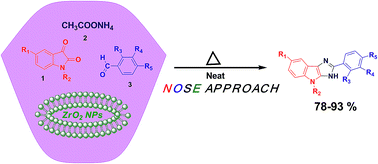
The multicomponent reaction of isatin derivatives 1a–g with ammonium acetate 2 and substituted benzaldehydes 3a–f in the presence of a catalytic amount of the ZrO2 NPs under solvent-free conditions at 110 °C, afforded imidazole derivatives 4a–s in good to excellent yields (Scheme 1 and Table 1). The chemical structures of the respective synthesized imidazole derivatives were established from their spectral data.


image file: c4ra16211k-s1.tif
Scheme 1 Synthesis of imidazole derivatives 4a–s via the multicomponent reaction of isatin derivatives 1a–g with ammonium acetate 2 and substituted aromatic aldehydes 3a–f.
Table 1 Results for the synthesis of the substituted imidazoles (4a–s)a
Entry R1 R2 R3 R4 R5 % Yield M. P.
a Reaction conditions: the isatin derivative, ammonium acetate and substituted aromatic aldehyde (1.0[thin space (1/6-em)]:[thin space (1/6-em)]5.0[thin space (1/6-em)]:[thin space (1/6-em)]1.0) and the ZrO2 NPs (15 mol %) were stirred at 110 °C to produce the solid products 4a–s.
4a H H H H H 88 >300
4b Cl H H H H 87 >300
4c H H NO2 H H 93 240
4d Cl H NO2 H H 90 290
4e H H H NO2 H 88 168
4f Cl H H NO2 H 90 192
4g H H H Cl H 82 158
4h Cl H H Cl H 80 152
4i H H H H Cl 89 220
4j Cl H H H Cl 90 165
4k H H H H OMe 78 147
4l Cl H H H OMe 85 130
4m H COCH3 H NO2 H 88 170
4n H COCH3 H Cl H 82 132
4o H COCH3 H H Cl 86 135
4p H C2H5 NO2 H H 88 158
4q H C3H7 H NO2 H 84 180
4r H CH2COOEt NO2 H H 91 172
4s CH3 H H H H 87 212


A proposed mechanism for the formation of the substituted imidazoles catalysed by the ZrO2 NPs is given in Scheme 2. The reaction proceeds via a diamine intermediate [X], which is formed through the activation of an aldehyde carbonyl group by the ZrO2 NPs. Condensation of the diamine with the isatin derivative, followed by dehydration and then rearrangement through the imino intermediate [Y], yielded the desired product.


image file: c4ra16211k-s2.tif
Scheme 2 Proposed mechanism for the formation of substituted imidazoles 4a–s.

In order to find the optimum reaction conditions, several parameters were investigated. Expectedly, the efficiency of the ZrO2 NPs was affected by the amount used (mol%). Therefore, a set of experiments using different amounts of the ZrO2 NPs were taken into account for the multicomponent reaction of isatin with ammonium acetate and benzaldehyde (Table 2). The synthetic route was drastically dependent on the presence of the catalyst, and only a poor yield was observed in the absence of catalyst after 120 min (entry 1, Table 2). It was found that the product yield increased on enhancing the catalyst concentration (Fig. 3). Only 5 mol% of the ZrO2 NPs was sufficient to attain a 60% yield of the product after 60 min (entry 2, Table 2). The best yield of 88% was obtained with 15 mol% of the ZrO2 NPs (entry 5, Table 2). However, further increase of the catalyst concentration (>15 mol%) did not improve the reaction rate or product yield (entry 6, Table 2).

Table 2 Effect of catalyst amount (mol%) on the yield of the product 4aa
Entry ZrO2 mol% Time (min) % Yield
a Reaction conditions: the isatin, ammonium acetate and benzaldehyde (1.0[thin space (1/6-em)]:[thin space (1/6-em)]5.0[thin space (1/6-em)]:[thin space (1/6-em)]1.0) and the ZrO2 NPs were stirred at 110 °C to produce the solid product.
1 0 120 23
2 5 60 60
3 10 45 75
4 12 35 82
5 15 30 88
6 20 30 88


image file: c4ra16211k-f3.tif
Fig. 3 Effect of the amount of the ZrO2 NPs on the multicomponent reaction of isatin with ammonium acetate and benzaldehyde.

In order to investigate whether R1 can be replaced by electron donating groups, a reaction using 5-methyl isatin (R1 = CH3) with benzaldehyde and ammonium acetate was attempted under the optimized reaction conditions. The reaction was found to be successful and the product was isolated in 87% yield. This confirms that the proposed methodology is equally applicable for the presence of electron donating and electron withdrawing groups at the 5-position of the isatin moiety.

The multicomponent reaction of isatin with ammonium acetate and benzaldehyde was investigated in detail using different molar proportions of the reactants (Table 3). A perusal of Table 3 clearly indicates that the best result was obtained using isatin, ammonium acetate and benzaldehyde in the molar proportion 1.0[thin space (1/6-em)]:[thin space (1/6-em)]5.0[thin space (1/6-em)]:[thin space (1/6-em)]1.0 at 110 °C under solvent-free conditions (entry 5, Table 3).

Table 3 Effect of the molar ratio of substrates on the yield of the product 4aa
Entry Molar ratio of reactants (isatin[thin space (1/6-em)]:[thin space (1/6-em)]ammonium acetate[thin space (1/6-em)]:[thin space (1/6-em)]benzaldehyde) % Yield
a Reaction conditions: isatin, ammonium acetate, benzaldehyde and the ZrO2 NPs (15 mol%) were stirred at 110 °C for 30 min to produce the solid product 4a.
1 1.0[thin space (1/6-em)]:[thin space (1/6-em)]1.0[thin space (1/6-em)]:[thin space (1/6-em)]1.0 Trace amount
2 1.0[thin space (1/6-em)]:[thin space (1/6-em)]2.0[thin space (1/6-em)]:[thin space (1/6-em)]1.0 35
3 1.0[thin space (1/6-em)]:[thin space (1/6-em)]3.0[thin space (1/6-em)]:[thin space (1/6-em)]1.0 52
4 1.0[thin space (1/6-em)]:[thin space (1/6-em)]4.0[thin space (1/6-em)]:[thin space (1/6-em)]1.0 78
5 1.0[thin space (1/6-em)]:[thin space (1/6-em)]5.0[thin space (1/6-em)]:[thin space (1/6-em)]1.0 88
6 1.0[thin space (1/6-em)]:[thin space (1/6-em)]6.0[thin space (1/6-em)]:[thin space (1/6-em)]1.0 87
7 1.0[thin space (1/6-em)]:[thin space (1/6-em)]5.0[thin space (1/6-em)]:[thin space (1/6-em)]1.2 87
8 1.2[thin space (1/6-em)]:[thin space (1/6-em)]5.0[thin space (1/6-em)]:[thin space (1/6-em)]1.0 86


The multicomponent reaction of isatin with ammonium acetate and benzaldehyde was examined under different temperatures. Obviously, the reaction rate and product yield were both increased on enhancing the temperature from 50 to 110 °C (Fig. 4). On the basis of this observation, it could be concluded that 110 °C is a favorable temperature for the multicomponent reaction of isatin with ammonium acetate and benzaldehyde (Table 4).


image file: c4ra16211k-f4.tif
Fig. 4 Effect of temperature (°C) on the multicomponent reaction of isatin with ammonium acetate and benzaldehyde.
Table 4 Effect of temperature on the yield of the product 4aa
Entry Temp. (°C) Time % Yield
a Reaction conditions: the isatin derivative, ammonium acetate and benzaldehyde (1.0[thin space (1/6-em)]:[thin space (1/6-em)]5.0[thin space (1/6-em)]:[thin space (1/6-em)]1.0) and the ZrO2 NPs (15 mol%) were stirred to produce the solid product.
1 Rt No reaction
2 50 10 h Trace amount
3 60 6 h 65
4 70 4 h 70
5 80 1.5 h 78
6 90 55 min 84
7 100 45 min 86
8 110 30 min 88
9 120 30 min 88


To investigate the effect of different solvents, the multicomponent reaction of isatin with ammonium acetate and benzaldehyde was carried out in various organic solvents at reflux temperature using 15 mol% of the ZrO2 NPs as the catalyst (Table 5 and Fig. 5). About 68% of the expected product 4a was obtained when the solvent used was ethanol (entry 1, Table 5). Obviously, the polar solvents, such as ethanol and acetonitrile, provided much better results than nonpolar solvents (entry 1 & 2, Table 5). It was observed that the reaction in the presence of solvent takes more time to give only a satisfactory yield of the product, using a similar ratio of the reactants (entries 1–4, Table 5). This may be due to competitive adsorption of the solvent and the substrate molecule on the catalyst surface; hence reaction under solvent-free conditions gives an excellent yield in a short reaction time (entry 5, Table 5). Another possible explanation for the higher yield under solvent-free conditions is that the eutectic mixture having a uniform distribution of the reactants brings the reacting species in closer proximity to react than in the presence of solvent (Fig. 5).

Table 5 Effect of different solvents on the yield of the product 4aa
Entry Solvent Time % Yield
a Reaction conditions: the isatin, ammonium acetate and benzaldehyde (1.0[thin space (1/6-em)]:[thin space (1/6-em)]5.0[thin space (1/6-em)]:[thin space (1/6-em)]1.0) and the ZrO2 NPs (15 mol%) were heated at reflux to produce the solid product.
1 Ethanol 10 h 68
2 Acetonitrile 10 h 59
3 Xylene 13 h 55
4 Toluene 18 h 52
5 Solvent-free 30 min 88


image file: c4ra16211k-f5.tif
Fig. 5 Effect of different solvents on the multicomponent reaction of isatin with ammonium acetate and benzaldehyde.

The effect of the type of ZrO2 (nano or bulk) was investigated for the multicomponent reaction of isatin with ammonium acetate and benzaldehyde under the optimized reaction conditions (Table 6). Four concentrations, 5, 10, 12 and 15 mol%, of ZrO2 were used to study this important parameter. The data prove that particle size and surface area are important factors for the catalytic efficacy of the ZrO2 NPs [Fig. 2, 6 and C–E (ESI)].

Table 6 Effect of the type of ZrO2 (bulk or nano) on the yield of the product 4aa
Type of ZrO2 Mol% % Yield
a Reaction conditions: isatin, ammonium acetate and benzaldehyde (1.0[thin space (1/6-em)]:[thin space (1/6-em)]5.0[thin space (1/6-em)]:[thin space (1/6-em)]1.0), and the ZrO2 tested, were stirred at 110 °C to produce the solid product.
ZrO2 (bulk) 5 42
Surface area: 6.95 m2 g−1 10 51
Average particle size: 2 μm 12 56
15 66
 
ZrO2 (nano) 5 59
Surface area: 44.70 m2 g−1 10 72
Average particle size: 20 nm 12 84
15 88


image file: c4ra16211k-f6.tif
Fig. 6 Effect of the type of ZrO2 (bulk or nano) on the multicomponent reaction of isatin with ammoniumacetate and benzaldehyde.

A comparison of the efficiency of the catalytic activity of the ZrO2 NPs with several other catalysts is presented in Table 7. The multicomponent reaction of isatin with ammonium acetate and benzaldehyde was used, and the comparison was in terms of the mol% of catalyst, reaction time, and percentage yield. The results showed that the ZrO2 NPs are the best catalyst in terms of mol%, reaction time and percentage yield. Although some of the catalysts led to a good yield, some of them are also environmentally hazardous and require longer reaction times and a higher mol% of the catalyst (Table 7).

Table 7 Effect of different catalysts on the yield of the product 4aa
Type of catalyst Mol% Time (min) % Yield
a Reaction conditions: the isatin, ammonium acetate and benzaldehyde (1.0[thin space (1/6-em)]:[thin space (1/6-em)]5.0[thin space (1/6-em)]:[thin space (1/6-em)]1.0) and the ZrO2 NPs (15 mol%) were stirred at 110 °C to produce the solid product.
Bentonite clay 20 60 55
K-10 clay 20 60 58
PTSA 40 75 45
NH4Cl 30 75 44
EDTA 40 75 40
Iodine 30 60 53
Yb(OTf) 25 60 51
TiO2 (nano) 20 30 80
ZrO2 (nano) 15 30 88


The reusability of the ZrO2 NPs was examined under the optimized reaction conditions (Table 8). The catalyst was separated by filtration, washed, dried and reused for a fresh reaction mixture, up to run no. 10. The results showed that there is no appreciable decrease in the product yield with subsequent reuse, which proves a reusability and recyclability of the ZrO2 NPs (Fig. 7).

Table 8 Reusability and recyclability of the ZrO2 NPs catalysta
Entry Number of the cycle % Yield
a Reaction conditions: the isatin, ammonium acetate and benzaldehyde (1.0[thin space (1/6-em)]:[thin space (1/6-em)]5.0[thin space (1/6-em)]:[thin space (1/6-em)]1.0) and the ZrO2 NPs (15 mol%) were stirred at 110 °C to produce the solid product.b The catalyst was washed, and dried at 80–90 °C for 12 h.c The ZrO2 NPs were calcined at 600 °C for 3 h.
1 88
2 1 88b
3 2 87b
4 3 86b
5 4 83b
6 5 80b
7 6 80b,c
8 7 80b
9 8 78b
10 9 75b
11 10 76b,c


image file: c4ra16211k-f7.tif
Fig. 7 The reusability and recyclability of the ZrO2 NPs catalyst for the multicomponent reaction of isatin with ammonium acetate and benzaldehyde.

Experimental

General

All chemicals were procured from Aldrich, USA and E. Merck, Germany and used as received. N-Substituted isatins were prepared using earlier reported procedures.44,45 TLC was carried out on SiO2 gel (HF254, 200 mesh). The solvent system employed was ethyl acetate[thin space (1/6-em)]:[thin space (1/6-em)]n-hexane (1[thin space (1/6-em)]:[thin space (1/6-em)]1) and the spots were identified by placing the plate in an iodine chamber. IR spectra were recorded on a PerkinElmer FT/IR version 10.03.05 spectrometer. NMR spectra were obtained using a JEOL AL300 FTNMR spectrometer; chemical shifts are given in δ ppm, relative to TMS as the internal standard. Elemental microanalysis was performed on an Exeter Analytical Inc Model CE-440 CHN Analyzer. Melting points were measured in open capillaries and are uncorrected. XRD spectra were recorded on a Scifert X-Ray Diffraction System. TEM images were taken using TECNAI G2, FEI. The SEM image was recorded using a Scanning Electron Microscope, QUANTA 200 F. BET surface area analysis was carried using Smart Sorb-93 manufactured by Smart Instruments Pvt. Ltd.

Typical procedure for the synthesis of the ZrO2 NPs46

A 0.075 M solution of ZrOCl2·8H2O was prepared and then precipitated using NH4OH (25%) with continuous stirring on a magnetic stirrer until the pH was in the range of 10 to 10.5. This resulted in the formation of a precipitate of zirconium hydroxide. The precipitate was collected by filtration and washed with double distilled water until the traces of chloride ions were completely removed. Complete removal of the chloride ions from the precipitate was checked by titrating the filtrate with a AgNO3 solution, using potassium chromate as the indicator. Then the precipitate was dried in oven at 80–90 °C for 24 h and calcined at 600 °C for 3 h in order to form the white nano zirconia powder.

General procedure for the synthesis of substituted imidazoles 4a–s

To a mixture of the isatin derivative 1a–g (1 mmol), ammonium acetate 2 (5 mmol) and the substituted aromatic aldehyde 3a–f (1 mmol), 15 mol% of the ZrO2 NPs was added [Scheme 1]. The mixture was heated and stirred at 110 °C for 30 min. The progress of the reaction was monitored using thin layered chromatography (n-hexane[thin space (1/6-em)]:[thin space (1/6-em)]ethyl acetate, 1[thin space (1/6-em)]:[thin space (1/6-em)]1). After completion, 20 ml of acetone was added to the reaction mixture; the catalyst was removed by filtration and washed with xylene and acetone. Then, 50 ml of double distilled water was added to the liquid portion. This resulted in the formation of a precipitate of the product 4a–s. The precipitate was filtered, dried and recrystallized from ethanol.

Characterization data for 2-phenyl-3,4-dihydroimidazo[4,5-b]indole (4a)

Brown solid, IR (KBr) ν: 3400, 3209, 3019, 2964, 1660, 1614, 1567, 1484, 1316, 1210, 1171, 1010, 877, 742, 653, 580 cm−1. 1H NMR (300 MHz, DMSO) δ: 7.80–8.86 (m, 9H, aromatic protons), 9.15 (s, 1H, NH), 9.66 (s, 1H, NH) ppm. 13C NMR (75.45 MHz, DMSO) δ: 124.0, 126.7, 127.5, 130.2, 130.7, 132.0, 133.7, 135.5, 139.1, 148.2, 160.9 ppm. Anal. calcd for C15H11N3: C, 77.24; H, 4.74; N, 18.01; found: C, 77.20; H, 4.76; N, 18.03.

Conclusions

ZrO2 nanoparticles have been synthesized and a novel synthetic route has been developed for the multicomponent reaction of isatin derivatives with ammonium acetate and substituted aromatic aldehydes using ZrO2 nanoparticles under solvent-free conditions. The yields of the products obtained were up to 93% at 110 °C. The advantage of the proposed method is its facile reaction conditions; the product can be isolated very easily without the use of column chromatography and the catalyst can be recycled. The simplicity of the presented protocol makes it an interesting alternative to other approaches. The obtained catalyst is expected to contribute to the development of environmentally benign methods and forms a part of nanomaterial chemistry.

Acknowledgements

The authors would like to acknowledge the financial support provided by IIT BHU, Varanasi.

References

  1. M. S. Singh and S. Chowdhury, RSC Adv., 2012, 2, 4547–4592 RSC.
  2. J. Grunes, J. Zhu and G. A. Somorjai, Chem. Commun., 2003, 2257–2260 RSC.
  3. M. T. Reetz and E. Westermann, Angew. Chem., Int. Ed., 2000, 39, 165–168 CrossRef CAS; C. Ramarao, S. V. Ley, S. C. Smith, I. M. Shirley and N. DeAlmeida, Chem. Commun., 2002, 1132–1133 RSC.
  4. J. A. Gladysz, Pure Appl. Chem., 2001, 73, 1319–1324 CrossRef CAS; J. A. Gladysz, Chem. Rev., 2002, 102, 3215–3216 CrossRef PubMed; G. Pacchioni, Surf. Rev. Lett., 2000, 7, 277–306 Search PubMed; D. M. Cox, D. J. Trevor, R. L. Whetten and A. Kaldor, J. Phys. Chem., 1988, 92, 421–429 CrossRef; V. Polshettiwar and R. S. Varma, Green Chem., 2010, 12, 743–754 RSC.
  5. V. Polshettiwar, B. Baruwati and R. S. Varma, ACS Nano, 2009, 3, 728–736 CrossRef CAS PubMed; V. Polshettiwar, M. N. Nadagouda and R. S. Varma, Chem. Commun., 2008, 6318–6320 RSC.
  6. K. Shimizu, R. Sato and A. Satsuma, Angew. Chem., Int. Ed., 2009, 48, 3982–3986 CrossRef CAS PubMed; A. Murugadoss, P. Goswami, A. Paul and A. Chattopadhyay, J. Mol. Catal. A: Chem., 2009, 304, 153–158 CrossRef PubMed; C. A. Witham, W. Huang, C. Tsung, J. N. Kuhn, G. A. Somorjai and F. D. Toste, Nat. Chem., 2010, 2, 36–41 CrossRef PubMed.
  7. G. Liu and Y. Lin, Anal. Chem., 2005, 77, 5894–5901 CrossRef CAS PubMed.
  8. S. Liu and M. Y. Han, Chem.–Asian J., 2010, 5, 36–45 CAS.
  9. J. Lu, J. B. Zang, S. X. Shan, H. Huang and Y. H. Wang, Nano Lett., 2008, 8, 4070–4074 CrossRef CAS PubMed.
  10. T. Z. Sholklapper, V. Radmilovic, C. P. Jacobson, S. J. Isco and L. C. De Jonghe, Electrochem. Solid-State Lett., 2007, 10, B74–B76 CrossRef CAS PubMed.
  11. X. Luo, A. Morrin, A. J. Killard and M. R. Smyth, Electroanalysis, 2006, 18, 319–326 CrossRef CAS.
  12. S. A. Steiner, Th. F. Baumann, B. C. Bayer, R. Blume, M. A. Worsley, W. J. E. MoberlyChan, L. Shaw, R. Schlögl, A. John Hart, S. Hofmann and B. L. Wardle, J. Chem. Soc., 2009, 131, 12144–12154 CrossRef CAS PubMed.
  13. M. D. Rhodes and A. T. Bell, J. Catal., 2005, 233, 198–209 CrossRef CAS PubMed.
  14. W. Stichert, F. Schuth, S. Kuba and H. Knozinger, J. Catal., 2001, 198, 277–285 CrossRef CAS.
  15. W. Li, Y. Q. Yin, R. X. Gao and R. L. Hou, J. Mol. Catal., 1999, 13, 186–192 CAS.
  16. K. Tanabe, Mater. Chem. Phys., 1985, 13, 347–264 CrossRef CAS; T. Yamaguchi, Catal. Today, 1994, 20, 199–217 CrossRef.
  17. K. Asakura, M. Aoki and Y. Iwasawa, Catal. Lett., 1988, 1, 395–403 CrossRef CAS.
  18. W. Li, H. Liu and E. Iglesia, J. Phys. Chem., B, 2006, 110, 23337–23342 CrossRef CAS PubMed.
  19. D. He, Y. Ding, H. Luo and C. Li, J. Mol. Catal. A: Chem., 2004, 208, 267–271 CrossRef CAS.
  20. P. D. L. Mercera, V. J. G. Ommen, E. B. M. Doesburg, A. J. Burggraat and J. R. H. Ross, Appl. Catal., 1990, 57, 127–148 (Appl. Catal., 1991, 71, 363–391) CrossRef CAS.
  21. S. Damyanova, P. Grange and B. Delmon, J. Catal., 1997, 168, 421–430 CrossRef CAS.
  22. A. Khodakov, B. Olthof, A. T. Bell and E. Iglesia, J. Catal., 1999, 181, 205–216 CrossRef CAS.
  23. V. A. Tsipoutiati, A. M. Efstathiou, Z. L. Zhang and X. E. Verykios, Catal. Today, 1994, 21, 579–587 CrossRef.
  24. S. K. Maity, M. S. Rana, B. N. Srinivas, S. K. Bej, M. G. Dhar and P. T. S. R. Rao, J. Mol. Catal. A: Chem., 2000, 153, 121–126 CrossRef CAS.
  25. Sh. Xie, E. Iglesia and A. T. Bell, Chem. Mater., 2000, 12, 2442–2447 CrossRef CAS.
  26. G. K. Chuah, S. H. Liu, S. Jaenicke and J. Li, Microporous Mesoporous Mater., 2000, 39, 381–392 CrossRef CAS.
  27. W. J. Houlihan, W. A. Remers and R. K. Brown, Indoles: Part I, Wiley, New York, 1992 CrossRef CAS; S. Agarwal, S. Cammerer, S. Filali, W. Frohner, J. Knoll, M. P. Krahl, K. R. Reddy and H. J. Knolker, Curr. Org. Chem., 2005, 9, 1601–1614 CrossRef CAS; A. W. Schmidt, K. R. Reddy and H. J. Knölker, Chem. Rev., 2012, 112, 3193–3328 CrossRef PubMed; M. Bandini and A. Eichholzer, Angew. Chem., Int. Ed., 2009, 48, 9608–9644 CrossRef PubMed; G. W. Gribble, J. Chem. Soc., Perkin Trans. 1, 2000, 1045–1075 RSC; M. Ishikura, T. Abe, T. Choshi and S. Hibino, Nat. Prod. Rep., 2013, 30, 694–752 RSC; G. R. Humphrey and J. T. Kuethe, Chem. Rev., 2006, 106, 2875–2911 CrossRef PubMed; G. W. Gribble, Pure Appl. Chem., 2003, 75, 1417–1432 CrossRef.
  28. M. R. Grimmett, in Comprehensive Heterocyclic Chemistry, ed. A. R. Katritzky and C. W. Rees, Pergamon Press, London, 1984, vol. 5 CrossRef CAS PubMed; M. R. Grimmett, Advances in Heterocyclic Chemistry, Academic Press, New York, 1980, vol. 12 CrossRef CAS PubMed; S. A. Laufer, W. Zimmermann and K. J. Ruff, J. Med. Chem., 2004, 47, 6311–6325 CrossRef CAS PubMed.
  29. H. Koike, T. Konse, T. Sada, T. Ikeda, A. Hyogo, D. Hinman, H. Saito and H. Yanagisawa, Ann. Rep. Sankyo Res. Lab., 2003, 55, 1–91 Search PubMed; S. L. Abrahams, R. J. Hazen, A. G. Batson and P. Phillips, J. Pharmacol. Exp. Ther., 1989, 249, 359–365 Search PubMed; S. E. Wolkenberg, D. D. Wisnoski, W. H. Leister, Y. Wang, Z. Zhao and C. W. Lindsley, Org. Lett., 2004, 6, 1453–1456 CrossRef CAS PubMed.
  30. A. M. M. Mjalli and S. Sarshar, US Pat. 5700826, 1997, p. 19; Chem. Abstr., 1998, 128, 88918a.
  31. M. Misono, Chem. Commun., 2001, 1141–1152 RSC.
  32. J. W. Blank, G. J. Durant, J. C. Emmett and C. R. Ganellin, Nature, 1974, 248, 65–67 CrossRef.
  33. U. Ucucu, N. G. Karaburun and I. Iskdag, Il Farmaco, 2001, 56, 285–290 CrossRef CAS.
  34. N. S. Gunay, G. Capan, N. Ulusoy, N. Ergenc, G. Otuk and D. Kaya, Il Farmaco, 1999, 54, 826–831 CrossRef CAS.
  35. J. Sisko and M. Mellinger, Pure Appl. Chem., 2002, 74, 1349–1357 CrossRef CAS.
  36. P. Gupta, S. Hameed and R. Jain, Eur. J. Med. Chem., 2004, 39, 805–814 CrossRef CAS PubMed.
  37. A. Kocabalkanli and R. F. Schinazi, Il Farmaco, 2002, 57, 993–997 CrossRef CAS.
  38. A. Puratchikodi, M. Nallu and S. Gopalakrishnan, Indian J. Heterocycl. Chem., 2004, 14, 149–150 Search PubMed.
  39. R. Kumar and J. W. Lown, Eur. J. Med. Chem., 2005, 40, 641–654 CrossRef CAS PubMed.
  40. A. Foroumadi, M. Mirzaei and A. Shafiee, Il Farmaco, 2001, 56, 621–623 CrossRef CAS.
  41. D. E. Frantz, L. Morency, A. Soheili, J. A. Murry, E. J. J. Grabowski and R. D. Tillyer, Org. Lett., 2004, 6, 843–846 CrossRef CAS PubMed.
  42. S. Bajpai, S. Singh and V. Srivastava, Heterocycl. Commun., 2014, 20, 37–39 CrossRef CAS.
  43. S. Bajpai, S. Singh and V. Srivastava, Arabian J. Chem., 2014 DOI:10.1016/j.arabjc.2014.11.037.
  44. G. Chen, Y. Wang, X. Hao, S. Mu and Q. Sun, Chem. Cent. J., 2011, 5, 37–41 CrossRef CAS PubMed.
  45. R. Kumar and H. Gupta, Int. J. Bioassays, 2013, 2, 593–598 Search PubMed.
  46. D. Gusain, S. N. Upadhyay and Y. C. Shrama, RSC Adv., 2014, 4, 18755–18762 RSC.

Footnote

Electronic supplementary information (ESI) available. See DOI: 10.1039/c4ra16211k

This journal is © The Royal Society of Chemistry 2015
Click here to see how this site uses Cookies. View our privacy policy here.