Implications of sample aging on the formation of internally etched silica coated gold nanoparticles

Anna A. Volkert, Marie Carmelle S. Pierre, Binaya Shrestha and Amanda J. Haes*
University of Iowa, Department of Chemistry, 204 IATL, Iowa City, Iowa 52242, USA. E-mail: amanda-haes@uiowa.edu; Fax: +1-391-335-1270; Tel: +1-319-384-3695

Received 3rd November 2014 , Accepted 5th December 2014

First published on 8th December 2014


Abstract

Aging time and storage conditions of silica stabilized gold nanoparticles impact the mechanism of nanoparticle-rattle structure formation. These differences are evaluated using electron microscopy and localized surface plasmon resonance spectroscopy coupled with modelling of gold nanosphere sensitivity to their local dielectric environment. Sample aging is revealed to impact the overall silica density and subsequent void formation in these structures. In all samples, voids formed near the metal cores and increased in size, which could be quantified using modelling. All in all, these results suggest that optimal silica membrane formation likely depends on initial silica density, which is directly related to sample age and storage conditions. As a result, these considerations as well as dielectric modelling could be exploited for future synthesis and use of these materials in surface enhanced spectroscopy and catalytic applications.
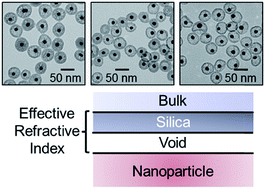

Introduction

The composition, shape, size, and local dielectric environment of solution-phase nanoparticles are routinely related to a specific function or property that is exploited in subsequent applications.1–10 Because the surface energy of solution-phase nanoparticles is inherently high, surface modification is often employed to induce electrostatic repulsions between, physically isolate nanostructures, and provide surface functionality for promoting these structure–function relationships. A surface modification technique that is used by many labs is the formation of robust protection layers composed of silica and/or polymers.11,12 Dielectric shells greatly improve nanoparticle stability; however, these materials can also prevent target molecules from interacting with the metal surface and eliminate the possibility of a molecule to undergo detection for a variety of surface enhanced spectroscopies.13,14

To facilitate the further use of metal@shell nanostructures in various applications such as sensing and catalysis, several research groups12,15 synthesized internally etched metal@shell nanoparticles to promote molecular diffusion while maintaining the electromagnetic stability of the metal cores16–21 without significantly hindering molecular transport.12 For instance, engineered gold nanospheres were engineered to be trapped inside microporous silica membranes.12 These nano-rattle structures were fabricated by removing the inner layer of the silica shell through dissolution processes under basic conditions. The elimination of the inner silica layer was tracked by following the localized surface plasmon resonance (LSPR) properties of the gold nanoparticles. The optical (extinction) properties of the gold nanospheres initially shifted to shorter wavelengths indicating a decrease in local refractive index near the metal surface as the silica begins to dissolve thereby forming a silica membrane. After ∼20 minutes, the optical properties stabilized. These changes were confirmed using transmission electron microscopy (TEM).

Because the etching reaction depends on many parameters including solution agitation and temperature as well as silica cross linking and thickness,22,23 the time required to produce a reproducible degree of silica dissolution can vary from day to day and sample to sample. To overcome this potential problem, the dielectric sensitivity of gold nanoparticles stabilized by silica shells is used to understand the impact of silica aging on the formation of internally etched silica coated gold (IE Au@SiO2) nanoparticles. This is achieved using the well-known sensitivity of plasmonic nanoparticles to their local dielectric environment. Specifically, the formation of IE Au@SiO2 nanostructures is monitored using LSPR spectroscopy. The refractive index sensitivity of and the characteristic electromagnetic field decay length extending from the gold nanoparticles as well as the refractive index and density of the silica shell are estimated using dielectric modelling. Sample aging is shown to impact the silica shell density, which subsequently causes differences in silica dissolution for the formation of these nano-rattle structures. By using the optical properties of the metal cores rather than etching time to track the formation of internally etched silica coated gold nanoparticles, more predictable materials design strategies are expected for subsequent applications including in catalysis and quantitative surface enhanced spectroscopy detection platforms for small molecules.

Experimental

Materials

Gold(III) chloride trihydrate, sodium citrate dihydrate, Amberlite MB-150 mixed bed exchange resin, (3-aminopropyl) trimethoxysilane (APS), sodium chloride (NaCl), sodium trisilicate (27%), and tetraethyl orthosilicate (TEOS) were purchased from Sigma (St. Louis, MO). Ethanol, ammonium hydroxide (NH4OH), hydrochloric acid (HCl), and nitric acid (HNO3) were purchased from Fisher Scientific (Pittsburgh, PA). Ultrapure water (18.2 MΩ cm−1) was obtained from a Barnstead Nanopure System (Dubuque, IA) and used for all experiments. For all experiments, glassware was cleaned with aqua regia (3[thin space (1/6-em)]:[thin space (1/6-em)]1 HCl/HNO3), rinsed thoroughly with water, and oven (glass) or air (plastic) dried overnight before use.

Nanoparticle synthesis

IE Au@SiO2 nanospheres were synthesized in four steps. First, gold nanospheres were synthesized using the standard citrate reduction method.12,15,24,25 Second, gold nanoparticles were silica-coated as previously reported.12,13,15,26,27 Third, IE Au@SiO2 nanospheres were synthesized by increasing the pH of the aqueous solution via the addition of concentrated NH4OH.12,15 Briefly, the pH of the solution was increased to 11.0 by the addition of concentrated NH4OH to promote dissolution of the internal, low-crossed linked silica near the gold nanoparticle surface. During the etching process, the concentrations of Au@SiO2 nanoparticles and NH4OH were 4.5 nM and ∼1.5 M, respectively. Finally, the solution pH was decreased to 4.0 using 100 mM HNO3. This acidification step quenched the reaction by reducing the rate of silica dissolution. IE Au@SiO2 nanoparticle solutions were then purified using a packed Sephadex-G50 column.13 The uncoated and/or partially coated gold nanoparticles were retained by the column matrix via hydrophobic interactions while the less hydrophobic, fully silica-coated IE Au@SiO2 nanoparticles eluted from the column and were collected for subsequent use. The concentration of the Au nanospheres in solution was estimated via extinction spectroscopy using an extinction coefficient of 13 nm bare gold nanoparticles (ε520 nm = 2 × 10⁸ M−1 cm−1) using the approach reported by Haiss, et al.28

Nanoparticle characterization

LSPR spectra were collected using a 1.0 cm path length disposable methacrylate cuvette and an ultraviolet-visible (UV-vis) spectrometer (Ocean Optics USB4000). To monitor the silica dissolution process, the samples were diluted in water to a final concentration of 4.5 nM, and the pH was adjusted to 11.0 using concentrated NH4OH. Upon the addition of base to the nanoparticle solution, the sample was mixed using a pipette, and LSPR spectra were collected every 30 seconds for two hours. The following parameters were used during data collections: integration time = 30 ms, average = 25, and boxcar = 10. Extinction maximum wavelengths (λmax) were determined from the zero-point crossing value of the first derivative of these spectra.

TEM images were collected using a JEOL JEM-1230 microscope equipped with a Gatan CCD camera. Samples were prepared on 400 mesh copper grids coated with a thin film of Formvar and carbon (Ted Pella, Inc.). The nanoparticle solution (∼50 μL) was pipetted onto the grid and promptly drained using filter paper. The mean diameter (d) of the nanospheres was determined from these data using Image Pro Analyzer (Media-Cybernetics). At least 100 nanoparticles were analysed for each nanoparticle sample.

Results and discussion

Monitoring the reproducibility of IE Au@SiO2 nanoparticle formation

Silica dissolution is known to depend on temperature, pH, and the degree of silica cross linking.29 To evaluate if the rate of silica dissolution varied from sample to sample, multiple independent syntheses of IE Au@SiO2 nanospheres are prepared (Fig. 1). To do this, silica coated gold nanospheres are synthesized using a modified Stöber method.11 Next, the Au@SiO2 nanoparticles are diluted to 4.5 nM and the solution pH was increased to 11.0 using concentrated NH4OH. This etching reaction took place at room temperature (∼70 °F) and without stirring.
image file: c4ra15443f-f1.tif
Fig. 1 Example time dependent (a) LSPR spectra, (b) etching profile, and (c) TEM images tracking the formation of IE Au@SiO2 nanospheres. Data collected after (1) 0 (2) 20, (3) 30, and (4) 40 minutes are shown. The LSPR λmax blue-shifts from 527.5, 526.5, 525.3, and 523.3 nm as etching progresses. The average gold nanoparticle diameter = 12.3 ± 1.3 nm in all samples, and the total composite nanoparticle diameter varies from (1) 45.3 ± 2.4, (2) 45.4 ± 2.7, (3) 43.9 ± 3.0, and (4) 43.5 ± 3.4 nm. The total silica shell thickness varies from (1) 16.5 ± 1.6, (2) 16.5 ± 1.6, (3) 15.8 ± 2.2, and (4) 15.6 ± 2.1 nm as etching progresses.

Formation of IE Au@SiO2 nanoparticles is evaluated using both time dependent LSPR and TEM data. Example data are shown in Fig. 1. The extinction maximum wavelength of Au@SiO2 nanoparticles blue-shifts as etching proceeds (Fig. 1a). This wavelength blue-shifts from 527.5, 526.5, 525.3, and 523.3 nm after 0, 20, 30, and 40 minutes of etching, respectively. The etching process occurs gradually over a 1.5 hour period using the extinction maximum wavelength (λmax) as an indicator of etching progress as shown in Fig. 1b. It is clear that the silica dissolution rate proceeds throughout this entire time frame. After 80 minutes, the extinction maximum wavelength minimizes at which point silica dissolution and silica membrane formation is likely still occurring but is not detectable using LSPR spectroscopy.

To structurally monitor the formation of IE Au@SiO2 nanoparticles, TEM is used (Fig. 1c). To analyse these materials, the solution was acidified, centrifuged, and column purified. Several observations are made. First, the diameters of the composite nanoparticles are approximately constant for all samples but do decrease slightly from 45.3–43.5 nm over the course of the experiment. This suggests that silica dissolution rate is faster at the interior silica matrix rather than on the external silica surface. This likely occurs because of a lower degree of silica cross linking at the silica matrix interior vs. exterior.12 Second, image contrast in the “etched” regions of the nanomaterials indicates differences in the local refractive index surrounding the various metal cores. These void regions appear to primarily occur near the metal surface and to proceed outwardly as etching progresses.

Previously, silica was demonstrated to age during storage.22,23 Aging rate depends on solution temperature as well as the composition of the solution and was shown to demonstrate variations in silica cross linking. In an effort to evaluate aging effects of the starting material (unetched Au@SiO2 nanoparticles) on the formation of IE Au@SiO2 nanoparticles, samples were stored in a water/ethanol mixture (primarily water) as well as the parent synthesis solution (contains unreacted silica, ethanol, and water) for various times prior to nanoparticle-rattle formation. Representative etching profiles are shown in Fig. 2a. Three important trends are noted. First, silica dissolution induces a systematic blue-shift in the λmax for all samples regardless of age. This was verified using TEM (data not shown). As a result, we can conclude that etching is occurring primarily at the interior silica matrix vs. the exterior as indicated from LSPR spectral changes. Second, as the age of the sample increases, etching occurred more slowly than samples that are etched immediately after the initial Au@SiO2 nanoparticle synthesis.


image file: c4ra15443f-f2.tif
Fig. 2 Variations in etching during the formation of IE Au@SiO2 nanoparticles. (a) Examples of four separate etching profiles as a function of aging and storage conditions where aging occurred for (1) 1 week, (2) 1 month, and (3) 2 months in water, and (4) 2 months in parent solution. (b) Histogram of λmax values after a 30 minute etching window. Etching was performed without stirring at room temperature (∼70 °F). The average λmax = 523.3 ± 2.5 nm and a median of 523 nm (N = 90).

For instance, aging the sample for 1 week, 1 month, and 2 months in water (Fig. 2a(1–3), respectively) resulted in an effectively slower etching rate. This suggests that the silica matrix is changing with time. Because no significant differences in particle dimensions are observed with TEM, these plasmonic variations likely arise from differences in silica cross linking and/or density with aging. Finally, storage solution also exhibits a significant impact on etching rate. Comparison of samples aged for 2 months in either water (Fig. 2a-3) or parent solution (Fig. 2a-4) reveals significant differences in the rate of IE Au@SiO2 nanoparticle formation. Namely, the rate of λmax variations reveals a distinct slope change after ∼25 minutes before following similar trends to the other etching profiles (i.e., samples stored in water). Once again, this suggests that aging and storage solution impacts the nature of silica surrounding the gold nanoparticles and thus, the local dielectric environment surrounding the gold spheres.

In an effort to better understand the implications of sample storage on IE Au@SiO2 nanoparticle formation, 90 parallel etching reactions are carried out using Au@SiO2 nanoparticles aged from 0–3 months. LSPR spectra are collected after 30 minutes of etching, and the λmax of the sample measured. These data are summarized in Fig. 2b. Importantly, the etching profile for all samples followed similar qualitative trends; however, quantitative differences are observed. For instance, these IE Au@SiO2 nanoparticles exhibit a median λmax of 523 nm and an average of 523.3 ± 2.5 nm. This suggests that the local dielectric environment surrounding the metal nanoparticle exhibits significant variations from likely differences in silica density and/or void formation both of which impact the effective refractive index (neffective) near the metal core.

Using dielectric sensitivity modelling to understand impacts of sample aging on the etching process

The LSPR wavelength of gold nanostructures depends on the local refractive index of the surrounding environment.24,30–32 Changes in the local dielectric medium induce predictable LSPR wavelength variations; therefore, shifts in the extinction maximum wavelength (Δλmax) of metal nanoparticles can be used to experimentally measure the refractive index sensitivity of the gold nanoparticles to changes in local dielectric environment and the characteristic electromagnetic field decay length associated with the metal nanoparticles. Furthermore, information regarding the refractive index of surface layers can be estimated if structural information is known.

In order to account for potential sample aging effects on the formation of IE Au@SiO2 nanoparticles, the dielectric sensitivity of the gold nanospheres need to be evaluated. To understand these spectral trends, the refractive index sensitivity of the gold nanoparticle cores stabilized with 0, 3.0, 4.0, and 14.0 nm thick silica shells13 are quantified by incubating the samples in 0–80% (w/v) sucrose solutions and monitoring changes in the refractive index of the bulk solution from 1.333 to 1.491.33 These data are summarized in Fig. 3. As expected, an increase in silica shell thickness induces a red-shift in the λmax. Second, the refractive index sensitivity of the metal nanoparticles decreases with increasing silica thickness.


image file: c4ra15443f-f3.tif
Fig. 3 Determination of silica refractive index and dielectric sensitivity of gold nanoparticles. (a) TEM images of and (b) λmax as a function of bulk refractive index for Au nanoparticles encapsulated in (1) 0, (2) 3, (3) 4, and (4) 14 nm thick silica shells. Bulk refractive index was modified using 0–80% (w/v) sucrose solutions. The data are analyzed using eqn (1). The refractive index of silica is estimated to 1.475 from the intersection of this analysis.

To quantify these spectral changes, a LSPR model that relates the wavelength shifts with the refractive index of the gold core surrounding medium is required. Jung et al. first developed a model for planar surface plasmon resonance experiments in 1998 (ref. 34) and Haes et al. adapted this model for use in LSPR spectroscopy in 2002 (ref. 33) as follows:

 
Δλmax = m1(neffnwater) − m2(neffnwater)2 (1)
where Δλmax is the LSPR wavelength shift response, m1 is the linear refractive index sensitivities, m2 is a non-linear refractive index sensitivity term that accounts for non-linearity in local electric fields, neff is the effective local refractive index, nwater is the refractive index of the bulk solution (water), which is water 1.333. In addition, neff can be defined assuming a one or two layer model (Fig. 4) and the following relationship:34
 
image file: c4ra15443f-t1.tif(2)
where nvoid is the refractive index of the void areas in the silica shell, ld is the characteristic electromagnetic field decay length, a is the void thickness, and b is the silica shell thickness minus void thickness (total silica shell thickness – a). The concept of void formation builds on previous studies involving silica-coated carbon nanotubes (CNT@SiO2)27 where dissolution began at the CNT surface and extended radically inward forming an internal void volume with a constant external shell diameter.


image file: c4ra15443f-f4.tif
Fig. 4 Silica dissolution can occur (a) via the uniform change in silica density and/or (b) preferentially at the metal interface.

Using eqn (1) and (2), both qualitative and quantitative differences can be extracted from the data in Fig. 3. For instance, because refractive index sensitivity decreases upon surface modification, a larger change in λmax is expected for Au nanospheres vs. silica coated Au nanospheres. Upon increasing sucrose concentration, the λmax for the gold nanospheres shift +8.4 nm vs. only +2.1 nm for the silica coated gold nanoparticle sample. These results can be attributed to local refractive index changes near the gold core which increased from 1.33 in water to 1.49 in 80% (w/v) sucrose.35–37

To determine the refractive index sensitivity of the metal cores to local dielectric changes, the trends observed in Fig. 3 are fit using eqn (1) and (2). Both the linear and non-linear refractive index sensitivities for the gold nanospheres can be estimated given that the wavelength shifts can be measured and the refractive indexes are known. These are estimated to be 80 and 160 for the linear and non-linear terms, respectively. Furthermore, the refractive index of the condensed silica shell is estimated from the intersection of these analyses for the various samples.33 Importantly, the refractive index of the silica shell is 1.475. This refractive index is in the reported range (1.45–1.50) for amorphous silica.26,38–42 Finally, a 5.0 nm ld for gold nanoparticles is estimated. Previous theoretical results predicted a characteristic electromagnetic field decay length between 5–30 nm for similar metal nanostructures.43–45 As a result, the model provides a reasonable estimation to describe the chemical and physical properties of these composite materials. Of note, the plasmonic properties of the gold nanoparticles are related to neffective, which depends both on the effective silica density (d) near the metal nanoparticles as well as the void thickness (a) formed upon silica dissolution near the metal surface (depicted in Fig. 4). As such, all of these parameters must be considered when understanding impacts of sample aging on nanoparticle-rattle formation.

Using this model shown in Fig. 4 as well as the aforementioned silica and gold nanoparticle properties, expected trends in the effective silica refractive index can be plotted as a function of silica density (Fig. 5a) and void thickness (Fig. 5b). Silica density was estimated using a previously determined relationship46 (nsilica = 0.189d + 1.047). As shown in Fig. 5a and as expected, increasing the silica density from 1.65 to 2.4 causes the effective silica refractive index to increase from 1.35 to 1.5. In contrast, increasing the void thickness from 0 to 9 nm causes the effective refractive index of the silica shell to decrease from 1.47 to 1.33. Both of these silica properties should induce a blue-shift in the extinction maximum wavelength quantified using (Δλmax) as shown in Fig. 5c. This result was achieved semi-empirically using the dielectric and structural properties of the nanomaterials synthesized in this study and eqn (1) and (2).


image file: c4ra15443f-f5.tif
Fig. 5 Effective refractive index can change as a function (a) silica density (assuming constant silica thickness and nsilica = 0.189 × density + 1.047) and (b) internal void thickness (assumes discreet silica void space). (c) Δλmax as a function of effective refractive index.

To evaluate the effectiveness of this model, LSPR data are collected for 4.5 nM Au@SiO2 nanoparticle solutions incubated in an etchant solution (1.5 M NH4OH) for 2 hours. LSPR wavelengths are monitored for the duration of the experiment, and Δλmax is measured and compared to calculated values. As previously reported, the λmax blue-shifts as etching progresses and larger Δλmax are observed and related to effective refractive index, silica density, and void thickness. Data for samples aged for 1 week (Fig. 2a-1), 2 months in water (Fig. 2a-3), and 2 months in the parent solution (Fig. 2a-4) are summarized in Table 1.

Table 1 Evaluation of silica characteristics of etched for silica coated gold nanoparticles stored under various conditionsa
  λmax (nm) Δλmax (λmax – 527.5), (nm) T (nm) TEM neff (est) Void (nm) (est) nsilica (est) Density (est)
a Various spectra were analysed and selected to represent distinct steps in silica membrane formation (not distinct etching times).
1 week (water) 527.47 −0.03 16.5 1.474 0 1.475 2.26
525.79 −1.71 15.8 1.454 0.5 1.475 2.26
523.36 −4.13 15.8 1.428 1.1 1.475 2.26
520.37 −7.12 15.8 1.391 2.3 1.475 2.26
519.24 −8.26 15.8 1.386 4.0 1.475 2.26
2 months (water) 526.69 −0.81 16.5 1.473 0 1.472 2.25
525.81 −1.69 16.0 1.454 0.3 1.472 2.25
525.13 −2.37 16.0 1.447 0.6 1.472 2.25
522.37 −5.13 16.0 1.417 1.4 1.472 2.25
519.20 −8.30 16.0 1.386 4.0 1.472 2.25
2 months (parent solution) 527.50 0.00 16.5 1.478 0 1.478 2.28
526.37 −1.13 15.9 1.461 0 1.460 2.185
525.37 −2.13 15.5 1.45 0.3 1.460 2.185
521.41 −6.08 15.4 1.407 1.45 1.460 2.185
519.96 −7.54 15.4 1.393 2.0 1.460 2.185


As shown in this table, several interesting trends are noted. First, by using the extinction maximum wavelength measured immediately after Au@SiO2 nanoparticle synthesis (unetched) vs. that measured immediately before Au@SiO2 nanoparticle formation, variations in this dielectric sensitive measurement can be observed. Of note, the initial samples exhibit average silica shell thicknesses of 16.5 ± 1.8 nm. As a result, we conclude that the changes in optical properties can be attributed to variations in silica shell density that depends on storage solution composition and aging time. Furthermore, as etching is initiated, silica contrast near the metal surface decreases in all conditions suggesting the eventual formation of voids near the metal surface.

To separate implications of silica density variations from void thickness formation near the metal surface during silica dissolution, the models summarized in Fig. 4 and eqn (1) and (2) are used. First, the effective silica refractive index is estimated. In all cases, this value decreases during the course of etching. For instance, samples aged for 1 week prior to IE Au@SiO2 nanoparticle formation exhibit neffective values beginning at 1.474 to 1.386. These values are similar for samples stored in water for 2 months (1.473 to 1.386). Of note, the slight decrease in initial refractive index of the local refractive index is attributed to a small change in silica density. Implications of these density differences result in unique void thickness formation rates during IE Au@SiO2 nanoparticle synthesis.

Finally, comparison of samples aged for 2 months in water vs. in the parent solution reveal additional differences. Interestingly, the initial neffective for samples stored in water vs. the parent solution differ by 0.03. This suggests that silica cross linking likely increases with aging in the parent solution. Additionally, samples stored in the silica containing parent solution exhibit a significant decrease in silica density (2.280 g cm−3 vs. 2.185 g cm−3) upon silica dissolution initiation. This is only observed when samples are stored in the parent solution. Once silica density stabilizes in these samples, void formation near the metal surface proceeds as observed in samples stored in water. Clearly, these results suggest that while sample aging can induce materials differences in the chemical and physical properties of the silica shell, dielectric monitoring coupled with TEM analysis can be used to understand and track the formation of IE Au@SiO2 nanoparticles for subsequent use in applications.

Conclusions

In summary, the present study demonstrates that sample aging and storage conditions impact the formation of IE Au@SiO2 nanoparticles. These effects impact the overall rate of nano-rattle structure formation. These differences are minimized by using nanoparticle structural characterization using TEM and LSPR based dielectric modelling. Sample aging was not observed to impact the overall silica shell thickness; however, aging samples for increasing times resulted in a slight decrease in overall silica density if the samples were stored in water. In contrast, Au@SiO2 nanoparticle samples aged in a silica-containing parent solution resulted in an increase in the initial silica density. This effect can be attributed to storage conditions that promote additional silica cross linking. In all samples, voids near the metal surface were observed and grew larger as time in the etching solution increased. The size of these voids could be quantified using dielectric sensitivity modelling. Of note, samples stored in the parent solution revealed a drop in silica density before void formation was observed. This suggests that optimal silica membrane formation likely depends on initial silica density, which is directly related to sample age and storage conditions. As a result, these considerations as well as dielectric modelling could be exploited for future synthesis and use of these materials in surface enhanced spectroscopy and catalytic applications.

Acknowledgements

This work was funded by the National Science Foundation, (CHE-1150135).

Notes and references

  1. R. Jin, Y. W. Cao, C. A. Mirkin, K. L. Kelly, G. C. Schatz and J. G. Zheng, Science, 2001, 294, 1901–1903 CrossRef CAS PubMed.
  2. C. L. Nehl, H. Liao and J. H. Hafner, Nano Lett., 2006, 6, 683–688 CrossRef CAS PubMed.
  3. Y. Yin, Y. Lu, Y. Sun and Y. Xia, Nano Lett., 2002, 2, 427–430 CrossRef CAS.
  4. V. Sharma, K. Park and M. Srinivasarao, Mater. Sci. Eng., R, 2009, 65, 1–38 CrossRef PubMed.
  5. H. Guo, F. Ruan, L. Lu, J. Hu, J. Pan, Z. Yang and B. Ren, J. Phys. Chem. C, 2009, 113, 10459–10464 CAS.
  6. S. Eustis and M. A. El-Sayed, J. Appl. Phys., 2006, 100, 044324 CrossRef PubMed.
  7. B. Nikoobakht and M. A. El-Sayed, Chem. Mater., 2003, 15, 1957–1962 CrossRef CAS.
  8. B. Nikoobakht and M. A. El-Sayed, J. Phys. Chem. A, 2003, 107, 3372–3378 CrossRef CAS.
  9. C. J. Orendorff, L. Gearheart, N. R. Jana and C. J. Murphy, Phys. Chem. Chem. Phys., 2006, 8, 165–170 RSC.
  10. A. Gole and C. J. Murphy, Chem. Mater., 2004, 16, 3633–3640 CrossRef CAS.
  11. M. Roca, N. H. Pandya, S. Nath and A. J. Haes, Langmuir, 2010, 26, 2035–2041 CrossRef CAS PubMed.
  12. M. Roca and A. J. Haes, J. Am. Chem. Soc., 2008, 130, 14273–14279 CrossRef CAS PubMed.
  13. M. C. S. Pierre and A. J. Haes, Anal. Chem., 2012, 84, 7906–7911 CrossRef CAS PubMed.
  14. A. Campion and P. Kambhampati, Chem. Soc. Rev., 1998, 27, 241–250 RSC.
  15. M. Roca, P. M. Mackie and A. J. Haes, Mater. Res. Soc. Symp. Proc., 2008, 1133E, 1133 Search PubMed.
  16. T. Zhang, J. Ge, Y. Hu, Q. Zhang, S. Aloni and Y. Yin, Angew. Chem., Int. Ed., 2008, 47, 5806–5811 CrossRef CAS PubMed.
  17. Y. Hu, Q. Zhang, J. Goebl, T. Zhang and Y. Yin, Phys. Chem. Chem. Phys., 2010, 12, 11836–11842 RSC.
  18. B. Liu and H. C. Zeng, Small, 2005, 1, 566–571 CrossRef CAS PubMed.
  19. X.-J. Wu and D. Xu, Adv. Mater., 2010, 22, 1516–1520 CrossRef CAS PubMed.
  20. W.-M. Zhang, J.-S. Hu, Y.-G. Guo, S.-F. Zheng, L.-S. Zhong, W.-G. Song and L.-J. Wan, Adv. Mater., 2008, 20, 1160–1165 CrossRef CAS.
  21. K. Kamata, Y. Lu and Y. Xia, J. Am. Chem. Soc., 2003, 125, 2384–2385 CrossRef CAS PubMed.
  22. J. M. Chovelon, L. E. Aarch, M. Charbonnier and M. Romand, J. Adhes., 1995, 50, 43–58 CrossRef CAS.
  23. D. F. Siqueira Petri, G. Wenz, P. Schunk and T. Schimmel, Langmuir, 1999, 15, 4520–4523 CrossRef.
  24. M. C. S. Pierre, P. M. Mackie, M. Roca and A. J. Haes, J. Phys. Chem. C, 2011, 115, 18511–18517 CAS.
  25. K. C. Grabar, R. G. Freeman, M. B. Hommer and M. J. Natan, Anal. Chem., 1995, 67, 735–743 CrossRef CAS.
  26. L. M. Liz-Marzan, M. Giersig and P. Mulvaney, Langmuir, 1996, 12, 4329–4335 CrossRef CAS.
  27. M. Grzelczak, M. A. Correa-Duarte and L. M. Liz-Marzan, Small, 2006, 2, 1174–1177 CrossRef CAS PubMed.
  28. W. Haiss, N. T. K. Thanh, J. Aveyard and D. G. Fernig, Anal. Chem., 2007, 79, 4215–4221 CrossRef CAS PubMed.
  29. T. K. Mandal, M. S. Fleming and D. R. Walt, Chem. Mater., 2000, 12, 3481–3487 CrossRef CAS.
  30. A. J. Haes and R. P. Van Duyne, Anal. Bioanal. Chem., 2004, 379, 920–930 CrossRef CAS PubMed.
  31. M. R. Ivanov, H. R. Bednar and A. J. Haes, ACS Nano, 2009, 3, 386–394 CrossRef CAS PubMed.
  32. E. Hutter and J. H. Fendler, Adv. Mater., 2004, 16, 1685–1706 CrossRef CAS.
  33. A. J. Haes, S. Zou, G. C. Schatz and R. P. Van Duyne, J. Phys. Chem. B, 2004, 108, 6961–6968 CrossRef CAS.
  34. L. S. Jung, C. T. Campbell, T. M. Chinowsky, M. N. Mar and S. S. Yee, Langmuir, 1998, 14, 5636–5648 CrossRef CAS.
  35. W. M. Yunus and A. B. Rahman, Appl. Opt., 1988, 27, 3341–3343 CrossRef CAS PubMed.
  36. R. A. Macon, in Brix Table (Sucrose Conversion Table), 2011, pp. 32–56 Search PubMed.
  37. C. O. Chichester, E. E. M. Mark and G. F. Stewart, Advances In Food Research, Academic Press, Inc., New York, 1978 Search PubMed.
  38. A. Van Blaaderen and A. Vrij, J. Colloid Interface Sci., 1993, 156, 1–18 CrossRef CAS.
  39. W. J. Harris, Br. J. Appl. Phys., 1959, 10, 139–140 CrossRef CAS.
  40. H. Malitson, J. Opt. Soc. Am., 1965, 55, 1205–1208 CrossRef.
  41. M. K. Song, W. S. Yang, S. W. Kwon, Y. S. Song, N. I. Cho and D. Y. Lee, J. Korean Ceram. Soc., 2008, 45, 524–530 CrossRef CAS.
  42. S. Liu, Z. Zhang and M. Y. Han, Adv. Mater., 2005, 17, 1862–1866 CrossRef CAS.
  43. A. Tanaka and B. Nakamura, Optical Imaging: Technology, Methods and Applications, Nova Science Publishers, 2012 Search PubMed.
  44. T. Sannomiya, P. K. Sahoo, D. I. Mahcicek, H. H. Solak, C. Hafner, D. Grieshaber and J. Vörös, Small, 2009, 5, 1889–1896 CrossRef CAS PubMed.
  45. T. Okamoto, I. Yamaguchi and T. Kobayashi, Opt. Lett., 2000, 25, 372–374 CrossRef CAS.
  46. S. Maj, Phys. Chem. Miner., 1984, 10, 133–136 CrossRef CAS.

This journal is © The Royal Society of Chemistry 2015
Click here to see how this site uses Cookies. View our privacy policy here.