Immacolata Serra‡
*a,
Simona Dalyb,
Andres R. Alcantarac,
Davide Bianchib,
Marco Terreniad and
Daniela Ubiali*ad
aDepartment of Drug Sciences, University of Pavia, via Taramelli 12, 27100 Pavia, PV, Italy. E-mail: immacolata.serra@unipv.it; daniela.ubiali@unipv.it
bGnosis S.p.A., Via Lavoratori Autobianchi 1, 20832 Desio, MB, Italy
cOrganic and Pharmaceutical Chemistry Department, Universidad Complutense de Madrid, Plaza de Ramón y Cajal s/n, 28040 Madrid, Spain
dItalian Biocatalysis Center, via Taramelli 12, 27100 Pavia, PV, Italy
First published on 25th February 2015
We here report on the enzymatic synthesis of the antiviral drug vidarabine (arabinosyladenine, araA) starting from arabinosyluracil and adenine. To this aim, uridine phosphorylase from Clostridium perfringens (CpUP) and a purine nucleoside phosphorylase from Aeromonas hydrophila (AhPNP) were used as covalently immobilized biocatalysts. Upon investigation of the optimal conditions for the enzyme activity (phosphate buffer 25 mM, pH 7.5, 25 °C, DMF 12.5–30%), the synthesis of araA was scaled up (2 L) and the product was isolated in 53% yield (3.5 g L−1) and 98.7% purity. An E-factor comparison between the enzymatic synthesis of araA and the classical chemical procedure clearly highlighted the “greenness” of the enzymatic route over the chemical one (E-factor: 423 vs. 1356, respectively).
Nevertheless the number of biocatalyzed chemical reactions is still limited due to reaction constraints dictated by the need for enzymes or whole cells to work under physiological conditions. Therefore, enzymes have to be tailored to meet the process requirements that often negatively affect both operational stability and shelf-life of the biocatalyst. Although genetic engineering is increasingly gaining importance for these purposes,6,7 immobilization is often the key to improve the operational performances of enzymes;8–11 other potential benefits of enzyme immobilization arise from the prevention of protein contamination of the products and the possibility of recycling the biocatalyst.
Important classes of antiviral and anticancer drugs are derived from nucleosides.12 Among them, vidarabine (arabinosyladenine; araA) is used for systemic treatment of Herpes simplex and other viruses.13,14 Unnatural nucleosides and nucleotides are routinely synthesized by multistep chemical procedures which are often plagued by the formation of undesired by-products and low overall yields. These drawbacks strongly reduce the performance of the processes in terms of purity and costs of the final product as well as of environmental impact. The established chemical synthesis of vidarabine is depicted in Scheme 1.15 Following a convergent approach, N6-benzoyladenine is reacted with 2,3,5-O-benzyl-D-arabinofuranosyl chloride (1, 90% of 1-α-chloro derivative) achieving compound 2 in 46% yield. The hydrogenation of 2 affords free 9-β-D-arabinofuranosyladenine (3) in more than 90% yield (Scheme 1a). On the contrary, pyrimidine arabinonucleosides can be readily prepared from the corresponding pyrimidine nucleoside via 2,2′-anhydronucleoside and subsequent hydrolysis (Scheme 1b).16
![]() | ||
| Scheme 1 Chemical synthesis of arabinosyladenine and arabinosyluracil.15,16 | ||
In this scenario, the use of a biocatalyst appears convenient: in the last decade many reviews or tutorial articles covering the use of enzymes or cells for the synthesis of nucleosides or analogues have been published.17–19 In this context, nucleoside phosphorylases (NPs; EC: 2.4.2.n) are a class of enzymes reported to catalyze the reversible cleavage of the glycosidic bond of (deoxy)ribonucleosides in the presence of inorganic orthophosphate (Pi) to generate the nucleobase and α-D-(deoxy)ribose-1-phosphate. The presence of an acceptor nucleobase (B2) in the reaction medium can result in the formation of a new nucleoside (transglycosylation) (Scheme 2). The transfer reaction catalyzed by NPs was first discovered by Krenitsky in 1968 (ref. 20) and since then the synthetic application of this class of enzymes has been extensively studied, as demonstrated by several examples in literature and patents.18,19,21–24 NPs can be, thus, considered a powerful tool for the synthesis of modified nucleosides.
Within this field, our research group has been largely involved in the study of stable and active immobilized enzymes for the synthesis of nucleoside analogues.21,25–26
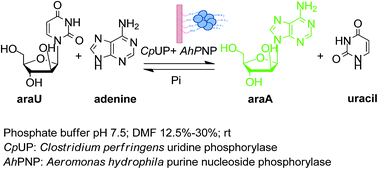
In particular, a collection of immobilized and stabilized NPs has been screened toward different substrates;27 among them, a purine nucleoside phosphorylase from Aeromonas hydrophila (AhPNP; EC: 2.4.2.1) and a uridine phosphorylase from Clostridium perfringens (CpUP; EC: 2.4.2.3) resulted interestingly active toward natural as well as modified nucleosides.22,27,28 AhPNP coupled with CpUP have been shown to be a good enzymatic twosome for carrying out the synthesis of arabinosyladenine (Scheme 3).27
In this work, the reaction conditions for the synthesis of araA have been extensively investigated and finally optimized, considering pH and presence of organic cosolvents. The transglycosylation reaction was developed at a preparative scale (2 L), in order to test the suitability of immobilized CpUP and AhPNP to be used as biocatalysts in a large scale process. Isolation and purification of the product has been also studied. The synthesis of araA may be considered a leading reaction not only because of the relevance of the antiviral product obtained, but also because of the drastic conditions required for the development of a preparative process in homogeneous medium; this is ascribed to the very low solubility of the reaction product in fully aqueous medium. Moreover, a comparison in terms of E-factor between the established and the new biocatalyzed reactions was here carried out.
| Enzyme | Fermentation volume (L) | Final volume (mL) | Protein amount (mg) | Total units (kIU) | IU mg−1 |
|---|---|---|---|---|---|
| CpUP | 15 | 190 | 4500 | 428 | 95 |
| 200 | 2000 | 22 000 | 800 | 36 | |
| AhPNP | 15 | 190 | 3760 | 416 | 110 |
| 200 | 1000 | 7200 | 720 | 100 |
The purified enzymes have been immobilized on aldehyde agarose loading different amounts of protein (Table 2).
| Enzyme | Load (mg g−1) | Carrier (g) | Immobilized proteinc (%) | Yield% (IU g−1)d |
|---|---|---|---|---|
| a Experimental conditions: pH 10, room temperature, 3 h.b Immobilization performed with 20% glycerol and hypoxanthine 5 mM.c Determined by Bradford method.d On the basis of the expressed activity considering inosine and 2′-deoxyuridine as the reference substrates for AhPNP and CpUP, respectively. | ||||
| AhPNPb | 1 | 1 | 100 | 30 (23)27 |
| 5 | 5 | 100 | 17 (85) | |
| 10 | 5 | 95 | 11 (110) | |
| 25 | 15 | 95 | 6 (156) | |
| 10 | 200 | 95 | 7 (70) | |
| CpUP | 1 | 1 | 100 | 33 (22)27 |
| 5 | 1 | 100 | 19 (34) | |
| 10 | 5 | 98 | 27 (97) | |
| 40 | 15 | 98 | 12 (172) | |
| 10 | 200 | 96 | 25 (90) | |
The load of the protein on the support (mg g−1) is, in fact, a crucial factor for the outcome of the immobilization and for the application of the immobilized biocatalysts at a preparative scale. The study of immobilization, carried out at a small scale using minimal amounts of protein (usually 1 mg of enzyme per gram of support), is used to select the experimental conditions for the immobilization, but normally produces a poorly active biocatalyst for a preparative synthetic application. Therefore, it becomes necessary to load on the support increasing amounts of protein so that the interplay of the load and the yield of immobilization can be evaluated.
The results of the immobilization scale up are reported in Table 2. As for AhPNP, the greater the load of protein, the lower was the immobilization yield, differently from CpUP where a trend was not observed. The immobilization was scaled up to prepare 0.2 kg of each enzyme derivative by loading 10 mg of protein per gram of carrier in both cases. This choice was addressed by the need to obtain a sufficiently active biocatalyst for synthetic applications without losing activity upon immobilization. The results obtained were consistent with the data registered at the lab scale immobilization providing enzyme derivatives with an activity ranging from 70 to 90 IU g−1 for AhPNP and CpUP, respectively (Table 2).
Activity and stability of the two immobilized derivatives were tested under different conditions, suitable to be used for the development of the process at a high substrate concentration.
As the pKa value for araA is quite high (about 12.5), its solubility is expected to significantly increase through deprotonation as the pH of the reaction medium is increased from acidic to basic conditions. High pH (10) was previously used in the synthesis of 2′-deoxyguanosine to ensure the complete solubility of guanine.21 However, the mode of binding of a charged substrate in the active site of the enzyme may differ from that one observed for a neutral substrate.29 Therefore, a balance between substrate solubility, activity and stability of both enzymes must be achieved.
With the idea to perform the synthesis of araA at basic pH, the activity of immobilized CpUP and AhPNP in a wide pH range was evaluated (Fig. 1). Except for pH 7 and 7.5, that were compatible with the activity of both enzymes, CpUP and AhPNP showed an opposite activity profile at acid pH (6) and weakly basic pH (8.5). These differences are less evident at pH 10 which, in our intent, could be used for the transglycosylation reaction but that determined a drop of the activity for both catalysts.
The use of non physiological pH values appeared thus to be not applicable for developing preparative processes using CpUP and AhPNP.
Alternatively, the use of different cosolvents can be considered. It is already well known that switching from hazardous solvents to more environmentally-friendly alternatives is currently a matter of intense research, aligned with the Green Chemistry philosophy,30,31 and really crucial because solvents constitute the major source of waste in chemical processes;32 furthermore, if we focus this fact for Pharma Industry, the situation is even more dramatic, because it is well known that solvents usually account for 80–90% of the non-aqueous mass of material usage for APIs synthesis, and consume about 60% of the overall energy used to produce them.
For this reason, the activity of AhPNP in mixtures of phosphate buffer with green solvents (such as glycerol, glycerol formal, and dimethylcarbonate) and tert-butanol (regarded as preferred)33 at different proportions was measured and compared to the standard medium. As it can be seen in Fig. 2, results were not very encouraging as the measured activity of the enzyme in those media was always lower than that one registered using only buffer.
If one considers the enzymatic activity, some mixtures would have been acceptable (such as tert-butanol or glycerol formal); however, the solubility of araA in those media was quite poor. As an alternative, the use of less green cosolvents, frequently used in nucleoside chemistry and able to enhance product solubility, was indeed considered.
As depicted in Fig. 3, dimethylformamide (DMF) and dimethylacetamide (DMA) allow to maintain completely the activity of AhPNP, and more than 50% of the activity of CpUP. A higher inhibition was observed in presence of acetonitrile (MeCN): at 30% of concentration of this cosolvent, about 50% of the activity was maintained by AhPNP, and only 30% by CpUP.
Also for that concerning the stability, MeCN highly affected the two enzymes and in both cases about 50% of activity was retained in presence of 30% of this cosolvent, while with DMF and DMA a complete stability was observed even when concentration was increased to 50% (Table 3).
| Enzyme | Solvent | Residual activity (%) |
|---|---|---|
| AhPNP | DMF 20% | 115 |
| DMF 30% | 109 | |
| DMF 50% | 105 | |
| DMA 30% | 105 | |
| MeCN 30% | 51 | |
| CpUP | DMF 20% | 103 |
| DMF 30% | 103 | |
| DMF 50% | 98 | |
| DMA 30% | 108 | |
| MeCN 30% | 48 |
For this purpose, the influence exerted by the cosolvent (DMF, DMA, MeCN) and phosphate concentration on the highest conversion and on the reaction rate was evaluated. In agreement with the activity data, the addition of a small percentage of organic cosolvent (MeCN or DMF at 10% v/v) did not influence the outcome of the bioconversion, both in terms of reaction rate and the maximum conversion, which was in fact similar to that obtained in the absence of cosolvent (Table 4).
| Entry | AraU (mM) | Ade (mM) | Phosphate (mM) | Solvent (%) | CpUP (IU) | AhPNP (IU) | vsb | Conversion% (h) |
|---|---|---|---|---|---|---|---|---|
| a Experimental conditions: pH 7.5, 10 mL and room temperature.b (μmol min−1). | ||||||||
| 1 | 4 | 2 | 50 | — | 6 | 12 | 0.0251 | 63 (24) |
| 2 | 4 | 2 | 50 | DMF 10% | 6 | 12 | 0.0211 | 63 (48) |
| 3 | 4 | 2 | 50 | MeCN 10% | 6 | 12 | 0.0251 | 68 (48) |
| 4 | 10 | 5 | 50 | MeCN 10% | 12 | 15 | 0.0372 | 74 (48) |
| 5 | 20 | 10 | 50 | MeCN 10% | 12 | 15 | 0.0687 | 74 (48) |
| 6 | 20 | 10 | 25 | MeCN 10% | 12 | 15 | 0.0664 | 72 (48) |
| 7 | 20 | 10 | 10 | MeCN 10% | 12 | 15 | 0.0572 | 72 (48) |
| 8 | 20 | 10 | 25 | DMF 10% | 12 | 15 | 0.0802 | 80 (48) |
| 9 | 20 | 10 | 25 | DMA 10% | 12 | 15 | 0.0824 | 80 (48) |
| 10 | 20 | 10 | 25 | DMF 20% | 12 | 15 | 0.0698 | 78 (48) |
| 11 | 20 | 10 | 25 | DMA 20% | 12 | 15 | 0.0604 | 75 (48) |
The effect of phosphate concentration was evaluated using a 20
:
10 stoichiometric ratio of araU
:
Ade as reported in Table 4; the decrease of the phosphate concentration from 50 mM to 10 mM (entries 5–7) did not have a significant effect on the extent of the final conversion (about 72% in 48 h), although a decrease in the initial rate (vs) was observed. For an easier purification, a phosphate concentration of 25 mM, which represents a good compromise between reaction rate and final conversion, was then used for the scale up of the bioconversion. In the same conditions, the use of DMF or DMA (entries 8 and 9) allowed to reach the highest conversion compared to MeCN. Moreover, increasing the concentration of these solvents from 10% to 20% no relevant reduction of yield was observed with DMF, while the yield decreased from 80% to 75% using DMA.
In conclusion, the results obtained indicate that the use of DMF could be preferred to other cosolvents in order to ensure the complete solubilization of araA during the synthesis. With this cosolvent (up to 30% of concentration) the enzymes retained their activity and the yields were similar or even higher compared with other cosolvents. Furthermore, the stability of both NPs was complete using up to 50% of DMF in buffer.
Based on the results obtained in the optimization study, and taking into account the conditions that could conjugate activity and stability of both enzymes, the reaction was scaled up using a concentration of 50 mM of araU and 25 mM of Ade in a final volume ranging from 20 mL to 2 L, in phosphate buffer 25 mM, pH 7.5 and at 25 °C. Given the poor solubility of the reaction product, it was necessary the use of an automatic dispenser to control the progressive addition of DMF in order to enhance the solubilization of araA. The choice for a gradual increase of the cosolvent was dictated by the need to combine the activity of the enzymes with the solubility of araA. In fact, as shown in Fig. 3, the activity of the two enzymes decreases significantly upon increasing concentration of DMF which is, however, essential to prevent the precipitation of the reaction product and thus to facilitate the separation from the immobilized biocatalysts.
The transglycosylation reaction was then performed in the presence of 12.5% of DMF v/v for the initial 6 h, followed by the dropwise addition of DMF until 30% concentration over the following 18 h. The product was isolated in about 50% yield and high purity. In particular, 7.1 g of araA (purity 98.7%, Fig. S1 ESI†) were isolated from the 2 L scale reaction.
Identity of the isolated compound was confirmed by NMR and MS analyses (Fig. S2 and S3, ESI†).
Thus, a E-factor comparison has been established between the enzymatic synthesis proposed in this paper and the classical chemical methodology described by Glaudemans and Fletcher (see ESI† for details on the calculations).15 The enzymatic protocol (at 2 L scale) would lead to different E-values depending on the reagents which are taken into account, as shown in Table 6.
As it can be seen, the enzymatic methodology presents clear advantages over the chemical procedure. For sure, the inclusion of solvents is the main factor to contribute to E-factor, as we have stated before. Furthermore, as the enzymatic derivative can be efficiently re-used at least five times without a noticeable decline of the activity, the waste contribution of the biocatalyst is clearly reduced, and also the economical balance of the overall protocol is undoubtedly improved.
Very recently, a new methodology for the synthesis of vidarabine has been described by Xia et al., through the dehydrazination of 1.5 kg of 8-hydrazine-vidarabine (obtained from a non-described vidarabine producing company) catalyzed by CuSO4 in water, on a 100 L reaction vessel at 80 °C for 6 h, to produce 0.975 kg of crude vidarabine (yield 75%), and 0.923 kg (yield 71%) after recrystallization.34 These authors claimed the greenness of this process as compared to a previous one, which required an excess of HgO as the dehydrazination reagent, with Hg produced as a side product and causing serious environmental pollution. As only this step is described in the paper, no direct comparison in terms of E-factor can be established. In any case, the mildness of our enzymatic protocol, carried out at room temperature, is a clear advantage compared to the dehydrazination methodology, as clearly pointed in the 6th Principle of Green Chemistry.35
AccuPrime Pfx DNA Polymerase, pET151/D-TOPO vector and Echerichia coli BL21 Star (DE3) chemically competent cells were purchased from Invitrogen (San Giuliano Milanese, Italy). Protein concentration assay was performed on a Shimadzu spectrophotometer UV 1601 by Bradford method using bovine serum albumin as standard. All experiments were performed at least as duplicate.
1H NMR spectrum of vidarabine was recorded in DMSO-d6 at 400.13 Hz on a Bruker AVANCE 400 spectrometer (Bruker, Karlsruhe, Germany) interfaced with a workstation running a Windows operating system equipped with a XWIN-NMR or TOPSPIN software package, at 300 K (Fig. S2, ESI†).
Electrospray ionization mass spectrum (ESI-Q-Tof-MS) was recorded on a Micromass Q-Tof micromass spectrometer (Waters, Milford, Massachusetts, U.S.A.) (Fig. S3, ESI†).
The amplified gene has been ligated into the pET151/D-TOPO vector (for the expression of the recombinant protein with an N-terminal 6xHis-tag) and the correct construction of the expression plasmid, named PL50, has been verified by direct sequencing of the cloned region.
Expression of both enzymes carried out at 15 L and 200 L fermentation volume consisted of a fermentation process composed of 3 phases: preseed, seed, fermentation.
The preseed cells were prepared in LB medium, incubated at 37 °C for 6 h and then inoculated in the pre-fermentative medium (yeast extract 1 g L−1, (NH4)2SO4 1 g L−1, KH2PO4 15 g L−1, MgSO4 5 g L−1, dextrose 10 g L−1) to a final concentration of 0.5% (v/v). The seed culture was incubated at 30 °C for 16 h and was subsequently diluted at 5% into a stirred bioreactor containing the fermentative medium ((NH4)2SO4 2 g L−1, K2HPO4 15 g L−1, KH2PO4 7.5 g L−1, MgSO4 2 g L−1, dextrose 50 g L−1). The pH was controlled by automatic addition of NH4OH 25%; the stirring rate was adjusted to 500 rpm and the pO2 was maintained automatically at 50% with aeration and agitation. The strain was grown to mid-exponential phase at 30 °C and then the protein expression was induced by adding 0.5 mM isopropylthio-β-D-galactoside (IPTG). After a 24 h expression phase, the cells were separated from the broth by centrifugation and disrupted by two cycles of homogenization using a GEA Niro Soavi Homogenizer at a pressure of 1000 bar. The suspension was then clarified by the addition of 0.5% quaternary ammonium salt and centrifugation (Avant J25 Beckman Coulter).
The enzymes were purified by column chromatography with Ni Sepharose™ 6 Fast Flow (GE Healthcare). The adsorbed enzymes were then eluted with a linear gradient of 50 mM NaH2PO4, 300 mM NaCl and 250 mM imidazole, pH 8. Fractions containing the active enzymes were collected, dialyzed by 5 kDa ultrafiltration and stored at −20 °C.
The purity of both the proteins (>90%) was assessed by SDS-PAGE electrophoresis (4–12%).
:
10).Uracil, Rt = 3.85 min, adenine, Rt = 7.42 min, arabinosyluracil (6), Rt = 5.62 min, arabinosyladenine (3), Rt = 12.33 min. The percentage of conversion was calculated on the basis of the depletion of sugar acceptor compound (heterocyclic base) and monitoring the formation of the nucleoside products: conversion (%) = [product area/(product area + base area)] × 100. The reaction was stopped by s.v. filtration of the immobilized biocatalyst.
| Volume (mL) | CpUP (IU) | AhPNP (IU) | vsb | Conv.% (h) | Isolated yield (%) | Purity (%) |
|---|---|---|---|---|---|---|
| a Reaction conditions: 50 mM araU, 25 mM Ade, 25 mM phosphate buffer, pH 7.5, 25 °C, DMF 12.5% → 30%.b μmol min−1; nd: not determined. | ||||||
| 20 | 48 | 60 | 0.6 | 73 (48) | nd | nd |
| 100 | 250 | 300 | 3.8 | 77 (26) | 45 | 96 |
| 500 | 1250 | 1500 | 20.1 | 77 (26) | 56 | 96 |
| 2000 | 5000 | 6000 | nd | 78 (26) | 53 | 98.7 |
| Enzymatic synthesis | ||||
|---|---|---|---|---|
| E values | No enzyme waste no solvent | Enzyme waste no solvent | No enzyme waste solvent | Enzyme waste solvent |
| Based on analytical yield | 2.45 | 26.25 | 285 | 309 |
| Based on final yield | 3.65 | 39.13 | 423 | 460 |
| Chemical synthesis (Glaudemans and Fletcher)15 | ||
|---|---|---|
| No solvent | Considering solvents | |
| First step | 2 | 201 |
| Second step | 3.05 | 1155 |
| Overall | 5.05 | 1356 |
Footnotes |
| † Electronic supplementary information (ESI) available. See DOI: 10.1039/c4ra15018j |
| ‡ Present address: Department of Food, Environmental and Nutritional Sciences – DeFENS, University of Milan, via Mangiagalli 25, 20133 Milano, MI, Italy. |
| This journal is © The Royal Society of Chemistry 2015 |