Preparation and characterization of functionalized silica spheres for removal of Cu(II), Pb(II), Cr(VI) and Cd(II) from aqueous solutions

Zhen Zhu*
School of Environmental Science and Safety Engineering, Tianjin University of Technology, Tianjin, 300384, China. E-mail: zhenzhu@tjut.edu.cn

Received 21st November 2014 , Accepted 10th March 2015

First published on 16th March 2015


Abstract

In this study, functionalized silica spheres (SMS) with a mesoporous structure were fabricated using stearic acid as a template and 3-(2-aminoethylamino)propyldimethoxymethylsilane as a cotemplate, under mild reaction conditions. SMS was prepared to develop efficient adsorbents for Cu(II), Pb(II), Cr(VI), and Cd(II) from aqueous solutions. The effect of the contact time, pH, initial metal concentration, temperature, and desorption were examined in batch experiments. The SMS displayed excellent Cr(VI) adsorption efficiency at a pH of 2. Meanwhile, the results also showed maximum adsorption of Cu(II), Pb(II), and Cd(II) at a pH of 7. Furthermore, SMS can be used repeatedly without significantly changing their adsorption capacities. In addition, the use of a stearic acid templating approach allows for the environmentally benign recovery of the cost-intensive template by simple solvent extraction. Therefore, the adsorbent SMS is expected to be an environmentally and economically feasible adsorbent for the removal of heavy metal from aqueous solutions.

Introduction

Water pollution by metals is a serious problem because of their toxicity and resistance to biodegradation.1 As they do not degrade biologically like organic pollutants, their presence in industrial effluents or drinking water is a public health problem due to their absorption and therefore possible accumulation in organisms.2 The potential sources of heavy metal in industrial wastewaters include fertilizers, metal fabrication, paints, pigments, and batteries. These would endanger public health and the environment if discharged improperly. To remove metals from aqueous streams, various technologies have been developed such as biological treatment, membrane separation, reduction, ion exchange, and adsorption; all have been used for the removal of heavy metals.3–13 In particular, adsorption is recognized as an effective and economic method for removing pollutants from wastewaters.14 An efficient adsorbing material should consist of a stable and insoluble matrix, which has active groups (typically organic groups) that interact with heavy metal ions. Up to now, a variety of adsorbents have been reported as materials for the adsorption of heavy metal including activated carbon,15,16 modified silica gel,17,18 multiwalled carbon nanotubes (MWCNTs),19,20 biomaterials,21 ion-imprinted materials,22 polymers,23–25 and inorganic materials.26–28 The aim of this study is to employ functionalized silica spheres (SMS) as a novel adsorbent and to explore the adsorption behavior of metal ions from aqueous solutions. The morphology, mesostructure and the formation mechanism of the silica spheres have been carefully examined using X-ray diffraction (XRD), scanning electron microscopy (SEM), infrared spectra (IR), transmission electron microscopy (TEM), nitrogen adsorption–desorption, particle-size analysis measurement, X-ray photoelectron spectroscopy (XPS) and elemental analysis (EA). In order to investigate the effects of operating factors on the adsorption capacity of SMS for Cu(II), Pb(II), Cd(II), and Cr(VI), we carried out a batch of adsorption experiments under different conditions by varying the effects of pH, adsorbent dosage, agitation time, initial concentration and temperature.

Experimental

Reagents

All of the reagents used in this study were analytical grade and were used as purchased without further purification. Stearic acid, tetraethoxysilane (TEOS), hydrochloric acid (HCl), 3-(2-aminoethylamino) propyldimethoxymethylsilane (KH602), aqueous ammonia (NH3/H2O), potassium dichromate (K2Cr2O7), lead nitrate (Pb(NO3)2), copper nitrate (Cu(NO3)2·4H2O), and cadmium nitrate (Cd(NO3)2·4H2O) were purchased from Tianjin Guangfu Chemical Technology Ltd, China.

Synthesis of adsorbents

SMS was synthesized using the anionic surfactants templating route as follows: 0.42 g of stearic acid was dispersed in deionized water at room temperature under vigorous stirring. A mixture of 4.68 g of TEOS and 0.64 g of KH602 was added to the solution with stirring for 8 h at 298 K and then aged for 10 h. The products were filtered off and washed with ethanol, the as-synthesized material was extracted using a Soxhlet extractor with ethanol for 48 h to remove the template and then dried in an oven at 373 K for 24 h.

Characterization

Powder X-ray diffraction spectra were collected using a Bruker D8 focus diffractometer, with Cu K radiation at 40 kV and 40 mA. Nitrogen adsorption–desorption isotherms of samples at 77 K were measured using a BEL-MINI adsorption analyzer. The surface area was calculated using a multipoint BET model. The pore size distribution was obtained via the Barret–Joyner–Halenda (BJH) model using the desorption isotherms, and the total pore volume was estimated at a relative pressure of 0.99, assuming full surface saturation by nitrogen. Infrared spectra were measured on a Nicolet Nexus 870 Fourier transform spectrometer in the wave number range 400–4000 cm−1. Samples were pulverized and dispersed in KBr pellets before recording the spectra to determine the carbon, hydrogen and nitrogen contents for as-synthesized and extracted samples were performed using a Vario EL III (Elementar, Germany) instrument. Scanning electron microscopy images were taken with a JEOL JSM-7500F field emission scanning electron microscope. TEM image was recorded with a JEOL JEM-2100F electron microscope. The sample for TEM measurement was suspended in ethanol and supported on a holey carbon film on a copper grid. Particle-size analysis measurement was performed using a ZetaSizer Nano ZS, Model ZEN 3690 (Malvern Instrument Ltd, Malvern, UK). Thermogravimetric analysis (TGA) and differential scanning calorimetry (DSC) were carried out with a Mettler Toledo TGA/DSC1 apparatus using air as the carrier gas. The analysis was performed with a 5 mg (approx.) sample from 303 K to 1173 K at a scan rate of 10 K min−1. X-ray photoelectron spectroscopy analysis was performed on a Kratos Axis UltraDLD spectrometer, using a monochromatic Al Kα source (1486.6 eV).

Batch adsorption experiments

The experiments were performed in a temperature-controlled water bath shaker for a given time at a mixing speed of 180 rpm. The effects of contact time, pH and temperature on adsorption data were assessed by changing the adsorption conditions. The salts used to prepare the metal solutions were Pb(NO3)2, Cu(NO3)2·4H2O, Cd(NO3)2·4H2O, and K2Cr2O7. Adjustment of pH were undertaken using 0.1 mol L−1 HCl and 0.1 mol L−1 NH3·H2O. On completion of the adsorption process, the adsorbent was filtered and washed with deionized water. The initial and final metal concentrations of the solutions were analyzed with an atomic absorption spectrophotometer (TAS-990). Finally, regeneration of the adsorbent was also investigated. All the experiments were carried out in quadruplication and the average result was presented. The adsorption percentage of metal ions was calculated using eqn (1).
 
image file: c4ra14985h-t1.tif(1)

The adsorption capacity was calculated using eqn (2).

 
image file: c4ra14985h-t2.tif(2)
where Qe is the amount (mg g−1) of metal ions adsorbed by the adsorbent, C0 and Ce are the metal concentrations (mg L−1) in the solution initially and after adsorption, respectively, V is the volume (L) of the solution, and m is the mass (g) of adsorbent used in the experiments.

For the physical adsorption process in solution, pseudo first-order and pseudo second-order rate expressions were selected to describe and analyze the adsorption kinetics:

Pseudo first-order rate expression:

 
ln(Q0Qt) = ln[thin space (1/6-em)]Q0K1t (3)

Pseudo second-order rate expression:

 
image file: c4ra14985h-t3.tif(4)
Q0 is the equilibrium adsorption capacity (mg g−1), Qt is the adsorption capacity over time, K1 is the pseudo first-order rate constant (min−1), K2 is the pseudo second-order rate constant (g (mg min)−1).

To describe the adsorption isotherm more scientifically, the Langmuir and Freundlich model equations were selected for use in this study. These models suggest different adsorption modes with different interactions between the adsorbed molecules or ions. It is commonly represented as:

 
image file: c4ra14985h-t4.tif(5)
where Qe represents the equilibrium adsorption capacity of metal ions on the adsorbent (mg g−1), Ce represents the equilibrium concentration in solution (mg L−1), Q0 represents the maximum monolayer capacity of adsorbent (mg g−1), and KL represents the Langmuir adsorption constant (L mg−1) related to the free energy of adsorption. The Langmuir model is based on the assumption that maximum adsorption occurs when a saturated monolayer of solute molecule is present on the adsorption surface. The energy of adsorption is constant and there is no migration of adsorbate particles in the surface plane. In the case of the Freundlich model, the energetic distribution of sites is heterogeneous because of the diversity of adsorption sites or the diverse nature of the metal ions adsorbed, be they free or hydrolyzed. The Freundlich equation is an empirical equation employed to describe heterogeneous systems, characterized by the heterogeneity factor 1/n, it describes reversible adsorption and is not restricted to formation of a monolayer. thus, the model is a useful means of data description. The common form is:
 
Qe = KFCe1/n (6)
where KF (mg g−1 (L mg−1)1/n) and 1/n represent the Freundlich constants corresponding to adsorption capacity and adsorption intensity, respectively.

In addition, the kinetic data can also be analyzed by an intraparticle diffusion kinetics model, formulated as:

 
Qt = Kit1/2 + C (7)
where Ki (mg g−1 h−1/2) is the intraparticle diffusion rate constant and C (mg g−1) is a constant, respectively.

Results and discussion

Elimination of the template stearic acid

To determine quantitatively the degree of template removal from the SMS materials, a TGA was employed. Fig. 1a showed the thermograms for the as-synthesized SMS in addition to those extracted in ethanol for 24 h, 48 h and 60 h. The thermograms were recorded from 293 to 1173 K. To estimate the stearic acid-content in the as-synthesized and the extracted samples, calculations were made based on the measured weight loss within the range of 423–653 K. In the temperature range up to 423 K, physisorbed water is released from the pores. From 423 K to about 653 K, the template and functional groups successfully decompose. At temperatures above 653 K, weight loss can be attributed to released water from silanol condensation and to the oxidation of a little amount of carbonaceous residues from incomplete template combustion. The amount of template and functional groups (via elemental analysis) can therefore be estimated by the weight loss between 423 and 653 K. This amount is approximately 32%, 22%, 16% and 15% for SMS, SMS (24 h), SMS (48 h) and SMS (60 h), respectively. Meanwhile, the DSC curves of the as-synthesized SMS and extracted SMS (48 h) are presented in Fig. 1b. Both of the analysis curves of as-synthesized SMS and extracted SMS (48 h), before and after extraction, contain two endothermic peaks, as a result of decomposition of the template and functional groups. The endothermic peak at 613 K attributed to the decomposing temperature of stearic acid nearly disappeared, which is due to removal of most of the stearic acid. Furthermore, we also found that the N/C mole ratio of samples increased with the increasing extraction time and the N/C mole ratio of extracted SMS (60 h) is similar to the N/C mole ratio of functional groups (theoretical value), as illustrated in Table 1 (via elemental analysis). These data showed that most of the stearic acid has been removed following extraction for the 60 h.
image file: c4ra14985h-f1.tif
Fig. 1 (a) Thermogravimetric curves for the as-synthesized and extracted SMS samples. (b) Differential scanning calorimetry curves for the as-synthesized and extracted SMS samples. (c) The small angle XRD patterns of the as-synthesized and extracted SMS samples. (d) FT-IR of the as-synthesized and extracted SMS samples.
Table 1 Comparison of molar ratio (N/C) of as-synthesized and extracted SMS samples
Materials Molar ratio (N/C) Molar ratio (N/C) theoretical value
As-synthesis SMS 0.783[thin space (1/6-em)]:[thin space (1/6-em)]5 image file: c4ra14985h-u1.tif
Extracted SMS (24 h) 1.410[thin space (1/6-em)]:[thin space (1/6-em)]5
Extracted SMS (48 h) 1.943[thin space (1/6-em)]:[thin space (1/6-em)]5
Extracted SMS (60 h) 1.969[thin space (1/6-em)]:[thin space (1/6-em)]5


Characterization of the SMS

The small angle XRD patterns of the as-synthesized and extracted SMS samples were shown in Fig. 1c. The pattern for the as-synthesized product contains a single diffraction peak corresponding to a d100 spacing of 5.8 nm because of poor crystallinity. Upon removal of the template by extraction, the scattering intensity increased substantially, suggesting that the extraction process may improve the ordering of the SMS framework. The removal of the template from the pores of SMS can be verified through IR spectroscopy. Fig. 1d showed the IR spectra of the as-synthesized and the extracted SMS (48 h). The two bands at 2853 and 2929 cm−1 were assigned to C–H vibrations of –CH3 and –CH2 carbon chain. A large broad band between 3400 and 3200 cm−1 was attributed to O–H stretching of the surface silanol groups and residual adsorbed water molecules. The peaks around 1074 cm−1 and 457 cm−1 were attributed to the intense Si–O–Si stretching vibration and Si–O–Si bending vibrations, respectively, and the characteristic absorption peak of –COOH around 1647 cm−1 was observed. The –CH3 and –CH2 peaks become much weaker after extraction and the characteristic absorption peak of –COOH disappeared. This clearly showed that most of the stearic acid has been removed from the SMS by extraction. The peak around 1294 cm−1 was attributed to Si–C stretching. The band at 1460 cm−1 was due to alkylammonium vibrations of the SMS, which indicated that functional groups have been successfully synthesized into SMS. The wide-scan XPS spectrum of SMS, as illustrated in Fig. 2. The SMS showed four characteristic peaks at approximately 284 eV, 103 eV, 403 eV and 531 eV, which were attributed to C 1s, Si 2p, N 1s and O 1s, respectively, indicating the existence of C, Si, N and O elements. Moreover, according to XPS analysis results, element composition of C and N in SMS were 7.37% and 3.43%, respectively, which was consistent with the theoretical value of N/C mole ratio (functional groups). The C 1s spectrum of SMS was shown in Fig. 2, which consists of three peaks. The first peak attributed to the Si–C bonds with a binding energy of 283.9 eV. The second peak (284.8 eV) can be ascribed to the C–H groups, while the third binding energy of 286.5 eV peak can be ascribed to the C–NH2 bonds. Two contributions were identified in the N 1s peak, as illustrated in Fig. 2. The binding energies of N 1s at 397.9 eV can be assigned to C–N and 399.1 eV caused by C–NH2 groups, respectively. Fig. 3 showed the SEM and TEM images of SMS prepared using stearic acid as the template and KH602 as cotemplate. As illustrated in Fig. 3a and b (SEM image), all of the samples consist of smooth spherical particles with a diameter of about 345 nm (Fig. 4c). The nitrogen adsorption–desorption isotherms of the SMS exhibited a sharp capillary condensation step in the relative pressure range 0.40–0.60 (Fig. 4a), indicating the presence of regular mesoporous framework-confined mesopores. In addition, pore size distribution curves (Fig. 4b) of the SMS was calculated from the adsorption branch of the isotherm. The pore size distributions exhibit a sharp peak centered at a mean value of around 3.6 nm, implying a uniform mesopore size. Furthermore, we found that the BET surface area and total pore volume are approximately 772 m2 g−1 and 0.70 cm3 g−1, respectively. Evidence for the similar “single-reflection” MCM-41-type structure of the spherical products was provided by the TEM image presented in Fig. 3c for SMS, showing that the SMS with network channels and uniform pore sizes, although it lacks long-range order in the pore arrangement, which was consistent with the results of BET and XRD.
image file: c4ra14985h-f2.tif
Fig. 2 The XPS spectra of SMS.

image file: c4ra14985h-f3.tif
Fig. 3 The SEM and TEM images of SMS.

image file: c4ra14985h-f4.tif
Fig. 4 (a) Nitrogen adsorption–desorption isotherms of SMS, (b) pore diameter distribution of SMS, (c) average size of SMS particles using a ZetaSizer Nano ZS, Model ZEN 3690 (Malvern Instrument Ltd, Malvern, UK).

Effect of pH on adsorption

It is well known that pH is a critical factor in the adsorption of metal ions, either because of its influence on metal solubility or the dissociation degree of functional groups located on sorbent surface. In this study, the adsorption experiments have been conducted in the pH range of 1–7, the initial concentration of Cu(II), Pb(II), Cd(II), and Cr(VI) was 500 mg L−1, adsorbent dose = 2 g L−1, contact time = 2 h, temperature = 298 K, and the results obtained were presented in Fig. 5. For SMS, it is obvious that the adsorption percentage of Cu(II), Pb(II), and Cd(II) also increased significantly as pH increased from 1 to 5, and was then maintained at about the same level at pH 6 and 7, respectively. This phenomenon can be explained by the fact that hydrogen ions competed with metal ions for the same adsorption sites on the SMS, compromising again metal adsorption. The Cu(II), Pb(II), and Cd(II) adsorption curves reach almost 100%. In contrary, the highest Cr(VI) adsorption was observed at pH 2. The adsorption capacity decreased sharply with an increase in solution pH above 2. Under strong acidic conditions, amino groups were protonated to form the positively charged sites (–NH3+ groups) and electrostatic attraction occurred between Cr(VI) and –NH3+, leading to the increase of Cr(VI) removal efficiency. With an increase in the pH value, the concentration of H+ was decreased, and at the same time the concentration of OH was increased, which competed with Cr(VI). So the ability of –NH2 to be protonated decreased, resulting in the decline of Cr(VI) removal efficiency.
image file: c4ra14985h-f5.tif
Fig. 5 Effect of the pH value on the adsorption of Cu(II), Pb(II), Cd(II), and Cr(VI) on SMS.

Desorption

The regeneration of the adsorbent is a significant factor in assessing its potential for commercial application. The adsorption–desorption (A/D) cycles of Cu(II), Pb(II), and Cd(II) were repeated ten times using eluent of 0.1 mol L−1 HCl. Fig. 6 showed the minimal change in the uptake and metal recovery efficiency of SMS for the three metal ions after ten consecutive adsorption–desorption cycles (the lost adsorption capacities for Cu(II), Pb(II), and Cd(II) were less than 10%) is that for the initial concentration of metal ion (Cu(II), Pb(II), and Cd(II)) was 50 mg L−1, adsorbent dose = 2 g L−1, contact time = 2 h, temperature = 298 K, and pH = 7. The mechanism of desorption might be attributed to the replacement of H+ ions on the metal loaded adsorbents. With the decrease of pH, there was an increase in H+ ion concentration. The abundant H+ ions in the solution would compete with the metal ions for the adsorption sites. As H+ ions occupied the sites in the SMS, the adsorbed metal ions were released into the aqueous solution. Thus, the complexation of the metal ion with SMS was disrupted by HCl. In addition, the adsorption–desorption (A/D) cycles of Cr(VI) was repeated ten times using eluent of 0.1 mol L−1 NH3·H2O, 96% of the adsorption capacity for Cr(VI) still remained, when initial concentration of Cr(VI) was 50 mg L−1, adsorbent dose = 2 g L−1, contact time = 2 h, temperature = 298 K, and pH = 2. The reason may be that H+ ions play a crucial role in the adsorption process, and hence the desorptive capacity increased with increasing pH value, and some adsorption sites have become deactivated, as indicated in Fig. 6. Therefore, SMS is an effective and reusable adsorbent and that HCl and NH3·H2O are good eluents of metal ions.
image file: c4ra14985h-f6.tif
Fig. 6 Regenerated use of SMS adsorbent for the removal of Cu(II), Pb(II), Cd(II), and Cr(VI) on SMS.

Effect of the contact time on adsorption, adsorption kinetics and adsorption isotherms

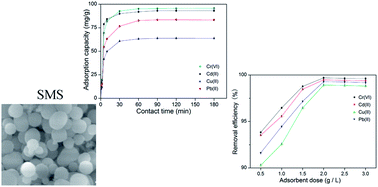
It is important that an adsorbent material offers rapid adsorption to minimize the time required to remove metal ions, which helps to reduce capital and operational costs, particularly in natural waters where the metal ions content is low. The effect of contact time was studied using a constant concentration of Cu(II), Pb(II), and Cd(II) was 200 mg L−1, adsorbent dose = 2 g L−1, contact time = 5–180 min, temperature = 298 K, and pH = 7. Furthermore, to investigate the effect of contact time on the adsorption of Cr(VI) on SMS using the initial concentration of metal ion of Cr(VI) was 200 mg L−1, adsorbent dose = 2 g L−1, contact time = 5–180 min, temperature = 298 K, and pH = 7. As illustrated in Fig. 7, the effect of contact time on the adsorption of Pb(II), Cd(II), Cr(VI), and Cu(II) on SMS. The adsorption efficiency of Pb(II), Cu(II), Cr(VI), and Cd(II) increased considerably with increasing contact time up to 60 min and later, it was almost constant. For example, during 60 min, when the adsorption efficiency was 82.65%, 91.92%, 94.21%, and 63.21% for Pb(II), Cu(II), Cr(VI), and Cd(II), respectively, then it was 83.53%, 89.82%, 95.44%, and 63.87%, respectively, during 120 min. In addition, in the first 5 min, the rate of adsorption was apparently fast, which can be explained that the available adsorption sites were sufficient compared with the density with the bare surface of the adsorbent in the beginning. As the process going on, the adsorption sites became saturated gradually.
image file: c4ra14985h-f7.tif
Fig. 7 Effect of the contact time on the adsorption of Pb(II), Cu(II), Cr(VI), and Cd(II) on SMS.

In order to describe Pb(II), Cu(II), Cr(VI), and Cd(II) adsorption kinetics, pseudo-first-order and pseudo-second-order kinetic models were investigated using adsorbent dose = 2 g L−1, contact time = 2 h, temperature = 298 K, the adsorption kinetics of Cr(VI) on SMS was studied at pH 2 and the adsorption kinetics of Cu(II), Pb(II), and Cd(II) on SMS were studied at pH 7. The parameters of the kinetic models and the regression correlation coefficients (R2) determined from pseudo second-order and pseudo first-order kinetic models were listed in Table 2. For SMS, the linear correlation coefficient values (R2) obtained from the pseudo first-order model were lower than that of pseudo-second-order model, the calculated equilibrium adsorption capacity Q02 (cal) were very close to the actual Q0 (exp), indicating that the adsorption of Pb(II), Cu(II), Cr(VI), and Cd(II) by SMS could be better explained by pseudo-second-order model. In addition, it can also be seen clearly from Table 2 that the correlation coefficient (R2) for intraparticle diffusion is lower than those for the pseudo-first-order and pseudo-second-order models. This indicates that the intraparticle diffusion model does not explain the experimental data.

Table 2 Kinetic adsorption parameters obtained using pseudo-first-order, pseudo-second-order and intra-particle diffusion models (SMS)
Metal ions Q0 (exp) (mg g−1) Pseudo first-order Pseudo second-order Intraparticle diffusion
Q01 (cal) (mg g−1) R2 Q02 (cal) (mg g−1) R2 Q03 (cal) (mg g−1) R2
Cr(VI) 188.82 188.14 0.967 188.56 0.999 152.92 0.821
Cu(II) 74.69 72.56 0.934 74.48 0.998 56.89 0.762
Pb(II) 100.58 99.21 0.901 100.33 0.997 74.37 0.726
Cd(II) 121.43 120.12 0.942 121.25 0.999 95.70 0.785


The isotherms were obtained through a similar procedure as for the adsorption experiments mentioned previously. Experiments were conducted for 2 h, time enough to attain the equilibrium. The adsorption capacities of SMS for Cu(II), Pb(II), Cd(II), and Cr(VI) were investigated in different initial metal ions concentration (20–200 mg L−1, 298 K). Furthermore, according to the above results, it can be found that SMS showed the best adsorption capacity for Cr(VI) at pH 2 and illustrated the highest adsorption capacities of Cu(II), Pb(II), and Cd(II) at a pH of 7. Therefore, experiments were carried out with different pH values (the adsorption isotherms of Cr(VI) on SMS was studied at pH 2 and the adsorption isotherms of Cu(II), Pb(II), and Cd(II) on SMS were studied at pH 7) while the other parameters were kept constant. It can be seen from Table 3 that the Langmuir model better describe Cu(II), Pb(II), Cd(II), and Cr(VI) ions adsorption on SMS than the Freundlich model, and a monolayer coverage of Cu(II), Pb(II), Cd(II), and Cr(VI) ions were considered to have formed on the surface of SMS. The maximum adsorption capacities (102.71 mg g−1 for Pb(II), 123.25 mg g−1 for Cd(II), and 74.96 mg g−1 for Cu(II)) were observed at pH 7, respectively, were calculated based on the Langmuir isotherm. Compared with the EDTAD-modified magnetic baker's yeast biomass (99.26 mg g−1 for Pb(II)),29 cellulose 4 (87 mg g−1 for Cd(II)),30 and MMSCB 5 (69.4 mg g−1 for Cd(II)),31 the adsorption capacities of Pb(II), Cd(II), and Cu(II) by SMS were higher. Moreover, it can also be observed from Fig. 7 that the adsorption capacity of SMS for Cr(VI) (191.78 mg g−1 at pH 2) was higher, compared with chitosan (153.85 mg g−1),32 AP-MCM-41 (111.1 mg g−1),33 PEI-ESM (160 mg g−1),34 waste acorn of Quercus ithaburensis (62.76 mg g−1),35 and hydrous zirconium oxide (61 mg g−1).36

Table 3 Isotherm parameters of adsorption model (SMS)
Metal ions Langmuir model Freundlich model
Qe1 (cal) (mg g−1) R2 Qe2 (cal) (mg g−1) R2
Cr(VI) 191.78 0.996 178.95 0.953
Cd(II) 123.25 0.991 105.79 0.930
Cu(II) 74.69 0.992 51.56 0.892
Pb(II) 102.71 0.995 83.61 0.915


Effect of initial concentration on adsorption

The effect of initial concentration on the percentage removal of Cr(VI) by SMS was investigated in different initial Cr(VI) concentration (20–200 mg L−1, 298 K), adsorbent dose = 2 g L−1, temperature = 298 K, contact time = 2 h, and pH = 2, as shown in Fig. 8. Meanwhile, investigation of the effect of initial concentration of Pb(II), Cu(II), and Cd(II) on SMS was carried out with different initial metal ions concentration (20–200 mg L−1, 298 K), adsorbent dose = 2 g L−1, temperature = 298 K, contact time = 2 h, and pH = 2, as illustrated in Fig. 8. It is apparent from Fig. 8 that the percentage removal decreased with the increase in the Pb(II), Cd(II), and Cu(II), and Cr(VI) concentration. At low concentrations, sufficient adsorption sites are available for adsorption of the Pb(II), Cd(II), Cu(II), and Cr(VI). Therefore, the fractional adsorption was observed to be independent of initial metal ion concentration. However, at higher concentrations the numbers of metal ions were relatively higher compared to availability of adsorption sites. Hence the percentage removal of Pb(II), Cd(II), Cu(II), and Cr(VI) depends on the initial metal ions concentration and decreases with increase in initial metal ions concentration.
image file: c4ra14985h-f8.tif
Fig. 8 Effect of the initial concentration on the adsorption of Cd(II), Pb(II), Cu(II), and Cr(VI) on SMS.

Effect of adsorbent dose on adsorption

To investigate the effect of the dosage of SMS on the removal of Cd(II), Pb(II), Cu(II), and Cr(VI) at different adsorbent dose (0.5–3 g L−1), initial concentration of metal ion of Cd(II), Pb(II), Cu(II), and Cr(VI) was 50 mg L−1, contact time = 2 h, temperature = 298 K, different pH (adsorption of Cu(II), Pb(II), and Cd(II) at pH 7 and adsorption of Cr(VI) at pH 2), as depicted in Fig. 9. It can be seen that with increasing the amount of adsorbent SMS, at a constant pH and initial metal concentration, led to an increase in the percentage removal of Cd(II), Pb(II), Cu(II), and Cr(VI) and tended to reach a saturation level at high doses. This is attributable to the surface area and number of adsorption sites being increased with increasing dose. In addition, SMS showed 99.05% Cu(II), 99.72% Cd(II), 99.64% Cr(VI), and 99.27% Pb(II) removal at a dosage of 2 g L−1. Nonetheless, adsorption capacity generally decreased with increasing dose and this is due to a decrease in available adsorbent surface area per unit mass which is caused by overlapping and aggregation of adsorption sites.
image file: c4ra14985h-f9.tif
Fig. 9 Effect of the adsorbent dose on the adsorption of Cd(II), Pb(II), Cu(II), and Cr(VI) on SMS.

Effect of temperature on adsorption

At different temperature ranges (283–308 K), 0.2 g of SMS was added to a 100 mL solution with different metal ions (300 mg L−1 for Cu(II), Pb(II), and Cd(II) at pH 7 and 200 mg L−1 for Cr(VI) at pH 2). As shown in Fig. 10, the adsorption capacities of the SMS for Cu(II), Pb(II), Cr(VI), and Cd(II) were obviously affected by temperature. The uptake increased with a rise in the reaction temperature from 283 to 308 K. This adsorption process needs energy, and it is favored at high temperature.
image file: c4ra14985h-f10.tif
Fig. 10 Effect of the temperature on the adsorption of Cd(II), Pb(II), Cu(II), and Cr(VI) on SMS.

Effect of ternary metal ions mixtures on adsorption

The results of the adsorption of the single Cd(II), Cu(II), Cr(VI) (20–100 mg L−1 for Cd(II)/Cu(II)/Cr(VI) at pH 2 and pH 7, respectively, adsorbent dose was 2 g L−1, contact time was 2 h), and the ternary Cd(II)–Cu(II)–Cr(VI) system (20–100 mg L−1 for Cd(II), Cu(II), and Cr(VI) at pH 2 and pH 7, respectively, adsorbent dose was 2 g L−1, contact time was 2 h) on SMS were presented in Table 4. There was not a significant difference between single metal and ternary metal adsorbed on the SMS, of which the adsorption capacity of SMS for Cr(VI) decreased less than that of Cu(II) and Cd(II) at pH 2. For example, when the initial concentration was at 10 mg L−1, 99.5% of Cr(VI) was adsorbed on the SMS in single metal compared with 94.3% of Cr(VI) from multi-metal competitive adsorption. This showed that the SMS possessed a better selective adsorption capacity for the Cr(VI) than the other two metal ions at pH 2. In contrast, for SMS, the adsorption of Cu(II) and Cd(II) onto the SMS was not significantly different between single metal and ternary metal ions competitive adsorption at pH 7. For instance, 75.9% of Cr(VI) was removed at an initial concentration of 100 mg L−1 when only Cr(VI) was present, whereas only 41.8% of Cr(VI) was adsorbed on the SMS when using multi metal ions. Thus, the competitive ability of Cu(II) and Cd(II) for the limited adsorption sites on SMS was stronger than that of Cr(VI) at pH 7. The above results have been shown to be related to the effect of pH on the interactions between metals, which was consistent with the results of the influence of pH values on SMS (SMS showed the best adsorption capacity for Cr(VI) at pH 2 while SMS exhibited the maximum adsorption capacities for Pb(II), Cd(II), and Cu(II) at pH 7).
Table 4 Effect of the ternary metal ions mixtures on the adsorption of Cd(II), Cu(II), and Cr(VI) on SMS
C0 (mg L−1) Single metal system adsorption efficiency (%) Ternary metal system adsorption efficiency (%) pH = 2
Cr(VI) Cd(II) Cu(II) Cr(VI) Cd(II) Cu(II)
20 99.50 ± 0.15 80.63 ± 0.14 76.31 ± 0.11 94.21 ± 0.17 69.52 ± 0.15 64.65 ± 0.12  
40 99.14 ± 0.16 80.08 ± 0.12 75.74 ± 0.10 93.54 ± 0.15 68.94 ± 0.14 64.12 ± 0.13
60 98.82 ± 0.13 79.46 ± 0.10 75.27 ± 0.09 93.02 ± 0.16 68.33 ± 0.12 63.71 ± 0.11
80 98.41 ± 0.14 78.81 ± 0.13 74.63 ± 0.13 92.51 ± 0.13 67.79 ± 0.10 63.23 ± 0.08
100 97.89 ± 0.12 78.23 ± 0.11 74.12 ± 0.10 92.10 ± 0.11 67.15 ± 0.09 62.80 ± 0.09

C0 (mg L−1) Single metal system percentage removal (%) Ternary metal system percentage removal (%) pH = 7
Cr(VI) Cd(II) Cu(II) Cr(VI) Cd(II) Cu(II)
20 77.50 ± 0.14 99.63 ± 0.17 99.31 ± 0.16 44.21 ± 0.05 96.02 ± 0.16 93.65 ± 0.15  
40 77.14 ± 0.15 99.08 ± 0.16 98.74 ± 0.15 43.54 ± 0.07 95.44 ± 0.17 93.12 ± 0.14
60 76.82 ± 0.16 98.46 ± 0.18 98.24 ± 0.17 43.02 ± 0.08 94.83 ± 0.15 92.72 ± 0.13
80 76.41 ± 0.12 97.81 ± 0.14 97.61 ± 0.12 42.41 ± 0.06 94.29 ± 0.13 92.23 ± 0.12
100 75.89 ± 0.13 97.23 ± 0.15 97.12 ± 0.15 41.80 ± 0.04 93.65 ± 0.14 91.82 ± 0.14


Conclusions

Functionalized silica spheres (SMS) with mesoporous structure were synthesized from stearic acid, KH602 and TEOS in a facile and environmentally benign pathway. Stearic acid has a high potential to be used as an environmentally friendly template for the synthesis of well-defined mesoporous silica materials with or without functional groups to avoid calcinations at high temperature. And even recycle of the stearic acid becomes feasible. Thus, the stearic acid template meets the requirements of green chemistry. The solution pH greatly influences the adsorption of Cr(VI) ions from aqueous solutions on SMS. The maximum Cr(VI) adsorption capacity of SMS was 191.78 mg g−1 at pH 2. In contrast, the maximum adsorption capacities of SMS for Pb(II), Cd(II), and Cu(II) were 102.71 mg g−1, 123.25 mg g−1, and 74.96 mg g−1, respectively, at pH 7. Moreover, in the ternary Cd(II)–Cu(II)–Cr(VI) system, SMS is very effective in removing Cu(II) and Cd(II) (91.82% for Cu(II) and 93.65% for Cd(II)) at pH 7 (initial concentration of Cd(II), Cu(II), and Cr(VI) is 100 mg L−1, respectively). Conversely, SMS showed the best adsorption capacity for Cr(VI) at pH 2. Furthermore, SMS can also be regenerated efficiently, which can be used repeatedly for at least 10 cycles without changing significantly their adsorption capacities for the adsorption of Cu(II), Pb(II), Cr(VI), and Cd(II) from aqueous solutions. The results indicated that SMS can be recovered for consecutive use, exhibiting good reusability. Therefore, the adsorbent SMS has potential as a promising application in the field of water pollution control.

References

  1. N. Chiron, R. Guilet and E. Deydier, Water Res., 2003, 37, 3079 CrossRef CAS.
  2. J. S. Yang, J. Y. Lee, Y. T. Park, K. Baek and J. Choi, Sep. Sci. Technol., 2010, 45, 814 CrossRef CAS.
  3. M. Sen, M. G. Dastidar and P. K. Roychoudhury, Enzyme Microb. Technol., 2007, 41, 51 CrossRef CAS PubMed.
  4. R. S. Azarudeen, R. Subha, D. Jeyakumar and A. R. Burkanudeen, Sep. Purif. Technol., 2013, 116, 366 CrossRef CAS PubMed.
  5. C. A. Kozlowski, T. Girek, W. Walkowiak and J. J. Koziol, Sep. Purif. Technol., 2005, 46, 136 CrossRef CAS PubMed.
  6. V. J. Inglezakis, A. A. Zorpas, M. D. Loizidou and H. P. Grigoropoulou, Sep. Purif. Technol., 2005, 46, 202 CrossRef CAS PubMed.
  7. Q. Cheng, C. C. Li, L. Xu, J. Q. Li and M. L. Zhai, Chem. Eng. J., 2011, 173, 42 CrossRef CAS PubMed.
  8. J. Sun, J. D. Mao, H. Gong and Y. Q. Lan, J. Hazard. Mater., 2009, 168, 1569 CrossRef CAS PubMed.
  9. J. N. Wang, Y. Zhou, A. M. Li, L. Xu and L. Xu, Chin. J. Polym. Sci., 2010, 28, 427 CrossRef CAS.
  10. N. Li and R. B. Bai, Sep. Purif. Technol., 2005, 42, 237 CrossRef CAS PubMed.
  11. B. Liu and Y. M. Huang, J. Mater. Chem., 2011, 21, 17413 RSC.
  12. R. Leyva-Ramos, L. A. Bernal-Jacome and I. Acosta-Rodriguez, Sep. Purif. Technol., 2005, 45, 41 CrossRef CAS PubMed.
  13. I. O. Ali, A. M. Hassan, S. M. Shaaban and K. S. Soliman, Sep. Purif. Technol., 2011, 83, 38 CrossRef PubMed.
  14. S. Wang and D. M. Yu, J. Appl. Polym. Sci., 2010, 118, 733 CAS.
  15. L. Wang, J. Zhang, R. Zhao, Y. Li, C. Li and C. L. Zhang, Bioresour. Technol., 2010, 101, 5808 CrossRef CAS PubMed.
  16. M. Machida, M. Aikawa and H. Tatsumoto, J. Hazard. Mater., 2005, B120, 271 CrossRef PubMed.
  17. M. E. Mahmoud, I. M. M. Kenawy, M. M. A. H. Hafez and R. R. Lashein, Desalination, 2010, 250, 62 CrossRef CAS PubMed.
  18. F. Venditti, A. Ceglie, G. Palazzo, G. Colafemmina and F. Z. Lopez, J. Colloid Interface Sci., 2007, 310, 353 CrossRef CAS PubMed.
  19. Y. H. Li, J. Ding, Z. K. Luan, Z. C. Di, Y. F. Zhu, C. L. Xu, D. H. Wu and B. Q. Wei, Carbon, 2003, 41, 2787 CrossRef CAS.
  20. D. Xu, X. L. Tan, C. L. Chen and X. K. Wang, J. Hazard. Mater., 2008, 154, 407 CrossRef CAS PubMed.
  21. X. K. OuYang, R. N. Jin, L. P. Yang, Y. G. Wang and L. Y. Yang, RSC Adv., 2014, 4, 28699 RSC.
  22. G. Bayramoglu and M. Y. Arica, J. Hazard. Mater., 2011, 187, 213 CrossRef CAS PubMed.
  23. M. K. Aroua, C. Y. Yin, F. N. Lim, W. L. Kan and W. M. A. W. Daud, J. Hazard. Mater., 2009, 166, 1526 CrossRef CAS PubMed.
  24. A. Ö. Saf, S. Alpaydin, A. Coskun and M. Ersoz, J. Membr. Sci., 2011, 377, 241 CrossRef CAS PubMed.
  25. H. I. Lee, Y. Jung, S. Kim, J. A. Yoon, J. H. Kim, J. S. Hwang, M. H. Yun, J. W. Yeon, C. S. Hong and J. M. Kim, Carbon, 2009, 47, 1043 CrossRef CAS PubMed.
  26. L. L. Zhang, W. C. Zhu, H. Zhang, S. W. Bi and Q. Zhang, RSC Adv., 2014, 4, 30542 RSC.
  27. L. S. Tan, J. Xu, X. Q. Xue, Z. M. Lou, J. Zhu, S. A. Baig and X. H. Xu, RSC Adv., 2014, 4, 45920 RSC.
  28. Y. Y. Guo, H. Guo, Y. P. Wang, L. X. Liu and W. W. Chen, RSC Adv., 2014, 4, 14048 RSC.
  29. Y. S. Zhang, J. Y. Zhu, L. Zhang, Z. M. Zhang, M. Xu and M. J. Zhao, Desalination, 2011, 278, 42 CrossRef CAS PubMed.
  30. L. V. A. Gurgel and L. F. Gil, Carbohydr. Polym., 2009, 77, 142 CrossRef CAS PubMed.
  31. L. V. A. Gurgel and L. F. Gil, Water Res., 2009, 43, 4479 CrossRef CAS PubMed.
  32. A. Baran, E. BiÇak, S. H. Baysal and S. önal, Bioresour. Technol., 2007, 98, 661 CrossRef CAS PubMed.
  33. S. A. Idris, K. Alotaibi, T. A. Peshkur, P. Anderson and L. T. Gibson, J. Colloid Interface Sci., 2012, 386, 344 CrossRef CAS PubMed.
  34. B. Liu and Y. M. Huang, J. Mater. Chem., 2011, 21, 17413 RSC.
  35. E. Malkoc, Y. Nuhoglu and Y. Abali, Chem. Eng. J., 2006, 119, 61 CrossRef CAS PubMed.
  36. L. A. Rodrigues, L. G. Maschio, R. E. D. Silva and M. L. C. P. D. Silva, J. Hazard. Mater., 2010, 173, 630 CrossRef CAS PubMed.

This journal is © The Royal Society of Chemistry 2015
Click here to see how this site uses Cookies. View our privacy policy here.