
Anaerobic ammonium oxidation (ANAMMOX) sludge immobilized by waterborne polyurethane and its nitrogen removal performance-a lab scale study

Guanghui Chena, Jun Li*a, Salma Tabassum*b and Zhenjia Zhangb
aKey Laboratory of Beijing for Water Quality Science and Water Environment Recovery Engineering, Beijing University of Technology, Beijing 100124, China. E-mail: ghui0066@163.com; lijunbjut@163.com; Tel: +86 13611249208
bSchool of Environmental Science and Engineering, Shanghai Jiao Tong University, Shanghai 200240, China. E-mail: salmazenith@gmail.com; Fax: +86 021-54740836; Tel: +86 15221195745

Received 13th November 2014 , Accepted 16th February 2015

First published on 17th February 2015


Abstract

In the present study, to maintain the biomass of anaerobic ammonium oxidation bacteria (ANAMMOX) in water, waterborne polyurethane (WPU) was used to immobilize ANAMMOX sludge. The ANAMMOX granules immobilized by WPU exhibited the best entrapment support, superb bioactivity and highest mechanical stability when compared with the performance of other ANAMMOX immobilized granules of polyvinyl alcohol (PVA), sodium alginate (SA), and the mixed material, PVA–SA. In a continuous-flow experiment, during high volume-load WPU-immobilized granules exhibited a relatively high total nitrogen removal rate, no effluent suspended solids or granule crushing were observed within 100 days. The highest total nitrogen removal rate of 80.98% was observed when the volume load of TN was 1.697 kg per m3 per day with HRT 1.5 h. WPU-immobilized granules exhibited better correlation (R2: 0.945 NH4+–N and 0.989 NO2–N) with experimental kinetic data for biological nitrogen removal. According to experimental data, good sludge retaining ability, strong resistance to shock-loading and mechanical stability during long-term operation of the granules immobilized by WPU was observed. The formation of volcanic crater-like concaves on the two sides of each bacterium and a large amount of ANAMMOX bacteria growing along the channels inside of the WPU granules were observed by scanning electron microscopy. Finally, the microbial community analysis 16S rDNA cloning revealed that Candidatus Brocadia fulgida (JX243641.1) was the primary ANAMMOX bacteria inside the WPU-immobilized granules. As carriers, immobilization materials protect ANAMMOX bacteria and increase biomass; however, they have no effect on bacteria and bacterial community structure.

1. Introduction

Traditional biological nitrogen removal techniques primarily remove the nitrogen element in the effluent through nitrification–denitrification.1 Anaerobic ammonium oxidation (ANAMMOX) can oxidize ammonia nitrogen to N2 using nitrite as the electron acceptor under anaerobic or anoxic conditions.2 Compared with traditional biological nitrogen removal techniques, the ANAMMOX technique has the following advantages: small site area, low energy consumption, no additional organic carbon source, and low surplus sludge volume.3 However, ANAMMOX bacteria are autotrophic bacteria; they grow slowly and have a low cell yield. In addition, they are also affected by environmental conditions like temperature, water quality, etc.4,5 Therefore, starting and operation of ANAMMOX technique have been extremely difficult, which limits its development.6 Researchers all around the world have conducted extensive studies on the ANAMMOX technique and proposed techniques such as the ANAMMOX strain fed-batch.7,8 However, these techniques generally require culturing sufficient high-rate ANAMMOX granules under optimal conditions. There are still issues in the culturing process from flocculent ANAMMOX sludge (FAS) to high-rate ANAMMOX granules (HAG), including loss of bacteria and slow granule formation.9 Therefore, retaining microbes and ensuring the biomass of ANAMMOX bacteria have become a primary objective for developing the ANAMMOX technique.10

The embedded immobilization technique is a new microbe immobilization technique in the modern bioengineering field. The embedded immobilization technique immobilizes free cells or enzymes in a constrained area through immobilization materials, such that the activity of the cells or the enzymes can be maintained and reused. The embedded immobilization technique provides a good retaining effect on microbes.11–13 Studies have shown that immobilizing ANAMMOX sludge using the embedded immobilization technique can effectively prevent the loss of ANAMMOX bacteria and maintains the biomass in the reactor, and thus, this technique appears promising.14–16 However, there are disadvantages of the immobilized ANAMMOX granules prepared using the existing immobilization materials, such as insufficient mechanical strength, low bioactivity, and lack of stability during long-term operation. Several methods have been used to enhance immobilized granules; however, there has been no significant improvement.17–19 Therefore, a new material, waterborne polyurethane (WPU),20 was selected in this study. In addition, natural polymer, sodium alginate (SA), synthesized polymer, polyvinyl alcohol (PVA), and mixed polymer PVA–SA were compared. ANAMMOX sludge was immobilized and then investigated in the aspects of mechanical stability, ANAMMOX performance with different immobilization materials, and shock-loading resistance during long-term operation to provide a basis for further study. This study also aims to investigate the removal efficiencies of WPU-, SA-, PVA–SA-, PVA-immobilized granules for NH4+–N and NO2–N.

2. Materials and methods

2.1. Immobilization materials

ANAMMOX sludge used in this study was obtained from an up flow anaerobic sludge blanket (UASB) reactor that was operated stably for more than 2 years in our laboratory.21 Sequencing analysis revealed that the primary bacteria in the sludge were Candidatus Brocadia fulgida (JX243641.1). Sludge was washed three times with phosphate buffered saline (PBS, pH = 7.4, 0.1 M) solution to remove any residual substrate on the sludge surface. Afterwards, the sludge was centrifuged for 10 min at 4000 rpm.

Analytical pure immobilization agents (WPU, PVA, SA, and PVA–SA) and cross linking agents/initiators (CaCl2, H3BO3, potassium persulfate (KPS), and tetramethylethylenediamine (TMEDA)) were used.

2.2. Water quality

Synthetic wastewater was used. The main components of wastewater are listed in Table 1. Trace elements I and II were according to the ref. 22. The pH of the synthetic wastewater ranged from 7.1 to 7.84.
Table 1 Composition of the synthetic wastewatera
Main components Mass concentration (mg L−1) Trace element II Mass concentration (g L−1)
a Notes: the content of Trace element I and II are 1 mL L−1.
KH2PO4 25 EDTA 15
CaCl2 120 CuSO4·5H2O 0.25
MgSO4·7H2O 260 ZnSO4·7H2O 0.43
KHCO3 753 CoCl2·6H2O 0.24
NH4Cl 382 MnCl2·4H2O 0.99
NaNO2 493 NaMoO4·2H2O 0.22
    NiCl2·6H2O 0.19

Trace element I Mass concentration (g L−1) Trace element II Mass concentration (g L−1)
FeSO4 5 NaSeO4 0.11
EDTA 5 H3BO3 0.014


2.3. Immobilization procedure

The preparation methods for all the immobilized granules were described as follows (mass percentage).
WPU-immobilized granules. 10% WPU solution and ANAMMOX sludge concentrate of the equivalent volume were mixed homogeneously. To initiate polymerization, the initiators TMEDA and KPS were added, and the solution was stirred rapidly. It will take approximately 30 min to become a gel. The resulting solid gel was cut into 3 × 3 × 3 mm cubes to obtain WPU-immobilized granules.

The Molecular Weight (MW) distribution of WPU in hydrogel had been investigated in our previous research.23 The MW of WPU is determined to be 5100 g mol−1 under the condition that gelation reaction occurred in 10% solution. We selected 10% solution medium to form WPU polymer since such generated WPU polymer could ensure sufficient mechanical strength and mass transfer property, so the WPU immobilized granules prepared was more significant.

PVA-immobilized granules. Equivalent volume of 10% PVA solution and ANAMMOX sludge concentrate were mixed homogeneously. Using a pipette the mixed solution (PVA solution and ANAMMOX sludge) was then added drop by drop in H3BO3 solution. The obtained solution was stored at 4 °C for 12 h in refrigerator for cross linking to obtain spherical PVA-immobilized granules.
SA-immobilized granules. Equivalent volumes of 2% SA solution and ANAMMOX sludge concentrate were mixed. Using a pipette the mixed solution was added drop by drop in CaCl2 solution (4%). The obtained solution was stored at 4 °C for 12 h in refrigerator for cross linking to obtain spherical SA-immobilized granules.
PVA–SA-immobilized granules. Firstly 8% PVA solution and 2% SA solution were mixed, and then mixed with an equivalent volume of ANAMMOX sludge concentrate. Using a pipette the mixed solution was added drop by drop in CaCl2 solution (4%). The obtained solution was stored at 4 °C for 12 h in refrigerator for cross linking to obtain spherical PVA–SA-immobilized granules.

2.4. Activation of immobilized granules

To recover the activity of the ANAMMOX bacteria in the immobilized granules, activated culture was performed on the prepared immobilized granules. The prepared immobilized granules were collected. Deionised (DI) water was used to wash the immobilized granules thoroughly until the effluent cleared. Immobilized granules were then transferred into the synthetic wastewater for activated culture and batch culture.24 One activation cycle was completed, when the concentration of NH4+–N in the effluent decreased to 20% with respect to the concentration of NH4+–N in the influent. After the completion of one cycle, the wastewater was replaced with fresh synthetic wastewater. After 1 W of activation, the immobilized granules were taken out for later use.

2.5. Determination of mechanical stability of the immobilized granules

Mechanical strength, expansion coefficient, tensile strength and swelling properties were used as evaluation indices to determine the mechanical stability of the activated immobilized granule.
Mechanical strength. In a serum bottle reactor immobilized granules (30) of similar size of each type were selected and placed (Fig. 1a). DI water 400 mL was added to the reactor. The mixture was then stirred magnetically at 600 rpm for 48 h, after that we observed the ratio of the number of intact immobilized granules to the original number of immobilized granules.
image file: c4ra14451a-f1.tif
Fig. 1 (a) Apparatus for measuring ANAMMOX performance. (b) Stirred continuous-flow reactor.
Expansion coefficient. In a 500 mL conical flask immobilized granules (20) of similar size of each types were added, approximately 400 mL DI water was added in the flask. The flask was then slowly shaken at 32 °C for 72 h. Diameters of the immobilized granules before and after the treatment were measured with vernier caliper. The expansion coefficient was determined by the ratio of the mean diameter of immobilized granules after 72 h of treatment to the mean diameter of the original immobilized granules.
Tensile strength. Tensile strength for four types of immobilized granules was evaluated using a particle strength tester (YKHC-3A, Heng odd, China). Immobilized granules with similar sizes were placed on a pan located in the middle of the tester. The physical stress was exerted on the granules, the maximum stress value was automatically recorded and tensile strength was calculated. Each experiment was repeated 10 times, and the average tensile strength was recorded.
Swelling properties. In a 500 mL conical flask immobilized granules (20) with similar sizes of each type were added, followed by the addition of 400 mL synthetic wastewater. Then the flask was slowly shaken at 32 °C for 1 week, changes in the immobilized granules were observed.

2.6. Measurement of ANAMMOX performance

Apparatus for measuring the ANAMMOX performance of immobilized granules is shown in Fig. 1a. Forty (40) millilitres activated immobilized granules (including approximately 20 mL concentrated sludge) of each type was added to a 500 mL serum bottle with a cap. Serum bottle was covered with black reflector paper. Then, 400 mL of synthetic wastewater was added to the serum bottle. The bottle was then placed on the constant temperature magnetic stirrer. To ensure an anaerobic environment, high purity N2 flowed into the bottle through the air inlet for 30 min to air-strip the dissolved oxygen in the water. Temperature was controlled at 32 °C, Magnetic stirrer (regulated speed 150 rpm) while the pH was not controlled. Sampling was conducted every 8 h through the air inlet using a syringe. Twenty (20) millilitres un-immobilized ANAMMOX sludge concentrate was used to prepare a 40 mL mixed solution as a control group for synchronous experiments. Two to three repeats were conducted for each experiment. Later, the results obtained were averaged.

2.7. Continuous-flow experiment

An up flow stirred reactor was used for the continuous-flow experiment as shown in Fig. 1b. The reactor was made of polymethyl methacrylate (PMMA) and the effective reactor volume was 2 L. A stirring device was placed on top of the reactor to ensure that the immobilized granules were stirred homogeneously. The effluent flows through the overflow weir. To prevent the immobilized granules from flowing out with the water a mesh was placed at the water outlet. There was a water bath layer on the external wall of the reactor. The water bath was used to maintain the temperature inside the reactor at 32 °C. After 1 week of activation, immobilized granules (the amount was based on 10% of the volume filling ratio) were added to the reactor. Synthetic wastewater was used in the experiment; the concentrations of NH4+–N and NO2−N were 40–60 mg L−1 and 40–60 mg L−1, respectively. The concentrations of other components are listed in Table 1. During the experiment, the hydraulic retention time (HRT) was continuously decreased; such indices as NH4+–N, NO2–N, NO3–N, total nitrogen (TN), mixed liquor suspended solids (MLSS), and mixed liquor volatile suspended solids (MLVSS) in the effluent were determined.

2.8. Kinetic measurements

20 mL of WPU-immobilized granules and 200 mL of synthetic wastewater were mixed in a 300 mL serum bottle. The NH4+–N and NO2–N concentrations in the simulated wastewater corresponded to the required concentrations. The serum bottles with mixed solutions were then sealed, vented by high-purity N2 to replace the dissolved oxygen (DO) and then placed in an incubator shaker at a constant temperature of 32 °C with a speed of 80 rpm. Samples were taken every six hours to calculate the NH4+–N and NO2–N removal rates. All tests were repeated three times.

2.9. Scanning electron microscopy (SEM) and molecular biological analysis

SEM analysis of immobilized granules. Immobilized granules were taken out of the reactor, washed, and pentanediol 25%was used to immobilize the granules for 1.5 h. Then, granules were washed three times in PBS. Subsequently, the granules were dehydrated in an ascending series of ethanol (volume fraction: 50%, 70%, 80%, 90% and 100%); dehydration period was 10–15 min each time. Lastly, isoamyl acetate was used for displacement. After the granules were freeze-dried for 24 h, an approximately1500 nm-thick layer of metallic membrane was electroplated on the surfaces of the samples.
For molecular biological analysis. 16S rDNA-cloning was used. First, immobilized granules were ground in a mortar. Then, an ultrasonic processor (amplitude: 50%) was used to crush the granules for 60 s. DNA was extracted. Nested polymerase chain reaction (PCR) was used to qualitatively amplify DNA fragment: a primer consisting of the universal primer for planctomyces, pla46f (5′-GGATTAGGCATGCAAGTC-3′), and the universal primer for bacteria, 630r (5′-CAKAAAGGAGGTGATCC-3′), was used for the first run of PCR amplification. The reaction system of PCR (total volume: 50 μL) was as follows: 5 μL 10× PCR buffer, 2 μL MgCl2, 1.5 μL dNTP (2.5 mmol L−1 each), 0.5 μL pla46f (20 μmol L−1), 0.5 μL 630r (20 μmol L−1), 1 μL Taq DNA polymerase (5U), and 0.5 μL DNA template; finally, 50 μL ddH20 was added. The reaction program for PCR was as follows: initial denaturation at 96 °C for 10 min; denaturation at 96 °C for 1 min, renaturation at 72 °C for 1 min and extension at 72 °C for 1 min, 35 cycles in total; and last extension at 72 °C for 10 min. Subsequently, the specific primer for ANAMMOX bacteria was used to amplify Amx368f (5′-TTCGCAATGCCCGAAAGG-3′) and Amx820r (5′-AAAACCCCTCTACTTAGTGCCC-3′). The reaction system and program of PCR were the same as in the first-run amplification system. The reaction products were analyzed using 1.2% agarose gel electrophoresis detection.25,26

2.10. Analytical methods

NH4+–N, NO2–N, NO3–N, TN, MLSS and MLVSS were determined according to standard methods.27 Temperature and pH values were determined by WTW/Multi 3420 multiparameter. For SEM Hitachi S-4300 was used.

3. Results and discussion

3.1. Preparation of immobilized granules

Fig. 2 shows digital images of the 4 types of immobilized granules. The PVA, SA, and PVA–SA immobilized granules were all spherical, and their diameters ranged from 2 to 4 mm. WPU-immobilized granules were 3 × 3 × 3 mm cubes. The SA-immobilized granules were gel-like and showed a red brown colour, they were elastic. The surfaces of the PVA-immobilized granules and the PVA–SA-immobilized granules exhibited a slight white colour; their elasticity was relatively poor. A severe conglutinating phenomenon occurred in the PVA-immobilized granules during the cross linking period and the later operation period. The WPU-immobilized granules were transparent gels and exhibited a jacinth colour, which is the colour of ANAMMOX sludge; they were very elastic.
image file: c4ra14451a-f2.tif
Fig. 2 Digital images of the 4 types of immobilized granules (a) PVA (b) SA (c) PVA–SA (d) WPU.

3.2. Stability of the immobilized granules

Table 2 lists the mechanical stability indices for the 4 types of immobilized granules. After 1 week of stirring in synthetic wastewater, PVA–SA-immobilized granules and SA-immobilized granules became soft and fragile.
Table 2 Stability of immobilized granulesa
Immobilized granules Mechanical strength Expansion coefficient Tensile strength Swelling properties
a Notes: (1). (—) – unchanged; (+) – slightly softened and loosened; (++) – softened and fragile (2). Unit of tensile strength is kg m−2.
WPU 1.00 1.04 6.1
SA 0.47 1.53 2.2 ++
PVA 0.73 1.19 4.6 +
PVA–SA 0.60 1.35 3.5 ++


The mechanical strength of SA-immobilized granules was the lowest; after 48 h of high-speed rotation, over 50% of the SA-immobilized granules broke. The WPU-immobilized granules exhibited the best stability; after 1 week of stirring, their swelling properties remained essentially the same. The expansion coefficient of the WPU-immobilized granules was 1.04; after 48 h of high-speed rotation, none of the granules broke. The PVA-immobilized granules also exhibited relatively good stability; after high-speed rotation, 26% of the granules broke. The expansion coefficient of the PVA-immobilized granules was 1.19. However, the conglutinating phenomenon in the PVA-immobilized granules was the most severe, and they had the worst balling property. After calculating the tensile strength for each immobilised granule (Table 2), WPU showed the best tensile strength (6.1 kg m−2) while SA was lowest (2.2 kg m−2). The tensile strength for PVA and PVA–SA was 4.6 kg m−2 and 3.5 kg m−2, respectively. Considering all the four indices, the order of mechanical stability was as follows (from strongest to weakest): WPU > PVA > PVA–SA > SA.

The differences in the mechanical stability of the immobilized granules were primarily caused by the properties of the immobilization materials. PVA is a synthetic polymer and has good physical properties; the immobilized granules prepared using PVA exhibited good mechanical strength and swelling properties. However, there are many hydrophilic hydroxyl groups in PVA molecules, which have certain water swelling properties and auto-condensing tendencies.28 Therefore, PVA-immobilized granules tended to conglutinate, which decreased the specific surface area of the immobilized granules and thus affected the mass transfer property. SA is a natural polymer. The size of the network structure formed by SA and the Ca2+ in the cross linking agent was relatively large, while the mechanical strength of the network structure was low. If there are Mg2+ and phosphates in the water, then this network structure will be damaged, resulting in the swelling and crushing of SA-immobilized granules. SA was introduced into PVA, and PVA–SA-immobilized granules were prepared. The macro-porous network structure of SA molecules can improve the mass transfer property of PVA, while the –OH bonds on the molecular chains of PVA and the –COO in SA form hydrogen bonds, which can also improve the conglutination behaviour of PVA-immobilized granules. However, due to the existence of SA, the swelling properties of immobilized granules will be affected; the granules will become soft, swollen, and crushed during long-term operation.

WPU is a synthetic polymeric material; it has good biocompatibility and excellent mechanical strength.29 When cross-linked, WPU forms a stable gel. Fig. 3 shows that WPU gel is a polymer with a three-dimensional network structure; the relative molecular mass and density are relatively large; the space of this three-dimensional network structure is relatively small, which not only ensures the mechanical strength of the WPU-immobilized granules but also absorbs less water when swelling; therefore, the WPU-immobilized granules exhibited the best mechanical stability among the 4 types of immobilized granules.


image file: c4ra14451a-f3.tif
Fig. 3 Chemical structure of WPU gel.

3.3. ANAMMOX performance of the immobilized granules

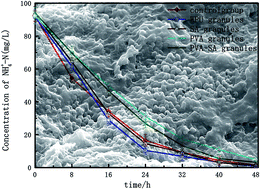
Fig. 4a shows the variation curve of the concentration of NH4+–N with respect to time in each reactor. The concentrations of NH4+–N decreased first rapidly and then slowly in both the control group and the immobilization group. As the initial concentration of NH4+–N was high and the ANAMMOX rate was fast, while the later decrease in the substrate concentration decreased the reaction rate. During 0–8 h, the concentration of NH4+–N in the control group decreases swiftly. After 16 h, the removal rate for the immobilization group surpassed the removal rate for the control group. After 40 h, the removal efficiency decreased in both the control group and the immobilization group. Eventually, at 50 h, NH4+–N was completely removed in all reactors. The variation pattern of the concentration of NO2–N was basically the same as the variation pattern of the NH4+–N. During 0–8 h, the removal rates for NH4+–N and NO2–N in the control group were higher than in the immobilization group, which was mainly because the existence of the immobilization material prevented the mass transfer between the materials in the water, such as NH4+–N, and the ANAMMOX bacteria in the immobilized granules. After 16 h, the removal rates for NH4+–N and NO2–N in the immobilization group were higher than in the control group due to the dispersion of the substrate into immobilized granules, the more concentrated biomass of the immobilized microbes resulted in higher activity of the ANAMMOX bacteria.
image file: c4ra14451a-f4.tif
Fig. 4 Variation curves of the concentrations of NH4+–N, NO2–N and NO3–N with respect to time (a) NH4+–N (b) NO2–N (c) NO3–N.

The removal efficiencies of WPU-, SA-, PVA–SA-, PVA-immobilized granules for NH4+–N and NO2–N were also different. During 8–24 h, the substrate completely dispersed into the immobilized granules. Degradation of NH4+–N and NO2–N exhibited good linear correlation. By computation, the average removal rates of WPU-, SA-, PVA–SA-, PVA-immobilized granules, and the control group for NH4+–N were obtained, which were 3.194, 3.122, 2.683, 2.419 and 2.363 mg h−1, respectively; removal rates for NO2–N were 4.053, 3.896, 3.353, 3.051 and 3.021 mg h−1, respectively. The order of removal efficiency for NH4+–N and NO2–N (from fastest to slowest): WPU > SA > PVA–SA > PVA > control group.

By comparison with the variation yield curve of NO3–N with respect to time in Fig. 4c, the ratio of the removed amount of NO2–N in the control group to the removed amount of NH4+–N was obtained (1.201), which was slightly lower than the theoretical value (1.32). The mean ratio of the yield of NO3–N to the removal amount of NH4+–N was 0.266, which was slightly higher than the theoretical value (0.26) as, during the preparation of immobilized granules and the subsequent activated culture, a small amount of oxygen was brought into the reaction system; during initial reaction period, the oxygen caused aerobic ammonium oxidation reaction, resulting in a relatively low removal amount of NO2–N and a relatively high yield of NO3–N. If the deviation caused by the oxygen was removed, then the measured ratio would be very close to the theoretical ANAMMOX value.

The ratios of the removed amount of NO2–N to the removed amount of NH4+–N of WPU-, SA-, PVA–SA-, and PVA-immobilized granules were 1.227, 1.228, 1.211, and 1.235, respectively; the ratios of the yield of NO3–N to the removed amount of NH4+–N were 0.237, 0.232, 0.246, and 0.236, respectively, which were both very close to the ratios in the control group. Thus, these immobilized granules exhibited good ANAMMOX performance, and the order of the ANAMMOX performance was as follows: WPU-immobilized granules > SA-immobilized granules > PVA–SA-immobilized granules > PVA-immobilized granules.

The ANAMMOX properties of different immobilized granules were different and were related to the form of the cross-linked immobilized granules. For each PVA-immobilized granule, there was a homogenous spherical shell; the exterior was relatively dense, and the mass transfer resistance was large. In addition, the conglutination of granules resulted in a decrease in specific area, leading to a poor mass transfer property; therefore, the ANAMMOX performance of the PVA-immobilized granules was poorest.

The spherical shell formed on the surface of each SA-immobilized granule was relatively thin, and the mass transfer resistance was relatively small.30 After cross linking, size of the network structure formed inside was relatively large; therefore, SA-immobilized granules exhibited relatively good ANAMMOX performance. There was also a dense spherical shell on the surface of each PVA–SA-immobilized granule; however, due to the introduction of SA, the macro-porous network structure of the SA molecules improved the mass transfer property of PVA. Therefore, the ANAMMOX performance of PVA–SA-immobilized granules was superior to the performance of PVA-immobilized granules but inferior to the performance of SA-immobilized granules. There was no obvious shell on the surface of each immobilized granule formed from WPU condensation; WPU-immobilized granule was soft, and the mass transfer property was good. Fig. 5a and b show ×1.0k and ×4.0k SEM images of the surfaces of WPU-immobilized granules. Fig. 5a shows many channels on the surface of each WPU-immobilized granule; bacteria were divided into different areas by the channels. Fig. 5b shows that these bacteria were in a spherical shape, and there were volcanic crater-like concaves on the two sides of each bacterium, indicating that these were typical ANAMMOX bacteria. Fig. 5c shows the SEM image of the inside of a WPU-immobilized granule after it was cut open; it can be seen that a large amount of ANAMMOX bacteria grew along the channels inside of the granule. So, ANNAMMOX bacteria were confirmed to exist within and on the granule and the WPU-immobilized granules had the best mass transfer property and ANAMMOX activity.


image file: c4ra14451a-f5.tif
Fig. 5 SEM images of WPU-immobilized granules (a) surface ×1.0k; (b) surface ×4.0k; (c) inside ×6.0k.

3.4. Comparison and selection of optimal immobilization materials

The different immobilized granules have different properties with different immobilization materials. The key factor of embedding immobilized technology is to select a suitable immobilization material. Table 3 shows the study of imbedded immobilization by different materials. In traditional materials, PVA had the best mechanical strength and stability, whereas the biological activity and mass transfer performance were worst. PVA–SA was more suitable as immobilization material for ANNAMMOX. Wang et al.31 found that sodium carboxymethyl cellulose (CMC) had better mass transfer performance and biological activity in comparison to SA.
Table 3 Study of imbedded immobilization by different materialsa
Research contents Mechanical stability Biological activity Optimal material References
a Notes: CMC-carboxymethylcellulose; CTS-chitosan.
PVA, SA PVA SA 32
PVA, SA, PVA–SA PVA–SA PVA–SA 33
CTS, PVA, SA, PVA–SA PVA CMC PVA–SA 31
CMC, PVA, SA, PVA–SA PVA CMC PVA–SA 24
WPU, PVA, SA, PVA–SA WPU WPU WPU Present study


After two years Zhu et al.24 found that the mechanical strength and stability of CMC was bad although it had good mass transfer performance, and CMC was not suitable as immobilization material. Compared to other, WPU had obvious advantages on mechanical strength and mass transfer performance. The results of the present study are also consistent with previous studies.32,33 Hence, WPU is a excellent immobilization material for ANAMMOX sludge.

3.5. WPU-immobilized granules activity using continuous-flow experiment

To further study the nitrogen removal performance and stability of WPU-immobilized granules during long-term operation, a method in which the HRT was gradually decreased was used for the continuous-flow experiment.

The HRT was decreased from 8 h to 1.5 h, and the corresponding volume load of TN was increased from 0.328 kg per m3 per day to 1.697 kg per m3 per day. Fig. 6 shows the variations of the influent and effluent TN of the reactor during the experimental period. During 0–35 days, HRT of the reactor was 8 h. The concentration of TN decreases rapidly, and the removal rate reached 22% in the first 7 days, after which the removal rate levelled off and the effluent TN remained at approximately 80 mg L−1. After the activity of the immobilized granules was recovered, the removal rate for TN increased rapidly starting at the 14th day; on the 35th day, the effluent TN was 14.18 mg L−1, and the removal rate reached 85%. On the 36th day, the HRT was decreased to 5 h, and the concentration of the effluent TN increased to 50.34 mg L−1. However, the removal rate still remained over 50%. As the experiment continued, the removal rate gradually returned to a relatively high level. Afterwards, the HRT was continuously decreased to 3 h and 1.5 h. The concentration of the effluent TN first increased and then gradually decreased. On 100th day, HRT was 1.5 h, the effluent TN conc. was 20.17 mg L−1, and the removal rate reached 80.98%, while the volume load of TN was 1.697 kg (m−3 d).


image file: c4ra14451a-f6.tif
Fig. 6 Variation curves of the TN removal effects of the WPU-immobilized granules with respect to time.

Fig. 6 shows that in the initial stage of the experiment, in which the HRT was decreased and the volume load increased, there was a stable period for the removal rate for TN in all cases, indicating that the WPU-immobilized granules exhibited very strong shock-loading resistance. When the load increased, the existence of the immobilization material would slow down the impact of the suddenly increased TN on the ANAMMOX bacteria, and thus, the removal efficiency was stable. After a while, when the ANAMMOX bacteria gradually adapted to the load variation, the activity of ANAMMOX increased, and the removal rate for TN also increased rapidly, which was consistent with the phenomenon reported by Bae et al.34 in which the immobilization technique was used to treat textile wastewater. In addition, the effluent of the reactor was always clear during the experimentation period, and no suspended solids (SS) were detected. None of the immobilized granules broke. The WPU-immobilized granules exhibited good sludge retaining ability and mechanical stability.

3.6. Biological nitrogen removal kinetics

The kinetic characteristics of WPU-immobilized granules are also studied using the Haldane model (eqn (1)).35
 
image file: c4ra14451a-t1.tif(1)
where, V is the reaction rate, S is the substrate concentration, Vmax is the maximum reaction rate, Km is the half-saturation constant and Ki is the half-suppression constant.

Non-linear fitting was performed on the experimental data using the Haldane model with Origin 8.0 to derive the kinetic functions for NH4+–N (Fig. 7a) and NO2–N (Fig. 7b). The fitting constants R2 were 0.945 and 0.989, indicating good correlations. The data in Fig. 7a showed that the obtained maximum nitration reaction rate of the immobilized granules was 1.97 mg per mg per day, the ammonium half-saturation constant was 1.42 mmol L−1, and the ammonium half-suppression constant was 817.8 mmol L−1. The data in Fig. 7b showed that the maximum nitrate reaction rate was 2.39 mg per mg per day, the nitrate half-saturation constant was 1.042 mmol L−1, and the nitrate half-suppression constant was 89.95 mmol L−1.


image file: c4ra14451a-f7.tif
Fig. 7 Biological nitrogen removal kinetics of immobilized granules (a) kinetic equation of NH4+–N (b) kinetic equation of NO2–N.

Compared to ANAMMOX sludge, the kinetic of immobilized granules showed higher maximum reaction rate, the increased reaction rate promotes the conversion of substrates, relaxes the self-suppression of substrates, and increases ANAMMOX sludge production. The results from the kinetic study also showed that the half-saturation constants of the immobilized particles for ammonium and nitrite were lower than ANAMMOX sludge, indicating that the immobilized particles better utilize the substrate in adverse environments. The half-suppression constants of the immobilized particles for ammonia and nitrite were higher than ANAMMOX sludge, so the immobilized particles could survive longer in high-concentration substrates.

3.7. Bacterial community structure analysis

To study the effect of the immobilization material (WPU) on the ANAMMOX bacteria, as well as the variation of the bacterial community structure in the immobilized granules, WPU-immobilized granules that had been in stable operation for 100 days in the reactor were selected for the 16S rDNA-cloning experiment. Forty-eight (48) 16S rDNA clones were obtained. After PCR detection, 43 positive clones were obtained. The 43 positive clones were sent to a sequencing company for sequence analysis. After the sequence analysis was completed, the result was Blast-aligned against the gene bank. Clones with the same sequence alignment result were defined as an operational taxonomic unit (OTU). Four (4) OTUs were obtained after sequence alignment. A phylogenetic tree was built using the final sequences and similar sequences to these OTUs (Fig. 8).
image file: c4ra14451a-f8.tif
Fig. 8 Phylogenetic tree of the ANAMMOX bacteria.

The analysis through the phylogenetic tree and alignment against the gene bank revealed that the homologies between the 43 clones and the ANAMMOX bacteria with known sequences were all over 99%. The 4 OTUs were closest to 4 types of ANAMMOX bacteria (Table 4).

Table 4 The 16S rDNA library of ANAMMOX bacteria and analysis of the phylogenesis of OTUs
OTU numbers Number of clones contained in each OTU Percentage of each OTU/% Bacteria with maximum similarity in GenBank (National Center for Biotechnology Information (NCBI) accession number) Similarity %
OTU1 26 60.47 Candidatus Brocadia fulgida 100
OTU2 7 16.28 Uncultured anaerobic ammonium-oxidizing bacterium 99
OTU3 5 11.63 Uncultured Candidatus Brocadia sp. 99
OTU4 5 11.63 Uncultured Planctomycetales bacterium 99


The sequence for the ANAMMOX bacteria with the highest similarity among all the cloning and sequencing results was Candidatus Brocadia fulgida (JX243641.1), for which there were 26 sequencing results with 100% similarity. The sequence similarities between the remaining 17 sequencing results and the uncultured ANAMMOX bacteria were all 99%. Therefore, the primary ANAMMOX bacteria inside the immobilized granules were Candidatus Brocadia fulgida (JX243641.1), which was consistent with the enriched type of ANAMMOX bacteria inside the reactor before immobilization. It can be seen from the experimental result of 16S rDNA cloning that the immobilized ANAMMOX bacteria exhibited relatively strong shock-loading resistance and ANAMMOX performance, which was primarily due to the effect of the immobilization material instead of the variation of the bacteria. The immobilization material served as a carrier and provided protection; it cushioned the external load variation through the layered network structure, reduced the impact on the ANAMMOX bacteria, and increased the shock-loading ability. In addition, the immobilization material served as a carrier inside the immobilized granules; the ANAMMOX bacteria proliferated copiously, and thus, the biomass concentration increased. Therefore, the ANAMMOX performance of the immobilized granules increased.

4. Conclusions

Comprehensively considering mechanical stability and ANAMMOX performance, WPU has significant advantages compared to the other materials. WPU was an excellent immobilization material for ANAMMOX sludge. The WPU-immobilized granules maintained good sludge retaining ability and mechanical stability during long-term operation and exhibited very strong shock-loading resistance. The removal of total nitrogen was higher than 80% at HRT 1.5 h, and continuous flow experiment was stable. Biological nitrogen removal kinetics showed that WPU-immobilized granules exhibited better ANNAMMOX kinetic characteristics. Microbial community analysis showed that the dominant ANAMMOX bacteria inside the WPU-immobilized granules were Candidatus Brocadia fulgida (JX243641.1). As the carrier, the immobilization material protected the bacteria and increased the biomass; it had no effect on the ANAMMOX bacteria and the bacterial community structure, Consequently, ANAMMOX sludge immobilized by waterborne polyurethane could be a promising strategy for treating wastewater containing high level of nitrogen.

Acknowledgements

This research was supported by National Critical Project for Science and Technology on Water Pollution Prevention and Control of China (nos 2014ZX07201-011) and Natural Science Foundation of Bei Jing (BJNSF, Grant nos 8122005).

References

  1. U. V. Dongen, M. S. M. Jetten and M. C. M. VanLoosdrecht, Water Sci. Technol., 2001, 44, 153–160 Search PubMed.
  2. A. A. V. Graaf, P. D. Bruijn, L. A. Robertson, M. S. M. Jetten and J. G. Kuenen, Microbiology, 1997, 143, 2415–2421 CrossRef PubMed.
  3. M. S. M. Jetten, M. Wagner, J. Fuerst, M. V. Loosdrecht, G. Kuenen and M. Strous, Curr. Opin. Biotechnol., 2001, 12, 283–288 CrossRef CAS.
  4. C. Tang, P. Zheng, Q. Mahmood and J. Chen, J. Cent. South Univ. Technol., 2010, 17, 79–84 CrossRef CAS PubMed.
  5. C. J. Tang, P. Zheng, T. T. Chen, J. Q. Zhang, Q. Mahmood, S. Ding, X. G. Chen, J. W. Chen and D. T. Wu, Water Res., 2011, 45, 201–210 CrossRef CAS PubMed.
  6. C. Tang, L. Xiong, Y. Wang and P. Zheng, J. Environ. Sci., 2013, 34, 3544–3551 CAS.
  7. B. Wett, Water Sci. Technol., 2006, 53, 121–128 CrossRef CAS.
  8. W. R. L. V. Star, W. R. Abma, D. Blommers, J.-W. Mulder, T. Tokutomi, M. Strous, C. Picioreanu and M. C. M. V. Loosdrecht, Water Res., 2007, 41, 4149–4163 CrossRef PubMed.
  9. B. Zu, D. Zahang and Q. Yan, J. Environ. Sci., 2008, 29, 683–687 CAS.
  10. S. Qiao, T. Tian, X. Duan, J. Zhou and Y. Cheng, Chem. Eng. J., 2013, 230, 19–26 CrossRef CAS PubMed.
  11. Y. Chen, T. Zhou and S. Yao, J. Microbiol. Biotechnol., 2013, 23, 511–517 CrossRef CAS.
  12. J. Huang, M. Tang and C. M. Li, RSC Adv., 2014, 4, 46498–46501 RSC.
  13. D. Zhang, Y. Zhang, F. Shen, J. Wang, W. Li, E. Li and J. Falandysz, Desalin. Water Treat., 2014, 52, 4792–4801 CrossRef CAS.
  14. S. Riham and H. E. Muftah, Journal of Water Process Engineering, 2014, 1, 84–90 CrossRef PubMed.
  15. R. Chen, Y. Ma, C. Zhao, Z. Lin, X. Zhu, L. Zhang and W. Yang, RSC Adv., 2014, 4, 46653–46661 RSC.
  16. D. Yamei, Z. Zhenjia, J. Yongwei, L. Zhirong and L. Jian, J. Environ. Sci., 2011, 23, 366–371 CrossRef.
  17. A. Magri, M. B. Vanotti and A. A. Szogi, Bioresour. Technol., 2012, 114, 231–240 CrossRef CAS PubMed.
  18. Y. Z. Zhou, J. Yang, X. L. Wang, Y. Q. Pan, H. Li, D. Zhou, Y. D. Liu, P. Wang, J. D. Gu, Q. Lu, Y. F. Qiu and K. F. Lin, Environ. Sci. Pollut. Res., 2014, 21(19), 11500–11509 CrossRef CAS PubMed.
  19. C. Zhong, P. Liu, W. Zhang, J. Liu and X. Zeng, Chin. J. Environ. Eng., 2013, 7, 2837–2843 CAS.
  20. Y. Dong, Z. Zhang, Y. Jin, J. Lu, X. Cheng, J. Li, Y.-Y. Deng, Y.-N. Feng and D. Chen, J. Environ. Sci., 2012, 24, 999–1005 CrossRef CAS.
  21. Z. Li, C. Liu, B. Zhao, J. Ma, X. Wang and J. Li, China Environ. Sci., 2013, 4, 648–654 Search PubMed.
  22. M. Strous, E. V. Gerven, P. Zheng, J. G. Kuenen and M. S. M. Jetten, Water Res., 1997, 31, 1955–1962 CrossRef CAS.
  23. Y. M. Dong, Ph.D thesis, Shanghai jiaotong university, 2012.
  24. G. L. Zhu, Y. Y. Hu and Q. R. Wang, Water Sci. Technol., 2009, 59, 2379–2386 CrossRef CAS PubMed.
  25. G. Zhu, S. Wang, Y. Wang, C. Wang, N. Risgaard-Petersen, M. S. Jetten and C. Yin, ISME J., 2011, 5, 1905–1912 CrossRef CAS PubMed.
  26. M. Z. Khan, S. Singh, T. R. Sreekrishnan and S. Z. Ahammad, RSC Adv., 2014, 4, 46851–46859 RSC.
  27. D. E. Andrew and H. F. M. Ann, Standard Methods for the Examination of Water and Wastewater, APHA (American Public Health Association), AWWA (American Water Works Association), WEF (Water Environment Federation), 21st edn, 2005 Search PubMed.
  28. J. C. J. F. Tacx, H. M. Schoffeleers, A. G. M. Brands and L. Teuwen, Polymer, 2000, 41, 947–957 CrossRef CAS.
  29. S. J. Lee, S. K. Lee and B. K. Kim, J. Macromol. Sci., Part B: Phys., 2014, 53, 254–264 CrossRef CAS.
  30. Z. H. Xiong, C. Z. Sun and Q. C. Liu, Environ. Sci. Technol., 2005, 28, 82–84 Search PubMed.
  31. B. E. Wang and Y. Y. Hu, J. Environ. Eng., 2007, 19, 451–457 CAS.
  32. M. Y. Zhao and Z. F. Lei, Water Purif. Technol., 2006, 25, 45–48 CAS.
  33. H. Y. Fu, P. C. XU, T. Chai, P. F. Gao, G. H. Huang and F. W. Chen, Chin. J. Environ. Eng., 2013, 7, 3256–3262 CAS.
  34. W. Bae, D. Han, F. Cui and M. Kim, KSCE J. Civ. Eng., 2014, 18, 964–970 CrossRef PubMed.
  35. C. S. Gee, M. T. Suidan and J. T. Pfeffer, J. Environ. Eng., 1990, 116, 18–31 CrossRef CAS.

This journal is © The Royal Society of Chemistry 2015
Click here to see how this site uses Cookies. View our privacy policy here.