DOI:
10.1039/C4RA14449J
(Paper)
RSC Adv., 2015,
5, 14804-14813
Evaluating two new Schiff bases synthesized on the inhibition of corrosion of copper in NaCl solutions
Received
14th November 2014
, Accepted 12th January 2015
First published on 12th January 2015
Abstract
Two kinds of new Schiff base derivatives, 2-((4-(4-(dimethylamino)styryl)phenylimino)methyl) (DSM) and its intermediate 4-(4-aminostyryl)-N,N-dimethylaniline (AND), form self-assembled monolayers (SAMs) on copper surfaces. The SAMs have been examined by a series of techniques, including contact angle (CA), atomic force microscope (AFM), scanning electronic microscope (SEM), and electrochemical measurements. The results suggest that the two derivatives adsorb onto the copper surface and generate corresponding hydrophobic films, which play an important role in the anticorrosion of copper in 3% NaCl solution. Quantum chemical calculations and molecular dynamics (MD) simulation are also used for further insight into the adsorption mechanism.
1. Introduction
Copper and its alloys are extensively investigated and used in industry, owing to high their electrical and thermal conductivities as well as excellent workability into mechanics.1,2 In particular, due to its high strength at low temperature, Cu is used in condenser pipes of ships, coastal power plant heat exchangers and so on. Although its resistance is quite good in nearly neutral or slightly alkaline aqueous environments, copper is still vulnerable to corrosion in harsh conditions. As corrosion of Cu in seawater, with high concentration of chlorine ions, is even more serious, copper corrosion in aqueous salt conditions is a problem, which needs to be faced.
There are several methods of copper anticorrosion, e.g., metal coating protective technologies (electroplating, chemical, hot dipping),3 metal surface transformation (metal oxide, metal phosphating, passivation),4 and non-metallic coating.5 However, the disadvantages of these approaches, such as low inhibition efficiency, inconvenient operation and environmental pollution, are hard to avoid. The adjusting of surfaces for copper protection with self-assembled monolayers (SAMs) has gained considerable attention in recent years.6–8 Because of the dense and stable structure of the SAM, it works as an insulated layer against the penetration of corrosive substances. Up to now, several types of organic compounds have been used for generating SAMs on copper surfaces for anticorrosion in aggressive environments.9–11 Generally, compounds having oxygen, nitrogen, sulfur and aromatic rings possess greater stability due to stronger chemical interaction between these atoms and the copper surface.12
Quantum chemical calculations have proved to be a very powerful tool for studying the inhibition mechanism. Adsorption-related electronic properties, adsorption geometries and energies, charge transferred from or toward the surface or a full description of the bonding electronic structure are useful and can be achieved by means of density functional theory (DFT) methodology.13–15 Besides, molecular dynamics simulation has also been used to analyze the characteristics of the inhibitor/surface mechanism and to describe the structural nature of the inhibitor in the corrosion process.16–18 Many results indicated that inhibitor molecules can adsorb onto the copper surface through π-type bonding of the aromatic ring as well as of the –C![[double bond, length as m-dash]](https://www.rsc.org/images/entities/char_e001.gif) N– double bond. Therefore, we inferred that if there are more aromatic rings, then the strength of adsorption will be stronger. To examine this assumption, AND and DSM were synthesized.
N– double bond. Therefore, we inferred that if there are more aromatic rings, then the strength of adsorption will be stronger. To examine this assumption, AND and DSM were synthesized.
The anticorrosion performances of SAMs formed by AND and DSM have been examined by complementary techniques, such as electrochemical methods, scanning electron microscope (SEM), atomic force microscopy (AFM), and contact angle measurement (CAM). Additionally, the relationship between the theoretical calculations and experimental results of the SAMs are discussed.
2. Experimental
2.1 Materials and sample preparation
AND and DSM were synthesized in our laboratory. Pure DSM is a yellow solid and AND is deep yellow. The compounds' synthetic routes and molecular structures are presented in Fig. 1. The chemical structures of the organic compounds were characterized using nuclear magnetic resonance (NMR) spectroscopy. Tetramethylsilane (TMS) was used as the internal standard with a Bruker 500 MHz apparatus at room temperature.
 |
| | Fig. 1 Synthetic route and molecular structure of AND and DSM. | |
AND. 1H-NMR (400 MHz, DMSO-d6) δ (ppm): 13.206 (s, 1H, Ar-OH), 8.999 (s, 1H, –NCH–), 7.629–7.640 (d, J = 4.4 Hz, 1H, Ar-H), 7.600–7.614 (d, J = 5.6 Hz, 2H, Ar-H), 7.405–7.439 (m, 5H, Ar-H), 7.150–7.178 (d, J = 11.2 Hz, 1H, Ar-H), 7.013 (s, 1H, Ar-H), 6.941–6.986 (m, 2H, –CHCH–), 6.707–7.722 (d, J = 6.0 Hz, 2H, Ar-H), 2.924 (s, 6H, –N(CH3)2), 13C-NMR (100 MHz, DMSO-d6) δ (ppm): 823.60, 964.41, 1178.51, 1357.89, 1523.76, 1610.56, 3369.94, 3462.22.
DSM. 1H-NMR (400 MHz, DMSO-d6) δ (ppm): 7.315–7.330 (d, J = 6.0 Hz, 2H, Ar-H), 7.194–7.208 (d, J = 5.6 Hz, 2H, Ar-H), 6.781 (s, 2H, –CHCH–), 6.678–6.3993 (d, J = 6.0 Hz, 2H, Ar-H), 6.533–6.647 (d, J = 5.6 Hz, 2H, Ar-H), 2.894 (s, 6H, –N(CH3)2), 13C-NMR (100 MHz, DMSO-d6) δ (ppm): 756.10, 828.53, 947.05, 964.41, 1193.94, 1219.01, 1354.03, 1446.61, 1521.84, 1604.77, 3014.74.
2.2 Preparation of monolayers on copper
The Schiff base DSM and its intermediate AND were dissolved in tetrahydrofuran in the desired concentrations. A 3% NaCl solution was prepared with NaCl dissolved in double-distilled water. Pure copper (Cu > 99.5%) was used. Emery papers of grading 800, 1200, 1500, and 2000 were used one by one for preparing the specimens' surfaces. Then, the specimens were rinsed by ethanol and immersed into different tetrahydrofuran solutions with different concentrations of DSM or AND for 6 h at room temperature. When the filming process finished, the copper electrodes were taken out of the solution and rinsed by copious quantities of ethanol and double-distilled water.
2.3 Electrochemical tests
All the electrochemical experiments were carried out in a typical three-compartment glass cell, while CHI660B was used. Copper electrodes with and without modified film were used as working electrodes, a platinum electrode as the counter one, and a saturated calomel electrode (SCE) as the reference electrode. The reference electrode was connected to a Luggin capillary to minimize the IR drop and chloride contamination. All experiments were performed at 298 K, using a thermostatic water bath to keep the temperature constant. The polarization curves were obtained from −250 to +250 mV (versus open circuit potential (OCP)) with 0.1 mV s−1 scan rate, and the data were collected and analyzed. Inhibition efficiency was calculated by| |
 | (1) |
where I0corr and Icorr indicates the current density in 3% NaCl solution with the bare copper electrode and with the different modified-films-electrodes, respectively.
EIS measurements were carried out at the OCP. The ac frequency range extended from 100 kHz to 10 MHz with a 10 mV peak-to-peak sine wave as the excitation signal. Then, the impedance data were analyzed and fitted. The inhibition efficiency obtained from the EIS measurements was calculated by
| |
 | (2) |
where
R0ct and
Rct are the resistance of charge transfer in the absence and presence of inhibitors, respectively.
2.4 Surface analysis
The morphologies of the copper surface with and without SAMs were examined by SEM and AFM. The SEM and AFM images were taken by a KYKY2800B SEM instrument at 25.0 kV and Seiko SPIN 3800N using non-contact mode, respectively. The contact angles (CA) on the bare copper, AND- and DSM-modified copper were measured by the sessile water drop method by a contact angle goniometer (Dataphysics OCA20, Germany). The average CA value was obtained by more than five valid measurements on different spots of the same sample.
2.5 Spectroscopic ellipsometry measurement
Spectroscopic ellipsometry is an optical method for surface analysis, which is based on measuring the change of the polarization state of a light beam during reflection.19 The complex-reflectivity ratio is defined by ρ = rρ/rs = tan![[thin space (1/6-em)]](https://www.rsc.org/images/entities/char_2009.gif) ψexp(jΔ), where rρ and rs are the complex-amplitude reflection coefficients. The angles ψ and Δ are the conventional ellipsometric parameters. The spectroscopic ellipsometry of the thickness of film was measured by a M22000U Automatic Ellipsometer (Woollam Corporation, USA). To avoid the strong absorption of light, we selected the wavelength range of incident light as 400–800 nm with the incident angle of 70°. The optical data was analyzed by the software WVASE32.
ψexp(jΔ), where rρ and rs are the complex-amplitude reflection coefficients. The angles ψ and Δ are the conventional ellipsometric parameters. The spectroscopic ellipsometry of the thickness of film was measured by a M22000U Automatic Ellipsometer (Woollam Corporation, USA). To avoid the strong absorption of light, we selected the wavelength range of incident light as 400–800 nm with the incident angle of 70°. The optical data was analyzed by the software WVASE32.
2.6 Computational details
All quantum calculations were performed by DFT with Becke's three parameter exchange functional along with the Lee–Yang–Parr nonlocal correlation functional (B3LYP)20 with the 6-311G++(d,p) basis set as implemented in Gaussian 03.
For an N-electron system with total energy E, qualitative chemical concepts electronegativity (χ) and hardness (ξ) are defined as the following first-order and second-order derivatives,21
| |
 | (3) |
| |
 | (4) |
where
ν(
r) and
μ are the external and electronic chemical potentials, respectively. From the values of the total electronic energy, the ionization potential (
I) and electron affinity (
A) of the inhibitors are calculated using the following equations,
where
E(N−1),
E(N), and
E(N+1) are the ground state energies of the system with
N − 1,
N, and
N + 1 electrons respectively. Hence,
χ and
ξ are calculated as follows:
χ = (
I +
A)/2,
ξ = (
I −
A)/2.
The number of transferred electrons (ΔN) was calculated using the following equation:22
| |
 | (7) |
where the work function (
Φ) is used for the electronegativity of the copper surface, and the global hardness is neglected by assuming that of a metallic bulk
I =
A, because they are softer than the neutral metallic atoms.
23
The adsorption behavior was simulated by the Forcite module from Accelrys Inc. The surface Cu (111) was chosen to simulate the adsorption process. The simulation of the interaction was carried out in a simulation box (2.3 × 2.3 × 3.84 nm) with periodic boundary conditions. The cutoff distance was 1.25 nm. Six layers of copper atoms were used to ensure that the depth of the surface was greater than the non-bond cutoff used in the calculation. COMPASS forcefield was chosen to optimize the structures of all components of the system. The molecular dynamics simulation was carried out at 298 K with a NVT ensemble with a time step of 1 fs and simulation time of 1000 ps.
3. Results and discussion
3.1 Molecular designs
Schiff bases possess photochemical properties, catalytic activities, structural and electronic properties, ligand effects, and protective anticorrosion properties for metals.24,25 There are many reports about various Schiff base inhibitors, which form complexes with copper ions and generate highly protective films chemisorbed onto the copper surface.26–28 The use of nitrogen containing organic compounds as a corrosion inhibitor for copper has been widely investigated. Phenyl rings containing conjugated bonds (π electrons) positively affect the interactions between copper and the inhibitor compound.
We designed a new molecule modified with three aromatic rings and the π-electrons of –CN–, because molecules containing nitrogen, sulfur, and aromatic rings are known as good corrosion inhibitors for copper in 3% NaCl solution.12,29 The SAM formed by DSM is quite stable, and the good adsorption of its molecules to the metal surface may be attributed to interaction between π electrons of the aromatic rings and lone pair electrons of the azomethine (–CN–) group. Compared to its intermediate (AND), the adsorption mechanism of DSM can be better understood.
3.2 Polarization test
The corrosion behavior of copper in NaCl solution has received considerable attention in literature.30,31 The cathodic chemical process occurs as the following:| | |
O2 + 4e− + 2H2O → 4OH−
| (8) |
In contrast, the anodic process undergoes a series of complicated and continuous chemical reactions, as demonstrated in Fig. 2: (i) oxidization of Cu(0) to Cu(I), (ii) immediate formation of insoluble CuCl, due to the presence of Cl−, (iii) formation of soluble cuprous chloride complex, because CuCl cannot be fixed due to its weak adhesion to the copper surface and is further attacked by Cl−, forming the soluble complex CuCl2− rapidly, (iv) formation of Cu2+, because the unstable complex diffused from the copper surface rapidly undergoes an oxidation reaction, and (v) corrosion of Cu, because once Cu2+ appears, a disproportionation reaction between Cu(0) and Cu(II) occurs: Cu2+ + Cu + 2Cl− → 2CuCl.
 |
| | Fig. 2 Corrosion process of copper in 3% NaCl solutions. | |
In Fig. 3, both anodic and cathodic reactions of the copper electrode were inhibited after modification, and this became more distinct as concentration increased. This indicates that after the modified AND or DSM reduce copper anodic dissolution, they also retard the oxygen reduction. Moreover, the shift in corrosion potential towards a more positive value may suggest that the inhibitor molecule mainly functions by inhibiting the anodic dissolution of copper. Moreover, it can be seen from Fig. 3 that the copper electrode displays a Tafel behavior of the anodic region. The Tafel line of the anodic polarization curve is extended to the electrode potential below the corrosion potential, and then a vertical line is made parallel to the Y-axis at the corrosion potential. The electrochemical parameters can be obtained from the point of intersection. In addition, the Tafel slope can be obtained by the Tafel extrapolation method in accordance with literature,32 as shown in Fig. 4. The corresponding electrochemical kinetic parameters, such as corrosion potential (Ecorr), anodic Tafel slope (βa), and corrosion current density (Icorr) are listed in Table 1.
 |
| | Fig. 3 Potentiodynamic polarization curves obtained in 3% NaCl solution for the bare copper and modified copper electrodes after 6 h of assembly in different concentrations of (a) AND and (b) DSM. | |
 |
| | Fig. 4 Tafel extrapolation of the anodic polarization curve for copper with 0.15 mmol L−1 AND-modified in 3% NaCl solution. | |
Table 1 Polarization curve results obtained in 3% NaCl for the bare copper and the modified copper electrodes after 6 h of assembly in different concentrations of AND and DSM solutions
| |
C (mmol L−1) |
Icorr (μA cm−2) |
Ecorr (V) |
βa (mV dec−1) |
SDa |
η (%) |
| SD: standard deviation. |
| |
Bare |
10.174 |
−0.268 |
500.0 |
0.01 |
— |
| AND |
0.03 |
2.281 |
−0.272 |
173.0 |
0.05 |
77.58 |
| 0.05 |
2.149 |
−0.268 |
83.3 |
0.03 |
78.88 |
| 0.10 |
1.667 |
−0.257 |
62.5 |
0.05 |
83.62 |
| 0.15 |
1.558 |
−0.256 |
55.6 |
0.02 |
84.69 |
| DSM |
0.03 |
1.170 |
−0.229 |
59.0 |
0.05 |
88.50 |
| 0.05 |
1.040 |
−0.226 |
41.7 |
0.03 |
89.78 |
| 0.10 |
0.651 |
−0.219 |
40.0 |
0.06 |
93.59 |
| 0.15 |
0.559 |
−0.211 |
37.8 |
0.03 |
94.50 |
The effect on βa values may be due to many factors, such as the composition of the copper electrode, concentration of the medium, scan rate, and charge transfer coefficient. Table 1 shows that βa changes obviously with the modified of AND or DSM, indicating that the adsorbed inhibitor molecules affect the mechanism of copper dissolution. Due to the adsorption of AND or DSM on the copper surface, the activation energy of anodic dissolution at the electrode surface is increased. It is observed that the inhibition efficiency increases with increasing concentration. The inhibition efficiency reaches a maximum value (AND: 84.69% at 0.15 mmol L−1, DSM: 94.50% at 0.15 mmol L−1).
3.3 Electrochemical impedance spectroscopy (EIS)
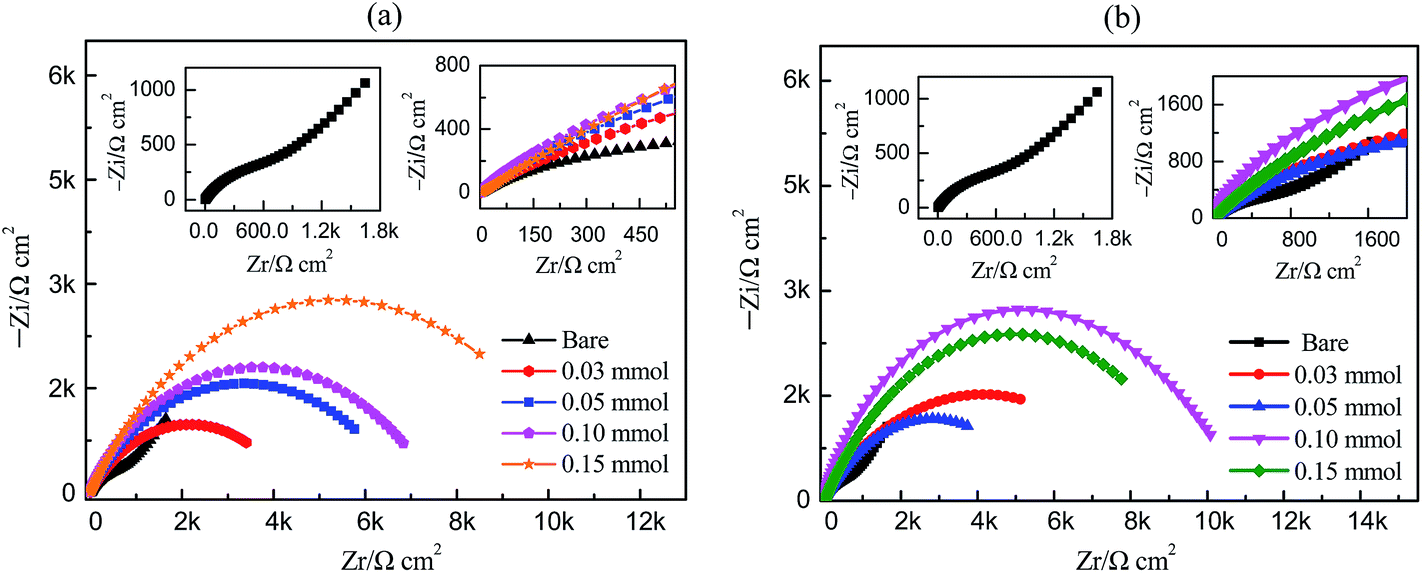
Fig. 5 shows the Nyquist plots for the bare copper, AND-modified and DSM-modified copper electrodes after 6 h of assembly in different concentrations. From the inset in Fig. 4, the Nyquist plots of the bare copper display a depressed semicircle at the high frequency and follow a straight line at low frequency. The high frequency semicircle may be caused by the charge transfer process, which is related to the relaxation time constant of the charge-transfer resistance (Rct) and the double-layer capacitance (Cdl) at the copper/electrolyte interface.33 The high frequency loop is not perfect semicircles, which can be attributed to the frequency dispersion as a result of the roughness and inhomogeneity of the electrode surface.34 The low frequency tail generally is known as Warburg impedance, which is attributed to the anodic diffusion process of CuCl2 from the surface of the electrode to the bulk solution and/or to the cathodic diffusion process of dissolved oxygen from the bulk solution to the surface of the electrode. For the AND- and DSM-modified copper electrodes, the Warburg impedance disappears at low frequencies. Only some large capacitive loops are observed in the Nyquist plots. The disappearance of Warburg impedance indicates that the SAM is sufficiently densely packed to prevent the diffusion process of the corrosion reaction and the copper corrosion is controlled by the charge transfer process.
 |
| | Fig. 5 EIS obtained in 3% NaCl solution for the bare copper, AND-modified (a) and DSM-modified (b) copper electrodes after 6 h of assembly in different concentrations. | |
In Fig. 5, several convex arcs exist and each diameter of the arcs increases with the increase in concentration. This indicates that the impedance values have increased and the copper has gotten more protection. When the concentration was 0.15 mmol L−1, the capacitive reactance arc radius of both reached the largest value.
The equivalent circuit model employed for this system is shown in Fig. 6. Rs shows the resistance of the solution between the working electrode and the reference electrode. Rct reflects the charge-transfer resistance. Rf is the resistance of the film formed on the copper surface. Constant phase element Q1 is composed of the membrane capacitance CPEf and the deviation parameter n1, and Q2 is composed of the double-layer capacitance CPEdl and the deviation parameter n2.
 |
| | Fig. 6 Equivalent circuit models for the bare copper electrode (a), and the AND- or DSM-modified copper electrode (b) in a 3% NaCl solution. | |
On the basis of the results in Table 2, the modification of the copper increases the Rct values. It seems to be enhanced with increasing thickness of SAM. The η values reach the maximum (AND: 89.20%, DSM: 92.49%) at the concentration of 0.15 mmol L−1. The charge transfer process is greatly inhibited by SAM, resulting in the prevention of copper from corrosion in Cl− solution. Compared with the blank, the values of the corrosive medium increase obviously with increasing AND or DSM concentration in tetrahydrofuran. This suggests that the strength of the SAM has a positive correlation with the concentration of AND or DSM in tetrahydrofuran.
Table 2 Impedance parameters of copper in 3% NaCl solution with different concentrations of AND and DSM
| |
C (mmol L−1) |
Rs (Ω cm2) |
Qf |
Rf (Ω cm2) |
Qdl |
Rct (Ω cm2) |
W |
η (%) |
| Y0 (×10−5 S sn cm−2) |
n1 |
Y0 (×10−4 S sn cm−2) |
n2 |
| |
Bare |
|
|
|
|
4.253 |
0.592 |
938 |
8.889 |
— |
| AND |
0.03 |
1.616 |
8.949 |
1.000 |
32.69 |
3.863 |
0.553 |
4498 |
|
79.14 |
| 0.05 |
1.507 |
7.571 |
1.000 |
33.01 |
3.679 |
0.494 |
5654 |
|
83.41 |
| 0.10 |
1.644 |
7.368 |
1.000 |
34.80 |
2.556 |
0.436 |
7980 |
|
88.25 |
| 0.15 |
1.154 |
2.209 |
1.000 |
35.77 |
0.395 |
0.591 |
8690 |
|
89.20 |
| DSM |
0.03 |
1.507 |
7.571 |
1.000 |
33.01 |
3.680 |
0.494 |
5650 |
|
83.40 |
| 0.05 |
1.444 |
7.968 |
1.000 |
34.80 |
2.515 |
0.436 |
8391 |
|
88.82 |
| 0.10 |
3.544 |
14.05 |
0.548 |
37.98 |
0.488 |
0.755 |
9967 |
|
90.59 |
| 0.15 |
3.878 |
3.634 |
0.989 |
39.09 |
0.151 |
0.540 |
11020 |
|
92.49 |
Table 2 shows that the CPEdl values decrease with the increasing of inhibitor concentrations, because water molecules are gradually replaced by the adsorption of the inhibitor molecules at the metal/solution interface, which leads to a protective film adsorbing on the copper surface. CPEdl is calculated by equation,35
| |
 | (9) |
where,
ε0 is the permittivity constant of the air,
ε is the local dielectric constant,
d is the thickness of the film, and
S is the surface of the electrode. There may be three reasons for the decrease of CPE
dl values: the increase in the adsorption film area (which decreases the electrode surface area), the decrease in the local dielectric constant and/or the increase in the double layer thickness. In a word, the diffusion of ions from the interface to the solution may be delayed and the dissolution reactions of copper may be inhibited to a great extent.
3.4 Contact angle measurements
The wettability of AND and DSM were examined by measuring the contact angle. Fig. 7 shows the images of the sessile water drop on the bare copper, the AND- and DSM-modified copper surface, respectively. It was found that the bare copper has a hydrophilic surface for the contact angle, which is 72.5° (Fig. 7a), whereas the angle on the AND-modified copper surface is 93.2° (Fig. 7b) and for DSM-modified it is 102.0° (Fig. 7c). It is evident that the contact angles significantly increase after modification of the copper by AND or DSM, indicating formation of a hydrophobic film. Moreover, the results showed that DSM had better surface hydrophobicity than AND. Generally, the value of contact angle strongly and mainly depends on the structure of the adsorption molecule and the properties of the substrate surface. In the process of the adsorption of AND or DSM, the polar head group of these two compounds fix to the copper surface and all of the nonpolar group is in contact with the solution, resulting in a homogeneous and hydrophobic interface, which gives rise to a larger contact angle.
 |
| | Fig. 7 Sessile water drop images on: (a) a bare copper surface, (b) a copper surface covered with 0.15 mmol L−1 AND, and (c) a copper surface covered with 0.15 mmol L−1 DSM. | |
3.5 SEM and EDS analysis
Fig. 8 shows what happens on bare copper and modified copper electrodes after being immersed in 3% NaCl solutions for 3 days. Before corrosion, the surface morphology of the sample was a freshly polished copper surface, as seen in Fig. 8a. After corrosion in 3% NaCl solution for 3 days, the surface morphology becomes porous and rough, as shown in Fig. 8b, which means copper was severely corroded. Compared with the bare copper, the AND-modified copper surface was smooth, but for a few moderate notches. Moreover, the DSM-modified copper was smooth with a few small notches. This fact is indicative of a good inhibition performance for the AND and DSM against copper corrosion in 3% NaCl solution.
 |
| | Fig. 8 SEM micrographs of freshly polished copper specimen (a), bare copper (b), 0.15 mmol L−1 AND-modified copper (c) and 0.15 mmol L−1 DSM-modified copper (d) immersed in 3% NaCl solutions for 3 days. | |
Fig. 9a shows the EDS test results of bare copper. The bare copper mainly consists of copper and some nickel. However, as shown in Fig. 9b and c, the composition of the surface changed after the specimen was immersed in AND or DSM solution. In the images, it can be concluded that the surface is covered by some kind of film, which consists of carbon. However, nitrogen atoms cannot be observed due to the high carbon–nitrogen mass ratio (AND: 6.86, DSM: 9.86) and imprecise instrument. Even so, it is fair enough to suggest the formation of the SAMs on the copper surface. It is also shown that the proportion of copper surface is smaller than that of AND, meaning the coverage of DSM on the copper surface is higher. This conclusion agrees with the results of electrochemical and SEM tests.
 |
| | Fig. 9 EDS images of bare copper and (a) AND-modified (b) and DSM-modified (c) copper. | |
3.6 AFM analysis
The surface topographies of freshly polished copper and modified copper electrodes after 3 h of immersion in 3% NaCl solution are shown in Fig. 10. It can be seen that after modification with AND or DSM, significant differences are found on the surface morphology of the corroded specimens. The AFM image of the freshly polished sample surface looks mostly uniform with only some tiny scratches. When the copper is modified with AND or DSM, the sample surface becomes relatively flat after NaCl treatment in general, and the DSM-modified copper surface looks smoother than the AND-modified copper surface. The mean roughness of the copper surface before NaCl treatment and after AND and DSA protection and NaCl treatment are 9.293 nm, 37.60 nm and 12.26 nm, respectively. This suggests that AND and DSM in 3% NaCl solution form a protective film on the copper surface, which prevents the surface from corroding.
 |
| | Fig. 10 2D/3D AFM images of freshly polished copper and (a and d) AND-modified (b and e) and DSM-modified (c and f) copper immersed in 3% NaCl solutions for 3 h. | |
3.7 Ellipsometer measurements
The ellipsometer, a typical tool to test the thickness of the film, was used. Good values were obtained by the Cauchy model. The points in Fig. 11 show the results of ψ and Δ of AND- and DSM-modified copper. Because of the good permeability of the films between the visible spectrum and infrared, the thicknesses of the films were obtained through the Cauchy model36 (see Fig. 12) by fitting experimental reflectance spectra. The results are presented in Table 3. The thickness of the films formed in AND and DSM solution are 49.51 nm and 101.56 nm, respectively. The larger the value, the better is the anticorrosion ability. Therefore, DSM has better performance, same as in the other tests.
 |
| | Fig. 11 Fitting results of thickness of AND (a) and DSM (b) modified film. | |
 |
| | Fig. 12 Cauchy model used for spectroscopic ellipsometry interpretation corresponding to AND or DSM on Cu substrate. | |
Table 3 Fit results of ψ and Δ by Cauchy model
| |
Thickness (nm) |
An |
Bn |
Cn |
| AND |
49.5 |
1.6043 |
0.00788 |
−0.0027 |
| DSM |
101.6 |
1.4398 |
0.08190 |
−0.0084 |
3.8 Theoretical calculations
The full optimized minimum energy geometrical configurations of AND and DSM are shown in Fig. 13. The computed molecular properties, including EHOMO, ELUMO, ΔELUMO–HOMO, dipole moment (μ), surface area (SA), molecular volume (V), projected area (PA), ionization potential (I), electron affinity (A) and fraction of transferred electrons (ΔN) are listed in the Table 4. As seen from the table, the positive ΔN value indicates that electron transfer from the inhibitor molecule to copper surface is available.
 |
| | Fig. 13 Optimized structures of AND and DSM. | |
Table 4 Quantum chemical descriptors for the studied inhibitor calculated at B3LYP/6-311G** level
| Inhibitor |
μ (Debye) |
SA (Å2) |
V (Å3) |
PA (Å2) |
I |
A |
χ |
ξ |
ΔN |
| AND |
1.15 |
309.5 |
334.42 |
104.52 |
4.7 |
1.09 |
2.89 |
1.8 |
0.53 |
| DSM |
3.28 |
480.11 |
450.2 |
131.64 |
4.98 |
1.99 |
3.49 |
1.5 |
0.44 |
In frontier molecular orbital theory, the inhibition efficiency of the inhibitor is closely related to the HOMO and LUMO.15 It is known that EHOMO is often associated with the electron donating ability of the inhibitor molecule and the higher the value of EHOMO, the greater is the ease of donating electrons to the unoccupied d orbital of the metal, whereas, ELUMO indicates the ability of the molecule to accept electrons. Therefore, the lower the value of ELUMO, the more probable it is that the molecule would accept electrons. Thus, higher EHOMO and lower ELUMO values generally enhance inhibition efficiency. Moreover, the smaller the value of the LUMO–HOMO energy gap (ΔE) for an inhibitor, the higher is the inhibition efficiency of that inhibitor.
It can be seen from Fig. 14 that the MOs of the studied inhibitors are very similar. The MOs, which cover most of the molecular structure, are made up of the π-type bonding in the benzene ring π-bonding and along the –CN– double bond (for DSM). This also can be proved by the contribution of some groups to molecular orbitals, which are shown in Table 5. The EHOMO of two studied inhibitors are −4.70 eV and −4.98 eV, respectively. The trend of EHOMO is different from the one for efficiency, but the difference of the two inhibitors is not significant. In addition, the ELUMO are −1.09 eV, −1.99 eV, respectively, so the values of ΔE are huge, 3.60 eV and 2.99 eV, which follows the trend for efficiency.
 |
| | Fig. 14 Frontier molecular orbits of AND and DSM as the HOMO and LUMO. | |
Table 5 Contributions of some groups to the HOMO and LUMO orbitals
| |
AND |
DSM |
| LUMO |
HOMO |
LUMO |
HOMO |
| Benzene-A |
28.78 |
31.82 |
5.78 |
35.41 |
| Benzene-B |
29.91 |
24.56 |
19.67 |
17.30 |
| Benzene-C |
|
|
31.19 |
2.34 |
| –CC– |
34.17 |
21.06 |
8.95 |
19.69 |
| –CN– |
|
|
32.29 |
4.51 |
The total electron density, as well as the electrostatic potential (ESP), of AND and DSM are shown in Fig. 15. From an overall perspective, both inhibitors are strong electron donors, for which evidence can be found in the total electron density (Fig. 15a). This has also been confirmed by the electrostatic potential map, in which the negatively charged red regions are located at the upper/lower surface of the molecular skeleton. These electron-rich areas would be preferred sites for adsorption to metal surfaces.
 |
| | Fig. 15 Electronic properties of the inhibitor molecules: (a) total electron density, (b) isosurface and (c) contour representation of electrostatic potential, respectively. Negative (positive) regions are colored red (blue). | |
Finally, molecular dynamics simulations were performed to study the adsorption behaviour of specific inhibitor molecules on the Cu (111) surface. The close contact between the inhibitor molecules and copper surface, as well as the best adsorption configurations for the compounds, are depicted in Fig. 16. It could be noticed that the two inhibitors adsorbed nearly parallel to the copper surface through donation of π electrons of the benzene rings and the lone pairs of the hetero-atoms to the metal. The average centroid distance (d) between the inhibitors and the Cu (111) surface is also shown in Fig. 16. The distance of DSM is shorter; this is due to the –CN– double bond and additional benzene ring.
 |
| | Fig. 16 Representative snapshots of AND and DSM on Cu (111) surface. Inset images show the top-down views. | |
Quantitative appraisal of the interaction was achieved by calculating the adsorption energy (Eads) using eqn (10):37
| | |
Eads = Ecomplex − (ECu + Einh)
| (10) |
where
Ecomplex is the total energy of the surface and inhibitor and
ECu and
Einh are the total energy of the copper crystal and of the free inhibitor molecule, respectively. The calculated
Eads values of the adsorption systems were −332.0 and −438.7 kJ mol
−1 for AND and DSM, respectively. The larger negative values of interaction energy can be attributed to the strong adsorption between the inhibitor molecules and the copper surface. It is obvious that DSM gives a more negative adsorption energy, which means that adsorption of DSM on the Cu (111) surface is stronger than that of AND. This accords with their performance in experiments.
4. Conclusions
The self-assembled monolayer formed by AND and DSM can protect copper from corrosion in 3% NaCl solution. The inhibition efficiency obtained from the polarization test is coincident with ones obtained from EIS, and both of the inhibition efficiencies increase with the concentration of impregnation liquid. SAMs formed by AND or DSM on the copper surface were characterized by surface analyses. The contact angle, thickness of layers, and corrosion morphology obtained from SEM and AFM indicate that the corrosion inhibition efficiency of DSM is better than that of AND. At the same time, theoretical parameters obtained from DFT calculation and MD simulation, such as energy of the gap, dipole moment, adsorption energy, display the same trend. The results of the theoretical calculation are in good agreement with those of the experiments.
Acknowledgements
This research was supported by Natural Science Foundation of China (no. 21376282), and Chongqing Innovation Fund for Graduate Students (no. CYB14019).
References
- R. L. Powell, H. M. Roder and W. J. Hall, Phys. Rev., 1959, 115, 314–323 CrossRef CAS.
- A. Bazzaoui, J. I. Martins, E. A. Bazzaoui, L. Martins and E. Machnikova, Electrochim. Acta, 2007, 52, 3568–3581 CrossRef PubMed.
- R. Subasri and T. Shinohara, Electrochemistry, 2004, 72, 880–884 CAS.
- W. H. Leng, D. P. Liu, X. F. Cheng, W. C. Zhu, J. Q. Zhang and C. A. Cao, Acta Metall. Sin., 2007, 43, 764–768 CAS.
- A. V. Rao, S. S. Latthe, S. A. Mahadik and C. Kappenstein, Appl. Surf. Sci., 2011, 257, 5772–5776 CrossRef CAS PubMed.
- A. T. Lusk and G. K. Jennings, Langmuir, 2001, 17, 7830–7836 CrossRef CAS.
- C. X. Li, L. Li and C. Wang, Electrochim. Acta, 2014, 115, 531–536 CrossRef CAS PubMed.
- F. Caprioli, A. Martinelli, D. Gazzoli, V. Di Castro and F. Decker, J. Phys. Chem. C, 2012, 116, 4628–4636 CAS.
- S. M. Song, C. E. Park, H. K. Yun, C. S. Hwang, S. Y. Oh and J. M. Park, J. Adhes. Sci. Technol., 1998, 12, 541–561 CrossRef CAS PubMed.
- W. Chen, S. Hong, H. Q. Luo and N. B. Li, J. Mater. Eng. Perform., 2014, 23, 527–537 CrossRef CAS.
- F. Caprioli, A. Martinelli, V. Di Castro and F. Decker, J. Electroanal. Chem., 2013, 693, 86–94 CrossRef CAS PubMed.
- M. M. Antonijevic and M. B. Petrovic, Int. J. Electrochem. Sci., 2008, 3, 1–28 CAS.
- G. Gece, Corros. Sci., 2008, 50, 2981–2992 CrossRef CAS PubMed.
- L. Guo, W. P. Dong and S. T. Zhang, RSC Adv., 2014, 4, 41956–41967 RSC.
- I. Lukovits, E. Kalman and F. Zucchi, Corrosion, 2001, 57, 3–8 CrossRef CAS.
- K. F. Khaled, J. Solid State Electrochem., 2009, 13, 1743–1756 CrossRef CAS.
- A. L. Guo, G. C. Duan, K. He, B. Sun, C. C. Fan and S. Q. Hu, Comput. Theor. Chem., 2013, 1015, 21–26 CrossRef CAS PubMed.
- J. Zhang, G. Qiao, S. Hu, Y. Yan, Z. Ren and L. Yu, Corros. Sci., 2011, 53, 147–152 CrossRef CAS PubMed.
- G. E. Jellison and F. A. Modine, Appl. Phys. Lett., 1996, 69, 371–373 CrossRef CAS PubMed.
- A. D. Becke, J. Chem. Phys., 1993, 98, 5648–5652 CrossRef CAS PubMed.
- S. B. Liu, Acta Phys. Chim. Sin., 2009, 25, 590–600 CAS.
- R. G. Parr and R. G. Pearson, J. Am. Chem. Soc., 1983, 105, 7512–7516 CrossRef CAS.
- A. Kokalj, Electrochim. Acta, 2010, 56, 745–755 CrossRef CAS PubMed.
- R. Noyori and S. Hashiguchi, Acc. Chem. Res., 1997, 30, 97–102 CrossRef CAS.
- S. V. Eliseeva and J. C. G. Bunzli, Chem. Soc. Rev., 2010, 39, 189–227 RSC.
- H. Ma, S. Chen, L. Niu, S. Zhao, S. Li and D. Li, J. Appl. Electrochem., 2002, 32, 65–72 CrossRef CAS.
- C. R. Bhattacharjee, G. Das and P. Mondal, Liq. Cryst., 2011, 38, 441–449 CrossRef CAS.
- Z. L. Quan, S. H. Chen, L. Li and X. G. Cui, Corros. Sci., 2002, 44, 703–715 CrossRef CAS.
- B. E. A. Rani and B. B. J. Basu, Int. J. Corros., 2012, 2012, 1–15 CrossRef.
- K. F. Khaled, Mater. Chem. Phys., 2008, 112, 104–111 CrossRef CAS PubMed.
- A. Dafali, B. Hammouti, R. Touzani, S. Kertit, A. Ramdani and K. El Kacemi, Anti-Corros. Methods Mater., 2002, 49, 96–104 CrossRef CAS.
- M. A. Amin, S. S. A. El Rehim and H. T. M. Abdel-Fatah, Corros. Sci., 2009, 51, 882–894 CrossRef CAS PubMed.
- J. M. Steigerwald, S. P. Murarka, R. J. Gutmann and D. J. Duquette, Mater. Chem. Phys., 1995, 41, 217–228 CrossRef CAS.
- Q. Qu, L. Li, S. Jiang, W. Bai and Z. T. Ding, J. Appl. Electrochem., 2009, 39, 569–576 CrossRef CAS.
- S. John and A. Joseph, RSC Adv., 2012, 2, 9944–9951 RSC.
- M. Rebien, W. Henrion, M. Hong, J. P. Mannaerts and M. Fleischer, Appl. Phys. Lett., 2002, 81, 250–252 CrossRef CAS PubMed.
- E. E. Oguzie, Y. Li, S. G. Wang and F. Wang, RSC Adv., 2011, 1, 866–873 RSC.
Footnote |
| † Both authors contributed equally to this work. |
|
| This journal is © The Royal Society of Chemistry 2015 |
Click here to see how this site uses Cookies. View our privacy policy here.