

Easily fixed simple small ESIPT molecule with aggregation induced emission for fast and photostable “turn-on” bioimaging†
Zhenzhen Tua,
Min Liub,
Yan Qian*a,
Guoqiang Yang*c,
Minmin Caia,
Lianhui Wanga and
Wei Huang*a
aKey Laboratory for Organic Electronics & Information Displays, Institute of Advanced Materials (IAM), Jiangsu National Synergistic Innovation Center for Advanced Materials (SICAM), Nanjing University of Posts & Telecommunications, 9 Wenyuan Road, Nanjing, 210023, China. E-mail: iamyqian@njupt.edu.cn; iamwhuang@njupt.edu.cn; Fax: +86 25 8586 6999; Tel: +86 25 8586 6008
bDepartment of Radiation Oncology, The First Hospital, Jilin University, 71 Xinmin Street, Changchun, 130021, China. E-mail: liumin602822@163.com
cBeijing National Laboratory for Molecular Sciences, Key Laboratory of Photochemistry, Institute of Chemistry Chinese Academy of Sciences, Beijing 100080, China. E-mail: gqyang@iccas.ac.cn; Fax: +86-10-62569564; Tel: +86-10-62569563
First published on 10th December 2014
Abstract
An excited state intramolecular proton transfer (ESIPT) fluorogen, due to its easy hydrogen bonding and AIE characteristics, has demonstrated a fast and selective light-up of the cytoplasm of HeLa cells within 20 seconds. Moreover, the low-cost material preparation, fair cytocompatibility, good photostability and wide pH application range all indicate its great potentials for commercialization.
The development of chromophore dyes with high sensitivity, noninvasiveness and biocompatibility is of great scientific value and has important practical implications in biomedical imaging and biotechnology in that it offers a direct visualization tool for detecting biological molecules and monitoring biological events in living cells.1–4
It is well known that fluorescent dyes such as inorganic quantum dots (QDs),5,6 fluorescent proteins,7 and upconversion nanophosphors (UCNP)8 have been widely investigated as fluorescent probes for fluorescence bioimaging. However, inorganic quantum dots (QDs) are highly cytotoxic in the oxidative environment because of their formation from heavy metals and chalcogens, which greatly limits them for in vivo applications.9–11 Fluorescent proteins such as green fluorescent protein (GFP) and its variants suffer from inherent susceptibility to proteolytic enzymes, severe spectral overlap with biosubstrate autofluorescence, and poor photostability, resulting in instability in biological environments.12 For the UCNP, extremely low upconversion efficiency and complicated processing technique hinder its developments and applications.8 In comparison, small-molecule fluorescent and phosphorescent organic dyes13 offer a unique approach due to their low toxicity, high sensitivity, fast response time and technical simplicity characteristics.14 As we know, phosphorescent materials have the shortcomings of a large molecular volume, being cytotoxic, having rare source and high cost.15–17 Moreover, most nomadic organic fluorophores suffer from severe luminescence quenching when accumulating in living cells,18,19 intense photobleaching, and are easily exuded from cells.20–22 It is thus envisioned to develop organic dyes exhibiting intense luminescence even when accumulated, high photostability, high selectivity and in-cell fixity.
In recent decades, a novel series of bioimaging and biosensing dyes exhibiting unique characteristics of aggregation-induced emission (AIE) have been discovered.23–25 These AIE dyes are non-emissive in molecularly-dispersed solution, and become highly luminescent in an aggregated state (for example, nanoparticles, powders and crystals). The AIE mechanism at the single molecular level can be attributed to the restriction of the intramolecular rotations (RIR),26–28 restriction of intramolecular charge transfer (ICT)29 or twisted intramolecular charge transfer (TICT),30,31 and restriction of cis–trans isomerization.32 At the supramolecular level, the AIE characteristics can be related to some specific molecular packing types such as dimer/excimer stacking,33,34 J-aggregation,35 herringbone stacking,36 or even the weakly coupled H-aggregation.37 Particularly, the AIE phenomenon has been demonstrated to be useful in monitoring activities of various biomolecules.38–40 These assays rely on previously “dark” AIE molecules combining with bio-molecules through noncovalent interactions (such as hydrophobic or electrostatic interaction) to yield highly emissive aggregated complexes.
As we know, for the purpose of biomedical imaging detection, the internalization of cell dye should be as quick as possible. However, to the best of our knowledge, the cells generally internalize the majority of fluorescent bioimaging dyes within 10 min to 2 h,41–47 which means a relatively long detection. This is possibly because it is not easy for relatively large molecules or particles to penetrate membranes through the 0.4–1 nm pores.48 Many efforts have been made to develop more sensitive chromophores for cellular quick-imaging studies.49,50 Very few fluorescent dyes have been reported to be internalized by the cells within 1–2 min,51 indicating a rapid uptake. Only some algal cells were reported to internalize fluorescent dyes within several seconds.52
In our previous work, a series of AIE-active excited state intramolecular proton transfer (ESIPT) compounds have been developed with in-depth investigation of their AIE mechanisms.53–55 ESIPT molecules are normally more stable as enol forms in the ground state and more stable as keto forms in the excited state. In the ESIPT process, an extremely fast four-level photophysical cycle (E–E*–K*–KE), mediated by intramolecular H-bonds, occurs immediately after photoexcitation.56 Therefore, an abnormally large Stokes shift without self-absorption is detected, which is beneficial to AIE characteristics. Here, we have developed an easily synthesized organic small-molecule ESIPT probe with strong luminescence, which displays AIE characteristic and bears a hydrogen bonding group to realize fast, selective and photostable “turn-on” bioimaging. Featured by short response time of 20 seconds via quick penetration, boosting fluorescence when fixed and concentrated in cytoplasm via hydrogen bonding, and photostable emission under intense illumination, the probe performed as an excellent fluorescent bio imaging dye, which rapidly and selectively stained cytoplasm of living HeLa cells without interfering with their proliferation processes.
The T3BA compound was synthesized by single-armed acylation of phthaloyl dichloride with 5-amino-2-(benzo[d]thiazol-2-yl)phenol (5ABT),53 due to decreased reaction activity of further acylation (Scheme 1). T3BA is soluble in THF, DMF and DMSO, but exhibits poor solubility in water. The AIE phenomenon can be easily observed by the naked eye. The THF solution was almost non-emissive, whereas its powder or nanoparticles dispersed in water exhibited a significantly enhanced emission (Fig. 1 inset). The fluorescence quantum efficiency of its THF solution and powder were measured to be 0.08% and 4%, respectively.
 | ||
| Scheme 1 Synthetic route of T3BA. | ||
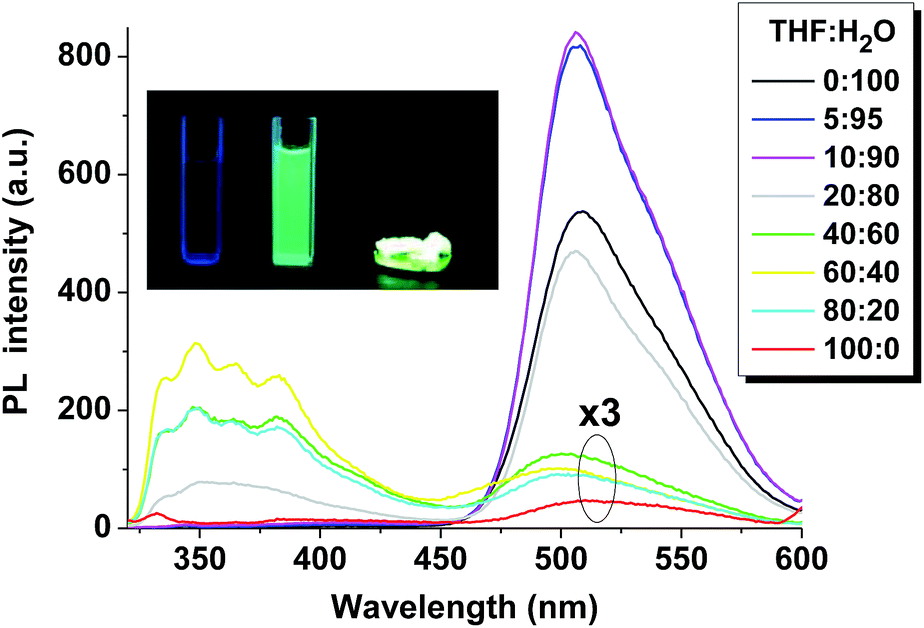 | ||
| Fig. 1 Fluorescence spectra of 10−5 M T3BA in the THF/H2O mixture at different water fractions. Inset: images of 10−5 M T3BA under UV illumination at 365 nm in THF solution, water, and powder from left to right. | ||
In THF solution, T3BA mainly exhibited two emissions around 320–420 nm and 470–600 nm. The emission around 320–420 nm corresponds to the enol emission, whereas the low-energy emission peaked at 506–513 nm corresponds to the keto emission.53 When the water fraction increased gradually from 0% to 60%, the fluorescence intensity only slightly increased. Further increasing the water fraction to 80%, the emission enhancement suddenly became evident, indicating formation of nanoparticles, which exhibited prominent AIE characteristics. Moreover, the absorption spectrum exhibited a sudden decrease of intensity and change of spectrum profile with increase of the relative absorption around 300 nm (Fig. S3†). The maximum fluorescence efficiency of the nanoaggregates achieved 90% water content, which was enhanced by 52 times higher than that of the molecularly dispersed THF solution. In the nanoparticles, the enol emission around 320–420 nm gradually disappeared, whereas the keto emission around 470–600 nm became the dominant emission.
Cytotoxicity assay with the cultural concentrations of T3BA at 5, 10, 25, 50, 75, 100 μM in DMSO buffer (Fig. S4†) demonstrated that more than 93% HeLa cells survive with the cultural concentration of T3BA lower than 50 μM, and more than 85% still survive with higher cultural concentration of 100 μM. Repeated experiments indicated that, with a low cultural concentration of 5 μM T3BA, the dye shows an unexpected result with the viabilities of HeLa cells of more than 105%, probably due to the growth promotion effect of low concentrations of T3BA, which needs further investigation. These results indicated that T3BA displays excellent biocompatibility and non-toxicity, and can be utilized in living cells as an excellent imaging agent.
As anticipated, these small T3BA molecules can quickly penetrate cell membranes and lead to fast fluorescence staining, as demonstrated by confocal fluorescence microscopy experiments (Fig. 2). The luminescence boosting in the cytoplasm of cells can be rapidly detected within 20 s (Fig. 3), indicating great potential for instant clinical diagnosis. The overlay of luminescent images and bright-field images confirmed that the T3BA were located mainly in the cytoplasm of cells but not in the membrane and nucleus. This is possibly because the carboxyl group of T3BA can easily form a hydrogen bond (such as C![[double bond, length as m-dash]](https://www.rsc.org/images/entities/char_e001.gif) O⋯OH, (CO)OH⋯OC, and (CO)OH⋯O–H) with the active constituents in cytoplasm (such as amino acid, glycogen, polyhydroxybutyrate, lipid) and thus is fixed and concentrated in the cytoplasm with boosting emission immediately after these small T3BA molecules penetrate the membrane. Therefore, due to the AIE characteristics, the rapid and selective light-up of the cytoplasm of HeLa cells can be observed (Scheme 2). Consistently, quantification by line plots revealed that the fluorescence intensity of the cytoplasm (region 3 and 1) is considerably higher than that of the nucleus (region 2), indicating selective cytoplasm uptake of T3BA (Fig. S5†). This T3BA uptake process is revealed as being energy-independent (Fig. S6†), by investigating the location of T3BA when active cellular uptake was blocked by incubation at 4 °C or pretreatment with the metabolic inhibitors 2-deoxy-D-glucose and oligomycin.57,58
O⋯OH, (CO)OH⋯OC, and (CO)OH⋯O–H) with the active constituents in cytoplasm (such as amino acid, glycogen, polyhydroxybutyrate, lipid) and thus is fixed and concentrated in the cytoplasm with boosting emission immediately after these small T3BA molecules penetrate the membrane. Therefore, due to the AIE characteristics, the rapid and selective light-up of the cytoplasm of HeLa cells can be observed (Scheme 2). Consistently, quantification by line plots revealed that the fluorescence intensity of the cytoplasm (region 3 and 1) is considerably higher than that of the nucleus (region 2), indicating selective cytoplasm uptake of T3BA (Fig. S5†). This T3BA uptake process is revealed as being energy-independent (Fig. S6†), by investigating the location of T3BA when active cellular uptake was blocked by incubation at 4 °C or pretreatment with the metabolic inhibitors 2-deoxy-D-glucose and oligomycin.57,58
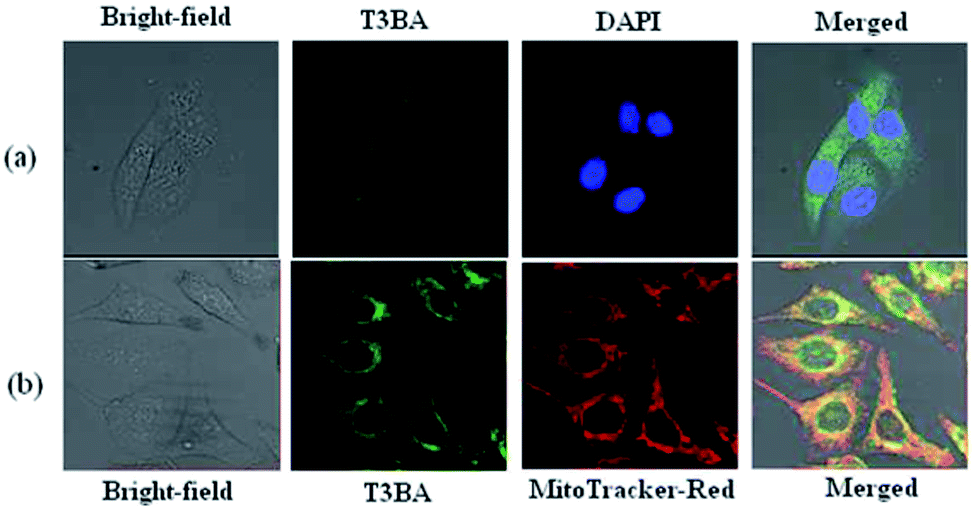 | ||
| Fig. 2 Confocal luminescence images of living HeLa cells incubated with 20 μM of T3BA for 10 min at 37 °C and co-stained with DAPI (a) and MitoTracker Red (b). | ||
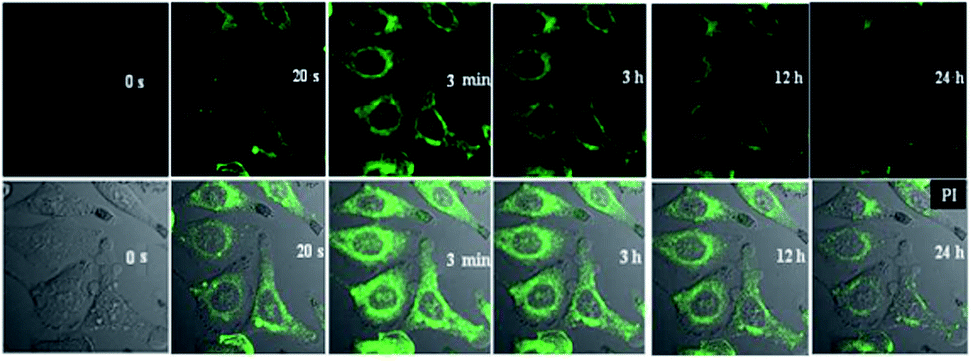 | ||
| Fig. 3 Time-lapse imaging in situ of HeLa cells at 0 s, 20 s, 3 min, 3 h, 12 h, and 24 h. Inset: PI staining is included to indicate cell viability. | ||
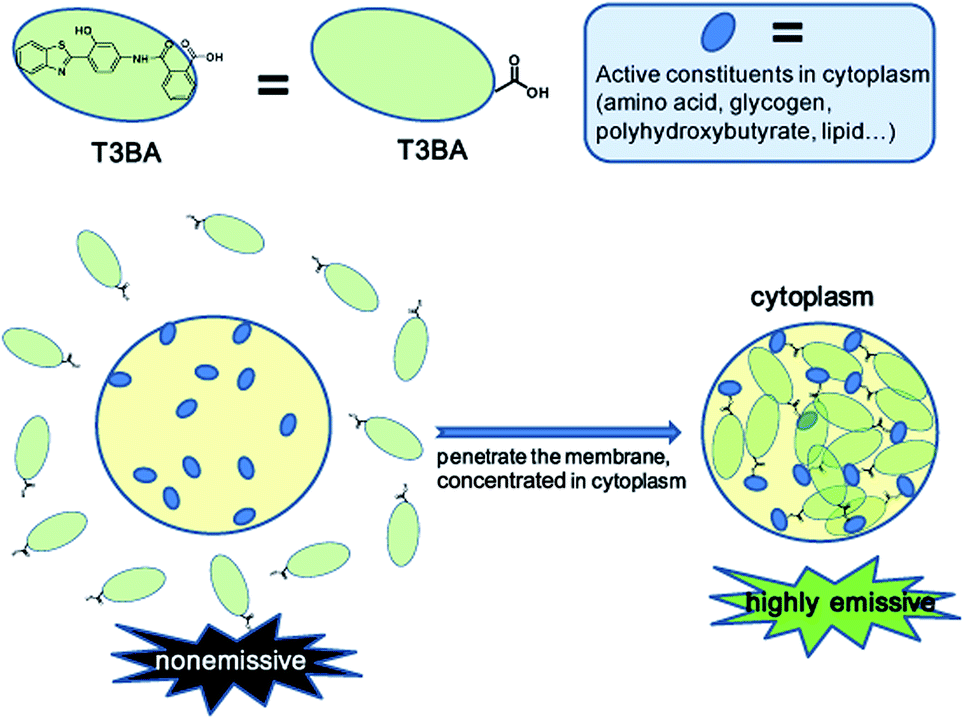 | ||
| Scheme 2 The imaging mechanism of T3BA in cytoplasm. | ||
Under continuous laser scanning upon excitation at 405 nm, the fluorescence intensity decreased less than 10% after 10 minutes of continuous laser illumination (Fig. S7†), suggesting its good photostability. This is beneficial for bioimaging, particularly in long-term studies.59 The constancy of the fluorescence in living HeLa cells stained with T3BA was investigated via a long time observation for 24 h (Fig. 3). Luminescence in the cytoplasm of cells can be rapidly detected within 20 s. The fluorescence intensity continuously increased over time and reached a maximum within 3 min. This indicated that even without a molecular transporter, small T3BA molecules are rapidly internalized by the cells and exhibit selective cytoplasm staining. Even after 24 h of incubation, the fluorescence intensity of T3BA was maintained high and the cells did not divide. The PI staining showed that the T3BA-treated cells were still viable. All these results indicate the good constancy of T3BA in cell imaging. Moreover, the fluorescence intensity of T3BA in living HeLa cells was barely affected when the pH varied from 4 to 10 (Fig. S8†), indicating a good suitability in various cell culture mediums and fluctuating biological environments.
The signal-to-noise (S/N) ratio of T3BA is comparable to the commonly commercialized dyes of MitoTracker Red and LysoTracker Red (Fig. S9†). Considering it's much simplified molecular structure (compared with MitoTracker Red and LysoTracker Red, Fig. S10†), facile and low-cost synthetic route, as well as fair cytocompatibility, good photostability and wide pH application range, T3BA is demonstrated as an attractive candidate for a commercialized bioimaging dye.
Conclusions
In this work, a new AIE-active and hydroxyl-bearing small-molecular compound, 5-amino-2-(benzo[d]thiazol-2-yl)-phenol, has been developed to act as a desirable cell-staining probe. Due to the fast response and enhanced emission when concentrated in cell culture media, the probe outperforms as an excellent fluorogen for the quick and selective imaging of cytoplasm of living cells without influencing cell proliferation. This indicates that T3BA acts as a promising candidate material for specific staining and targeting of cellular compartments by further modification and improvement.Acknowledgements
We express our sincere gratitude to the National Natural Science Foundation of China (Grant nos 21373114, 21475064), National Key Basic Research Program of China (973) (2012CB933301), Project funded by the Priority Academic Program Development of Jiangsu Higher Education Institutions, PAPD (YX030001), Natural Science Foundation of Jiangsu Province of China BK20140871, Research Launching Foundation from Nanjing University of Posts and Telecommunications (XK0300913043), Program for Changjiang Scholars and Innovative Research Team in University (IRT1148), and Sci-tech Support Plan of Jiangsu Province (BE2014719).Notes and references
- Y. Wang, J. Y. Shyy and S. Chien, Annu. Rev. Biomed. Eng., 2008, 10, 1–38 CrossRef CAS PubMed.
- R. Tivony, L. Larush, O. Sela-Tavor and S. Magdassi, J. Biomed. Nanotechnol., 2014, 6, 1041–1048 CrossRef PubMed.
- Y. Yu, Y. Hong, C. Feng, J. Liu, J. W. Lam, M. Faisal, K. M. Ng, K. Q. Luo and B. Tang, Sci. China, Ser. B: Chem., 2009, 52, 15–19 CrossRef CAS PubMed.
- Z. Wang, S. Chen, J. W. Lam, W. Qin, R. T. Kwok, N. Xie, Q. Hu and B. Tang, J. Am. Chem. Soc., 2013, 135, 8238–8245 CrossRef CAS PubMed.
- U. Resch-Genger, M. Grabolle, S. Cavaliere-Jaricot, R. Nitschke and T. Nann, Nat. Methods, 2008, 5, 763–775 CrossRef CAS PubMed.
- J. Liu, W. C. Law, J. Liu, R. Hu, L. Liu, J. Zhu, H. Chen, J. Wang, Y. Hu, L. Ye and K. T. Yong, RSC Adv., 2013, 3, 1768–1773 RSC.
- B. G. Giepmans, S. R. Adams, M. H. Ellisman and R. Y. Tsien, Science, 2006, 312, 217–224 CrossRef CAS PubMed.
- J. Zhou, Z. Liu and F. Li, Chem. Soc. Rev., 2012, 41, 1323–1349 RSC.
- X. Wang, W. Li, B. Zhao, D. Zhang, K. Sun, X. An, Z. Zhang and Z. Shen, RSC Adv., 2013, 3, 3553–3556 RSC.
- J. C. Chang and S. J. Rosenthal, Methods Mol. Biol., 2013, 991, 149–162 CAS.
- H. Li, Q. Zhou, W. Liu, B. Yan, Y. Zhao and G. Jiang, Sci. China, Ser. B: Chem., 2008, 51, 393–400 CrossRef CAS PubMed.
- D. M. Chudakov, M. V. Matz, S. Lukyanov and K. A. Lukyanov, Physiol. Rev., 2010, 90, 1103–1163 CrossRef CAS PubMed.
- H. Zollinger, Color Chemistry: Synthesis, Properties and Applications of Organic Dyes and Pigments, Wiley-VCH, Weinheim, 2nd edn, 1991 Search PubMed.
- R. Alford, H. M. Simpson, J. Duberman, G. C. Hill, M. Ogawa, C. Regino, H. Kobayashi and P. L. Choyke, Mol. Imaging, 2009, 8, 341–354 CAS.
- G. Zhang, H. Zhang, Y. Gao, R. Tao, L. Xin, J. Yi, F. Li, W. Liu and J. Qiao, Organometallics, 2014, 33, 61–68 CrossRef CAS.
- S. P. Y. Li, H. W. Liu, K. Y. Zhang and K. K. W. Lo, Chem.–Eur. J., 2010, 16, 8329–8339 CrossRef CAS PubMed.
- K. K. W. Lo, S. P. Y. Li and K. Y. Zhang, New J. Chem., 2011, 35, 265–287 RSC.
- J. B. Birks, Photophysics of Aromatic Molecules, Wiley, New York, 1970 Search PubMed.
- H. J. Jo, J. E. Nam, K. Sim, D. H. Kim, J. H. Kim and J. K. Kang, J. Nanosci. Nanotechnol., 2014, 14, 7938–7942 CrossRef CAS PubMed.
- C. R. Jing and V. W. Cornish, Acc. Chem. Res., 2011, 44, 784–792 CrossRef CAS PubMed.
- B. D. Chithrani and W. C. Chan, Nano Lett., 2007, 7, 1542–1550 CrossRef CAS PubMed.
- C. Y. Dombu, C. M. Kroubi, R. Zibouche, R. Matran and D. Betbeder, Nanotechnology, 2010, 21, 355102 CrossRef PubMed.
- J. Luo, Z. Xie, J. Y. Lam, L. Cheng, H. Chen, C. Qiu, H. S. Kwok, X. Zhan, Y. Liu, D. Zhuc and B. Tang, Chem. Commun., 2001, 1740–1741 RSC.
- W. Qin, D. Ding, J. Liu, W. Yuan, Y. Hu, B. Liu and B. Tang, Adv. Funct. Mater., 2012, 22, 771–779 CrossRef CAS.
- D. Ding, K. Li, B. Liu and B. Tang, Acc. Chem. Res., 2013, 46, 2441–2453 CrossRef CAS PubMed.
- Y. Li, F. Li, H. Zhang, Z. Xie, W. Xie, H. Xu, B. Li, F. Shen, L. Ye, M. Hanif, D. Ma and Y. Ma, Chem. Commun., 2007, 231–233 RSC.
- Y. Hong, J. Y. Lam and B. Tang, Chem. Soc. Rev., 2011, 40, 5361–5388 RSC.
- Y. Hong, J. Y. Lam and B. Tang, Chem. Commun., 2009, 4332–4353 RSC.
- B. Gao, H. Wang, Y. Hao, L. Fu, H. Fang, Y. Jiang, L. Wang, Q. Chen, H. Xia, L. Pan, Y. Ma and H. Sun, J. Phys. Chem. B, 2010, 114, 128–134 CrossRef CAS PubMed.
- R. Hu, E. Lager, A. Aguilar-Aguilar, J. Liu, J. Y. Lam, H. Y. Sung, I. D. Williams, Y. Zhong, K. S. Wong, E. Peña-Cabrera and B. Tang, J. Phys. Chem. C, 2009, 113, 15845–15853 CAS.
- Y. Qian, M. Cai, L. Xie, G. Yang, S. Wu and W. Huang, Chem. Phys. Chem., 2011, 12, 397–404 CrossRef CAS PubMed.
- Z. Q. Xie, B. Yang, G. Cheng, L. Liu, F. He, F. Shen, Y. Ma and S. Liu, Chem. Mater., 2005, 17, 1287–1289 CrossRef CAS.
- Y. Liu, X. Tao, F. Wang, J. Shi, J. Sun, W. Yu, Y. Ren, D. Zou and M. Jiang, J. Phys. Chem. C, 2007, 111, 6544–6549 CAS.
- T. Zhou, F. Li, Y. Fan, W. Song, X. Mu, H. Zhang and Y. Wang, Chem. Commun., 2009, 3199–3201 RSC.
- Y. Qian, S. Li, G. Zhang, Q. Wang, S. Wang, H. Xu, C. Li, Y. Li and G. Yang, J. Phys. Chem. B, 2007, 111, 5861–5868 CrossRef CAS PubMed.
- C. J. Bhongale, C. W. Chang, C. S. Lee, E. G. Diau and C. J. Hsu, J. Phys. Chem. B, 2005, 109, 13472–13482 CrossRef CAS PubMed.
- J. Clark, C. Silva, R. H. Friend and F. C. Spano, Phys. Rev. Lett., 2007, 98, 206406 CrossRef.
- H. Shi, R. K. Kwok, J. Liu, B. Xing, B. Tang and B. Liu, J. Am. Chem. Soc., 2012, 134, 17972–17981 CrossRef CAS PubMed.
- W. Qin, D. Ding, J. Liu, W. Yuan, Y. Hu, B. Liu and B. Tang, Adv. Funct. Mater., 2012, 22, 771–779 CrossRef CAS.
- K. Li, W. Qin, D. Ding, N. Tomczak, J. Geng, R. Liu, J. Liu, X. Zhang, H. Liu, B. Liu and B. Tang, Sci. Rep., 2013, 3, 1150 Search PubMed.
- K. Y. Zhang, S. P. Y. Li, N. Y. Zhu, I. W. S. Or, M. S. H. Cheung, Y. W. Lam and K. K. W. Lo, Inorg. Chem., 2010, 49, 2530–2540 CrossRef CAS PubMed.
- V. Mailander and K. Landfester, Biomacromolecules, 2009, 10, 2379–2400 CrossRef PubMed.
- C. Liu, H. Wu, Z. Wang, C. Shao, B. Zhu and X. Zhang, Chem. Commun., 2014, 50, 6013–6016 RSC.
- J. Huang, M. tang, M. Liu, M. Zhou, Z. Liu, Y. Cao, M. Zhu, S. Liu and W. Zeng, Dyes Pigm., 2014, 107, 1–8 CrossRef CAS PubMed.
- J. Wang, H. Li, L. Long, G. Xiao and D. Xie, J. Lumin., 2012, 132, 2456–2461 CrossRef CAS PubMed.
- B. Zhu, B. Guo, Y. Zhao, B. Zhang and B. Du, Biosens. Bioelectron., 2014, 55, 72–75 CrossRef CAS PubMed.
- M. Gao, Q. Hu, G. Feng, B. Tang and B. Liu, J. Mater. Chem. B, 2014, 2, 3438–3442 RSC.
- D. C. Chang and T. S. Reese, Biophys. J., 1990, 58, 1–12 CrossRef CAS.
- J. N. Higginbotham, B. M. Demory, J. D. Gephart, J. L. Franklin, G. Bogatcheva, G. J. Kremers, D. W. Piston, G. D. Ayers, R. E. McConnell, M. J. Tyska and R. J. Coffey, Curr. Biol., 2011, 21, 779–786 CrossRef CAS PubMed.
- C. Li, M. Yu, Y. Sun, Y. Wu, C. Huang and F. Li, J. Am. Chem. Soc., 2011, 133, 11231–11239 CrossRef CAS PubMed.
- W. liu, H. li, H. Lv, B. Zhao and J. Miao, Spectrochim. Acta, Part A, 2012, 95, 658–663 CrossRef CAS PubMed.
- T. Govender, L. Ramanna, I. Rawat and F. Bux, Bioresour. Technol, 2012, 114, 507–511 CrossRef CAS PubMed.
- M. Cai, Z. Gao, X. Zhou, X. Wang, S. Chen, Y. Zhao, Y. Qian, N. Shi, B. Mi, L. Xie and W. Huang, Phys. Chem. Chem. Phys., 2012, 14, 5289–5296 RSC.
- Y. Qian, M. Cai, L. Xie, G. Yang, S. Wu and W. Huang, ChemPhysChem, 2011, 12, 397–404 CrossRef CAS PubMed.
- Y. Qian, S. Li, G. Zhang, Q. Wang, S. Wang, H. Xu, C. Li, Y. Li and G. Yang, J. Phys. Chem. B, 2007, 111, 5861–5868 CrossRef CAS PubMed.
- A. Z. Weller, Electrochemistry, 1956, 60, 1144 CAS.
- C. A. Puckett and J. K. Barton, Biochemistry, 2008, 47, 11711–11716 CrossRef CAS PubMed.
- K. Y. Zhang and K. W. Lo, Inorg. Chem., 2009, 48, 6011–6025 CrossRef CAS PubMed.
- J. Geng, K. Li, W. Qin, L. Ma, G. G. Gurzadyan, B. Tang and B. Liu, Small, 2013, 9, 2012–2019 CrossRef CAS PubMed.
Footnote |
| † Electronic supplementary information (ESI) available: Procedures and results of additional experiments. See DOI: 10.1039/c4ra14405h |
| This journal is © The Royal Society of Chemistry 2015 |