
Lifang Zhang
ab,
Fuguo Wanga,
Li Qianga,
Kaixiong Gaoa,
Bin Zhang*a and
Junyan Zhang
*a
aState Key Laboratory of Solid Lubrication, Lanzhou Institute of Chemical Physics, Chinese Academy of Sciences, Lanzhou 730000, P. R. China. E-mail: zhangjunyan@licp.cas.cn; Fax: +86-931-4968295; Tel: +86-931-4968295
bUniversity of Chinese Academy of Sciences, Beijing 100049, P. R. China
First published on 23rd December 2014
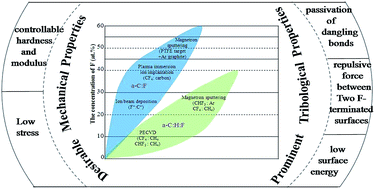
Fluorine easily substitutes hydrogen in DLC films due to its monovalence and high electronegativity. The peculiarities of fluorine bestow low surface energy, low inner stress, good thermal stability, preeminent tribological properties and biocompatibility on fluorine-containing, diamond-like carbon (F-DLC) films. Although there are some reviews that introduce the important advances in DLC films, they are not particularly focused on the promising F-DLC films. In this review, we mainly concentrate on the mechanical and tribological properties of F-DLC films. The mechanical properties, including hardness, modulus, and inner stress, will be discussed thoroughly. More importantly, the eminent tribological properties of F-DLC films would be emphasized based on the surface passivation and repulsive forces induced by fluorine atoms from the surface chemical and micro-mechanical viewpoints. Finally, some existing challenges and promising breakthroughs about F-DLC films are also proposed. It is expected that these films would be produced on a large scale and applied extensively in industrial applications such as micro-electro-mechanical systems, ultra-large scale integrated circuits, thin film transistor liquid crystal displays and biomedical devices.
| Electronegativity | Bond energy (eV) | ||||
|---|---|---|---|---|---|
| C | H | F | C–C | C–H | C–F |
| 2.55 | 2.20 | 3.98 | 6.3 | 3.5 | 5.6 |
To date, a large number of preparation methods have been developed to deposit F-DLC films such as the plasma enhanced chemical vapor deposition (PECVD),20–22 reactive magnetron sputtering,23,24 ion beam deposition,25 and plasma immersion ion implantation,26–28 and others.29 Freire Jr et al. deposited fluorinated amorphous carbon films (a-C:F:H) using radio frequency plasma enhance chemical vapor deposition (rf-PECVD) as the deposition method and a CH4/CF4 mixture as the plasma atmosphere.30 For a fixed self-bias of −350 V, the F concentration increases gradually with CF4 partial pressure. They also found that, compared with amorphous carbon films (a-C:H), the shift in the position of the G peak spans from 1538 to 1556 cm−1 and the ratio between the D and G peaks (ID/IG) changed from 0.5 to 1.1 when the film is deposited at the partial pressure of 80%. Raman information is associated with the size and amount of sp2-hybridized carbon domains.31,32 These results indicate that the amount of sp2 configurations changes and the ordered sp2 phase forms, leading to a transition from a diamond-like carbon structure to a polymer-like structure. However, the fluorine content of a-C:H:F films prepared using PECVD as the deposition method and the CH4–CF4 mixture as a gas source is limited to about 20 at.%. Thus, it is necessary to develop other deposition methods to obtain a higher fluorine content. Reactive magnetron sputtering owing to the advantage of co-sputtering with fluorocarbon and graphite can achieve a high ratio of fluorine to carbon.10,33,34 However, the low availability of the graphitic target greatly restricts its practical application. In order to eliminate the influence of hydrogen on film properties, Ronning et al. deposited fluorinated carbon films by mass selected ion beam deposition, which can directly deposit energetic 12C+ and 19F+ ions at about 100 eV.35 The C+
:
F+ charge ratio was varied from 1
:
0 (i.e., pure carbon) up to 3
:
7. As the F concentration increases, a three step progression of structure occurs as follows. Initially, the tetrahedrally bonded carbon atom (ta-C:F) network with a low fluorine-doping concentration is characterized by a diamond-like structure. With a further increase in F concentration, fluorinated amorphous carbon (a-C:F) films occur with the graphitization of the three-dimensional amorphous network. Moreover, polymer-like fluorocarbon structures, i.e., –CF2 chains and –CF3 endings, increase when the F concentration exceeds 20 at.%. The mechanical properties such as mass density and compressive stress decrease with increase in fluorine concentration, whereas the water contact angle increases with increase in fluorine concentration. Plasma immersion ion implantation (PIII) can provide the non-line-of-sight deposition of thin films on large-area substrates and on complicated-shaped substrates at room temperature. Huang et al.36 deposited fluorine-doped, diamond-like carbon films with different fluorine contents by using CF4 and a carbon cathode arc source. Both the increase in fluorine content and the inner structural changes in F-DLC films are considered to be associated with their deposition and growth mechanisms. Thus, it is crucial to study the deposition mechanisms and growth processes of F-DLC films.
As a kind of heterogeneous doped amorphous carbon film, the initial intention of fluorine incorporation into DLC films is to solve the drawbacks of conventional DLC films. The state-of-the-art mechanical and tribological properties of conventional H-DLC films are described as follows: (i) the friction coefficient spans from >0.7 to <0.001;37–41 (ii) wear is achieved as low as 10−10 to 10−11 mm3 N−1 m−1;42 and (iii) hardness and elastic recovery reaches ∼60 GPa (ref. 43) and ∼80%, respectively.44 However, there are two major disadvantages of DLC films. First, the structure of highly hydrogenated amorphous carbon (a-C:H) films change easily at the temperature of 250–350 °C,45 suggesting that they have poor thermal stabilities. Furthermore, although annealing can reduce inner stress, their mechanical properties degrade simultaneously. Secondly, both hydrogenated and free-hydrogen DLC (a-C) films are very sensitive to testing environments. In inert or vacuum test environments, the coefficient of friction (COF) of hydrogenated DLC films is lower than that of hydrogen-free DLC films. However, in ambient or humid environments, the situation is the reverse;46–48 consequently, these drawbacks will greatly limit their utilization in practical conditions.
Generally, thermal stability could be evaluated by the mass spectrometric study of gas evolution from the thermal decomposition of DLC films,49 the abrupt change of bulk resistivity from the annealing temperature, and Raman analysis. In the late 20th century, Ang et al.14,50 investigated the low bulk resistivity versus annealing temperature of DLC films deposited by PECVD with methane (CH4)/nitrogen trifluoride (NF3) as the reactant gas. The temperature of the abrupt decrease of bulk resistivity for the as-deposited films in CH4 is 200 °C, while that of films deposited with CH4 and NF3 is above 400 °C, suggesting that the addition of NF3 makes the films more stable. The thermal desorption study conducted by Sah et al.49 suggested that highly fluorinated a-C:H:F films are thermally more stable than a-C:H films. Nevertheless, it is unclear whether thermal stability decreases with increase in fluorine concentration.51 Until now, thermal stability of the as-obtained F-DLC films can be sustained even at elevated temperatures as high as 500 °C.52 The possible reason for this enhanced thermal stability is that the bond energy of C–F is higher than that of C–H.
It is well-accepted that the tribological behaviors of conventional DLC films are affected to a great extent by environmental conditions, which is a significant external factor. a-C:H films have a low friction coefficient in dry environments and in vacuum, but this value shows an increasing trend as the relative humidity (RH) increases.47 This can be ascribed to the fact that the polarized C–H bonds in a-C:H films absorb water molecules, which have great polarity, onto the film surface through intermolecular forces. The resulting water adsorbed layer leads to a viscous drag and even capillary forces, thus increasing the adhesion and friction of the film surface. In most cases, a-C:H films work in an air atmosphere, where water is unavoidable. One effective way to solve this problem is to dope fluorine into the DLC films in order to reduce the surface energy. The decrease of the polar part contributes to the reduction of the surface energy, which can lessen the intermolecular forces for the adsorption of water and oxygen. Therefore, the fluorine modification of DLC films is able to improve the environmental adaptability of their tribological behaviors.
Although several previous papers have reviewed the recent progress of different aspects of DLC films, including the deposition methods, as-formed structures, properties and applications, they mainly paid close attention to hydrogenated DLC films, and thus review articles about F-DLC films are still rare. In this review, the recent advances of the mechanical and tribological properties of F-DLC films are addressed. The major part of this review is organized into five sections. In the second section, the deposition mechanisms and structures of F-DLC films are discussed intensively, with emphasis on two as-proposed competing mechanisms: etching of fluorine ions and growth of fluorocarbon plasma. In the third section, we summarize the mechanical properties of F-DLC films, including hardness, modulus, and inner stress, and discuss the impact of the incorporation of fluorine on these properties. In the following section, the excellent tribological properties of F-DLC films are recapitulated and elucidated from the surface chemical and micro-mechanical viewpoint because surface passivation and repulsive force are induced by fluorine atoms. Finally, some prospects and existing challenges about F-DLC films are addressed briefly.
Usually, F-DLC films are prepared by different deposition mechanisms using different reactant materials, namely, fluorocarbons, hydrocarbons and/or graphitic carbon. The term “the substitution of hydrogen with fluorine” is proposed as a common mechanism, whose process includes impact, growth, surface reactions and relaxation.55 The deposition process is based on the “sub-implantation” and “plasma” mode, which correlates with ion impingement that is determined by the ion energy and species in the plasma. Lamperti et al.56–58 comprehensively studied the structure and mechanical properties versus CF4 content and bias voltage variation separately. Fluorine atoms with sufficient kinetic energy replace hydrogen to form hydrofluoric acid (HF), modifying the short-range order of the film. A higher concentration of CF4 leads to the formation of fluorocarbon clusters in the plasma and makes a contribution to the polymer fraction in F-DLC films. The evolution of hardness versus the bias voltage (Vb) witnessed a maximum value around −250 V, which agrees with subplantation mode for the best values of Vb. In practice, the mechanism of “the substitution of hydrogen with fluorine” can be understood by the competition between the etching of fluorine ions and the growth of fluorocarbon plasma.59 Hydrocarbon radicals easily stick onto the surface, resulting in the emergence of deposition; moreover, fluorine coalesces with hydrogen from hydrocarbon radicals to form volatile HF, leaving many dangling bonds. These dangling bonds are saturated by carbon-carrying species, finally prompting the growth of CF3+. For higher ratios of CF4, until there are not enough hydrocarbon radicals to prevent F-induced silicon substrate etching, large fluorinated molecules exist in the gas phase due to the agglomeration of CFx radicals, which give the films polymer-like characteristics. Freire and co-workers20,39,60 made an effort to investigate the film growth of a-C:H:F by ion bombardment. The result showed that the F/C ratio of the gas mixture decided the behavior of deposition. When 0 < F/C < 1, there is no fluorine incorporation. Note that the F/C ratio in the film progressively increases when the F/C ratio of the gas mixture increases from 1 to 3.2; however, erosion occurs in the film when F/C is beyond 3.2. In addition, the structural arrangement with increase in Vb (fixed the partial pressure of CF4 = 67%) changes from a diamond-like to polymer-like structure.61
![]() | ||
| Fig. 1 Functions of the CFn groups in graphene-like networks.62 Reproduced with permission from ref. 62. Copyright (2014) American Chemical Society. | ||
There is a general agreement that the sum of fluorine and hydrogen contents is nearly constant. Fluorine atoms substitute hydrogen atoms that bond to carbon atoms in a-C:H:F films to form CFn (n ≤ 3) groups. The XPS spectrum of C1s peaks analyzes the manner in which carbon and fluorine bond with different fluorine contents. C–CF and C–F groups are present at the fluorine content below 20 at.%. When the fluorine content reaches 23 at.%, CF2 groups appear and the transition of the diamond-like structure to a polymer-like structure occurs. It is suggested that increase in C–F bonds correlates with decrease in C
C bonds.64 Due to the inductive effect of fluorine atoms, the conjugated C
C bonds generates electron deficient carbon by polarized σ bonds and such a deficient-electron carbon accepts electrons into σ* antibonding orbital by nucleophilic attack; moreover, note that, in this case, the C
C bond is broken. Eventually, the bonding structure of the carbon atoms changes from a C
C bond structure to a cross-linked structure. The structure modes of a-C:F:H with different ratios of CF4/CH4 are shown in detail in Fig. 2. The left model belongs to a low gas flow rate ratio where electron-rich –CH3 groups terminate the cross-link structure and form the C
C double bond structure, whereas the right one with the cross-link structure, possessing the high gas flow rate ratio of CF4/CH4 = 3.0, displays that the C
C double bond structure is isolated by fluorine.65 To summarize, F-DLC films with low concentrations of fluorine that substitutes hydrogen sustain the diamond-like structure because of the formation C–F and C–CF groups. However, for high fluorine concentrations, these films have a characteristic polymer-like structure arrangement, which can be attributed to the cooperative effect of two aspects. First, the emergence of CF2 groups as large ring and chain patterns disrupts the carbon network. Second, the number of sp2 carbon increases and thus sp2 hybridized carbon domains form in the microstructure, which is supported by the shift of G peaks to a higher frequency.
![]() | ||
| Fig. 2 Models of the bonding structures in a-C:F films with the variation of the gas flow rate ratio: the left one depicts a-C:F films with electron-rich groups; the right one describes a-C:F films with electron-deficient groups.65 Reproduced from ref. 65 with permission from Elsevier. | ||
It is generally believed that the introduction and increase of the fluorine content promotes the transformation of sp3 cross-linked networks into sp2 carbon domains in amorphous carbon films. Thus, the content of fluorine has a crucial effect on the mechanical properties of the as-obtained DLC films. The as-reported research has demonstrated both the hardness and elastic recovery of films, which are reduced consistently with increase in fluorine content. Because the fluorine content is mainly tuned by increasing the CF4 flux among gas resources, current studies largely concentrate on the relationship between the mechanical properties and gas resource proportion of tetrafluoride and methane (CF4/CH4). As shown in Fig. 3a, the nano-hardness of films with 0, 2, and 8 sccm CF4, evaluated by nano-indentator testing, are 42, 15.3, and 12.4 GPa respectively, which are obviously superior to that of PTFE or Teflon.73 Note that the critical scratch load of partial films (0, 2, 8 sccm) slightly decreases with increase in CF4 flux, indicating a fairly good adhesion to the substrate (Fig. 3a). The decline in film hardness and the scratch resistance illustrates that the addition of fluorine into amorphous carbon films crucially affects their mechanical properties. Yu et al.74 prepared F-DLC films using rf-PECVD. When the ratio of CF4/CH4 was varied from 0
:
x to 4
:
1, the hardness decreased from 19 GPa to 16 GPa, which is still higher than that of the Si (100) substrate (∼12 GPa), as depicted in Fig. 3b. The decrease of hardness and modulus is commonly assigned to the change of the microstructure. The increase of the intensity ratio of the D-band to G-band (ID/IG) and the upward shift of the G-band with the increase of CF4/CH4 reveal the formation of sp2 clusters and confirmed the structural changes.32,74 The Raman results also indicate that sp2-hybridized carbon domains are the main component of C–C networks. The addition of fluorine breaks the cross-linked C–C network and the sp3 diamond-like matrix collapses; thus, a new and more open structural arrangement is built, which induces a decrease in hardness in return.
![]() | ||
Fig. 3 (a) Load–depth curves from nanoindentation measurements for the deposited at different CF4 fluxes.73 (b) Curves of hardness and modulus for the films deposited at varying ratios of CF4/CH4 from 0 : x to 4 : 1.74 Reproduced from ref. 73 and 74 with permission from Elsevier. | ||
Hence, the presence of fluorine atoms not only terminates the crossing carbon network as a termination radical, but also helps to form fluorine-containing groups, i.e. –(CF–CF)n–, CF2, so as to reduce the stiffness and density of the films. These terminal and steric effects eventually decrease the hardness and modulus of a-C:F films. Fig. 4a shows that hardness of films deposited at a total pressure (P) of 1.5 kPa does not change with CF4 concentration, but they are lower than the values of films deposited at P = 1.0 kPa. The Young's modulus of samples for P = 1.5 kPa approaches 240 GPa, while that of samples for P = 1.0 kPa is 326 GPa. Fig. 4b illustrates that the formation of CF2 chains is activated at P = 1.5 kPa, and the decrease in hardness is explained by the fact that weaker C–F bonds substitute for strong C
C bonds and the CF2 chains weaken the films structure.75,60 Ma et al.76 sputtered a PTFE target to deposit a-C:F films by means of RF unbalanced magnetron sputtering. The G peak position and ID/IG of the prepared samples obtained by the Raman spectrum reveal that amorphous graphitic sp2 clusters are the main component of the C–C network, and the values of modulus and hardness approaches 15 GPa and 0.5 GPa, which is similar to those of polycrystalline graphite. Furthermore, the linear regression correlation between modulus and the proportion of C–CF, C–F, –(CF–CF)n–, whose coefficients are 0.009, 0.09, 0.9 (depicted in Fig. 4c and d) indicates that –(CF–CF)n– groups reduce the modulus intensively. Not only do the –(CF–CF)n– groups breach the C–C network, but the fluorine atom also has a steric effect, leading to the decrease of stiffness, thus reducing hardness and modulus.
![]() | ||
| Fig. 4 Vickers hardness (HV), Young's modulus (E), and variation of the amount of CF2 chains as a function of the volume ratio of CF4/(CF4 + CH4) at different total pressures are depicted in (a) and (b), respectively.75 Modulus as a function of –(CF–CF)n–, –(C–CF)n– group proportion are shown in (c) and (d), respectively.76 Reproduced with permission from: (a) and (b) ref. 75 Elsevier; (c) and (d) ref. 76 Elsevier. | ||
Previous studies show that film hardness depends on both the sp3/sp2 ratio and the film's structure, which are influenced by the fluorine content added into the DLC films. For a given gas resource and deposition device, the total contents of hydrogen and fluorine are almost kept constant.56 Therefore, the fluorine content can be tailored by tuning the ratio of the gases resource, in order to obtain films with appropriate hardness for many mechanical applications.77
Generally, the intrinsic stress in DLC films is compressive and controlled by the growth mechanism of sub-implantation, which can be understood in terms of the film structure and the ion bombardment during the process of film growth. It is found that when the fluorine element is added into the a-C:H film, the resulting a-C:H:F film exhibits lower stress than the a-C:H film without it. The measured results show that the stress decreases with the increasing fluorine atomic content, which is further supported by the microstructure features of F-DLC films, as depicted in Fig. 5a,52 and b;20 i.e., more sp2 bonds are formed in the DLC matrix, which occurs in the wake of the increasing fluorine content.73 Bendavid et al.55 concluded the relationship between stress and fluorine content, as demonstrated in Fig. 5c, which shows the plot of compressive stress and hardness versus fluorine content in the films. Stress is reduced as fluorine content increases, which similar to that of hardness and modulus. Further experiments seem to indicate that the self-bias voltage also has little contribution to the compressive stress and hardness of the film, as shown in Fig. 5d.
![]() | ||
| Fig. 5 Stress as a function of fluorine content is depicted in (a)52 and (b),20 respectively. The plot of compressive stress and hardness as a function of fluorine content, self-bias voltage in the films are shown in (c) and (d), respectively.55 Reproduced with permission from: (a) ref. 52 Elsevier; (b) ref. 20 Cambridge University Press; (c) and (d) ref. 55 Elsevier. | ||
In previous reports, it has been demonstrated that the increment of fluorine content can be achieved by increasing the ratio of fluorocarbon gases and/or self-bias voltage. Freire et al.30,60 conducted a comprehensive experiment to clarify the relationship between the stress and the most impressive deposition parameters, i.e., the CF4 partial pressure and Vb. Fig. 6a shows the compressive stress as a function of different fluorine contents which was obtained by increasing the CF4 partial pressure (Vb = −350 V), and the structure transforms from a diamond-like to polymer-like arrangement, which was confirmed by the increase of the luminescence background intensity. Moreover, they pointed out that the internal stress of a-C:H is almost three times higher than that of a-C:F:H at a fixed PCF4 = 67% in the entire investigated Vb region. It is also remarkable that a broad maximum for the stress appears at around −350 V, as can be seen from Fig. 6b. As depicted in the sub-plantation model for a-C:H films, the ion energy of 100 eV per C atom is indispensable for the maximum intensity of hardness and compressive stress.49 At a fixed CF4 partial pressure, 100 eV per C atom corresponds to the Vb of −350 V. Under this condition, the values of hardness and stress for this a-C:F:H film is equal to 5.7 and 1.3 GPa, respectively. These results can be further explained by the energy sharing between each atom in the molecule. With higher mass ratio of individual atoms to the whole molecule, the sharing energy of the atoms is higher. Obviously, for CH3+ ions, this energy is almost totally concentrated in the C atoms, while it is more evenly distributed among all the atoms for CF3+. Therefore, given Vb = −350 V, the ions become less effective with increasing partial pressure of CF4, which directly modifies the film stress. On the other hand, in the latter case, for a fixed CF4-rich atmosphere, increasing the Vb does not make the CF3+ ion much more energetic and intense. As a consequence, it can be concluded that it is the energy of the bombarding species instead of the fluorine content that controls the stress.
![]() | ||
| Fig. 6 (a) Compressive internal stress, open circles of an a-C:H film deposited at −350 V, 14 GPa for comparison, as a function of the self-bias; (b) compressive internal stress, as a function of the film fluorine content (VB = −350 V, P = 10 Pa).60 Reproduced from ref. 60 with permission from Elsevier. | ||
Based on the aforementioned discussion and analysis, the reduction of stress with the incorporation of fluorine can be ascribed to the following reasons. First, the incorporation of fluorine atoms into the a-C:H gives rise to the formation of HF volatile gas, which reduces the content of hydrogen, especially the unbound hydrogen. Furthermore, due to its bigger dimensions and the constant total amount of fluorine and hydrogen, fluorine can lower the atomic density by replacing hydrogen. It has been reported that a lower atomic density can diminish quenched-in strain. This means the transformation from a metastable sp3 to stable sp2 configuration to some extent, which thus decreases the stiffness of the carbon network and finally causes the fall of internal stress. Second, the energy sharing mechanism explained the reduction of stress as the partial pressure of CF4 increased. Third, fluorocarbon groups, which acted as termination radicals, favor to the formation of a boundary in the three-dimensional network, which is beneficial to the inner stress relief.
To date, it is widely accepted that a DLC film's tribological properties depend primarily on the sp3/sp2 hybridization ratio of carbon bonds, the relative content of hydrogen and/or other alloying elements, sliding conditions,90 surface roughness,43 and chemical and/or adhesion interactions of the tribo-pair, testing conditions and/or third-body material.37,91,92 When conducting friction tests, all of these conditions, which influence the tribological behavior, should be taken into account to avoid dispensable effects and to acquire more accurate and reasonable experimental results.
It has been reported in previous publications that fluorinated DLC coatings have outstanding tribological properties. Compared with conventional DLC films, fluorinated DLC films are more inert and lubricant.93 Though higher fluorination DLC films [F/(F + C) > 0.4] seem to be soft and have no wear resistance, moderate fluorinated DLC films [F/(F + C) < 0.2] can have a similar friction level and a lower surface energy compared to conventional a-C:H films.94 Moreover, fluorinated DLC films not only have the same range of steady state friction as that of most typical DLC coatings, but also exhibit a comparable wear.95 It is still found that the repulsive force of F/F terminated surfaces is larger than that of H/H terminated surfaces under the same distance, whose repulsive force is greater than zero.93,96,97 Currently, it is widely believed that fluorine, added into conventional DLC films, plays two vital roles in the low friction behavior, which are passivation and repulsive forces.
The passivation of dangling carbon bonds by hydrogen or hydroxyl is thought to hinder the interactions between the superficial carbon atoms and the counterface, which has been demonstrated by previous studies.99,100 It has been reported that the COF of non-hydrogenated DLC (NH-DLC) against 319 Al alloy tested in ambient air is 0.12, but evidently drops to 0.015 when tested in H2.101 Another study indicated that Al would be transferred to the clean diamond surface but not to the H or OH passivated diamond surfaces.38,102 The resulting Al(111)/C(111)–1 × 1 interface has a high adhesion force because of strong covalent Al–C bonds. It is proven that aluminum atoms form covalent bonds at surfaces consisting of carbon atoms with exposed dangling bond.103 Friction tests of NH-DLC coatings against Al pins in different testing environments have been performed to further verify the effect of passivation on tribological behavior. In terms of samples tested in both nitrogen and vacuum, it is observed from the SEM image of their wear track that a significant amount of Al atoms transferred and adhered to the DLC coating surface. Energy Dispersive Spectroscopy (EDS) analysis also confirms that C and Cr removed from the DLC coatings are located at the interface, and their friction coefficients are 0.46 and 0.47, respectively. When the relative humidity in air increases from 0% to 85%, the width of the wear track becomes smaller and the contact surface is seriously oxidized, finally leading to the reduction of the friction coefficient from 0.16 to 0.085. Presumably, the adhesion interaction derived from dangling bonds between the surface carbon atoms and Al atoms in nitrogen and vacuum would be regarded as the most critical factor to cause the high fluctuating COF and sever adhesion wear, which also remains the most plausible wear mechanism according to the qualitative analysis of the Gibbs free energy. In comparison with the tests in vacuum and nitrogen, the test in the ambient air provides a large amount of water vapor to passivate the dangling bonds on NH-DLC coatings, thus reducing the COF and wear due to the oxidation wear and abrasive wear.104
To elucidate the role of hydrogen in the tribological mechanism, the COF of partially hydrogenated DLC coatings with two different hydrogen contents have been investigated in an ultra-high vacuum (UHV) and in different hydrogen gas pressures. In UHV, the COF of the film with the lowest hydrogen content of 34 at.% ascends significantly to a stable value of 0.6 after a running-in period. However, provided that hydrogen with its pressure of 10 hPa (hectopascal) is introduced as the tribological atmosphere, the abovementioned film exhibits a lower stable COF of 0.006 after a short initial process. Such a phenomenon is also observed for the film that contained 40 at.% hydrogen in UHV. This may be ascribed to the fact that the introduction of hydrogen increases the surface C–H bonds and reduces the π–π* interaction, forming more weak van der Waals interactions.105 To best of our knowledge, the type and extent of chemical interactions between the sliding-contact interfaces determine the friction and wear properties. It has been demonstrated that the di-hydrogen elimination of the σ bonds and π–π* interactions is the main reason for the superlubricity of DLC films.38 Both a carbonaceous tribolayer on the counterface and the passivation of the sliding surfaces by the chemisorptions of hydrogen co-induce the low friction of NH-DLC films.103 The carbonaceous transfer layer with low shear strength is suggested to be a prerequisite attain a low friction coefficient of H-DLC, which is correlated with applied load, sliding velocity and cycle.106,107
Similar to the hydrogen atoms discussed above, the passivation of surface dangling bonds by fluorine atoms can be ascribed to the formation of fluorocarbon groups, which terminate the surface active carbon. An F-DLC film containing 18.6 at.% F was obtained using the plasma-assisted chemical vapour deposition technique. The following XPS analysis of C1s indicates that the content of –CF and –CF2 bonds approaches 21% and 4%, respectively.108 The XPS spectra of a-C:H:F films prepared by RF magnetron sputtering can be deconvoluted into three peaks: –C–CF–, –CF, and –CF2. Herein, –C–CF– is the main bond structure at a low content of the fluorine source, resulting in a three-dimensional network structure.74,109 It is also summarized that the incorporation of fluorine into the film not only substitutes H to terminate the surface carbon atoms, but also the total amount is kept roughly constant. Being the strongest electronegative element, fluorine bonds to carbon with the bond energy of 5.6 eV, which is higher than that of C–H (3.5 eV). The stronger C–F chemical bond endows F-DLC films with chemical inertness. Therefore, the substitution of hydrogen by fluorine does not weaken the contribution of passivation to the tribological behaviors of F-DLC films.
Zhang et al.110,111 prepared fluorinate-doped hydrogenated films with a curved graphitic (CG-C:H:F) structure. The COF of CG-C:H:F film against Al2O3 was sustained at a steady ultra-low value of 0.01 as seen in Fig. 7a(1), while the reference a-C:H film is 0.03 as seen in Fig. 7a(2). The long-term, ultra-low friction for the CG-C:H:F film is because fluorine activates the formation of curved graphite interfacial layers dispersed in the amorphous carbon structure. Such curved graphite interfacial layers do not only diminish the superficial σ dangling bonds, but also reduce the adhesion due to abundant saturated π-bonds, thus obtaining good tribological behaviors. Fig. 7b illustrates that the a-C:H:F films have excellent tribological performance, because the C–F bond energy is higher than the C–H bond energy.111
![]() | ||
| Fig. 7 (a) Coefficient of friction of the CG-C:H:F film (1) and the a-C:H (2).110 (b) Friction coefficient of F-DLC films prepared by different modifications under different loads: (1) a-C:H film, (2) F-P-a-C:H film and (3) a-C:H:F film.111 Reproduced from ref. 110 and 111 with permission from Elsevier. | ||
The role of fluorine bonded to carbon is both termination and reducing surface energy. The surface energy of F-DLC films is close to that of tetrafluoroethylene (PTFE), which is used for anti-sticking, and is far lower than that of a-C:H:Si and a-C:H.94,112 Notably, the gradually improved contact angle of water droplets on the surface of F-DLC films suggests the formation of a great deal of hydrophobic –CFx groups on its surface, which further confirms its lower surface energy.2,18,19,73,113
A special tribological characteristic of F-DLC is the formation of repulsive forces between two surfaces with fluorine atoms. It has been reported that mutual action between two F-DLC surfaces have higher repulsive forces than that inflicted by two H-DLC surfaces. Fig. 8a illustrates the electrostatic effects, which exist in two F-DLC and two H-DLC counterfaces. It is observed from left diagram plots in Fig. 8a that the two hydrogen terminated DLC counterfaces are mutually exclusive, whereas this repulsive force between the two fluorine terminated DLC counterfaces leads to levitation without contact.93,97,114 Alpas et al.114 calculated the change in total energy of the system interface energy (ΔEtot) as a function of separation distance between Al and diamond:F surfaces. As these two surfaces become closer each other, the ΔEtot value presents two changing process. The first process ranging from a local minimum value to a maximum value indicates the generation of attractive forces between the Al and the diamond:F, while the second process switching from the maximum value to a local minimum value indicates the development of one fluorine atom, which is transferred to the Al surface. During the whole process, the global minimum value of the ΔEtot appears at the point where three fluorine atoms are transferred to the diamond, indicating that the 3F transferred Al/diamond:F is the most stable structure. Moreover, electron charge density difference analysis is used to investigate the bond structure of Al and F atoms and explore the reconstruction of the interface in the process, which provides support for the formation of AlF3.115
![]() | ||
| Fig. 8 (a) The comparison of electrostatic repulsion between a hydrogen terminated DLC (left diagram) and fluorine terminated DLC (right diagram).93 (b) Schematic description of the evolution of COF with sliding time for F-DLC/Al. (1) The initial COF is relatively low for a thin oxide layer in the surface of F-DLC; (2) the breaking of the C–C, C–H and C–F bonds, after F (and C) transfer from the DLC to Al surfaces, the formation of new Al–F bonds at the Al surface, the progressive increase of the COF for the change of bond energy; (3) the formation of AlF3 at Al surface and some C linked to F atoms transferred to the Al surface. The final low steady-state COF is obtained from two F-terminated surfaces.114 Reproduced from ref. 93 and 114 with permission from Elsevier. | ||
The evolution of the COF further demonstrates that the interaction of two F-DLC coatings alleviate adhesion. SEM and EDS analyses of the Al ball surface and wear track of Al/F-DLC show that plastic deformation occurs on the Al ball surface and Al fails to adhere to the F-DLC coating. The schematic in Fig. 8b depicts the repulsive effect based on the material transfer mechanisms, thus explaining the changes of the COF.114
Kubo et al.116 investigated the friction reduction mechanism of H, F-terminated DLC surfaces using molecular dynamics (MD) and tight-binding quantum chemistry (TBQC) calculations. MD can tackle atomic-scale chemical reaction dynamics along with the density functional theory, which can evaluate the reaction possibility, potential functions of the interactive atoms. TBQC-MD is an effective method that not only enables a long-range calculation to investigate the chemical reaction at the interface, but also can handle the friction properties at both the electronic-scale and atomic-scale. MD calculation results of the chemical reaction of H, F-terminated DLC models are concluded as follows. Coulombic energy with a positive value suggests that the larger repulsive forces work on the interface of H, F-terminated DLC models. Moreover, the Lennard-Jones (L-J) energies of the F-terminated DLC model is more stable than that of the H-terminated DLC model, which indicates the existence of weak van der Waals interactions at the interface of the H-terminated DLC model. Therefore, the friction coefficient of the F-terminated DLC model is lower than that of the H-terminated DLC model. Subsequently, the low friction mechanism of fluorine-terminated, diamond-like carbon films (F-terminated DLC) is investigated by TBQC-MD. The simulation results show that the friction coefficient of H-terminated DLC films is 0.42, while it is 0.08 for F-terminated DLC films at the high contact pressure of 7 GPa. The larger ion size and negative charge of fluorine atoms account for the strong repulsive force of F-terminated DLC films.117
O bonds, dipole interaction and capillary forces, or to the inhibition of wear-induced graphitization mechanisms.120 Conversely, the friction coefficient of hydrogen-free DLC films decreases with increasing humidity. This may be attributed to the passivation of dangling bonds by forming hydrogen and hydroxyl groups38,39 or to the water-lubricated sp2 rich transfer film.
In order to improve the humidity sensitivity of conventional DLC films, the most common method is to introduce other elements into these films such as Si, Ti and F.121 Among them, fluorine is believed to be a considerable effective additive. Hauert and Gilmore122 investigated the tribological moisture sensitivity for the alloying elements of Ti and F, and compared these results with the as-reported ones for Si. As presented in Fig. 9a and b, the addition of Ti has little effect on the friction coefficient of DLC with respect to relative humidity. This also has been verified by the fact that the friction coefficient of DLC remains constant at 0.12 at the relative moisture of 65% and 85% over the full range of Ti contents (Fig. 9g and f). It is seen from Fig. 9c and d that a small content of Si can make Si-DLC become practically insensitive to ambient humidity. Its friction coefficient is stabilized at 0.075 over the relative humidity range of 5–85%. With regard to fluorine, as shown in Fig. 9k, its contents of 2 at.% can stabilized the COF of F-DLC against steel at 0.15 from the detail of the evolution of μ5%, μ65%, μ85%, while 2–4 at.% stabilize the COF at 0.1 for the Al/F-DLC film counterpart, which is inferred from Fig. 9l. As far as wear behavior is concerned, F-DLC films retains a low value, while Si-DLC films present a linear increase in the wear rate; i.e., F-DLC is a promising candidate for friction coefficient tailoring and maintaining a wide range of relative humidity without compromising its wear resistance.
![]() | ||
| Fig. 9 Overview of the evolution of μ5%, μ65% and μ85% as a function of dopant content for the dopants Ti (a and b), Si (c and d) and F (e and f). Results for the steel counterface are presented on the left (a, c, and e) and results for the alumina counterface on the right (b, d, and f). Detail evolution of μ5%, μ65% and μ85% for low-friction behavior as a function of dopant content for the dopants Ti (g and h), Si (i and j) and F (k and l). Results for the steel counterface are presented on the left (g, i, and k) and results for the alumina counter-face on the right (h, j, and l).122 Reproduced from ref. 122 with permission from Elsevier. | ||
Rubio-Roy et al.123 deposited F-DLC films with different ratios of CHF3
:
CH4 by PECVD. It can be observed in Fig. 10a that for any given fluorine content, the friction shows a remarkable reduction over the humidity range of 20–60%. Importantly, when the humidity is beyond 60%, the friction is almost stabilized at approximately 0.2 despite the CHF3 contents. It should be noted that the F-DLC films with 10% CHF3 display maximum friction for this given content of CHF3 at four selected relative humidities. In Fig. 10b, all friction curves initially show an increasing trend, and then begin to decrease when CHF3 is beyond 10%. It is well accepted that fluorine modification can reduce the surface energy dramatically,124,125 and it is demonstrated by the water contact angle increase after the incorporation of fluorine into the DLC films (Fig. 10d).17 The friction coefficient of a-C:F films with a fluorine content of 25 at.% against steel balls are tested in three different environments. It can be seen from Fig. 10c that friction coefficients in humid air and dry air have a similar behavior; hence, they are not affected by humidity.126
![]() | ||
| Fig. 10 (a) Friction of a-C:H:F films with different contents of CHF3 as a function of humidity. (b) Friction of a-C:H:F films at different relative humidities in relation with contents of CHF3.123 (c) Friction coefficients of a-C:F films with a fluorine content of 25 at.% against stainless steel balls are tested in dry air (<15% humidity), humid air (>85% humidity) and deionized water environments.126 (d) Liquid droplet on the surface of DLC films before and after F doped: (1) DLC films; (2) F-DLC films, respectively.17 Reproduced with permission from: (a) and (b) ref. 123 Elsevier; (c) ref. 126 Elsevier; (d) ref. 17 Hindawi Publishing Corporation. | ||
In conclusion, the friction decreases with increasing humidity, because surface dangling bonds produced mechanically can react with hydrogen and hydroxyl groups from water to terminate the dangling bonds, despite the fact that fluorine bonds to carbon with a high bond energy. The incorporation of F reduces the surface energy so that the adhesion to the counterpart decreases. When the humidity increases up to some extent, physisorbed-water will mask the minor chemical difference of the films.
However, it should be noted that the development of F-DLC films are still facing many challenges and difficulties, and some of the problems still need to be resolved for further study. First and foremost, although a large number of synthetic methods have been developed to prepare F-DLC films, there is still a lack of systematic process parameters to obtain DLC films with a controllable fluorine content by choosing fluorocarbon gases with suitable F/C ratios and bias voltages. Importantly, F-DLC films with a high F content show weaker mechanical properties. Therefore, it is important to obtain systematic process parameters to balance fluorine content and mechanical properties. Notably, etching of fluorine on silicon substrates prohibits the growth of films in the deposition process; hence, it is necessary to build an interlayer. Moreover, the reduction of hardness is believed to be related with microstructure changes of F-DLC films, which correspond to increasing sp2 configurations, but how this change reflects on the carbon chemical environment is still an important issue to solve. Relationships between hardness and carbon chemical environment can be verified qualitatively. Last not but least, the tribological behaviors of F-DLC films have been studied in depth by simulation and theoretical calculations. Experimental research on different sliding conditions and atmospheres need to be explored to meet working requirements. These will be beneficial for the practical applications of F-DLC films in our lives. As discussed in Section 4, the introduction of the F element to DLC induces a change in bonding and electronegativity inside, finally leading to excellent tribological performances. Our future focus will be primarily placed on the experimental research of hetero-element doping into DLC films on a micro level, exploring the role of the chemical or adhesion interaction on the whole tribological performance of films. The eventual aim is to design F-DLC films with better tunable performance, and developing multifunctional-integration F-DLC films by doping with a variety of elements.
| This journal is © The Royal Society of Chemistry 2015 |