A protic ionic liquid catalyzed strategy for selective hydrolytic cleavage of tert-butyloxycarbonyl amine (N-Boc)

Swapan Majumdar*a, Jhinuk Dea, Ankita Chakrabortya, Dipanwita Royb and Dilip K. Maitib
aDepartment of Chemistry, Tripura University, Suryamaninagar, 799 022, India. E-mail: smajumdar@tripurauniv.in; Fax: +91-381-2374802; Tel: +91-381-237-9070
bDepartment of Chemistry, University of Calcutta, 92, A. P. C. Road, Kolkata 700 009, India

Received 29th October 2014 , Accepted 4th December 2014

First published on 4th December 2014


Abstract

A simple, mild and efficient strategy for selective hydrolytic cleavage of the N-tert-butyloxycarbonyl (Boc) group is devised using a protic ionic liquid as an efficient catalyst. The deprotection reaction proceeded well for N-Boc protected aromatic, heteroaromatic, aliphatic compounds, and chiral amino acid esters and peptides. A wide range of labile protecting groups such as tert-butyl ester, tert-butyl ether, benzyloxycarbonyl (Cbz), TBDMS, O-Boc and S-Boc remained unaffected under the reaction conditions.

Due to environmental and economic issues as well as legislation, chemistry is driven to reduce waste, and reuse and recycle materials in order to meet the principles of green chemistry.1 Thus the development of an environmentally benign, efficient and simple methodology for a fundamental organic transformation is in great demand. The protection and deprotection of functional groups is a common feature to synthesize multi-functionalized molecules in target oriented syntheses.2 The choice of a suitable protecting group is often crucial in the context of simplifying the procedure, achieving the highest yield of the desired product, easy workup and separation. The protection of amines plays pivotal role in the synthetic organic chemistry. For instance, the N-Boc group is extensively used as a protecting group of amines in organic synthesis and amino acids in peptide and nucleoside chemistry. Consequently, a number of methods were developed for cleavage of the N-Boc group using strong acids,3 Lewis acids4 and microwave assisted neutral conditions5 to liberate the parent amine. In some cases, basic conditions6 such as aq. Na2CO3, Cs2CO3–imidazole and NaOtBu have been employed. The heterogeneous catalysis promoted N-Boc deprotection using sulfonic acid resin,7a montmorillonite K10,7b silica,7c heteropolyacids,7d HY-zeolite7e are also reported. However, most of the reported strategies suffer from serious drawbacks such as (i) longer reaction time, (ii) high temperature, (iii) low yield of products and (iv) exploiting expensive catalysts. Moreover, preparations of some of the catalysts are very tedious. Thus, organic synthesis professionals of industries and academia seek simple, efficient and milder methods for deprotection of this most frequently used protecting group, which should be selective enough for preserving the other functionalities in the molecule. G. Wang et al. (2009) reported8 a special and efficient “green”, catalyst-free, N-Boc deprotection in supercritical water under pressure. In their methodology, both aromatic and aliphatic N-Boc amines can be converted into the corresponding amines in high yields within 2–16 h, using distilled and deionized water (20 mL mmol−1) at 150 °C. J. Wang and his colleagues (2009) described9 a selective N-Boc deprotection method using boiling water as a reaction medium. In spite of the potentiality of these green methods, their major limitation is the use of sophisticated and costly technology, incompatibility of the deprotection reaction with ester functionality and longer reaction time. As an inexpensive and readily available reagent, imidazolium based protic ionic liquid has attracted considerable interest due to its less hazardous nature and efficiency in various organic transformations.10 We have reported earlier an efficient method11a for the tert-butyloxycarbonylation of amines, amino acids/esters, alcohols and a green strategy for the selective hydrolytic cleavage of acetals and ketals11b using protic ionic liquid as an effective catalyst. In this communication, we disclose the efficacy of a protic ionic liquid as a catalyst for the selective deprotection of N-Boc group of a wide range of achiral and chiral compounds.

In our initial experiments we choose readily available N-Boc aniline as a model substrate and, the results for development and optimization of the deprotection studies is displayed in Table 1. On treatment of the N-Boc aniline (1 mmol) with 1 mmol of Bronsted acid ionic liquid (I or II) in water–dioxane (1[thin space (1/6-em)]:[thin space (1/6-em)]1) at 30 °C, the deprotection did not take place (Table 1, entry 1). However on rising the temperature to 70–72 °C deprotection was smoothly accomplished after 1 h in 92% yield (Table 1, entry 2). Disappearance of the characteristic infrared absorption peak at 1690 cm−1 and 1H NMR signal at δ 1.35 of 1a confirmed the cleavage of N-Boc group. Usage of catalytic amount of II (10 mol%) was slowed down the reaction rate (6 h) and yield was also marginally dropped to 85% (Table 1, entry 3). Changing the solvent system dioxane–water (1[thin space (1/6-em)]:[thin space (1/6-em)]1) to water results incomplete conversion (Table 1, entry 4), probably due to the poor solubility of the precursor. It indicates that homogeneous solution of substrate in water–dioxane is essential for executing the catalytic cycle of the PIL. Since it was known that imidazolium cation has the capability to activate carbonyl group thus we turned our attention whether this cleavage reaction is compatible to other imidazolium based ionic liquid irrespective of their anionic counterparts. To investigate such role of imidazolium cation in this cleavage reaction we have employed 1-methyl-3-butyl imidazolium bromide (III) and 1-methyl-3-butyl imidazolium hydroxide (IV)12 under the same reaction conditions. Unfortunately hydrolytic cleavage was unsuccessful (Table 1, entries 5, 6). These results revealed the proton present in ionic liquid II (PIL) is indispensable. Water has also important role with the protic ionic liquid as the deprotection reaction did not undergo in anhydrous condition even at 80 °C (Table 1, entry 7). The conversion of N-Boc aniline to aniline was also unsuccessful without protic ionic liquid either in water alone at 80 °C, (Table 1, entry 8, which was consistent with the results reported by G. Wang et al.8) or water–dioxane (Table 1, entry 9).

Table 1 Standardization of PIL catalyzed N-Boc cleavage of N-Boc aniline

image file: c4ra13419b-u1.tif

Entry Solvent Temp. (°C) Ionic liquid Time (h) Yield (%)
1 Dioxane–H2O (1[thin space (1/6-em)]:[thin space (1/6-em)]1) 30 I or II (100 mol%) 12 0
2 Dioxane–H2O (1[thin space (1/6-em)]:[thin space (1/6-em)]1) 70–72 II (100 mol%) 1 92
3 Dioxane–H2O (1[thin space (1/6-em)]:[thin space (1/6-em)]1) 70–72 II (10 mol%) 6 85
4 Water 70–72 II (10 mol%) 6 Mixture
5 Dioxane–H2O (1[thin space (1/6-em)]:[thin space (1/6-em)]1) 70–72 III (100 mol%) 12 0
6 Dioxane–H2O (1[thin space (1/6-em)]:[thin space (1/6-em)]1) 70–72 IV (100 mol%) 12 0
7 Dioxane 80 II (100 mol%) 12 0
8 Water 80 None 4 0
9 Dioxane–H2O (1[thin space (1/6-em)]:[thin space (1/6-em)]1) 80 None 4 0


After the standard condition of the deprotection reaction is set, we have chosen several N-Boc protected aromatic and heteroaromatic compounds, which were subjected to deprotection under the optimized reaction conditions. We were pleased to observe that N-Boc protected o- and p-toluidine, 4-aminophenol, 4-methoxyaniline, 1-naphthylamine, imidazole, benzimidazole, 2-amino pyridine, 4-fluoroaniline and 4-nitroaniline undergo smoothly for deprotection under the catalysis of protic ionic liquid (II) to afford the desired amines in good to excellent yields (Table 2). It can be seen from the results summarized in Table 2 that the electron donating substituents such as methyl (Table 2, entries 1 and 2), hydroxyl (entry 3), methoxy (entry 4) accelerate the reaction rate whereas the electron withdrawing substituents fluoro (entry 9) and nitro (entry 10) decrease the rate of the reaction. N-Boc imidazole/benzimidazole (entries 6, 7) or N-Boc-2-amino pyridine (entry 8) also took longer reaction time. The slow reactivity of hetero-aromatic could be explained by the fact that the heterocyclic ring nitrogen got protonated by protic ionic liquid, which reduced the catalyst concentration. In the case of N-Boc protected 4-fluoroaniline and 4-nitroaniline the deprotection reactions were rather slow, but complete deprotection could be achieved at 80–82 °C in 72% and 75% yields respectively (Table 2, entries 9, 10). This is probably due to the solubility problem of the substrates in dioxane–water (1[thin space (1/6-em)]:[thin space (1/6-em)]1) medium.

Table 2 Protic ionic liquid catalyzed deprotection of N-Boc aromatic aminesa
Entry Substrate Product Time (h) Yieldb (%)
a Reaction temperature 70–72 °C.b Yield reported on the basis of isolated product after column chromatography.c Reaction was carried out at 80–82 °C.
1 image file: c4ra13419b-u2.tif image file: c4ra13419b-u3.tif 1 98
2 image file: c4ra13419b-u4.tif image file: c4ra13419b-u5.tif 1 92
3 image file: c4ra13419b-u6.tif image file: c4ra13419b-u7.tif 2 82
4 image file: c4ra13419b-u8.tif image file: c4ra13419b-u9.tif 1 85
5 image file: c4ra13419b-u10.tif image file: c4ra13419b-u11.tif 2 89
6 image file: c4ra13419b-u12.tif image file: c4ra13419b-u13.tif 3 77
7 image file: c4ra13419b-u14.tif image file: c4ra13419b-u15.tif 4 65
8 image file: c4ra13419b-u16.tif image file: c4ra13419b-u17.tif 5 55
9 image file: c4ra13419b-u18.tif image file: c4ra13419b-u19.tif 5 72c
10 image file: c4ra13419b-u20.tif image file: c4ra13419b-u21.tif 5 75c


The previous method is also applicable for deprotection of N-Boc protected aliphatic amines, which was working at a little bit higher temperature (80–82 °C). The N-Boc protected hexadecyl and octadecyl amines (Table 3, entries 1, 2) proceeded efficiently at 80 °C, whereas it was sluggish on use of N-Boc benzylamine and N-Boc dibenzylamines (Table 3, entries 3, 4). The N,N-di-Boc protected benzylamine was also cleaved to benzylamine by protic ionic liquid in water–dioxane (1[thin space (1/6-em)]:[thin space (1/6-em)]1) rather slowly (entry 5). The equimolar mixture of protected aromatic amine (N-Boc aniline) and aliphatic amine (N-Boc benzylamine) were treated together with equivalent amount of protic ionic liquid II in water–dioxane (1[thin space (1/6-em)]:[thin space (1/6-em)]1) at 70–72 °C, and complete conversion of N-Boc aniline to aniline was observed after 1 h with 90% yield (Table 3, entry 6). This experiment indicates that the deprotection strategy is highly selective for aromatic Boc-protected amino compounds over aliphatic N-Boc amines.

Table 3 Deprotection of N-Boc group of aliphatic aminesa
Entry Substrate Product Time (h) Yieldb (%)
a Reaction temperature 80–82 °C.b Isolated yield.c Reaction temperature 70–72 °C.
1 image file: c4ra13419b-u22.tif image file: c4ra13419b-u23.tif 1.5 96
2 image file: c4ra13419b-u24.tif image file: c4ra13419b-u25.tif 1.5 92
3 image file: c4ra13419b-u26.tif image file: c4ra13419b-u27.tif 4.0 98
4 image file: c4ra13419b-u28.tif image file: c4ra13419b-u29.tif 5.5 80
5 image file: c4ra13419b-u30.tif image file: c4ra13419b-u31.tif 7.0 74
6 image file: c4ra13419b-u32.tif image file: c4ra13419b-u33.tif 1.0 90c


In contrary to cleavage of both the N-Boc and ester functional groups on use of supercritical water8 or boiling water9 herein N-Boc deprotection were proceeds without cleavage of the ester functionality, tert-butyl ether group and N-benzyloxycarbonyl (Cbz) group present in amino acid derivatives or other molecules. To broaden the scope of the deprotection strategy, several other acid labile protecting groups such as tetrahydropyranyl, –CO2tBu and –TBDMS were also addressed in our study. Since both phenolic –OH and alcoholic –OH get protected by Boc group at 70 °C under solvent free conditions11a we were interested to examine the behavior of these O-Boc protected compounds under the N-Boc deprotection reaction conditions. We noticed that only O-Boc protected phenol underwent deprotection to afford the desired product in 90% yield after 1.5 h (Table 4, entry 1), whereas alcoholic O-Boc compounds were completely inert under the same reaction conditions, even after 6 h (Table 4, entries 2, 3). The S-Boc protected benzyl thiol, O-TBDMS and tert-butyl ester were also inert against protic ionic liquid under the similar reaction conditions (Table 4, entries 4–6) to afford the desired thiol, alcohol and acids. Interestingly the PIL catalyst was efficiently deprotected O-THP protecting group under the reaction conditions to afford corresponding aliphatic alcohol in 93% yield (Table 4, entry 7).

Table 4 Deprotection of O-Boc and other protecting groups
Entry Substrate Product Time (h) Yield (%)
1 image file: c4ra13419b-u34.tif image file: c4ra13419b-u35.tif 1.5 90
2 image file: c4ra13419b-u36.tif image file: c4ra13419b-u37.tif 6.0 NR
3 image file: c4ra13419b-u38.tif image file: c4ra13419b-u39.tif 6.0 NR
4 image file: c4ra13419b-u40.tif image file: c4ra13419b-u41.tif 6.0 NR
5 image file: c4ra13419b-u42.tif image file: c4ra13419b-u43.tif 6.0 NR
6 image file: c4ra13419b-u44.tif image file: c4ra13419b-u45.tif 6.0 NR
7 image file: c4ra13419b-u46.tif image file: c4ra13419b-u47.tif 4.0 93


Having in mind the importance of N-Boc protection strategy in peptide synthesis, feasibility of N-Boc deprotected of different amino acids or their esters were examined keeping the reaction temperature at 80–82 °C. The N-Boc protected L-Phe-OBn, L-Phe-OMe and L-Ser(tBu)-OMe (Table 5, entries 1–3) all undergo smooth deprotection in water–dioxane to the corresponding amines. Racemization at the α-carbon of the amino acid derivatives were not observed in any cases. N-Boc protected amino acids such as Boc-Ala-OH or Boc-Pro-OH both underwent deprotection to free amino acids in 65% and 92% isolated yield respectively. In both the cases deprotection proceeds well in water (no need of dioxane) in shorter reaction time with respect to corresponding esters. It is noteworthy to mention that N-Cbz protected amino acid did not respond because no change was observed on treatment of Cbz-Phe-OH with 100 mol% of PIL (II) in water–dioxane (1[thin space (1/6-em)]:[thin space (1/6-em)]1) for 3 h at 80–82 °C. Thus, it is possible to deprotect N-Boc group in presence of an orthogonal N-Cbz group present in the same molecule (Table 5, entry 7).

Table 5 Deprotection of N-Boc group present in amino acids and other derivativesa
Entry Substrate Product Time (h) Yieldb (%)
a Isolated yield.b Reaction temperature 80–82 °C.c Reaction proceed in water.
1 image file: c4ra13419b-u48.tif image file: c4ra13419b-u49.tif 3.5 72
2 image file: c4ra13419b-u50.tif image file: c4ra13419b-u51.tif 3.0 70
3 image file: c4ra13419b-u52.tif image file: c4ra13419b-u53.tif 4.5 75
4 image file: c4ra13419b-u54.tif image file: c4ra13419b-u55.tif 1.0 65c
5 image file: c4ra13419b-u56.tif image file: c4ra13419b-u57.tif 1.0 92c
6 image file: c4ra13419b-u58.tif image file: c4ra13419b-u59.tif 3.0 NR
7 image file: c4ra13419b-u60.tif image file: c4ra13419b-u61.tif 1.0 76


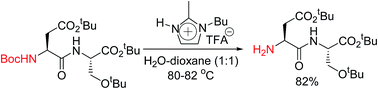
We are also delighted to observed that Boc protected N-terminal amino group was selectively deprotected when fully protected dipeptide BocAsp(OtBu)Ser(tBu)-OtBu (7h)13 was treated with protic ionic liquid in water–dioxane (1[thin space (1/6-em)]:[thin space (1/6-em)]1) for 4 h at 80–82 °C to produced N-deprotected product 8h in 82% yield (Scheme 1). In this reaction, peptide bond, CO2tBu group of side chain as well as terminal position in aspartic acid residue and tert-butyl ether in serine residue were retained. This observation indicated that our method is highly selective for N-Boc group in a peptide in the presence of other common protecting groups.


image file: c4ra13419b-s1.tif
Scheme 1 Chemoselective deprotection of N-Boc group in a peptide.

The generally accepted mechanism for the deprotection of the Boc group under anhydrous acidic condition14 involves the formation of carbon dioxide and isobutylene. In this case, the first step is the activation of Boc group by protonation and subsequent elimination of isobutylene produced unstable carbamic acid which releases carbon dioxide to afford parent amine. On the other hand, activation of carbonyls by imidazolium cation is well established. In our study we observed that the N-Boc deprotection was smoothly proceed when protic ionic liquid was employed and the cleavage reaction was not successful when imidazolium bromide or hydroxide was employed. To see whether proton alone could catalyzed the N-Boc deprotection we have carried out one control experiment with triethylammoniun trifluoroacetate by keeping the other conditions same (not shown in the tables) but this does not produce any deprotected product. Thus it is likely to involve dual activation of carbamate by imidazolium ion and proton attached in ionic liquid and then nucleophilic attack by water providing a tetra-coordinated species that can expels tert-BuOH and carbamic acid. The elimination of carbon dioxide from carbamic acid provides the parent amine (Scheme 2).


image file: c4ra13419b-s2.tif
Scheme 2 Probable mechanism of N-Boc deprotection reaction.

In conclusion we have demonstrated a simple, mild and chemoselective Boc-deprotection strategy for N-Boc amines using imidazolium based protic ionic liquid in water–dioxane mixture. The present approach proceeded well for aromatic, heteroaromatic, aliphatic N-Boc substrates as well as N-Boc amino acid/esters and N-Boc peptides. The acid sensitive and labile protecting groups such as methyl or tert-butyl ester, tert-butyl ether, TBDMS survived under the reaction conditions. Chemoselectivity of the reaction and many sensitive functional groups tolerance will make the protocol attractive and useful to the synthetic and medicinal chemists in academia and industry.

General procedure

To a stirred solution of N-Boc amine (1 mmol) in water–dioxane (1[thin space (1/6-em)]:[thin space (1/6-em)]1, 2 mL), protic ionic liquid II (1 equiv. or 10 mol%) was added and then the mixture was heated at 70–72 °C or 80–82 °C depending upon the nature of substrate as indicated in the Tables 2–5 until the complete consumption of starting material (monitored by TLC). After completion of the reaction, dioxane was removed under reduced pressure and the mixture was diluted with water (5 mL). The mixture was extracted with diethyl ether or ethyl acetate (3 × 5 mL), washed with water, dried over anhydrous Na2SO4 and concentrated under reduced pressure. The crude product was then passed through a short pad silica-gel to afforded parent amines. The aqueous part containing ionic liquid was recycled. The product was characterized by IR, 1H and 13C NMR spectral data and compare with authentic samples (ESI).

Acknowledgements

We are pleased to acknowledge the financial support from Department of Science & Technology (DST), Govt. of India (grant no. SR/S1/OC-49/2010) for this investigation. A.C. is thankful to Department of Science and Technology, Govt of India for providing INSPIRE research fellowship. We are also very much thankful to learned reviewers for their valuable comments and suggestions, which improved the quality of the work.

References

  1. (a) P. T. Anastas and J. C. Warner, Green Chemistry: Theory and Practice, Oxford University Press, New York, 1998, p. 30 Search PubMed; (b) P. T. Anastas and M. M. Kirchhoff, Acc. Chem. Res., 2002, 35, 686 CrossRef CAS PubMed; (c) ACS Symposium Series 1011, ed. P. T. Anastas, I. J. Levy and K. E. Parent, Am. Chem. Soc., Washington, DC, 2009, p. 137 Search PubMed.
  2. (a) T. W. Greene and P. G. M. Wuts, in Protective groups in Organic Synthesis, Wiley & Sons, New York, 3rd edn, 1999 CrossRef; (b) P. J. Kocienski, in Protecting Groups, Georg Thieme, Suttgart, 2004 Search PubMed.
  3. (a) A. Kuttan, S. Nowshudin and M. N. A. Rao, Tetrahedron Lett., 2004, 45, 2663 CrossRef CAS PubMed; (b) S. Natarajan, Y.-G. Alexander and A. Ganesan, Mol. Diversity, 2005, 9, 291 CrossRef PubMed; (c) G. Han, M. Tamaki and V. J. Hruby, J. Pept. Res., 2001, 58, 338 CrossRef CAS; (d) P. Strazzolini, N. Misuri and P. Polese, Tetrahedron Lett., 2005, 46, 2075 CrossRef CAS PubMed; (e) B. Li, M. Berliner, R. Buzon, C. K.-F. Chiu, S. T. Colgan, T. Kaneko, N. Keene, W. Kissel, T. Le, K. R. Leeman, B. Marquez, R. Morris, L. Newell, S. Wunderwald, M. Witt, J. Weaver, Z.-J. Zhang and Z.-L. Zhang, J. Org. Chem., 2006, 71, 9045 CrossRef CAS PubMed.
  4. (a) E. F. Evans, N. J. Lewis, I. Kapfer, G. Macdonald and R. J. K. Taylor, Synth. Commun., 1997, 27, 1819 CrossRef CAS; (b) R. S. Lott, V. S. Chauhan and C. H. Stammer, J. Chem. Soc., Chem. Commun., 1979, 495 RSC; (c) G. Marcantoni, M. Massccesi, E. Torregiani, G. Bartoli, M. Bosco and L. Sambri, J. Org. Chem., 2001, 66, 4430 CrossRef; (d) R. Frank and M. Schutkowski, Chem. Commun., 1996, 2509 RSC; (e) D. S. Bose, K. K. Kumar and A. V. N. Reddy, Synth. Commun., 2003, 33, 445 CrossRef CAS PubMed; (f) R. Kaul, Y. Brouillette, Z. Sajjadi, K. A. Hansford and W. D. Lubell, J. Org. Chem., 2004, 69, 6131 CrossRef CAS PubMed.
  5. (a) S. R. Dandepally and A. L. Williams, Tetrahedron Lett., 2009, 50, 1071 CrossRef CAS PubMed; (b) J. G. Siro, J. Martín, J. L. García-Navio, M. J. Remuǐnan and J. J. Vaquero, Synlett, 1998, 147 CrossRef CAS PubMed.
  6. (a) S. E. Kazzouli, J. Koubachi, S. Berteina-Raboin, A. Mouaddi and G. Guillaumet, Tetrahedron Lett., 2006, 47, 8575 CrossRef PubMed; (b) D. K. Mohapatra and K. A. Durugkar, ARKIVOC, 2005, xiv, 20 CrossRef; (c) N. J. Tom, W. M. Simon, H. N. Frost and M. Ewing, Tetrahedron Lett., 2004, 45, 905 CrossRef CAS PubMed.
  7. (a) Y.-S. Liu, C. Zhao, D. E. Bergbreiter and D. Romo, J. Org. Chem., 1998, 63, 3471 CrossRef CAS; (b) N. S. Slaikh, A. S. Gajare, V. H. Deshpande and A. V. Bedekar, Tetrahedron Lett., 2000, 41, 385 CrossRef; (c) R. W. Jackson, Tetrahedron Lett., 2001, 42, 5163 CrossRef CAS; (d) R. Belghiche, Z. Cheraiet, M. Berredjem, M. Abbessi and N.-E. Aouf, Eur. J. Chem., 2012, 3, 305 CrossRef CAS; (e) N. Ravindranath, C. Ramesh, M. Ravinder Reddy and B. Das, Adv. Synth. Catal., 2003, 345, 1207 CrossRef CAS.
  8. G. Wang, C. Li, J. Li and X. Jia, Tetrahedron Lett., 2009, 50, 1438 CrossRef CAS PubMed.
  9. J. Wang, Y.-L. Liang and J. Qu, Chem. Commun., 2009, 5144 RSC.
  10. Preparation and applications of protic ionic liquids see: (a) G. Zhao, T. Jiang, H. Gao, B. Han, J. Huang and D. Sun, Green Chem., 2004, 6, 75 RSC; (b) A. R. Hajipour and F. Rafiee, Org. Prep. Proced. Int., 2010, 42, 285 CrossRef CAS; (c) A. R. Hajipour and F. Rafiee, J. Iran. Chem. Soc., 2009, 6, 647 CrossRef CAS; (d) J.-P. Belieres and C. A. Angell, J. Phys. Chem. B, 2007, 111, 4926 CrossRef CAS PubMed; (e) S. Sunitha, S. Kanjilal, P. S. Reddy and R. B. N. Prasad, Tetrahedron Lett., 2008, 49, 2527 CrossRef CAS PubMed; (f) S. Sahoo, T. Joseph and S. B. Halligudi, J. Mol. Catal. A: Chem., 2006, 244, 179 CrossRef CAS PubMed.
  11. (a) S. Majumdar, J. De, A. Chakraborty and D. K. Maiti, RSC Adv., 2014, 4, 24544 RSC; (b) S. Majumdar, M. Chakraborty, D. K. Maiti, S. Chowdhury and J. Hossain, RSC Adv., 2014, 4, 16497 RSC.
  12. B. C. Ranu and R. Jana, Eur. J. Org. Chem., 2006, 3767 CrossRef CAS.
  13. C. A. Goubko, S. Majumdar, A. Basak and X. Cao, Biomed. Microdevices, 2010, 12, 555 CrossRef CAS PubMed.
  14. D. M. Shendage, R. Froehlich and G. Haufe, Org. Lett., 2004, 6, 3675 CrossRef CAS PubMed.

Footnote

Electronic supplementary information (ESI) available. See DOI: 10.1039/c4ra13419b

This journal is © The Royal Society of Chemistry 2015
Click here to see how this site uses Cookies. View our privacy policy here.