Qiying Liu*a,
Xiaofeng Caobc,
Tiejun Wanga,
Chenguang Wanga,
Qi Zhanga and
Longlong Maa
aCAS Key Laboratory of Renewable Energy, Guangzhou Institute of Energy Conversion, Chinese Academy of Sciences, Guangzhou, 510640, P. R. China. E-mail: liuqy@ms.giec.ac.cn; Fax: +86-20-87057789; Tel: +86-20-87048614
bState Key Laboratory of Coal Conversion, Institute of Coal Chemistry, Chinese Academy of Sciences, Taiyuan, 030001, P. R. China
cUniversity of Chinese Academy of Sciences, Beijing, 100049, P. R. China
First published on 3rd December 2014
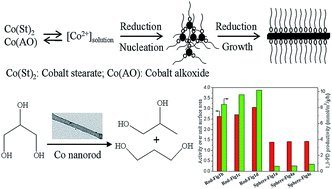
Cobalt nanorods were synthesised in polyol using Ir as the nucleation agent and sodium stearate as the surfactant. The aspect ratios of the rods can be facilely mediated by the Ir/Co molar ratios. During rod growth, the solid cobalt alkoxide and stearate intermediates formed at the initial stages and acted as the reservoir to control Co2+ reduction and then mediated the subsequent rod growth. Stearate played the critical role in controlling rod formation by its selective and covalent coating on the {10−10} planes, which induces anisotropic growth in the [0002] direction. The cobalt rods presented the hcp phase in the centre part and the fcc phase in the conical tips because of the difference in growth rate between stages, showing the hybrid crystallographic property. The slow growth can also induce the formation of fcc spheres by altering the amount of alkali in polyol. In glycerol hydrogenolysis, the hcp rods, which mainly expose the {10−10} planes, revealed much higher activity and 1,3-propanediol selectivity than the fcc spheres, demonstrating facet-dependent performance as a solid catalyst. To our knowledge, this is the first example of producing 1,3-propanediol using the facet effect of cobalt nanomaterials.
Large numbers of strategies have been employed to synthesise cobalt nanomaterials with well defined geometries. By using ordered mesoporous SiO2, ZrO2, carbon nanotubes and polystyrene as the hard templates13–16 and polyvinylpyrrolidone (PVP), cetyl trimethylammonium bromide (CTAB) and sodium dodecyl sulfonate (SDS) as the soft templates,17–19 cobalt nanowires, nanocubes and hollow spheres can be synthesised. In the presence of surfactants, cobalt nanorods/wires, discs and spherical nanocrystallites have also been fabricated via the thermal pyrolysis of cobalt-containing precursors in organic solvents20,21 and reverse micro-emulsion systems.22 However, these produced cobalt nanomaterials require multiple steps for the hard/soft templates, costly/toxic organometallic precursors for thermal pyrolysis and complex reaction media for reverse micro-emulsion. In contrast, polyol is an effective solvent, reductant and complexant for the synthesis of metal nanomaterials.23,24 However, due to the mild reducing capability of polyol and negative redox potential of cobalt cation, the synthetic temperature is rather high (the reduction usually takes place at the boiling point of polyol), which makes the strict control of the shape and particle size of cobalt nanomaterials rather difficult.25 One solution is to introduce foreign nuclei to facilitate cobalt nucleation at lower temperature, which facilitate the separation of nucleation and growth processes and mediate the shapes and sizes of the metal nanomaterials.26,27
In this work, we solvothermally fabricate cobalt nanorods with controllable aspect ratios and nanospheres with different sizes by selecting Ir as the heterogeneous nucleation agent in 1,2-propanediol and sodium stearate. The structures of the nanorods/nanospheres were elucidated, and a formation mechanism was proposed. These nanoparticles were used as the catalyst for the selective hydrogenolysis of glycerol to 1,2-/1,3-propanediols, and an interesting facet-dependent catalysis was obtained.
Transmission electron microscopy (TEM) and high-resolution transmission electron microscopy (HRTEM) images were taken using a JEOL JEM-2100F instrument operated at 200 kV. The samples were ultrasonically dispersed into ethanol, and drops of the suspension were placed on a carbon-coated copper grid and then dried in air.
Scanning electron microscopy (SEM) images of the cobalt materials were recorded using an S-4800 instrument operated at 30 kV. The sample was placed on conductive carbon tape adhered to an aluminium sample holder.
Elemental analyses were performed by inductively coupled plasma atomic emission spectroscopy (ICP-AES) on a Plasma-Spec-II spectrometer (LEEMAN, USA). The samples were dissolved in aqua regia, and the solution was diluted with 2% HNO3 to meet the detection range of the instrument.
The N2 adsorption–desorption isothermal profile was determined on a Micromeritics ASAP 2010 system at −196 °C. Before measurement, the samples were degassed under vacuum for 6 h at 80 °C. The surface area was calculated by the multipoint Brunauer–Emmett–Teller method.
The FT-IR spectra were obtained in the scanning range of 4000–400 cm−1 using a Nicolet 6700 FT-IR spectrometer with a resolution of 4 cm−1. The sample was fully ground with KBr and pressed into a wafer before measurement.
Thermogravimetric (TG) curves were measured on a NETZSCH-STA 409PC DSC-SP thermal analyser under N2 flow at 30 ml min−1 with a ramp of 10 °C min−1 from room temperature to 630 °C.
X-ray photoelectron spectroscopy (XPS) measurements were performed with a Surface Science Instruments SSX-100 ESCA spectrometer using monochromatic Al Kα X-rays and an electrostatic hemispherical analyser. The spectra were recorded with a pass energy of 110 eV and an X-ray spot size of 600 μm. The base pressure in the analysis chamber was around 10−9 Torr. A flood gun-type charge neutraliser was used to correct for differential charging. For XPS measurements, the samples were pre-treated at 100 °C in a reactor cell under N2 flow and then transferred under vacuum to the analysis chamber.
The liquid products were identified by gas chromatography-mass spectrometry (GC-MS) and quantified by a gas chromatograph (Agilent 7890) equipped with a flame-ionisation detector and a Carbowax 20 M capillary column with a length of 25 m and a diameter of 0.2 mm. 1,4-Butanediol was used as the internal standard. The gas products were collected by a gas bag and analysed by another gas chromatograph equipped with a thermal conductivity detector and a Porapak-T (3 m × 3 mm) pack column.
Glycerol conversion and product selectivity are defined as the following formulas:
Here, C, W, A and M refer to the mass concentration, weight, peak area (in gas chromatography analysis) and molecular weight of glycerol or the product, respectively. The subscripts i and s indicate the product and the internal standard, respectively, mi indicates the carbon number of product i, and a and b are the parameters of product i in the correction curves during quantification analysis.
The structural details of the rods were characterised by HRTEM. As shown in Fig. 2a, the consistent lattice fringes at 0.211 nm, 0.208 nm and 0.188 nm correspond to the (10−10), (0002) and (10−11) planes, respectively, indicating the hexagonal close-packed phase of metal cobalt (hcp, JCPDS no. 5-727). Based on Fig. 2a and the fast Fourier transform (FFT) pattern, the rods grow along the [001] plane, and the main exposed planes are the enclosed {1010} planes in the lateral direction. The structure of the conical head is shown in Fig. 2b and d. The conical heads presented as regular hexagons along the [0002] directions of the nanorods; their average size was about 28 nm, and the side length was about 15 nm, which is consistent with the size measured by TEM (Fig. 1b). Interestingly, the HRTEM measurement and relative FFT pattern showed that the distinct lattice fringes at 0.203 nm are related to the (111) plane of face-centred cubic phase of metal cobalt (fcc, JCPDS no. 15-806). These fringes are perpendicular to the long axes of the nanorods, revealing the mainly exposed (111) plane. Evidently, the crystallography of the synthetic cobalt nanorods is composed of hcp phase in the centre part and the fcc phase in the conical tips.
![]() | ||
| Fig. 2 HRTEM images of a cobalt nanorods: (a), conical head (b), Ir nanoparticles (c) and conical heads by SEM image (d). Insets in (a) and (b) are the fast Fourier transform (FFT) patterns. | ||
In addition to the rods, multi-pod nanostructures with three, four and five branches were observed for Ir/Co molar ratios of 0.01 and 0.025 (Fig. 3). The length of each branch varied within 30–200 nm, while their diameters were similar to the 10 nm diameters of the isolated rods. In some cases, the branches extruded out from a bending or a straight rod substrate, forming a quasi-tetrapod structure.
![]() | ||
| Fig. 3 TEM images of cobalt multi-pods. The synthesis of a, c and d correspond to those in Fig. 1b and b is relative to Fig. 1c. | ||
Fig. 4 shows the XRD patterns of cobalt nanomaterials synthesised with different Ir/Co molar ratios. When no Ir was introduced and the synthesis lasted for 20 h, diffractions were observed at 2θ = 44.4°, 51.6° and 76°, corresponding to the (111), (200) and (220) planes, respectively; this indicates the fcc phase of the cobalt spheres. As Ir was added and the synthesis was carried out for 10 h, the fcc phase disappeared. The distinct diffractions at 2θ = 41.5°, 44.4°, 47.4°, 62.4° and 75.9° correspond to the (10−10), (0002), (10−11), (10−12) and (1100) planes, respectively, demonstrating that the cobalt is hcp phase. The relative (0002) diffraction was significantly intensified with increasing Ir/Co molar ratio, indicating the preferential orientations of the rods. According to the Scherrer equation, we calculated the consistent diffraction length based on the (10−10) and (0002) planes in Fig. 4d. The lengths along the [10−10] and [0002] directions were 12 nm and 43 nm, respectively, which is consistent with the TEM measurements (Fig. 1d and 2a).
The influence of NaOH on the cobalt morphology is shown in Fig. 5. Without alkali, the cobalt particles were spherical and had sizes of about 30 nm. These nanospheres aggregated into larger particles with sizes of 100–300 nm, followed by further self-assembly into a one-dimensional chain structure. When the appropriate amount of NaOH (0.2 g) was used, the chain-like structure was transformed into nanorods with lengths of 50–200 nm and diameters of about 10 nm. However, as the NaOH amount was further increased to 0.7 g, the cobalt shape changed back to spheres with sizes of 100–200 nm and rough surfaces. Based on previous reports, the spheres synthesised at high basicity were possibly formed due to the slow growth of cobalt materials.28,29
![]() | ||
| Fig. 5 TEM images of cobalt nanomaterials synthesised with different NaOH amounts: (a) 0 g, (b) 0.2 g, and (c) 0.7 g. Synthetic conditions: 2.30 g sodium stearate, Ir/Co = 0.025 (mol), 150 °C, 10 h. | ||
Fig. 6 shows the XRD patterns of the cobalt nanomaterials synthesised with different NaOH amounts. When no NaOH was used, the crystallographic phase of the small spheres was the pure fcc structure. As expected, the cobalt nanorods presented as the pure hcp phase at the NaOH amount of 0.2 g. When the NaOH was further increased to 0.7 g, mixed hcp and fcc phases were obtained. The significantly intensified diffraction at 2θ = 44.4° is attribute to the superimposition of the hcp (0002) and fcc (111) planes of cobalt.28 Based on the previous report, we confirmed that the relative content of the fcc phase was about 65%.29
![]() | ||
| Fig. 6 XRD patterns of cobalt nanomaterials synthesised with different NaOH amounts: (a) 0 g, (b) 0.2 g, and (c) 0.7 g. | ||
When the reaction time was prolonged to 1 h, the TEM image indicated the formation of a mixture of particles and rods, with the particles being the majority, in addition to the solid intermediates. The particle size was in the range of 5–20 nm, while the rod diameter and length were about 7 nm and 50–100 nm, respectively, demonstrating that Co2+ begins to be reduced at this stage. The formation of large particles of more than 10 nm was possibly ascribed to the continuous growth during cooling because such size cannot grow into rods with diameters of 10 nm. With the reaction time was increased to 1.5 h, the particles grew into nanorods at the expense of the cobalt-containing intermediates. Only a very weak diffraction at 2θ = 20° was observed in the XRD pattern, indicating that the crystalline intermediates were transformed to amorphous materials. Instead, the hcp cobalt phase was observed, as indicated by weak diffractions. When the time was increased to 10 h, the rods continued growing to lengths of 200 nm, while their diameters rose slightly to about 10 nm. During this process, the diffraction peak of hcp cobalt gradually intensified, while those of the solid intermediates decreased in intensity until the intermediates were completely consumed. Similarly, the conical tips at the rod termini are possibly formed at early stages for the same reason that large particles are formed at 1 h.
During synthesis, the solid intermediates (cobalt stearate and alkoxide) decrease the dissolved Co2+ concentration in 1,2-propanediol (the Co2+ reservoir) and decrease the supersaturation of Co2+ by controlling the release of Co2+ into solution. Here, H2IrCl6 is simultaneously introduced with cobalt acetate. Due to its higher redox potential compared to Co2+, the Ir4+ ions are reduced first and fast to nanoparticles by 1,2-propanediol. As a heterogeneous nucleation agent, the tiny Ir particles facilitate the reduction of Co2+ to nanocrystals by the same solvent followed by their growth into rods. Regarding the absence of Ir particles in XRD patterns (Fig. 4, 6 and 8), we measured the content of Ir residue on cobalt nanomaterials by ICP-AES. As shown in Table 1, the Ir/Co molar ratios in the final rods and spheres were much lower than in the corresponding initial materials, indicating that most Ir particles were removed during the washing procedure. The isolated 2–3 nm Ir particles were occasionally observed by HRTEM (Fig. 2c).
| Sample | Ir/Co (mol, stoichiometry) | Ir/Co (mol, ICP) | Surface area (m2 g−1, BET) |
|---|---|---|---|
| Co nanorods, Fig. 1b | 0.01 | 0.0014 | 31.4 |
| Co nanorods, Fig. 15a, reused | 0.01 | 0.0011 | 35.7 |
| Co nanorods, Fig. 1c | 0.025 | 0.0028 | 26.9 |
| Co nanorods, Fig. 1d | 0.05 | 0.0029 | 20.2 |
| Co nanospheres, Fig. 1a | — | — | 1.5 |
| Co nanospheres, Fig. 4a | 0.025 | 0.0026 | 19.9 |
| Co nanospheres, Fig. 15b, reused | 0.025 | 0.0020 | 3.4 |
| Co nanospheres, Fig. 4c | 0.025 | 0.0021 | 5.3 |
In the presence of Ir as the nucleation agent, the reduction of dissolved Co2+ is accelerated; this results in relatively separated nucleation and growth processes,33 which is favourable for the fast growth of nanocrystals into rods. For the formation of cobalt nanorods, the length is determined by the amount of Co available for growth. At high Ir/Co ratio, more Ir particles induce more Co nuclei formation in the nucleation stage. This leads to fewer available cobalt atoms for subsequent growth, resulting in rods with low aspect ratios (Fig. 1). In some cases, conical tips with large sizes were observed. Based on previous reports, their formation is perhaps attributed to slow growth in the final stage when the Co2+ concentration in solution is very low.34,35 This slow growth results in the stacking model of reduced cobalt atoms via the ABCABC… sequence along the [111] direction of the fcc phase, which is very different from the ABAB… sequence along the [0002] orientation of the hcp cobalt phase under fast growth.36 Both factors dominate the formation of rods with hybrid hcp and fcc phases.
Based on Fig. 5 and 6, the hcp cobalt nanorods can be synthesised at the medium basicity, while the low and high basicities lead to the formation of fcc spheres and mixed fcc/hcp spheres, respectively. As proposed by previous reports, H+ is produced by dehydrogenation and accumulated during Co2+ reduction by 1,2-propanediol.37,38 The addition of the appropriate amount of NaOH can counteract H+ and push the reaction forward, thus accelerating cobalt growth into rods. Conversely, the formation of spheres is due to the low growth of cobalt.
In addition to the isolated rods, a significant amount of multi-pods with isotropic and unisotropic geometries were obtained at the appropriate Ir/Co ratios (Fig. 3). At the early stage, tiny cobalt nanocrystals with specific facets of high energy could form. These facets possibly serve as the seeds for the epitaxial three-dimensional stacking of reduced cobalt atoms to form the final isotropic multi-pods.39 During fast rod growth, stacking faults easily form.40 These faults are high in energy and favourable for the capture of cobalt atoms as secondary seeds; this is followed by growth into branched rods from the substrate to form the unisotropic multi-pods. This hypothesis was evidenced by the fact that the extrusions were unambiguously observed on some rods (Fig. 3d, as labelled by the circles) that survived from rod synthesis.
Surfactants are widely used to synthesise well-defined metal nanostructures via their selective capping effects.41 Here, the employed of surfactant sodium stearate is critical in the formation of cobalt nanorods and multi-pods. In hcp cobalt, the surface energy of the lateral {10−10} facets is higher than those of the axial {0002} ones.42 This induces the selective capping of stearate, which facilitates rod growth along the [0002] orientation. Fig. 9 shows the FT-IR spectra of cobalt nanorods synthesised for different times. For pure sodium stearate, the observed peaks corresponded to the stretching vibrations of aliphatic C–H (2950–2850 cm−1) and carboxyl group (–COO−, 1566 cm−1 and 1428 cm−1), and the scissoring vibration of C–H (1468 cm−1).32 As the time increased, the absorbencies decreased, but were still observed after 10 h. This indicated the decomposition of cobalt stearate due to Co2+ reduction and the release of excess stearate into solution, with the minority remaining capped on the cobalt rod surface. We confirmed the amount of capping stearate on the rods synthesised for 10 h by TG analysis. As shown in Fig. 10, the about 2% of the weight loss before 150 °C is ascribed to the removal of physically absorbed water. The second loss of about 14% at 295 °C corresponds to the thermal decomposition of stearate. We used XPS to analyse the chemical state of stearate with different aspect ratios (Fig. 11). The Co2p doublet at the binding energies of 779.1 eV and 794.5 eV indicated a mixture of Co and Coδ+ species combined with carboxylate.42 This combination is demonstrated by the binding energy of C1s at 289.4 eV (C–O bond). The other C1s peak at 284.8 eV is attributed to the carbons in the aliphatic chain (C–C bond) of stearate. As carboxylic acid absorbs on metal surfaces, two bonding types (monodentate bonds with inequivalent oxygen atoms or bidentate bonds with equivalent oxygen atoms) are proposed.43 If the monodentate bond forms, an O1s peak corresponding to C
O would be observed at a binding energy of about 533 eV. However, our results show that only one peak at 530.5 eV (C–O bond) is present, indicating that the bonding model for stearate is bidentate.
![]() | ||
| Fig. 10 TG profile of cobalt nanorods. The rods were synthesised under the following conditions: Ir/Co = 0.025 (mol), 2.30 g sodium stearate, 0.2 g NaOH, 150 °C, 10 h. | ||
![]() | ||
| Fig. 11 XPS spectra of cobalt nanorods: Co2p core level (A); C1s core level (B); and O1s core level (C). (a), (b) and (c) represent the rods in Fig. 1b, c and d, respectively. | ||
Here, we used cobalt nanorods and spheres for this process. The detectable and identified products contain 1,2-/1,3-propanediols, acetol, 1-propanol, ethylene glycol and ethanol. Considering that Ir has been reported as an active metal, we prepared the equivalent Ir particles based on the Ir residue on cobalt rod surface and performed the comparison experiment under the same condition. The result showed that the glycerol conversion was lower than 3%, indicating that its catalytic performance can be ruled out. As shown in Table 2, the nanorods produced a glycerol conversion of more than 60% with a total selectivity for 1,2-/1,3-propanediols of more than 65%; the highest propanediol yield of 59% was obtained over the rods (Fig. 1b) with the largest surfaces (Table 1). Comparatively, the spheres showed much lower activities than the rods. In addition to their catalytic activity, the rods presented a remarkably higher 1,3-propanediol selectivity, and the highest yield of 19% was obtained. The superior performance of the rods is attributed to their exposed {10−10} facets, which are favourable for glycerol hydrogenolysis to propanediols due to their higher surface energy compared to the {111} planes likely exposed on the spheres.38 Fig. 12 compares the activity and 1,3-propanediol productivity per unit surface area for the rods and spheres. The respective activity and 1,3-propanediol productivity over the rods were two and ten times higher than those obtained over the spheres, respectively. To our knowledge, this is the first example of mediating 1,2- and 1,3-propanediol selectivities in glycerol hydrogenolysis by controlling the morphologies of cobalt materials.
| Catalyst | Conversion (%) | Selectivity of products (C mol%) | ||||||
|---|---|---|---|---|---|---|---|---|
| 1,2-PD | 1,3-PD | Acetol | 1-Propanol | EG | Ethanol | Unidentified | ||
| a Reaction conditions: 10% glycerol aqueous solution, 40 ml; catalyst, 0.06 g; reaction temperature, 200 °C; reaction time, 12 h; initial H2 pressure, 3.0 MPa. PD, propanediol; EG, ethylene glycol. | ||||||||
| Nanorods, Fig. 1b | 82.4 | 48.0 | 23.1 | 4.8 | 4.4 | 7.3 | 3.3 | 9.2 |
| Nanorods, Fig. 1c | 72.6 | 41.1 | 25.5 | 5.1 | 5.3 | 3.5 | 2.9 | 16.6 |
| Nanorods, Fig. 1d | 61.9 | 47.2 | 24.2 | 4.6 | 3.1 | 3.4 | 2.2 | 15.3 |
| Nanospheres, Fig. 1a | 2.1 | 57.7 | 3.4 | 4.1 | — | — | — | 34.8 |
| Nanospheres, Fig. 5a | 28.3 | 55.9 | 3.5 | 5.8 | 4.1 | 4.4 | 1.9 | 24.4 |
| Nanospheres, Fig. 5c | 7.6 | 56.6 | 4.6 | 5.0 | 2.3 | 1.5 | — | 30.0 |
![]() | ||
| Fig. 12 Glycerol conversion (A) and 1,3-propanediol productivity (B) per unit surface area of cobalt nanomaterials. | ||
Fig. 13 shows the influence of reaction time on glycerol hydrogenolysis over cobalt rods and spheres. For the rods, the glycerol conversion increased with increasing reaction time, and the maximum conversion of 87% was obtained at 16 h. Meanwhile, the 1,2-/1,3-propanediol selectivities presented a volcano feature with respective maximal 36% and 58% at the time of 5 h, which then reduced to 41% and 24%, respectively, when the duration was lengthened to 16 h. In addition to the goal products, acetol, which is produced by the removal of the tip hydroxyl in glycerol by dehydration, monotonically decreased with increasing reaction time due to its further hydrogenation to 1,2-propanediol.47 The further hydrogenolysis of propanediols resulted in the gradual increase of 1-propanol, although this kind of side produce was suppressed due to the selectivities being below 10%. Additionally, ethylene glycol produced by glycerol dehydrogenation followed by retro-aldolation was observed,48 and the selectivities increased monotonically to about 10%. A significant amount of 1,3-propanediol was obtained in final products over the cobalt rods. However, 3-hydroxy-propanal was not observed, even at low glycerol conversion, which is possibly attributed to its fast hydrogenation to 1,3-propanediol.48 When the cobalt spheres were used, similar phenomena were observed, but higher 1,2-propanediol and much lower 1,3-propanediol selectivities were obtained compared with the rods. The gas phase was analysed over both rods and spheres, and H2, CO2 and CH4 were detected as the main products, indicating that the aqueous phase reforming of glycerol and diols/mononic alcohols takes place in our experiments.50
The catalytic stabilities of the cobalt rods and spheres are shown in Fig. 14. Over the cobalt rods, the glycerol conversion decreased slightly from 80% for the first run to 70% for the third run; the selectivity for 1,3-propanediol was slightly reduced (from 26% to 21%), while that of 1,2-propanediol increased (from 49% to 58%). For the cobalt spheres, the glycerol conversion decreased significantly from 30% in the first run to 5% in the third run, while the selectivities for 1,3-propanediol and 1,2-propanediol remained constant at 5% and 60%, respectively. Obviously, the rods show superior stability to the spheres in glycerol hydrogenolysis.
The TEM images of used cobalt materials are shown in Fig. 15. After three cycles, the surfaces of the rods became rough, but their one-dimensional shapes were largely kept, indicating that the rods are “robust” in this process. In contrast, the spheres were agglomerated severely into agglomerates of several hundreds of nanometers, indicating that the spheres are morphologically unstable in the present hydrogenolysis conditions. This aggregation results in the remarkable loss of surface area (Table 1), preventing the spheres from being reused in glycerol hydrogenolysis. It is noted that the retention of the rod-like shape and surface area (Table 1) of the rods after reuse may be the main reason for their superior performance compared to the spheres.
![]() | ||
| Fig. 15 TEM images of cobalt nanorods (a) and nanospheres (b) after the third use in glycerol hydrogenolysis. The fresh rods and spheres are relative to Fig. 1b and 5a, respectively. | ||
| This journal is © The Royal Society of Chemistry 2015 |