
Jinli Panga,
Xiuyan Liab,
Guowei Zhou*ab,
Bin Suna and
Yingqin Weia
aKey Laboratory of Fine Chemicals in Universities of Shandong, School of Chemistry and Pharmaceutical Engineering, Qilu University of Technology, Jinan 250353, Shandong, People's Republic of China. E-mail: guoweizhou@hotmail.com; Tel: +86 531 89631696
bSchool of Chemical Engineering and Environment, Weifang University of Science and Technology, Weifang 262700, P. R. China
First published on 17th December 2014
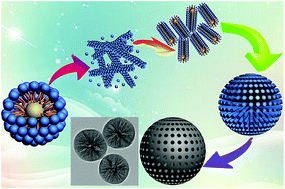
Mesoporous silica nanospheres (MSNs) with radially oriented mesochannels were fabricated in a cetyltrimethylammonium bromide (CTAB)–ethanol–cyclohexane–water oil-in-water (O/W) microemulsion system at 35 °C by regulating ethanol-to-cyclohexane volume ratio. In addition, MSNs were obtained by introducing polyvinylpyrrolidone (PVP) as a stabilizing agent into the O/W microemulsion system. Compared with silica spheres prepared without PVP, the nanoparticle shape changed from slightly irregular spheroids to spheres, particle size decreased from 400–650 nm to 300–450 nm, and BET surface areas ranged from 1000–1114 m2 g−1 to 975–1052 m2 g−1. Based on the experimental results, a possible mechanism for the structural regulation of MSNs with radially oriented mesochannels prepared with or without PVP O/W microemulsion was proposed. Simple drug loading and release with aspirin as a model drug was performed to assess and compare the storage capacity and in vitro release profiles of the nanoparticles.
To date, obtaining such MSNs with ordered mesochannels that are aligned perpendicular to the sphere surface and with good dispersity is difficult. A limited number of studies on the fabrication of MSNs with radially oriented mesochannels have been reported.12,15–17 Chen et al. first reported the preparation of hollow mesoporous silica nanospheres (HMSNs) with radially oriented mesochannels in uniform shell (35 nm to 40 nm thick) using an anionic surfactant as template.12 The product consisted of intact and dispersed hollow spheres with diameters mostly ranging between 100 and 500 nm, specific surface area of 502 m2 g−1 and average pore diameter of 3.1 nm. Teng et al. demonstrated a self-transformation approach to synthesize ordered HMSNs with radially oriented mesochannels by incubation with water.15 The obtained hollow spheres presented an average diameter of 550 nm and a mean shell thickness of approximately 110 nm. The mesochannels of the spheres were continuous throughout the shell, with openings at the surface, and were radially oriented toward the sphere surface. Compared with conventional MCM-41 and SBA-15, the radially oriented mesochannels in mesoporous silica spheres cause increased surface area and pore volume, which facilitate pore wall functionalization and interaction with various species. This effect is due to the possibility of combining the enormous functional variations of organic groups with the advantages of thermally stable and robust silica scaffolds.6,12,18 On the other hand, radially oriented mesochannels allow for easy penetration of molecules into or out of the pore system.19 Kityk et al. presented a systematic optical polarimetry study aimed at exploring the orientational order of a discotic liquid crystal based on a pyrene derivative confined in parallel-aligned nanochannels of mesoporous alumina, silicon, and silica.20 Thus, silica nanospheres with radially oriented mesochannels show potential in diverse applications such as in catalysis, adsorption, separation, and biomedicine, especially as multifunctional carriers in drug delivery. However, dense silica nanoparticles with radially oriented mesochannels reflected on the sphere from the spherical surface to the interior have never been seen before.
Microemulsions offer advantages in providing uniform nanospheres because of their transparency or translucency, low viscosity, isotropic and thermodynamically stable oil–water mixture systems.21,22 MSNs have been successfully prepared through templating routes that use microemulsion systems.22–25 Lin et al. reported the fabrication of spherical solids into hollow-structured silica nanoparticles, using a water-in-oil (W/O) microemulsion system formed from Triton X-100 (polyoxyethylene tert-octylphenyl ether)–hexanol–cyclohexane–water as template and aminopropyltrimethoxy silane with tetraethyl orthosilicate (TEOS) as silica source precursor. Solid silica nanoparticles with uniform size of approximately 40 nm were obtained, and the hollow silica nanospheres were approximately 40 nm in size with an internal diameter of 30 nm and wall thickness of around 5 nm. BET surface areas decreased from 280 m2 g−1 to 72 m2 g−1.23 Moreover, Zhang et al. reported the formed process of magnetic colloidosomes by directing the self-assembly of SiO2@Fe3O4 NPs and Fe3O4–SiO2 hetero-nanorods at the interface of W/O droplets. These colloidosomes can be easily manipulated and self-aligned under an external magnetic field, thus presenting potential applications in microreactors, drug delivery, and other biomedical fields for their special magnetic response.26
MSNs have been considered as excellent candidates for use in drug delivery systems for their tunable particle size, surface properties, shape, structure, and so on.10,12,15 MSNs possess an open entrance to facilitate drug entry, as well as well-ordered channels for the homogeneous distribution of drug molecules.10 Wang et al. reported on HMSNs with radially ordered mesostructured. These HMSNs were validated by a drug release experiment with flurbiprofen, which exhibits higher storage capacity and significantly higher rate of release than flake-like mesoporous SBA-15 particles.12 The effectiveness of the radially aligned mesopores facilitates rapid molecular transport and easy molecular accessibility. This property has a remarkable influence on high drug storage capacity and favorable molecular diffusion through the radially oriented mesopores for drug delivery.
The orderly alignment of mesopores perpendicular to the surface of the spheres presents an interesting material structure. Spherical radially oriented mesochannel MSNs were prepared by using O/W microemulsion as soft template. The method is relatively simple and effective for the fabrication of nanomaterials with good dispersity and to control the particle size. Synthesis of these sphere particles often involves the hydrolysis/condensation of TEOS around microemulsion droplets.27 In the present study, MSNs with radially oriented mesoporous channels were prepared using an oil-in-water (O/W) microemulsion system, which consists of cetyltrimethylammonium bromide (CTAB), ethanol, cyclohexane and water as template, and TEOS as silica source. In addition, MSNs were also obtained in the presence of polyvinylpyrrolidone (PVP) as a capping agent and stabilizer in the O/W microemulsion system. The obtained MSNs possess controllable size, high surface area, and radially oriented mesochannels from the spherical surface to the interior. The application of prepared MSNs in drug loading and release was also investigated with aspirin as model drug.
The same method as above was used to synthesize MSNs when PVP was added. The molar ratio of CTAB: PVP: cyclohexane: TEOS: ethanol: H2O: ammonium hydroxide was 1: (0.005, 0.023, 0.046, 0.092): 168: 11: 1172: 6327: 30. Here, the molar ratio of cyclohexane to ethanol was 168: 1172. The as-prepared silica samples were labeled as MSNsM1, MSNsM2, MSNsM3, and MSNsM4 at PVP-to-CTAB mass ratios (RM) of 0.5, 2.5, 5, and 10, respectively.
For release profiles, 100 mg of the loaded sample was placed in 50 mL phosphate buffer solution (pH 7.4). The contents were stirred at 300 rpm and at 37 °C. The sample (3.0 mL) was withdrawn immediately and replaced by another 3.0 mL of fresh phosphate buffer solution at each 30 min interval for the first 3 h, and eventually after every 1 h until the final measurement after 10 h. The aliquots were centrifuged to ensure that no solid particles were present in the suspension. The transparent supernatants were analyzed for aspirin using a UV-vis spectrophotometer at λ = 275 nm. The measurements were repeated thrice for each sample, and the results were averaged.
The loaded and released amounts of aspirin were calculated according to the method described in the authors' previous report.28 Aspirin release (wt%) was assigned to aspirin released amounts (g)/total aspirin adsorbed amounts (g) in MSNs-asp. The drug loading content and encapsulation efficiency were calculated using the following equations:32,33
![]() | (1) |
![]() | (2) |
![]() | ||
| Fig. 1 FESEM (a and c) and HRTEM (b and d) images of MSNsV2 (a and b) and MSNsV4 (c and d). The insets are the corresponding magnified images of (b) and (d), respectively. | ||
The effect of PVP-to-CTAB mass ratio on particle morphology and diameter was investigated. Fig. 2a–d and S2† display the HRTEM images of MSNs obtained in the presence of PVP. The significant feature of the spheres was their radially oriented pore structure from the center to the outer surface, which was approximately 4 nm in size was clearly observed in the inset of Fig. S2.† However, more reliable determination of the pore size may be obtained from nitrogen adsorption–desorption analysis.
The FESEM image (Fig. 3) shows that the prepared particles were intact spheres with a smooth surface without aggregation. MSNs prepared without addition of PVP (Fig. 1 and S1†) were slightly irregular spheroids in shape, with 400 nm to 650 nm average particle diameter. By contrast, monodispersed spherical nanoparticles with 300 nm to 450 nm diameter were obtained when PVP was added into the reaction system. Results show that PVP can be involved in and influence the morphology of silica particles. Silica particle sizes decreased when PVP was added, as compared with the silica spheres sizes prepared with only CTAB. Nanoparticles (MSNsM1) of around 450 nm in diameter were produced when 0.04 g PVP was added. In comparison, when the amount of PVP was increased to 0.2 g, the particle diameter decreased from 450 nm to 350 nm (MSNsM2). Upon further addition of PVP, the particle size became 300 nm and did not evidently change. In addition, the appearance of cavities can be observed in the FESEM images (Fig. 3).
The N2 adsorption–desorption isotherms of the MSNs (MSNsV1–4 and MSNsM1–4) products all show typical type-IV features with an adsorption step at relative pressure between 0.2 and 0.5 because of capillary condensation of the filling nitrogen in the mesopores (Fig. 4), thus indicating the presence of mesoporous channels.24 The large H4-type hysteresis loop of MSNs in the P/P0 range of 0.5 to 1.0 can be attributed to the presence of mesopores that have most probably resulted from particle packing.27,37 Correspondingly, the pore size distribution was very narrow, with only one peak centered at about 4.0 nm in the pore size distribution curves of the desorption branch. This distribution indicates that 4.0 nm mesopores must be predominant in MSNsV1–4 and MSNsM1–4 samples. The spherical silica nanoparticles with radially oriented mesopores present micropores of about 1.4 nm (Fig. S3†). This conclusion is consistent with the result of the earlier literature.15 These micropores in the silica framework are crucial for facilitating the accessibility of guest molecules, such as drugs.15,28 The pore size of each type of MSNs is uniform, regardless of particle size. The specific surface areas and pore volumes of the calcined MSNs were obtained for comparison, as shown in Table 1. Slight differences among MSNsM1, MSNsM3, and MSNsM4 were observed. On the other hand, MSNsM2 showed less surface area than MSNsM1, which decreased from 1052 m2 g−1 to 975 m2 g−1. The BET surface areas ranges were 1000 to 1114 (MSNsV1–4) and 975 m2 g−1 to 1052 m2 g−1 (MSNsM1–4), suggesting that these particles have larger surface areas than monomodal porous systems.22,28 Except for MSNsV4, the pore volumes of MSNsV1, MSNsV2, and MSNsV3 exhibited an increasing trend. When the quantity of PVP was increased, the pore volume increased from 0.59 cm3 g−1 to 0.74 cm3 g−1. Moreover, with further increase in the amount of cyclohexane and PVP, the pore size showed no apparent change.
![]() | ||
| Fig. 4 The N2 adsorption–desorption isotherms (a and c) and corresponding BJH pore size distribution curves (b and d) of MSNsV1–4 (a and b) and MSNsM1–4 (c and d). | ||
| Sample | RV | RM | SBET (m2 g−1)a | V (cm3 g−1)a | D (nm)a |
|---|---|---|---|---|---|
| a D, SBET, and V stand for average BET pore diameter, surface area, and pore volume, respectively. | |||||
| MSNsV1 | 7.5 | — | 1027 | 0.52 | 3.91 |
| MSNsV2 | 5 | — | 1000 | 0.59 | 3.95 |
| MSNsV3 | 3.75 | — | 1046 | 0.64 | 3.91 |
| MSNsV4 | 3 | — | 1114 | 0.59 | 3.93 |
| MSNsM1 | 3.75 | 0.5 | 1052 | 0.59 | 3.90 |
| MSNsM2 | 3.75 | 2.5 | 975 | 0.61 | 3.95 |
| MSNsM3 | 3.75 | 5 | 1031 | 0.70 | 4.07 |
| MSNsM4 | 3.75 | 10 | 1035 | 0.74 | 4.07 |
First, numerous bead-like microemulsion droplets are produced, becomes interconnected compactly with one another, and self-aggregate into larger microemulsion rod-shaped aggregations.40 Then, back-fence microemulsion droplets collide with other close droplets to crack, increasing the possibility of conglutination. This phenomenon leads to the formation of cylindrical microemulsions, which self-assemble and orient into positions perpendicular to the particle surface at the oil–water interface to form cylindrical microemulsion spheres.41 The process is similar to the formation of Ho/TiO2 nanowires.40 This mechanism reduces the high surface free energy caused by increased oil–water interfacial area. At the same time, the hydrolysis/condensation of TEOS occurs on the surface of the cylindrical microemulsion droplets, which simultaneously collide with other close particles.41 Finally, sphere-like SiO2 is obtained by calcination to remove the organic components by leaving the radially oriented channels from the center to the surface. Given that the formation of the cylindrical microemulsion droplets is not an equilibrium process, the varying sizes of the cylindrical microemulsion droplets depend on the hydrogen bonds and van der Waals forces of the back-fence microemulsion droplets.22 The hydrolysis/condensation of TEOS on the surface of the cylindrical microemulsion droplets is restricted to the vicinity of the oil–water interface.23 Thus, cavities are formed on the surface of the samples, as seen in FESEM images.
Notably, PVP was widely used as a stabilizer for the synthesis of colloids and nanoparticles.42–46 In this study, PVP was added into the reaction system as capping agent and steric emulsion stabilizer. PVP molecular chain only possesses weak positive charge, but a ring opening reaction would be incited under alkaline conditions by adding a proper amount of ammonium hydroxide. Then, its molecular chain would become oppositely charged.47 At this time, the oppositely charged PVP molecular chain associates with CTAB.47,48 The PVP molecule chains were adsorbed on cylindrical microemulsion droplets, forming a continuous layer similar to a capping agent, to inhibit the growth of microemulsion droplets in all directions.49,50 Thus, the dimension of mesoporous silica decreased because of the large restrictive power of PVP molecular chains.51,52 As a result, the presence of the amount of PVP molecules could have stabilized the microemulsion droplets during the reaction and led to the formation of uniform smaller particles.43,44
Apart from increasing the storage capacity of drug molecules, hierarchically porous spheres also can provide delivery pathways for drug molecule diffusion.57–59 The aspirin release profiles of MSNs in phosphate buffer solution are shown in Fig. 5 and 6. The diffusion of drug molecules from the pores is largely dependent on the nature of the interaction of the drug molecule with the pore, as well as the intrinsic mobility of the drug molecules inside the pores.10,60 The release data was similar with a first-order kinetic model involving an exponential decay, as described in the previous report.61
![]() | ||
| Fig. 5 The mean cumulative release rates of aspirin in MSNsV1-asp (■), MSNsV2-asp (●), MSNsV3-asp (▲) and MSNsV4-asp (▼). | ||
![]() | ||
| Fig. 6 The mean cumulative release rates of aspirin in MSNsM1-asp (■), MSNsM2-asp (●), MSNsM3-asp (▲) and MSNsM4-asp (▼). | ||
Fig. 5 suggests that the weak interaction (van der Waals interaction, hydrogen bonding) between aspirin molecules and the silanol groups on the surface contributed to the extensive release of aspirin in the initial stage.56,62 Also, drug clogging in the pore entrance is one of the reasons for the rapid release rate.11,62–64 Afterward, the aspirin delivery profiles showed a slow release, such that nearly 10 wt% of the adsorbed aspirin remained entrapped inside the mesopores. MSNsV3-asp showed a continuous rapid release rate compared with the relatively steady release rates of MSNsV1-asp, MSNsV2-asp, and MSNsV4-asp. The release profiles for MSNsV1-asp and MSNsV4-asp were similar, with approximately 80% maximum aspirin release after 7 h.
Fig. 6 suggests that all four samples (MSNsM(1 to 4)-asp) showed similar initial rapid rates of aspirin release, with nearly 40% of the aspirin released from the SiO2 within the first hour. The amounts of aspirin released from MSNsM1-asp, MSNsM2-asp, MSNsM3-asp, and MSNsM4-asp after 7 h were 91 wt%, 93 wt%, 94 wt%, and 97 wt%, respectively, which indicates that the aspirin release rate increases with increasing amount of PVP. By contrast, the release time of aspirin decreased with increasing amount of PVP. Nearly complete release of aspirin was observed after 3 h for MSNsM4-asp. In general, slow sustained drug release is superior to relatively quick release.6 Compared with MSNsM1–4-asp, MSNsV1–4-asp exhibited a better aspirin release effect. The lower release rate of the MSNsV1–4-asp could be ascribed to the longer mesoporous channels of 450 nm to 600 nm in MSNsV1–4 samples than in MSNsM1–4-asp. Therefore, MSNsV1–4 samples with radially oriented mesopores can be advantageous in simulated concentrative release of drugs. The diffusion of drug molecules from the pores is largely dependent on the interaction of the drug molecule and the silanol groups. Modification on the surface of the mesoporous silica nanomaterials with organic groups is particularly interesting owing to the change in the forces between the silica nanomaterials with drug molecules. Typical strategies for immobilizing drug molecules via covalent bonds affect the drug release rate to reduce burst release and to achieve a more sustained release profile.6,12 Future works will attempt to improve the interactions between drug molecules and the support system by modifying the surface of the radially oriented mesochannels in MSNs with organic groups to reduce burst release and achieve a more sustained release profile.
Footnote |
| † Electronic supplementary information (ESI) available: HRTEM Figures, FESEM Figures, N2 adsorption–desorption isotherms, corresponding BJH pore size distribution curves after aspirin-loading, and structure parameters of different samples. See DOI: 10.1039/c4ra12291g |
| This journal is © The Royal Society of Chemistry 2015 |