Joining of SiO2–BN ceramic to Nb using a CNT-reinforced brazing alloy

Jun Lei Qi*, Jing Huang Lin, Yu Han Wan, Li Xia Zhang, Jian Cao and Ji Cai Feng*
State Key Laboratory of Advanced Welding and Joining, Harbin Institute of Technology, Harbin 150001, China. E-mail: jlqi@hit.edu.cn; fengjc@hit.edu.cn; Fax: +86-451-86418146; Tel: +86-451-86418146

Received 24th September 2014 , Accepted 11th November 2014

First published on 11th November 2014


Abstract

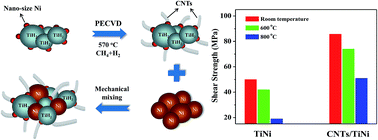
Brazing SiO2–BN ceramics with Nb are often associated with the problems of high residual stress caused by the difference in the thermal expansion coefficients and poor mechanical properties under high temperature. To overcome these problems, here we report a new type of carbon nanotube (CNT)-reinforced TiNi brazing alloy via an “in situ growth” method by PECVD. The CNT/TiNi brazing alloy has very homogeneously dispersed CNTs within the TiNi brazing alloy, produced by in situ growth of CNTs on TiH2 and Ni powders mixed evenly into the CNT/TiH2 powders. It can be applied in the brazing of SiO2–BN and Nb. Results show that the addition of CNTs into the TiNi brazing alloy is very beneficial for the dissolution and diffusion of Nb in the brazed joint, because it can promote more TiNi–(Nb,Ti) eutectics which emerge in most of the brazing seam. Furthermore, the average shear strength of the brazed joint at room temperature is raised from 49 to 85 MPa with 1.5 vol% CNTs added into the TiNi brazing alloy. In particular, at 800 °C the brazed joint still has a very high shear strength of 51 MPa, about 1.7 times stronger than that of the TiNi brazing alloy. These results suggest that the CNTs played a key role in reducing the residual stress and reinforcing the mechanical properties (at both room and high temperature) of the brazed joint. It provides a way for the development of CNT-reinforced brazing alloys.

1. Introduction

Due to their unique combination of various properties, such as low density, and good mechanical and excellent thermal shock resistance, SiO2–BN ceramics have potential applications in thermal protection parts.1,2 To extend the practical application of SiO2–BN ceramics, it is essential to be able to join them to metallic components.3,4 For example, the assembly of nozzle components requires joining a SiO2–BN ceramic nozzle to a metallic holder. However, the joining of SiO2–BN ceramics is a great challenge since most conventional methods are not suitable. The major challenge in joining SiO2–BN ceramics to metals is not so much the chemical dissimilarity between the materials but rather the stresses induced by the mismatch between the coefficients of thermal expansion (CTE) of the components that impairs the joint integrity.4,5 Considering its applications under high temperatures, the joint should possess good mechanical behavior. Therefore, it is essential to reduce or eliminate the residual stresses in the interfacial region to improve the joining quality and enhance the mechanical properties under high temperatures.

To overcome the inherent problems mentioned above, many studies suggested the addition of low CTE materials (such as ceramic fibers or particles) into brazing alloys to improve the mechanical properties (at both room and high temperature) of ceramic–metal joints.5–7 However, this method had its own limitations: high weight ratio, uneven distribution and non-wetting of the reinforcements, as well as non-controllability of the brazing alloy reinforcement interfaces.8,9 Recently, Nai et al.10–12 and Kumar et al.13,14 have studied the effect of the addition of carbon nanotubes (CNTs) on the tensile and mechanical properties of Sn–Ag–Cu (SAC) solder alloys. Their studies indicated that when some CNTs were added into the SAC solder alloy, the wettability and mechanical properties would be convincingly improved. CNTs are widely known to possess great physical, low-density, thermal, electrical, and mechanical properties, which make them suitable for preparing novel composites. Due to their excellent properties, they are widely used as reinforcement materials.15,16 Compared with the traditional reinforcements, CNTs show great mechanical properties, especially under high temperature conditions.17 Currently, Ti-based brazing alloys are widely used to braze ceramics and metals.18 However, there are still several factors that prevent us from taking full advantage of CNT-reinforced Ti-based brazing alloys, for instance: (i) difficulty in homogeneously dispersing the CNTs in the Ti-based brazing alloys, (ii) reaction between the CNTs and Ti due to the incomplete structure of CNTs that easily reacts with Ti in the brazing process,19,20 and (iii) contamination of the Ti source, such as oxidation and carbonization of Ti in the CNT composite and the brazing process. Therefore, overcoming these problems is key to the realization of CNT-reinforced brazing alloys being used in ceramic and metal brazing.

To overcome these problems, here we report a new type of CNT-reinforced TiNi brazing alloy via an “in situ growth” method using plasma enhanced chemical vapor deposition (PECVD). The obtained CNT/TiNi brazing alloy was used to braze SiO2–BN ceramic to Nb. The investigation emphasizes the effect of CNTs on the microstructures and shear strength of the brazed joints. Furthermore, the strengthening mechanism of the CNTs by reducing the residual stress and reinforcing the mechanical properties of the brazed joint is also elucidated.

2. Experimental

The synthesis process of the CNT/TiNi brazing alloy is shown in Fig. 1. In order to prevent contamination of the Ti source, TiH2 was selected as the Ti source of the CNT/TiNi brazing alloy. Due to the hydrogen-bonding in TiH2, the reaction between Ti and C could be inhibited. Thus, the CNT/TiNi brazing alloy will effectively avoid being contaminated in the synthesis process. The CNT/TiNi brazing alloy was synthesized by PECVD, using Ni nanoparticles as catalyst. The fabrication of Ni catalyst nanoparticles has been reported previously.21,22 The synthesis process of the CNT/TiNi brazing alloy mainly consists of three steps. The first step is to produce Ni(NO3)2–TiH2 powder. Ni(NO3)2·6H2O (99.9% purity) and TiH2 (99.7% purity) were mixed in ethanol solution with constant stirring, and then the solution was heated up to obtain a fine Ni(NO3)2–TiH2 powder, which was employed in the following synthesis experiments. In the second step, the Ni(NO3)2–TiH2 powder was kept in a quartz boat and placed at the same horizontal level in a PECVD reaction chamber.21 The PECVD chamber was evacuated to a pressure below 5 Pa by a rotary pump, and then the chamber was maintained at 200 Pa with H2 at a flow rate of 20 sccm. Since the decomposition temperature of TiH2 is about 600 °C,23 CNTs were grown at 570 °C for 15 min by introducing a mixture of CH4/H2 into the reactor at a flow rate of 40/10 sccm. In the final step, the prepared CNT/TiH2 powder was mechanically mixed with Ni powder to form the CNT/TiNi brazing alloy.
image file: c4ra11110a-f1.tif
Fig. 1 Schematic of the formation process of the CNT/TiNi brazing alloy.

The Nb substrate and SiO2–BN ceramic were sandwiched between the TiNi and CNT/TiNi brazing alloy. After that the assembly was put into a vacuum furnace and a normal pressure (about 0.01 MPa) was applied to maintain the close contact of the assembly. During the brazing process, the assembly was heated to 1140 °C at a rate of 15 °C min−1. After being isothermally held at 1140 °C for 5 min, the assembly was cooled down to room temperature at a rate of 5 °C min−1 without power.

The morphology and structure of the samples were characterized using scanning electron microscopy (SEM) with a microscope equipped for electron-dispersive spectroscopy (EDS), transmission electron microscopy (TEM), X-ray diffraction (XRD) and Raman spectroscopy. The shear strengths were also tested at both room and high temperatures. At least five specimens were tested for each experimental condition.

3. Results and discussion

Corresponding to the formation process shown in Fig. 1, Fig. 2a–d show the SEM images of TiH2, CNT/TiH2 and CNT/TiH2–Ni particles. The surface of the pure TiH2 particles is smooth and clean, as shown in Fig. 2a. Fig. 2b shows a low-magnification SEM image of the CNTs grown in situ on the TiH2 powder. CNTs with lengths in the range of 3–4 μm are homogeneously and densely distributed on the surface of the TiH2 powder. The CNTs on the TiH2 particles are not agglomerated and are very similar in different regions, and their diameter and length are similar, as shown in Fig. 2b. Moreover, it can be observed that the CNTs are homogeneously dispersed in the TiH2 powder. As shown in the inset of Fig. 2c, the as-grown CNTs show a typical tubular structure, where the surface of the sidewalls is clean. After simply mechanically mixing with Ni powder, it can be found that the CNTs disperse homogeneously into the TiH2–Ni powder, as shown in Fig. 2d. It can be clearly observed that the CNTs are not agglomerated at all, and network structures are formed between the CNTs and TiH2–Ni powder. This result may be attributed to a certain binding force between the CNTs and TiH2 particles since the CNTs are synthesized in the TiH2 powder in situ. The morphology of the CNT/TiH2–Ni powder shows an ideal composite microstructure, displaying a spherical morphology with the CNTs homogeneously dispersed in the powder.21
image file: c4ra11110a-f2.tif
Fig. 2 SEM images of (a) TiH2, (b and c) CNT/TiH2 and (d) CNT/TiH2–Ni particles. The inset of (c) is the TEM image of the obtained CNTs. (e) XRD patterns and (f) Raman spectra for TiH2, CNT/TiH2 and CNT/TiH2–Ni powders.

As a result, it is demonstrated that the homogeneously dispersed CNTs within the TiH2–Ni powder are achieved by the three-step procedure described above. Moreover, the most important feature of the PECVD process is that the CNTs are synthesized in the TiH2 powder in situ. It is also found that the density and length of the CNTs, or the CNT content of the composite powders, can be easily tuned by adjusting the experimental parameters, such as the growing time and the CH4 percentage in the mixture of CH4/H2 gases. With a shorter time and lower CH4 percentage, shorter and sparser CNTs can be obtained in the TiH2 powder. Therefore, it is easy and practical to obtain different contents of CNTs in CNT/TiNi brazing alloys. In our case, the CNT content in the CNT/TiNi brazing alloy is 1.5 vol%.

Fig. 2e exhibits the XRD patterns of the pure TiH2, CNT/TiH2 and CNT/TiH2–Ni powders, and all of the diffraction peaks can be assigned. From the XRD results (see Fig. 2e), it can be found that the XRD peaks of the pure TiH2 powder (black line in Fig. 2e) can be safely indexed to the peak positions of TiH1.924 with the face-centered cubic structure.25 In the XRD pattern of the CNT/TiH2 powder, a peak at 2θ = 26.4° (red line in Fig. 2e) is observed after the CNTs have been grown on the TiH2 powder, which does not appear in the XRD pattern of the pure TiH2. The peak at 2θ = 26.4° can be assigned to graphite (002), which indicates that CNTs have been obtained and that the CNTs are mainly composed of well-crystallized graphite.24 The other peaks can be indexed to the peak positions of TiH1.924. Furthermore, peaks corresponding to TiC and TiO2 do not appear in the XRD pattern. These results indicate that TiH2 does not decompose and that it maintains its original state in the PECVD process, which further avoids the reaction between Ti and C, and prevents contamination of the Ti source. In the XRD pattern of the CNT/TiH2–Ni powder (blue line in Fig. 2e), the sharp peaks at 2θ = 44.5°, 51.8° and 76.4° are attributed to the peak positions of Ni with the face-centered cubic structure.24 The other peaks in the XRD pattern of the CNT/TiH2–Ni powder are the same as for the CNT/TiH2 powder. This suggests that the CNT/TiH2 and Ni powders maintain their original state in the mechanical mixing process.

Next, we examined the graphitic structure of the as-grown CNTs, and Raman spectroscopy was conducted with a 514 nm wavelength laser in a spectral range of 1000–2000 cm−1. Fig. 2f shows the Raman spectra for the pure TiH2, CNT/TiH2 and CNT/TiH2–Ni powders, respectively. It indicates that the Raman spectrum of the pure TiH2 powder (black line in Fig. 2f) does not have any peaks. As shown in Fig. 2f, the typical Raman spectrum of the CNTs/TiH2 powder (red line in Fig. 2f) exhibits two characteristic carbon bands corresponding to multi-walled CNTs, which are associated with the disorder induced D-band at around 1350 cm−1, and the G-band at around 1580 cm−1 related to in-plane sp2 vibrations.7,15,26 Compared with the CNT/TiH2–Ni powder (see the red line and blue lines in Fig. 2f), it can be found that the peak positions and ID/IG ratio (the intensity ratio of the D-band to G-band) in the Raman spectrum are basically unchanged. These results suggest that the CNTs are not damaged in the mechanical mixing process. In addition, the ID/IG ratio of the as-grown CNTs in the CNT/TiH2 powder was calculated to be 0.83, as shown in Fig. 2f. The low ID/IG value implies that the as-grown CNTs are mainly composed of well-crystallized graphite, which is in agreement with the TEM observations. Namely, the as-grown CNTs exhibit a few defects and complete structure, which makes a perfect structure. Kuzumaki et al.20 reported that CNTs with a perfect structure did not react with the Ti matrix even under hot-pressing for 2 h at ∼1000 °C. However, CNTs can easily be damaged during the traditional preparations of CNT-reinforced Ti matrix composites,10–14,19,20 which can result in high-density surface defects and damaged structures of the CNTs. CNTs with incomplete structures easily react with Ti at high temperatures.19,20 Obviously, the composite will lose the strengthening effect of the CNTs. Thus, the obtained CNTs with a perfect structure can improve the mechanical performance of the CNT-reinforced composite. Compared with traditional methods,10–14 in situ growth of CNTs at low temperature by the PECVD method could realize homogeneously dispersed and perfectly structured CNTs within the TiH2–Ni powder. In this way, it can effectively make CNTs homogeneously disperse into the Ti-based brazing alloys and avoid the reaction between Ti and CNTs.

In order to prove the effect of the CNTs in the TiNi brazing alloy, the interfacial microstructure and mechanical properties of the SiO2–BN/Nb joints brazed by TiNi and the CNT/TiNi brazing alloy were comparatively studied. Fig. 3 shows the typical interfacial microstructure of the SiO2–BN/Nb joint brazed with TiNi and 1.5 vol% CNT/TiNi brazing alloy at 1140 °C for 5 min. It is obvious that the joints are soundly bonded without cracks and voids, as shown in Fig. 3a and c. In the TiNi brazing alloy, three characteristic zones can be distinguished in the SiO2–BN/Nb brazed joint, as shown in Fig. 3a and b. The brazing alloy reacted with the Nb substrate, and thus a continuous ternary eutectic area was formed (denoted by Layer I). A reaction layer (denoted by Layer III), with a thickness of 15 μm, formed adjacent to the SiO2–BN substrate. The wide gray reaction layer (denoted by Layer II), with a thickness of 123 μm, formed in the region between Layer I and Layer III. EDS compositional analyses were performed on each layer in Fig. 3 to identify the possible phases that were presented in the joints. Based on the EDS results shown in Table 1, the body of a brazed joint was primarily composed of (Nb,Ti) eutectics and TiNi (points A and B in Layer I), a TiNi phase (point C in Layer II), and TiN, Ti3O5 and Ti5Si3 compounds (points E and F in Layer III). According to the previous research,28 it is suggested that Layer I is mainly composed of TiNi–(Nb,Ti) eutectics. Namely, the typical microstructure of the SiO2–BN/Nb joint brazed with the TiNi brazing alloy at 1140 °C for 5 min was SiO2–BN/TiNi–(Nb,Ti)/TiNi/TiN + Ti3O5 + Ti5Si3/Nb.


image file: c4ra11110a-f3.tif
Fig. 3 SEM images of the typical interfacial microstructure of the BN–SiO2/Nb joint brazed with (a and b) TiNi and (c and d) 1.5 vol%-CNT/TiNi brazing alloy at 1140 °C for 5 min.
Table 1 Average chemical compositions of each reactant (at.%) in Fig. 3
  Ti Ni Nb Si O N Possible phase
A 17.94 6.93 72.97 2.16 (Nb,Ti)
B 44.45 42.66 11.44 1.45 TiNi
C 44.25 47.46 6.97 1.33 TiNi
D 37.82 33.14 27.77 1.26 TiNi − (Nb,Ti)
E 44.20 4.89 1.50 12.20 6.25 21.78 TiN + Ti5Si3
F 48.65 1.21 3.76 2.19 13.54 33.08 TiN + Ti3O5


For the 1.5 vol% CNT/TiNi brazing alloy, the microstructure of the brazed joint is significantly different from that with the TiNi brazing alloy, as shown in Fig. 3c and d. It can be observed that the SiO2–BN/Nb joint brazed by the CNT/TiNi brazing alloy mainly consists of one reaction layer, which is composed of TiNi–(Nb,Ti) eutectics (micro-zone D), as shown in Fig. 3c and Table 1. Namely, the typical microstructure of the SiO2–BN/Nb joint brazed with the CNT/TiNi brazing alloy at 1140 °C for 5 min was SiO2–BN/TiNi–(Nb,Ti)/Nb. Obviously, the reaction layer (TiNi–(Nb,Ti) eutectics) played a key role in reducing the residual stress and reinforcing the quality of the joint. Compared with the TiNi brazing alloy (see Fig. 3a and c), it can be clearly found that the interfacial microstructure of the brazed joint has undergone significant changes after the addition of CNTs into the TiNi brazing alloy. In addition, the main composition of the only reaction layer is similar to Layer I in the reaction layer of the joint brazed with the TiNi brazing alloy. Similarly, the reaction layer was formed by the reaction between the brazing alloy and Nb, and a ternary eutectic area was formed by the dissolution and diffusion of the Nb as Layer I. The thickness (∼235 μm) of the reaction layer (TiNi–(Nb,Ti) eutectics) is larger than that of the reaction layer of the joint brazed with the TiNi brazing alloy (∼45 μm). This indicates that a small amount of CNTs added into the brazing alloy can significantly increase the diffusing distance of Nb in the brazed joint. Thus, this result suggests that CNTs play a key role in improving the dissolution and diffusion of Nb in the brazed joint.

Considering their applications under high temperatures, it is necessary to analyze the mechanical properties of SiO2–BN/Nb brazing joints at high temperatures. The shear strengths were tested at both room temperature and high temperatures, as shown in Fig. 4. The average shear strength of the joints brazed using the CNT/TiNi brazing alloy reached 85 MPa at room temperature, which was about 70% higher than that of the joints brazed with the TiNi brazing alloy (49 MPa). It is worth noting that the average shear strength of the joints brazed with the CNT/TiNi brazing alloy declines slightly with increasing temperature. Notably, the average shear strength of the joints using the CNT/TiNi brazing alloy was 51 MPa (800 °C), nearly 170% higher than that of the joints brazed with the TiNi brazing alloy (19 MPa). In contrast, the average shear strength obtained from the TiNi brazing alloy was significantly decreased as the temperature increased (see Fig. 4), especially at 800 °C. Thus, these results suggest that the CNTs played a key role in effectively improving the mechanical performances of the brazed joints.


image file: c4ra11110a-f4.tif
Fig. 4 The shear strengths were tested both at room temperature and high temperatures (600 and 800 °C).

Fig. 5a–d shows the fracture surface of the SiO2–BN/Nb joint after carrying out shear tests at room temperature and high temperature (800 °C). In the shear tests at room temperature, cracks in the joint brazed with the TiNi brazing alloy propagated in the SiO2–BN substrate near the braze interface, and a bowed crack path was observed, as shown in Fig. 5a. This indicated that a high residual stress was generated in the SiO2–BN ceramic resulting in a relatively low joint strength. Different fracture modes were observed in the joints brazed with the CNT/TiNi brazing alloy, as shown in Fig. 5b. The fracture initiation took place at the reaction layer, and then the crack propagated in the SiO2–BN substrate. So, a step-like fracture surface formed during the shear tests at room temperature. According to previous reports,26,27 the change in the fracture modes suggested that the residual stress was effectively reduced when CNTs were added into the TiNi brazing alloy. In addition, Fig. 5e is an SEM image of the fracture surface in the joint brazed with the CNT/TiNi brazing alloy (corresponding circular area in Fig. 5b), which shows CNTs with an obviously tubular structure. This result suggests that the CNTs with a perfect structure did not react with the Ti at the high temperature of 1140 °C, as demonstrated by Kuzumaki et al.20 Moreover, it can be observed that the CNTs are dispersed very well into the TiNi brazing alloy, and some CNTs are pulled out or broken, which indicates that the load transfer from the brazing alloy to the nanotubes is sufficient to fracture the nanotubes.21


image file: c4ra11110a-f5.tif
Fig. 5 The fracture surface of the SiO2–BN/Nb joint after carrying out shear tests at (a and c) room temperature and (b and d) high temperature (800 °C). (e) SEM image of the fractured surface of the joint brazed with the CNT/TiNi brazing alloy, corresponding to the circular area in (b).

In the shear tests at high temperature (800 °C), it can be found that the fracture modes of the SiO2–BN/Nb joint brazed using the TiNi and CNT/TiNi brazing alloys are substantially the same, as shown in Fig. 5c and d. Namely, cracking of the joint propagated in the reaction layer, and the fracture surface took place at the reaction layer. Thus, the mechanical properties of the joints are significantly dependent on the reaction layer at high temperature, because cracking of the joints starts in the reaction layer under the load of high temperature. Combined with the shear strength of the joints at 800 °C (see Fig. 4), it can be found that the shear strength of the joints can be significantly improved by adding CNTs into the brazing alloy. In the final analysis, it was found that CNTs added into the brazing alloy can significantly increase the mechanical properties of the reaction layer in the fracture area at high temperature.

Based on the above results, it is suggested that the CNTs play a key role in two major aspects; reducing the residual stress and reinforcing the mechanical properties of the brazed joint both at room and high temperatures. In order to reveal the strengthening mechanism of the CNTs in the brazed joint, we conducted the following discussion. On the one hand, it is known that a robust ceramic–metal joint is not only dependent on the strong interfacial bond between the ceramic and the metal, but also on the favorable stress gradient formed in the joint.27 Some studies have been performed for a ceramic–metal joint, confirming that there is a high residual stress gradient around the ceramic–metal interface.27,29–32 A low joint strength will be unavoidable if the residual stress is not effectively relaxed. Such a phenomenon is caused primarily by the significant difference in the CTE between ceramics and metals or brazing alloys.26,27 Consequently, it should be noted that the residual stress yielded during cooling was due to the CTE mismatch between the SiO2–BN ceramic (CTESiO2–BN = ∼1.7 × 10⁻⁶ per K) and Nb (CTENb = ∼7 × 10⁻⁶ per K) or the TiNi brazing alloy (CTETiNi = ∼15.4 × 10⁻⁶ per K).27,33,34 In our case, the homogeneously dispersed CNTs in the brazing seam of the SiO2–BN/Nb joint resulted from the homogeneous dispersion of the CNTs in the TiNi brazing alloy. CNTs have a very low CTE (CTECNTs = −5.86 × 10⁻⁹ per K)20,35 value in the brazing seam and the ability of well-bonded CNTs to effectively constrain the expansion of the TiNi matrix20 could reduce the CTE of the brazing seam.27 In addition, the CNTs in the brazing seam could improve the dissolution and diffusion of Nb in the reaction layer of the brazed joint, because they can be beneficial to the homogeneous distribution of Nb in all of the brazing seam. Similarly, Nb has a relatively low CTE value in the brazing seam, which could also reduce the CTE of the brazing seam. Taken together, it is beneficial to reduce the joint residual stress because the CTE mismatch between the SiO2–BN ceramic (CTESiO2–BN = ∼1.7 × 10⁻⁶ per K)27 and the brazing seam was lowered by the addition of CNTs into the brazing alloy. Consequently, the mechanical properties of the brazed joints can be significantly improved by reducing the residual stress. On the other hand, it is widely known that CNTs and Nb have excellent mechanical and high temperature properties.17,36,37 As a result, the homogeneous dispersion of the CNTs and Nb in the brazing seam will effectively improve the mechanical and high temperature properties of the brazed joints. Moreover, the strong interfacial strength between the CNTs and TiNi brazing alloy was caused by the better wetting effect of the CNTs with Ti and Ni atoms.38,39 It is especially important to improve the brazing seam performance because it can cause high load translation during the shear process (as suggested by the pulling out and breaking of CNTs in the inset of Fig. 5e) and thus raise the shear strength of the brazed joints whether at high or room temperature. Therefore, we believe that the mechanical properties of the brazed joints at both room and high temperatures were effectively improved when CNTs were added into the TiNi brazing alloy.

4. Conclusions

In this paper, we developed a new type of CNT-reinforced TiNi brazing alloy via an “in situ growth” mechanism using PECVD, and CNTs with perfect structure are very homogeneously dispersed within the TiNi brazing alloy. The new type of CNTs/TiNi brazing alloy is applied to the brazing of SiO2–BN ceramic with Nb. The results show that the introduction of CNTs is very beneficial to the dissolution and diffusion of Nb in the brazed joint. Meanwhile, a homogeneous distribution of CNTs and Nb in the brazing seam could significantly help to reduce the residual stress and reinforce the mechanical and high temperature properties of the brazed joint. With the 1.5 vol% CNTs added into the TiNi brazing alloy, the average shear strength of the brazed joint at room temperature is raised from 49 to 85 MPa, and the average shear strength at 800 °C (51 MPa) is nearly 170% higher than that when using the TiNi brazing alloy. This study may open the development of CNT-reinforced brazing alloys in the brazing field.

Acknowledgements

The support from the National Natural Science Foundation of China (Grant no. 51105108), and the Fundamental Research Funds for the Central Universities (Grant no. HIT. NSRIF. 2010113) is highly appreciated.

References

  1. D. C. Jia, L. Z. Zhou, Z. H. Yang, X. M. Duan and Y. Zhou, J. Am. Ceram. Soc., 2011, 94, 3552 CrossRef CAS.
  2. G. Wen, G. L. Wu, T. Q. Lei, Y. Zhou and Z. X. Guo, J. Am. Ceram. Soc., 2000, 20, 1923 CrossRef CAS.
  3. Z. W. Yang, L. X. Zhang, X. Y. Tian, Q. Xue and J. C. Feng, Mater. Sci. Eng., A, 2012, 556, 722 CrossRef CAS.
  4. J. Cao, H. Q. Wang, J. L. Qi, X. C. Lin and J. C. Feng, Scr. Mater., 2011, 65, 261 CrossRef CAS.
  5. Z. W. Yang, L. X. Zhang, W. Ren, Q. Xue, P. He and J. C. Feng, Mater. Sci. Eng., A, 2013, 560, 817 CrossRef CAS.
  6. G. B. Lin, J. H. Huang and H. Zhang, J. Mater. Process. Technol., 2007, 189, 256 CrossRef CAS.
  7. Y. M. He, J. Zhang, Y. Sun and C. F. Liu, J. Eur. Ceram. Soc., 2010, 30, 3245 CrossRef CAS.
  8. B. S. S. Daniel, V. S. R. Murthy and G. S. Murty, J. Mater. Process. Technol., 1997, 68, 132 CrossRef.
  9. M. X. Yang, T. S. Lin, P. He and Y. D. Huang, Mater. Sci. Eng., A, 2011, 528, 3520 CrossRef.
  10. S. M. L. Nai, J. Wei and M. Gupta, Mater. Sci. Eng., A, 2006, 423, 166 CrossRef.
  11. S. M. L. Nai, J. Wei and M. Gupta, Thin Solid Films, 2006, 504, 401 CrossRef CAS.
  12. Y. D. Han, H. Y. Jing, S. M. L. Nai, L. Y. Xu, C. M. Tan and J. Wei, Intermetallics, 2012, 31, 72 CrossRef CAS.
  13. K. M. Kumar, V. Kripesh and A. A. O. Tay, J. Alloys Compd., 2008, 455, 148 CrossRef CAS.
  14. K. M. Kumar, V. Kripesh and A. A. O. Tay, J. Alloys Compd., 2008, 450, 229 CrossRef CAS.
  15. W. A. Curtin and B. W. Sheldon, Mater. Today, 2004, 7, 44 CrossRef CAS.
  16. R. George, K. T. Kashyap, R. Rahul and S. Yamdagni, Scr. Mater., 2005, 53, 1159 CrossRef CAS.
  17. R. S. Ruoff and D. C. Lorents, Carbon, 1995, 33, 925 CrossRef CAS.
  18. R. K. Shiue, S. K. Wu, Y. T. Chen and C. Y. Shiue, Intermetallics, 2008, 16, 1083 CrossRef CAS.
  19. X. Feng, J. H. Sui, W. Cai and A. L. Liu, Scr. Mater., 2011, 64, 824 CrossRef CAS.
  20. T. Kuzumaki, O. Ujiie, H. Ichinose and K. Ito, Adv. Eng. Mater., 2000, 2, 416 CrossRef CAS.
  21. C. N. He, N. Q. Zhao, C. S. Shi, X. W. Du, J. J. Li, H. P. Li and Q. R. Cui, Adv. Mater., 2007, 19, 1128 CrossRef CAS.
  22. J. L. Qi, Y. H. Wan, F. Zhang, J. Cao, L. X. Zhang and J. C. Feng, China Weld., 2013, 22, 42 CAS.
  23. D. Y. Kovalev, V. K. Prokudina, V. I. Ratnikov and V. I. Ponomarev, Int. J. Self-Propag. High-Temp. Synth., 2010, 19, 253 CrossRef CAS.
  24. C. N. He, N. Q. Zhao, C. S. Shi, X. W. Du and J. J. Li, Mater. Lett., 2007, 61, 4940 CrossRef CAS.
  25. T. M. Marceloa, V. Livramentoa, M. V. Oliveirab and M. H. Carvalhoa, Mater. Res., 2006, 9, 65 Search PubMed.
  26. J. W. Park, P. F. Mendez and T. W. Eagar, Acta Mater., 2002, 50, 883 CrossRef CAS.
  27. Z. W. Yang, L. X. Zhang, W. Ren, M. Lei and J. C. Feng, J. Eur. Ceram. Soc., 2013, 33, 759 CrossRef CAS.
  28. Y. Z. Liu, L. X. Zhang, C. B. Liu, Z. W. Yang, H. W. Li and J. C. Feng, Sci. Technol. Weld. Joining, 2011, 16, 193 CrossRef CAS.
  29. C. H. Hsueh and A. G. Evans, J. Am. Ceram. Soc., 1985, 68, 241 CrossRef CAS.
  30. A. Abed, P. Hussain, I. S. Jalham and A. Hendry, J. Eur. Ceram. Soc., 2001, 21, 2803 CrossRef CAS.
  31. H. Y. Yu, S. C. Sanday and B. B. Rath, J. Am. Ceram. Soc., 1993, 76, 1661 CrossRef CAS.
  32. S. B. Lee and J. H. Kim, J. Mater. Process. Technol., 1997, 67, 167 CrossRef.
  33. T. Ikeshoji, T. Tokunaga, A. Suzumura and Y. Takahisa, International Symposium on Interfacial Joining and Surface Technology, 2014, vol. 61, p. 5 Search PubMed.
  34. Y. Q. Fu and H. J. Du, Surf. Coat. Technol., 2002, 153, 100 CrossRef CAS.
  35. R. B. Pipes and P. Hubert, Compos. Sci. Technol., 2003, 63, 1571 CrossRef CAS.
  36. T. Tsuchida and T. Kakuta, J. Eur. Ceram. Soc., 2007, 27, 527 CrossRef CAS.
  37. C. L. Yeh and W. H. Chen, J. Alloys Compd., 2006, 422, 78 CrossRef CAS.
  38. J. Y. Guo and C. X. Xu, Appl. Phys. A: Mater. Sci. Process., 2011, 102, 333 CrossRef CAS.
  39. Y. He, J. Y. Zhang, Y. Wang and Z. P. Yu, Appl. Phys. Lett., 2010, 96, 1 Search PubMed.

This journal is © The Royal Society of Chemistry 2014
Click here to see how this site uses Cookies. View our privacy policy here.