
DOI:
10.1039/C4RA10833G
(Paper)
RSC Adv., 2014,
4, 62399-62403
Sensitive detection of C. parvum using near infrared emitting Ag2S@silica core–shell nanospheres
Received
20th September 2014
, Accepted 31st October 2014
First published on 3rd November 2014
Abstract
An optical immunosensor was developed using anti-oocysts McAb immobilized near-infrared (NIR) emitting Ag2S@silica core–shell nanospheres for the detection of C. parvum in water. The formation of the core Ag2S and the SiO2 shell over the core was confirmed by X-ray diffraction (XRD) and high resolution transmission electron microscopy (HRTEM). The optical properties of the nanostructures were determined by UV-Vis spectroscopy and photoluminescence (PL) studies. The core–shell Ag2S@silica nanospheres exhibited an intense emission peak at 896 nm which falls in the biological window. TEM images confirm the presence of a uniform core–shell structure, with a Ag2S core with an average size of 80 nm, and a silica shell with a thickness of 40–50 nm. The C. parvum antibody anti-oocysts McAb immobilized Ag2S@silica nanoparticles were used as detector probes and these biosensors exhibited excellent analytical performance toward the detection of C. parvum, with detection limits of 10 oocysts per mL with a minimal assay period.
1. Introduction
Cryptosporidium parvum is an obligate intracellular protozoan parasite which infects a wide range of vertebrate hosts such as humans, birds and cattle.1–4 Quantification of C. parvum oocysts in water samples can be done by an ELISA protocol but the detection limit is merely 10
000 oocysts per gallon.5 Conventionally, Cryptosporidium parvum can be detected by acid-fast staining,6 immunofluorescent (IF) antibody staining,7 flow cytometry,8 and polymerase chain reactions (PCR).9,10 In immunofluorescent (IF) antibody staining, the non-specificity of the antibody, due to cross reactions with other species, might be a problem and this method requires a large number of oocysts, ranging from 50
000–500
000 oocysts per g, in order to give positive detection feedback.11 The polymerase chain reaction (PCR) is able to detect oocyst numbers ranging from 100–1000 oocysts per g,4 However, this process is time consuming and the chemicals needed are relatively expensive compared to other methods.
Though there are several known advantages of organic dye labeled optical biosensors, for instance, photostability, sensitivity and water solublility,12–14 the emission of organic dyes is susceptible to quenching through Fourier resonance energy transfer (FRET). In addition to FRET, traditional fluorescence based sensors require time consuming assays, sophisticated instrument, and toxic chemicals of high cost that limit its use as a tool for routine screening of pathogens in various biological samples. In order to overcome such limitations of fluorescence biosensors, quantum dots have recently been employed as alternative materials to dye labeled sensors. Nanomaterials have great potential as attractive sensor materials for sensitive and quick detection because of their high surface-area-to-volume ratio and efficient interaction with analytes. It was also reported that detection sensitivities of nanoparticle based biosensors are superior to those of conventional sensors.15,16 Hence in the present work, we have synthesized antibody labeled NIR emitting core–shell Ag2S@silica nanospheres to use as detector probes, which offer the following advantages: firstly, the silica shell can act as a protective layer to the Ag2S core and the silica matrix is optically transparent which will allow excitation and emission light to pass through the silica framework. Secondly, NIR emitting QDs (Quantum Dots) are expected to give more sensitive results because of the fact that biomolecules are highly transparent to NIR, so avoid fluorescence intensity loss due to scattering of radiation by biomolecules.17 The biological imaging of NIR emitting quantum dots have been studied in the literature.18,19 However, the advantages of core–shell type nanospheres have not been exploited well in immunofluorescent sensors so far. In this work, the optical features of NIR emitting core–shell Ag2S@silica nanospheres have been exploited to fabricate an optical immunosensor and to study the limiting sensitivity by taking C. parvum as a model pathogen.
2. Experimental
2.1 Materials and methods
Parasitic Cryptosporidium parvum at a concentration of 1 × 10⁵ oocysts per mL and anti-oocysts monoclonal antibody of 1/20–1/2000 unit were purchased from BTF Microbiology, Australia and Virostat, USA, respectively. Quartz glass, cetyltrimethylammonium bromide (CTAB, 99.0%), formaldehyde solution (37.0 wt%), ammonium nitrate (99.0%), and sodium sulfide (98.0%), GPTMS ((3-glycidoxypropyl)methyldiethoxysilane), TEOS (tetraethyl orthosilicate), BSA (bovine serum albumin), PBS (phosphate buffer saline), absolute anhydrous ethanol (99.7%), silver nitrate (99.8%) and sodium hydroxide (96.0%) were purchased from Sigma-Aldrich and SRL, India. All chemicals were used without additional purification. Deionized water was used for all experiments. The optical properties were measured with a UV spectrophotometer (Shimadzu UV-1800) and a Perkin Elmer LS 55 fluorescence spectrometer. The morphology of the Ag2S@silica nanospheres was investigated using a Technai10-philips transmission electron microscope at 100 kV. Regular TEM specimens were made by evaporating one drop of the Ag2S@silica nanosphere solution on carbon-coated copper grids.
2.2 Synthesis of Ag2S@silica nanospheres
In our experiment the Ag2S@silica nanospheres were synthesized by a simple one-pot process combined with sulfuration.20 In brief, 0.10 g of CTAB was dissolved in a solution containing 96 mL water and 0.7 mL of 0.5 M NaOH, and stirred for 30 min at 80 °C. Then 0.4 mL 1.0 M formaldehyde aqueous solution and 1.0 mL 0.15 M silver nitrate aqueous solution were added. To the resulting mixture, 0.3 g TEOS was added with stirring and a yellow precipitate was formed within several minutes. After stirring for 30 min, 1.0 mL 0.1 M sodium sulfide solution was added. The yellow precipitate turned black immediately. The products were filtered after stirring for a further 2 h, washed by ethanol and water, and then dried at 50 °C in a vacuum. The final product could be easily dispersed in ethanol and water.
2.3 Preparation of anti-oocysts McAb immobilized Ag2S@silica nanospheres
For the covalent conjugation of McAb with the Ag2S@silica nanospheres, the surfaces of the prepared Ag2S@silica nanospheres were functionalized with (3-glycidoxypropyl)methyldiethoxysilane.21 In brief, 5 mL of the Ag2S@silica nanosphere suspension was stirred with 0.5 mL 1% GPTMS for more than 6 hours, and kept at 4 °C for further use as stock. The GPTMS functionalized Ag2S@silica nanospheres were collected by centrifugation, and rinsed thoroughly with ethanol to remove any physically adsorbed GPTMS. 1 mL of the GPTMS functionalized Ag2S@silica nanospheres from the stock solution was mixed with 100 μL of primary anti-oocysts McAb (10 μg mL−1) and stirred for an hour at room temperature; the unbound anti-oocysts McAbs were then removed by centrifugation and successively washed with PBS. Finally the anti-oocysts McAb immobilized Ag2S@silica nanospheres were dispersed in 1 mL PBS.
2.4 Fabrication of quartz glass plates for the detection of C. parvum
The quartz glass plates (2 × 0.5 cm) were cleaned thoroughly in an ultra-sonication process using acetone, followed by water. The SAM (self-assembled monolayer) of GPTMS on the pre-cleaned quartz glass plates was prepared as per a previously reported procedure.3 The cleaned glass plates, with dimensions of 2 cm × 0.5 cm, were immersed in a solution of 1
:
1
:
5 (v/v) H2O2
:
NH4OH
:
H2O for 30 min at 80 °C for hydrolysis, rinsed thoroughly with deionized water, and then dried. The plates were next immersed in 1% (v/v) (3-glycidoxypropyl)methyldiethoxysilane (GPTMS) for 20 hours. Subsequently, the plates were dried, and then immersed in 200 μL (1 mg mL−1) of anti-oocysts McAb for an hour. The plates were then blocked with 3% BSA in phosphate buffer saline for another hour at room temperature.
2.5 Optical detection of C. parvum by anti-oocysts McAb immobilized core–shell Ag2S@silica nanospheres
The fabricated glass plates were then incubated with 200 μL of the target C. parvum at room temperature for 30 minutes, and washed with a PBST buffer. After being dried, the glass plates were treated with 200 μL of anti-oocysts McAb immobilized core–shell Ag2S@silica nanospheres for 30 minutes, and washed with PBST to remove the nonspecific binding on the glass plate surface. The modified quartz glass plates were analyzed with a fluorescence spectrometer.
3. Results and discussion
3.1 Characterization of the anti-oocysts McAb immobilized core–shell Ag2S@silica nanospheres
The as prepared core–shell Ag2S@silica nanospheres were analyzed using UV spectroscopy, high-resolution transmission electron microscopy (HRTEM), a fluorescence spectrometer, and an X-ray diffractogram. The UV/Vis absorption spectra of the Ag2S@silica colloid solution and anti-oocysts McAb immobilized Ag2S@silica are presented in Fig. 1. The absorption peak observed at 242 nm is assigned to a sulfide functional group. A less intense shallower band at 350 nm is attributed to silver,22 which indicates the formation of monodispersed Ag2S@silica nanospheres. Following antibody conjugation, the absorption was red-shifted, indicating the conjugation of the antibody.
 |
| | Fig. 1 (a) UV spectral analysis of Ag2S@silica and anti-oocysts McAb immobilized Ag2S@silica core–shell nanospheres. (b) PL spectral analysis of Ag2S@silica core–shell nanospheres. (c) Transmission electron microscopic image of Ag2S@silica core–shell nanospheres. | |
The results from the photoluminescence studies (Fig. 1b) show that the core–shell nanospheres exhibit an intense emission at the NIR region with an emission maximum at 896 nm, which falls exactly in the biological window (700–1100 nm). This is anticipated to enhance the sensitivity of detection due to the fact that radiation within the biological window has maximum penetration in tissues and interference of tissue auto fluorescence is minimal. The TEM images of the Ag2S@silica core–shell nanospheres are presented in Fig. 1c. A typical core–shell structure is clearly observed, with a single silver sulfide nanoparticle core and uniform silica shell with an average diameter of 120 nm. Furthermore, it is observed that the Ag2S core has an average size of 80 nm and the silica shell thickness ranges from 40–50 nm. The X-ray diffractograms of Ag2S and Ag2S@SiO2 are presented in Fig 2. The peaks at 31.4° (d = 2.80 Å), 34.3° (d = 2.60 Å), and 36.8° 2θ (d = 2.40 Å) are in good agreement with the characteristic peaks of monoclinic Ag2S (JCPDS card file 14-0072), corresponding to the (−112), (−121), and (121) planes. Further, the presence of a silica shell was also confirmed from the existence of a broad peak at 2θ = 22° in Fig. 2c, which is due to the reflection from SiO2 surrounding the Ag2S core. The XRD results are consistent with the TEM micrograph illustrated in Fig. 1b.
 |
| | Fig. 2 XRD patterns of the (a) monoclinic Ag2S phase (JCPDS card file 14-0072), (b) Ag2S nanoparticles, and (c) the Ag2S@silica core–shell nanospheres. | |
3.2 Principle of the anti-oocysts McAb immobilized NIR emitting core–shell Ag2S@silica nanosphere based optical immunosensor
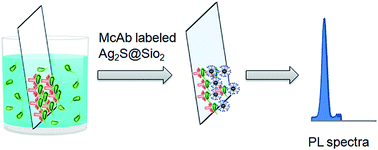
The principle of the anti-oocysts McAb immobilized NIR emitting core–shell Ag2S@silica nanosphere based optical immunosensor is based on the sandwich form of the antibody immunoassay. As shown in Scheme 1, anti-oocysts McAb was immobilized on the (3-glycidoxypropyl)methyldiethoxysilane functionalized quartz glass plate and subsequently incubated with the target C. parvum. The glass plates were then treated with anti-oocysts McAb immobilized core–shell Ag2S@silica nanospheres and used to measure the photoluminescence (PL) spectra to detect the presence of the target pathogen.
 |
| | Scheme 1 The principle of the anti-oocysts McAb immobilized NIR emitting core–shell Ag2S@silica nanosphere based optical immunosensor. | |
3.3 Optical characterization of the modified quartz glass for C. parvum detection
The consecutive immobilization of GPTMS, primary anti-oocysts monoclonal antibody, oocysts and anti-oocysts McAb immobilized core–shell nanoparticles on the quartz glass were characterized by PL spectroscopy. As shown in Fig. 3, a PL peak was not observed in GPTMS, the anti-oocysts antibody, or the oocyst treated glass slide. The PL peak appeared at 896 nm for the anti-oocysts McAb immobilized core–shell nanoparticle treated glass plate, which indicates the presence of the target C. parvum on the modified glass plate, but it was not in the absence of C. parvum. The resulting appearance of an intense PL peak is attributed to the specific detection of C. parvum on the antibody functionalized glass surface, and followed by treatment with the anti-oocysts McAb immobilized core–shell nanoparticles. Consequently, the obtained PL spectrum confirmed that the different species were sequentially immobilized on the GPTMS functionalized quartz glass.
 |
| | Fig. 3 PL spectral analysis of modified quartz glass to develop a NIR emitting core–shell nanoparticle based immunosensor. | |
3.4 Efficiency of the NIR emitting core–shell Ag2S@silica nanosphere based optical immunosensor for the detection of C. parvum
The developed NIR emitting core–shell silica nanoparticle based optical immunoassay was tested for sensitivity and selectivity for the detection of the model analyte, C. parvum. Serial numbers, for instance 0 to 100 oocysts per mL, were used and analyzed to quantify the assay efficiency. The optical response for the analysis of oocysts with serial numbers is shown in Fig. 4a and b. It was found that the photoluminescent absorbance peak increased as expected with an increase in the number of oocysts. A linear response from 10 to 100 oocyst per mL was shown, whereas below 10 oocyst per mL (5 oocyst per mL) little deviation in linearity was found. This may be due to the limited number of the target pathogen C. parvum. The optimized linearity came to exist only after 10 oocysts per mL and a limit of detection of 10 oocysts per mL was noted. The sequential treatment of quartz glass is shown in Scheme 1, except oocysts did not show any photoemission, which reveals that the appearance of an emission peak in Fig. 3 is not due to the non-specific or physical adherence of core–shell nanospheres on the quartz glass. The reproducibility of the developed optical immunosensor was assessed by a series of 5 immunoassays under optimized conditions, to detect 100 and 50 oocysts per mL. The coefficient variations of the assay are 4.1% and 2.7% respectively, which suggests that the assay is reproducible in optimized conditions. Further, the developed NIR emitting core–shell silica nanoparticle based optical immunoassay was validated by studying the specific binding of anti-oocysts McAb immobilized Ag2S@silica nanospheres with other pathogens such as Giardia lamblia, Vibrio Cholerae, Shigella, E. coli and Salmonella, and it was found that the photoemission is not observed for any of the pathogens except C. parvum (Fig. 5).
 |
| | Fig. 4 PL analysis of anti-oocysts McAb immobilized NIR emitting core–shell Ag2S@silica nanosphere based immunosensors for C. parvum detection. (a) Various concentrations of C. parvum were used, from (top to bottom) 0 to 100 oocysts per mL of C. parvum and (b) a standard graph of PL intensity versus the concentration of C. parvum (oocysts per mL) using NIR emitting core–shell nanoparticles. | |
 |
| | Fig. 5 Validation of the specificity of the developed anti-oocysts McAb immobilized NIR emitting core–shell Ag2S@silica nanosphere based immunosensor assay for the detection of C. parvum (i) Shigella, (ii) Vibrio Cholerae, (iii) E coli, (iv) Salmonella, (v) Giardia lamblia, and (vi) C. parvum. | |
4. Conclusion
We have utilized the optical features of NIR emitting core–shell Ag2S@silica nanospheres to fabricate an optical immunosensor and have studied the sensitivity of the assay by using C. parvum as a model pathogen. The study reveals that the developed optical immunosensor can detect C. parvum as low as 10 oocysts per mL with a minimal assay period. We conclude that the anti-oocysts McAb immobilized NIR emitting core–shell Ag2S@silica nanospheres can be employed for the optical immunosensing of C. parvum in environmental samples.
Acknowledgements
The authors acknowledge financial support from the Department of Science and Technology through the Fast Track Young Scientist Scheme: Grant no. SR/FT/CS-103/2009.
References
- S. Ghaffari, N. Kalantari and C. A. Hart, Int. J. Mol. Cell. Med., 2014, 3, 36 Search PubMed.
- M. Manser, M. Granlund, H. Edwards, A. Saez, E. Petersen, B. Evengard and P. Chiodini, Clin. Microbiol. Infect., 2014, 20, 65 CrossRef PubMed.
- C. Thiruppathiraja, V. Saroja, S. Kamatchiammal, P. Adaikkappan and M. Alagar, J. Environ. Monit., 2011, 13, 2782 RSC.
- J. I. Wong, L. Wang, Y. Shi, T. A. Palacios, J. Kong, X. Dong and H. Y. Yang, Appl. Phys. Lett., 2014, 104, 063705 CrossRef PubMed.
- B. C. Ferrari and P. L. Bergquist, Cytometry, Part A, 2007, 71, 265 CrossRef CAS PubMed.
- C. K. Nielsen and L. A. Ward, J. Vet. Diagn. Invest., 1999, 11, 567 CrossRef CAS PubMed.
- A. J. Alles, M. A. Waldron, L. S. Sierra and A. R. Mattia, J. Clin. Microbiol., 1995, 33, 1632 CAS.
- G. Vesey, P. Hutton, A. Champion, N. Ashbolt, K. Williams, A. Warton and D. Veal, Cytometry, 1994, 16, 1 CrossRef CAS PubMed.
- A. R. Guy, P. Payment, U. J. Krull and P. A. Horgen, Appl. Environ. Microbiol., 2003, 69, 5178 CrossRef.
- C. Kaucner and T. Stinear, Appl. Environ. Microbiol., 1998, 64, 4627 CAS.
- F. T. Biderouni and N. Salehi, Gastroenterol. Hepatol. Bed Bench, 2014, 7, 125 Search PubMed.
- S. Santra, P. Zhang, K. M. Wang, R. Tapec and W. H. Tan, Anal. Chem., 2001, 73, 4988 CrossRef CAS.
- X. He, J. Duan, K. Wang, W. Tan, X. Lin and C. He, J. Nanosci. Nanotechnol., 2004, 4, 585 CrossRef CAS PubMed.
- L. Wang, C. Y. Yang and W. H. Tan, Nano Lett., 2005, 5, 37 CrossRef CAS PubMed.
- B. Shi, Y. Wang, K. Zhang, T. L. Lam and H. L. Wa Chan, Biosens. Bioelectron., 2011, 26(6), 2917 CrossRef CAS PubMed.
- P. Upadhyay, M. Hanif and S. Bhaskar, Clin. Microbiol. Infect., 2006, 12, 1118 CrossRef CAS PubMed.
- J. Pichaandi and F. C. J. M. van Veggel, Coord. Chem. Rev., 2014, 263–264, 138 CrossRef CAS PubMed.
- S. Jin, Y. Hu, Z. Gu, L. Liu and H. C. Wu, J. Nanomater., 2011, 2011, 1 CrossRef PubMed.
- G. Iyer, J. J. Li, F. Pinaud, J. M. Tsay, L. A. Bentolila, X. Michalet and S. Weiss, Proc. of SPIE., ed. M. Osinski, K. Yamamoto and T. M.Jovin, 2006, vol. 6096, p. 60960B Search PubMed.
- L. Han, Y. Lv, A. M. Asiri, A. O. Al-Youbi, B. Tu and D. Zhao, J. Mater. Chem., 2012, 22, 7274 RSC.
- Y. Wu, C. Chen and S. Liu, Anal. Chem., 2009, 81, 1600 CrossRef CAS PubMed.
- V. Krylova and L. Samuolaitiene, Mater. Sci., 2013, 19, 1 CrossRef.
|
| This journal is © The Royal Society of Chemistry 2014 |
Click here to see how this site uses Cookies. View our privacy policy here.