Hsiu-Chuan Lee
ab,
Wen-Yi Chengb,
Brian E. T.-G. Huangc,
Yi-Hao Hsub and
Shih-Yi Huang*b
aProgram for Translation Medicine, Taipei Medical University, Taipei, Taiwan
bSchool of Nutrition and Health Sciences, Taipei Medical University, 250 Wu-Xing Street, Taipei 110, Taiwan. E-mail: sihuang@tmu.edu.tw; Fax: +886-2-27373112; Tel: +886-2-27361661 ext. 6543
cDepartment of Chemistry, National Taiwan University, Taipei, Taiwan
First published on 14th October 2014
Poria cocos (Fu Ling) and Dioscorea opposita (Chinese Yam) were suggested to have potential benefits in blood sugar control. However, little is known about the underlying mechanisms. In this study, we investigated the anti-inflammatory and hypoglycemic effects of Poria cocos and Dioscorea opposita extracts in prediabetic rats. Fifty streptozotocin-injected rats with a mimic prediabetic status were gavaged with a single dose of either D. opposita (0.35 g kg−1 per day) or P. cocos (0.14 g kg−1 per day), a combination dose comprising single doses of the 2 herbal extracts, or vehicle for a 6-week treatment. Each group contained 10 rats. Blood and selected organ samples were collected during the study. The results indicated that administering the extracts singly or in combination for 6 week, significantly reduced the fasting blood-glucose level. The levels of interleukin-6 in plasma and selected organs significantly decreased during the treatment. The concentration of plasma free fatty acids (FFA) and the ratio of n − 6/n − 3 polyunsaturated fatty acids (PUFAs) were also significantly lowered after the 6 week intervention. The results indicate that administering P. cocos and D. opposita extracts produced anti-inflammatory effects in prediabetic rats by reducing the levels of interleukin-6 and the FFA ratio of n − 6/n − 3 PUFAs.
Previously, a low ratio of n − 6/n − 3 polyunsaturated fatty acids (PUFAs) has been reported to affect the development of cardiovascular diseases.7 Current Western diets are highly caloric and feature inadequate lipid profiles and dietary ratios of n − 6/n − 3 PUFA.8 N − 3 PUFAs have been reported to compete with n − 6 PUFAs as substrates for cyclooxygenases, and n − 3 PUFAs often exert physiological effects, which are the opposite of those exerted by n − 6 PUFA eicosanoid products. Therefore, the use of the n − 6/n − 3 PUFA ratio as a biomarker in dietetics to prevent chronic diseases should be considered.
Increasing evidence indicates that elevated levels of advanced glycation end products (AGEs) contribute for the development of several related vascular diseases and for the progression of diabetes.9 Patients with a hyperglycemia status are considered to experience chronic inflammation.10 Glycated proteins have been reported to function as triggers that propagate non-enzymatic chain reactions leading to AGE formation11 and activate the expression of receptors for AGEs (RAGEs). RAGEs, which participate in signal transduction by activating Nuclear Factor kappa B (NF-κB), have been used for the development of various disorders.12 An activation of RAGE ligands initiates a chronic inflammatory pathway that contributes to the pathogenesis of diabetic complications.13 In addition, AGEs and RAGEs promote the release of proinflammatory cytokines (i.e., tumor necrosis factor-α [TNF-α], interleukin-1 [IL-1], and interleukin-6 [IL-6]) by macrophages, and this triggers the recruitment of inflammatory mediators and results in an acceleration of tissue dysfunction. These findings suggest that blocking RAGE expression could serve as an effective approach in treating a range of diabetic complications,14 particularly diabetic renal dysfunction.15
Poria cocos (Fu Ling) and Dioscorea opposita (Chinese Yam) are well known and widely used Chinese herbs that have been reported to exhibit antidiabetic and anti-inflammatory effects.16–19 Certain Chinese herbs are also included in diets to control blood sugar in patients with hyperglycemia.20 However, the potential mechanisms underlying the antidiabetic effects of P. cocos and D. opposita, which could depend on the anti-inflammatory or hypoglycemic properties of the herbs, remain unknown. Therefore, in this study, we tested the hypothesis that P. cocos and D. opposita crude extracts exert anti-inflammatory and hypoglycemic effects in prediabetic rats.
:
1 and 13
:
1, respectively. All the chemicals and solvents used in this study were obtained from Sigma (St. Louis, MO, USA) unless otherwise specified.
A pre-DM status was induced in 50 rats within 2 week, and these animals were assigned to receive the following treatments: a single dose of herb (either 0.35 g kg−1 per day of the D. opposita crude extract [D] or 0.14 g kg−1 per day of the P. cocos crude extract [P]) and a combination dose comprising single doses of the 2 herbal extracts (0.35 g kg−1 per day of the D. opposita crude extract and 0.14 g kg−1 per day of the P. cocos crude extract [M]); or the vehicle (0.5 mL of normal saline, [C; pre-DM control]). Each group contained 10 rats. The remaining 10 rats were assigned to the “normal” group [N] and they received no treatment during the study. Detailed procedures used for producing a pre-DM status are described elsewhere.22,23 In brief, the rats received a single injection of 20 mg kg−1 streptozotocin (STZ) intraperitoneally to induce a mimic prediabetes status. The fasting blood-sugar level of qualified STZ-treated rats was determined to be 140–200 mg dL−1 before the intervention. After a prediabetes status was confirmed, the rats were gavaged with specified amounts of herbal crude extracts, daily for 6 week. Venous blood was collected from the tails of the rats in all the groups at baseline, after 3 and 6 week and at the end of the experiment. The animals were provided with an American Institute of Nutrition-93M (AIN-93M) diet and water, ad libitum. These conditions were maintained constant throughout the experiment. At the end of the experimental period, all the animals were euthanized using carbon dioxide, the kidney and liver were excised, and abdominal blood was collected for analyses. All the chemicals used in this study were obtained from Sigma-Aldrich (St. Louis, MO, USA). The animals were housed 2/cage, and all the procedures used complied with the guidelines of the Institutional Animal Care and Use Committee of Taipei Medical University (LAC-99-0271).
000 × g for 20 min at 4 °C, and the supernatants obtained were mixed with a protease-inhibitor cocktail (Sigma). A rat TNF-α platinum-sandwich enzyme-linked immunosorbent assay (ELISA) kit (Cat. no. BMS622, eBioscience, Vienna, Austria) was used to determine the TNF-α levels in serum and selected tissues. In brief, homogenates and standards were pipetted into 96-well microplates precoated with a TNF-α-specific monoclonal antibody. Then, an enzyme-linked monoclonal antibody specific for TNF-α was added to the wells. After 60 min, any unbound antibody–enzyme complex was washed out, and a color-development substrate solution was added to the wells to determine the amount of TNF-α bound in the initial step. Then, color development was stopped, and the color intensity was measured within 30 min using a microplate reader (Versa Max Microplate Reader, Molecular Devices, Sunnyvale, CA, USA) set to 450 nm. IL-6 levels in the serum and selected tissues were determined using a rat IL-6 platinum ELISA kit (Cat. No. BMS625, eBioscience, Vienna, Austria). The ELISA procedures used were similar to those used to determine the TNF-α levels, and the color intensity was measured at 405 nm. The total protein content of the samples was measured using the Bradford method.25 The serum CRP levels were determined using a TBA-c16000 automated analyzer (Toshiba, Tokyo, Japan). VCAM levels in the plasma were determined using a rat vascular cell adhesion protein 1 (VCAM-1/CD106) ELISA kit (Cat. no. CSB-E07275r, CUSABIO, Wuhan, China). E-selectin levels in the plasma were determined using a rat soluble E-selectin (sE-selectin) ELISA kit (Cat. no. CSB-E07996r, CUSABIO, Wuhan, China). The ELISA procedures used were similar to those used to determine the TNF-α levels, and the color intensity was measured at 450 nm.
:
2 linoleic acid (LA), C20
:
2 eicosadienoic acid (EDA), and C20
:
4 arachidonic acid (AA); 4n − 3 fatty acids: C18
:
3 α-linolenic acid (ALA), C20
:
5 eicosapentaenoic acid (EPA), C22
:
5 docosapentaenoic acid (DPA), and C22
:
6 docosahexaenoic acid (DHA); and the ratio of n − 6/n − 3 PUFAs.
| N | C | D | P | M | |
|---|---|---|---|---|---|
| a N, normal; C, prediabetes mellitus control; D, D. opposita (1×); P, P. cocos (1×); M, combination of D. opposita (1×) and P. cocos (1×). Feeding efficiency (%) = (body-weight gain/total food intake) × 100%. Data are presented as means ± SEM. Each group contained 10 rats. Values in a row that are indicated by the same letter do not differ significantly from one another; Duncan's multiple-range test (P < 0.05). | |||||
| Initial body weight (g) | 294.3 ± 3.0 | 292.4 ± 6.2 | 293.7 ± 3.2 | 293.8 ± 3.3 | 294.1 ± 1.9 |
| Final body weight (g) | 463.4 ± 14.9a | 286.3 ± 8.3b | 319.7 ± 13.9c | 308.8 ± 6.3bc | 302.8 ± 4.4bc |
| Body-weight gain (g) | 169.1 ± 15.2a | −6.1 ± 9.5b | 26.0 ± 14.5b | 15.0 ± 8.1b | 8.6 ± 4.9b |
| Food intake (g per day) | 21.7 ± 0.4a | 30.8 ± 0.3b | 29.7 ± 0.4b | 30.8 ± 0.3b | 30.0 ± 0.4b |
| Feeding efficiency (%) | 13.9 ± 1.1a | −0.4 ± 0.2b | 1.6 ± 0.9b | 0.9 ± 0.4b | 0.6 ± 0.2b |
| Liver weight (g) | 12.0 ± 0.8a | 9.7 ± 0.5b | 9.1 ± 0.5b | 8.9 ± 0.4b | 8.3 ± 0.4b |
| sGOT (U L−1) | 98.1 ± 2.9 | 105.6 ± 9.4 | 98.1 ± 5.8 | 98.1 ± 2.7 | 99.6 ± 3.5 |
| sGPT (U L−1) | 32.2 ± 0.9a | 46.0 ± 2.8b | 43.0 ± 3.0b | 42.4 ± 3.3b | 46.1 ± 4.3b |
| Kidney weight (g) | 2.68 ± 0.09a | 3.22 ± 0.10b | 3.19 ± 0.21b | 2.96 ± 0.12a | 3.03 ± 0.13a |
| BUN (mg dL−1) | 9.8 ± 0.7a | 39.0 ± 3.1b | 36.8 ± 9.5b | 31.1 ± 3.0c | 37.0 ± 3.4b |
| Creatinine (mg dL−1) | 0.38 ± 0.02 | 0.36 ± 0.01 | 0.37 ± 0.08 | 0.39 ± 0.03 | 0.41 ± 0.03 |
| N | C | D | P | M | |
|---|---|---|---|---|---|
| a N, normal; C, prediabetes mellitus control; D, D. opposita (1×); P, P. cocos (1×); M, combination of D. opposita (1×) and P. cocos (1×). FBG: fasting blood glucose, HbA1C, glycosylated Hb, HOMA-IR: homeostatic model assessment-insulin resistance (HOMA-IR) = (AC × (insulin)/22.5), CRP:C-reactive protein, TG: triglyceride, TC: total cholesterol, HDLc: high-density lipoprotein cholesterol, LDLc: low-density lipoprotein cholesterol, TNF-α: tumor necrosis factor α, IL-6: interleukin-6, VCAM 1, vascular cell adhesion molecule 1, ICAM-1, Intercellular Adhesion Molecule 1. Data are presented as means ± SEM. Each group contained 10 rats. Values in a row that are indicated by the same letter do not differ significantly from one another; Duncan's multiple-range test (P < 0.05). | |||||
| Glucose metabolism | |||||
| FBG (mg dL−1) | 129.8 ± 5.4a | 286.3 ± 17.4b | 226.1 ± 11.7c | 232.6 ± 13.6c | 247.5 ± 14.2c |
| Insulin (μIU mL−1) | 0.31 ± 0.01 | 0.35 ± 0.02 | 0.37 ± 0.04 | 0.37 ± 0.05 | 0.36 ± 0.04 |
| HbA1c (%) | 6.5 ± 0.7a | 11.7 ± 0.4b | 8.2 ± 0.4c | 7.8 ± 0.8c | 7.7 ± 0.7c |
| HOMA-IR | 2.43 ± 0.11a | 5.96 ± 0.42b | 5.03 ± 0.60b | 5.37 ± 0.70b | 5.44 ± 0.90b |
| CRP (μg dL−1) | 6.09 ± 2.41 | 7.76 ± 1.56 | 5.95 ± 1.38 | 6.74 ± 1.93 | 6.57 ± 1.06 |
![]() |
|||||
| Blood lipids | |||||
| TG (mg dL−1) | 47.9 ± 2.9 | 51.1 ± 4.2 | 53.0 ± 5.6 | 52.4 ± 6.3 | 50.9 ± 5.2 |
| TC (mg dL−1) | 100.3 ± 5.2 | 159.3 ± 15.1a | 149.6 ± 12.9a | 143.5 ± 9.5a | 137.9 ± 4.6a |
| HDLc (mg dL−1) | 13.9 ± 1.4 | 16.4 ± 1.2 | 15.1 ± 1.9 | 15.8 ± 2.7 | 14.7 ± 1.4 |
| LDLc (mg dL−1) | 3.4 ± 0.7 | 5.8 ± 0.6 | 4.8 ± 0.9 | 4.7 ± 0.7 | 4.2 ± 0.3 |
| Free fatty acids (mmol L−1) | 0.037 ± 0.010a | 0.041 ± 0.011b | 0.037 ± 0.008ab | 0.032 ± 0.007a | 0.036 ± 0.012ab |
![]() |
|||||
| Inflammatory status | |||||
| TNF-α (pg mL−1) | 0.14 ± 0.03a | 0.42 ± 0.08b | 0.16 ± 0.04a | 0.15 ± 0.02a | 0.14 ± 0.03a |
| IL-6 (mg mL−1) | 0.13 ± 0.04a | 0.43 ± 0.02b | 0.28 ± 0.03a | 0.29 ± 0.04a | 0.27 ± 0.04a |
| VCAM (ng mL−1) | 51.4 ± 14.6a | 104.9 ± 13.5b | 94.6 ± 11.3a | 86.0 ± 19.3a | 116.2 ± 21.5b |
| ICAM (ng mL−1) | 36.9 ± 15.1a | 156.3 ± 27.4b | 130.3 ± 32.9b | 110.7 ± 21.4b | 127.4 ± 26.2b |
| E-selectin (pg mL−1) | 373 ± 38 | 455 ± 32 | 423 ± 170 | 404 ± 105 | 676 ± 221 |
| N | C | D | P | M | ||
|---|---|---|---|---|---|---|
| a N, normal; C, prediabetes mellitus control; D, D. opposita (1×); P, Poria cocos (1×); M, combination of D. opposita (1×) and P. cocos (1×). SFAs, saturated FAs; MUFAs, monounsaturated FAs; PUFAs, polyunsaturated FAs; AA, arachidonic acid; EPA, eicosapentaenoic acid. Data are presented as means ± SEM. Each group contained 10 rats. Values in a row that are indicated by the same letter do not differ significantly from one another; Duncan's multiple-range test (P < 0.05). | ||||||
| Plasma | SFAs | 41.42 ± 1.19 | 40.43 ± 0.99 | 39.47 ± 0.63 | 41.29 ± 0.68 | 39.60 ± 0.96 |
| MUFAs | 42.21 ± 1.27 | 40.35 ± 1.00 | 41.64 ± 0.64 | 39.26 ± 0.75 | 40.85 ± 1.14 | |
| PUFAs | 16.37 ± 0.52a | 19.23 ± 0.45b | 18.89 ± 0.55b | 19.45 ± 0.64b | 19.55 ± 0.56b | |
| n − 6 | 15.00 ± 0.46a | 17.61 ± 0.43b | 17.36 ± 0.49b | 17.56 ± 0.62b | 17.88 ± 0.43b | |
C20 : 4 (AA) |
6.69 ± 0.42a | 7.34 ± 0.22b | 7.05 ± 0.36a | 7.68 ± 0.61b | 6.57 ± 0.35a | |
| n − 3 | 1.37 ± 0.09a | 1.62 ± 0.08a | 1.52 ± 0.15a | 1.89 ± 0.17b | 1.66 ± 0.18a | |
C20 : 5 (EPA) |
0.10 ± 0.03 | 0.09 ± 0.03 | 0.09 ± 0.03 | 0.11 ± 0.02 | 0.09 ± 0.02 | |
| n − 6/n − 3 | 11.18 ± 0.58 | 11.15 ± 0.70 | 10.73 ± 0.62 | 10.57 ± 1.27 | 11.47 ± 0.96 | |
| AA/EPA | 66.93 ± 8.33 | 81.53 ± 8.44 | 78.12 ± 6.77 | 69.58 ± 7.63 | 73.22 ± 7.51 | |
| Plasma free FAs | SFAs | 40.55 ± 0.74ab | 43.34 ± 0.65a | 40.00 ± 0.40ab | 39.17 ± 0.88b | 40.91 ± 1.68ab |
| MUFAs | 52.58 ± 0.67ab | 50.54 ± 0.68a | 55.05 ± 0.54bc | 56.12 ± 0.94cd | 53.92 ± 1.86ab | |
| PUFAs | 6.87 ± 0.19a | 6.12 ± 0.34b | 4.96 ± 0.32c | 4.71 ± 0.23c | 5.18 ± 0.37c | |
| n − 6 | 1.56 ± 0.05a | 4.80 ± 0.30b | 2.00 ± 0.18a | 1.58 ± 0.08a | 2.53 ± 0.28c | |
C20 : 4 (AA) |
0.42 ± 0.03a | 0.82 ± 0.03b | 0.22 ± 0.05c | 0.16 ± 0.03c | 0.37 ± 0.02a | |
| n − 3 | 5.31 ± 0.18a | 1.32 ± 0.15b | 2.96 ± 0.31c | 3.31 ± 0.28c | 2.65 ± 0.16c | |
C20 : 5 (EPA) |
0.027 ± 0.012 | 0.016 ± 0.004 | 0.030 ± 0.015 | 0.014 ± 0.004 | 0.031 ± 0.012 | |
| n − 6/n − 3 | 0.30 ± 0.01a | 2.72 ± 0.21b | 0.76 ± 0.16a | 0.55 ± 0.08a | 0.79 ± 0.09a | |
| AA/EPA | 14.03 ± 4.01a | 50.25 ± 3.83b | 9.16 ± 3.03a | 11.40 ± 5.21a | 11.93 ± 3.52a | |
The profiles of plasma FFAs are presented in Table 3. SFA levels in the P. cocos group and the high-dose combination group were significantly lower than those in the control group; the MUFA levels in the single-dose and high-dose combination groups were significantly higher than those in the control group; and PUFA levels in the herb-treated groups were significantly lower than those in the control group (P < 0.05 for all). AA declined most noticeably in the herb-treated groups. Both the ratio of n − 6/n − 3 PUFAs and the AA/EPA ratios in the herb-treated groups were significantly lower than those in the control group (P < 0.05 for all).
P. cocos, a saprophytic fungus, is used in traditional Chinese medicine for its diuretic, sedative, and tonic effects.31–34 D. opposita is commonly used in traditional Chinese medicine to treat patients with diabetes.17,30,35 In this study, no statistically significant differences in hyperglycemia were detected among the herbal extract-treated groups; however, the D. opposita group exhibited a significant increase in body-weight gain compared with that of the control group, which may be attributed to the antiglycemic property of polysaccharides.18 Two potential components of P. cocos,19 polysaccharides and triterpenes (i.e., pachymic acid), were proposed to stimulate glucose uptake by enhancing glucose transporter 4 (GLUT4) gene expression and GLUT4 translocation.36 Dioscorea opposita-treated rats with STZ-induced diabetes displayed increased sensitivity to exogenous insulin.18 The results of this study indicate that P. cocos and D. opposita crude extracts exhibited potential antiglycemic properties during treatment.
An acute elevation of plasma FFA levels is a key aspect of the process of T2DM development, and it is a major factor that induces insulin resistance.37 The study data revealed that plasma FFA levels declined in a statistically significant manner in the P. cocos group compared with those of the control group. Distinct FFA profiles have been proposed to produce opposite effects on the progression of insulin resistance and T2DM.38 Elevated levels of dietary SFAs are considered to decrease insulin sensitivity and increase the risk of T2DM.39,40 In this study, we detected elevated FFA n − 6 PUFA levels, especially AA levels, in rats with a prediabetic status. The elevated levels of SFA and n − 6 PUFAs in plasma FAAs were proposed to trigger the proinflammatory cascade in tissues.41 In addition, the herbal treatments ameliorated both the levels and profiles of FFAs. Certain profiles of FFAs are considered more critical than the concentration of FFAs in T2DM.42 Lowering the ratios of n − 6/n − 3 PUFA or AA/EPA in FFAs positively correlated with inflammation43 and IL-6 levels.44 The results of this study indicate that P. cocos or D. opposita crude extracts ameliorated the ratio of n − 6/n − 3 PUFAs and AA/EPA ratios and concomitantly reduced inflammation. Thus, the ratios of n − 6/n − 3 PUFAs and AA/EPA in FFAs might serve as predictors in assessing chronic inflammation in patients with a prediabetic status.
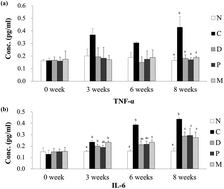
Diabetes is considered to be a form of chronic inflammation, which is defined as a series of phenomena induced by distinct pathological stimuli and tissue injuries. Hyperglycemia enhances the formation of AGEs, which are generated through the auto-oxidation of glucose and certain proteins. The interactions of AGEs with their receptors, called RAGEs, might lead to the production of proinflammatory cytokines and cause inflammation.45,46 The present results revealed that the TNF-α and IL-6 concentrations in the plasma, liver, and kidneys gradually increased with the rise in blood glucose and the progression of diabetes. We confirmed that in the process of the development of prediabetes into diabetes, the rats exhibited a chronic inflammation status, which accelerated disease development.47
Diabetic nephropathies are common chronic complications in diabetes. Continual hyperglycemia leads to elevated vessel pressure, glomerular filtration rate, and mesangial proliferation. The interactions of AGEs with RAGEs induce the expression of vascular cell adhesion molecule-1 and lead to vascular endothelial damage.48 AGE accumulation in vessel walls causes a thickening of glomerular basal membrane, elicits changes in renal physiological functions and morphology, and increases the risk of atherosclerosis or glomerulosclerosis.49 Although we did not quantify renal morphological changes, the results indicated that AGEs and RAGEs mainly accumulated in afferent arterioles and in the proximal area of renal vessels, especially in the control group. The animals in the control group exhibited thickened renal glomerular basal membranes. Yoon et al. reported that a high concentration of glucose induced an elevated proliferation of mesangial cells, and that a water extract of P. cocos inhibited mesangial cell proliferation by reducing the expression of cyclins and cyclin-dependent kinases.50 In the present study, following the herbal-extract intervention, the thickness of the glomerular basal membrane decreased, and reduced AGE accumulation and RAGE expression were observed in the renal vessel walls. Immunohistochemical analysis revealed that the crude extracts of both P. cocos and D. opposita exerted similar protective effects against diabetic nephropathies. However, the bioactive ingredients in the extracts are not identical, and polyphenols, flavonoids, and soluble dietary fiber might play critical roles in diabetic nephropathies. The herbal extracts might potentially produce protective effects by improving fasting blood-sugar levels20 and lowering the levels of proinflammatory cytokines15 and cyclin regulators.50
This study has a few limitations. First, the pre-DM model has been used to mimic the diabetes status in certain murine species, but the period for which the pre-DM status is maintained in rats does not appear to be controllable. Second, we did not quantify renal morphologic changes. Although the results of immunohistochemical staining indicated that AGEs and RAGEs mainly accumulated in afferent arterioles and in the proximal area of renal vessels, the expression levels of AGEs and RAGEs should be quantified.
In conclusion, the results indicate that in prediabetic rats, administering P. cocos or D. opposita crude extracts produced hypoglycemic and anti-inflammatory effects by reducing fasting blood-sugar levels, IL-6 levels, the FFA ratio of n − 6/n − 3 PUFAs, and AGE formation in kidney vessels, but the extracts did not produce synergistic effects.
| This journal is © The Royal Society of Chemistry 2014 |