Anushri Rananawarea,
Rajesh S. Bhosalebc,
Hemlata Patila,
Mohammad Al Kobaisid,
Amanda Abrahama,
Ravi Shuklaa,
Sidhanath V. Bhosaleb and
Sheshanath V. Bhosale*a
aSchool of Applied Sciences, RMIT University, GPO Box 2476, Melbourne, VIC-3001, Australia. E-mail: sheshanath.bhosale@rmit.edu.au
bPolymers and Functional Materials Division, CSIR-Indian Institute of Chemical Technology, Hyderabad-500 007, Telangana, India
cRMIT-IICT Research Centre, CSIR-Indian Institute of Chemical Technology, Hyderabad-500 007, Telangana, India
dFaculty of Science, Engineering and Technology, Swinburne University, PO BOX 3122, Hawthron, Australia
First published on 30th October 2014
A pyridyl functionalised tetraphenylethylene (Py-TPE) for ratiometric fluorescent detection of intracellular pH values is reported. The Py-TPE fluorescent probe can be used for H+ sensing in organic solvents (CHCl3, DMF and MeOH) and the change in optical density through absorption, emission and naked eye detection was modulated. On addition of TFA, an aggregation-induced enhancement of emission with an increase in quantum yield of 0.11 to 0.63, due to an intramolecular charge transfer (ICT) process was observed. This process is reversed by addition of TEA resulting in a cycle that can be repeated several times.
In earlier work, tetrapyridyl-substituted tetraphenylethylenes have been reported for various applications such as supramolecular building blocks,10 TPE-based organic and metal–organic networks,11 mercury sensing,12 and halogen bonded networks.13 We are interested to use pyridyl functionalised dyes as pH sensors as well as study their acid induced assembly.14 In this work, we report the pyridyl appended TPE motif 1 (Fig. 1) and its dual applications: firstly its use as a reversible probe for acid/base sensing in solution and live cells, and secondly, pH- and solvent-dependent assembly. The protonation/deprotonation can be detected by the naked eye, as the color of the solution changed from light yellow to dark green (λex = 365 nm) in acidic conditions by the addition of trifluoroacetic acid (TFA) and reversed to light yellow upon addition of triethylamine (TEA) in various solvents such as chloroform (CHCl3), N,N′-dimethylformamide (DMF) and methanol (MeOH) as shown in Fig. 1b. The fluorescence intensity is enhanced more efficiently in chloroform in comparison to DMF and MeOH. This is because ionic species can aggregate to a higher extent in a nonprotic solvent such as CHCl3, while DMF and MeOH are able to solvate protonated Py-TPE ionic species resulting in less aggregation and therefore less AIE. Furthermore, spectroscopic and scanning electron microscopic (SEM) techniques were employed to demonstrate the growth mechanism.
Pyridyl substituted TPE 1 (Py-TPE 1) was prepared via a Suzuki coupling reaction of tetrabromo TPE with 4-pyridine boronic acid in the presence of Pd(PPh3)4 as reported in the literature.10 Py-TPE 1 bears two important features, allowing molecules to self-assemble into a variety of supramolecular nanostructures with pH control, the first is the pyridyl moiety for protonation, which may tune the intermolecular interaction by charge pairing, and the second is the planar aromatic core of TPE for packing the structures via π–π-interactions and van der Waals forces.
Py-TPE 1 can be dissolved easily in organic solvents such as CHCl3, DMF and MeOH, resulting in a stable, transparent light yellow solution. In CHCl3, 1 (1 × 10⁻⁵ M) showed two well-resolved absorption bands at 276 nm, and 310 nm, assigned to the S0 → S2, and the S0 → S1 transitions respectively, and a shoulder at 339 nm, which is typical of the TPE chromophore (Fig. 2a). Almost identical UV-vis absorption was observed in DMF and MeOH. Interestingly, upon addition of TFA in CHCl3 a significant increase in absorbance of the 342 nm band was observed along with a decrease of both the 276 nm and 310 nm bands, in DMF and MeOH, the 342 nm band appeared red-shifted to 351 nm. Fig. 2b illustrates the typical absorption of 1 in CHCl3 with the gradual addition of 0–10 equiv. TFA (10−4 M), a slight red shift of the absorption maxima to 342 nm with a gradual increase in its intensity is observed. These results clearly indicate that such a shift in the absorption is due to protonation of the pyridine group along with charge-pairing and hydrogen-bonding, in addition to dipole–dipole interactions relative to the S0 → S1 transition. Py-TPE-H+ (2) can be deprotonated by the addition of TEA to regenerate Py-TPE 1 and this reverse cycle is seen in all the organic solvents used in this study (see ESI Fig. S1a–c†).
Furthermore, we studied the protonation/deprotonation cycle using fluorescence microscopy. We found that Py-TPE 1 is weakly fluorescent (λem = ∼480 nm, λex = 340 nm) in organic solvents such as CHCl3, DMF and MeOH, and even gradual addition of water (up to 70%) in the latter two solvents had very little effect on the fluorescence spectra of 1 which is markedly fluorescent in the solid state i.e. bands appeared at 438 and 562 nm and in water at 425 and 550 nm, however upon protonation of Py-TPE 1 the emission bands broaden with a red shift to 440 and 540 nm, respectively (see ESI Fig. S3 and S4†). In CHCl3 an emission maximum at 440 nm was observed and in DMF and MeOH the band had a similar shape to that in CHCl3, but was red-shifted to 448 nm. Interestingly, upon addition of trifluoroacetic acid (TFA) the emission was significantly enhanced and red shifted to ∼534 nm, this fluorescence enhancement was observed only in CHCl3, DMF and MeOH (see ESI Fig. S2†). This process is reversible upon addition of triethylamine (TEA) to the solution of 1 in DMF, restoring fluorescence to its original state (Fig. 3a). In acidic conditions, the emission intensity increased, with an about 86 nm red shift of the emission to 534 nm with an isosbestic point at 472 nm. In DMF, acidification caused the intensity of the fluorescence to increase (Φ = ∼0.73) and after the addition of TEA, the original fluorescence (Φ = 0.18) spectrum of 1 was obtained; this cycle is reversed several times without any loss of emission intensity (Fig. 3b).15,16 This phenomenon was observed in all the organic solvents used in this study (see ESI Fig. S2a–c†). Thus, the fluorescence spectra showed clear bathochromic shifts and enhancement of emission in the case of 2 over the non-protonated species 1 can be attributed to an intramolecular charge transfer (ICT) process and π–π-stacking of the aromatic cores in a polar solvent. A similar phenomenon was reported in the case of 3-acetyl-6-(4-vinylpyridine)-9-ethyl-carbazole by Yu and co-workers.17 1H-NMR spectroscopy confirms the protonation of 1 resulting in downfield shifts of the aromatic peaks of the pyridine moieties i.e. from δ = 7.5 to 7.63 ppm and from δ = 8.62 to 8.69 ppm (see ESI Fig. S5†).
Theoretical density functional theory (DFT) calculations using the Gaussian 09 suite of programs18 and B3LYP/6-31G level of theory of the unprotonated Py-TPE (1) and quadruple protonated Py-TPE (2) molecules indicated that the HOMO → LUMO transition red shifts by 67.265 nm when protonated, this is consistent with the UV-Vis and spectroscopy evidence in solution (see ESI Fig. S6–S8 and Table S1†). The calculation also showed positive charge distributed across the molecule through the conjugated aromatic system in (2), this makes π–π-stacking of solubilised (1) in aqueous acidic media less likely and hence the disappearance of the AIE effect, ion paring is the dominant interaction in organic solvents.
Time-dependent density functional theory (TD-DFT) and B3LYP/6-31G level of theory have been applied to the electronic excited states of 1 and 2. The calculation is performed for both singlet and triplet of the 4 excited states in the gas phase. Py-TPE 2, shows a red shift in the obtained transition and also the fluorescence peak in the visible region can be assigned to a triplet 3A transition with oscillator strength f = 0 making the irradiative process less likely. Thus, the aggregation of the protonated or unprotonated species causes rotation in the arms of the molecule which is found to play an important role in hindering the dissipation of the excited state energy.19 This enhances the radiative decay at room temperature. A similar phenomenon was observed in the solid state.
To gain further insight, we performed Scanning Electron Microscopy (SEM). A self-assembled aggregation arrangement of the protonated pyridyl functionalised tetraphenylethylene molecules 2 (10−5 M) forming needle shaped crystals in a fractal pattern (Fig. 4) with various dimensions was observed by SEM.
![]() | ||
| Fig. 4 Scanning electron micrographs of 2 (10−5 M) recrystallized from (A) DMF, (B) MeOH and (C) CHCl3. | ||
Typically, larger crystallites were observed to form in DMF (A) and smaller ones were formed in MeOH (B) and CHCl3 (C) after solvent evaporation. However, crystal formation seems to be less frequent from polar solvents such as DMF and MeOH. And, the width of the crystals varies depending on solvent polarity such as in DMF it is about 3.5 μm, in MeOH ∼6 μm, and about 250 nm in CHCl3. Many cross-linked nanostructures were also observed from these solvents, but no precipitation or collapsed morphology was apparent. These results suggest that the formed crystalline aggregates are very stable. As expected the formed aggregates disappeared upon the addition of TEA. Even increasing the concentration of 2 (10−3 M) in all the above solvents does not change the aggregation morphology, only extended aggregates were observed (see ESI Fig. S9†). On the other hand, the unprotonated form of Py-TPE 1 in MeOH and DMF aggregates into non-crystalline global supramolecular aggregates (see ESI Fig. S10A and S10B†), which may be due to a phase transition from monomer into aggregates in the polar solvents. In contrast, compound 1, forms large circles on the surface in CHCl3 after evaporation (Fig. S10C†). In the unprotonated form soluble species and the disappearance of AIEE of the Py-TPE were observed, a similar effect has been observed in the case of J- and H-type of aggregates of perylene diimides.20 Upon protonation the formation of nano-aggregates via self-assembly enhances the fluorescence emission.21 This highlights the delicate balance of the protonation to tune the ICT effect along with intermolecular interactions (charge pairing and hydrogen bonding) as well as dipole–dipole interactions, allowing nanostructures to form in a controlled fashion.
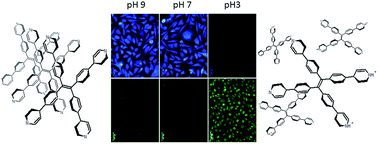
The potential utility of Py-TPE 1 for the specific imaging of acid–base sensing in living cells was evaluated (Fig. 5). For this purpose 1 was solubilised in DMSO at a 0.5 mg mL−1 stock concentration that was further diluted in serum containing media without any precipitation. Human prostate cancer (PC-3) cells, in their log phase of growth, were cultured in 24 well tissue culture plates for a period of 24 h.
The cells were pre-treated with 5 μg mL−1 of 1 for 2 hours and washed extensively with ice cold PBS to remove any trace amount of unreacted Py-TPE 1. This leads to a significantly low ionic transport through channel proteins and helps in the maintenance of cellular architecture. This is clearly reflected in Fig. 5 where it can be seen that the cells are able to maintain their shape and integral membrane structure. Fluorescence of the cells was observed at a low temperature under acidic (pH 3), neutral (pH 7) and alkaline (pH 9) environments. The low temperature helps in maintenance of the cell integrity under extreme pH conditions across the cell membrane as the activity of channel proteins, responsible for the movement of ions across the membrane, is significantly hindered due to reduced metabolic activities. Hence, the cells can withstand a greater disparity in the ionic concentration across the membrane. Our fluorescence microscopy images as shown in Fig. 5 revealed that cells showed a bright fluorescence in the blue channel between 450 and 490 nm with a centre wavelength of 470 nm under neutral pH conditions, and by increasing the pH up to 9, the fluorescence remained unaltered. However, when the cells were exposed to acidic conditions a significant red shift in the overall florescence was observed in the green visible light region, in the range between 520 and 560 nm. The morphology of the cells in the phase contrast images on the left panel of Fig. 5 clearly suggests that a 5 μg mL−1 concentration of 1 was nontoxic to cells. The clean background in the pictures suggests that the 1 is specifically incorporated into the cells and provided significant imaging contrast at concentrations as low as 5 μg mL−1.
In summary, we have demonstrated that a pyridyl-substituted tetraphenylene ethylene undergoes protonation and deprotonation events in polar and non-polar solvents. The protonation effect has been studied by means of UV-vis, fluorescence, 1H NMR spectroscopy. The protonation/deprotonation of Py-TPE 1 results in aggregation under acidic conditions and hence an aggregation-induced enhanced emission (AIEE) effect can be detected by the naked eye, and is fully reversible when the conditions are oscillated between acidic and basic. The adequate aqueous solubility and appreciable biocompatibility at imageable concentrations make this compound promising for cell based imaging and sensing applications. Furthermore, the protonated species aggregate in organic solvents into a variety of nanostructures depending on the solvent used. These results show a shift in absorption and enhancement in fluorescence attributed to the formation of nano-aggregated assemblies caused when the ICT effect along with π–π-staking becomes dominant and shows AIEE effect. In the unprotonated form soluble species and the disappearance of AIEE of the Py-TPE were observed. This colorimetric and ratiometric probe may find promising applications as an active element of chemo- and biosensors.
Footnote |
| † Electronic supplementary information (ESI) available: Details of UV/vis fluorescence and microscopic data of aggregates in all the solvents. See DOI: 10.1039/c4ra10511g |
| This journal is © The Royal Society of Chemistry 2014 |