Identification of a small molecule preventing BMSC senescence in vitro by improving intracellular homeostasis via ANXA7 and Hmbox1

Fang-Wu Wanga, Fei Zhaoa, Xing-Yang Qiana, Zhe-Zhen Yua, Jing Zhaoa, Le Sua, Yun Zhangb, Shang-Li Zhanga, Bao-Xiang Zhao*c and Jun-Ying Miao*ab
aInstitute of Developmental Biology, School of Life Science, Shandong University, Jinan 250100, P.R. China
bThe Key Laboratory of Cardiovascular Remodeling and Function Research, Chinese Ministry of Education and Chinese Ministry of Health, Shandong University Qilu Hospital, Jinan, 250012, P.R. China
cInstitute of Organic Chemistry, School of Chemistry and Chemical Engineering, Shandong University, Jinan 250100, P.R. China. E-mail: bxzhao@sdu.edu; miaojy@sdu.edu.cn; Fax: +86 531 88565610; Tel: +86 531 88364929

Received 14th September 2014 , Accepted 15th October 2014

First published on 16th October 2014


Abstract

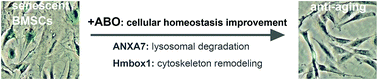
Recently, small chemical molecules have been proved to be ideal and promising interventions for bone marrow-derived mesenchymal stem cell (BMSC)-based tissue regeneration therapies. In this study, we discovered the huge anti-aging potential of a bioactive small molecule, 6-amino-3,4-dihydro-2H-3-hydroxymethyl-1,4-benzoxazine (ABO), which can suppress a series of senescent phenotypes, enhancing the proliferation and differentiation capacities in cultured rat BMSCs. We further illustrated that those beneficial effects were attributed to an improvement in cellular homeostasis, from the intracellular degradation system to cytoskeleton organization. ABO could enhance autophagy and reduce intracellular oxidative stress, by facilitating lysosomal degradation. The direct target protein of ABO, ANXA7, was elevated and proved essential for autophagy induction and lysosomal protection against Baf-A1 upon ABO treatment. Hmbox1 was another critical protein elevated by ABO, and probably downstream ANXA7. Intriguingly, the subcellular distribution of Hmbox1 largely overlapped with cytoskeletal microfilaments and this might lead to a microfilament reorganization. ABO could decrease the level of Caveolin-1, indicating a remodeling of the F-actin assembly and has attracted our interest to investigate the interaction between Hmbox1, Caveolin-1 and ANXA7 in microfilament formation at the cell membrane in a future study.

Introduction

The application of bone marrow-derived mesenchymal stem cells (BMSCs) in clinical infusion is now providing a great hope for cell therapies and tissue engineering in a wide variety of diseases.1–3 However, BMSCs cultured in vitro possess a very limited proliferation potential, with a maximum of about 40 PD for young donors and a sharp decline to 20 PD for older donors,4,5 substantially restricting the effect and efficiency of clinical treatment, and especially impeding the development of an autologous cell-based therapy for senior patients. Therefore, more information about the molecular mechanisms of BMSC senescence and potential intervention strategies would greatly benefit augmentation of the tissue regeneration therapies utilizing BMSCs.

Although accumulative reports have recognized a series of cellular or molecular markers of senescent BMSCs, e.g., loss of proliferation and multipotentiality,4,6 enlarged morphology,7 telomere attrition,5 elevated levels of p53 and p21,8 decreased antioxidants and stress resistance,8,9 downregulated DNA damage repair genes,10 the deep mechanisms regarding the onset and the effects of BMSC senescence still remain poorly understood. Senescent phenotypes in long-lived cells are often the consequence of collapsed homeostasis, leading to an accumulation of insoluble protein aggregates, lipofuscin, dysfunctional organelles and increased DNA damage. Currently, an important intracellular degradation and homeostasis maintenance system, autophagy, has rapidly attracted growing attention, due to its intrinsic link with aging.11 With the ability of “cleansing” and rejuvenating cellular components, autophagy is suggested to be a critical anti-oxidant mechanism.12 However, autophagic degradation is paradoxically susceptible to oxidative impairments during aging, and a decline of autophagic activity with age has been depicted in almost all the tissues and organisms analyzed.13 Studies indicate that the accumulation of undigested products inside lysosomes, usually in the form of heavy lipofuscin loading, appear to cause severe oxidative impairments to lysosomes, which was a primary cause for the compromising of the autophagic degradation in aging cells.14 Although autophagy in BMSCs has remained largely uncharacterized, several studies have suggested that autophagy protected BSMCs from oxidative stress,15 hypoxia,16 serum deprivation,17 and X-ray radiation.18 It is possible that autophagy may play a similar role in the maintenance of BMSCs as other long-lived cells.19

To date, attempts to delay BMSC senescence from reaching a higher expansion level in vitro have mainly concentrated on supplementation with various growth factors and cytokines. However, most of these factors stimulate cell proliferation via activating the growth signaling pathways,20 which are not able to essentially improve the disturbed cellular homeostasis in aging cells, and worse still, may lead to into undesirable effects such as cancer, metastasis and fibrosis.21,22 Enhancing telomerase activity by the introduction of lentivirus-mediated hTERT is also an approach.23,24 However, there still exist safety concerns about the usage of viral vectors, as well as a tumorgenesis risk of telomerase over-activation. Recently, several studies have shed light on the identification and development of bioactive small molecules to facilitate the differentiation of BMSCs in vitro in cell-based regenerative medicine fields.25–27 Small chemicals have some unique advantages, e.g., they can specifically target certain pathways related to selective cellular functions, and thus, the side effects can be minimized. Moreover, the production and preservation of chemicals is much less costly compared to the growth factors. Even though small molecules have become an ideal intervention approach in regeneration medicine, anti-aging small molecules in BMSCs have been rarely announced.28 Herein, we report a bioactive small molecular compound, 6-amino-3,4-dihydro-2H-3-hydroxymethyl-1,4-benzoxazine (ABO), which could effectively inhibit cell senescence in cultured rat BMSCs.

Our previous studies illustrated the multifunctions of ABO in several cell lineages, highlighting its roles in stimulating mTOR-independent autophagy,29,30 promoting angiogenesis, inhibiting apoptosis,31,32 and modulating differentiation.27,33 This was the first demonstration of the anti-senescence effect of ABO. We utilized cultured rat BMSCs of different population doubling levels (PDLs), a Hayflick model of replicative senescence,34 for the initial investigations, to illustrate the underlying molecular mechanisms. We found ABO improved cellular homeostasis in senescent BMSCs, primarily by activating autophagy and enhancing cytoskeleton homeostasis.

Results and discussion

ABO-inhibited cultured BMSC senescence

We discovered that ABO treatment significantly suppressed the senescent biomarkers in BMSCs (Fig. 1). The SA-β-gal staining result showed an increased proportion of positively stained cells in the senescent group (PDL 27) compared to PDL 5, with an obvious morphological change (Fig. 1B). The morphology of the senescent cells were more flat and spread out, with increased podia and actin stress filaments,4 in contrast to the spindle-type morphology of young cells. We found ABO-treated senescent cells exhibited a significantly decreased number of SA-β-gal positive cells, comparable to the positive control of the anti-aging chemical D60928 (Fig. 1B and C). Moreover, ABO-treated cells adopted a thinner and smaller morphology, with less cytoplasmic extensions and actin filaments. To investigate the influence of ABO on cell growth kinetics, the total cell number of each group was tracked starting at 2 × 10⁴ for eight consecutive days (Fig. 1D). We found the growth curve of ABO-treated PDL 16 cells presented a higher slope, indicating a faster proliferation speed. Although there were discrepancies on the adipocytic differentiation potential with age in vivo,35,36 numerous studies have demonstrated that cultured BMSCs gradually lose their adipogenic potential.4,8,37 In this study, BMSCs at different PDLs were cultured for 10 days in an adipogenic medium. A decline of differentiation capacity was observed in senescent cells, while senescent cells incubated with adipocyte medium containing 50 μM ABO presented a higher number of adipocytes, reflecting an enhanced differentiation potential (Fig. 1E). Intensified oxidative stress is a remarkable feature of senescent phenotypes. We also observed that ABO treatment could appreciably diminish intracellular ROS to a level similar to young cells (Fig. S1). From these results, it would be safe to infer that ABO suppressed BMSC aging in vitro, with a huge potential to restore its proliferation and differentiation capacities.
image file: c4ra10404h-f1.tif
Fig. 1 Senescence-associated markers showing ABO-suppressed cellular aging in BMSCs. (A) The chemical structure of ABO, 6-amino-3,4-dihydro-2H-3-hydroxymethyl-1,4-benzoxazine. (B) SA-β-gal activity and morphology of young (PDL 5) and senescent (PDL 27) BMSCs. (a) and (b) Normal BMSCs at PDL 5 and PDL 27. (c) and (d) Senescent BMSCs treated with 5 μg mL−1, 10 μg mL−1 D609 for 24 h, as a positive control. (e–g) Senescent BMSCs treated with 25 μM, 50 μM, 100 μM ABO for 24 h. (C) Percentage of SA-β-gal-positive cells. (**P < 0.01 versus PDL 27 cells, results were expressed as mean ± SEM, n = 3). (D) Growth curves of BMSCs at PDL 4, PDL 16, and PDL 16 with 50 μM ABO. (*P < 0.05; #P < 0.05 versus PDL 16 cells, results were expressed as mean ± SEM, n = 4). (E) Effect of ABO on adipogenic differentiation capacity, manifested by morphology of BMSCs at PDL 4, PDL 16, and PDL 16 with ABO treatment.

ABO-induced autophagy and the target protein ANXA7 crucial for senescence inhibition in BMSCs

ABO had been demonstrated as a robust mTOR-independent autophagy inducer in our previous studies.29,30 Immunoblotting of LC3 (microtubule-associated protein 1 light chain 3), an established marker of autophagy, showed a decreased level of autophagy in senescent cells, and ABO treatment significantly restored the autophagic activity (Fig. 2A). A complete autophagic flux and efficient autophagic degradation was further validated by the p62/SQSTM1 protein level (Fig. 2B). As an ubiquitin-binding adaptor protein for both proteasome and autophagy pathways, p62 and the targeted cargos become incorporated into autophagosomes. We monitored a high amount of p62 accumulated in senescent cells, and found ABO prominently reduced the p62 level through autophagic degradation. Currently, p62 has become a novel target for aging studies, as a key effector in protein homeostasis, nutrient signalings, antioxidant responses, etc.38 Our results indicated that ABO might have an influence on the biofunctions of p62, particularly protein homeostasis via modulating autophagy.
image file: c4ra10404h-f2.tif
Fig. 2 ABO-induced autophagy and ANXA7 contribution to the anti-senescent effect of ABO. (A) Western blot assay of LC3-II indicated a decline of autophagy with age and ABO enhanced autophagic activity in senescent BMSCs. (B) Western blot assay of p62 suggested that ABO promoted the clearance of p62 by autophagy in senescent cells. (C) The level of ANXA7 decreased with age, and was prominently elevated by ABO in senescent BMSCs. (D) and (E) SA-β-gal staining implied that upregulated ANXA7 and autophagy were indispensable for senescence inhibition in BMSCs. (a) and (b) normal BMSCs at PDL 5 and PDL 20. (c–e) PDL 20 cells respectively subjected to 20 nM scrambled siRNA, 20 nM ANXA7 siRNA, and 5 mM 3-MA, for 12 h and then incubated with culture medium containing 50 μM ABO for 48 h. The percentage of SA-β-gal-positive cells was measured in (D) (**P < 0.01, *P < 0.05, results were expressed as mean ± SEM, n = 3).

ANXA7, a direct target protein of ABO, was discovered to participate in ABO-induced autophagy.30 In this study, we also found ANXA7 was raised by ABO in senescent BMSCs (Fig. 2C). Interestingly, ANXA7 gradually declined with age, suggesting a potent role in the aging mechanism. To confirm whether upregulated autophagy and ANXA7 were indispensable for senescence inhibition by ABO, we conducted SA-β-gal staining after subjecting the cells to ANXA7 siRNA and an autophagy inhibitor, 3-MA, concurrent with ABO treatment. The results indicated that both ANXA7 silencing and autophagy cutoff significantly suppressed the reduction of SA-β-gal activity by ABO (Fig. 2D and E), thus this indicated they were indispensable for the anti-aging effect of ABO.

ABO protected and enhanced lysosomal activity via ANXA7

The blockage of lysosomal degradation, the last step of autophagy, would result in an accumulation of giant autolysosomes and the subversion of autophagy.39 During aging, lysosomal membrane permeabilization and integrity are perturbed,40 leading to a rapid collapse of the lysosomal pH and intracellular digestion. We wondered whether ABO-induced autophagy was a consequence of enhanced lysosomal degradation. Acridine orange (AO) is commonly used as an indicator for changes in lysosomal pH, lysosomal integrity, and permeability.41,42 As determined by AO staining (Fig. 3A), senescent cells at PDL 20 displayed a dim and dispersed red fluorescence compared to the red punctuated fluorescence signal in young cells. ABO treatment greatly increased red puncta inside the senescent cells, indicating a higher level of lysosomal activity. However, this effect was attenuated by ANXA7 silencing.
image file: c4ra10404h-f3.tif
Fig. 3 ABO promoted lysosomal degradation and protected lysosomes from Baf-A1 impairment via ANXA7. (A) Acridine Orange staining for young and senescent BMSCs. (a–d): Lysosomal activity declined with age as shown in (a) and (b). 50 μM ABO treatment for 24 h significantly restored the amount of acidic vacuoles (c), but this effect diminished when the cells were subject to 20 nM ANXA7 siRNA before ABO treatment (d). (e–g) BMSCs were exposed to 20 nM Baf-A1 for 8 h with (f) or without (e) pre-incubation with ABO for 24 h. ANXA7 silencing attenuated the protective effect of ABO (g). The fluorescence was quantified in the below panel (**P < 0.01, results were expressed as mean ± SEM, n = 3.). (B) ABO altered subcellular distribution pattern of ANXA7 and increased co-localization between ANXA7 and lysosomes. 20 nM Baf-A1 treatment for 1 h severely impaired the lysosomes, while ABO pre-treatment for 24 h counteracted the damaging effect.

We next utilized Bafilomycin-A1 (Baf-A1), a recognized inhibitor of vacuolar H+-ATPase (V-ATPase) located on the lysosomal membrane, to investigate whether ABO functioned by maintaining the lysosomal pH gradient. By exposing cells to 20 nM Baf-A1 for 8 h, we found that the red Fluorescence nearly disappeared in the control cells (Fig. 3Ae). When the cells were pre-treated with 50 μM ABO for 24 h, and then exposed 20 nM Baf-A1 supplemented with ABO for 8 h, the red acidic compartments were significantly retained, indicating ABO could counteract Baf-A1 impairment (Fig. 3Af). However, ANXA7 knockdown almost abolished this protective effect (Fig. 3Ag), thus we hypothesized that ANXA7 might be a key factor in lysosomal activity recovery upon ABO treatment. To further illustrate this, we examined the subcellular distribution of ANXA7 and lysosomes by Immunofluorescence. As shown in Fig. 3B, ABO significantly elevated the level of ANXA7 and altered its distribution pattern inside the senescent cells, with an obviously increased co-localization between ANXA7 and lysotracker, a pH-dependent probe for lysosomes. After incubation with Baf-A1 for 1 h, the signal of lysotracker was nearly diminished. ABO pre-treatment for 24 h could ameliorate lysosomal impairment by Baf-A1 (Fig. 3B), accompanied by a superposition of ANXA7 puncta and lysosomes, which indicated that ANXA7 might interact directly with lysosomes.

ABO upregulated Hmbox1 in senescent BMSCs via ANXA7

In addition to ANXA7, we discovered that ABO raised the level of Hmbox1 in senescent BMSCs, a recently-identified transcription factor belonging to the hepatocyte nuclear factor of the Homeobox family. As shown in Fig. 4A, Hmbox1 also strikingly declined with age. ABO treatment could upregulate Hmbox1 by up to 2–3 fold at 6 h. However, elevation of the Hmbox1 level was only sustained over a short time period within 24 h, reflecting the existence of a sophisticated regulation network drawing Hmbox1 back down to normal levels. So far, there has been no report regarding the upstream regulatory mechanism of Hmbox1. By performing ANXA7 silencing, we found that the knockdown of ANXA7 dramatically decreased Hmbox1 protein in untreated cells and nearly offset the elevating effect by ABO (Fig. 4B). To figure out whether ANXA7 affected Hmbox1 at the transcription or post-transcription level, we also analyzed the mRNA changes of Hmbox1, but there was no significant difference between the normal and ANXA7 silencing groups in senescent BMSCs (Fig. 4C). Thus, ANXA7 might serve as an upstream regulator of Hmbox1 at a post-transcriptional level.
image file: c4ra10404h-f4.tif
Fig. 4 ABO-upregulated Hmbox1 in senescent BMSCs via ANXA7. (A) Western blot analysis showed that Hmbox1 levels declined with age and was upregulated by ABO prominently at 6 h and 12 h, and then returned to a normal level at 24 h (*P < 0.05, **P < 0.01 versus PDL 16, results were expressed as mean ± SEM, n = 4). (B) ANXA7 silencing dramatically the decreased Hmbox1 protein, and prevented upregulation of Hmbox1 by ABO (*P < 0.05, **P < 0.01, results were expressed as mean ± SEM, n = 5). (C) The relative mRNA level of Hmbox1 was evaluated by RT-PCR. Although young cells exhibited higher amounts of Hmbox1 mRNA than senescent cells, there was no apparent difference between normal and ANXA7 silencing groups (*P < 0.05, results are expressed as mean ± SEM, n = 3).

Hmbox1 was important for microfilament organization in senescent BMSCs

We next performed Hmbox1 silencing and overexpression experiments and observed the impact of Hmbox1 protein on the cellular senescent state by SA-β-gal staining. We found that the knockdown of Hmbox1 appreciably suppressed the anti-aging effect of ABO, whereas its overexpression by transfecting pCMV-Hmbox1 greatly reduced the positively stained cells (Fig. S2), suggesting that Hmbox1 was a senescence-associated factor and at least in part mediated the anti-aging effect of ABO.

Since first being identified in 2006,43 the biological functions of Hmbox1 have been gradually uncovered in the past several years, particularly in immunology,44,45 cell differentiation,27 and telomere extension.46,47 Although the intriguing functions of Hmbox1 in telomere greatly attracted our attention, we proposed that this function was unlikely to exert an immediate effect within 24 h when ABO already had reversed some of the senescent phenotypes. We examined the subcellular distribution of Hmbox1 and found surprisingly that it displayed paralleled string-like filaments throughout the cell, resembling the morphology of cytoskeletons. Then, we conducted a co-immunostaining of Hmbox1 with β-actin and α-tubulin, respectively, to make it clear whether Hmbox1 interacted with the microfilaments or microtubules. As a result, Hmbox1 perfectly overlapped with the microfilaments (Fig. 5A), while it only partially co-localized with the microtubules labeled by α-tubulin, with no apparent change after ABO treatment (data not shown). As shown in Fig. 5B, ABO significantly elevated the protein level of Hmbox1 at 6 h, and caused an obvious change in the microfilament architecture at 6 h and 24 h. The structure of the microfilaments in the senescent cells appeared to be denser and more chaotic than that of young cells and typically presented higher concentration at the periphery of the cells. However, after ABO treatment, the arrangement of the microfilaments tended to be more parallel and monodirectional, with a larger proportion of microfilaments distributed in cytosol instead of at the edge of the cell. We speculated that those changes could account for a thinner and less spreading morphology of ABO-treated cells (Fig. 1A). According to previous studies, the morphological and mobility changes in aging cells are mainly attributed to the organization and dynamics of microfilaments.48 Several studies have demonstrated that microfilaments in senescent cells had an increased rigidity and a declined turnover rate.49,50 In this study, we hypothesized that the changes in morphology (Fig. 1B) and microfilament organization caused by ABO was mediated by Hmbox1, given its significant upregulation at 6 h and an apparent co-localization with filamentous actins (F-actins). However, the underlying mechanisms of whether and how Hmbox1 participated in microfilament remodeling and turnover remained to be examined.


image file: c4ra10404h-f5.tif
Fig. 5 The subcellular distribution of Hmbox1 was co-localized with cytoskeletons and might engage in microfilament reorganization. (A) Hmbox1 was largely overlapped with microfilaments marked by β-actin protein, and both Hmbox1 and the architecture of microfilament underwent redistribution upon ABO treatment. (B) Western blot analysis showed that Caveolin-1 increased with age and was downregulated by ABO at 24 h (*P < 0.05, **P < 0.01, results were expressed as mean ± SEM, n = 3).

F-actins are basically nucleated at the cell membrane and usually anchored to focal adhesions, connecting microfilaments to the extracellular matrix.51 In human diploid fibroblasts, the increased formation of focal adhesions leads to the senescent phenotype of microfilaments, and Caveolin-1 facilitated this process by interacting with focal adhesion kinase, which regulated actin stress fiber formation.52 By Caveolin-1 immunoblotting, we found that the senescent cells had an elevated Caveolin-1 level, which could be reduced by ABO treatment to a level akin to young cells (Fig. 5B). We then proposed the potential function of Hmbox1 in microfilament remodeling, perhaps associated with Caveolin-1 and F-actin formation at cell membrane. Whether Hmbox1 could interact with Caveolin-1 and remodel F-actin assembly is an intriguing topic in the following study.

Experimental

Cell culture

Rat bone marrow collection and mesenchymal stem cell isolation were performed according to Pittenger et al.53 In brief, bone marrow in the femurs and tibias of male Wistar rats (90–100 g) was washed using Dulbecco's modified Eagle's medium-low glucose (DMEM-LG) (Gibco) supplemented with 10% FBS (Gibco). BMSCs were isolated by the removal of non-adherent cells after 72 h and the medium was changed every 2 days until the adherent cells reached 50% confluence, and they were then harvested with 0.05% trypsin (Sangon Biotech) in phosphate-buffered saline (PBS). Cells were grown to 70–80% confluence and then passaged or seeded in plates or appropriate dishes at a density of 5000 cm−2. The experiments were conducted on cells at varied PDLs to demarcate young (PDL 3–5) and senescent (PDL 16–30) BMSCs.

Cell treatment

ABO was synthesized as reported with a purity greater than 98% and the structure was confirmed by spectral data.31 ABO was dissolved in dimethylsulfoxide (DMSO) to make a 0.1 M stock solution. BMSCs were incubated with culture medium containing 25 μM, 50 μM, 100 μM ABO, or a corresponding volume of DMSO solvent as control (below 0.1%, v/v) in all subsequent experiments.

Senescence-associated β-galactosidase assay

BMSCs seeded in 24-well plates were exposed to 2% formaldehyde/0.5% glutaraldehyde for fixation. After 5 min, cells were rinsed with PBS and warmed β-gal buffer solution (5 mM potassium ferrocyanide, 5 mM potassium ferricyanide, 150 mM NaCl, and 2 mM MgCl2, pH = 6.0) for 1 min. Then, cells were incubated with staining solution (buffer solution supplemented with 1 mg mL−1 5-bromo-4-chloro-3-indolyl β-D-galactopyranoside, Takara) for over 18 h at 37 °C. Senescent cells were stained blue under a phase-contrast microscopy. The percentage of positively stained cells was estimated by counting at least 1500 cells for each sample.

Growth kinetics assay

2 × 10⁴ cells were seeded in each dish (35 mm) at first and the number of cells was counted by cytometry using a hemacytometer after suspension of the cells with 0.05% trypsin. The culture medium was replaced every day and the ABO-treated group was incubated with a medium containing 50 μM ABO throughout 8 days.

In vitro adipogenic differentiation

Cells in 6-well plates were cultured in adipogenic induction medium (DMEM-LG supplemented with 10% FBS, 0.01 mg mL−1 insulin, 1 mM dexamethasone, 0.2 mM indomethacin and 0.5 mM 3-isobutyl-1-methylxanthine) for 10 days as previously described.28 The induction medium was replaced every day. After 10 days, the morphological changes were monitored under a phase-contrast microscopy.

Western blot

Protein SDS-PAGE and western blot were performed as previously reported.54 Briefly, the total protein extracts were obtained in protein lysis buffer with 1 mM PMSF and boiled for 5 min in loading buffer. Equal amounts of protein of each sample were loaded on 15% SDS-polyacrylamide gel and underwent electrophoresis. Then, the gel was electroblotted onto a polyvinylidene difluoride membrane (Millipore, USA). After being blocked with 5% non-fat milk for 1 h, the membrane was probed with primary antibodies (1[thin space (1/6-em)]:[thin space (1/6-em)]1000 in 3% BSA) at 4 °C overnight, then horseradish peroxidase-conjugated secondary antibodies (1[thin space (1/6-em)]:[thin space (1/6-em)]5000 in 3% non-fat milk), and finally, detected with an enhanced chemiluminescence detection kit (Thermo Fisher, 34080). The relative quantities of protein bands were analyzed by Image-J software and normalized to loading control.

Intracellular ROS level detection

Intracellular ROS in BMSCs were detected using a fluoroprobe, DCHF (2′,7′-dichlorodihydrofluorescein), which could transform into a highly fluorescent DCF (2′,7′-dichlorofluorescein) when oxidized by ROS. BMSCs grown in 24-well plates were incubated with a medium containing 5 μM DCHF at 37 °C for 30 min and monitored under a confocal laser scanning microscope (Leica) with an excitation wavelength of 488 nm. The amount of ROS was quantified as the relative fluorescence intensity of DCF per cell by Leica Confocal Software (LCS Lite).

Lysosomal activity detection

Lysosomal activity was monitored by use of a metachromatic fluorophore acridine orange (0.1 mg mL−1). After treatment, BMSCs were gently rinsed twice with PBS and then subjected to acridine orange staining for 5 min. Cells were washed in PBS and the fluorescence was observed under an inverted fluorescence microscope (Nikon).

Immunofluorescence microscopy

For the immunofluorescence assay, BMSCs were seeded into glass bottom dishes (20 mm) and grown to 70% confluence. After treatment, the cells were fixed in 4% paraformaldehyde for 15 min and blocked with goat serum (1[thin space (1/6-em)]:[thin space (1/6-em)]30 dilution in 0.1 M PBS) in 0.1 M PBS for 45 min at room temperature. Then, the cells were incubated with primary antibody (1[thin space (1/6-em)]:[thin space (1/6-em)]100 dilution) overnight at 4 °C and then with Alexa 488 or 546-labeled species-specific secondary antibodies (1[thin space (1/6-em)]:[thin space (1/6-em)]200 dilution in 0.1 M PBS) for 45 min at 37 °C. Finally, the cells were rinsed in 0.1 M PBS, and monitored by a confocal laser scanning microscope (Zeiss).

RNA interference

The transfection of a specific siRNA targeting ANXA7 and Hmbox1 was facilitated by HiperFect RNA interference reagent, according to the manufacturer's instructions. BMSCs grown in 24-well plates that had reached 60% confluence were transfected with ANXA7 siRNA or Hmbox1 siRNA, and scrambled siRNA as the negative control. After incubation with siRNAs for 12 h, the medium was substituted for normal culture medium, and the cells were then ready for subsequent experiments. The efficiency of silencing was evaluated by western blot assay (Fig. S3).

RT-PCR

RT-PCR analysis of Hmbox1 and GAPDH in BMSCs was conducted according to previously reported.27 The total RNA of BMSCs were extracted and isolated using TRIzol reagent (Life Technologies), and an amount of 1 μg of total RNA was reverse-transcribed using a PrimeScript RT reagent Kit with a gDNA Eraser (DRR047A, Takara). Synthesized complementary DNA was augmented by PCR utilizing a 2× EasyTaq PCR SuperMix (Transgen Biotech). The primer sequences were for Hmbox1, sense 5′-GTC CAG GAG GCC ATT CCA ACA GCG-3′, anti-sense 5′-AAT GAG GGC ACC ATG CCA TCT TC-3′; and GAPDH as a normalization control, sense 5′-TAT CGG ACG CCT GGT TAC-3′, antisense 5′-TGA GCC CTT CCA TAT GC-3′.

Antibodies

Antibodies for ANXA7 (sc-11389), Hmbox1 (sc-87768), GAPDH (sc-47724) and horseradish peroxidase-conjugated secondary antibodies were obtained from Santa Cruz Biotechnology. Antibodies for LC3 (2775) and Caveolin-1 (3238) were purchased from Cell Signaling Technology. Antibody for β-actin (A5441) was obtained from Sigma-Aldrich. Antibody for p62/SQSTM1 (PM045) was bought from MBL. Antibody for α-tubulin (BM1452) was purchased from Boster, China. Secondary antibodies for immunofluorescence were donkey anti-rabbit IgG Alexa Fluor-488 (Invitrogen, A21206) and goat anti-mouse IgG Alexa Fluor-546 (Invitrogen, A11003).

Statistical analysis

Data were presented as means ± SE from at least three independent experiments and analyzed by Student's t-test. Differences at P < 0.05 were considered statistically significant (SPSS 11.5).

Conclusions

We discovered the prominent anti-senescence effect of ABO in cultured rat BMSCs, as evidenced by a series of senescence-associated markers. Further mechanistic investigations suggested these beneficial effects were ascribed to an improvement of cellular homeostasis primarily mediated by two novel age-associated proteins, ANXA7 and Hmbox1.

ANXA7 belongs to calcium-dependent phospholipid binding proteins, predominantly distributed in membranes in cytoplasm, and has been reported to be resident in endomembrane organelles, such as endoplasmic reticulum,55 endosomes,56 and autophagosomes. However, this was the first time its co-localization with lysosomes was observed. ANXA7 could interact with other proteins and modulate phosphorylation with its GTPase activity, playing a key role in tumorgenesis, apoptosis,57 autophagy29,30 and inflammation.58 Based on our results, we speculated that ANXA7 probably interacts with lysosomal membrane proteins, such as V-ATPase, a well-known target of Baf-A1. V-ATPase is also closely associated with aging. According to a recent study, the hyperactivity of V-ATPase in yeast cells suppressed age-induced mitochondrial dysfunction, whereas V-ATPase depletion led to a drastically shortened lifespan.59 Therefore, the lysosomal H+ gradient could be considered as a key factor in cellular senescence. Whether ANXA7 participates in lysosomal H+ gradient maintenance through interacting with V-ATPase needs to be further demonstrated.

In addition to ANXA7, we found that ABO elevated Hmbox1 protein levels, which probably played a role in microfilament homeostasis. Recent studies revealed that the microfilament might associate with senescence onset by modulating ROS levels60 and mechanotransduction.61 It was suggested that microfilaments underwent dramatic changes during aging, including assembly and organization remodeling and decreased turnover rate. We found Hmbox1 might be a novel actin-binding protein (ABP) and promote microfilament homeostasis upon ABO treatment, based on the observation of the co-localization between Hmbox1 and β-actin. The dynamics and function of the microfilament is largely dependent on its formation and assembly at the cell membrane. Our results showed that ABO treatment might suppress focal adhesion formation through the downregulation of Caveolin-1, thus inhibiting the appearance of senescent phenotypes of the microfilament and cell morphology. From this point, it would be intriguing to study the interaction between Hmbox1 and ANXA7 in microfilament homeostasis, since it has been reported that annexins62 were recruited to the sites of actin assembly at cellular membranes and contributed to microfilament formation. Although our results indicated that ANXA7 was an upstream regulator of Hmbox1 at a post-transcriptional level, whether they had a direct interaction remained to be unraveled.

We were eager to know next the cross-talkings between those homeostasis maintaining effects of ABO linked by key proteins. Whether ANXA7 participated in microfilament assembly through interactions with Hmbox1, and whether Hmbox1 contributed to autophagy flux by modulating cytosolic F-actin are intriguing topics in our future study. A more thorough understanding of the molecular mechanism underlying ABO-induced anti-aging effects will provide a mechanistic insight into the onset and effect of senescence in BMSCs, which will also lead to the discovery of novel anti-senescence interventions with small molecules to facilitate BMSC-based therapies in regeneration medicine.

Acknowledgements

This work was financially supported by the National Natural Science Foundation of China (no. 81321061, 91313033, J1103515, 31270877, 20972088, and 31070735) and the National 973 Research Project (no. 2011CB503906).

Notes and references

  1. S. Forostyak, P. Jendelova and E. Sykova, Biochimie, 2013, 95, 2257–2270 CrossRef CAS PubMed.
  2. I. K. Ko and B. S. Kim, Int. J. Stem Cells, 2008, 1, 49–54 CrossRef CAS.
  3. A. R. Derubeis and R. Cancedda, Ann. Biomed. Eng., 2004, 32, 160–165 CrossRef.
  4. K. Stenderup, J. Justesen, C. Clausen and M. Kassem, Bone, 2003, 33, 919–926 CrossRef PubMed.
  5. M. A. Baxter, R. F. Wynn, S. N. Jowitt, J. E. Wraith, L. J. Fairbairn and I. Bellantuono, Stem Cells, 2004, 22, 675–682 CrossRef CAS PubMed.
  6. S. P. Bruder, N. Jaiswal and S. E. Haynesworth, J. Cell. Biochem., 1997, 64, 278–294 CrossRef CAS.
  7. J. R. Mauney, D. L. Kaplan and V. Volloch, Biomaterials, 2004, 25, 3233–3243 CrossRef CAS PubMed.
  8. A. Stolzing, E. Jones, D. McGonagle and A. Scutt, Mech. Ageing Dev., 2008, 129, 163–173 CrossRef CAS PubMed.
  9. D. Maggio, M. Barabani, M. Pierandrei, M. C. Polidori, M. Catani, P. Mecocci, U. Senin, R. Pacifici and A. Cherubini, J. Clin. Endocrinol. Metab., 2003, 88, 1523–1527 CrossRef CAS PubMed.
  10. U. Galderisi, H. Helmbold, T. Squillaro, N. Alessio, N. Komm, B. Khadang, M. Cipollaro, W. Bohn and A. Giordano, Stem Cells Dev., 2009, 18, 1033–1042 CrossRef CAS PubMed.
  11. D. C. Rubinsztein, G. Marino and G. Kroemer, Cell, 2011, 146, 682–695 CrossRef CAS PubMed.
  12. A. M. Cuervo, J. Gerontol., Ser. A, 2008, 63, 547–549 CrossRef PubMed.
  13. A. M. Cuervo, E. Bergamini, U. T. Brunk, W. Droge, M. Ffrench and A. Terman, Autophagy, 2005, 1, 131–140 CrossRef.
  14. U. T. Brunk and A. Terman, Free Radical Biol. Med., 2002, 33, 611–619 CrossRef CAS.
  15. C. Song, C. Song and F. Tong, Cytotherapy, 2014, 16, 1361–1370 CrossRef CAS PubMed.
  16. L. Wang, X. Hu, W. Zhu, Z. Jiang, Y. Zhou, P. Chen and J. Wang, Sci. China: Life Sci., 2014, 57, 171–180 CrossRef CAS PubMed.
  17. Q. Zhang, Y. J. Yang, H. Wang, Q. T. Dong, T. J. Wang, H. Y. Qian and H. Xu, Stem Cells Dev., 2012, 21, 1321–1332 CrossRef CAS PubMed.
  18. Z. Chen, H. Bai, Y. Z. Pan, C. B. Wang, Q. Zhao, X. Y. Hu and X. H. Ma, Zhonghua Xueyexue Zazhi, 2011, 32, 602–605 CAS.
  19. M. Mortensen, E. J. Soilleux, G. Djordjevic, R. Tripp, M. Lutteropp, E. Sadighi-Akha, A. J. Stranks, J. Glanville, S. Knight, S. E. Jacobsen, K. R. Kranc and A. K. Simon, J. Exp. Med., 2011, 208, 455–467 CrossRef CAS PubMed.
  20. Y. W. Eom, J. E. Oh, J. I. Lee, S. K. Baik, K. J. Rhee, H. C. Shin, Y. M. Kim, C. M. Ahn, J. H. Kong, H. S. Kim and K. Y. Shim, Biochem. Biophys. Res. Commun., 2014, 445, 16–22 CrossRef CAS PubMed.
  21. M. Oft, K. H. Heider and H. Beug, Curr. Biol., 1998, 8, 1243–1252 CrossRef CAS.
  22. S. Hassane, W. N. Leonhard, A. van der Wal, L. J. Hawinkels, I. S. Lantinga-van Leeuwen, P. ten Dijke, M. H. Breuning, E. de Heer and D. J. Peters, The J. Pathol., 2010, 222, 21–31 CAS.
  23. H. Tang, Y. Xiang, X. Jiang, Y. Ke, Z. Xiao, Y. Guo, Q. Wang, M. Du, L. Qin, Y. Zou, Y. Cai, Z. Chen and R. Xu, Biochem. Biophys. Res. Commun., 2013, 440, 502–508 CrossRef CAS PubMed.
  24. J. L. Simonsen, C. Rosada, N. Serakinci, J. Justesen, K. Stenderup, S. I. Rattan, T. G. Jensen and M. Kassem, Nat. Biotechnol., 2002, 20, 592–596 CrossRef CAS PubMed.
  25. T.-J. Cho, J. Kim, S.-K. Kwon, K. Oh, J.-a. Lee, D.-S. Lee, J. Cho and S. B. Park, Chem. Sci., 2012, 3, 3071–3075 RSC.
  26. K. Johnson, S. Zhu, M. S. Tremblay, J. N. Payette, J. Wang, L. C. Bouchez, S. Meeusen, A. Althage, C. Y. Cho, X. Wu and P. G. Schultz, Science, 2012, 336, 717–721 CrossRef CAS PubMed.
  27. L. Su, H. Zhao, C. Sun, B. Zhao, J. Zhao, S. Zhang, H. Su and J. Miao, ACS Chem. Biol., 2010, 5, 1035–1043 CrossRef CAS PubMed.
  28. C. Sun, N. Wang, J. Huang, J. Xin, F. Peng, Y. Ren, S. Zhang and J. Miao, J. Cell. Biochem., 2009, 108, 519–528 CrossRef CAS PubMed.
  29. L. Wang, Z. Dong, B. Huang, B. Zhao, H. Wang, J. Zhao, H. Kung, S. Zhang and J. Miao, Autophagy, 2010, 6, 1115–1124 CrossRef CAS.
  30. H. Li, N. Liu, S. Wang, L. Wang, J. Zhao, L. Su, Y. Zhang, S. Zhang, Z. Xu, B. Zhao and J. Miao, Biochim. Biophys. Acta, 2013, 1833, 2092–2099 CrossRef CAS PubMed.
  31. P. F. Jiao, B. X. Zhao, W. W. Wang, Q. X. He, M. S. Wan, D. S. Shin and J. Y. Miao, Bioorg. Med. Chem. Lett., 2006, 16, 2862–2867 CrossRef CAS PubMed.
  32. Z. Dong, Y. Cheng, J. Zhao, L. Su, B. Zhao, Y. Zhang, S. Zhang and J. Miao, J. Cell. Physiol., 2010, 223, 202–208 CAS.
  33. L. Han, J. Shao, L. Su, J. Gao, S. Wang, Y. Zhang, S. Zhang, B. Zhao and J. Miao, Stem Cells Dev., 2012, 21, 2762–2769 CrossRef CAS PubMed.
  34. A. Banfi, A. Muraglia, B. Dozin, M. Mastrogiacomo, R. Cancedda and R. Quarto, Exp. Hematol., 2000, 28, 707–715 CrossRef CAS.
  35. M. Almeida and C. A. O'Brien, J. Gerontol., Ser. A, 2013, 68, 1197–1208 CrossRef CAS PubMed.
  36. J. Justesen, K. Stenderup, E. F. Eriksen and M. Kassem, Calcif. Tissue Int., 2002, 71, 36–44 CrossRef CAS PubMed.
  37. A. Muraglia, R. Cancedda and R. Quarto, J. Cell Sci., 2000, 113(7), 1161–1166 CAS.
  38. A. Bitto, C. A. Lerner, T. Nacarelli, E. Crowe, C. Torres and C. Sell, Age, 2014, 36, 9626 CrossRef PubMed.
  39. W. L. Yen and D. J. Klionsky, Physiology, 2008, 23, 248–262 CrossRef CAS PubMed.
  40. T. Kurz, J. W. Eaton and U. T. Brunk, Antioxid. Redox Signaling, 2010, 13, 511–523 CrossRef CAS PubMed.
  41. J. Chen, S. Xavier, E. Moskowitz-Kassai, R. Chen, C. Y. Lu, K. Sanduski, A. Spes, B. Turk and M. S. Goligorsky, Am. J. Pathol., 2012, 180, 973–983 CrossRef CAS PubMed.
  42. S. Patschan, J. Chen, O. Gealekman, K. Krupincza, M. Wang, L. Shu, J. A. Shayman and M. S. Goligorsky, Am. J. Physiol., 2008, 294, F100–F109 CrossRef CAS PubMed.
  43. S. Chen, H. Saiyin, X. Zeng, J. Xi, X. Liu, X. Li and L. Yu, Cytogenet. Genome Res., 2006, 114, 131–136 CrossRef CAS PubMed.
  44. L. Wu, C. Zhang and J. Zhang, Cell. Mol. Immunol., 2011, 8, 433–440 CrossRef CAS PubMed.
  45. L. Wu, C. Zhang, X. Zheng, Z. Tian and J. Zhang, Int. Immunopharmacol., 2011, 11, 1895–1900 CrossRef CAS PubMed.
  46. D. Kappei, F. Butter, C. Benda, M. Scheibe, I. Draskovic, M. Stevense, C. L. Novo, C. Basquin, M. Araki, K. Araki, D. B. Krastev, R. Kittler, R. Jessberger, J. A. Londono-Vallejo, M. Mann and F. Buchholz, EMBO J., 2013, 32, 1681–1701 CrossRef CAS PubMed.
  47. X. Feng, Z. Luo, S. Jiang, F. Li, X. Han, Y. Hu, D. Wang, Y. Zhao, W. Ma, D. Liu, J. Huang and Z. Songyang, J. Cell Sci., 2013, 126, 3982–3989 CrossRef CAS PubMed.
  48. M. N. Starodubtseva, Ageing Res. Rev., 2011, 10, 16–25 CrossRef PubMed.
  49. I. Sokolov, S. Iyer and C. D. Woodworth, Nanomedicine: Nanotechnology, Biology and Medicine, 2006, 2, 31–36 CrossRef CAS PubMed.
  50. G. Kasper, L. Mao, S. Geissler, A. Draycheva, J. Trippens, J. Kuhnisch, M. Tschirschmann, K. Kaspar, C. Perka, G. N. Duda and J. Klose, Stem Cells, 2009, 27, 1288–1297 CrossRef CAS PubMed.
  51. S. Tojkander, G. Gateva and P. Lappalainen, J. Cell Sci., 2012, 125, 1855–1864 CrossRef CAS PubMed.
  52. K. A. Cho, S. J. Ryu, Y. S. Oh, J. H. Park, J. W. Lee, H. P. Kim, K. T. Kim, I. S. Jang and S. C. Park, J. Biol. Chem., 2004, 279, 42270–42278 CrossRef CAS PubMed.
  53. M. F. Pittenger, A. M. Mackay, S. C. Beck, R. K. Jaiswal, R. Douglas, J. D. Mosca, M. A. Moorman, D. W. Simonetti, S. Craig and D. R. Marshak, Science, 1999, 284, 143–147 CrossRef CAS.
  54. F. W. Wang, S. Q. Wang, B. X. Zhao and J. Y. Miao, Org. Biomol. Chem., 2014, 12, 3062–3070 CAS.
  55. C. S. Clemen, A. Hofmann, C. Zamparelli and A. A. Noegel, J. Muscle Res. Cell Motil., 1999, 20, 669–679 CrossRef CAS.
  56. M. Marko, Y. Prabhu, R. Muller, R. Blau-Wasser, M. Schleicher and A. A. Noegel, Eur. J. Cell Biol., 2006, 85, 1011–1022 CrossRef CAS PubMed.
  57. C. Guo, S. Liu, F. Greenaway and M. Z. Sun, Clin. Chim. Acta, 2013, 423, 83–89 CrossRef CAS PubMed.
  58. G. Badalian, B. K. Kurbanmuradov, V. G. Poliakov and Z. S. Ordukhanian, Pediatriia, 1990, 100–102 Search PubMed.
  59. A. L. Hughes and D. E. Gottschling, Nature, 2012, 492, 261–265 CrossRef CAS PubMed.
  60. M. E. Farah, V. Sirotkin, B. Haarer, D. Kakhniashvili and D. C. Amberg, Cytoskeleton, 2011, 68, 340–354 CrossRef CAS PubMed.
  61. M. Wu, J. Fannin, K. M. Rice, B. Wang and E. R. Blough, Ageing Res. Rev., 2011, 10, 1–15 CrossRef PubMed.
  62. U. Rescher and V. Gerke, J. Cell Sci., 2004, 117, 2631–2639 CrossRef CAS PubMed.

Footnote

Electronic supplementary information (ESI) available. See DOI: 10.1039/c4ra10404h

This journal is © The Royal Society of Chemistry 2014
Click here to see how this site uses Cookies. View our privacy policy here.