Safety evaluation of graphene oxide-based magnetic nanocomposites as MRI contrast agents and drug delivery vehicles

Jian-Min Shen*a, Gang Huangb, Xing Zhoub, Jin Zoua, Yang Yanga, Yan-Fang Chena and Sheng-Kang Mena
aDepartment of Biochemistry and Molecular Biology, School of Life Sciences, Lanzhou University, Lanzhou, Gansu 730000, China. E-mail: shenjianmin@lzu.edu.cn; Fax: +86-931-891-5208; Tel: +86-15117266908
bThe People's Hospital of Gansu Province, Lanzhou, Gansu 730000, China

Received 2nd September 2014 , Accepted 1st October 2014

First published on 1st October 2014


Abstract

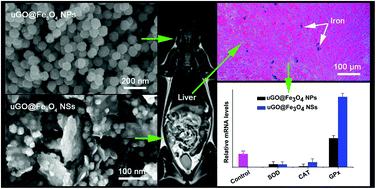
A variety of graphene oxide-based magnetic nanocomposites have been developed based on the purpose for biomedical applications. However, their safety is still unclear in vivo. Here, two nanocomposites of ultrafine graphene oxide-iron oxide nanoparticles and nanosheets (uGO@Fe3O4 NPs and NSs) were prepared. The samples were used for evaluating the morphology, dosage, time-dependent effects on various biochemical parameters of clinical significances at various levels: organ, cell, and molecule in a female Wistar mouse model and hepatic cell lines. At the organ level, the explorations of biodistribution, MRI, and histopathology consistently showed that the uGO@Fe3O4 NPs and NSs were primarily trapped in the liver and spleen. The heart, liver, spleen, and kidney were damaged based on histopathological observation and the obvious fluctuation of blood biochemical indicators. At the cellular level, the studies of blood compatibility and cytotoxicity demonstrated that the uGO@Fe3O4 NSs possessed a higher toxicity than uGO@Fe3O4 NPs, and resulted in about 47% (HepG2) and 48% (L02) loss of cell viability at their highest concentration (400 μg Fe per mL). At the molecular level, uGO@Fe3O4 NPs and NSs suppressed mRNA expression levels of SOD and upregulated mRNA expression levels of GPx, while the effect on CAT gene expression was mixed, suggesting the significant fluctuation in uGO@Fe3O4 nanocomposites-induced oxidative stress in mice. The assessments indicated that the uGO@Fe3O4 NPs and NSs have no acute fatal toxicity, but do have some toxicity.

1. Introduction

Magnetic nanoparticles (MNPs) with inherent ultrafine size, biodegradability, biocompatibility and superparamagnetic properties are promising materials for drug delivery, hyperthermia, targeting, and magnetic resonance imaging (MRI).1–4 The applicability of MNPs depends to a great degree upon the modification of their functionalization.5 Coupled with functional moieties including cross-linking agents (e.g. active macromolecules, surfactant, and organic polymer) and ligands (e.g. peptides, antibodies, and small molecules), the resulting hybrids possess more extensive properties than their MNP precursor, and can be used as drug delivery vehicles and high-performance imaging and diagnostic probes.6,7 In recent years, graphene oxide (GO), a novel two-dimensional carbon nanostructure, has acquired wide acceptance because of its large specific surface area, monoatomic layer plane, and unique thermal properties.8–11 Graphene oxide-based magnetic nanoparticle (GO@MNP) composites, which are usually synthesized by taking GO as substrate material, have excellent qualities.12 Subsequently, various functionalized GO@MNP composites were developed based on the purpose for biomedical applications such as contrast agents and drug carriers.13–15

Unfortunately, recent evidences have shown that GO for use in MRI and drug delivery has health risks.16 GO was able to induce oxidative stress,17 plasma membrane damage,18 changes in gene expression,19 lung inflammatory response,20 and strong thrombotoxicity in vitro or in vivo.21 It is obscure whether GO@MNPs nanocomposites are also so because the hybrids have similar characteristics to GO after all. For example, sheet GO was apt to be intercepted by reticuloendothelial system and caused lung granuloma in mice,20 and evoked strong aggregatory response in human platelets.21 Presumably, GO-based magentic nanosheets have the similar potential disadvantages. Therefore, it is necessary to confirm the safety and biocompatibility of GO@MNPs nanocomposites through extensive in vitro and in vivo studies before being used for MRI and drug delivery. So far, however, to the best of our knowledge, only a few relevant works have been conducted. In some studies, though GO@MNPs nanocomposite was developed for promoting tumor targeting drug delivery and MRI,12 it is not fully known what toxicity and biodistribution are in vivo. Most of the studies solely involved cytotoxicity assay in vitro and concluded that functionalized GO@MNPs nanocomposite is a pretty safe material based on relative cell viability.13,14 Particularly, GO@MNPs nanocomposite for integrated applications including drug delivery, photothermal therapy and MRI in vivo was also merely evaluated at cellular level,15 excepting very few literature.22 Strictly speaking, however, cultures in vitro cannot completely simulate the complexity of the living system or supply convincing data regarding the response of the physiological system to exogenous agents.23–25 So far, only Wang et al. carried out the biodistribution of multifunctional magnetic-graphene nanoparticles except for cytotoxicity assay.26 Additionally, there have been no literatures on the detailed safety evaluation of GO@MNPs nanocomposites in any animal models, which is preferred for the toxicological assessment of a novel material,23 let alone explored the simultaneous molecular and biochemical responses of antioxidant enzyme and biotransportation in the body. As a consequence, although several groups have presented the use of GO@MNPs nanocomposites for MRI in animals,12,26 no real clinical MRI applications have been reported so far to our best knowledge, likely because of the lack of biocompatibility evidences of GO@MNPs nanocomposites.

In the present study, we selected two kinds of GO@MNPs nanocomposites with different morphologies as samples, which were synthesized by a solvothermal method for nanoparticles (NPs) or a novel chemical precipitation method developed by us for nanosheets (NSs),27,28 respectively, used for a systematic toxicity studies. The intravenous administration was carried out to obtain assessment results in vivo.29 Then, the bio-transportation of GO@MNPs nanocomposites was qualitatively and quantitatively analyzed by MRI observation and iron concentration determination with the inductively coupled plasma optical emission spectroscopy (ICP-OES). Blood compatibility, cytotoxicity, blood biochemical parameters, and histopathology were systematically researched. In addition, we researched oxidative stress-related enzyme gene expression because alterations in these enzyme levels directly reflect the response for organism to exogenous stimulus at the molecular level.30 Gene expression profiling of superoxide dismutase (SOD), catalase (CAT), and glutathione peroxidase (GPx) from mouse livers of each administration was analyzed by real-time reverse transcriptase polymerase chain reaction (RT-PCR) to further assay nanocomposites-induced hepatotoxicity.

2. Materials and methods

2.1 Materials

Graphite (99.95%) with an average particle diameter of 4 mm, 98% sulfuric acid, sodium nitrate, potassium permanganate, hydrogen peroxide, dimethyformamide (DMF), ferric trichloride hexahydrate, ethanediol, sodium acetate, polyethyleneglycol-2000 (PEG), iron sulfate heptahydrate, and WST-8 reagent were acquired from Sigma Aldrich (Shanghai, China). All cell lines used in experiment were acquired from the Shanghai cell bank (China). The ultrapure water was used throughout the experiment.

2.2 Synthesis of uGO@Fe3O4 nanocomposites

Ultra-fine graphene oxide (uGO) sheets were prepared from expandable graphite powder as described in our previous paper.28 The spherical uGO@Fe3O4 nanoparticles were synthesized by hydrothermal method.27 In a typical reaction, 2.16 g FeCl3·6H2O, 1.6 g polyethylene glycol (PEG-2000) and 5.76 g NaOAc were thoroughly dissolved in 80 mL ethylene glycol under ultrasonication. Then 320 mg resulting uGO was uniformly dispersed in above mixture via ultrasound for 1 h. After that, the suspension was transferred into a 100 mL Teflon stainless-steel autoclave and reacted at 200 °C for 4.5 h. The as-prepared uGO@Fe3O4 nanocomposite was washed with deionized water and ethanol and dried at 60 °C. The product was denoted as uGO@Fe3O4 nanoparticles (uGO@Fe3O4 NPs). The uGO@Fe3O4 nanosheets were prepared by combination of simple one-step chemical deposition and slow oxidation. Specifically, 500 mg of uGO was preprocessed with 30 mL of NaOH solution (0.23 mol L−1) under ultrasonication for 40 min, followed by stirring for another two days under nitrogen protection. The suspension was adjusted to pH = 8.6 with NaOH solution (6 mol L−1) as soon as 2.43 g of FeSO4·7H2O was added, followed by ultrasonication for 40 min and stirring for 24 h at room temperature. Then, iron ions were oxidated for 2–3 min in the oxygen flow (0.04 m3 h−1) and for 10 min in the air flow (0.1 m3 h−1) while shaking. Afterwards, the suspension was re-adjusted to pH = 10.0 and continued to stir for 1 h. The product was separated and completely washed with deionized water by magnetic decantation to remove residual precursors. The product was denoted as uGO@Fe3O4 nanosheets (uGO@Fe3O4 NSs).

2.3 Characterization and analytical methods

The resulting uGO@Fe3O4 NPs/NSs were characterized by X-ray diffraction (XRD) using Cu Kα radiation at X'Pert PRO (PANalytical, Holand). Their external and inner morphology were observed with a scanning electron microscopy (SEM, S-4800, Hitachi, Japan) and transmission electron microscopy (TEM, TecnaiG2 F30, FEI, USA) with an acceleration voltage of 200 kV, respectively. The composition of the samples was analyzed by a Fourier transform infrared (FT-IR) spectrometer (NEXUS 670 FT-IR, Nicolet, USA). The FT-IR spectrum was collected between the wave number of 400 and 4000 cm−1. The size and zeta potential of the uGO@Fe3O4 NPs/NSs suspended in HSA (0.6 mM)-containing PBS media at pH 7.4 were determined using a Malvern dynamic light scattering (DLS) (Zetasizer Nano 3600, U.K.) in triplicate.

2.4 In vitro magnetic property evaluation (VSM and MRI)

The magnetization saturation properties of uGO@Fe3O4 NPs/NSs were measured on a Lake Shore vibrating sample magnetometer (VSM). For MRI studies, different concentrations (0, 1.25, 2.5, 5.0, 10.0, 20.0 μg Fe per mL) of uGO@Fe3O4 NPs/NSs were suspended in a total volume of 1.5 mL agar phantoms (1.5%, w/v) without air bubbles in a 24-well plate. MR images of agar phantoms were acquired using a Siemens Skyra machine operating at 3.0 T, horizontal bore MRI scanner equipped with a dedicated knee joint coil (15 channels). T2 relaxation times were determined using following sequence parameters: repetition time (TR) 2400 ms, echo time (TE) 67 ms, matrix size 256 × 320, field of view (FOV) 161 × 161 mm, slice thickness 3 mm. MR image analyses were conducted using the Siemens multi modality work place (MMWP) with software Vision VE40.

2.5 Haemocompatibility assessment in vitro

2.5.1 Hemolysis assay. For hemolysis study, 2 mL of healthy human blood (Red Cross Blood Center, Gansu, China) was centrifugated at 1500 rpm for 10 min to collect human red blood cells (HRBCs). HRBCs were redispersed in 10-fold volume of sterile PBS media. 100 microliter of HRBCs suspension was treated with (a) 1.9 mL of uGO@Fe3O4 NPs/NSs in PBS at concentrations of 12.5, 25, 50, 100, 200, and 400 μg Fe per mL as samples; (b) 1.9 mL of PBS as a negative control; (c) 1.9 mL of deionized water as a positive control. The cells were incubated at a standstill for 3 h at 37 °C after shaken gently. The mixtures were centrifuged at 1500 rpm for 10 min, and the haemolysis degree was determined by recording absorbance values of the supernatant at 541 nm. The hemolysis percentages of the samples were calculated according to the equation below:31
(sample O.D.541 − negative control O.D.541)/(positive control O.D.541 − negative control O.D.541) × 100%
2.5.2 Coagulation assay. 100 microliter of fresh human plasma was treated with (a) 900 μL of uGO@Fe3O4 NPs/NSs in PBS at concentrations of 12.5, 25, 50, 100, 200, and 400 μg Fe per mL as samples; (b) 900 μL of PBS as a control. The mixtures were incubated at 37 °C for 5 min and centrifuged at 2500 rpm for 10 min. The supernatants were used to analyze prothrombin time (PT) and activated-partial-thromboplastin time (APTT) on a fully automatic blood-coagulation analyzer (ACL TOP 9000, USA) by using the SynthAsil kit (Instrumentation Laboratory Company, Orangeburg, USA).

2.6 Cytotoxicity and apoptosis assay in vitro

In vitro cytotoxicity was assessed using a WST-8 test and FITC-labeled Annexin-V and propidium iodide (PI) staining. Human hepatocytes cancer HepG2 cells and normal hepatocytes L02 cells were used for this experiment. Cells were seeded in 96-well plates at a density of 1 × 10⁴ cells per well in RPMI-1640 medium and incubated with uGO@Fe3O4 NPs/NSs with different concentration (12.5–400 μg Fe per mL, in PBS) for 24 h. Equivalent amount of PBS without nanocomposites was used as control. Then, cells were washed twice with PBS and the WST-8 reagent was added to each well. After incubation for 30 min, the absorbance was determined on a microplate spectrophotometer at 460 nm. The blank absorbance (medium without cells) was subtracted from each value. All the experiments were conducted in triplicate. For the detection of nanocomposite-induced apoptosis, the cells treated with uGO@Fe3O4 NPs/NSs were stained with Annexin-V/PI and analyzed by flow cytometer (BD LSRFortessa, USA).

2.7 Animals and treatment regime

Female Wistar mice (BW 150–200 g) were supplied by the Experimental Animal Center of Lanzhou University (Lanzhou, China). The animals were housed (2/cage) at 22 ± 1 °C under a 12 h light[thin space (1/6-em)]:[thin space (1/6-em)]12 h dark cycle and 50–60% relative humidity with free access to standard pellet diet and tap water. All experiments were conducted in accordance with the protocols approved by the Ethics Committee of Animal Experiments of Lanzhou University. Animals were randomly divided into seven groups: a control group and six sample groups (low, medium, and high dose groups per composite). The sample group mice were injected with suspension containing uGO@Fe3O4 NPs/NSs in sterile PBS irradiated by 60Co by a lateral tail vein (0.5 mL per mouse, 5, 7.5, 10 mg Fe per kg body weight), respectively. The control group mice were given 0.5 mL of sterile PBS. Five mice from each group were weighed and sacrificed at regular time points (1 h, 24 h, 7 days and 14 days). Firstly, blood was collected using a standard vein blood collection technique for Fe concentrations and biochemistry assay. Then, heart, liver, spleen, lung and kidney were immediately excised. A piece of tissue (0.5 × 0.5 × 0.3 cm) was quickly removed and fixed with 4% paraform for 48 h for further histopathological examinations. After dehydrated progressively, the fixed sections were embedded in paraffin, sectioned, and stained with H&E and Prussian Blue standard protocol (Table S1). All the residual tissues were stored at −80 °C for analysis of bio-transportation of ferrofluid in vivo and gene expression.

2.8 Quantitative analysis of Fe concentrations by ICP-OES

The iron concentrations in blood and organs at different doses (5, 7.5, 10 mg Fe per kg) and times (1 h, 24 h, 7 days and 14 days) were analyzed by ICP-OES (IRIS ER/S, TJA, USA). Samples were prepared by complete digestion of blood (3 mL) and organs (300–500 mg) in 2 mL of mixed solution of nitric acid and perchloric acid with a volume ratio of 10[thin space (1/6-em)]:[thin space (1/6-em)]1 at 90 °C for 4 h. The digested solution was cooled and diluted to 5 mL of constant volume with deionized water for Fe concentration measurement. Fe concentration in specific tissue of different administrations was expressed as mass per milliliter of blood (Fe μg mL−1) or per gram of tissue (Fe μg per g).

2.9 Blood biochemical assays

For blood biochemical assays, 1.0 mL of the blood sample was centrifuged at 2000 rpm for 10 min. The serum samples were used for measuring the following parameters using a biochemical autoanalyzer (Accute 400, Toshiba, Japan): total bilirubin levels (TBIL [μmol L−1]), albumin (ALB [g L−1]), alanine aminotransferase (ALT [U L−1]), aspartate aminotransferase (AST [U L−1]), alkaline phosphatase (ALP [U L−1]), blood urea nitrogen (BUN [mmol L−1]), creatinine (CREA [μmol L−1]), and lactate dehydrogenase (LDH [UL−1]).

2.10 In vivo magnetic resonance imaging (MRI)

Three mice from low dose group treated with uGO@Fe3O4 NPs or NSs were weighed and anesthetized with 20% urethane. MR images were acquired using a 3.0 T system (Siemens Skyra), horizontal bore MRI scanner equipped with a dedicated knee joint coil (15 channels). The turbo spin echo (TSE) technique was applied with acquisitions in the T2-weighted sequence in the coronal plane. T2-weighted image parameters were as follows: TR 3000 ms, TE 67 ms, NEX 4, matrix size 256 × 256, FOV 190 × 190 mm, slice thickness 2 mm.

2.11 RNA extraction and gene expression

Total hepatic RNA was extracted and purified from liver tissues treated with uGO@Fe3O4 NPs or uGO@Fe3O4 NSs at different doses (5, 7.5, 10 mg Fe per kg) for 14 days and blank control liver using a Takara™ reagent (Shiga, Japan), according to the manufacturer's instructions. The quality of total RNA was assessed by AGE (agarose gel electrophoresis) and determining the ratio of A260/A280 on a UV spectrophotometer (Bio Teke ND5000, China). The purified RNA was stored at −80 °C for further use. cDNA was prepared and detected on a Lang gel imaging system (LG2020D, Hangzhou, China) based on obtained RNA for quantitative RT-PCR assay as described in the instructions of PrimeScript™ RT reagent Kit (Japan). The PCR fluorescent quantitation was carried out in a 15.3 μL system with a SYBR Premix Ex Taq™ Kit (Takara, Japan), 2 μL of specific upstream primer and 2 μL of specific downstream primer (Table 1), synthesized by SBS Genetech Co., Ltd, Shanghai, China, and 1 μL of cDNA using the following procedure: initial denaturation at 95 °C for 120 s followed by 45 cycles of amplification (95 °C for 15 s and 60 °C for 40 s). The same operation was performed in triplicate. The target genes evaluated involved SOD, CAT, and GPx. GAPDH was selected as internal standard primer. Fluorescent quantitative PCR was performed on a real-time QPCR system (Stratagene MX3005P, USA).
Table 1 Sequences of qPCR primers used in the experiment
Gene Upstream primer sequences (5′–3′) Downstream primer sequences (5′–3′)
SOD CCACTGCAGGACCTCATTTT CACCTTTGCCCAAGTCATCT
CAT CGACCGAGGGATTCCAGATG ATCCGGGTCTTCCTGTGCAA
GPx TGCCCTACCCTTATGACGAC TCGATGTTGATGGTCTGGAA
GAPDH ATGGAGAAGGCTGGGGCTCACCT AGCCCTTCCACGATGCCAAAGTTGT


2.12 Statistical analysis

Data represent mean ± standard error of the mean (S.E.M.). Statistical analyses between the samples and the controls were conducted using ANOVA. All the graphs were plotted using Origin 8.5 software.

3. Results

3.1 Characterization of uGO@Fe3O4 nanocomposites

The morphologies of uGO@Fe3O4 NPs/NSs are shown in the TEM and SEM images (Fig. 1). Fig. 1A and C consistently demonstrate that uGO@Fe3O4 NPs tend to sphere and a narrow range of distribution (approximately 80 ± 10 nm) based on statistical data of 100 particles. The average diameter of NPs was consistent with that measured from the DLS (Fig. 2A). uGO and Fe3O4 MNPs in composites are uniformly bound together and cannot be distinguished. In the case of uGO@Fe3O4 NSs, it can be clearly observed that Fe3O4 MNPs of less than 20 nm in size are uniformly decorated onto uGO sheets (Fig. 1B and D), and the average size of nanosheets was also about 80 ± 10 nm based on 100 particles by TEM and SEM images. In order to assess stability of uGO–iron oxide composites, uGO@Fe3O4 NPs or NSs were soaked in HSA (0.6 mM)-containing PBS media at pH 7.4 for 14 days, and then were washed with deionized water. The iron loading efficiencies were almost the same before and after immersion, and accounted for 49.6 wt% for uGO@Fe3O4 NPs and 48.5 wt% for uGO@Fe3O4 NSs by ICP-OES measurement.
image file: c4ra09657f-f1.tif
Fig. 1 (A) TEM and (C) SEM images of uGO@Fe3O4 NPs. (B) TEM and (D) SEM images of uGO@Fe3O4 NSs.

image file: c4ra09657f-f2.tif
Fig. 2 (A) The size distribution of uGO@Fe3O4 NPs. (B) ξ-potentials, (C) XRD, and (D) FTIR spectra of uGO@Fe3O4 NPs and NSs. The size distributions and ξ-potentials of nanocomposites were measured in HSA (0.6 mM)-containing PBS media at pH 7.4. The size distribution of NSs was not presented because DLS cannot describe non-spherical particles well.

In order to determine the zeta-potentials of the uGO@Fe3O4 NPs and NSs in simulative physiological environment, a HSA (0.6 mM)-containing PBS medium was used.28 In this medium, uGO@Fe3O4 NPs possessed higher negative ζ potential of about −33.8 than NSs (−28 mV) at room temperature (Fig. 2B), reflecting spherical NPs synthesized by hydrothermal method exist more carboxyl group exposure than NSs prepared by chemical deposition method.

Based on the profiles of the XRD spectra, the characteristic peaks of uGO@Fe3O4 NPs and NSs at (111), (220), (311), (400), (511), (422) and (440) (Fig. 2C) demonstrated the presence of magnetic nanoparticles. In addition, no peaks corresponding to other crystallographic structure were observed, testifying the purity of two kinds of hybrids. Similar intensity peaks can be seen in uGO@Fe3O4 NPs and NSs, indicating that there were almost the same magnetic nanoparticles content in the two kinds of nanocomposites.

The FTIR spectra shown in Fig. 2D were used to determine the composition of uGO@Fe3O4 NPs and NSs. Whether in uGO@Fe3O4 NPs or in NSs, the characteristic peaks corresponding to the stretching vibration of hydroxy group at 3400 cm−1, carboxyl group at 1735 cm−1, and the Fe–O bond at 590 cm−1 clearly indicated the successful preparation of uGO@Fe3O4 hybrids.

3.2 Magnetization property in vitro

The magnetization properties of uGO@Fe3O4 NPs and NSs were measured at room temperature, as shown in Fig. 3A. Although the uGO@Fe3O4 NPs and NSs were synthesized with the different methods and had different morphologies, their saturation magnetization intensity was very close, reaching 49 emu per g for NPs and 53 emu per g for NSs, respectively. This can completely make an adequate magnetic responsiveness in the applications for MR imaging and magnetic induction based on our previous study.28
image file: c4ra09657f-f3.tif
Fig. 3 (A) Magnetization curve and (B and C) magnetic resonance image (MRI) characteristics of uGO@Fe3O4 NPs and NSs formulations. (B) The plate was loaded with the different concentrations of uGO@Fe3O4 NPs or NSs suspended in 1.5 mL of 1.5% agar phantoms at 25 °C and imaged with a 3.0 T Siemens Skyra MRI instrument, respectively. (C) T2 relaxation rates (1/T2) plotted as a function of the Fe concentration for uGO@Fe3O4 NPs and NSs formulations.

To further demonstrate the effect of bound Fe3O4 MNPs on T2 relaxation, a 24-well plate containing MNPs, uGO@Fe3O4 NPs, uGO@Fe3O4 NSs, and uGO suspended in 1.5 mL of 1.5% agar phantoms with the different iron concentrations were imaged using a 3T MRI instrument (Fig. 3B). Fe3O4 MNP was taken as a control to provide a reference for uGO@Fe3O4 NPs and NSs. Fe3O4 MNPs can lead to decrease in regional signal intensity due to reducing of T2 relaxation time.7 It was obvious that signal gradually decreased as the concentration of Fe3O4 MNPs in the uGO@Fe3O4 hybrids enhanced from 1.25 μg Fe per mL to 20 μg Fe per mL. Relative to the sole MNPs- or uGO-containing gel, uGO@Fe3O4 NPs and NSs possessed higher signal than pure MNPs and lower than uGO. The obtained images were used to plot a 1/T2 map (Fig. 3C). The transverse relaxation rate (1/T2), as a function of the Fe concentration in each formulation, increased linearly with the Fe concentration in all the samples (Fig. 3C). The 1/T2 displayed to increase in the following order for the tested samples: uGO < uGO@Fe3O4 NPs < uGO@Fe3O4 NSs < MNP. As a consequence, the uGO@Fe3O4 NPs and uGO@Fe3O4 NSs can potentially perfect observation by contrast enhancement using T2-weighted imaging process.

3.3 Haemocompatibility assays in vitro

The research indicated that no significant hemolysis effects were found for uGO@Fe3O4 NPs and NSs formulations in the range of 12.5–400 μg Fe per mL of concentration (Fig. 4A and B). Particularly, uGO@Fe3O4 NPs did not display any hemolytic activity even at 400 μg Fe per mL of high concentration, as low as 1.65% hemolysis percentage was monitored, and still fell within the negligible scope (<5%).32 By contrast, a 4.43% hemolysis percentage was detected for uGO@Fe3O4 NSs at this concentration. Fig. 4C demonstrated that PT values of plasma exposed to uGO@Fe3O4 NSs or uGO@Fe3O4 NPs in the range of 12.5–100 μg Fe per mL of concentration were within their normal ranges of 11–13 s,33 respectively. However, as the concentration of uGO@Fe3O4 NSs or uGO@Fe3O4 NPs increased, the PT values reduced to below normal ranges. Fig. 4D showed that APTT values of plasma exposed to two kinds of nanocomposites in all test concentration range were within their normal ranges of 25.4–38.4 s,34 respectively.
image file: c4ra09657f-f4.tif
Fig. 4 Blood compatibility studies in vitro. (A) Hemolysis percentages of uGO@Fe3O4 NPs and NSs formulations in PBS at the concentrations of 12.5, 25, 50, 100, 200, and 400 μg Fe per mL. (B) Representative photograph of the hemolysis assay to detect the presence of hemoglobin in the supernatant of formulations in PBS at above concentrations. + and − symbols represent positive control and negative control, respectively. (C and D) Coagulation properties of uGO@Fe3O4 NPs and NSs formulations at above concentrations after incubation with fresh plasma for 5 min.

3.4 Cytotoxicity and apoptosis assay in vitro

Human hepatocytes cancer HepG2 cells and normal hepatocytes L02 cells are classical in vitro models applied to hepatotoxicity research. As shown in Fig. 5A and B, uGO@Fe3O4 NPs showed higher cell viabilities for HepG2 cells and L02 cells than uGO@Fe3O4 NSs at all tested concentrations according to the WST-8 assay. Even though at 400 μg Fe per mL of high concentration, uGO@Fe3O4 NPs still revealed high cell viabilities for HepG2 cells (70%) and L02 cells (65%). To further perform a quantitative comparison regarding apoptosis induced by uGO@Fe3O4 NPs or uGO@Fe3O4 NSs, above HepG2 and L02 cells treated with nanocomposites were co-stained with annexin V/PI to detect on a laser scanning confocal microscope (LSCM) and analyze by flow cytometry. It is clear that after treated with uGO@Fe3O4 NPs or uGO@Fe3O4 NSs, some HepG2 and L02 cells display significant green fluorescence cytoplasm and red fluorescence nucleus (herein only present HepG2 cells, Fig. 5C) compared with control cells untreated (inset in Fig. 5C).
image file: c4ra09657f-f5.tif
Fig. 5 (A and B) In vitro cell viabilities of the uGO@Fe3O4 NPs or uGO@Fe3O4 NSs with different concentrations against HepG2 cells and L02 cells were determined using WST-8 assay. (C) Representative HepG2 cells (1 × 10⁵ cells per mL in PBS) co-stained with annexin V/PI after treated with uGO@Fe3O4 NSs for 24 h. The inset in right top in (C) is control image (untreated cells) to compare them to. (D) Quantification of apoptotic cells after treated with uGO@Fe3O4 NPs or uGO@Fe3O4 NSs using annexin V/PI co-staining and analysis by flow cytometry. Mean values ± SD (n = 5) are plotted.

3.5 Blood biochemical assays

In this section, living mice were intravenously administrated with uGO@Fe3O4 NPs or NSs according to the three doses (5, 7.5, and 10 mg Fe per kg). The blood biochemical indicators were shown in Fig. 6. The results indicated that TBIL, ALT, AST, ALP, BUN, and LDH have elevated, to different extents, compared with the control (Fig. 6). Particularly, in vivo a high dosage-exposure of uGO@Fe3O4 NPs and NSs induced more obvious increase in these indicator levels than low dosage. By contrast, ALB level in the serum declined compared to the control group (p < 0.05) (Fig. 6B), and CREA data there was not significant difference between the sample groups and the control (Fig. 6G). The results of 14 days after injecting uGO@Fe3O4 NPs or NSs were not presented because of a roughly parallel to the data on the seventh day.
image file: c4ra09657f-f6.tif
Fig. 6 Blood biochemical parameters after injecting uGO@Fe3O4 NPs and NSs formulations with different dosages at 1 h, 24 h, and 7 days. Related blood biochemistry indicators: total bilirubin levels (TBIL), albumin (ALB), alanine aminotransferase (ALT), aspartate aminotransferase (AST), alkaline phosphatase (ALP), urea nitrogen (BUN), creatinine (CREA), and lactate dehydrogenase (LDH). All data are presented as mean ± S.E.M. (n = 5). ★p < 0.05, ★★p < 0.01, and ★★★p < 0.001 versus control according to ANOVA.

3.6 Biodistribution of GO@MNPs nanocomposites

The ICP-OES measurements were used to assay iron concentration to determine the in vivo biodistribution of the uGO@Fe3O4 NPs and NSs in mice. The major organs, including blood, heart, liver, spleen, lung, and kidney were collected for iron content determination at 1 h, 24 h, 7 days and 14 days after intravenous administration. Fig. 7 shows that the iron concentrations in six tissues at different dosages and times changed. The Fe concentrations of control mice only given sterile PBS were expressed as line starting at t = 0 h. In the bloodstream, two kinds of nanocomposites shared a similar circulation pattern, where Fe concentrations were maximized at 1 h post-injection and were basically positively related with the dosage (Fig. 7A). At 14 days after intravenous injection Fe concentrations mostly backed to the value preinjection, showing Fe element was slowly removed from blood plasma. In low doses of uGO@Fe3O4 NPs treatment mice (5 and 7.5 mg Fe per kg), the Fe concentration in the heart reached maximum at 1 h after injection. But in mice treated with high doses of uGO@Fe3O4 NPs (10 mg Fe per kg) and three doses of uGO@Fe3O4 NSs, the peak values of iron in the heart presented at 24 h after injection (Fig. 7B). On 14 days after the injection, Fe concentration in the heart treated with uGO@Fe3O4 NPs reduced to the level preinjection, while the heart treated with uGO@Fe3O4 NSs still remained a small quantity of iron element. The total concentration of Fe accumulated in the liver treated with NPs or NSs always increased with time, while the total concentration of Fe in the spleen originally dramatically increased and subsequently kept constant or slightly decreased (Fig. 7C and D). In the lung (Fig. 7E), Fe concentrations in uGO@Fe3O4 NPs groups had a similar change trend to NSs groups, in other words, 24 h after injection, the iron concentrations were reached the peak, and then gradually declined over the next 13 days. In the kidney, the Fe concentration in the mice treated with uGO@Fe3O4 NPs first rapidly increased and then decreased (Fig. 7F). By contrast, in the case of uGO@Fe3O4 NSs, the Fe concentrations slowly increased within 7 days after the injection and then dramatically increased.
image file: c4ra09657f-f7.tif
Fig. 7 Biodistribution of Fe in tissues from the mice treated with uGO@Fe3O4 NPs or NSs with 5, 7.5, and 10 mg Fe per kg doses at different time point. Data point at 0 h represents the quantity of Fe in the organs of control group. Vertical axis means Fe mass per milliliter of blood (μg mL−1) or per gram of tissue (μg g−1). The data are expressed as mean ± S.D. (n = 5).

3.7 MR imaging in vivo

In order to further explore the dynamic changes of the nanocomposites in the liver, spleen, and kidney, in vivo MR imaging was performed using an optimized sequence at echo time 67 ms and repetition time 3000 ms on the 3.0 T MRI instrument. Fig. 8A shows representative T2-weighted MRI images of the same mouse coronal plane before and after intravenous administration of uGO@Fe3O4 NSs or uGO@Fe3O4 NPs. The liver and spleen apparently darkened, and other organs just a little darkened following the intravenous administration of uGO@Fe3O4 NSs or NPs compared with the control Fig. 8A(c), reflecting enhancement of the contrast due to the uptake of uGO@Fe3O4 nanocomposites in liver and spleen. Especially, the regional signal intensity of mouse liver treated with uGO@Fe3O4 NSs was lower than those with uGO@Fe3O4 NPs. As shown in Fig. 8B and C, the relative signal intensities of liver were 40% and 50% 1 hour after injection of uGO@Fe3O4 NSs or NPs, respectively. With time, however, the signal intensity of liver treated with uGO@Fe3O4 NSs or NPs was roughly stable. In spleen, the relative signal intensity persistently decreased except at 3 h after uGO@Fe3O4 NSs were injected, while the signal appeared fluctuation after injection of uGO@Fe3O4 NPs. In kidney treated with uGO@Fe3O4 NSs, furthermore, the signal variation was small within 7 days, but the signal significantly decreased 7 days later, showing that nanosheets began to be eliminated after continuous accumulation in the kidney for 7 days. In kidney treated with uGO@Fe3O4 NPs, by contrast, the signal slowly fell during 6 hours to 24 hours after administration, and then gradually rose. To further verify the uptake of uGO@Fe3O4 NSs and NPs in liver and spleen as described by MRI detection, Prussian blue staining of slides from two organs was achieved. The results were presented in ESI, Fig. S2. The histopathological observation indicated that liver of exposure to uGO@Fe3O4 NSs generated a time-dependent liver inflammatory response characterized by granulomas (G), swollen vacuolated bundles (S), and interstitial edema (E) (Fig. S2(A) and (B)). Over time, the toxicity reaction of the liver of mice becomes more and more severe. Some inflammation cells were infiltrated in liver interstitium. The hepatic architecture of mice showed some deformation.
image file: c4ra09657f-f8.tif
Fig. 8 (A) In vivo T2-weighted MR images of the same living mouse obtained by a magnetic resonance instrument before (control, c) and after (1 h, 3 h, 6 h, 12 h, 24 h, 48 h, 7days, and 14days) intravenous administration of sterile saline solution containing uGO@Fe3O4 NSs or NPs (5 mg Fe per kg). (B and C) Time dependence of the relative signal intensity in liver, spleen, and kidneys after the administration of uGO@Fe3O4 NSs or NPs.

3.8 Gene expression

Herein, RT-PCR of hepatic mRNA under different treatment modes has been performed to further analyze uGO@Fe3O4 NPs/NSs-induced oxidative stress behavior. The identification data of PCR products were presented in ESI Table S3, Fig. S4 and S5. Fig. 9 illustrates the effect of uGO@Fe3O4 NPs or NSs with various doses on mRNA expression of SOD, CAT, and GPx 14 days after injecting. As depicted in Fig. 9, uGO@Fe3O4 NPs and NSs caused significant decrease in the expressions of SOD mRNA gene (Fig. 9A) and substantial increase in the expressions of GPx mRNA gene (Fig. 9C) compared with the control (p < 0.01). Especially, uGO@Fe3O4 NSs at the dosages of 5, 7.5, and 10 mg Fe per kg caused 4.9, 5.2, 8.3-fold decrease in SOD gene expressions and 5.4, 12.1, 23.1-fold increase in GPx gene expressions compared to the control, respectively. By contrast, the alterations in CAT mRNA gene expression showed complicated situations, where uGO@Fe3O4 NPs at the dosages of 5 and 7.5 mg Fe per kg caused about 17.8 and 2.2-fold decrease in hepatic CAT gene expression, and uGO@Fe3O4 NSs at the same dosage caused about 2.7 and 3.8-fold decrease compared to the control (p < 0.01), respectively (Fig. 9B). However, there were about 1.3 and 2.0-fold increase in CAT gene expression caused by uGO@Fe3O4 NPs and NSs at the doses of 10 mg Fe per kg relative to control, respectively.
image file: c4ra09657f-f9.tif
Fig. 9 Relative mRNA levels of SOD (A), CAT (B), and GPx (C) from the mouse livers under various doses 14 days after injecting. The data are expressed as mean ± S.D. (n = 3). ★p < 0.05, ★★p < 0.01, and ★★★p < 0.001 versus control according to ANOVA.

4. Discussion

4.1 Calculation of effective dose

It is essential to determine effective dose of GO-based magnetic nanocomposites to meet MRI contrast demand in vivo. Here, in order to relate these two exposures in vivo and in vitro, the dosages of uGO@Fe3O4 NPs or NSs were converted to iron concentration according to the iron loading efficiencies (49.6 wt% for uGO@Fe3O4 NPs and 48.5 wt% for uGO@Fe3O4 NSs). Female Wistar mice were treated with the dosage magnitude of 5–10 mg Fe per kg BW by intravenous injection based on the references for similar works for MRI contrast purpose and our practical exploration.6,35 According to our test, the whole blood of a Wistar mouse (BW 150–200 g) has about 8–10 milliliters by a standard vein blood collection technique. From this calculation, the Fe concentration in blood is about <100 μg Fe per mL at that moment of injecting. As a reference, the dosage range of 12.5–400 μg Fe per mL was used for haemocompatibility and cytotoxicity assay in vitro.

4.2 Haemocompatibility assays in vitro

Good haemocompatibility is extremely important when nanomaterials enter circulation after vein injection. Hemolysis and coagulation parameters are the most frequently conducted assays for detecting hemoglobin release and thrombosis.34,36 The research showed that although hemolysis effects fell in the range of security, a higher hemolysis percentage was detected for uGO@Fe3O4 NSs compared with uGO@Fe3O4 NPs (Fig. 4A and B). It was reported that the particle size and exfoliation extent of GO can influence hemolytic activity.36 In the present case, the sizes of uGO@Fe3O4 NPs and uGO@Fe3O4 NSs are almost the same (approximately 80 nm) (Fig. 1), and their GO moieties were derived from the same batch of uGO with the same exfoliation extent. The hemolytic difference of two nanomaterials is highly dependent on their morphologies.16 Chen et al. declared that nanocomposite with sharp edges possessed higher toxicity.37 So, uGO@Fe3O4 NSs induced higher hemolysis than uGO@Fe3O4 NPs because the former easily penetrate into cells to cause release of free hemoglobin in the medium.18

Coagulation evaluation, such as prothrombin time (PT) and activated partial thromboplastin time (APTT) test, is essential for monitoring thrombosis effect caused by exogenetic materials.38 The study displayed that uGO@Fe3O4 NSs or uGO@Fe3O4 NPs at low concentration (<100 μg Fe per mL) did not induce extrinsic coagulation (PT), but the PT values of the plasma mixed with high concentrations (>200 μg Fe per mL) of nanocomposites obviously declined, even below normal value (11 s) (Fig. 4C), reflecting dosage-dependent effects on extrinsic coagulation. By contrast, APTT values did not break through the normal range at all tested concentrations (Fig. 4D), showing that intrinsic coagulation pathways were not influenced by these nanocomposites. The possible reason is that a large number of hydroxyl groups were introduced to nanocomposites in the process of preparation,28 which the resulting hybrids possessed electronegative surface. A nanomaterial with high negative charge (Fig. 2B) may be not favorable for platelet aggregation and the formation of coagulation. Compared with free GO, these MNPs-binding GO nanocomposites are safer, because free GO potentially induced the high thrombosis, or blood clots according to the literature.21

4.3 Cytotoxicity and apoptosis assay in vitro

According to the cell viability, uGO@Fe3O4 NPs possessed lower growth inhibition activity than uGO@Fe3O4 NSs (Fig. 5), reflecting that the former showed better cytocompatibility than the latter. This may be attributed to its spherical structure except high negative zeta potential tending to repelling negatively charged cell membrane. The representative HepG2 cells simultaneously appeared green fluorescence cytoplasm and red fluorescence nucleus based on LSCM image (Fig. 5C), verifying that the cells have been at a later stage of apoptosis even necrosis. This is because annexin V-FITC can only react with phosphatide acyl serine inside membrane and propidium iodide (PI) can only stain dead cell. Quantitative detection on flow cytometry indicated that uGO@Fe3O4 NPs or uGO@Fe3O4 NSs can dose-dependently activate apoptosis of HepG2 and L02 cells (Fig. 5D), implying that uGO@Fe3O4 composites existed certain cytotoxicity. It can be seen that HepG2 and L02 cells treated with uGO@Fe3O4 NSs showed 1.6 and 1.5 times apoptotic cell higher than the corresponding cells treated with uGO@Fe3O4 NPs under the same conditions, suggesting that uGO@Fe3O4 NSs showed higher growth inhibition activity for two kinds of cells compared to uGO@Fe3O4 NPs. These data were similar to the results assayed by WST-8 test. The overhang in toxicity may be because cell membrane was damaged through physical interaction with uGO@Fe3O4 nanosheets with sharp edges. As described in the previous literature, a graphene nanosheet possessing sharp edges caused considerable damage to the cell membrane of bacteria.39 Furthermore, Wang et al. declared GO could cause cell apoptosis or death through disturbing the course of cell energy metabolism and gene transcription and translation after entering into cytoplasm by endocytosis pathway.20 This explanation applies equally well to uGO@Fe3O4 nanosheets.

4.4 Body weight change analysis

Although cytotoxicity of GO-based magnetic nanocomposites in vitro have been reported in some scientific literature,13–15 it is still essential to evaluate the toxicity and biocompatibility in animal. It was observed that 7 days after treated with uGO@Fe3O4 NPs or NSs, even 14 days, the Wistar mice did not die and were still in good conditions, reflecting that the nanocomposites have no acute lethal toxicity within tested doses (5–10 mg Fe per kg). Further research found that there seemed to be discrepancies in body weight change (BWC) among control and two sample groups between the start and the last day (14 days) of treatment (Table 2). BWC in mice treated with uGO@Fe3O4 NPs or NSs were significantly smaller than those in the control mice. Especially, the gained weight in NSs group only approximately accounted for 40% of the control. The emaciation can be attributed to exogenous stimuli. However, none of the BWC results for the different dose groups of the same sample are statistically significant in Table 2. These results showed that uGO@Fe3O4 NPs or NSs inhibited the growth of the mice and have a physical toxicity to a certain extent, but dosage-dependent effect was inapparent.
Table 2 Body weight change (BWC, g) between the start and the last day (14 days) of treatment to research a physical toxicity caused by uGO@Fe3O4 NPs or NSs with 5, 7.5, and 10 mg Fe per kg of dosages. Control group was injected PBS. The data are expressed as mean ± S.D. (n = 5). *p < 0.05 versus control according to ANOVA
Groups Dosage (mg Fe per kg BW) BWC (g)
Control PBS 17.6 ± 5.2
uGO@Fe3O4 NPs 5 13.6 ± 2.4
7.5 14.8 ± 3.6
10 13.4 ± 3.9
uGO@Fe3O4 NSs 5 7.3 ± 1.6*
7.5 7.1 ± 2.1*
10 6.8 ± 3.7*


4.5 Blood biochemical assays

In order to further explore toxicity mechanism, eight main blood biochemical indicators were assayed. As shown in Fig. 6, the uGO@Fe3O4 NPs and NSs induced a severe hepatic injury as evidenced by the significant enhancement of TBIL, ALT, AST, and ALP levels (p ≤ 0.05) and decline of ALB level (p ≤ 0.05). Especially, the high-dosage exposure of uGO@Fe3O4 NPs and NSs enhanced the damage on hepatic. Although CREA data there was only small fluctuation, a sharp rise in BUN level (Fig. 6F and G) still implied the existence of nephrotoxicity. The significant increase of LDH level in the serum further testified the damage of multiple tissues, such as liver and spleen.

4.6 Biodistribution of GO@MNPs nanocomposites

In vivo studies determining graphene oxide-based magnetic nanocomposites effects upon organs are scarce in the literature. The present work conducted their biodistribution in mice by iron element measurements and MRI detection. It can be found that the Fe element rapidly distributed in blood, heart, liver, spleen, lung and kidney as the blood flow after GO@MNPs nanocomposites were injected (Fig. 7). In the blood, though Fe concentration rose to the peak 1 h after injection, the amplitude of its variation was very small compared to other tissues, suggesting that nanocomposites were fast transported from blood plasma to solid organs. By contrast, even 14 days after injection, the other five tissues treated with uGO@Fe3O4 NSs still remained a certain amount of iron elements, demonstrating that the uGO@Fe3O4 NSs were not easy to be completely removed from these tissues. Liver and spleen possessed the highest Fe concentration in all detected tissues, and Fe remained constant 14 days after injection, reflecting that a large quantity of nanocomposites was intercepted. This is in agreement with previous research findings.35,40 Particularly, large dose of uGO@Fe3O4 NSs displayed the larger interception both in liver and spleen compared to uGO@Fe3O4 NPs, showing that dosage and morphology of nanocomposites are important factors influencing the interception and accumulation. Furthermore, it is possible for exogenous nanosheets with irregular edge to enhance the phagocytosis of macrophages in liver and spleen. These results were confirmed by MR imaging (Fig. 8). In these T2-weighted images, the negative enhancement apparently illustrated that the uGO@Fe3O4 NPs/NSs largely accumulated in the reticuloendothelial system (RES), such as liver and spleen. The uGO@Fe3O4 NSs had a longer accumulation process compared to uGO@Fe3O4 NPs.

4.7 Histopathological analysis

The fact that the uGO@Fe3O4 NSs and NPs tended to persistent accumulation in the liver and spleen provided evidence for tissue injury, especially, hepatic injury. Hepatic architecture of normal mice showed regular cell distribution and normal histology without any damage (Fig. S2 control). However, histopathological findings of hepatic tissue of exposure to uGO@Fe3O4 NSs revealed serious granulomas (G), swollen vacuolated bundles (S) and interstitial edema (E) (Fig. S2(A)). The inflammation sites can be more clearly observed in histological image by only H&E staining without iron Prussian blue staining in the liver (Fig. 10). This may be because nanomaterial, such as uGO@Fe3O4 NSs with sharp edges, punctured tissue cells. Another possible reason of the organ lesions may be associated with a dispersive mode of GO-based particulate deposition in the liver. At 24 h, or later, macrophage-containing granulomas were formed. A careful observation could discern that the granulomas main gathered around uGO@Fe3O4 NSs. Subsequently, the granulomas further developed into vacuolated bundles and interstitial edema.
image file: c4ra09657f-f10.tif
Fig. 10 Representative histological images of the liver of (A) control and (B) exposure to uGO@Fe3O4 NSs at 7 days. (H&E stain, 40×). Blue particles show cell nuclei (N).

The uGO@Fe3O4 NSs and NPs tended to induce tissues injury, which prompts surface modification for graphene or graphene-based magnetic nanocomposite.22,41–44 Surface coating is very important to control toxicity of nanomaterials. In fact, the surface modifications for graphene-based magnetic nanocomposite with biocompatibility polymer materials, such as chitosan or PEG, are being conducted by us as a continuation of the work.

4.8 Gene expression

Liver tissue is the important site for xenobiotic metabolism. In most cases, the metabolic and detoxification processes are achieved in the liver by activating superoxide dismutase, catalase, and glutathione peroxidase. SOD, CAT, and GPx constitute the primary antioxidant system.45 These antioxidant enzyme genes are mainly responsible for eliminating superoxide anion radicals by reduction reaction.46 When liver was damaged, organisms activated antioxidant defense passages to inhibit reactive oxygen species (ROS) generation.47 Interestingly, in present study, three genes manifested rather different expression patterns under the same dose. The findings confirm that uGO@Fe3O4 NPs and NSs suppressed mRNA expression levels of SOD and upregulated mRNA expression levels of GPx, while the effect on CAT gene expression changed with dose. This pattern reflected GPx in antioxidant system was preferentially activated during the uGO@Fe3O4 nanocomposite exposure. Only when exposed to high doses of uGO@Fe3O4 NPs or NSs (10 mg Fe per kg), did organisms increase CAT gene expression level. Enhancement of CAT and GPx expression may imply that there was more generation of ROS in cells after exposure to nanomaterials. CAT and GPx were broadly studied in other species. For example, rat expressing CAT and GPx in liver tissue resisted lead-induced oxidative stress.48 The previous literature reported that the toxicity mechanism of the exogenous substances is associated with the turbulence in the oxidative stress-antioxidant balance.49 It is worth noting that over expression of the CAT and GPx at high doses may induce premature senescence, in turn, affect growth and development, as mentioned emaciation above. With regard to the decrease in SOD mRNA expression, we deduce the weakening of the metabolic capacity of the mouse. According to the literature,50 organism will reduce appropriate metabolic functions in the case of extreme oxidative stress.

5. Summary

This study evaluated the safety of ultrafine graphene oxide-based magnetic NPs and NSs in vitro and in vivo. The data in vitro suggest that uGO@Fe3O4 NSs showed higher growth inhibition activity for HepG2 cells and L02 cells, and induced higher hemolysis than uGO@Fe3O4 NPs. Although intrinsic coagulation values did not break through the normal range at all tested concentrations, the nanomaterials at high concentration caused extrinsic coagulation. After intravenous injection, the accumulation in mice mainly occurred in reticuloendothelial system and increased with dosage and exposure time. A long time deposition in tissues induced granulomas, subsequently, further developed into vacuolated bundles and interstitial edema. The significant fluctuation of blood biochemical indicators testified that the uGO@Fe3O4 NPs and NSs induced a severe hepatic injury. Enhancement of CAT and GPx expression further demonstrated that there was more generation of ROS in liver due to hepatic injury after exposure to nanomaterials. Therefore, uGO@Fe3O4 NPs and NSs are the initial factors of toxicity.

Conflict of interest

The authors have declared that there is no conflict of interest.

Acknowledgements

This study was supported by the Talents Fund for Basic Disciplines of National Science Fundation of China (J1210077, J1210033, J1103502) and the basic scientific research business expenses of the central university and open project of key laboratory for magnetism and magnetic materials of the ministry of education, Lanzhou University (no. LZUMMM2012006).

References

  1. J. C. Li, Y. He, W. J. Sun, Y. Luo, H. D. Cai, Y. Q. Pan, M. W. Shen, J. D. Xia and X. Y. Shi, Biomaterials, 2014, 35, 3666–3677 CrossRef CAS PubMed.
  2. J. R. McCarthy and R. Weissleder, Adv. Drug Delivery Rev., 2008, 60, 1241–1251 CrossRef CAS PubMed.
  3. S. Laurent, S. Dutz, U. O. Häfeli and M. Mahmoudi, Adv. Colloid Interface Sci., 2011, 166, 8–23 CAS.
  4. L. Z. Bai, D. L. Zhao, Y. Xu, J. M. Zhang, Y. L. Gao, L. Y. Zhao and J. T. Tang, Mater. Lett., 2012, 68, 399–401 CrossRef CAS PubMed.
  5. V. I. Shubayev, T. R. Pisanic and S. H. Jin, Adv. Drug Delivery Rev., 2009, 61, 467–477 CrossRef CAS PubMed.
  6. A. J. Cole, A. E. David, J. X. Wang, C. J. Galbán, H. L. Hill and V. C. Yang, Biomaterials, 2011, 32, 2183–2193 CrossRef CAS PubMed.
  7. M. M. Yallapu, S. F. Othman, E. T. Curtis, B. K. Gupta, M. Jaggi and S. C. Chauhan, Biomaterials, 2011, 32, 1890–1905 CrossRef CAS PubMed.
  8. K. S. Novoselov, Z. Jiang, Y. Zhang, S. Morozov, H. Stormer, U. Zeitler, J. Maan, G. Boebinger, P. Kim and A. Geim, Science, 2007, 315, 1379 CrossRef CAS PubMed.
  9. A. A. Balandin, S. Ghosh, W. Bao, I. Calizo, D. Teweldebrhan, F. Miao and C. N. Lau, Nano Lett., 2008, 8, 902–907 CrossRef CAS PubMed.
  10. C. Lee, X. Wei, J. W. Kysar and J. Hone, Science, 2008, 321, 385 CrossRef CAS PubMed.
  11. J. G. Liu, L. Cui and D. Losic, Acta Biomater., 2013, 9, 9243–9257 CrossRef CAS PubMed.
  12. G. S. Wang, G. Y. Chen, Z. Y. Wei, X. F. Dong and M. Qi, Mater. Chem. Phys., 2013, 141, 997–1004 CrossRef CAS PubMed.
  13. L. Yan, Y. N. Chang, L. N. Zhao, Z. J. Gu, X. X. Liu, G. Tian, L. J. Zhou, W. L. Ren, S. Jin, W. Y. Yin, H. Q. Chang, G. M. Xing, X. F. Gao and Y. L. Zhao, Carbon, 2013, 57, 120–129 CrossRef CAS PubMed.
  14. W. H. Chen, P. W. Yi, Y. Zhang, L. M. Zhang, Z. W. Deng and Z. J. Zhang, ACS Appl. Mater. Interfaces, 2011, 3, 4085–4091 CAS.
  15. X. X. Ma, H. Q. Tao, K. Yang, L. Z. Feng, L. Cheng, X. Z. Shi, Y. G. Li, L. Guo and Z. Liu, Nano Res., 2012, 5, 199–212 CrossRef CAS.
  16. A. B. Seabra, A. J. Paula, R. d. Lima, O. L. Alves and N. Duran, Chem. Res. Toxicol., 2014, 27, 159–168 CrossRef CAS PubMed.
  17. Y. Chang, S. T. Yang, J. H. Liu, E. Dong, Y. Wang, A. Cao, Y. Liu and H. Wang, Toxicol. Lett., 2011, 200, 201–210 CrossRef CAS PubMed.
  18. T. Lammel, P. Boisseaux, M. L. Fernández-Cruz and J. M. Navas, Part. Fibre Toxicol., 2013, 10, 27 CrossRef CAS PubMed.
  19. J. Yuan, H. C. Gao, J. J. Sui, H. W. Duan, W. N. Chen and C. B. Ching, Toxicol. Sci., 2012, 126, 149–161 CrossRef CAS PubMed.
  20. K. Wang, J. Ruan, H. Song, J. L. Zhang, Y. Wo, S. W. Guo and D. X. Cui, Nanoscale Res. Lett., 2011, 6, 8–15 Search PubMed.
  21. S. K. Singh, M. K. Singh, P. P. Kulkarni, V. K. Sonkar, J. J. A. Gracio and D. Dash, ACS Nano, 2012, 6, 2731–2740 CrossRef CAS PubMed.
  22. K. Yang, S. Zhang, G. X. Zhang, X. M. Sun, S. T. Lee and Z. Liu, Nano Lett., 2010, 10, 3318–3323 CrossRef CAS PubMed.
  23. T. S. Hauck, R. E. Anderson, H. C. Fischer, S. Newbigging and W. C. W. Chan, Small, 2010, 6, 138–144 CrossRef CAS PubMed.
  24. C. F. Jones and D. W. Grainger, Adv. Drug Delivery Rev., 2009, 61(6), 438–456 CrossRef CAS PubMed.
  25. R. F. Phalen, M. J. Oldham and A. E. Nel, Toxicol. Sci., 2006, 92, 126–132 CrossRef CAS PubMed.
  26. C. Y. Wang, S. Ravi, U. S. Garapati, M. Das, M. Howell, J. Mallela, S. Alwarappan, S. S. Mohapatra and S. Mohapatra, J. Mater. Chem. B, 2013, 1, 4396–4405 RSC.
  27. L. Ai, C. Zhang and Z. Chen, J. Hazard. Mater., 2011, 192, 1515–1524 CrossRef CAS PubMed.
  28. J. M. Shen, F. Y. Gao, L. P. Guan, W. Su, Y. J. Yang, Q. R. Li and Z. C. Jin, RSC Adv., 2014, 4, 18473–18484 RSC.
  29. R. S. Yang, L. W. Chang, J. P. Wu, M. H. Tsai, H. J. Wang, Y. C. Kuo, T. K. Yeh, C. S. Yang and P. Lin, Environ. Health Perspect., 2007, 115, 1339–1343 CrossRef CAS PubMed.
  30. A. A. Attia, R. H. El-Mazoudy and N. S. El-Shenawy, Pestic. Biochem. Physiol., 2012, 103, 87–93 CrossRef CAS PubMed.
  31. Y. S. Lin and C. L. Haynes, J. Am. Chem. Soc., 2010, 132, 4834–4842 CrossRef CAS PubMed.
  32. Y. N. Sun, C. D. Wang, X. M. Zhang, L. Ren and X. H. Tian, J. Nanosci. Nanotechnol., 2011, 11, 1210–1216 CrossRef CAS PubMed.
  33. C. L. Yang, S. J. Huang, C. W. Chou, Y. C. Chiou, K. P. Lin, M. S. Tsai and K. C. Young, Talanta, 2013, 116, 704–711 CrossRef CAS PubMed.
  34. H. X. Wu, S. J. Zhang, J. M. Zhang, G. Liu, J. L. Shi, L. X. Zhang, X. Z. Cui, M. L. Ruan, Q. J. He and W. B. Bu, Adv. Funct. Mater., 2011, 21, 1850–1862 CrossRef CAS.
  35. R. Y. Hong, B. Feng, L. L. Chen, G. H. Liu, H. Z. Li, Y. Zheng and D. G. Wei, Biochem. Eng. J., 2008, 42, 290–300 CrossRef CAS PubMed.
  36. K. H. Liao, Y. S. Lin, C. W. Macosko and C. L. Haynes, ACS Appl. Mater. Interfaces, 2011, 3, 2607–2615 CAS.
  37. J. Chen, X. Wang and H. Han, J. Nanopart. Res., 2013, 15, 1658–1671 CrossRef.
  38. C. H. Shih, C. H. Lu, J. H. Wu, C. H. Lin, J. M. Wang and C. Y. Lin, Sens. Actuators, B, 2012, 161, 1184–1190 CrossRef CAS PubMed.
  39. O. Akhavan and E. Ghaderi, ACS Nano, 2010, 4, 5731–5736 CrossRef CAS PubMed.
  40. L. Gu, R. H. Fang, M. J. Sailor and J. H. Park, ACS Nano, 2012, 6, 4947–4954 CrossRef CAS PubMed.
  41. K. Yang, J. M. Wan, S. Zhang, Y. Zhang, S. T. Lee and Z. Liu, ACS Nano, 2011, 5(1), 516–522 CrossRef CAS PubMed.
  42. S. Zhang, K. Yang, L. Z. Feng and Z. Liu, Carbon, 2011, 49(12), 4040–4049 CrossRef CAS PubMed.
  43. K. Yang, L. L. Hu, X. X. Ma, S. Q. Ye, L. Cheng, X. Z. Shi, C. H. Li, Y. G. Li and Z. Liu, Adv. Mater., 2012, 24, 1868–1872 CrossRef CAS PubMed.
  44. X. Z. Shi, H. Gong, Y. J. Li, C. Wang, L. Cheng and Z. Liu, Biomaterials, 2013, 34(20), 4786–4793 CrossRef CAS PubMed.
  45. M. Hajiani, F. Razi, A. Golestani, M. Frouzandeh, A. A. Owji, S. Khaghani, N. Ghannadian, A. Shariftabrizi and P. Pasalar, Redox Rep., 2012, 17, 101–107 CrossRef CAS PubMed.
  46. J. S. Seo, Y. M. Lee, H. G. Park and J. S. Lee, Biochem. Biophys. Res. Commun., 2006, 340, 901–908 CrossRef CAS PubMed.
  47. J. S. Rhee, R. O. Kim, H. G. Choi, J. Lee, Y. M. Lee and J. S. Lee, Comp. Biochem. Physiol., Part C: Toxicol. Pharmacol., 2011, 154, 19–27 CrossRef PubMed.
  48. C. M. Liu, Y. L. Zheng, J. Lu, Z. F. Zhang, S. H. Fan, D. M. Wu and J. Q. Ma, Environ. Toxicol. Pharmacol., 2010, 29, 158–166 CrossRef CAS PubMed.
  49. A. O. Abolaji, J. P. Kamdem, T. H. Lugokenski, T. K. Nascimento, E. P. Waczuk, E. O. Farombi, É. L. S. Loreto and J. B. T. Rocha, Free Radical Biol. Med., 2014, 71, 99–108 CrossRef PubMed.
  50. J. F. Zhang, X. R. Wang, H. Y. Guo, J. C. Wu and Y. Q. Xue, Ecotoxicol. Environ. Saf., 2004, 58, 110–116 CrossRef CAS PubMed.

Footnote

Electronic supplementary information (ESI) available. See DOI: 10.1039/c4ra09657f

This journal is © The Royal Society of Chemistry 2014
Click here to see how this site uses Cookies. View our privacy policy here.