
Synthesis and characterization of platinum modified TiO2-embedded carbon nanofibers for solar hydrogen generation

Minju Kim a, Abdul Razzaqa, Young Kwang Kimb, Soonhyun Kim*b and Su-Il In*a
aDepartment of Energy Systems Engineering, Daegu Gyeoungbuk Institute of Science and Technology (DGIST), 50-1 sang ri, Hyeun-pung myun, Dalseoung Gun, Daegu, Republic of Korea. E-mail: insuil@dgist.ac.kr; Fax: +82-53-785-6409; Tel: +82-53-785-6417
bNano & Bio Research Division, Daegu Gyeoungbuk Institute of Science and Technology (DGIST), 50-1 sang ri, Hyeun-pung myun, Dalseoung Gun, Daegu, Republic of Korea. E-mail: sh2358@dgist.ac.kr; Fax: +82-53-785-6409; Tel: +82-53-785-6417

Received 10th August 2014 , Accepted 2nd October 2014

First published on 2nd October 2014


Abstract

Photocatalytic water splitting is a significant and promising technology to generate hydrogen, an alternative and clean future fuel. The present work describes the preparation and application of a TiO2 based photocatalyst with an effective architecture focused on the key issues of photocatalyst reusability and photocatalytically stable activity. TiO2 nanoparticles were embedded onto carbon nanofibers (CNF) acting as a support. The electrospinning method was adopted for fabrication of TiO2 embedded carbon nanofibers (TiO2/CNF). The photocatalytic activity of the TiO2/CNF under simulated light was improved by Pt co-catalyst photodeposition. The morphological and structural properties of TiO2/CNF and Pt photodeposited TiO2/CNF (Pt–TiO2/CNF) were investigated by field emission scanning electron microscopy (FESEM), high resolution transmission electron microscopy (HRTEM) and powder X-ray diffraction (XRD) techniques. The surface characteristics of these materials were investigated by X-ray photoelectron spectroscopy (XPS), photocurrent and photoluminescence (PL) measurements were also used to elaborate the effect of Pt photodeposition. The reusability and photocatalytic stability of Pt–TiO2/CNF was tested by the generation of approximately the same amounts of photocatalytic hydrogen with the same sample under the same conditions of illumination. The highest production rate of photocatalytic hydrogen generation achieved under simulated light was 3.5 μmol (after 3 hours of illumination with 0.02 g of photocatalyst). These tests show that Pt–TiO2/CNF is a reusable photocatalyt with a promising stable photocatalytic performance for solar energy conversion applications.

1. Introduction

Hydrogen has emerged as a potential energy carrier in various low greenhouse gas energy applications due to its renewability and neutral impact on the environment. Hydrogen can be produced by various methods such as (i) steam reforming of natural gas,1 (ii) biomass reforming,2 (iii) water electrolysis,3 (iv) photocatalytic water splitting4 and (v) photoelectrochemical water splitting.5 Currently, a major part of hydrogen used for industrial and commercial applications is being produced from fossil fuels. The limited reserves and pollutant emissions from fossil fuels have been directing the research efforts to focus on alternative renewable approaches for meeting hydrogen demand. The pioneering work of solar hydrogen evolution by Fujishima and Honda opened a new path to global research for clean and eco-friendly solar hydrogen production.5 A tremendous amount of research has been conducted for the development of efficient photocatalytic systems to produce hydrogen either by photoelectrochemical or photocatalytic water splitting. Despite of extensive research, photocatalytic water splitting still requires massive efforts to increase the yield of hydrogen with stable performance before it will be a competitive and a cost effective technology. The key aspect of photocatalytic water splitting is the use of photocatalysts, which create electron–hole pairs upon sunlight absorption. The electrons thus created can reduce hydrogen ions (H+) generated by water splitting into hydrogen. There are numerous methods for improving the photocatalytic hydrogen yield, which include designing novel photocatalysts,6 co-catalyst loading,7 using mixed semiconductors,8 modification with non-metals such as nitrogen,9 and carbon,10 Z-schemes mechanism11 and by the addition of hole scavengers.12 Most of the above mentioned methods employ powder photocatalysts dispersed in water for photocatalytic hydrogen generation. The powder photocatalysts bear the advantages of well dispersion and large scale applications. However, a major disadvantage is inadequate recovery or separation of powder photocatalyst from the photoreactor after photocatalytic reactions leading to the issues of reusability and stable photocatalytic performance. Moreover, the aggregation of powder photocatalysts13 and influence on the physical properties of the materials during photoirradiation14 limit the use of powder photocatalysts.

To overcome the critical issue of reusability for spent nanostructured photocatalysts, the nanofibrous morphology of photocatalyst seems to be an attractive and effective strategy.15,16 Several researchers have been investigating various approaches for synthesis of photocatalyst nanofibers (NF) such as doped photocatalyst NF,17,18 cocatalyst loaded photocatalyst NF,19 heterojunction photocatalyst NF20 and photocatalyst nanoparticles (NP) embedded inorganic or polymer NF.21–23 In the latest approach, NF acts as structural support for embedded photocatalyst NP, increasing their reusability, thermal and chemical stability. In this regard, Fan et al.21 investigated the successful growth of ZnIn2S4 and ZnS–AgIn5S8 NP on electrospun fluoropolymer nanofibers, achieving much enhanced photocatalytic hydrogen generation. The fluoropolymer support also demonstrated excellent stability in thermal, radiational and chemical treatment. Tong et al.22 reported electrospun PAN/Ag/Pd composite NF with improved photocatalytic hydrogen generation. This material also shows excellent recycling stability. In addition to the polymeric supporting materials, carbon nanofibers (CNF) have also attracted a wider attention as a support material due to their unique properties and broader application range.24,25 The numerous advantages possessed by CNF include high surface area,26 potential as a candidate for hydrogen storage,27 efficient catalytic supports28 and possible super capacitor applications in the near future.29 Furthermore, it is well known that the photocatalytic efficiency can be improved by coupling with carbon nanomaterials due to enhanced charge separation efficiency.30

In this paper, a mixed phase (anatase and rutile) TiO2 nanoparticles embedded carbon nanofibers (TiO2/CNF) were fabricated with the following objectives: (i) preparation of TiO2/CNF photocatalyst for easy recovery and reusability of spent photocatalyst and (ii) to attain a stable photocatalytic performance of recovered TiO2/CNF photocatalyst. Furthermore, the photocatalytic property of TiO2/CNF was modified by Pt deposition. The fabricated material was evaluated by the photocatalytic hydrogen generation. To the best of our knowledge there is no report regarding the application of TiO2 nanoparticles embedded carbon nanofibers (TiO2/CNF) in photocatalytic hydrogen generation. The TiO2 nanoparticles were encapsulated with CNF to avoid the inadequate recovery loss of TiO2 photocatalyst in the process of photocatalytic hydrogen generation. TiO2/CNF were synthesized by carbothermal reaction of TiO2 embedded polyacrylonitirle (TiO2/PAN).31 The TiO2/PAN nanofibers were harvested by electrospinning technique.32,33 The electrospinning method is considered to be simple and versatile technique for producing ultra-fine thin nanofibers. Pt was photodeposited with varied deposition times on the TiO2/CNF surface. The photodeposition method employed here is considered as a comparatively economical method to other deposition methods.34,35 Photocatalytic hydrogen was generated by employing Pt–TiO2/CNF under simulated solar irradiation at ambient temperature. Methanol, acting as a hole scavenger, was added to the water. The photocatalytic stability test for Pt–TiO2/CNF was demonstrated by generation of similar amounts of photocatalytic hydrogen under the same experimental conditions with same recovered material, ensuring our strategy to be a promising and effective approach addressing specifically the reusability and photocatalytic stability of photocatalyst.

2. Experimental

2.1. Materials and reagents

Commercially available TiO2 P25 (Degussa), polyacrylonitrile, (PAN, 99.0%, Aldrich), N,N-dimethylformamide (DMF, 99.0%, Samchun chemicals), Methanol (100.0%, J. T. Braker) and hydrogen hexachloroplatinate (IV) hydrate (H2PtCl6·6H2O, Kojima chemicals) were used as received. Deionized water (resistivity >18 μm) was used throughout the experiments.

2.2. Preparation of TiO2/CNF

A solution of PAN in DMF (10.0 wt%) was first prepared in a beaker under magnetic stirring. The stirring was performed at a temperature of 60 °C and continued for 96 hours to achieve a homogeneous solution. TiO2 P25 powder (1.0 g) was dispersed under stirring in this homogeneous solution (10.0 g). The stirring was continued for 3 days followed by a mild sonication at ambient conditions, resulting in a well dispersed yellowish TiO2/PAN gel. The TiO2/PAN nanofibers were fabricated using TiO2/PAN gel via electrospinning technique. The details of the electrospinning technique are described in previous work.26 A dense web of TiO2/PAN nanofibers was carbonized in a tube furnace under nitrogen streaming to produce titanium carbonitride embedded CNF (TiCN/CNF). The carbonization process consisted of the following steps: (i) stabilization of TiO2/PAN nanofibers in air at a temperature of 250 °C for 20 minutes followed by (ii) carbonization of TiO2/PAN nanofibers at 750 °C for 1 hour and (iii) finally heating the TiO2/PAN nanofibers at 1400 °C for 1 hour. Both, carbonization and final heating steps were carried out under N2 streaming. During carbonization process a ramp rate of 5 °C min−1 was applied between all plateaus of 250 °C, 750 °C and 1400 °C. Further oxidation of TiCN/CNF was carried out for its conversion to TiO2/CNF at 410 °C for 90 minutes with a ramp rate of 5 °C min−1 in the furnace. The schematic presenting the synthesis of TiO2/CNF is shown in Fig. 1.
image file: c4ra08455a-f1.tif
Fig. 1 Schematic representation of TiO2/CNF fabrication.

2.3. Preparation of Pt–TiO2/CNF

To improve the photocatalytic activity of TiO2/CNF, Pt cocatalyst was deposited on the surface of TiO2/CNF via photodeposition method.34,35 Pt photodeposition was conducted in a quartz reactor (7.5 ml) containing an aqueous solution (5.0 ml) of H2PtCl6·6H2O (0.15 mmol) and methanol (10.0 vol%) as a sacrificial hole scavenger. TiO2/CNF (0.02 g) was added into the quartz reactor and different amounts of Pt were photodeposited on its surface. Any air present inside the quartz reactor was removed prior to photodeposition experiments by N2 gas streaming for 30 minutes. A 300 W Xe arc lamp (Oriel) with a 10.0 cm long IR water filter and a UV cutoff filter (λ > 295 nm) was used as a light source for Pt photodeposition. Various samples of Pt photodeposited TiO2/CNF (Pt(n)–TiO2/CNF, where n = Pt photodeposition time) were prepared by varying Pt photodeposition time as 0, 30, 60, 120 and 180 minutes. All the Pt(n)–TiO2/CNF samples prepared were thoroughly cleaned with DI water and dried under ambient conditions for 24 hours. The samples obtained after drying were labeled as Pt(0)–TiO2/CNF, Pt(30)–TiO2/CNF, Pt(60)–TiO2/CNF, Pt(120)–TiO2/CNF and Pt(180)–TiO2/CNF corresponding to their respective Pt photodeposition times.

2.4. Photocatalytic hydrogen generation

The photocatalytic hydrogen generation was demonstrated in a Quartz reactor (7.5 ml). A specific amount of Pt–TiO2/CNF photocatalyst (4.0 g L−1) was placed in a solution of H2O (5.0 ml) and methanol (0.5 ml). Any air present was purged by N2 streaming for 30 minutes prior to photoirradiation. The reactor was illuminated for 3 hours using light from a 300 W Xe arc lamp (Oriel) after passing through a 10.0 cm long IR water filter and a UV cutoff filter (λ > 295 nm). The photocatalytic hydrogen generation was studied with batch system using bare TiO2/CNF and Pt(n)–TiO2/CNF samples. The amount of hydrogen produced was monitored at 30 minute intervals by gas chromatography (GC, HP 6890) equipped with a Molsieve column and a thermal conductivity detector (TCD). The reusability and photocatalytic stability tests were conducted using the Pt(120)–TiO2/CNF sample. The sample was withdrawn from the photoreactor after first cycle (3 hours illumination) and was retested for additional four cycles of photocatalytic hydrogen generation under the same experimental conditions.

2.5. Photocurrent and photoluminescence measurements

Photocurrent and photoluminescence measurements were taken for CNF, TiCN/CNF, TiO2/CNF and Pt–TiO2/CNF The photocurrent was measured using three-electrode system in a 0.1 M Na2SO4 buffer (∼neutral pH). The working electrode size was fixed at 1 cm × 3 cm. The reference electrode and counter electrode were Ag/AgCl and Pt wire, respectively. N2 was continuously purged before and during photocurrent measurement, and a constant potential (0.5 V vs. Ag/AgCl) was applied to the working electrode using a potentiostat (VSP, Princeton Applied Research). Photocurrent generations were measured under AM 1.5 light irradiation (Abet technology). Mixed solution was stirred for 100 seconds for stabilization. Then light was irradiated for 100 seconds and light off for 100 seconds.

Photoluminescence (PL) experiments were performed with a spectrometer (f = 0.5 m, Acton Research Co., Spectrograph 500i), and an intensified photo diode array detector (Princeton Instrument Co., IRY1024) equipped with 325 nm He–Cd laser (Kimon, 1 K, 50 mW).

2.6. Characterization of Pt–TiO2/CNF

The morphological analysis of TiO2/PAN nanofibers, TiCN/CNF, and TiO2/CNF were done using a field emission scanning electron microscope (FESEM, Hitachi S-4800). Powder X-ray diffraction (XRD) patterns of the samples were recorded in a wide angle range (2θ = 20–80°) using an X-ray diffractometer (Panalytical, Empyrean) operating at 40 kV and 30 mA with Cu Kα radiation (λ = 1.54187 Å). The transmission electron microscopy (TEM) and the selected area electron diffraction (SAED) patterns of Pt(180)–TiO2/CNF were obtained using a field emission transmission electron microscope (FETEM, Hitachi HF-3300) instrument operating at 300 kV. The surface composition, their oxidation states, and atomic ratios of the samples were determined by X-ray photoelectron spectroscopy (XPS, Thermo VG, K-alpha) using Al Kα line (148[thin space (1/6-em)]606 eV) as the X-ray source.

3. Results and discussion

3.1. Morphological properties of TiO2/CNF

FESEM images of TiO2/PAN nanofibers, TiCN/CNF and TiO2/CNF are shown in Fig. 2. Fig. 2a shows a dense web of well aligned TiO2/PAN nanofibers (diameter = 550 nm) as synthesized. After carbonization of TiO2/PAN, a decrease in the thickness of TiCN/CNF (390 nm) was noticed (Fig. 2b). The formation of carbon from PAN at high temperature caused shrinkage of the TiO2/PAN nanofibers.36 However, no significant change in the morphology of TiO2/CNF (Fig. 2c) was observed after the oxidation of TiCN/CNF. The FESEM image of a selected TiO2/CNF is shown in Fig. 2d. The image clearly displays random embedment of TiO2 nanoparticles on the CNF surface.
image file: c4ra08455a-f2.tif
Fig. 2 FESEM images of (a) TiO2/PAN nanofibers, (b) TiCN/CNF, (c) TiO2/CNF and (d) a selected TiO2/CNF exposing the embedment of TiO2 nanoparticles.

3.2. XRD analysis

Fig. 3 shows XRD patterns of TiO2/PAN, TiCN/CNF and TiO2/CNF. TiO2/PAN consists of highly crystalline anatase (A) co-existing with small amounts of rutile (R) TiO2 phase (Fig. 3a). The sample exhibits main diffraction peaks of anatase and rutile phases of TiO2 at 2θ values of 25.2° and 27.5° respectively along with other respective minor peaks.10 After the carbonization process, the peaks of anatase and rutile phases of TiO2 disappear with the appearance of various other diffraction peaks at 2θ values of 36°, 42.7°, 62°, 74°, and 78° (Fig. 3b). These diffraction peaks are attributed to the formation of Titanium carbide (TC) in CNF,37–39 ensuring the formation of TiCN/CNF as an intermediate product. However, after oxidation of TiCN/CNF, the main peaks of anatase and rutile TiO2 phases reappear in the TiO2/CNF sample (Fig. 3c). The reappearance of anatase and rutile phases of TiO2 is accredited to the oxidation of TiCN/CNF during the calcination process.31,40,41
image file: c4ra08455a-f3.tif
Fig. 3 XRD patterns of (a) TiO2/PAN, (b) TiCN/CNF and (C) TiO2/CNF (A, anatase; R, rutile; TC, titanium carbide).

The XRD pattern of Pt(n)–TiO2/CNF samples (n = 0, 30, 60, 120 and 180 minutes of Pt photodeposition) are shown in Fig. S1. It is obvious that all of the samples show peaks of anatase (A) and rutile (R) phases of TiO2 in their respective XRD patterns, confirming the presence of TiO2. However, it is hard to observe the Pt peaks in the XRD pattern due to the high dispersion of Pt nanoparticles or due to the low level of photodeposition.42 Hence, further analyses were conducted to confirm the presence of Pt in these samples and are discussed later.

3.3. TEM studies

Fig. 4a shows a TEM image of a selected Pt(180)–TiO2/CNF. The TEM image reveals the presence of agglomerated nanoparticles on the nanofiber surface. The agglomerated nanoparticles were classified as embedded TiO2 and photodeposited Pt nanoparticles by scanning transmission electron microscopy (STEM) analysis. The STEM image (Fig. 4b) illustrates randomly distributed brighter and darker regions on the nanofiber surface. The brighter regions are attributed to photodeposited Pt nanoparticles, whereas the darker regions indicate the embedment of TiO2 nanoparticles.43 The randomness of the brighter regions, as indicated by dotted circles, points to varying amounts of Pt photodeposition on the nanofiber surface. The High resolution transmission electron microscopy (HRTEM) image (Fig. 4c) of brighter region observed by STEM was taken to investigate the interface region between Pt and TiO2. It can be seen that the HRTEM of brighter region for representative Pt(180)–TiO2/CNF displays well defined interface and lattice fringes of Pt and TiO2. The interface between Pt and TiO2 as shown by HRTEM image also supports the successful photodeposition of Pt on the TiO2 nanoparticles. A lattice spacing of 0.345 nm is associated to the d101 plane of anatase TiO2 (ref. 44) and 0.224 nm corresponds to the d111 plane of cubic Pt.45 In addition, the selected area electron diffraction (SAED) pattern of the Pt–TiO2 interface, observed in HRTEM (Fig. 4c) was studied. Fig. 4d shows the SAED patterns of Pt(180)–TiO2/CNF, which clearly demonstrates the polycrystalline nature of the selected area. The diffraction pattern shows rings which can be indexed to the d101 plane of anatase TiO2 and the d111 plane of Pt.
image file: c4ra08455a-f4.tif
Fig. 4 Representative images of Pt(180)–TiO2/CNF: (a) TEM image of a selected nanofiber, (b) STEM image of (a), (c) HRTEM image and (d) SAED pattern.

3.4. XPS studies

X-ray photoelectron spectroscopy (XPS) analysis of the representative Pt(180)–TiO2/CNF was conducted to investigate the chemical compositions of the photocatalyst. Furthermore, XPS data provides additional information regarding the surface composition and binding interaction of different charged species present in Pt(180)–TiO2/CNF. The complete survey scan of Pt(180)–TiO2/CNF (Fig. S2) revealed that the sample surface is mainly composed of titanium, oxygen, platinum and carbon. Fig. 5a–d shows the high resolution XPS spectra of Ti 2p, O 1s, Pt 4f and C 1s regions respectively. The high resolution peaks were deconvoluted to analyze the binding energy signals corresponding to titanium, oxygen, platinum and carbon atoms.
image file: c4ra08455a-f5.tif
Fig. 5 XPS spectra of Pt(180)–TiO2/CNF showing the regions of (a) Ti 2p, (b) O 1s, (c) Pt 4f and (d) C 1s.

The Ti 2p region (Fig. 5a) shows peaks at 459.3 eV, 460.8 eV, and 465.8 eV. The peaks appearing at 459.3 eV and 465.8 eV can be assigned to Ti 2p3/2 and Ti 2p1/2 of TiO2,46 verifying the presence of TiO2 in respective Pt(180)–TiO2/CNF. Whereas, the peak appearing at 460.8 eV corresponds to the Ti–C bond confirming the embedment of TiO2 in the CNF via Ti–C linkage.47 Fig. 5b shows XPS spectra of O 1s region displaying peaks near 530.7 eV and 532.0 eV. Previous studies have attributed the peak at 530.7 eV to Ti–O bond (associated with lattice oxygen of the bulk TiO2) and the shoulder peak near the binding energy at 532.0 eV to O–C bonds on the surface of TiO2.10 The XPS spectra of the Pt 4f region (Fig. 5c) exhibit peaks at 71.6 eV and 74.9 eV. These peaks can be assigned to Pt 4f7/2 due to bulk Pt with an oxidation state of zero (Pt(0)), and Pt 4f5/2 associated to the PtO having +4 oxidation (Pt(IV)), assuring the successful photodeposition of Pt on TiO2/CNF.45,48 This indicates that the Pt exhibits in both oxidized state and zero state on TiO2/CNF providing moderate active sites for photocatalytic hydrogen generation.

Fig. 5d shows the XPS of the C 1s region with peaks appearing at 284.6 eV, 285.7 eV, 286.3 eV, and 288.0 eV. Based on the reported data, these peaks are attributed to C–C, C–O, and C[double bond, length as m-dash]O, and surface carbonate, respectively.49

XPS analysis for the TiCN/CNF and TiO2/CNF were also conducted to investigate the chemical composition changes after calcination of TiCN/CNF. Fig. S3(a–d) shows high resolution XPS of Ti 2p, O 1s, C 1s and N 1s for TiCN/CNF and TiO2/CNF. The Ti 2p region for TiCN/CNF (Fig. S3a) shows a single peak near 459.3 eV corresponding to Ti 2p1/2. While the Ti 2p region for TiO2/CNF (Fig. S3a) exhibits two peaks near 460.0 eV and 465.8 eV corresponding to Ti 2p1/2 and Ti 2p3/2, respectively. The shifting of the Ti 2p1/2 signal towards a slightly high binding energy and reappearance of the Ti 2p3/2 signal in TiO2/CNF depicts the oxidation of Ti ions present in TiCN/CNF after calcination. Both TiCN/CNF and TiO2/CNF exhibit a single peak with varied intensity in the O 1s (Fig. S3b) and the C 1s (Fig. S3c) regions. The O 1s region shows a peak around 530.7 eV corresponding to the Ti–O bond.46 An increase in the intensity of the Ti–O bond signal confirms the reappearance of oxidized Ti states in TiO2/CNF.47 The C 1s region shows a peak associated to C–C bonds appearing near 284.6 eV. A decrease in signal intensities of the C–C bonds observed in TiO2/CNF reassures the conversion of TiCN to TiO2 during calcination. Fig. S3d shows XPS spectra of N 1s regions of TiCN/CNF and TiO2/CNF. In TiCN/CNF, a strong N 1s signal intensity at 397.1 eV appeared corresponding to Ti–N bonds.47 This signal indicates TiN existence on the titanium surface due to accumulation of nitrogen from PAN during the carbothermal reaction. However, after the calcination of TiCN/CNF (carbothermal product) most nitride ions are burned off, resulting in no N 1s signal in TiO2/CNF. The XPS spectra of Pt(n)–TiO2/CNF samples formed with varied Pt photodeposition times are also shown in Fig. S4. The atomic ratios for Pt content were calculated using XPS data and is shown in Table S1. It can be seen that with the increase of Pt photodeposition time, the Pt atomic concentration is increased resulting in the signals intensification of Pt 4f7/2, and Pt 4f5/2 irrespective of binding energies. This increase clearly indicates that the increased Pt photodeposition time leads to increase of Pt quantity on the TiO2/CNF.

3.5. Photocatalytic hydrogen generation

Fig. 6 shows photocatalytic hydrogen generation from different Pt(n)–TiO2/CNF samples. All the samples were irradiated for 3 hours. It can be seen clearly Pt(n)–TiO2/CNF exhibits a significant enhancement in H2 evolution as compared to TiO2/CNF or Pt(0)–TiO2/CNF sample (without Pt photodeposition) which produces negligible amount of photocatalytic H2. Thus an increase in photocatalytic performance of Pt(n)–TiO2/CNF is mainly due to photodeposition of Pt nanoparticles. While the beneficial role of CNF remains as a physical support for embedment of TiO2 nanoparticles contributing to the easy recovery and reusability of photocatalyst. Furthermore increasing the Pt photodeposition times also increased the hydrogen yield. The longer Pt photodeposition time increases the Pt loading, raising the Pt atomic ratio (inset to Fig. 6). The higher Pt atomic ratio results in an increase of electron sinks thus improving the photocatalyst activity with moderate reaction rates.4 However, when Pt(n)–TiO2/CNF sample with Pt photodeposition times longer than 120 min was employed, no significant increase in the photocatalytic hydrogen generation was observed. A similar trend was noticed for the Pt atomic ratio with increased Pt photodeposition time (inset to Fig. 6). This may be due to blockage of TiO2 active sites due to high Pt loading, limiting photocatalytic hydrogen generation.50 Due to this converged behavior, experiments for photocatalytic hydrogen generation were bound to the Pt(180)–TiO2/CNF sample. Thus increase of photocatalytic hydrogen generation for each Pt(n)–TiO2/CNF sample can be attributed to improved photocatalytic activity as a result of Pt photodeposition. The photocatalytic hydrogen generation in all Pt(n)–TiO2/CNF samples increased with longer irradiation time and after 3 hours of irradiation were 0, 1.5, 2.6, 3.2, and 3.5 μmole, respectively (Fig. S5).
image file: c4ra08455a-f6.tif
Fig. 6 Amount of photocatalytic hydrogen generated after 3 hours of irradiation employing Pt(n)–TiO2/CNF samples prepared at photodeposition times of 0, 30, 60, 120 and 180 min, respectively. Inset figure shows the relation between Pt atomic ratio with photodeposition times.

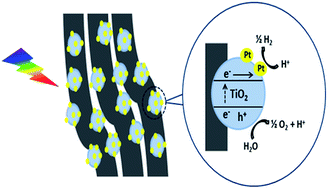
It is well known that the deposition of noble metals usually enhance the separation and prolong the lifetime of photogenerated electrons and holes (e–h+), resulting in the improved photocatalytic activity.51,52 The mechanism involved in the generation of photocatalytic hydrogen employing Pt(n)–TiO2/CNF is illustrated in Fig. 7a. Upon light irradiation, the photogenerated electrons are excited from the valence band to conduction band (CB) of TiO2 and migrated to Pt nanoparticles which acts as electron traps. On the other hand the holes are accumulated at the TiO2 valence band (VB). The photogenerated electrons trapped by Pt nanoparticles are transferred to surface adsorbed protons to produce H2, while the holes diffuse to photocatalyst surface and oxidize water to give oxygen. The Pt nanoparticles photodeposited on TiO2 result in the formation of Schottky barrier at Pt–TiO2 interface based on the difference between the Pt work function (ΦPt = 5.7 eV)53 and the electron affinity (χ = 3.8 eV)54 of TiO2 conduction band (Fig. 7b). The height of Schottky barrier (Φb = 1.7 eV)55 is appropriate enough for suppressing the e–h+ recombination thus acting as an electron trap during the photocatalytic process.


image file: c4ra08455a-f7.tif
Fig. 7 (a) Schematic illustration of photocatalytic hydrogen generation and (b) energy band diagram for Pt–TiO2 junction on Pt(n)–TiO2/CNF sample. (Evac, EF, ΦPt, χ, Φb represents Vacuum level, Fermi level, work function of Pt, electron affinity of TiO2 conduction band and Schottky barrier height, respectively (all values in eV)).

To further support the suppression of the e–h+ recombination and improved charge separation by Pt photodeposition, the photocurrent and photoluminescence (PL) of CNF, TiCN/CNF, TiO2/CNF and Pt–TiO2/CNF were measured. The time profiles of photocurrent with electrodes of respective material are shown in Fig S6. When the light is turned “on” the photocurrent is instantaneously produced, however when the light is turned “off”, the dark current is found to be negligible. It can be seen form the photocurrent profiles that the Pt–TiO2/CNF sample shows the highest photocurrent value compared to other samples. The pure CNF shows negligible photocurrent, whereas the TiCN/CNF and TiO2/CNF shows lower photocurrent than Pt–TiO2/CNF. The synergistic photoresponse of Pt–TiO2/CNF can be attributed to the presence of Pt on TiO2 which increases the electron transfer and effectively suppress the e–h+ recombination. The PL spectra for respective samples are also shown in Fig. S7. The PL emission spectrum of pure TiO2 (P25) was also measured as a reference. All the samples were excited at 325 nm and the PL spectra recorded in the range of 400–900 nm. The PL emission peak for TiO2 (P 25) is centered around 500 nm. The enlarged view of PL emission peaks (because of weak intensity) for all the samples are shown in inset to Fig. S7. The decrease in the intensity of PL emission peaks of samples follows the order: CNF, TiO2/CNF, Pt–TiO2/CNF and TiCN/CNF. It can be seen that the PL emission for Pt–TiO2/CNF is decreased specifically in the range of 400–530 nm. This result indicates Pt photodeposition promotes the electron transfer from TiO2/CNF to Pt and quenches the e–h+ recombination.56 While all the other PL emissions in the longer wavelength range (>530 nm) can be assigned to intrinsic defects and nonstoichiometry due to presence of oxygen vacancies in the mixed (anatase and rutile) phase TiO2.57,58 The low intensity PL emission spectra of TiCN/CNF may be because of no or very low amount of mixed phase TiO2 in the sample.

3.6. Photocatalytic stability test

The reusability and photocatalytic stability test of the Pt(n)–TiO2/CNF sample was investigated by repeating the cycles of photocatalytic hydrogen generation with the same sample after a fixed time interval. The photocatalytic experiment was performed for five cycles as illustrated in Fig. 8. The illumination for each cycle was done for 30 minutes to study photocatalytic hydrogen yield. After the completion of first cycle the spent photocatalyst was recovered and the same sample was reused as a photocatalyst for the next four cycles. The spent photocatalyst was simply recovered by tweezers after each cycle, washed with DI water and reused. It is obvious from Fig. 8 that during all repeated cycles employing the same material, the recycling reactions produce approximately similar amount of hydrogen generation. These data confirm the photocatalytic stable performance of spent photocatalyst during all cycles of reaction and sufficiently support the reusability of the recovered photocatalyst.
image file: c4ra08455a-f8.tif
Fig. 8 Photocatalytic hydrogen generation using Pt(120)TiO2/CNF spent sample under simulated solar light illumination after each interval of 3 hours.

4. Conclusions

In this work TiO2 embedded CNF was prepared with the aim of achieving photocatalyst reusability and photocatalytically stable performance for photcatalytic hydrogen generation. The embedment of TiO2 nanoparticles in PAN nanofibers was accomplished by electrospinning technique. The TiO2/CNF was obtained by carbothermal reaction followed by calcination process. Formation of Pt–TiO2/CNF was achieved by photodeposition of platinum precursor on the TiO2/CNF surface. The Pt photodeposition enhances the photocatalytic activity of the material due to increased electron transfer and reduced electron hole recombination. Furthermore we found that an increase in Pt photodeposition time results in an increase of photocatalytic hydrogen generation. However, we observed that the photocatalytic hydrogen generation becomes saturated with longer Pt photodeposition time (longer than 120 min). This saturation was due to excess deposition of Pt on the TiO2/CNF, which cover the TiO2 active sites and influence the photcatalytic performance of Pt–TiO2/CNF.

The reusability and photocatalytic stability test of the prepared Pt–TiO2/CNF was demonstrated by repeating the photocatalytic hydrogen generation cycles. The repetition was done after a fixed interval of time employing the same sample each time. Approximately similar amount of photocatalytic hydrogen was generated during each repeated cycle, assuring the stable behavior of Pt–TiO2/CNF. On the basis of the characteristic physical properties of Pt–TiO2/CNF, we believe that such a configuration will be advantageous and cost effective for large scale application in near future.

Acknowledgements

This work was supported by the DGIST R&D Program of the Ministry of Education, Science and Technology of Korea (14-NB-03 & 14-BD-0404). This research was supported by Basic Science Research Program through the National Research Foundation of Korea (NRF) funded by the Ministry of Science, ICT & Future Planning (2013R1A1A1008678).

References

  1. S. Uemiya, N. Sato, H. Ando, T. Matsuda and E. Kikichi, Appl. Catal., A, 1991, 67, 223–230 CrossRef CAS.
  2. S. J. Yoon, Y.-C. Choi and J.-G. Lee, Energy Convers. Manage., 2010, 51, 42–47 CrossRef CAS PubMed.
  3. K. Zeng and D. Zhang, Prog. Energy Combust. Sci., 2010, 36, 307–326 CrossRef CAS PubMed.
  4. M. Ni, M. K. H. Leung, D. Y. C. Leung and K. Sumathy, Renewable Sustainable Energy Rev., 2007, 11, 401–425 CrossRef CAS PubMed.
  5. A. Fujishima and K. Honda, Nature, 1972, 283, 37–38 CrossRef.
  6. A. Kudo and Y. Miseki, Chem. Soc. Rev., 2009, 38, 253–278 RSC.
  7. K. Maeda and K. Domen, J. Phys. Chem. Lett., 2010, 1, 2655–2661 CrossRef CAS.
  8. X. Wang, G. Liu, Z.-G. Chen, F. Li, L. Wang, G. Q. Lu and H.-M. Cheng, Chem. Commun., 2009, 3452–3454 RSC.
  9. S. In, A. Orlov, F. Gracia, M. Tikhov, D. S. Wright and R. M. Lambert, Chem. Commun., 2006, 4236–4238 RSC.
  10. S. K. Parayil, H. S. Kibombo, C.-M. Wu, R. Peng, J. Baltrusaitis and R. T. Koodali, Int. J. Hydrogen Energy, 2012, 37, 8257–8267 CrossRef CAS PubMed.
  11. H. J. Yun, H. Lee, N. D. Kim, D. M. Lee, S. Yu and J. Yi, ACS Nano, 2011, 5, 4084–4090 CrossRef CAS PubMed.
  12. S. G. Lee, S. Lee and H.-I. Lee, Appl. Catal., A, 2001, 207, 173–181 CrossRef CAS.
  13. N. Mandzy, E. Grulke and T. Druffel, Powder Technol., 2005, 160, 121–126 CrossRef CAS PubMed.
  14. M. Miyuauchi, A. Nakajima, T. Watanabe and K. Hashimoto, Chem. Mater., 2002, 14, 2812–2816 CrossRef.
  15. S. K. Palaniswamy, S. Jayaraman, S. Subramanian, J. B. Veluru, S. Gurdev, I. A. Suleyman and R. Seeram, Energy Environ. Sci, 2014 10.1039/c4ee00612g.
  16. S. Jayaraman, L. Ning, P. K. Suresh and R. Seeram, Biofuel Research Journal, 2014, 2, 44–54 Search PubMed.
  17. V. J. Babu, M. K. Kumar, R. Murugan, M. M. Khin, R. P. Rao, A. S. Nair and S. Ramakrishna, Int. J. Hydrogen Energy, 2013, 38, 4324–4333 CrossRef PubMed.
  18. J. B. Varley, A. Janotti and C. G. V. d. Walle, Adv. Mater., 2011, 23, 2343–2347 CrossRef CAS PubMed.
  19. S. Chuangchote, J. Jitputti, T. Sagawa and S. Yoshikawa, ACS Appl. Mater. Interfaces, 2009, 1, 1140–1143 CAS.
  20. S. S. Lee, H. Bai, Z. Liu and D. D. Sun, Appl. Catal., B, 2013, 140, 68–81 CrossRef PubMed.
  21. W.-J. Fan, Z.-F. Zhou, W.-B. Xu, Z.-F. Shi, F.-M. Ren, H.-H. Ma and S.-W. Huang, Int. J. Hydrogen Energy, 2010, 35, 6525–6530 CrossRef CAS PubMed.
  22. Y. Tong, X. Lu, W. Sun, G. Nie, L. Yang and C. Wang, J. Power Sources, 2014, 261, 221–226 CrossRef CAS PubMed.
  23. A. Chinnappan and H. Kim, Int. J. Hydrogen Energy, 2012, 37, 18851–18859 CrossRef CAS PubMed.
  24. B. Pant, N. A. M. Barakat, H. R. Pant, M. Park, P. S. Saud, J.-W. Kim and H.-Y. Kim, J. Colloid Interface Sci., 2014, 434, 159–166 CrossRef CAS PubMed.
  25. B. Pant, H. R. Pant, N. A. M. Barakat, M. Park, K. Jeon, Y. Choi and H.-Y. Kim, Ceram. Int., 2013, 39, 7029–7035 CrossRef CAS PubMed.
  26. S. Kim and S. K. Lim, Appl. Catal., B, 2008, 84, 16–20 CrossRef CAS PubMed.
  27. M. Marella and M. Tomaselli, Carbon, 2006, 44, 1404–1413 CrossRef CAS PubMed.
  28. A. Chambers, T. Nemes, N. M. Rodriguez and R. T. K. Baker, J. Phys. Chem. B, 1998, 102, 2251–2258 CrossRef CAS.
  29. L.-F. Chen, X.-D. Zhang, H.-W. Liang, M. Kong, Q.-F. Guan, P. Chen, Z.-Y. Wu and S.-H. Yu, ACS Nano, 2012, 6, 7092–7102 CrossRef CAS PubMed.
  30. H.-L. Kim, S. Kim, J.-K. Kang and W. Choi, J. Catal., 2014, 309, 49–57 CrossRef CAS PubMed.
  31. L. Zhang, J. Hu, A. A. Voevodin and H. Fong, Nanoscale, 2010, 2, 1670–1673 RSC.
  32. D. Li and Y. Xia, Adv. Mater., 2004, 16, 1151–1170 CrossRef CAS.
  33. Y. Yang, H. Wang, X. Lu, Y. Zhao, X. Li and C. Wang, Mater. Sci. Eng., B, 2007, 140, 48–52 CrossRef CAS PubMed.
  34. S. A. C. Carabineiro, B. F. Machado, G. Dražić, R. R. Bacsa, P. Serp, J. L. Figueiredo and J. L. Faria, Stud. Surf. Sci. Catal., 2010, 629–633 CrossRef CAS.
  35. H. T. Gomes, B. F. Machado, A. M. T. Silva, G. Dražić and J. L. Faria, Mater. Lett., 2011, 65, 966–969 CrossRef CAS PubMed.
  36. S. Aryal, C. K. Kim, K.-W. Kim, M. S. Khil and H. Y. Kim, Mater. Sci. Eng., C, 2008, 28, 75–79 CrossRef CAS PubMed.
  37. N. Chandra, M. Sharma, D. K. Singh and S. S. Amritphale, Mater. Lett., 2009, 63, 1051–1053 CrossRef CAS PubMed.
  38. I.-J. Shon, B.-R. Kim, J.-M. Doh and J.-K. Yoon, Ceram. Int., 2010, 36, 1797–1803 CrossRef CAS PubMed.
  39. H. Lin, B. Tao, J. Xiong and Q. Li, Int. J. Refract. Met. Hard Mater., 2013, 1, 363–365 CrossRef PubMed.
  40. X. Chen, Y. Li, J. Zhu, S. Jin, L. Zhao, Z. Lei and X. Hong, Ceram. Int., 2008, 34, 1253–1259 CrossRef CAS PubMed.
  41. L. M. Berger and W. Gruner, Int. J. Refract. Met. Hard Mater., 2002, 20, 235–251 CrossRef CAS.
  42. L. Di, Z. Xu, K. Wang and X. Zhang, Catal. Today, 2013, 211, 109–113 CrossRef CAS PubMed.
  43. W. Y. Teoh, L. Mädler, D. Beydoun, S. E. Pratsinis and R. Amal, Chem. Eng. Sci., 2005, 60, 5852–5861 CrossRef CAS PubMed.
  44. S. K. Mohapatra, M. Misra, V. K. Mahajan and K. S. Raja, J. Phys. Chem. C, 2007, 111, 8677–8685 CAS.
  45. B. Luo, X. Yan, S. Xu and Q. Xue, Electrochem. Commun., 2013, 30, 71–74 CrossRef CAS PubMed.
  46. Y. Cong, X. Li, Y. Qin, Z. Dong, G. Yuan, Z. Cui and X. Lai, Appl. Catal., B, 2011, 107, 128–134 CrossRef CAS PubMed.
  47. P. E. Restrepo, P. J. Arango and V. J. B. Palacio, DYNA, 2010, 77, 64–74 Search PubMed.
  48. F. Sen and G. Gokkagac, J. Phys. Chem. C, 2007, 111, 5715–5720 CAS.
  49. K. Nishimiya, T. Hata, Y. Imamura and S. Ishihara, J. Wood Sci., 1998, 44, 56–61 CrossRef CAS.
  50. M. D. Driessen and V. H. Grassian, J. Phys. Chem. B, 1998, 102, 1418–1423 CrossRef CAS.
  51. A. J. Bard, J. Phys. Chem., 1982, 86, 172 CrossRef CAS.
  52. K. Hashimoto, T. Kawai and T. J. Sakata, J. Phys. Chem., 1984, 88, 4083 CrossRef CAS.
  53. D. Eastman, Phys. Rev. B: Solid State, 1970, 2, 1–2 CrossRef.
  54. D. Tsukamoto, A. Shiro, Y. Shiraishi, Y. Sugano, S. Ichikawa, S. Tanaka and T. Hirai, ACS Catal., 2012, 2, 599–603 CrossRef CAS.
  55. W. Y. Park, G. H. Kim, J. Y. Seok, K. M. Kim, S. J. Song, M. H. Lee and C. S. Hwang, Nanotechnology, 2010, 21, 195–201 Search PubMed.
  56. R. P. Antony, M. Tom, C. Ramesh, N. Murugesan, D. Arup, S. Dhara, S. Dash and A. K. Tyagi, Int. J. Hydrogen Energy, 2012, 37, 8268–8276 CrossRef CAS PubMed.
  57. J. Shi, Z. Feng, T. Chen, Y. Lian, X. Wang and C. Li, J. Phys. Chem. C, 2007, 111, 693–699 CAS.
  58. H. Nakajima and T. Mori, Phys. B, 2006, 376–377, 820–822 CrossRef CAS PubMed.

Footnotes

Electronic supplementary information (ESI) available: Additional XRD, XPS, photocatalytic hydrogen generation plot, Pt atomic concentration table, photocurrent profiles, and photoluminescence spectra. See DOI: 10.1039/c4ra08455a
Both authors contributed equally to this work.

This journal is © The Royal Society of Chemistry 2014
Click here to see how this site uses Cookies. View our privacy policy here.