Li Zhouab,
Caihong Zhubc,
Laura Edmondsbd,
Huilin Yangbc,
Wenguo Cui*bc and
Bin Li*bc
aCollege of Chemistry, Chemical Engineering and Materials Science, Soochow University, Suzhou, Jiangsu 215123, P. R. China
bOrthopedic Institute, Soochow University, 708 Renmin Rd, Suzhou, Jiangsu 215007, P. R. China. E-mail: wgcui80@hotmail.com; binli@suda.edu.cn; Fax: +86-512-67781163; Tel: +86-512-67781420
cDepartment of Orthopedics, The First Affiliated Hospital of Soochow University, 188 Shizi St, Suzhou, Jiangsu 215006, P. R. China
dNanotechnology Engineering, University of Waterloo, Waterloo, Ontario N2L3G1, Canada
First published on 28th August 2014
Water-solubility facilitates drug transportation and distribution of drugs throughout the body and hence effectively promotes their absorption. While there have been a number of techniques for incorporating water-soluble drugs into electrospun fibers to realize sustained release of them, problems including burst and uncontrolled release still remain to be solved. In this study, we developed a microsol-electrospinning technique for fabricating core–shell microfibers to achieve incubated, controlled and sustainable release of water-soluble drugs such as chloroquine (CQ). In this approach, nanoparticles made of CQ-loaded hyaluronic acid (HA) sol were first prepared using the emulsification method. Next, the HA-sol nanoparticles were dispersed in poly(L-lactide) (PLLA) electrospinning solution to form a uniform suspension, which was used for fabricating composite microfibers through microsol-electrospinning. Judging from SEM and TEM, the composite microfibers had smooth, uniform morphology and core–shell structure. Further tests showed that the microsol-electrospun microfibers had similar physical, chemical, and mechanical properties as microfibers fabricated using a conventional electrospinning approach. In vitro drug release tests showed that compared to conventional electrospun microfibers, the burst release of CQ was significantly reduced in microsol-electrospun microfibers. Meanwhile, the release time of CQ was markedly extended, being as long as more than 40 days. Importantly, the drug release rate could be readily adjusted by changing the concentration of microsol particles and the amount of drug in the microfibers. Together, findings from this study have revealed that microsol-electrospinning is a facile technique for loading water-soluble drugs into electrospun microfibers and releasing them in a controlled fashion, which may expand the applications of water-soluble drugs.
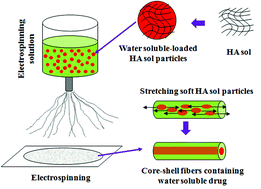
Electrospinning is an effective technique that has been extensively used to fabricate ultra-fine polymer fibers with diameters ranging from several microns down to less than 100 nm.7 Among the numerous applications of electrospun fibers in biomedicine, drug carrier is one of the most exciting one.8 To date, a couple of electrospinning techniques have been developed to fabricate polymer nanofibers for drug delivery, including mixing electrospinning,9 emulsion electrospinning,10 and coaxial electrospinning.11 In order to incorporate water-soluble drugs in polymer microfibers, emulsion electrospinning and coaxial electrospinning are most frequently used. Coaxial electrospinning results in microfibers with core–shell structure, in which the water-soluble drug is confined in the core and protected by a polymer shell.12 While such a core–shell structure of fibers markedly help reduce burst release and maintain stable release rate, achieving coaxial electrospinning is technically demanding due to the complexity of spinneret and potential instability of coaxial flow upon feeding.13,14 A much simpler approach, emulsion electrospinning is used for carrying water-soluble drugs by emulsifying aqueous solution in a polymer solution and then electrospinnning the emulsion.15 Nonetheless, it suffers low efficiency of drug loading. Hence, it remains challenging to develop a simple yet reliable technique for fabricating electrospun polymer microfibers loaded with water-soluble drugs.
In addition to controlled loading and release, preserving the activity of water-soluble drugs is also a critical issue affecting their applications. Hydrosols, a type of sol in which water is the dispersed phase and possesses high dispersion stability, have shown promise in drug delivery applications.16,17 Specifically, hydrosol nanoparticles may be obtained by ultrasonic dispersion and have been used as efficient drug carriers.18 In hydrosol nanoparticles, the drug is dissolved into the aqueous solution and can be readily released from them in a controlled fashion as a result of free diffusion of water through the wall of nanoparticles. The hydrosol nanoparticles could form stable water-in-oil (W/O) emulsions in organic solvents, which are beneficial for fabrication of hydrosol-loaded carriers. However, hydrosol nanoparticles resist diffusion of organic solvents and can effectively prevent organic solvent from contacting the encapsulated drug within them. As a result, hydrosol may function as an ideal isolated system that protects the activity of drug within it.
However, it is a constant challenge to realize the controlled and delayed release of water-soluble drugs from electrospun polyester fibers, because (1) water-soluble drugs fast dissolved in water solution; (2) water-soluble drugs could not dissolve into the organic solvent during the preparation of electrospun solution. Taking advantages of hydrosol nanoparticles, in this study we aimed to develop an efficient microsol-electrospinning technique for fabricating core–shell polymer microfibers for water-soluble drug loading and release. By incorporating water-soluble drug into lipid-soluble electrospun fibers, such an approach may achieve controlled loading and sustainable release of water-soluble drugs, and meanwhile protect the drug activity. Chloroquine phosphate salt (CQ), a common drug for treating falciparum malaria, vivax malaria, and other diseases,19,20 is used as a model drug in this study. CQ is typical water-soluble drug which can be easily dissolved in water but is hard to dissolve in organic solvents such as ethyl alcohol, chloroform, and benzene.21 As a natural polymer and exists richly in the extracellular matrix (ECM) of most tissues, hyaluronic acid (HA) has been widely used in drug delivery systems.22 In this study, we first prepared CQ-loaded HA hydrosol nanoparticles using ultrasonic emulsification method. We then uniformly dispersed the HA-sol nanoparticles in poly(L-lactide) solution and used the suspension to fabricate core–shell electrospun microfibers by a one-step electrospinning process, i.e., microsol-electrospinning. In addition to morphological characterizations, the physical, chemical, and mechanical properties of the electrospun microfibers were extensively studied. More importantly, the vitro loading and release behaviors of CQ-loaded microfibers fabricated using microsol-electrospinning were investigated.
| Sample name | Amount of 1% HA (g) | Percentage of CQ (with respect to PLLA) |
|---|---|---|
| PLLA-HA05-CQ05 | 0.05 | 0.5% |
| PLLA-HA05-CQ10 | 0.05 | 1.0% |
| PLLA-HA05-CQ15 | 0.05 | 1.5% |
| PLLA-HA10-CQ05 | 0.1 | 0.5% |
| PLLA-HA10-CQ10 | 0.1 | 1.0% |
| PLLA-HA10-CQ15 | 0.1 | 1.5% |
Transmission electron microscopy (TEM) images of individual microfiber's inner structure were obtained by a Hitachi HT7700 at 120 kV.
Fourier transform infrared spectroscopy (FTIR, Nicolet 6700) was used for investigating the composites, pure CQ, and HA.
Wide angle X-ray diffraction (WAXRD) pattern was recorded by using an X-ray diffractometer (X' Pert-Pro MPD) using Cu Kα radiation with a Ni filter (1.542 Å). The samples were scanned from 5° to 90° at a scanning rate of 5° min−1.
The static water contact angles (WCA) of microfibrous membranes were measured using a contact angle analyzer (DSA25S, Data Physics Corporation).
Glass transition temperatures (Tg) were determined using a Perkin-Elmer differential scanning calorimeter (DSC, DIAMOND) apparatus. The samples were heated from 20 to 150 °C with a heating rate of 10 °C min−1 under nitrogen atmosphere.
For mechanical tests, the dry microfibrous membranes were punched into dumbbell shaped specimens (15.0 × 3.0 × 0.13 mm3). Uniaxial tensile tests were performed using a mechanical testing machine (Hengyi, 5 mm min−1, n = 5).
![]() | (1) |
As measured, the LEs of all CQ-loaded electrospun membranes were about 80% in this study.
To identify the in vitro release behavior of CQ, small square samples, which had approximately identical size and thickness with a total mass of about 100 mg, were cut from the fibrous membranes and then immersed in 20 mL of 154 mM phosphate buffered saline (PBS, pH 7.4), The suspension was maintained in a constant-temperature shaking air bath (Taichang Huamei Biochemical Instruments, Jiangsu, China) with a shaking speed of 100 cycles per min at a temperature of 37 °C. At predetermined time intervals, 3.0 mL buffer was removed for analysis and 3.0 mL fresh PBS was added back for continuing incubation. The concentrations of CQ in the samples were measured by an UV-Vis spectrophotometer (WFZ UV-2102 Unique Technology Shanghai) at wavelength of 257 nm. The results were showed in terms of cumulative release as a function of release time:12
![]() | (2) |
The inner structure of electron fibers was further examined using TEM (Fig. 3). Clearly, relatively uniform core–sheath structures were formed by microsol-electrospinning. The HA-microsol phase as the core was well packaged into the PLLA phase as the shell. The diameters of cores are 0.29, 0.42, 0.75, 0.33, 0.58, and 0.83 μm for PLLA-HA05-CQ05, PLLA-HA05-CQ10, PLLA-HA05-CQ15, PLLA-HA10-CQ05, PLLA-HA10-CQ10, and PLLA-HA10-CQ15 fibers, respectively. Apparently, increase of the content of HA-sol and CQ resulted in fibers with larger cores.
O stretching vibration of ester linkage, and the peaks at 2924 cm−1 and 2853 cm−1 are from C–H stretch.24 The IR spectra of fibrous membranes incorporated with different amounts of HA and CQ appear similar as the spectrum of pure PLLA. No characteristic peaks of HA and CQ are seen in the IR spectra of fibrous membranes, implying that there were no HA and CQ presented at the surface of fibers. This again demonstrates that all the particles of HA-microsol were packaged into the fibers fabricated using microsol electrospinning.
In addition, WCA tests were performed to characterize the surface wettability of electrospun membranes. The water contact angles are 130.17° ± 2.12°, 131.15° ± 2.92°, 130.12° ± 3.10°, 130.70° ± 1.13°, 131.95° ± 2.67°, 131.14° ± 2.31°, 132.10° ± 1.92° for PLLA, PLLA-HA05-CQ05, PLLA-HA05-CQ10, PLLA-HA05-CQ15, PLLA-HA10-CQ05, PLLA-HA10-CQ10, and PLLA-HA10-CQ15 membranes, respectively (insets in Fig. 2). The wettability of all electrospun membranes did not apparently differ from each other, suggesting that all the particles of HA-microsol were incorporated in the PLLA fibers as a result of the hydrophilicity of HA and CQ. The results from WCA tests well echo the ATR-FTIR results.
Further, the XRD profiles of HA, CQ, and electrospun fibrous membranes were examined (Fig. 5). In contrast to the amorphous PLLA and HA which show no characteristic peaks in XRD curves, pure CQ was crystallized with a set of major peaks in the range of 5–30°. However, there are no CQ peaks at all in all the drug-loaded fibrous membranes. Therefore, addition of HA-microsol and CQ did not apparently affect the crystalline state of the electrospun fibers.
To investigate the effect of HA on the thermodynamic behavior of electrospun fibrous membranes, DSC analysis was performed for the membranes with and without HA-microsol entrapment.25,26 As measured, the glass transition temperature (Tg) are 61.50, 62.47, 62.36, 63.41, 62.79, 62.82, 62.68 °C for PLLA, PLLA-HA05-CQ05, PLLA-HA05-CQ10, PLLA-HA05-CQ15, PLLA-HA10-CQ05, PLLA-HA10-CQ10, and PLLA-HA10-CQ15, respectively. Apparently, addition of HA and CQ resulted in little change in the Tg of electrospun membranes, meaning that microsol-electrospinning did not affect the thermodynamic behavior of PLLA.
The stress–strain profiles of electrospun fibrous membranes measured from tensile tests are shown in Fig. 6. The tensile strengths of the fibrous membranes of PLLA, PLLA-HA05-CQ05, PLLA-HA05-CQ10, PLLA-HA05-CQ15, PLLA-HA10-CQ05, PLLA-HA10-CQ10, and PLLA-HA10-CQ15 membranes are 4.12 ± 0.25, 3.91 ± 0.16, 3.81 ± 0.95, 3.49 ± 0.91, 3.39 ± 0.83, 3.39 ± 0.71, and 3.38 ± 0.85 MPa, respectively. The breaking elongations are 78.89 ± 0.23, 71.17 ± 0.45, 63.48 ± 0.33, 70.25 ± 0.71, 73.15 ± 0.89, 74.77 ± 0.56, 75.47 ± 0.43%, respectively. Therefore, it appears that the tensile strength and breaking elongation of PLLA were slightly decreased as a result of HA and CQ incorporation. However, the tensile moduli of all the fibrous membranes are similar, being approximately 44.8 MPa.
As can be clearly seen from the release curves, the CQ-loaded microsol-electrospun fibrous membranes can achieve stable and long release of CQ. For instance, in the membrane prepared from 0.10 g HA-sol with 1.0% CQ (PLLA-HA10-CQ10), consistent drug release lasted as long as 6 weeks (Fig. 7b). Interestingly, the release time was highly dependent on the loading amounts of HA and CQ. Fibrous membranes with lower levels of HA and CQ released CQ more slowly and the total release time could be significantly longer than 6 weeks. However, there seems to be an upper limit of drug loading, above which the release of CQ was significantly sped up. This is clearly shown in the case of PLLA-HA10-CQ15, from which almost 100% drug release was achieved within as short as 2 weeks (Fig. 7b). Depending on the HA and CQ amounts, initial burst release might also be reduced in microsol-electrospun fibrous membranes. With the same content of HA, more CQ will cause more burst release and shorter time sustained release. Membranes with more CQ will release more at the same time. With the same concentration of CQ, more HA loaded will cause more initial burst release, shorter time sustained release, and more release capacity at the same time.
![]() | ||
| Fig. 8 Schematic illustration of the formation of composite fibers with core–shell structure during microsol-electrospinning. | ||
The microsol-electrospinning and emulsion electrospinning share the same mechanism of preparation of electrospun solution and the process of electrospining. However, compared to the emulsion electrospinning and coaxial electrospinning techniques that have been commonly used for loading hydrophilic drugs, microsol-electrospinning offers an alternate approach which does not require complicated setup, yet achieves more stable electrospinning process. Meanwhile, it can achieve an ideal drug loading efficiency (about 80%) with this technology. The total release time of drugs from micro-electrospun fibrous membranes was also increased, being as long as 6 weeks (Fig. 7). In addition, depending on the amount of HA and drug, initial burst release could also be minimized in microsol-electrospun fibrous membranes (Fig. 7). Therefore, the microsol-electrospinning technique not only enables stable and continuous electrospinning and markedly improves drug loading efficiency, but also reduces the initial burst release and realizes long controlled release. Such a method can be effectively used to package and consistently release a number of water-soluble macromolecules, especially the molecules whose activity is highly sensitive to organic solvents, such as proteins and growth factors. Further improvement of this study is undergoing, including increasing loading efficiency to minimize drug loss and optimizing the conditions for HA-sol formation.
| This journal is © The Royal Society of Chemistry 2014 |