In situ synthesis of copper nanoparticles within ionic liquid-in-vegetable oil microemulsions and their direct use as high efficient nanolubricants

Aili Wang, Li Chen, Fan Xu and Zongcheng Yan*
School of Chemistry and Chemical Engineering, South China University of Technology, Guangzhou 510640, China. E-mail: zcyan@scut.edu.cn; Fax: +86 20 87111109; Tel: +86 20 87111109

Received 8th July 2014 , Accepted 15th September 2014

First published on 15th September 2014


Abstract

The current study highlighted a simple, efficient and environmentally friendly preparation method of a new type of nanolubricant. Herein, copper nanoparticles were successfully in situ synthesized within ionic liquid-in-vegetable oil microemulsions, and the as-prepared systems could be used as high-performance nanolubricants directly. Ascorbic acid and copper chloride were used as the raw materials for the synthesis of copper nanoparticles, whereas the castor oil, 1-butyl-3-methylimidazolium tetrafluoroborate and Triton X-100 were employed for the formulation of ionic liquid microemulsions. The copper-based ionic liquid-in-vegetable oil nanolubricants were characterized by dynamic light scattering, UV-visible spectra and a four-ball tribological tester, which confirmed the formation of copper nanoparticles and the improvement of the friction performance. The SEM micrographs and EDX chemical analysis were carried out to analyze the friction surface after sliding. The results showed that the designed nanolubricants presented an enhanced lubricating property compared to the neat ionic liquid microemulsion. In addition, the mechanism of the in situ synthesis of nanoparticles within nonaqueous ionic liquid microemulsions was discussed.

1. Introduction

In the last decades, a tremendous advance in engine technology was observed, which depended largely on lubricant development.1 Owing to the worsening energy crisis and increasing environmental awareness, some research groups have proposed or further investigated several mineral lubricating oil substitutes such as ionic liquids, polyol esters and vegetable oils.2–8 In order to overcome their own deficiencies, such as the insufficient oxidative stability of castor oil, on the lubrication performance, research on processing of these biolubricants have been widely reported.9–12 Our previous study also indicated that vegetable oil-based ionic liquid microemulsions may have potential as biolubricant basestocks, and the phase behavior of ionic liquid-in vegetable oil microemulsions were further detailed in recent studies.13–15

In order to response to the requirements of lubrication efficiency positively, the development and application of additives, particular at the nanoscale, have made a rapid growth over the past few years, because lubricants with nanoparticles as additives (hereafter referred to as “nanolubricants”) can offer excellent anti-wear and friction-reducing properties.16–20 Numerous nanoparticles, particularly Cu, have been investigated as component of nanolubricants.18,21–23 In the attempt to synthesize the designed nanolubricants, a two-step route was traditionally employed.17 However, the difficulties in storing and dispersing the nanoparticles into lubricant base oils became bottlenecks of this method. Recently, Zhang and his coworkers introduced an in situ one-step route for preparing Ni nanoparticles directly in PAO6 lubricant base oil.21 This method offered a novel option for reducing the cost and promoting the industrialization of nanolubricants.

It has been found that water/oil microemulsion was an effective reactor for the preparation of nano-Schiff base and Schiff base copper complex. However, the as-prepared microemulsion must be demulsified for the collection of nanoparticles and oil phase. Moreover, the dispersed nanoparticles should be diluted by lubricant base oil before the evaluation of tribological performance.24 And yet, few studies dealt with in situ synthesis of metal nanoparticles in microemulsions, let alone nonaqueous microemulsions. Besides, most of the chemical reactions on preparation of copper nanoparticles were not green.25–28

In the present research, we showed that copper nanoparticles were successfully in situ synthesized within vegetable oil-based ionic liquid microemulsions, which could be used as copper-based nanolubricants directly. Notably, the highly stable dispersions of copper nanoparticles were prepared by chemical reduction in nonaqueous microemulsions, and nontoxic ascorbic acid was used as the reducing agent to prevent the oxidation of the synthesized copper nanoparticles. The designed systems exhibited significant improvement of anti-wear and friction-reducing properties compared with pure vegetable oil-based ionic liquid microemulsions. The current study highlighted a simple, efficient and environmentally friendly preparation method of a new type of nanolubricants, and their practical application was explored as well.

2. Experimental section

2.1. Materials

Ascorbic acid and copper chloride (CuCl2) were commercial materials purchased from Aladdin Chemical Reagent Co., China. Ionic liquid 1-butyl-3-methylimidazolium tetrafluoroborate ([BMIM][BF4]) was purchased from Lanzhou Institute of Chemical Physics and used without further purification. Castor oil and Triton® X-100 (TX-100; polyethylene glycol p-(1,1,3,3-tetramethylbutyl)-phenyl ether; octyl phenol 9.5 EO) were purchased from Guangzhou CongYuan Instrument Co., Ltd. Before used, TX-100 was vacuum-dried at 70 °C for 6 hours to remove excess water.

2.2. Synthesis of copper-based ionic liquid-in-vegetable oil nanolubricants

In a typical experiment, the procedure of copper-based nanolubricant preparation included the following steps: (1) a certain amount of CuCl2 was dissolved in castor oil at 80 °C. After a moderate intensity of magnetic stirring for 40 min, TX-100 was added into the above solution, and the as-prepared system was named as solution A. (2) Under the same condition, ascorbic acid was added into [BMIM][BF4], and the obtained solution was dropped into the solution A to get a solution B. (3) The solution B was kept at 80 °C for a certain time with continuous magnetic stirring. Then the copper-based ionic liquid-in-vegetable oil nanolubricants were successfully synthesized. The obtained nanolubricant was placed under ambient conditions for 6 months. The general recipe was presented in Table 1. The chemical reduction process occurred as follows:29
 
Cu2+ + C6H8O6 → Cu + C6H6O6 + 2H+ (1)
Table 1 General recipe used in the synthesis process of copper-based ionic liquid-in-vegetable oil nanolubricants
Sample name Ascorbic acid (mM) CuCl2 (mM) [BMIM][BF4] (mM) Castor oil (mM) TX-100 (mM) Reaction time (h) Reaction temperature (oC) Theoretical concentration of copper (wt%)
S1 12 4 20 25 80 1 80 0.32
S2 6 2 20 25 80 1 80 0.16
S3 6 2 20 25 80 1 60 0.16
S4 12 4 20 25 80 1.5 80 0.32
S5 12 4 20 25 80 2 80 0.32
Blank 0 0 20 25 80 0 80 0


2.3. Characterization of copper-based ionic liquid-in-vegetable oil nanolubricants

The dynamic light scattering (DLS) of the produced nanolubricants was recorded on a Malvern Nano ZS instrument at 25 ± 0.1 °C. This instrument employed a 4 mW He–Ne laser operating at a wavelength of 633 nm. UV-visible (UV-vis) analysis of copper-based ionic liquid-in-vegetable oil nanolubricants was carried out using a Shimadzu UV-2450 spectrophotometer. The blank sample was first scanned to get the baseline, and then the biolubricant sample was scanned to get the UV-vis spectra. Measurements were carried out at 25 ± 0.1 °C. The tribological properties of as-prepared copper-based ionic liquid-in-vegetable oil nanolubricants were evaluated with an MS-10A four-ball tribotester, which performed at 1450 r min−1 for 60 min. GCr15 steel balls with an HRC of 61 to 64 were employed during the test. The wear scar diameters were measured using a video camera installed in the four-ball tribotester. During the process, both the longitudinal and the horizontal wear scar diameter were measured and the average of the two diameters was noted as the average wear scar diameter for each ball. Similar method was used to obtain the average wear scar diameter of the other two balls. The average value of three balls was defined as the final wear scar diameter. A representative wear scar image was shown in the ESI. Each set of DLS and tribological experiments was repeated three times, and the average value obtained was used for data processing and analysis. Morphology and element distribution of the worn surface on the tested ball were examined using scanning electron microscopy (SEM) Hitachi S-3700N equipped with an energy dispersive X-ray spectroscopy (EDS). Each ball was cleaned by ultrasonically agitated thermal bath before the SEM and EDS tests. The color transitions of the copper-based ionic liquid-in-vegetable oil nanolubricants under different condition were observed visually.

3. Results and discussion

3.1. Reaction process of the in situ synthesis of nanoparticles in nonaqueous microemulsions

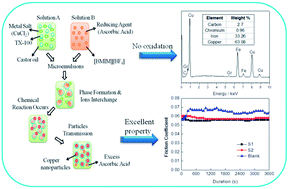
A schematic picture of the reaction process is represented in Fig. 1. Once the two solutions carrying the appropriate reactants were mixed, the formation of microemulsions and the interchange of metal salt and reducing agent happened at the same time. These procedures occurred rapidly, which could be confirmed by the determination of changes in appearance of color.30 Fig. 2 shows the appearance of different samples. It could be observed that the mixture became colorless when ascorbic acid was added initially, but turned to bright red brown from colorless after 10 min and barely changed as time went on (see S1, S4, and S5). The reaction time had an influence on the average size of nanolubricants as well. Fig. 3 shows the average size of each sample. When the reaction times were extended, the average size of nanolubricants decreased, and the reason could be ascribed to the slow arrival of the complete reduction.
image file: c4ra06785a-f1.tif
Fig. 1 Diagram of the in situ synthesis of copper nanoparticles in ionic liquid-in-vegetable oil microemulsions.

image file: c4ra06785a-f2.tif
Fig. 2 The appearance of different samples at the ambient temperature.

image file: c4ra06785a-f3.tif
Fig. 3 The average size of different samples at the ambient temperature.

The mixture of reactants took place in the interface of microemulsion droplets, and then the chemical reaction occurred during this process, as shown in Fig. 1. Since the restricted solubility of metal particles in the castor oil phase, as well as the fact that the surfactant molecules would attached to the surface of particles after the copper nanoparticles attaining the final size,25 the obtained particles penetrated into the inner core of the microemulsions and got stabilized right there.

The theoretical concentration of copper in the nanolubricants was decided by the amount of metal salt. Since ascorbic acid used in this work was overweight to prevent the oxidation of copper nanoparticles, Cu2+ should be deducted completely in theory. Fig. 2 also indicates that the theoretical concentration of copper could affect the appearance of the designed nanolubricants (see S1 and S2). The nanolubricants turned darker with the increasing of copper concentration. As the copper generated continuously, the ionic liquid occupied by per unit of surfactant decreased, resulting in a decrement of ionic liquid core. Since the particle size of copper mainly depended on the inner core of the reverse microemulsion,31 the incorporation of copper particle lead to decrease in particle size compared to the blank control. Besides, the average size of nanolubricants increased with decreasing copper concentration. The reason for the above results was that the average size of copper nanoparticles was less than that of blank microemulsions, and hence the average diameter of nanolubricants would decrease with the increasing pure copper nanoparticles in the as-prepared microemulsions.

Reaction temperature had a significant effect on the formation of copper nanoparticles.29 For S2 and S3, we maintained the other conditions constant and altered the reaction temperature from 80 °C to 60 °C, the color became lighter and the average size of nanolubricants became larger as shown in Fig. 2 and 3. The above results indicated that the lower temperature gave rise to a weaker reducing power of ascorbic acid so that less copper appeared, and a larger microemulsion diameter was obtained.

3.2. UV-vis analyses

In this work, using traditional methods, such as X-ray diffraction and transmission electron microscopy, to identify the copper nanoparticles synthesized within vegetable oil-based ionic liquid microemulsions was difficult because of the extraordinary stability and high viscosity natures of the designed microemulsions. However, UV-vis absorbance spectroscopy is a powerful measurement technique used to identify the formation of copper nanoparticles within microemulsions, since that a distinct surface plasmon absorption band on the surface of nanoparticles will show up as a response to the incident light.32 The measurement is not affected by viscosity, and can be carried out without demulsification. Fig. 4 shows the UV-vis absorption spectra of nanolubricant S1, S2 and the blank control. It was reported that the as-synthesized copper nanoparticles were spherical if the UV-vis absorption spectra of nanolubricant showed a single peak at around 570 nm.33 However, when the diameters of copper nanoparticles are small enough, a broadened plasmon peak will appear and have a blue shift.34,35 In this work, only one moderate absorption peak at approximately 524 nm could be observed, which confirmed the existence of spherical copper, and this absorbing peak could be ascribed to the specific absorption by nanosized copper particles.36 The UV-vis of sample S3 was given in the ESI, which showed similar absorbing peak. These results agreed with the DLS analysis of nanolubricants, and based on these, we can infer that copper nanoparticles can be successfully in situ prepared within vegetable oil-based ionic liquid microemulsions.
image file: c4ra06785a-f4.tif
Fig. 4 The UV-vis absorption spectra of sample S1, S2 and blank.

3.3. Tribological properties

The friction coefficients for nanolubricants S1, S2 and blank are displayed in Fig. 5, and Table 2 presents the mean friction coefficient and the standard deviation for comparison. The standard deviation represented the variation of three repeating runs for each samples. Since the only difference between S2 and S3 was that they were prepared under different temperature, their characterization results, such as the variation of the friction coefficient with time and the mean friction coefficient were similar. The characterization results of S3 were shown in the ESI. The friction coefficient of microemulsion without additives (sample blank) fluctuated obviously with the duration of test, and showed a relatively high mean value. While with the participation of in situ synthesized copper nanoparticles (sample S1 and S2), the friction coefficient varied smoothly with duration and the mean value significantly decreased compare to the blank sample. Besides, nanolubricant containing 0.32 wt% of copper nanoparticles showed a small decrease of friction coefficient value compared with nanolubricant with 0.16 wt% of copper nanoparticles. The results convinced that nano-copper additive could enhance the friction-reducing properties of ionic liquid microemulsions, and the amount of this additive would affect the anti-friction properties of nanolubricants.
image file: c4ra06785a-f5.tif
Fig. 5 Friction coefficient of nanolubricants S1, S2 and blank under 392 N of load.
Table 2 Mean friction coefficient of four-ball tribotester and standard deviation
Samples Mean friction coefficient Standard deviation
S1 0.0559 0.000689
S2 0.0581 0.001215
Blank 0.0648 0.003742


Fig. 6 shows a comparison of the wear results among sample S1, S2 and blank. Similar to the friction results, the microemulsions with in situ synthesized copper nanoparticles exhibit enhanced anti-wear properties, and the nanolubricants containing more copper nanoparticles could get a better wear reducing result. It has been reported that nanoparticles dispersed in base oils can penetrate into the contact area and then deposit on it because of their smaller size.37,38 In this respect, these findings supported the claim that tiny copper particles were released from nonaqueous microemulsions and may even form a metallic film layer on the friction surface.


image file: c4ra06785a-f6.tif
Fig. 6 Wear scar diameters (WSD) of steel balls lubricated by sample S1 (a), S2 (b) and blank (c).

3.4. Worn surface analysis

Observing the wear, scars and grooves on the worn surface after lubrication are important approaches when evaluating the tribological performance of lubricants. Morphology on the worn ball surfaces was analyzed by SEM. Fig. 7(a) and (b) are SEM images of the friction surfaces after nano lubrication test with the in situ synthesized copper nanoparticles at rates of 0.32 wt% and 0.16 wt%, respectively. The wear scar result of S3 were shown in the ESI. Fig. 7(c) shows the surface after testing with pure ionic liquid-in-vegetable oil microemulsion. It can be seen that scratches and grooves in Fig. 7(c) are deeper than those in Fig. 7(a) and (b), and Fig. 7(a) presents a smoother and more flat surface compared to Fig. 7(b). These results demonstrated that the copper nanoparticles can remarkably reduce the scarring and wear, and this effect becomes more obvious with increasing copper nanoparticles amount. Therefore, it could be inferred that the copper nanoparticles in ionic liquid-in-vegetable oil microemulsions enhanced the friction-reducing properties.
image file: c4ra06785a-f7.tif
Fig. 7 Worn surface morphology of steel balls lubricated by nanolubricants S1 (a), S2 (b) and blank (c).

EDS was utilized to detect the elements distribution on the worn surface when the friction balls were operated with ionic liquid-in-vegetable oil microemulsions containing nanoparticles. Fig. 8 shows the EDS results for the areas indicated in Fig. 7. The selected spectra for sample S1 presented as much as 63.08 wt% of copper, which originated from the nanoparticles. Besides, it also showed carbon (2.7 wt%), chromium (0.96 wt%) and iron (33.26 wt%), which were from the ball alloy. Neither cupric oxides nor cuprous oxides were detected on the worn surface. The EDS spectra for sample S2 and S3 (see ESI) showed the same result. These facts further confirmed that pure copper nanoparticles were successfully in situ prepared within ionic liquid-in-vegetable oil microemulsions.


image file: c4ra06785a-f8.tif
Fig. 8 EDS spectra of the worn surfaces lubricated by nanolubricants S1 (a), S2 (b) and blank (c).

The mechanism by which copper nanoparticles reduced friction and resisted wear can be explained by two possibilities. One is that copper nanoparticles in the microemulsion deposit on the scars and grooves of the friction surface, and hence the element of ball alloy can be detected along with the copper nanoparticles of lubricant oil.38 Another is that the copper film is formed. According to Yu and coworkers,39 the copper film contained the element of iron, which may come from the iron grindings produced in sliding.

3.5. The stability of nanolubricants

The stability of ionic liquid-in-vegetable oil microemulsions containing copper nanoparticles is an important indicator to evaluate their performance. In this work, the as-synthesized copper nanoparticles were well distributed inside the inner cores of the microemulsions. Due to the high stability of microemulsions, no precipitate was obtained after a centrifugation at 12[thin space (1/6-em)]000 rpm for 20 min. Fig. 9 presents the comparison photos of the nanolubricants S1 before and after 6 months of storage at ambient condition. Besides, particle size and friction coefficient measurement of nanolubricant after 6 months of storage were also investigated (see ESI). The nanolubricant showed no obvious color change, sign of sedimentation, and lubricating ability reduction even after storage that indicated the nanolubricants with in situ synthesized copper particles were highly stable at ambient condition. The stability of the designed nanolubricant could be ascribed to the performance of the excess ascorbic acid, which prevented the oxidation of copper nanoparticles as mentioned earlier. Along with the initial stability of microemulsions, the capping effect of the excess ascorbic acid also contributed to the formation of highly stable nanolubricants.40
image file: c4ra06785a-f9.tif
Fig. 9 The photos of sample S1 before (A) and after (B) 6 months of storage.

4. Conclusions

The results presented in this study showed that copper nanoparticles were successfully in situ synthesized within ionic liquid-in-vegetable oil microemulsions, and the schematic reaction process of this innovative synthetic method was discussed in detail. The nonaqueous microemulsions containing the as-prepared copper nanoparticles could be used as high-performance nanolubricants directly, which exhibited excellent tribological performance and high stability after storage for 6 months at ambient condition. This approach showed that the designed nanolubricants had potential advantages in the application of lubrication.

Acknowledgements

This research was supported by the National Natural Science Foundation of China (21376088), Project of Production, Education and Research, Guangdong Province and Ministry of Education (2012B09100063, 2012A090300015), and the Fundamental Research Funds for the Central Universities (2013ZZ0071). The authors would also gratefully acknowledge the support from the Guangdong Provincial Laboratory of Green Chemical Technology.

References

  1. J. W. B. Braga, A. A. d. S. Junior and I. S. Martins, Fuel, 2014, 120, 171–178 CrossRef CAS PubMed.
  2. A. E. Somers, P. C. Howlett, D. R. MacFarlane and M. Forsyth, Lubricants, 2013, 1, 3–21 CrossRef PubMed.
  3. C. Ye, W. Liu, Y. Chen and L. Yu, Chem. Commun., 2001, 2244–2245 RSC.
  4. F. Zhou, Y. Liang and W. Liu, Chem. Soc. Rev., 2009, 38, 2590–2599 RSC.
  5. K. V. Padmaja, B. V. Rao, R. K. Reddy, P. S. Bhaskar, A. K. Singh and R. B. Prasad, Ind. Crops Prod., 2012, 35, 237–240 CrossRef CAS PubMed.
  6. N. Fox and G. Stachowiak, Tribol. Int., 2007, 40, 1035–1046 CrossRef CAS PubMed.
  7. H. Kamimura, and S. Mori, Use of an ionic liquid as a base oil of a lubricating oil composition, Idemitsu Kosan, Eu. Pat., 1 672 051, 2003 Search PubMed.
  8. G. Bodesheim, S. Grundei, A. Höpke, M. Schmidt-Amelunxen and D. Sohn, Use of ionic liquids for improving the properties of lubricating compositions, Klüber Lubricatio, Eu. Pat., 2 164 934, 2007 Search PubMed.
  9. J. Salimon, N. Salih and E. Yousif, Eur. J. Lipid Sci. Technol., 2010, 112, 519–530 CAS.
  10. J. C. Bart, S. Cavallaro and E. Gucciardi, in Biolubricants: Science and technology, ed. J. C. Bart, S. Cavallaro and E. Gucciardi, Elsevier, Boca Raton, 2013, pp. 351–395 Search PubMed.
  11. K. Hill and R. Höfer, in Sustainable Solutions for Modern Economies, ed. R. Höfer, RSC, Cambridge, 2009, pp. 167–237 Search PubMed.
  12. T. W. Abraham and R. Höfer, in Polymer Science: A Comprehensive Reference, ed. K. Matyjaszewski and M. Möller, Elsevier, Abraham, 2012, pp. 15–58 Search PubMed.
  13. A. Wang, L. Chen, D. Jiang and Z. Yan, Ind. Crops Prod., 2013, 51, 425–429 CrossRef CAS PubMed.
  14. A. Wang, L. Chen, D. Jiang and Z. Yan, J. Chem. Eng. Data, 2014, 59, 666–671 CrossRef CAS.
  15. A. Wang, L. Chen, D. Jiang and Z. Yan, Colloids Surf., A, 2014, 446, 97–101 CrossRef CAS PubMed.
  16. Y. Wu, W. Tsui and T. Liu, Wear, 2007, 262, 819–825 CrossRef CAS PubMed.
  17. V. Zin, F. Agresti, S. Barison, L. Colla, A. Gondolini and M. Fabrizio, Nanotechnology, 2013, 12, 751–759 CAS.
  18. J. Zhou, J. Yang, Z. Zhang, W. Liu and Q. Xue, Mater. Res. Bull., 1999, 34, 1361–1367 CrossRef CAS.
  19. J. Padgurskas, R. Rukuiža, R. Kreivaitis, S. Asadauskas and D. Bražinskienė, Tribology, 2009, 3, 97–102 CAS.
  20. Y. Choi, C. Lee, Y. Hwang, M. Park, J. Lee, C. Choi and M. Jung, Curr. Appl. Phys., 2009, 9, e124–e127 CrossRef PubMed.
  21. Y. Chen, Y. Zhang, S. Zhang, L. Yu, P. Zhang and Z. Zhang, Tribol. Lett., 2013, 51, 73–83 CrossRef CAS PubMed.
  22. L. Dong, G. Chen, H. Li and J. Fang, Tribology, 2004, 24, 517–521 CAS.
  23. C.-G. Lee, Y.-J. Hwang, Y.-M. Choi, J.-K. Lee, C. Choi and J.-M. Oh, Int. J. Precis. Eng. Manuf., 2009, 10, 85–90 CrossRef PubMed.
  24. X. Gao, J. Li and W. Gao, Colloid J., 2009, 71, 302–307 CrossRef CAS.
  25. I. Capek, Adv. Colloid Interface Sci., 2004, 110, 49–74 CrossRef CAS PubMed.
  26. J. Padgurskas, R. Rukuiza, I. Prosyčevas and R. Kreivaitis, Tribol. Int., 2013, 60, 224–232 CrossRef CAS PubMed.
  27. Y. Wang, A. V. Biradar, G. Wang, K. K. Sharma, C. T. Duncan, S. Rangan and T. Asefa, Chem.–Eur. J., 2010, 16, 10735–10743 CrossRef CAS PubMed.
  28. V. Engels, F. Benaskar, D. A. Jefferson, B. F. Johnson and A. E. Wheatley, Dalton Trans., 2010, 39, 6496–6502 CAS.
  29. M. Biçer and İ. Şişman, Powder Technol., 2010, 198, 279–284 CrossRef PubMed.
  30. H.-F. Eicke and P. E. Zinsli, J. Colloid Interface Sci., 1978, 65, 131–140 CrossRef CAS.
  31. P. Calandra, M. Goffredi and V. T. Liveri, Colloids Surf., A, 1999, 160, 9–13 CrossRef CAS.
  32. J. Xiong, Y. Wang, Q. Xue and X. Wu, Green Chem., 2011, 13, 900–904 RSC.
  33. H. Huang, F. Yan, Y. Kek, C. Chew, G. Xu, W. Ji, P. Oh and S. Tang, Langmuir, 1997, 13, 172–175 CrossRef CAS.
  34. I. Lisiecki and M. P. Pileni, J. Am. Chem. Soc., 1993, 115, 3887–3896 CrossRef CAS.
  35. I. Lisiecki, F. Billoudet and M. Pileni, J. Phys. Chem., 1996, 100, 4160–4166 CrossRef CAS.
  36. N. A. Dhas, C. P. Raj and A. Gedanken, Chem. Mater., 1998, 10, 1446–1452 CrossRef CAS.
  37. F. Chinas-Castillo and H. Spikes, Tribol. Trans., 2000, 43, 387–394 CrossRef.
  38. S. Alves, B. Barros, M. Trajano, K. Ribeiro and E. Moura, Tribol. Int., 2013, 65, 28–36 CrossRef CAS PubMed.
  39. H. Yu, Y. Xu, P. Shi, B. Xu, X. Wang, Q. Liu and H. Wang, Surf. Coat. Technol., 2008, 203, 28–34 CrossRef CAS PubMed.
  40. G. Yang, Z. Zhang, S. Zhang, L. Yu and P. Zhang, Mater. Res. Bull., 2013, 48, 1716–1719 CrossRef CAS PubMed.

Footnote

Electronic supplementary information (ESI) available. See DOI: 10.1039/c4ra06785a

This journal is © The Royal Society of Chemistry 2014
Click here to see how this site uses Cookies. View our privacy policy here.