DOI:
10.1039/C4RA03231D
(Paper)
RSC Adv., 2014,
4, 21208-21215
Sustainable one-pot aqueous route to hierarchical carbon–MoO2 electrodes for Li-ion batteries†
Received
10th April 2014
, Accepted 2nd May 2014
First published on 2nd May 2014
Abstract
A route towards carbon–MoO2 core–shell spheres has been developed, through hydrothermal decomposition of ascorbic acid combined with precipitation of MoO2 nanoparticles. In this one-pot and green process, carbon spheres originating from ascorbic acid act as seeds for the in situ deposition of a corona made of 30 nm molybdenum dioxide particles. The as-obtained hierarchical nanostructured carbon–MoO2 core–shell spheres exhibit an ideal combination of electrical conductivity and lithium reactivity for Li-ion battery electrodes. This nanocomposite offers the opportunity to master the collector-active material and active material–electrolyte interfaces. Direct transfer “from the beaker to the battery” without any additives nor thermal treatment yields storage capacity values of ca. 600 mA h·g−1 at C/5 rate with excellent stability that challenges state-of-the-art molybdenum oxide-based batteries.
Introduction
Li-ion batteries rely on the complex interplay between the current collector, the electrodes and the electrolyte.1 Building a battery electrode indeed involves a complex multistep process, often with harmful reagents, to address capacity loss during cycling that can be attributed to problems intrinsic to the active material, such as irreversible transformations during the charge–discharge process, or issues related to interfaces. Among the latter, one can distinguish the active material–electrolyte interface where extended reactions and degradation can occur,1,2 and the contact between the active material and the current collector or conductive additives – usually pre-made carbon particles – which may be the locus of electron percolation loss due to large volume variations during cycling, inhomogeneous distributions and/or poor interaction between both components.1,2 Most of the problems linked to the collector-active material interface may be addressed through nano- and micro-structuration1–3 to guarantee the durability of mechanical and electrical properties along the charge–discharge cycles. The challenge of electrode structuration at different length scales was considered by the development of many composite structures, combining e.g. carbon nanotubes,4 graphene4,5 or carbon spheres,6,7 assemblies with controlled morphogy8,9 for high electrical conductivity, and grafted active insertion materials. However this efficient strategy is often achieved in several steps, in harsh conditions (e.g. H2 atmosphere at 600 °C) with faint control of the active material size and morphology.5,10–12 Nanostructuration of the collector prior to deposition of the active material is another promising way but relies on a complex multistep approach.2,5,10–12 Thus, interface optimization between the collector or conductive additive and the active material still relies on energy consuming processes and “experimental know-how” than on a sustainable rational approach. Some answers have been proposed, such as carbon coatings produced in situ during the formation of active LiFePO4,13–15 or MoO2 for instance16–18 but the process relies on high temperature treatments. The development of green, sustainable, and simple methods for combining in an efficient way the carbon collector and the active material is therefore still highly sought.
Here, we combine aqueous chemistry with the sol–gel process toward the one-pot synthesis of original carbon-active material core–shell structures that can be directly transferred “from the beaker to the battery”, without need for high temperature pre-treatments nor additives. The as-obtained hierarchical nanocomposite originates from a self-assembly process in the aqueous medium and consists in submicronic spheres, with a carbonaceous core and a shell made of assembled 30 nm ellipsoidal MoO2 nanoparticles. As a model to evaluate this strategy, molybdenum dioxide is ideal because of its high specific capacity4,12,19,20 and its low electrical resistivity for fast electrochemical reactions.21–23 These green chemistry-derived particles can be readily incorporated as electrodes and exhibit enhanced electrochemical reactivity versus lithium. Their storage capacity of 600 mA h·g−1 (per gram of MoO2 active material) stable over tenths of cycles surpasses those previously reported on a few cycles.3,5,10–12,20,22,24–26 Their ease of processing outperforms common physical blends of carbon and MoO2 nanoparticles and compares favorably to state-of-the-art MoO2-based electrode materials,3,5,10–12,20,22,24–26 where higher capacities were only reached through multistep, high temperature procedures.3,5,10,12,20
Results and discussion
Core–shell particles synthesis
Micrometric core–shell spheres were prepared by hydrothermal synthesis with ascorbic acid as both the reductant of Mo(VI) complexes and the precursor for the organic core formation. A similar method has been described elsewhere.18 Below 250 °C, reduction is not complete and no crystalline MoO2 is observed. Yet, at 250 °C, the X-Ray Diffraction (XRD) pattern shows a well-crystallized monoclinic MoO2 structure (Fig. 1), while Field Emission Scanning Electron Microscopy (FESEM) (Fig. 2a and b) highlights spherical assemblies with diameters between 200 nm and 2 μm. A broken shell discloses a spherical core. In the same conditions but without Mo source, micronic carbonaceous spheres (Fig. S1a†) are obtained from the polymerization of ascorbic acid and its degradation products.27 When this reaction is performed with the Mo(VI) precursor, the carbonaceous matter becomes the core of the nanostructured spheres. Transmission Electron Microscopy (TEM) (Fig. 2c and d) provides a closer insight into the MoO2 nanoparticles isolated from the core after sonication (Fig. 2e). These slightly oval particles of about 30 nm are crystalline as shown by electron diffraction (ED, Fig. 2f). The UV-visible-near IR absorption spectrum (Fig. S2†) shows a classical Drüde behavior coherent with the well-known metallic properties of molybdenum dioxide,21 with additional absorbance between 800 and 2000 nm due to the organic core absorption. Thermogravimetric analysis (not shown) indicates that the material contains 58 wt% of organic products.
 |
| | Fig. 1 XRD pattern of the carbon–MoO2 assemblies. Stars (*) indicate the peaks belonging to monoclinic MoO2 according to the reference pattern ICDD 04-003-1961. The most intense peaks are indexed. For comparison, the XRD pattern of the amorphous compound obtained after 12 h at 150 °C is also shown. | |
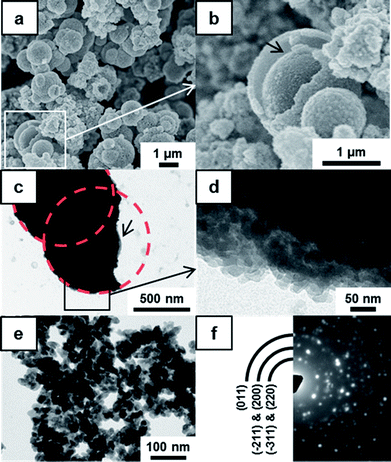 |
| | Fig. 2 (a) FESEM and (c) TEM images of C–MoO2 core–shell particles. Some MoO2 shells are broken, disclosing the carbon core (white box, small arrows and corresponding (b and d) magnifications). (e) TEM image and (f) corresponding ED pattern of the same sample previously sonicated to detach the MoO2 particles. | |
To understand the formation of the core–shell structures, the reaction was stopped after different durations of hydrothermal treatment. According to the XRD patterns (Fig. S3†), the crystalline to amorphous matter ratio increases during the synthesis, as well as the crystallite size, exemplified by peak narrowing. Crystallization is completed after 6 hours. TEM and SEM (Fig. 3) provide a significant contrast between the organic core and the inorganic shell that enables one to distinguish the two components. After one hour of hydrothermal treatment, “naked” organic spheres are observed, without any MoO2 seed on their surfaces. Charge effects on the FESEM image show that these spheres are not electronically conductive, in agreement with the carbonaceous, poorly graphitic nature of the cores. These naked spheres indicate that polymerization of ascorbic acid or of its degradation products27 leads to the organic core formation prior to any MoO2 nucleation. Some “raspberry-like” assemblies of organic spheres decorated with few MoO2 nanoparticles are also observed in minority. No isolated MoO2 nanoparticles were detected. Hence, MoO2 nanoparticles appear only through heterogeneous nucleation on the organic cores, which indeed requires lower activation energy than homogeneous nucleation.28 Besides, molybdenum polyoxoanions in solution might be complexed by the organic functions at the surface of the core, so that precipitation would readily occur on the carbonaceous spheres. After 3 h, “naked” cores are no longer observed and the surface density of inorganic particles is increased. After 6 h, the organic core is entirely coated with MoO2 nanoparticles: the reaction is complete. The mechanism of the core–shell formation can be summed up as follows (scheme in Fig. 3): ascorbic acid and its derivatives27 polymerize and form organic spheres which then become a support for heterogeneous nucleation of the MoO2 nanoparticles followed by particle growth. A similar “in situ seeding” mechanism was already highlighted for other inorganic29 and hybrid particles.6,30–32 In the specific case of this work, the interplay between the organic and inorganic precursors goes well beyond the formation of the carbon–metal oxide interface. Indeed, as no MoO2 is obtained in the absence of ascorbic acid, the organic species act not only as the core precursor, but also as the reductant to form Mo(IV) species. Reciprocally, without molybdenum complexes, the organic polymerization occurs to a lesser extent, as shown by (1) the resulting supernatant with yellow hue, characteristic of incomplete degradation of the organic moieties, and (2) the FTIR spectra (Fig. S4†) highlighting stronger O–H, C–H and C–O stretching bands for the carbonaceous spheres in the absence of Mo precursors. Therefore, reticulation and graphitization goes further with molybdenum species: MoO2 nanoparticles may catalyze the organic polymerization. Interestingly, the organic source can be modified: when glucose is used instead of ascorbic acid, core–shell structures are also observed. This one-pot process opens up avenues for the use of cheap water-soluble organic sources, which could be selected from industrial wastes for instance: any water-soluble organic, complexing and soft-reducing agent able to “polymerize” at pH ∼ 1, to ensure the solubility of the Mo precursor, could be used to readily obtain these C–MoO2 core–shell objects.
 |
| | Fig. 3 FESEM images (1–12 h), TEM picture (3 h) and evolution of the carbon–MoO2 core–shell assemblies during the hydrothermal treatment. | |
The final material is constituted of MoO2 nanoparticles supported onto a carbonaceous core that could act as a current collector in Li-ion batteries but also as a buffer for volume changes during cycling. Indeed, simple density calculations show that the active material can experience volume doubling during complete Li incorporation (4Li+ per MoO2). Molybdenum dioxide MoO2 is used as the active material because of its attractiveness as anode material with high specific capacity and stability versus the electrolyte.4,12,19,20 This compound also exhibits a metal-like behavior with low electrical resistivity, which confers fast electrochemical reactions and facilitates electron percolation.21–23 The conductivity of the self-supported material was evaluated to assess its suitability for building electrodes without use of external conductive carbon additive. For that purpose, a cohesive pellet was prepared without calcination in order to prevent sintering and to characterize the as-synthesized material. Because conventional cold-pressed samples were too fragile for conductivity measurements, we used Spark Plasma Sintering (SPS) at 300 °C to obtain suitable tablets with 72% density, avoiding grain growth, while maintaining the core–shell architecture (Fig. S5†). The electrical conductivity of the sintered pellet is about 80 S m−1, close to the conductivity of pure mesoporous MoO2.3 Therefore, the as-synthesized material is conductive, presumably due to the interconnected MoO2 conductive paths. This high conductivity is favorable to the use as electrode material without carbon addition: the inorganic framework will insert lithium and conduct the electrons while the polymeric support will anchor the active particles and act as a buffer to accommodate volume changes during cycling. It might also contribute to the overall electrical conductivity, to a lesser extent because it is not fully graphitized.
Electrochemical properties
Cyclic voltammetry at different scan rates (not shown) confirmed that each redox phenomena are reversible and that the storage mechanism is faradaic.22,33 The cycling performances were evaluated in galvanostatic mode at C/10 and then C/5 rates. The corresponding cycles are presented for the as-synthesized core–shell particles without carbon additive (Fig. 4a) and sole MoO2 nanoparticles mechanically blended with carbon additive (Fig. 4b) as a reference. The single nanoparticles in the reference material and those constituting the shell have a similar size of about 30 nm. The stabilized specific capacity (Fig. 4e) of 600 mA h g−1 is interesting compared to those reported in the literature between 400 and 750 mA h g−1.3,5,10–12,20,22,24,25 While the capacity is stable upon charge–discharge for the core–shell assembly, it drops continuously for the reference mechanical blend. This strong decrease is attributed to the poor mechanical property of the non-structured electrode and to poorer stability of the particles in the electrolyte. In both cases, about 3Li+ are initially inserted–deinserted at each cycle, which indicates that insertion (1Li+ exchanged) is not the only mechanism, but that conversion with overall reaction (1) also occurs:| | |
MoO2 + 4Li+ + 4e− = Mo + 2Li2O
| (1) |
 |
| | Fig. 4 (a–d) Galvanostatic cycles between 0.1 and 3 V versus Li (electrolyte LiPF6 1 mol L−1 in a 1![[thin space (1/6-em)]](https://www.rsc.org/images/entities/char_2009.gif) :1 wt mixture of ethylene- and dimethyl-carbonates) of various MoO2 electrodes (caption bottom-right). X is the amount of Li+ reacted per Mo atoms. The arrows indicate the current rate transition from C/10 to C/5. (e) Cycling performances of the electrodes: charge (hollow symbols) and discharge (filled symbols) capacities. Values are given per gram of MoO2 active material. The as-synthesized core–shell particles are compared to their separate components, mechanical blends with carbon and their calcined counter-parts. For as-synthesized core–shell assemblies (circles), calcined core–shell particles (squares) and calcined core–shell particles with carbon additive (losanges), the slight drop at 10 cycles corresponds to the change from a C/10 to a C/5 rate. :1 wt mixture of ethylene- and dimethyl-carbonates) of various MoO2 electrodes (caption bottom-right). X is the amount of Li+ reacted per Mo atoms. The arrows indicate the current rate transition from C/10 to C/5. (e) Cycling performances of the electrodes: charge (hollow symbols) and discharge (filled symbols) capacities. Values are given per gram of MoO2 active material. The as-synthesized core–shell particles are compared to their separate components, mechanical blends with carbon and their calcined counter-parts. For as-synthesized core–shell assemblies (circles), calcined core–shell particles (squares) and calcined core–shell particles with carbon additive (losanges), the slight drop at 10 cycles corresponds to the change from a C/10 to a C/5 rate. | |
Reaction (1) is never observed for micronic MoO2 particles because of extremely slow kinetics.22 The nanometric size of the inorganic particles activates this reaction, increasing the theoretical capacity from 210 to 840 mA h g−1.22 The initial irreversibility of about 600 mA h g−1 observed at the first cycle can be attributed to both the inorganic MoO2 shell and the carbonaceous core. Irreversible reactions have been reported at the interface between MoO2 nanoparticles and the electrolyte, forming a solid electrolyte inter-phase (SEI) at 0.7 V (Li+/Li) during the first discharge.20 Other irreversible reactions could involve the carbonaceous core and the loss of remaining C–O, C![[double bond, length as m-dash]](https://www.rsc.org/images/entities/char_e001.gif) O groups highlighted by FTIR (Fig. S4†).34 To assess this last hypothesis, sole organic cores were prepared by hydrothermal treatment of an ascorbic acid solution and tested in the same conditions (Fig. 4e). The contribution of the core to the global capacity of the core–shell material is insignificant (25 mA h g−1). Moreover, the initial irreversibility of the core is evaluated to 40 mA h g−1, less than 10% of the total irreversibility. Therefore, the irreversibility at the first discharge is mainly attributed to the SEI formation and to the establishment of electrical contacts. In order to improve percolation, a second core–shell material was prepared by calcination at 600 °C under argon of the as-synthesized product (Fig. 4c). This additional sample provides a supplementary reference to evaluate the performances of the material of interest, namely the as-obtained core–shell particles. This thermal treatment eliminates organic groups from the core in order to increase its conductivity and to make it more suitable for collecting electrons. A better percolation is also expected in this new material, because of the higher conductivity of the core along with the improved quality of the interfaces between MoO2 particles but also between the core and the shell. The calcination temperature was limited to 600 °C because of molybdenum oxides volatility above this temperature. The content of carbonaceous core slightly changes from 58 wt% to 50 wt%. A reference sample consisting of sole calcined carbon cores was also prepared in order to evaluate their contribution to the overall capacity (Fig. 4d). XRD and FESEM (Fig. S6†) show that calcination does not impact the MoO2 nanoparticle size and the core–shell architecture. A decrease in the charge effects on FESEM images indicates improvement of the electron conductivity (Fig. S1b†). Infrared spectra (Fig. S4†) highlight the disappearance of the CO and C–O bands. Therefore, most of the reactive moieties of the carbonaceous core are eliminated and its composition gets closer to pure carbon. The charge–discharge curves of the calcined core–shell particles (Fig. 4c) show a reduced initial capacity loss that confirms the contribution of the interfaces to the capacity loss of the as-synthesized material. As a result of the lower oxygen content and the higher electrical conductivity of the calcined core and better quality of the interfaces, the heat-treated material exhibits higher performances during the first cycles than the as-obtained particles, with a capacity of 720 mA h g−1 after 30 cycles (Fig. 3e) and an insignificant contribution of the calcined carbonaceous core to the overall capacity (Fig. 3e). Some irreversibility is still observed during the first cycle but is mainly due to the carbonaceous core (270 mA h g−1 out of the 450 mA h g−1 measured). Yet, after 30 cycles, the capacity of the calcined core–shell particles drops, indicating that the dissolution of MoO2 nanoparticles is initiated,2 which was not the case with the as-synthesized material. It seems that calcination improves the specific capacity of the electrodes but also “cleans” the MoO2 surfaces from organic species that could prevent dissolution.20 Embedding inorganic active material in porous carbon is indeed a well-known strategy for the prevention of particle dissolution.16–18,35 Careful TEM examination (Fig. 5) of the MoO2 shell in the as-synthesized assembly actually shows a 1–2 nm-thick carbonaceous layer over the nanoparticles, which should contribute to stabilization versus dissolution. Conversion is also more important after calcination and could accelerate the degradation of the core–shell material via drastic structural modifications. Finally, even for the calcined material, a clear improvement is conferred by the hierarchical structuration of the spheres, since the mechanical blend between reference nanoparticles and carbon particles hardly reaches a capacity of 600 mA h g−1 lasting less than two cycles (Fig. 4e). Therefore, nano- and micro-texturation of the electrode plays a major role in the electrochemical behavior of the composite, because it impacts directly the nature and quality of the interfaces between the different components (MoO2, carbonaceous core and electrolyte) (Fig. 6): anchoring the active MoO2 particles at the microscale prevents particle loss during Li+ incorporation and volume doubling, while the nanoscale carbonaceous shell over the nanoparticles limits active material loss by dissolution.
O groups highlighted by FTIR (Fig. S4†).34 To assess this last hypothesis, sole organic cores were prepared by hydrothermal treatment of an ascorbic acid solution and tested in the same conditions (Fig. 4e). The contribution of the core to the global capacity of the core–shell material is insignificant (25 mA h g−1). Moreover, the initial irreversibility of the core is evaluated to 40 mA h g−1, less than 10% of the total irreversibility. Therefore, the irreversibility at the first discharge is mainly attributed to the SEI formation and to the establishment of electrical contacts. In order to improve percolation, a second core–shell material was prepared by calcination at 600 °C under argon of the as-synthesized product (Fig. 4c). This additional sample provides a supplementary reference to evaluate the performances of the material of interest, namely the as-obtained core–shell particles. This thermal treatment eliminates organic groups from the core in order to increase its conductivity and to make it more suitable for collecting electrons. A better percolation is also expected in this new material, because of the higher conductivity of the core along with the improved quality of the interfaces between MoO2 particles but also between the core and the shell. The calcination temperature was limited to 600 °C because of molybdenum oxides volatility above this temperature. The content of carbonaceous core slightly changes from 58 wt% to 50 wt%. A reference sample consisting of sole calcined carbon cores was also prepared in order to evaluate their contribution to the overall capacity (Fig. 4d). XRD and FESEM (Fig. S6†) show that calcination does not impact the MoO2 nanoparticle size and the core–shell architecture. A decrease in the charge effects on FESEM images indicates improvement of the electron conductivity (Fig. S1b†). Infrared spectra (Fig. S4†) highlight the disappearance of the CO and C–O bands. Therefore, most of the reactive moieties of the carbonaceous core are eliminated and its composition gets closer to pure carbon. The charge–discharge curves of the calcined core–shell particles (Fig. 4c) show a reduced initial capacity loss that confirms the contribution of the interfaces to the capacity loss of the as-synthesized material. As a result of the lower oxygen content and the higher electrical conductivity of the calcined core and better quality of the interfaces, the heat-treated material exhibits higher performances during the first cycles than the as-obtained particles, with a capacity of 720 mA h g−1 after 30 cycles (Fig. 3e) and an insignificant contribution of the calcined carbonaceous core to the overall capacity (Fig. 3e). Some irreversibility is still observed during the first cycle but is mainly due to the carbonaceous core (270 mA h g−1 out of the 450 mA h g−1 measured). Yet, after 30 cycles, the capacity of the calcined core–shell particles drops, indicating that the dissolution of MoO2 nanoparticles is initiated,2 which was not the case with the as-synthesized material. It seems that calcination improves the specific capacity of the electrodes but also “cleans” the MoO2 surfaces from organic species that could prevent dissolution.20 Embedding inorganic active material in porous carbon is indeed a well-known strategy for the prevention of particle dissolution.16–18,35 Careful TEM examination (Fig. 5) of the MoO2 shell in the as-synthesized assembly actually shows a 1–2 nm-thick carbonaceous layer over the nanoparticles, which should contribute to stabilization versus dissolution. Conversion is also more important after calcination and could accelerate the degradation of the core–shell material via drastic structural modifications. Finally, even for the calcined material, a clear improvement is conferred by the hierarchical structuration of the spheres, since the mechanical blend between reference nanoparticles and carbon particles hardly reaches a capacity of 600 mA h g−1 lasting less than two cycles (Fig. 4e). Therefore, nano- and micro-texturation of the electrode plays a major role in the electrochemical behavior of the composite, because it impacts directly the nature and quality of the interfaces between the different components (MoO2, carbonaceous core and electrolyte) (Fig. 6): anchoring the active MoO2 particles at the microscale prevents particle loss during Li+ incorporation and volume doubling, while the nanoscale carbonaceous shell over the nanoparticles limits active material loss by dissolution.
 |
| | Fig. 5 HRTEM picture of an as-synthesized core–shell particle. The black arrows highlight a 1–2 nm thick carbonaceous layer over the MoO2 nanoparticles. | |
 |
| | Fig. 6 MoO2-based electrode structuration by a one-pot aqueous synthesis for ordering at the macro-, micro- and nano-scales, and impact of hierarchical ordering on cyclability: microscale anchoring of the active MoO2 nanoparticles on the core carbon additive prevents particle detachment during Li incorporation and volume doubling; the nanoscale carbonaceous shell grown over the active MoO2 nanoparticles prevents particle dissolution into the electrolyte. | |
To evaluate the need for further improvement of the nanostructured material, conductive Sp carbon particles were mechanically blended with calcined core–shell spheres (core–shell/Sp carbon weight ratio of 85/8, Fig. 7). A further capacity increase is observed in the blend (+15%), with capacities reaching 830 mA h g−1 with a 80 mA h g−1 contribution of the core (Fig. 4e). This value close to the theoretical one for MoO2 exchanging 4Li+ is attributed to better electron percolation through the higher conductivity of Sp carbon compared to the poorly ordered carbon core of the hierarchical particles.
 |
| | Fig. 7 Effect of the addition of conductive carbon additive on the performances of the calcined core–shell particles: galvanostatic cycles (a) without carbon additive, (b) with carbon additive (core–shell/Csp weight ratio: 85/8). The red arrow indicates the change of intensity from a C/10 to a C/5 rate. (c) Evolution of the capacity upon cycling for both electrodes: without carbon additive and with carbon additive. The charge and discharge capacities are both indicated (in hollow and solid squares, respectively). Values are given per gram of MoO2 active material. | |
Further enhancement in the additive-free system could arise from the adjustment of the MoO2 shell to the carbon core ratio by tuning the Mo and ascorbic acid initial contents, and the temperature of the hydrothermal and calcination treatments for higher ordering and conductivity of the carbon core. Nevertheless, the stable capacity of 600 mA h g−1 achieved with the as-obtained core–shell particles, without any additives, is remarkably high and compares favorably to values reported in the literature. Indeed, capacities were reported in the range 300–750 mA h g−1 for crystalline MoO2 (ref. 3, 20 and 24–26) and few carbon-nanoparticles physical-blends reached 600 mA h g−1 after 20–70 cycles, at the expense of multistep processing.5,10–12 Mesoporous MoO2 (ref. 3) could also reach values of 750 mA h g−1 but relied on a hard templating approach involving at least three steps, with high temperatures and toxic reagents. These methods are much more tedious than the one-pot synthesis developed here.
Conclusion
In summary, the one-pot self-assembly of an organic core and MoO2 nanoparticles into core–shell C–MoO2 architectures was performed through green, sol–gel chemistry that could be applied to waste chemicals. The as-synthesized particles can be directly used as electrode materials without additive nor thermal treatment and exhibit much better charge–discharge properties than common mechanical blends with carbon because of managed interfaces. The nano-structuration achieved here is then of great interest for energy storage in Li-ion batteries, especially because it is environmentally friendly and really easy to carry out.
Experimental
Materials
Ammonium molybdate tetrahydrate (NH4)6Mo7O24·4H2O and hydrochlorodric acid 37% were purchased from Sigma-Aldrich. L-Ascorbic acid C6H8O6 was purchased from Acros Organics. All chemicals were used as received, without further purification. Water was purified through a Milli-Q system.
Synthesis of carbon–MoO2 particles
The self-organized MoO2 core–shell particles (C–MoO2) were prepared as follows: a solution of 21.4 mmol·L−1 ammonium heptamolybdate (0.15 mol L−1 of “Mo” entities) was prepared in water. One Mo equivalent of ascorbic acid was added to the aqueous solution of ammonium heptamolybdate. After stiring for 5 minutes, the pH was adjusted to 1 with concentrated HCl. The solution was then placed in an autoclave and heated at 250 °C for 12 h. Then, the autoclave was cooled at room temperature and opened. The colorless supernatant was disposed of and the black powder washed by centrifugation until the surnatant pH was neutral. The samples were then dried at 40 °C under vacuum before further characterization.
Synthesis of sole carbon cores
The same procedure as described above was used, except that no Mo precursor was introduced.
Calcination of carbon–MoO2 particles and sole carbon cores
The powders were calcined at 600 °C for 7 hours under argon.
Materials characterization
The as-prepared products were characterized by powder XRD using a Brucker D8 X-ray diffractometer with Cu Kα radiation (λ = 1.54178 Å), TEM (Tecnai spirit G2 apparatus operating at 120 kV), UV-visible-near IR absorption spectra were recorded in the reflection mode with a UV/Vis/NIR Perkin Elmer Lambda 900 spectrometer equipped with an integration sphere. The Fourier-transform infrared (FTIR) spectra were obtained through a Perkin Elmer, Spectrum 400 FT-IR/FT-NIR spectrometer, in the Attenuated Total Reflectance mode using the Universal ATR Sampling Accessory of the constructor. FESEM images were obtained on a Hitachi SU-70 apparatus operating at 2.5 kV.
Electrochemical measurements. The conductivity evaluation was realized on a pellet prepared by SPS (Spark Plasma Sintering). A pressure of 108 Pa was applied during 10 minutes while the temperature was raised to 300 °C. Platinum (170–200 nm) was deposited on the two opposite sides of the cylindrical pellet (diameter of 8 mm) in order to guarantee a good electrical contact with the potentiostat (2 electrodes measurement). The electrochemical properties were measured using Swagelok cells assembled in argon-filled glove box. Lithium metal served as counter electrode and reference electrode. A fiberglass separator (about 2 mm thick) was soaked with the electrolyte (LiPF6 1 mol L−1 in a 50:50 wt mixture of ethylene carbonate (EC) and dimethylcarbonate (DMC)). The working electrode was obtained by Doctor Blading of the different NMP-based slurries on a copper foil: active material (MoO2, 85 wt%), Sp carbon (8 wt%) and polyvinylidene fluoride (PVDF, 7 wt%) in the case of bare MoO2 nanoparticles; the same formulation without any Sp carbon in the case of the as-synthesized and the calcined core–shell materials; and a fourth sample of calcined core–shell materials with Sp carbon (weight ratio 85/8). The thickness of the electrode was 40 μm. The resulting MoO2 areal loading was 40 g·m−2 and the MoO2 loading of the electrode was ca. 2 g·mL−1. The electrochemical experiments (galvanostatic charges and discharges) were performed at room temperature, on a Biologic multichannel potentiostat, between 0.1 and 3.0 V versus Li+/Li. The currents were adjusted to ensure C/10 rate (insertion of 1Li+ in 10 h) for the first cycles and then C/5 rate (insertion of 1Li+ in 5 h). The electrochemical performances of sole organic cores were evaluated in the same conditions. For the as-synthesized material, a rate performance study was also carried out in cyclic voltammetry, for scanning rates ranging between 0.5 and 100 mV s−1 in the same cell-configuration.
Theoretical volume variations experienced by the active MoO2 material
Using crystallographic data (ICDD cards 01-086-0135, 01-080-0228, 01-076-9237 and 00-042-1120 for MoO2, LiMoO2, Li2O and Mo, respectively) to evaluate materials densities, we can estimate that for the active material volume, an increase of +11.6% is expected during insertion of 1Li+ into MoO2, and then +76.3% during further incorporation of 3Li+ for conversion of LiMoO2 into Li2O and Mo. This results in a global volume increase of 96.8%: the volume is doubled during Li+ incorporation in the case of complete reactions.
Acknowledgements
Solvay is acknowledged for funding. The authors acknowledge M. D. Montero for FESEM observations.
Notes and references
- J. M. Tarascon and M. Armand, Nature, 2001, 414, 359–367 CrossRef CAS PubMed.
- A. S. Aricò, P. Bruce, B. Scrosati, J.-M. Tarascon and W. van Schalkwijk, Nat. Mater., 2005, 4, 366–377 CrossRef PubMed.
- Y. Shi, B. Guo, S. a. Corr, Q. Shi, Y.-S. Hu, K. R. Heier, L. Chen, R. Seshadri and G. D. Stucky, Nano Lett., 2009, 9, 4215–4220 CrossRef CAS PubMed.
- C. a. Ellefson, O. Marin-Flores, S. Ha and M. G. Norton, J. Mater. Sci., 2011, 47, 2057–2071 CrossRef.
- Y. Sun, X. Hu, W. Luo and Y. Huang, ACS Nano, 2011, 5, 7100–7107 CrossRef CAS PubMed.
- M. Titirici, M. Antonietti and A. Thomas, Chem. Mater., 2006, 43, 3808–3812 CrossRef.
- R. Demir-Cakan, Y.-S. Hu, M. Antonietti, J. Maier and M.-M. Titirici, Chem. Mater., 2008, 20, 1227–1229 CrossRef CAS.
- M.-M. Titirici, R. J. White, C. Falco and M. Sevilla, Energy Environ. Sci., 2012, 5, 6796 Search PubMed.
- K. Tang, R. J. White, X. Mu, M.-M. Titirici, P. a. van Aken and J. Maier, ChemSusChem, 2012, 5, 400 CrossRef CAS PubMed.
- X. Ji, P. Herle, Y. Rho and L. Nazar, Chem. Mater., 2007, 374–383 CrossRef CAS.
- Q. Gao, L. Yang, X. Lu, J. Mao, Y. Zhang, Y. Wu and Y. Tang, J. Mater. Chem., 2010, 20, 2807 RSC.
- Y. Sun, X. Hu, W. Luo and Y. Huang, J. Mater. Chem., 2012, 22, 425 RSC.
- H. Huang, S.-C. Yin and L. F. Nazar, Electrochem. Solid-State Lett., 2001, 4, A170–A172 CrossRef CAS PubMed.
- A. Audemer, C. Wurm, M. Morcrette, S. Gwizdala, and C. Masquelier, Carbon-coated Li-containing powders and process for production thereof, WO 2004/001881 A2, 2004.
- R. Dominko, M. Bele, M. Gaberscek, M. Remskar, D. Hanzel, S. Pejovnik and J. Jamnik, J. Electrochem. Soc., 2005, 152, A607 CrossRef CAS PubMed.
- Z. Wang, J. S. Chen, T. Zhu, S. Madhavi and X. W. Lou, Chem. Commun., 2010, 46, 6906–6908 RSC.
- L. Zhou, H. Wu, Z. Wang and X. Lou, ACS Appl. Mater. Interfaces, 2011, 3, 4853–4857 CAS.
- P. Lu and D. Xue, Mater. Focus, 2012, 1, 229–233 CrossRef CAS PubMed.
- T. Ohzuku and A. Ueda, Solid State Ionics, 1994, 69, 201–211 CrossRef CAS.
- D. Koziej, M. D. Rossell, B. Ludi, A. Hintennach, P. Novák, J.-D. Grunwaldt and M. Niederberger, Small, 2011, 7, 377–387 CrossRef CAS PubMed.
- Z. Hanafi, M. Khilla and A. Abu-El Saud, Rev. Chim. Miner., 1981, 18, 133 CAS.
- J. H. Ku, Y. S. Jung, K. T. Lee, C. H. Kim and S. M. Oh, J. Electrochem. Soc., 2009, 156, A688 CrossRef CAS PubMed.
- J.
H. Ku, J. H. Ryu, S. H. Kim, O. H. Han and S. M. Oh, Adv. Funct. Mater., 2012, 22, 3658–3664 CrossRef CAS.
- Y. Liang, S. Yang, Z. Yi, J. Sun and Y. Zhou, Mater. Chem. Phys., 2005, 93, 395–398 CrossRef CAS PubMed.
- L. C. Yang, Q. S. Gao, Y. Tang, Y. P. Wu and R. Holze, J. Power Sources, 2008, 179, 357–360 CrossRef CAS PubMed.
- L. C. Yang, Q. S. Gao, Y. H. Zhang, Y. Tang and Y. P. Wu, Electrochem. Commun., 2008, 10, 118–122 CrossRef CAS PubMed.
- M.-M. Titirici, M. Antonietti and N. Baccile, Green Chem., 2008, 10, 1204 RSC.
- L. Carbone and P. D. Cozzoli, Nano Today, 2010, 5, 449–493 CrossRef CAS PubMed.
- D. Portehault, S. Cassaignon, E. Baudrin and J.-P. Jolivet, Chem. Mater., 2008, 20, 6140–6147 CrossRef CAS.
- C. Avendaño, A. Briceño, F. J. Méndez, J. L. Brito, G. González, E. Cañizales, R. Atencio and P. Dieudonné, Dalton Trans., 2013, 42, 2822–2830 RSC.
- X. Wu, Z. Wang, L. Chen and X. Huang, Solid State Ionics, 2004, 170, 117–121 CrossRef CAS PubMed.
- X. W. Lou, J. S. Chen, P. Chen and L. a. Archer, Chem. Mater., 2009, 21, 2868–2874 CrossRef CAS.
- H. Lindström, S. Södergren, A. Solbrand, H. Rensmo, J. Hjelm, A. Hagfeldt and S.-E. Lindquist, J. Phys. Chem. B, 1997, 101, 7717–7722 CrossRef.
- B. Hu, K. Wang, L. Wu, S.-H. Yu, M. Antonietti and M.-M. Titirici, Adv. Mater., 2010, 22, 813–828 CrossRef CAS PubMed.
- A. Odani, V. G. Pol, S. V. Pol, M. Koltypin, A. Gedanken and D. Aurbach, Adv. Mater., 2006, 18, 1431–1436 CrossRef CAS.
Footnote |
| † Electronic supplementary information (ESI) available: C–MoO2 characterization and formation mechanism, additional electrochemical investigations. See DOI: 10.1039/c4ra03231d |
|
| This journal is © The Royal Society of Chemistry 2014 |
Click here to see how this site uses Cookies. View our privacy policy here. 


