Temperature-dependent formation of Ru-based nanocomposites: structures and properties

Yue Tengab, Le Xin Song*ac, Anne Ponchel*c, Eric Monflierc, Zhi Cheng Shaoa, Juan Xiaab and Zheng Kun Yanga
aDepartment of Chemistry, University of Science and Technology of China, Jin Zhai Road 96, Hefei 230026, China. E-mail: solexin@ustc.edu.cn; Fax: +86-551-3601592; Tel: +86-551-3492002
bCAS Key Laboratory of Materials for Energy Conversion, Department of Materials Science and Engineering, University of Science and Technology of China, Hefei 230026, China
cUniversité d’Artois, Unité de Catalyse et Chimie du Solide, UCCS UMR CNRS 8181, Faculté des Sciences Jean Perrin, Rue Jean Souvraz, F-62300 Lens, France. E-mail: anne.ponchel@univ-artois.fr; Tel: +33 (0)321791754

Received 8th April 2014 , Accepted 9th June 2014

First published on 9th June 2014


Abstract

A new route to produce Ru-based nanocomposites with mixed valence states of ruthenium is reported in this paper via a solid-phase sintering process. Precursor particles were prepared by an intimate mixing of RuCl3 and native β-cyclodextrin (β-CD) with a molar ratio of 1[thin space (1/6-em)]:[thin space (1/6-em)]1, followed by a sintering process at various temperatures ranging from 573 to 1173 K in ambient atmosphere. The so-obtained composite nanomaterials have been characterized by X-ray diffraction and notably the results show that an adjustment of the temperature enabled us to obtain Ru-based nanoparticles with controllable compositions. The surface-enhanced Raman scattering performances of the obtained nanomaterials have been analyzed using Rhodamine 6G (R6G) as the Raman probe. Their magnetic behaviors have been investigated as a function of the field strengths. The present work provides a significant advance in the development of both transformation in valence states of transition metals and in situ nanocomposites of metal/metal oxide combinations.

Introduction

Water soluble biomolecular templates such as cyclodextrins (CDs) have recently emerged as excellent potential tools for the preparation of metal or metal oxide materials.1–3 CDs are water soluble cyclic oligosaccharides formed of 6 (α-), 7 (β-) or 8 (γ-) glucopyranose units that exhibit multifunctional properties, such as the formation of host–guest inclusion complexes,4–9 and the stabilization of metallic nanoparticles10–12 and molecule-ion adducts with inorganic metal salts.13,14 In addition, recent studies of our group have revealed that transformations in valence states of transition metal ions could occur during sintering intimate mixtures of a metal salt with β-CD. For example, it has been demonstrated that the valence of copper can be easily modulated from Cu(II) to Cu(I) by changing the initial molar ratio of copper chloride dihydrate to β-CD in the sintering process in ambient atmosphere.15 These results encouraged us to further investigate the formation mechanism of metal-based composites.

Metal/metal oxide nanocomposite materials have attracted wide interest because they have improved multifunctional properties and potential wide-ranging applications in many fileds.16 For example, composites consisting of nanostructured ruthenium (Ru) and its oxides (e.g., RuO2) have shown promising results in experimental studies.17–19 Usually, Ru-based materials are initially prepared in solution by chemical reduction of ruthenium salts,20 complexes17a or oxides.21 Thus, the use of reducing agents [e.g., hydroxylamine, hydrazine, sodium borohydride or polyols] is the most common method employed. Recently, Zhang and co-workers reported the preparation of Ru@RuO2 composites using an electrochemical method.22 In general, the procedure requires drastic conditions, such as high reflux temperatures and the use of toxic or expensive organic reagents. Thus, it was found that, after their direct deposition onto inorganic oxide supports, 1 wt% Ru-based supported nanocatalysts were highly active and stable in the catalytic conversion of ethanol to CO2. Surprisingly, despite these promising effects, the preparation of Ru-based composites has not been the subject of further investigations, and in particular, their synthesis in the presence of molecular templates by solid-phase sintering in ambient atmosphere has never been explored. The interest of the procedure is to perform the solid-phase reaction without adding any strong reducing agents, neither in solution nor in the gas phase and so to avoid the use of liquid organic media.

The present work describes for the first time the effect of β-CD on the temperature dependence of transformation in ruthenium valence states, starting from a molecule-ion solution of RuCl3 and β-CD with an initial molar ratio of 1[thin space (1/6-em)]:[thin space (1/6-em)]1. After evaporation of the solvent, the sintering experiments of the resulting solid mixture have been performed under ambient atmosphere in a muffle furnace at different temperatures, ranging from 573 to 1173 K. A series of Ru-based composites (SP-a to SP-g) have been obtained and characterized by X-ray diffraction (XRD), X-ray photoelectron spectroscopy (XPS), Raman and electron microscopy. Several control materials formed by the same solid-state method but from different carbon sources (α-CD, γ-CD and activated carbon) were conducted to have a better insight into the role of the organic templates during the sintering process. Unexpectedly, we have found that the ability of the CDs to modulate the valence transformation of ruthenium [from Ru(III) to Ru(0) and Ru(IV)] and stabilize the Ru-based nanocomposites depended both on the temperature of sintering and chemical nature of the oligosaccharides. A possible formation mechanism of the Ru-based composites was proposed. Further, we found that these composite materials exhibit different surface-enhanced Raman scattering (SERS) properties. Finally, field dependences of the Ru-based materials have been determined to be highly related to the composite ratios of Ru(0) to RuO2.

Experimental section

Materials

β-CD was purchased from Shanghai Chemical Reagent Company and recrystallized twice from deionized water. RuCl3·3H2O was from Aladdin Chemistry Co. Ltd. Commercial activated carbon was from Sinopharm Chemical Reagent Co. Ltd. (Shanghai, China). α- and γ-CD were purchased from Aldrich. Rhodamine 6G (R6G) was purchased from Sigma-Aldrich. All other chemicals were of general-purpose reagent grade, unless otherwise stated.

Preparation of intimate mixtures

The intimate mixture of RuCl3 and β-CD was prepared by the follow method. Initially, 1 mmol RuCl3 (207 mg) and 1 mmol β-CD (1134 mg) were mixed into a round-bottom flask with deionized distilled water of 100 mL and magnetically stirred at 298 K for 4 h. Then, the distilled water was drawn off by rotary evaporation under vacuum at 323 K. Finally, a brown residue was obtained and dried in vacuum to a constant weight. Note that, in addition, intimate mixtures of RuCl3 with other CDs (α- and γ-CD) and material (activated carbon) were prepared by the same procedure.

Sintering experiments of intimate mixtures

Sintering experiments of the intimate mixture of β-CD with RuCl3 were carried out in a muffle furnace at 573, 673, 773, 873, 973, 1073 and 1173 K for 4 h. After sintering, the products were cooled under a vacuum, and weighted at room temperature, hereafter denoted as SP-a to SP-g, respectively. Their color changes were uniform, all from brown to black.

Also, the sintering products of intimate mixtures of RuCl3 with activated carbon, α- and γ-CD were obtained at 573, 773, 873 and 1173 K for 4 h in ambient atmosphere.

SERS measurements

SP-a, c, d and g were dispersed on a silica substrate (1 cm × 1 cm) after suspended in alcohol. Then, the R6G reagent (used as probe molecule) was dissolved into pure water. Finally, 20 μL of the probe solution (10−3 M) was dropped onto the silica substrate.

Instruments and methods

XRD analyses of solid samples were carried out in a Philips X'Pert Pro X-ray diffractometer. Samples were irradiated with monochromatized Cu Kα and analyzed in the 2θ range from 20 to 60°. Elemental analysis was done on an Elementar Vario EL III elemental analyzer. XPS was performed at Photoemission Station of National Synchrotron Radiation Laboratory of Hefei with a VG Scienta R3000 electron energy analyzer, using Al Kα radiation (1486.6 eV) in ultra-high vacuum (2.00 × 10⁻⁹ torr) at room temperature. The energy resolution of the instrument is 0.16 eV. The C 1s peak (284.8 eV) was used as the internal standard for binding-energy calibration. Raman spectra were collected at room temperature with a LABRAM-HR Confocal Laser MicroRaman spectrometer with a resolution of 0.6 cm−1 in the range 100–2000 cm−1.

Field emission scanning electron microscope (FE-SEM) images were recorded on a JEOL-JSM-6700F field-emitting microscope. Transmission electron microscopy (TEM) and high-resolution transmission electron microscopy (HR-TEM) images were carried out with a JEOL-2010 field-emission transmission electron microscope using an accelerating voltage of 200 kV. STEM (scanning transmission electron microscopy) and EDS (energy dispersive X-ray spectroscopy) mappings were obtained on a JEM 2010F field-emission TEM at 200 kV, equipped with an X-ray energy dispersive spectrometer (EDS). Magnetic properties of solid samples were investigated using a quantum design magnetic property measurement system superconducting quantum interference device (SQUID) magnetometer.

Thermal gravimetric (TG) analyses were obtained on a Shimadzu TGA-50 thermogravimetric analyzer at a heating rate of 10.0 K min−1 in ambient atmosphere with a gas flow of 25 mL min−1. All solid samples were ground to fine powder by mortar and pestle before analysis. The weight of the solid samples analyzed was in the range of 5 mg to 7 mg.

Results and discussion

Formation and composition of a series of Ru-based nanocomposites

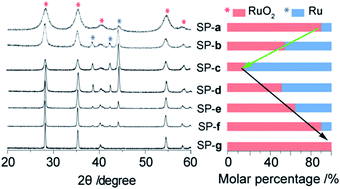
Fig. 1 shows the XRD patterns of the seven materials (SP-ag) prepared from RuCl3 and β-CD. Clearly, the five characteristic diffraction peaks at 2θ angles of 28.3, 35.1, 40.3, 54.5 and 58.1° (indicated by red asterisks) are attributable to the (110), (101), (111), (211) and (220) phases of crystal structure of RuO2 (tetragonal system), respectively (JCPDS 88-0322).23 At the same time, the characteristic diffraction peaks of metallic Ru at 38.5 (100), 42.3 (002) and 44.0° (101) (hexagonal system, JCPDS 89-4903)24 (indicated by blue asterisks), were also detected in SP-af.
image file: c4ra03142c-f1.tif
Fig. 1 (A) XRD patterns of SP-ag, (B) XPS-(Ru 3p) spectra of SP-a, c, d and g, and (C) molar percentages (%) of Ru(0) and RuO2. The peaks and percentages of RuO2 and Ru are marked by red and blue, respectively.

The change of the molar percentages of Ru(0) and RuO2 in the series of composites is further illustrated by XPS measurements as shown in Fig. 1. At lower sintering temperatures (573–773 K), the relative content of metallic Ru becomes higher with the increase of temperature (indicated by the green arrow). Contrarily, at higher sintering temperatures (873–1173 K), the relative content of metallic Ru decreases with the increase of temperature and finally the metallic Ru phase disappears completely to give pure RuO2 phase in SP-g (indicated by the black arrow). This result, which shows that the content of metallic Ru passes through a maximum at a temperature of about 773 K, strongly suggests two significant points regarding the redox properties of RuCl3 in the presence of β-CD.

First, the reduction of RuCl3 to Ru(0) is likely to be associated with the generation of graphite particles during the decomposition process of β-CD. In addition, it can be mentioned that besides the RuO2 diffraction lines, no signal assigned to a Ru(0) phase was ever detected in the sintering products of free RuCl3 under the same conditions (Fig. S1, ESI).

Second, the formation and constitution of the composites consisting of metallic Ru and RuO2 is highly dependent on, and can be manipulated by, changes in sintering temperatures.

The Ru-based nanocomposites: SP-a (RuO2 is dominant, i.e., the molar ratio of Ru(0) to RuO2 is about 1[thin space (1/6-em)]:[thin space (1/6-em)]9), SP-c (metallic Ru is dominant, i.e., the molar ratio of Ru(0) to RuO2 is about 5[thin space (1/6-em)]:[thin space (1/6-em)]1), SP-d (RuO2 and metallic Ru are almost equivalent) and SP-g (only RuO2) have been further characterized by FE-SEM and TEM analyses in order to show the differences in their morphology or surface structure. Fig. 2a–d shows surface structures of the four Ru-based materials. Obviously, SP-a, SP-c and SP-d have analogous ordered three-dimensional structures shaped like doughnuts comprising nanoparticles with a mean diameter of 50–70 nm. In contrast, a large agglomerate diameter (>200 nm) and a relative large mean diameter (about 120 nm) of particles are observed in the pure RuO2 (SP-g). The HR-TEM image of SP-g shows that the interplanar spacing is 0.255 nm (Fig. S2, ESI), corresponding to the (101) plane of tetragonal RuO2. The selected area electron diffraction (SAED) pattern recorded indicates the single crystallinity of the RuO2 crystal and can be indexed to the tetragonal RuO2 structure along the [010] zone axis, corresponding to the nanocrystal grown along [101] direction (Fig. S2, ESI).


image file: c4ra03142c-f2.tif
Fig. 2 FE-SEM and TEM (insets) images of (a) SP-a, (b) SP-c, (c) SP-d and (d) SP-g. Size distributions of particles of (e) SP-a, (f) SP-c, (g) SP-d and (h) SP-g based on the TEM images.

STEM and EDS analyses were performed to further characterize the detail structure of the nanoparticles in SP-c. Result indicates that a low content of oxygen but a high content of ruthenium appear at the center of some nanoparticles (Fig. S3, ESI). This is a strong indication that the Ru phase within the nanoparticles is not homogeneously distributed, showing a native oxide shell in combination with an underlying Ru core. However, we also notice that not all the nanoparticles display such a core–shell structure. We speculate that this phenomenon may be related to two factors (i) incomplete dispersion of the RuCl3 in its mixture of β-CD, and (ii) the growth of the nanocomposites with more kinetically controlled than thermodynamically controlled process, e.g., the effect of the size of the nanoparticles on the oxidation rate of Ru(0).

In conclusion, the temperature dependence of transformation in valence states of Ru gives a strong impression that β-CD seems to play an important role as the composite particle precursor.

Formation process of the Ru-based nanocomposites

Raman spectra of the Ru-based materials in Fig. 3 provide further information about the structural nature of the composites, allowing us to speculate the role of β-CD. As shown in Fig. 3, in the case of SP-a, the occurrence of a band at 1589 cm−1 (G band of the C–C vibration of graphite layers25) indicates the existence of graphite (mass percentage: 0.36%, based on elemental analysis) in this material. Undoubtedly, the graphite particles were originated from the decomposition process of β-CD. The very low value of the relative content of graphite should be a reason for the absence of the X-ray diffraction lines of graphite.26 Nevertheless, in SP-c, SP-d and SP-g, the G band disappears completely. One reason is the presence of an interaction between graphite and RuCl3, and the other is the oxidation of graphite particles with the increase of temperature. Instead, several bands at 513, 626 and 704 cm−1, belonging to Raman-active modes (Eg, A1g and B2g) of RuO2,27 appear clearly. Additionally, there are two bands at 1026 and 1252 cm−1, which are the overtones of 513 and 626 cm−1 Raman bands. The results of Raman spectra suggest that the graphite carbon generated in this carbonization process of β-CD may act as a reduction agent of Ru(III) to Ru(0).
image file: c4ra03142c-f3.tif
Fig. 3 Raman spectra of SP-a, c, d and g. Relative signal intensity was normalized to the intensity of the peak at 1026 cm−1 in SP-c.

The thermal decomposition of β-CD has already been the subject of several investigations in the literatures.28,29 Thus authors have reported that the process occurred in three stages: (i) the release of physically absorbed and crystallized water below 110 K, (ii) the dissociation of cyclodextrin rings to form saturated or unsaturated organic compounds below 573 K, and (iii) the formation and oxidation of graphite carbon at high temperatures (>573 K). A comparison of the TG curves between free β-CD and the mixture (1[thin space (1/6-em)]:[thin space (1/6-em)]1, molar ratio) of β-CD and RuCl3 at the entire temperature range reveals significant decomposition differences (see Fig. S4, ESI). The β-CD in the mixture completely decomposes much earlier (710 K) when compared to free β-CD (850 K), implying that the presence of RuCl3 favors the cleavage of glycosidic bonds. TG data is in accordance with the results of XRD and XPS. For example, when the decomposition of β-CD ends, a solid product with a residual mass of 7.8% at 773 K was collected. Notably, this experimental value is in well-agreement with the ratio of Ru(0) to RuO2 previously estimated by XPS analysis (i.e. 5[thin space (1/6-em)]:[thin space (1/6-em)]1 corresponding to 78.8 wt% metallic Ru).

Several control experiments using different oligosaccharides were performed in parallel for comparison. The XRD patterns of sintering products of the mixtures of RuCl3 with α- and γ-CD at the same sintering temperatures as those used in the case of β-CD indicate that although the Ru-based composites can be produced in the presence of each of the CDs, there are two significant characteristics that need to be pointed out (Fig. S5, ESI).

First, the relative contents of metallic Ru in the composites are quite different even at the same sintering temperatures. For example, at 573 K, while the treatment with α-CD leads to the highest content of Ru, by treatment with β-CD, RuO2 is clearly the dominant phase. Interestingly, at this temperature, the use of γ-CD results in almost equivalent amounts of Ru(0) and RuO2. Second, in the presence of α- or γ-CD, with the increase of temperature from 573 to 873 K, the relative content of Ru(0) decreases while the content of RuO2 increases gradually.

These observations reveal that the generation of the Ru-based nanocomposites by means of in situ chemical processes is highly dependent on the chemical nature of the oligosaccharides. On the one hand, this finding suggests that there are different ways, in which RuCl3 can interact with the oligosaccharides in aqueous solution, causing each molecule-ion system to generate a characteristic compositing process of the Ru-based crystallite nanoparticles formed during the thermal process. On the other hand, different thermal decomposition processes (Fig. S6, ESI) of the oligosaccharides may be an important reason for different formation rates of graphite carbon, leading to a difference in compositions of the composites.30

In addition, we performed control experiments by using activated carbon instead of β-CD. Our data (Fig. S7, ESI) indicate that the introduction of activated carbon causes the generation of metallic Ru at 573 K, and subsequently the Ru disappears with the increase of sintering temperature. The result is due to the well-known rapid oxidation of activated carbons by oxygen in air and suggests indirectly that the interactions between RuCl3 and the activated carbon are not of the same type as those occurring the metal precursor and β-CD.

Starting from this observation, a process for the valence transformation of Ru can be therefore proposed, as illustrated in Fig. 4. Initially, an intimate mixture of β-CD and RuCl3 was prepared as a precursor. Subsequently, several basic reactions (eqn (1)–(5)) occurred during the sintering process of the mixture. The oxidation of RuCl3 by oxygen in air to form RuO2 (eqn (1)) is simultaneous with the reduction of the RuO2 to Ru(0) (eqn (4)) by graphite carbon derived from the slow release in the decomposition process of β-CD (eqn (2)). At the same time, the oxidation of the Ru(0) to RuO2 occurs in this process at higher temperatures (eqn (5)). Our data indicate that the release rate of the graphite carbon from β-CD is relatively low particularly at lower temperatures such as 573 K, which results in that the oxidation of RuCl3 is dominant at this temperature. As temperature increases from 573 to 773 K, the release of carbon accelerates, causing the content increase of Ru in the composites. For example, after sintering for 2 h at 773 K, a higher intensity of the Ru(0) XRD peaks was obtained because of the quick release of carbon (Fig. S8, ESI) and the as-obtained Ru could be maintained after another 2 h. Moreover, when temperature is higher than 773 K, the Ru is gradually oxidized to RuO2, and finally completely disappears at 1173 K when carbon disappears (eqn (3)). Therefore, this result should be a reflection of an earlier and easier oxidation of activated Ru species since in general metallic Ru does not oxidize in air at temperatures below 1073 K.31


image file: c4ra03142c-f4.tif
Fig. 4 Formation process of the Ru-based nanocomposites.

We performed additional sintering experiments using intimate mixtures of β-CD and RuCl3 with molar ratios of 1[thin space (1/6-em)]:[thin space (1/6-em)]2 and 2[thin space (1/6-em)]:[thin space (1/6-em)]1. XRD analysis (Fig. 5) provides very interesting findings with regard to the composition of the final products by changing the sintering temperature. We noticed that all the products obtained by changing the sintering temperature are proved to be RuO2. Therefore, it does not follow the same trend when the initial molar ratio of RuCl3:β-CD is not fixed at 1[thin space (1/6-em)]:[thin space (1/6-em)]1, like more RuCl3 or more β-CD. It can be explained by the formation process of the Ru-based nanocomposites as described in Fig. 4. On the one hand, when the amount of β-CD is relatively large, extra water molecules were produced in the sintering process (see eqn (2)). The presence of the water molecules will promote the formation reactions (eg, eqn (1)) of RuO2. On the other hand, when the amount of β-CD is relatively small, the formation reaction (eqn (4)) of Ru will be difficult to occur because of the lack of released carbon from the decomposition of β-CD. This observation not only suggests that the composition of the final products of the mixtures of β-CD and RuCl3 is strongly associated with the mixed ratios, but also further supports the proposal of the formation process of the Ru-based nanocomposites.


image file: c4ra03142c-f5.tif
Fig. 5 XRD patterns of the sintering products of the intimated mixtures of β-CD and RuCl3 with molar ratios of 2[thin space (1/6-em)]:[thin space (1/6-em)]1 (A) and 1[thin space (1/6-em)]:[thin space (1/6-em)]2 (B) at 573 (a), 773 (b), 873 (c), 973 K (d).

The remarkable difference in compositions of the Ru-based nanocomposites allows us to characterize the relationship between the compositions and physical properties. Two independent experimental techniques, i.e. SERS and magnetic enrichment effects, were employed to evaluate this question.

SERS properties of the Ru-based nanocomposites

SERS is a very useful technique causing strongly increased Raman signals from compounds, which have been attached to nanofilms, nano-sized structures, architectures, assemblies.32 A large number of studies have reported on applications of metallic nanomaterials, such as gold and silver, in SERS.33 However, not enough concern was given to the application potential of metallic oxide nanomaterials in SERS. Therefore, we performed a series of SERS experiments with the use of the Ru-based composites.

Fig. 6 depicts the Raman spectra of the probe molecule R6G on the Ru-based composites deposited onto a silica glass substrate. No Raman signal is observed from the R6G on the silica substrate. However in the presence of the composites, there are several clear signals at 612, 771, 1361 and 1648 cm−1, due to the carbon–oxygen stretch, ethylamine group wag and xanthene ring stretch of R6G, revealing the SERS properties of the Ru-based nanocomposites. This property was reported previously, but only for pure metallic Ru phase.34 In particular, the two composites: SP-a and SP-c, have stronger SERS activity relative to the other two: SP-d and SP-g. It suggests that the ratio of RuO2 to Ru(0) in the nanocomposites has an important effect on the Raman scattering. This is a very interesting phenomenon: when the content of metallic Ru is much higher or much lower than RuO2, the composites show better SERS activity. Taken this together with the structural features of the composites, it can be suggested that such a Raman enhancement effect may be attributed to the enhanced localized electromagnetic field, which is affected by two factors: the interaction between Ru(0) and RuO2, and the small size and large surface area per unit mass of the nanocomposites.35 Although the SERS effect in the Ru/RuO2 composites is relatively small compared to that generally reported for noble metals, understanding the relationship between the compositions of the nanocomposites and their SERS effects is significant because it could lead to a strategy for improvement. Our result may provide a clue to further modify the SERS properties of metal/metal oxide nanocomposites.


image file: c4ra03142c-f6.tif
Fig. 6 SERS spectra of R6G on a silica substrate, and SP-a, c, d and g.

Magnetic properties and electronic structures of the Ru-based nanocomposites

Magnetic properties of SP-a, c, d and g were measured by a SQUID. Fig. 7 depicts the field dependences of magnetizations of the four nanomaterials at 298 K. Two interesting phenomena are observed from this figure. First, all the four Ru-based nanocomposites exhibit superparamagnetism. Second, the crystallites have very low, but different, magnetizations in fields up to the maximum applied magnetic field (10 kOe). For example, the saturation magnetizations (Ms) of SP-a, c, d and g at 298 K are 0.85 × 10⁻², 2.8 × 10⁻², 0.56 × 10⁻² and 1.4 × 10⁻² emu g−1, respectively. It is known that the magnetic susceptibility of RuO2 is much higher than that of metallic Ru. However, in the present case, this relation is reversed and is abnormal. For example, SP-c with a large amount of Ru(0) exhibits a much higher Ms, when compared to pure RuO2 (SP-g). We believe that the reason for this difference may be that the in situ composite interaction between metallic Ru and RuO2 has induced a change in the distribution of electronic density in the crystals. Therefore, it seems tempting to speculate on the possibility whether inner electronic structures of Ru core levels vary with the formation of composites.
image file: c4ra03142c-f7.tif
Fig. 7 Field dependences of magnetizations of SP-a, c, d and g at 298 K. The inset is the magnified version of the hysteresis loop in the field range of 300 Oe.

In line with this, the Ru 3p XPS spectra for SP-a, c, d and g, which are shown in Fig. 1, exhibit significant shifts in the binding energy of Ru(IV) and Ru(0). The Ru 3p region of SP-a was separated into two components: one having higher binding energies of about 462.2 (3p5/2) and 484.3 (3p3/2) eV due to Ru(IV) in RuO2,36 and the other having lower binding energies of about 461.1 (3p5/2) and 482.7 (3p3/2) eV due to Ru (0).37

However, we find that a shift in binding energies for Ru 3p core level has occurred from one composite to another and especially from one composite to the pure RuO2. For example, in the SP-d, the binding energies of Ru(IV) 3p5/2 and 3p3/2 increase largely to 463.3 and 485.7 eV, respectively, when compared to those of SP-a. We speculate that it is due to substantially more electron transfer from Ru atoms to oxygen atoms while the materials were synthesized at higher temperatures. This electron transfer effect is also in line with the decrease in the O 1s binding energy that is measured in the samples prepared at 573 and 873 K (Fig. S9, ESI). It should be noted that the O 1s line shape is asymmetric in both SP-a and SP-d, probably as a result of the compositional heterogeneity of the oxide near-surface region.38 In the pure RuO2, the binding energies of Ru(IV) 3p5/2 and 3p3/2 increase dramatically to 464.5 and 486.4 eV, respectively. It is apparent that such a large shift is a reflection of significant differences in the electronic structure of Ru(IV) among the composites and especially between the pure RuO2 phase and its composite materials. This provides evidence for our conclusion that the composite interaction between metallic Ru and RuO2 leads to a change in inner electronic structures of Ru core levels.

These findings provide a basis for understanding the magnetic properties of Ru-based composite materials. The Ru-based materials show magnetic behaviour even though neither ruthenium nor ruthenium dioxide is ferro-, ferri-, or antiferromagnetic. We consider that this is a very rare case of the composite materials between a metal and its oxides. In particular, the fact that the SP-c with a large amount of metallic Ru exhibits a much higher Ms, when compared to pure RuO2 (SP-g), is especially interesting because this allows us to illustrate some important properties of the composite model. On the one hand, the composite interaction between Ru and RuO2 has led to a change of electronic structure of Ru cores based on XPS analysis, suggesting that there might be a possibility of electronic transfer between the Ru(0) and the Ru(IV). This electronic transfer could be one reason for the change in the Ru local magnetic anisotropy, leading to a distribution of local Ru magnetic-moment orientations. On the other hand, the obtained composite powders had a crystallite size in the range of nanoscale (diameter, <50 nm). This is the other important reason why these composite materials show magnetic behaviour, because at the nanometer scale, each particle may contain only a single magnetic domain.

Conclusion

This work demonstrated for the first time the valence transformation of Ru(III) to Ru(IV) and Ru(0) via a modified combustion method based on ruthenium chloride and β-CD. The special interest of the method lies in the fact that it yields a series of Ru/RuO2 nanocomposites with temperature-dependent composite ratios, but without adding any extra components such as inorganic reducing agents, organic solvents and surfactants. We believe that this method could be used for many different systems. Particularly, our results firstly revealed that the composite ratios have a crucial effect on the physical properties of the nanocomposites, including magnetizations and SERS effects. In addition, the size of the domains could also play a role in the physical properties. We consider that the description of the composition–property relationship provides a framework for designing and developing metal–metal oxide nanocomposite materials.

Acknowledgements

This project was supported by NSFC (no. 21071139) and National Synchrotron Radiation Laboratory at University of Science and Technology of China. We thank the French Ministry of Foreign and European Affairs (MAEE) for their financial support (PHC XI GUANGQI 2011, 26157TJ).

References

  1. (a) A. Denicourt-Nowicki, A. Roucoux, F. Wyrwalski, E. Monflier and A. Ponchel, Chem.–Eur. J., 2008, 14, 8090–8093 CrossRef CAS PubMed; (b) F. Wyrwalski, B. Léger, C. Lancelot, A. Roucoux, E. Monflier and A. Ponchel, Appl. Catal., A, 2011, 391, 334–341 CrossRef CAS PubMed; (c) J. Hu, D. D. Shao, C. L. Chen, G. D. Sheng, J. X. Li, X. K. Wang and M. Nagatsu, J. Phys. Chem. B, 2010, 114, 6779–6785 CrossRef CAS PubMed; (d) S. Z. Pan, L. X. Song, L. Bai, M. Wang, L. H. Zhu and J. Chen, Curr. Org. Chem., 2011, 15, 862–868 CrossRef CAS.
  2. (a) A. Jean-Marie, A. Griboval-Constant, A. Y. Khodakov, E. Monflier and F. Diehl, Chem. Commun., 2011, 10767–10769 RSC; (b) R. Fuhrer, I. K. Herrmann, E. K. Athanassiou, R. N. Grass and W. J. Stark, Langmuir, 2011, 27, 1924–1929 CrossRef CAS PubMed; (c) Y. Kang, L. L. Zhou, X. Li and J. Y. Yuan, J. Mater. Chem., 2011, 21, 3704–3710 RSC.
  3. (a) T. Sen, K. K. Haldar and A. Patra, J. Phys. Chem. C, 2010, 114, 11409–11413 CrossRef CAS; (b) B. Guo, C. S. Li and Z. Y. Yuan, J. Phys. Chem. C, 2010, 114, 12805–12817 CrossRef CAS; (c) M. Gil, C. Martin, J. A. Organero, M. T. Navarro, A. Corma and A. Douha, J. Phys. Chem. C, 2010, 114, 6311–6317 CrossRef CAS; (d) L. X. Song, J. Chen, L. H. Zhu, J. Xia and J. Yang, Inorg. Chem., 2011, 50, 7988–7996 CrossRef CAS PubMed.
  4. (a) G. I. Grasso, F. Bellia, G. Arena, G. Vecchio and E. Rizzarelli, Inorg. Chem., 2011, 50, 4917–4924 CrossRef CAS PubMed; (b) X. Cheng, Z. D. Lu, Y. Z. Li, Q. Wang, C. S. Lu and Q. J. Meng, Dalton Trans., 2011, 40, 11788–11794 RSC; (c) H. M. Wang and L. X. Song, Chem. Lett., 2007, 36, 596–597 CrossRef CAS; (d) X. Q. Guo, L. X. Song, F. Y. Du, Z. Dang and M. Wang, J. Phys. Chem. B, 2011, 115, 1139–1144 CrossRef CAS PubMed; (e) Q. X. Guo, L. Liu, W. S. Cai, Y. Jiang and Y. C. Liu, Chem. Phys. Lett., 1998, 290, 514–518 CrossRef CAS.
  5. (a) V. G. Rao, C. Ghatak, R. Pramanik, S. Sarkar and N. Sarkar, J. Phys. Chem. B, 2011, 115, 10500–10508 CrossRef CAS PubMed; (b) L. X. Song, F. Y. Du, J. Yang, Z. Dang, J. Yang and Z. C. Shao, Soft Matter, 2011, 7, 6671–6677 RSC; (c) L. X. Song, L. Bai, X. M. Xu, J. He and S. Z. Pan, Coord. Chem. Rev., 2009, 253, 1276–1284 CrossRef CAS PubMed.
  6. (a) L. X. Song, F. Y. Du, X. Q. Guo and S. Z. Pan, J. Phys. Chem. B, 2010, 114, 1738–1744 CrossRef CAS PubMed; (b) M. R. Caira, E. J. C. de Vries and L. R. Nassimbeni, Chem. Commun., 2003, 2058–2059 RSC; (c) K. Harata, L. X. Song and H. Morii, Supramol. Chem., 2000, 11, 217–224 CrossRef CAS; (d) W. S. Cai, B. Y. Xia, X. G. Shao, Q. X. Guo, B. Maigret and Z. X. Pan, Chem. Phys. Lett., 2000, 319, 708–712 CrossRef CAS.
  7. (a) M. R. Caira, Curr. Org. Chem., 2011, 15, 815–830 CrossRef CAS; (b) L. X. Song, X. K. Ke and Z. J. Guo, Acta Chim. Sin., 2002, 60, 1419–1427 CAS; (c) L. X. Song, S. Z. Pan, L. Bai, Z. Dang, F. Y. Du and J. Chen, Supramol. Chem., 2011, 23, 447–454 CrossRef CAS; (d) L. X. Song, H. M. Wang, X. Q. Guo and L. Bai, J. Org. Chem., 2008, 73, 8305–8316 CrossRef CAS PubMed.
  8. (a) P. Liu, D. J. Zhang and J. H. Zhan, J. Phys. Chem. A, 2010, 114, 13122–13128 CrossRef CAS PubMed; (b) M. S. Deshpande, A. S. Kumbhar and C. Nather, Dalton Trans., 2010, 39, 9146–9152 RSC; (c) L. X. Song and L. Bai, J. Phys. Chem. B, 2009, 113, 11724–11731 CrossRef CAS PubMed; (d) L. X. Song, H. M. Wang, P. Xu, Z. Q. Zhang and Q. Q. Liu, Bull. Chem. Soc. Jpn., 2007, 80, 2313–2322 CrossRef CAS; (e) X. Q. Guo, L. X. Song, Z. Dang and F. Y. Du, Bull. Chem. Soc. Jpn., 2009, 82, 1209–1213 CrossRef CAS.
  9. (a) C. Yang, C. F. Ke, W. T. Liang, G. Fukuhara, T. Mori, Y. Liu and Y. Inoue, J. Am. Chem. Soc., 2011, 133, 13786–13789 CrossRef CAS PubMed; (b) A. K. Mandal, D. K. Das, A. K. Das, S. S. Mojudar and B. Bhattacharyya, J. Phys. Chem. B, 2011, 115, 10456–10461 CrossRef CAS PubMed; (c) Z. J. Ding, H. Y. Zhang, L. H. Wang, F. Ding and Y. Liu, Org. Lett., 2011, 13, 856–859 CrossRef CAS PubMed; (d) L. X. Song and P. Xu, J. Phys. Chem. A, 2008, 112, 11341–11348 CrossRef CAS PubMed.
  10. (a) M. Komiyama and H. Hirai, Bull. Chem. Soc. Jpn., 1983, 56, 2833–2834 CrossRef CAS; (b) J. Alvarez, J. Liu, E. Roman and A. E. Kaifer, Chem. Commun., 2000, 1151–1152 RSC.
  11. (a) C. Hubert, A. Nowicki, A. Roucoux, B. Léger, G. Crowyn and E. Monflier, Chem. Commun., 2009, 1228–1230 RSC; (b) J. Shi, Y. Chen, Q. Wang and Y. Liu, Adv. Mater., 2010, 22, 2575–2578 CrossRef CAS PubMed.
  12. (a) A. Nowicki, Y. Zhang, B. Léger, J. P. Rolland, H. Bricout, E. Monflier and A. Roucoux, Chem. Commun., 2006, 296–298 RSC; (b) A. Nowicki-Denicourt, A. Ponchel, E. Monflier and A. Roucoux, Dalton Trans., 2007, 5714–5719 RSC.
  13. (a) L. X. Song, M. Wang, Z. Dang and F. Y. Du, J. Phys. Chem. B, 2010, 114, 3404–3410 CrossRef CAS PubMed; (b) Z. Dang, L. X. Song, J. Yang, J. Chen and Y. Teng, Dalton Trans., 2012, 41, 3006–3013 RSC.
  14. (a) L. X. Song and Z. Dang, J. Phys. Chem. B, 2009, 113, 4998–5000 CrossRef CAS PubMed; (b) L. X. Song, S. Z. Pan, L. H. Zhu, M. Wang, F. Y. Du and J. Chen, Inorg. Chem., 2011, 50, 2215–2223 CrossRef CAS PubMed; (c) L. X. Song, J. Yang, L. Bai, F. Y. Du, J. Chen and M. Wang, Inorg. Chem., 2011, 50, 1682–1688 CrossRef CAS PubMed; (d) L. X. Song and L. Bai, J. Phys. Chem. B, 2009, 113, 9035–9040 CrossRef CAS PubMed.
  15. J. Yang, L. X. Song, J. Yang, Z. Dang and J. Chen, Dalton Trans., 2012, 41, 2393–2398 RSC.
  16. (a) Z. Schnepp, S. R. Hall, M. J. Hollamby and S. Mann, Green Chem., 2011, 13, 272–275 RSC; (b) M. Han, X. Li, B. J. Li, N. Shi, K. Chen, J. M. Zhu and Z. Xu, J. Phys. Chem. C, 2008, 11, 17893–17898 CrossRef.
  17. (a) M. Zahmakiran, Y. Tonbulz and S. Ozkar, Chem. Commun., 2010, 46, 4788–4790 RSC; (b) O. Vidoni, K. Philippot, C. Amiens, B. Chaudret, O. Balmes, J. O. Malm, J. O. Bovin, F. Senocq and M. J. Casanove, Angew. Chem., Int. Ed., 1999, 38, 3736–3738 CrossRef CAS; (c) A. Nowicki, V. Le Boulaire and A. Roucoux, Adv. Synth. Catal., 2007, 349, 2326–2330 CrossRef CAS.
  18. (a) L. Zang and H. Kisch, Angew. Chem., Int. Ed., 2000, 39, 3921–3922 CrossRef CAS; (b) S. Wendt, A. P. Seitsonen and H. Over, Catal. Today, 2003, 85, 167–175 CrossRef CAS; (c) P. Nowakowski, S. Villain, A. Kopia, I. Suliga and J. R. Gavarri, Appl. Surf. Sci., 2008, 254, 5675–5682 CrossRef CAS PubMed.
  19. V. Matsura, Y. Guari, C. Reye, R. J. P. Corriu, M. Tristany, S. Jansat, K. Philippot, A. Maisonnat and B. Chaudret, Adv. Funct. Mater., 2009, 19, 3781–3787 CrossRef CAS.
  20. X. Yan, H. Liu and K. Y. Liew, J. Mater. Chem., 2001, 11, 3387–3391 RSC.
  21. L. M. Rossi and G. Machado, J. Mol. Catal. A: Chem., 2009, 298, 69–73 CrossRef CAS PubMed.
  22. B. Zhang, C. B. Zhang, H. He, Y. B. Yu, L. Wang and J. Zhang, Chem. Mater., 2010, 22, 4056–4061 CrossRef CAS.
  23. (a) J. Lee, H. S. Yang, N. S. Lee, O. Kwon, H. Y. Shin, S. Yoon, J. M. Baik, Y. S. Seo and M. H. Kim, CrystEngComm, 2013, 15, 2367–2371 RSC; (b) A. Korotcov, H. P. Hsu, Y. S. Huang, D. S. Tsai and K. K. Tiong, Cryst. Growth Des., 2006, 6, 2501–2506 CrossRef CAS.
  24. (a) C. Galletti, S. Specchia and V. Specchia, Chem. Eng. J., 2011, 167, 616–621 CrossRef CAS PubMed; (b) C. V. Rao and B. Viswanathan, J. Phys. Chem. C, 2007, 111, 16538–16543 CrossRef CAS.
  25. (a) K. N. Kudin, B. Ozbas, H. C. Schniepp, R. K. Prud'homme, I. A. Aksay and R. Car, Nano Lett., 2008, 8, 36–41 CrossRef CAS PubMed; (b) R. J. Nemanich and S. A. Solin, Phys. Rev. B: Condens. Matter Mater. Phys., 1979, 20, 392–401 CrossRef CAS.
  26. (a) K. L. Saenger, J. C. Tsang, A. A. Bol, J. O. Chu, A. Grill and C. Lavoie, Appl. Phys. Lett., 2010, 96, 153105 CrossRef PubMed; (b) N. Gokulakrishnan, N. Kania, B. Leger, C. Lancelot, D. Grosso, E. Monflier and A. Ponchel, Carbon, 2011, 49, 1290–1298 CrossRef CAS PubMed.
  27. P. Balaya, H. Li, L. Kienle and J. Maier, Adv. Funct. Mater., 2003, 13, 621–625 CrossRef CAS.
  28. F. Giordano, C. Novak and J. R. Moyano, Thermochim. Acta, 2001, 380, 123–151 CrossRef CAS.
  29. F. Trotta, M. Zanetti and G. Camino, Polym. Degrad. Stab., 2000, 69, 373–379 CrossRef CAS.
  30. L. X. Song, H. M. Wang, Y. Yang and P. Xu, Bull. Chem. Soc. Jpn., 2007, 80, 2185–2195 CrossRef CAS.
  31. W. M. Haynes, D. R. Lide and T. J. Bruno, CRC Handbook of Chemistry and Physics, CRC Press, 93rd edn, 2012 Search PubMed.
  32. (a) N. P. W. Pieconka and R. F. Aroca, Chem. Soc. Rev., 2008, 37, 946–954 RSC; (b) K. F. Domke, D. Zhang and B. Pettinger, J. Am. Chem. Soc., 2007, 129, 6708–6709 CrossRef CAS PubMed.
  33. (a) A. M. Michaels, J. Jiang and L. Brus, J. Phys. Chem. B, 2000, 104, 11965–11971 CrossRef CAS; (b) N. Leopold and B. Lendl, J. Phys. Chem. B, 2003, 107, 5723–5727 CrossRef CAS; (c) C. E. Talley, J. B. Jackson, C. Oubre, N. K. Grady, C. W. Hollars, S. M. Lane, T. R. huser, P. Halas and N. J. Nordlander, Nano Lett., 2005, 5, 1569–1574 CrossRef CAS PubMed.
  34. A. X. Yin, W. C. Liu, J. Ke, W. Zhu, J. Gu, Y. W. Zhang and C. H. Yan, J. Am. Chem. Soc., 2012, 134, 20479–20489 CrossRef CAS PubMed.
  35. (a) B. K. Jena and C. R. Raj, Chem. Mater., 2008, 20, 3546–3548 CrossRef CAS; (b) C. L. Haynes, A. D. McFarland and R. P. Van Duyne, Anal. Chem., 2005, 77, 338a–346a CrossRef CAS.
  36. (a) K. C. Park, I. Y. Jang, W. Wongwiriyapan, S. Morimoto, Y. J. Kim, Y. C. Jung, T. Toyad and M. Endo, J. Mater. Chem., 2010, 20, 5345–5354 RSC; (b) S. Sen, F. Sen and G. Gokagac, Phys. Chem. Chem. Phys., 2011, 13, 6784–6792 RSC.
  37. (a) A. Velazquez-Palenzuela, F. Centellas, J. A. Garrido, C. Arias, R. M. Rodriguez, E. Brillas and C. Pere-Lluís, J. Phys. Chem. C, 2010, 114, 4399–4407 CrossRef CAS; (b) Y. Z. Lu and W. Chen, Chem. Commun., 2011, 47, 2541–2543 RSC.
  38. M. Brumbach, P. A. Veneman, F. S. Marrikar, T. Schulmeyer, A. Simmonds, W. Xia, P. Lee and N. R. Armstrong, Langmuir, 2007, 23, 11089–11099 CrossRef CAS PubMed.

Footnote

Electronic supplementary information (ESI) available: XRD, HR-TEM, SAED, EDS mapping, TG, and XPS. See DOI: 10.1039/c4ra03142c

This journal is © The Royal Society of Chemistry 2014
Click here to see how this site uses Cookies. View our privacy policy here.