
DOI:
10.1039/C4RA02968B
(Paper)
RSC Adv., 2014,
4, 27971-27978
Towards effective lignin conversion: HZSM-5 catalyzed one-pot solvolytic depolymerization/hydrodeoxygenation of lignin into value added compounds†
Received
3rd April 2014
, Accepted 16th June 2014
First published on 16th June 2014
Abstract
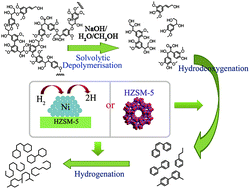
A one-pot greener approach towards lignin depolymerization/hydrodeoxygenation is presented. Water was used as a reaction medium with methanol as a source of reductive equivalents of hydrogen in inert atmosphere. Zeolite HZSM-5 and Ni-doped HZSM-5 were synthesized at low temperature (95 °C), characterized and used as a hydrodeoxygenation catalyst at 220 °C. Lignin conversion up to 96.8–98.5% was observed with highly reduced char formation (<1%). IR, GC-MS and ESI-MS spectroscopy were used to characterize the conversion products. The products were mainly comprised of alkyl substituted phenols (15.4 wt%) found as water soluble products. The water insoluble products showed mostly formation of oligomers with acyclic (4.1 wt%) and cyclic (1.5 wt%) compounds. Acyclic compounds included up to 2.8 wt% of open chain C12–C19 hydrocarbons. ESI-MS showed that the molecular weight of the products formed during solvolytic depolymerization/hydrodeoxygenation of lignin were in the range of m/z ca. 60 to ca. 1000. A mechanistic hypothesis on formation of monomeric products is also presented.
Introduction
Valorization of biomass has increasing significance as a future means of securing the energy supply, reducing the fossil CO2 emissions, providing a source of platform chemicals and supporting the rural economy. High value sugars and oils are the source of first generation fuel and chemicals. Based on cheaper and more abundant lignocellulosic feedstock, second generation fuel and chemicals are being developed. Lignocellulose is mainly composed of cellulose, hemicelluloses and lignin. Lignin is the second most abundant polymer, after cellulose, which has drawn the attention of scientists across the world. It constitutes 15–30% of the lignocellulose by weight and 40% by energy.1 Structurally, lignin is an amorphous, aromatic, water-insoluble, heterogeneous and three-dimensional cross-linked polymer with low viscosity. However, due to its complex non-uniform aromatic nature, it is difficult to isolate from lignocellulose without modification and difficult to convert into useful products. Thus, far it being a high energy content byproduct, it is usually burnt in the furnace of chemical recovery boilers in pulp and paper industries.2,3 Hence developing methods for conversion of lignin is worthy for the effective utilization of biomass.
Lignin shows refractory behaviour towards conversion to low molecular weight compounds that can be used as platform chemicals and fuel additives. This refractory behaviour is due to recombination reactions of carbon centered radicals leading to formation of new carbon–carbon linkages and thus char formation.4 Pyrolytic lignin conversion processes, besides being energy demanding processes, are less attractive due to significant char formation (up to 40%).5 Solvent based conversion methods have been reported in past few years. These reports show that effective depolymerization with significant reduction in charring can be achieved in water and alcohols catalyzed by homogeneous base4,6a–d or acid.6e,f Besides, water is the most abundant available, environmentally benign solvent with exciting physiochemical properties at high temperature and hence, capable of providing a reaction medium for biomass conversion. High temperature water (HTW) shows 3 folds of ionic product (Kw), increased solubility for small organic compounds and lower dielectric constant which is favourable for oxygen removal from biomass with suitable catalyst. HTW is proved to be highly effective in conversion of kerogen into petroleum in presence of clay minerals.7 Lignin depolymerization (LDP) in common alcohol viz. methanol,8 ethanol6b,8a,c and ethylene glycol8a,c as solvent has shown promising approach as being quite efficient in avoiding recombination of depolymerised lignin products and subsequent formation of char. Hydrogenation/hydro-deoxygenation of depolymerised products of lignin to fuel grade hydrocarbons through multistep reaction over various heterogeneous catalysts have also been patented.9
However, above processes are accomplished by using gaseous hydrogen at elevated temperature and pressures (>300 °C and 100 atm). Hydrogen transfer from alcohols viz. methanol,8a,10a ethanol6a and 2-propanol10b is a better alternative to decrease the working temperature. Envisaging this approach, in the present work, we have carried out solvolytic depolymerisation of lignin in water–methanol (1
:
1) mixture. Here, methanol provides the reductive equivalents at 220 °C using zeolite HZSM-5 and Ni doped HZSM-5 as hydrodeoxygenation/hydrogenation catalyst. All these aspects are achieved in one-pot as shown in Scheme 1.
 |
| | Scheme 1 Proposed strategy for conversion of lignin. | |
Results and discussion
Catalyst characterization
XRD diffractograms of synthesized zeolite catalyst HZSM-5 and Ni-ZSM-5 are shown in Fig. 1. The diffractogram of HZSM-5 confirmed its typical MFI (Mordenite Framework Inverted) structure as also verified with ICDD ref. code 00-044-0003. Average crystallite size (coherently diffracting domains) of the synthesized zeolite HZSM-5 was calculated to be 11.78 nm. However, the SEM micrographs showed that the particles have nearly spherical morphology with particle size in the range of 2–8 μm (Fig. 2). EDS results showed that the Si/Al ratio of HZSM-5 was 42. NiO phase was identified on the Ni-ZSM-5 catalyst from XRD diffractogram and verified with ICDD ref. code 01-073-1523. Average crystallite size of impregnated NiO was calculated to be 4.21 nm. The calculated lattice parameters of synthesized zeolites and impregnated NiO phase are given in Table S1 in ESI.† The BET surface area, average pore volume and average pore diameter of HZSM-5 were found to be 271.3 m2 g−1, 0.314 cm3 g−1 and 4.63 nm respectively. The BET surface area, average pore volume and average diameter of Ni-ZSM-5 were found to be 164.7 m2 g−1, 0.503 cm3 g−1 and 12.2 nm respectively.
 |
| | Fig. 1 XRD diffractograms of HZSM-5 and Ni-ZSM-5. | |
 |
| | Fig. 2 SEM micrographs of HZSM-5 at (A) 5000× and (B) 2000×. | |
Catalytic reactions
After the reaction, the solvent based separation of products was done using ethyl acetate (EtOAc) and tetrahydrofuran (THF) as shown in Scheme 2. The low molecular weight products were separated into water soluble products and EtOAc soluble (water insoluble) products. The residual lignin and high molecular weight fragments of lignin were soluble in THF. The THF insoluble products comprised of the catalyst and char. Hence, lignin conversion was determined by deducting the THF soluble and char. But remarkably, there was negligible charring (<1%) as determined gravimetrically after recovery of catalyst (see Table S2 in ESI†).
 |
| | Scheme 2 Product separation procedure. | |
In a typical reaction, 0.1 g lignin, 0.1 g solid catalyst, 1.7 mmol NaOH in 20 mL 1
:
1 water–methanol mixture (10 mL each) was used in a 25 mL SS316 reactor at 220 °C for desired reaction time T. Lignin is a big molecule with number of different linkages which are suitable to undergo hydrogenolysis in presence of catalyst. It is desirable to provide enough quantity of catalyst to promote lignin-active site (catalyst) interaction. It is also noticed that several lignin researchers are using higher quantities of catalyst.10a,c Maximum lignin conversion of 93.4% was obtained without solid catalyst at 7 h of reaction time. Patil et al.6a also reported similar results with 91.1% conversion in 5 h in inert atmosphere. Reactions using HZSM-5 as a catalyst showed enhanced conversion up to 98.5% whereas Ni-ZSM-5 showed 96.9% conversion at 7 h of reaction time (Fig. 3). Product yields at only optimized reaction time (7 h) are shown here in Table 1, as only further analyses data on products obtained at optimized time was evaluated. In comparative observations, mainly extractives in ethyl acetate and water soluble products were focused. Gaseous products were calculated by subtraction method. Without solid catalyst, 44.1% EtOAc soluble (water insoluble) and 16% water soluble products were obtained where only NaOH (6.8 wt% of lignin) acted as catalyst. HZSM-5 did not improve the yields. It gave similar yields as in case of reaction done without solid catalyst. However, Ni-ZSM-5 showed a lower yield of EtOAc soluble (38.1%) products with greater yield of gaseous products showing promoting effect of Ni towards gasification as also shown by T. Furusawa et al.11 We demonstrated the lignin conversion in water at 220 °C and autogenous pressure anticipating greater hydrolysis of aromatic ether linkages in lignin due to increased ionic product of water at high temperature.7 Low concentration of NaOH increased the solubility of lignin in the reaction mixture ensuring the lignin molecules thoroughly dispersed in the reaction mixture to reduce the possibility of recombination reactions, besides promoting alkaline hydrolysis of lignin into smaller units. Without NaOH, we found significant charring (19.3%) with low lignin conversion (56.9%).
 |
| | Fig. 3 Lignin conversion at different reaction time. Reaction condition: lignin (0.1 g), methanol (10 mL), water (10 mL), NaOH (1.7 mmol), solid catalyst (0.1 g), temperature (220 °C), 1 atm Ar. | |
| Entry |
Solid catalyst |
NaOH (mmol) |
Lignin conversion (%) |
EtOAc soluble products (wt%) |
Water soluble products (wt%) |
Gaseous products (wt%) |
Char (wt%) |
| Reaction condition: lignin (0.1 g), methanol (10 mL), water (10 mL), NaOH (1.7 mmol), solid catalyst (0.1 g), temperature (220 °C), reaction time (7 Hr), 1 atm Ar. |
| 1 |
— |
1.7 |
93.4 |
44.1 |
16.0 |
33.3 |
<1 |
| 2 |
HZSM-5 |
1.7 |
98.5 |
44.9 |
16.1 |
37.6 |
<1 |
| 3 |
Ni-ZSM-5 |
1.7 |
96.9 |
38.1 |
16.4 |
42.4 |
<1 |
| 4 |
Ni-ZSM-5 |
0 |
56.9 |
33.8 |
19.1 |
4.0 |
19.3 |
Structural changes
FTIR analyses were used to assess the expected structural changes occurring in a mixture during depolymerisation experiments. Lignin has complex structure with methoxyl substituted phenyl-propane type of subunits that are linked by ether linkages and other C–C linkages. The IR bands found in lignin were assigned according to literature12 (see Table S3, ESI†). The FTIR spectra of lignin conversion products (EtOAc) without solid catalyst and with solid catalyst at 7 h of reaction time are shown in Fig. 4A. Increase in intensity of IR band at around 2900 cm−1 accompanied by signals at 1451 cm−1 and 1370 cm−1 and decrease in the intensity of signal at 1598 cm−1 and 869 cm−1 along with disappearance of the IR signals at 1517 cm−1 indicated the hydrogenation of the aromatic rings in the lignin derived products. Strong signals at ∼1720–1705 cm−1 showed the presence of carbonyl/carboxyl groups in the products. These results showed the predominance of hydrocarbon structures together with smaller amounts of aromatic structures and carbonyl/carboxyl groups. With HZSM-5 and Ni-ZSM-5, products were dominated by hydroxyl groups (3400–3620 cm−1).
 |
| | Fig. 4 FTIR spectra (A) EtOAc soluble products and (B) water soluble products of reaction with no solid catalyst, HZSM-5, Ni-ZSM-5. Reaction condition: lignin (0.1 g), methanol (10 ml), water (10 ml), NaOH (1.7 mmol), solid catalyst (0.1 g), temperature 5 (220 °C), 1 atm Ar. | |
This indicated higher degree of cleavage in the ether linkages and demethylation/demethoxylation reaction that resulted in higher disassembly of lignin into low molecular weight compounds. Complete disappearance of the IR band at 1517 cm−1 and 1426 cm−1 with decreased intensity at 1598 cm−1 and smaller intensity bands at 3400–3620 cm−1 were observed in case of products obtained in presence of Ni-ZSM-5 that indicated the presence of aliphatic structures and relatively lower hydroxyl group content in reaction products. In the FTIR spectra of water soluble products (Fig. 4B), no increase in the band intensity around 2960 cm−1 and 2879 cm−1 indicated absence of aliphatic structures in product mixture. IR bands at 3400–3600 cm−1, 3188 cm−1, 1061 cm−1 and 869 cm−1 with overtones at ∼1937 cm−1 strongly supported the presence of phenolics in the water soluble products. Overall, the FTIR results indicated that hydrogenation occurred in reaction performed without catalyst but with lesser cleavage of ether linkage and demethylation/demethoxylation reactions. Hydrogenation of aromatic structures, higher cleavage of ether linkages and demethylation/demethoxylation reactions occurred in the reactions performed with both HZSM-5 and Ni-ZSM-5.
Product analysis
Products of lignin depolymerisation/hydrodeoxygenation for 7 h of reaction time were analyzed by GC-MS. The conditions of analysis and extractions were strictly identical in all cases. The EtOAc soluble products from the reaction without solid catalyst were not detectable in GC-MS (Fig. S5 ESI†) which infers that products mixture was mainly composed of oligomeric fragments of lignin.6a HZSM-5 catalyzed formation of alkyl substituted phenols (14.1 wt%) as major products (Fig. 5A). Durohydroquinone, phenol, 2,4,6-trimethyl-, phenol, 3-(1,1-dimethylethyl)-4-methoxy-, phenol, 2-ethyl-4,5-dimethyl-, 1,4-benzenediol, 2,3,5-trimethyl- and phenol, 3-(1,1-dimethylethyl)-4-methoxy- were among the major phenols identified. Apart from alkyl substituted phenols, acyclic (3.7 wt%) and cyclic (2.8 wt%) compounds were also identified. Out of 3.7 wt% acyclic compounds, 2.4 wt% were acyclic hydrocarbons such as tetradecane, hexadecane, nonadecane, dodecane, tetradecane-2,6,10-trimethyl-, dodecane-2,6,10-trimethyl-, and heptacosane. Remaining 1.3 wt% acyclic compounds included oxygenated compounds such as 2-hexadecanol, 1-hexadecanol, acetate, 1-hexadecanol-2-methyl-, 2-hydroxy-6-hexadecenoic acid, methyl ester and cyclopropane-tetradecanoic acid, 2-octyl-, methyl ester (Fig. 5B).
 |
| | Fig. 5 (A) Quantitative monomeric product yields and (B) yields of acyclic and cyclic products. | |
When Ni-ZSM-5 was used as catalyst, alkyl substituted phenols were slightly higher in proportion up to 15.4 wt% (Fig. 5). Ni-ZSM-5 favoured higher yield of acyclic compounds (4.1 wt% as compared to 3.7 wt% with HZSM-5) and lesser cyclic compounds (1.5 wt%) as shown in Fig. 5. The total ion chromatograms of products formed in Ni-ZSM-5 catalyzed reaction are shown in Fig. 6. The detailed list of compounds identified in GCMS analysis is presented in Table S4–S7 in the ESI.†
 |
| | Fig. 6 Total ion chromatograms of (A) EtOAc soluble products (B) water soluble products. Reaction condition: lignin (0.1 g), methanol (10 mL), water (10 mL), NaOH (1.7 mmol), solid catalyst-Ni-ZSM-5 (0.1 g), 55 reaction time (7 Hr), temperature (220 °C), 1 atm Ar. | |
Water soluble and EtOAc soluble products from catalytic reactions (HZSM-5 and Ni-ZSM-5 catalyzed) were analyzed by ESI-MS to study the molecular weight distribution of these products as it is helpful in analyzing molecules without severe fragmentation.6a,f Results showed that the products have mass distribution range from ca. 60–1000 m/z in both catalytic reactions. However, Ni doped HZSM-5 showed greater mass distribution in the range from ca. 60–250 m/z than HZSM-5 (Fig. 7). The number average and weight average molecular weight of products calculated based on the ESI-MS data are shown in Table 2.8a Ni-HZSM-5 catalyzed formation of products with significantly lower average molecular weight due to enhanced hydrogenation/hydrogenolysis effect by Nickel oxide supported over HZSM-5. The Polydispersity Indices were near to unity that indicated a narrow range of mass distribution of products (Table 2).
 |
| | Fig. 7 ESI-MS spectra of lignin conversion products. | |
Table 2 Average molecular weight of products
| |
HZSM-5 |
Ni-ZSM-5 |
| Number average molecular weight (Mn) |
380.2 |
234.4 |
| Weight average molecular weight (Mw) |
448.0 |
322.4 |
| Polydispersity index |
1.2 |
1.4 |
Catalyst reuse studies
The XRD diffractograms of the spent HZSM-5 and Ni-ZSM-5 catalyst showed that the structure of zeolite was not destroyed during lignin depolymerization reaction (see Fig. S7 and S8 in ESI†). Further, catalyst recycling studies with Ni-ZSM-5 showed that the catalyst retained its activity up to 3 cycles (Fig. 8).
 |
| | Fig. 8 Catalyst recycle study (Ni-ZSM-5). | |
Mechanistic hypothesis
Cleavage of ether (β–O–4) linkages in lignin results in release of monomeric and dimeric products as shown in Scheme 3. These ether linkages are cleaved effectively in HTW assisted with base catalyzed hydrolysis due to high natural concentration of H+ and OH−1 resulting from high Kw.7a Depolymerised products from lignin further undergoes demethoxylation to give phenolic compounds that are hydrogenated to form cyclohexanols type of structures. These cyclohexanols are further dehydrated by the zeolite catalyst to cyclohexene type of structures. The cyclohexenes are hydrogenated to cyclohexanes which then undergo ring hydrogenolysis to yield open chain hydrocarbons10b,c (Scheme 4 – route 1A and 1B). Further, cyclohexenes may also undergo methylation and then ring hydrogenolysis (Scheme 4 – route 2A and 2B). Methylation was evidenced by formation of phenolic and cyclic monomeric products (water soluble products) having mono-, di-, tri- or tetra-methyl groups substituted in the ring. These methyl substitutions may be controlling factor that avoids formation of char in the reaction.
 |
| | Scheme 3 Lignin disassembly by base catalyzed hydrolysis of ether linkages. | |
 |
| | Scheme 4 Possible pathways for the formation of acyclic hydrocarbon from depolymerised products of lignin. | |
Conclusion
In conclusion, a one-pot process for the catalytic conversion of lignin to value added hydrocarbons in water–methanol mixture has shown high degree of depolymerisation without charring. The method was tested with lignin instead of model compounds. From a green chemistry perspective, water was successfully utilized as reaction medium. Hydrogenation was achieved using hydrogen transfer from methanol instead of using gaseous hydrogen. The H+ and OH−1 ions from self-ionization of HTW due to higher Kw of water at high temperature with small NaOH (0.17 M) concentration was successfully utilized for effective depolymerisation (up to 98.5%) by cleavage of ether linkages and demethoxylation in lignin. HZSM-5 and Ni doped HZSM-5 were found to be effective in hydrodeoxygenation and enhanced hydrogenation of depolymerised products. We found a synergistic behaviour of solid catalyst and NaOH in conversion of lignin into value added hydrocarbons. Without solid catalyst in presence of NaOH, the EtOAc soluble products (44 wt% of lignin) were oligomeric fractions of lignin that were not detected in GC-MS. Without NaOH in presence of solid acid catalyst, the lignin conversion was low (56.9%). With NaOH and solid catalyst, product mixture showed the formation of phenols along with acyclic and cyclic compounds. Major proportion of the acyclic compounds was C12–C19 hydrocarbons showing promise for generating diesel/gasoline fuel additives. These results show the potential for further development of catalyst and optimization of process parameters for the production of acyclic (long chain) hydrocarbons from lignin.
Experimental section
Materials
Silica sol (LUDOX HS-30, 30 wt% suspension in H2O, Aldrich), tetrapropylammonium bromide (TPABr, 98%, Aldrich), ammonium sulphate ((NH4)2SO4, BioXtra, ≥99.0%, Sigma-Aldrich), alumina (Al2O3, activated, neutral, Brockmann Activity I, Fluka), nickel(II) nitrate hexahydrate (Ni(NO3)·6H2O, crystalline, Sigma-Aldrich), ethyl acetate (Lichrosolv, Merck), tetrahydrofuran (Lichrosolv, Merck), H2SO4 (97%, Merck) were used as received. Kraft Lignin was isolated from industrial black liquor (BILT paper industry, India). Black liquor was acidified with 50% H2SO4 with vigorous stirring, precipitated lignin was washed thoroughly with distilled water and dried in oven at 80 °C for 1 h. Lignin was further purified using 1,4-dioxane. Solvent was recovered and pure lignin was used in the experiments.
Catalyst synthesis
HZSM-5 was synthesized according to the procedure given by Rollmann et al.13 with some modification as follows: for solution 1, 0.0018 mol Al2O3 and 0.005 mol NaOH was dissolved in 25 mL deionized water. For solution 2, 0.015 mol TPABr (template) and 0.03 mol H2SO4 was dissolved in 50 mL deionized water. Solution 1 and 2 were mixed with 24 mL of silica sol (0.15 mol silica) and stirred vigorously for 5 minutes in a polypropylene screw top bottle to form a gel. pH was adjusted in the range 11–12 and stirred for 30 minutes. The tightly closed screw top bottle was placed in an oven at 95 °C for 5 days. Then the solid crystallized product was filtered and washed with deionized water. The product was initially calcined at the rate of 4 °C min−1 upto 100 °C, further it was increased to 10 °C min−1 to 500 °C and maintained at 500 °C for 3 hours to decompose organic template. The calcined product was subjected to ammonium exchange with 1 M (NH4)2SO4 solution (10 mL g−1) for 10–15 minutes at ambient temperature. It was washed, dried and again calcined at 500 °C for 3 hours to give HZSM-5.
Nickel-supported-on-HZSM-5 catalyst was prepared by wet impregnating HZSM-5 with aqueous solution of Ni(NO3)·6H2O, followed by drying at 110 °C overnight. The material was then calcined in air for 6 h at 500 °C. The amount of Ni loading on the catalyst was controlled to be 10 wt%.
Catalyst characterization
The structure of HZSM-5 was characterized by X-ray powder diffraction (XRD). The XRD patterns of samples were recorded on a PANalytical – X'Pert PRO through a 2θ range from 5° to 60° for HZSM-5 and 5° to 80° for Ni-ZSM-5 (step size 0.017°, step time 20 s) using CuKα radiation (1.54 Å) at 40 kV and 100 mA. The crystallite size was calculated using Scherrer's eqn (1):| |
 | (1) |
where Γ is the mean crystallite size of the ordered (crystalline) domains, which may be smaller or equal to the grain size; K is a dimensionless shape factor, the shape factor has a typical value of about 0.89; λ is the X-ray wavelength; β is the line broadening at half the maximum intensity (FWHM), after subtracting the instrumental line broadening, in radians and θ is the Bragg angle. Lattice parameters were calculated with X'Pert High Score software.
The surface morphology of the catalyst was studied by scanning electron microscopy on a FEI Quanta 450 FEG apparatus equipped with Energy Dispersive Spectrometer (EDAX). Surface area, pore volume and average pore size were characterized and determined by N2 adsorption–desorption (Micromeritics ASAP 2010).
Catalytic reactions
Lignin (0.1 g), solid catalyst (0.1 g), NaOH (1.7 mmol), methanol (10 mL) and water (10 mL) were placed in a 25 mL stainless steel SS316 reactor. NaOH was used as a co-catalyst. The reactor was sealed after purging it with Argon 3–5 times to expel air. The reaction was performed at 220 °C without stirring. When the desired reaction time was reached, the reactor was quenched in water. The products from the reactor were washed with 20 mL water, acidified to pH 2–3 and centrifuged at 2500 rpm for 15 minutes to separate water soluble and water insoluble products. The solvent based separation of products was done with ethyl acetate (EtOAc) and tetrahydrofuran (THF) as shown in Scheme 2. Calculations of yields are as per in eqn (2)–(4):| |
 | (2) |
| |
 | (3) |
| |
 | (4) |
Product characterization
The FTIR spectra of various extractives after removal of respective solvent were recorded on Shimadzu IRAffinity-1 with DLATGS detector and DRS (diffuse reflectance spectroscopy) accessory. The main measurement features were a spectral range from 4000 to 400 cm−1, 45 scans, and a resolution of 4 cm−1.
The products were qualitatively and quantitatively analyzed on a GC-MS instrument (Thermo Scientific, Trace-1310/Thermo ISQ MS detector) equipped with an TRACE TR-5MS capillary column (30 m × 0.25 mm × 0.1 μm) and Helium as a carrier gas. The column was initially kept at 50 °C for 2 min, then was heated at a rate of 8 °C min−1 to 290 °C, and maintained for another 5 min. In MS, ion source temperature was kept at 230 °C and operated at full scan mode with mass range 40–500 amu. Phenanthrene was used as internal standard. About 0.5 μL of sample was injected with an autosampler in a split mode with column flow 1.2 mL min−1 and split flow 30 mL min−1. The compounds were identified by comparing with pure compounds.
Each sample (2 mg mL−1) was dissolved in dichloromethane and analyzed by full-scan electrospray ionisation mass spectrometry (m/z range from 60 to 2000 with 1 scan per s) on Waters, Micromass Q-TOF micro with Waters Alliance 2795 separation module (Waters Corporation, Milford, MA). The system consisted of Waters 1525μ binary HPLC pump with mobile phase degassing unit, a quadropole-time of flight mass spectrometer and MassLynx™ 4.0 software. Samples of 20 μL were injected by the autosampler and led into the mass spectrometer by 70 cm of PEEK tubing (i.d. of 0.18 mm) without separation on a chromatographic column. Each sample was analyzed 5 times. The mobile phase consisted of 80
:
20 methanol–water, using a flow rate of 0.3 mL min−1. Both positive and negative electrospray ionization was used to detect different compounds. In all cases, identical methods of extractions and analysis conditions were maintained.
Acknowledgements
First author Sunit K. Singh is thankful to The Director, VNIT, Nagpur for providing necessary facilities and financial support. We are thankful to SAIF, Chandigarh for providing XRD and ESI-MS facility and SAIF, Chennai for SEM-EDS facility.
References
- J. P. Lange, in Catalysis for Renewables: From Feedstock to Energy Production, ed. G. Centi and R. A. van Santen, WILEY-VCH, Weinheim, 2007, pp. 21–27 Search PubMed.
- D. Dimmel, in Lignin and Lignans: Advances in chemistry, ed. C. Heitner, D. R. Dimmel and J. A. Schmidt, CRC Press-Taylor & Francis Group, 2010, pp. 1–10 Search PubMed.
-
(a) J. Zakzeski, P. C. A. Bruijnincx, A. L. Jongerius and B. M. Weckhuysen, Chem. Rev., 2010, 110, 3552–3599 CrossRef CAS PubMed;
(b) M. P. Pandey and C. S. Kim, Chem. Eng. Technol., 2011, 34, 29–41 CrossRef CAS.
- V. M. Roberts, V. Stein, T. Reiner, A. Lemonidou, X. Li and J. A. Lercher, Chem.–Eur. J., 2011, 17, 5939–5948 CrossRef CAS PubMed.
-
(a) H. Ben and A. J. Ragauskas, Energy Fuels, 2011, 25, 4662–4668 CrossRef CAS;
(b) R. Lou, S. Wu and G. Lv, J. Anal. Appl. Pyrolysis, 2010, 89, 191–196 CrossRef CAS PubMed;
(c) D. J. Nowakowski, A. V. Bridgwater, D. C. Elliott, D. Meier and P. de Wild, J. Anal. Appl. Pyrolysis, 2010, 88, 53–72 CrossRef CAS PubMed.
-
(a) P. T. Patil, U. Armbruster, M. Richter and A. Martin, Energy Fuels, 2011, 25, 4713–4722 CrossRef CAS;
(b) J. E. Miller, L. Evans, A. Littlewolf and D. E. Trudell, Fuel, 1999, 78, 1363–1366 CrossRef CAS;
(c) S. Karagöz, T. Bhaskar, A. Muto and Y. Sakata, Fuel, 2004, 83, 2293–2299 CrossRef PubMed;
(d) R. W. Thring, Biomass Bioenergy, 1994, 7, 125–130 CrossRef CAS;
(e) M. Kleinert and T. Barth, Energy Fuels, 2008, 22, 1371–1379 CrossRef CAS;
(f) G. Gellerstedt, J. Li, I. Eide, M. Kleinert and T. Barth, Energy Fuels, 2008, 22, 4240–4244 CrossRef CAS.
-
(a) N. Akiya and P. E. Savage, Chem. Rev., 2002, 102, 2725–2750 CrossRef CAS PubMed;
(b) A. A. Peterson, F. Vogel, R. P. Lachance, M. Froling, J. M. J. Antal Jr and J. W. Tester, Energy Environ. Sci., 2008, 1, 32–65 RSC.
-
(a) Q. Song, F. Wang, J. Cai, Y. Wang, J. Zhang, W. Yu and J. Xu, Energy Environ. Sci., 2013, 6, 994 RSC;
(b) T. H. Parsell, B. C. Owen, I. Klein, T. M. Jarrell, C. L. Marcum, L. J. Haupert, L. M. Amundson, H. I. Kenttämaa, F. Ribeiro, J. T. Miller and M. M. Abu-Omar, Chem. Sci., 2013, 4, 806 RSC;
(c) Q. Song, F. Wang and J. Xu, Chem. Commun., 2012, 48, 7019–7021 RSC.
-
(a) W. W. Zmierczak and J. D. Miller, U. S. Pat., 2011, 7 964 761 B2;
(b) T. L. Marker and J. A. Petri, U. S. Pat., 2009, 7 578 927 B2;
(c) J. S. Shabtai, W. W. Zmierczak and E. Chornet, U. S. Pat., 2001, 6 172 272 B1.
-
(a) K. Barta, T. D. Matson, M. L. Fettig, S. L. Scott, A. V. Iretskii and P. C. Ford, Green Chem., 2010, 12, 1640 RSC;
(b) X. Wang and R. Rinaldi, Angew.
Chem., Int. Ed., 2013, 52, 11499–11503 CAS;
(c) C. Zhao and J. A. Lercher, ChemCatChem, 2012, 4, 64–68 CrossRef CAS.
-
(a) T. Furusawa, T. Sato, H. Sugito, Y. Miura, Y. Ishiyama, M. Sato, N. Itoh and N. Suzuki, Int. J. Hydrogen Energy, 2007, 32, 699–704 CrossRef CAS PubMed;
(b) T. Furusawa, T. Sato, M. Saito, Y. Ishiyama, M. Sato, N. Itoh and N. Suzuki, Appl. Catal., A, 2007, 327, 300–310 CrossRef CAS PubMed.
-
(a) O. Faix, Fourier transformed infrared spectroscopy in Methods in Lignin Chemistry, ed. S. Y. Lin and C. W. Dence, Springer-Verlag, Berlin-Heidelberg, 1992, pp. 83–109 Search PubMed;
(b) C. G. Boeriu, D. Bravo, R. J. A. Gosselink and J. E. G. van Dam, Ind. Crops Prod., 2004, 20, 205 CrossRef CAS PubMed.
- L. D. Rollmann, E. W. Valyocsik and R. D. Shannon, Zeolite Molecular Sieves, in Inorganic Syntheses, ed. S. L. Holt, John Wiley & Sons, Inc., Hoboken, NJ, USA, 2007, vol. 22, pp. 67–68, DOI:10.1002/9780470132 531.ch12.
Footnote |
| † Electronic supplementary information (ESI) available. See DOI: 10.1039/c4ra02968b |
|
| This journal is © The Royal Society of Chemistry 2014 |
Click here to see how this site uses Cookies. View our privacy policy here.