DOI:
10.1039/C4RA02792B
(Paper)
RSC Adv., 2014,
4, 29999-30003
Fluorescent and antioxidant studies of effectively synthesized isochromenopyrrolone analogues
Received
29th March 2014
, Accepted 17th June 2014
First published on 17th June 2014
Abstract
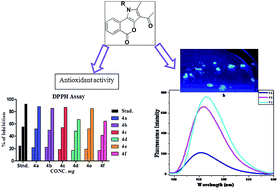
An efficient strategy for the synthesis of 3-acetyl-2-methyl-1-phenylisochromeno [4,3-b] pyrrol-5(1H)-ones 4a–f have been developed using montmorillonite K10 as a catalyst. The reaction proceeded from acetyl acetone, substituted primary amines and ninhydrin via acidic media under solvent-free conditions. Compounds 4a–c exhibit green fluorescence under UV light, and their fluorescent properties in the liquid state were investigated. All the synthesized compounds were subjected for the evaluation of their free radical scavenging activity. Among all the tested compounds 4a and 4c exhibited good percentage inhibition in comparison with the standard, i.e. ascorbic acid.
1. Introduction
Aromatic heterocyclic compounds are known to show a wide range of ecotoxic effects, e.g. acute toxicity, cytotoxicity,1 photo-induced toxicity,2 mutagenicity3 and carcinogenicity.4 New efficient methods for the synthesis of heterocycles are a topic of major interest in modern synthetic organic chemistry.5 Among the heterocycles isocoumarin represents the foremost class of naturally occurring lactones that display a wide range of biological activities such as protease inhibitor properties, antifungal, cytotoxic, anti-allergic, antimicrobial and antimalarial effects.6–10 Isocoumarins are a class of natural products with a broad spectrum of biological activity,11,12 including antioxidative,13 antiangiogenic,14 antifungal,15,16 anti-allergic and antimicrobial8–10 activities. They are also important in medicinal chemistry as building blocks for bioactive compounds.17,18 In addition to its natural occurrence,19,20 various synthetic methodologies for construction of isocoumarins have been demonstrated.11 Note that isocoumarins are useful synthetic precursors to other heterocyclic and carbocyclic compounds.21,22
Free radicals oxidatively damage lipids, proteins and genomic DNA integrity, and they are widely recognized as the root cause of numerous degenerative diseases including cancer.23 Antioxidants are potent scavengers of free radicals and serve as inhibitors of neoplastic processes.24 Vegetables, fruits and their seeds are rich sources of vitamins C, E, β-carotene and other compounds that might protect the organism against free radical induced injury and diseases.25,26 There has been an increasing interest in the use of natural antioxidants, such as tocopherols, flavonoids for the preservation of food materials.27 These natural antioxidants avoid the toxicity problems, which may arise from the use of synthetic antioxidants such as butylated hydroxy anisole (BHA), butylated hydroxy toluene (BHT) and propyl gallate (PG). Due to the complexity of antioxidant activity in foods, the evaluation of synthetic heterocyclic compounds has been widely focused on recently.28
In this paper, synthesis of isochromenopyrrolone analogues using MK-10 under solvent-free conditions as an approach for organic synthesis is described, which involves microwave exposure of the neat reactants. The synthesis of 3-acetyl-2-methyl-1-phenylisochromeno [4,3-b] pyrrol-5(1H)-ones 4a–f were carried out using MK-10 as a catalyst was found to be more efficient with high yields compared to conventional synthesis methods.29
2. Results and discussion
2.1 Chemistry
In this work, we have reported the synthesis of a novel series of 3-acetyl-2-methyl-1-phenylisochromeno [4,3-b] pyrrol-5(1H)-ones 4a–f using MK-10 as a catalyst. The antioxidant activity and fluorescence properties of these 3-acetyl-2-methyl-1-phenylisochromeno [4,3-b] pyrrol-5(1H)-ones 4a–f have also been reported.
The formation of 4a–f was confirmed by FTIR, 1H NMR, 13C NMR and mass spectral analysis. FT-IR data of compound 4a shows an absorption peak at 1462 cm−1, indicating benzene C
C stretching, a peak at 1668 cm−1, indicating alkene C
C stretching, a peak at 1732 cm−1, indicating C
O stretching, and peaks at 3199–3057 cm−1, indicating sp3 C–H stretching. 1H-NMR data of compound 4a confirms the existence of one methyl of pyrrole ring, one methyl group of the acetyl group and two methyl groups of substituted amine groups at δ 1.04, 1.04, 2.32, 2.79 ppm respectively, as well as two methylene protons of the ethyl groups at δ 2.26 and the seven aromatic protons that exist between δ 6.2 to 8.36 ppm. 13C-NMR data of compound 4a confirms the existence of six aliphatic carbons at δ 12.26–31.30 ppm, sixteen aromatic carbons between δ 110.4–142.1 ppm and two carbonyl groups at δ 161.99 (–C
O of isocoumarin ring) and 193.66 (–C
O of the acetyl group) (Scheme 1).
 |
| | Scheme 1 Synthesis of 3-acetyl-2-methyl-1-phenylisochromeno [4,3-b] pyrrol-5(1H)-ones 4a–f. | |
2.2 Fluorescence studies
For the fluorescence studies, we found that the compound 4c exhibits a strong emission at 464 nm, the compound 4b shows emission at 462 nm, which is similar to that of 4c, and the compound 4a shows weak emission at 456 nm.
2.3 Hydrogen peroxide scavenging assay
In the present study, hydrogen peroxide scavenging assay was performed for isochromenopyrrolones 4a–f. The absorbance of the standard (ascorbic acid) and the compounds 4a–f was measured at 230 nm, and the results were tabulated in Table 1. The percentage inhibition of the target molecules 4a–f has been plotted against the various concentrations of the standard (ascorbic acid) and the test solutions (Fig. 1). All readings were obtained in triplicate to check their accuracy.
Table 1 Percentage inhibition of H2O2 assay of 3-acetyl-2-methyl-1-phenylisochromeno [4,3-b] pyrrol-5(1H)-ones 4a–f
| Conc. μL |
% Inhibition |
| 4a |
4b |
4c |
4d |
4e |
4f |
| 10 |
41.63 |
40.62 |
40.81 |
11.07 |
22.61 |
10.54 |
| 20 |
50.85 |
45.68 |
48.14 |
20.84 |
31.74 |
18.19 |
| 30 |
58.38 |
53.64 |
54.76 |
32.42 |
48.89 |
32.16 |
| 50 |
84.46 |
83.82 |
74.05 |
52.68 |
72.14 |
52.05 |
| 100 |
88.70 |
87.64 |
83.64 |
76.21 |
82.38 |
74.89 |
| IC50 |
1.84 |
2.07 |
2.07 |
2.46 |
2.90 |
2.38 |
 |
| | Fig. 1 Comparison of the percentage inhibition of H2O2 assay of 3-acetyl-2-methyl-1-phenylisochromeno [4,3-b] pyrrol-5(1H)-ones 4a–f. | |
2.4 DPPH assay
In the present study, the DPPH assay was performed for the isochromenopyrrolones 4a–f. The absorbance of the standard (ascorbic acid), and compounds 4a–f were measured at 520 nm, and the results are listed in Table 2. The percentage inhibition of the target molecules have been plotted against the various concentrations of the standard (ascorbic acid) and the test solutions 4a–f (Fig. 2). All readings were obtained in triplicate to check their accuracy.
Table 2 Percentage inhibition of DPPH assay of 3-acetyl-2-methyl-1-phenylisochromeno [4,3-b] pyrrol-5(1H)-ones 4a–f
| Conc. μL |
% Inhibition |
| 4a |
4b |
4c |
4d |
4e |
4f |
4a |
| 10 |
24.96 |
21.62 |
22.13 |
18.70 |
17.28 |
19.15 |
16.78 |
| 50 |
55.73 |
51.89 |
50.20 |
54.00 |
48.55 |
52.26 |
41.51 |
| 100 |
92.77 |
88.15 |
85.73 |
86.92 |
67.35 |
85.09 |
64.42 |
| IC50 |
1.76 |
1.88 |
1.91 |
1.90 |
2.22 |
1.93 |
2.38 |
 |
| | Fig. 2 Comparison of the percentage inhibition of DPPH assay of 3-acetyl-2-methyl-1-phenylisochromeno [4,3-b] pyrrol-5(1H)-ones 4a–f. | |
3. Experimental
Solvents and reagents were commercially sourced and used without further purification. Thin-layered chromatography (TLC) was performed on preparative plates of silica gel. Visualization was made using a UV chamber. Column chromatography was performed by using silica gel (60–120 mesh). Melting points were measured on a Elchem Microprocessor-based DT apparatus using an open capillary tube, and they are corrected with the standard, i.e. benzoic acid. IR spectra were obtained on a Nucon infrared spectrophotometer (KBr disc). UV-vis spectrum was obtained on UV-2550, Shimadzu Corporation, Kyoto, Japan. The NMR spectrum was recorded on a Bruker Avance III- 400 & 500 MHz spectrometer with tetramethylsilane (TMS) as an internal standard. Chemical shifts were reported in δ units (ppm). GC-MS spectra were recorded on a Perkin Elmer spectrophotometer, GC model: clarus 680, mass spectrometer model: clarus 600 (EI). The fluorescence spectra were obtained on Hitachi F-7000 FL spectrophotometer.
3.1 General procedure for the synthesis of 3-acetyl-2-methyl-1-phenylisochromeno [4,3-b] pyrrol-5(1H)-one (4f)
Method A: (E)-2-hydroxy-2-(2-oxo-4-(phenylimino)pentan-3-yl)-1H-indene-1,3(2H)-dione (3f). A mixture of acetyl acetone 1 (1.1 mmol) and aniline 2f (1.1 mmol) were heated at 85 °C for 15–30 min. Then, the reaction mixture was added to a solution of ninhydrin (1.1 mmol) in acetic acid (10 mL), and stirred at room temperature until the reactants disappeared. The progress of the reaction was monitored by TLC. After the completion, the reaction mixture was cooled to room temperature, and then this mixture was quenched using crushed ice. The solid formed was allowed to stand for 30 min and then filtered. Compound 3f was recrystallized by mixture of acetone and hexane (2
:
8) to afford the crystals of intermediate compound 3f.
3-Acetyl-2-methyl-1-phenylisochromeno [4,3-b]pyrrol-5(1H)-one (4f). About 0.5 mL of conc. H2SO4 was added to a solution of 200 mg of compound 3 in 10 mL of acetic acid. The reaction mixture was heated on a water bath at 85 °C for about 30–45 min. The initial pale green color of the solution was intensified to brown, which indicated the conversion of product 4a. The progress of the reaction was monitored by TLC. Then, the reaction mixture was cooled to room temperature and poured into crush ice with continuous stirring. The precipitated solid was allowed to stand for 30 min and then filtered. Then, the solid obtained was purified by column chromatography using petroleum ether: ethyl acetate (8
:
2) as the eluent to afford the reddish brown crystals of isochromenopyrrolone 4a.
Method-B: 3-acetyl-2-methyl-1-phenylisochromeno[4,3-b]pyrrol-5(1H)-one (4f). Acetyl acetone 1 (1.1 mmol), aniline 2f (1.1 mmol), ninhydrin (1.1 mmol), followed by addition of MK-10 (10 mg) were introduced in an Erlenmeyer flask. This mixture was subjected to microwave irradiation for sufficient intervals of time using resting intervals of 1 min after every 30 s of irradiation. The progress of the reaction was monitored by TLC. After cooling, the reaction mixture became sticky, and the sticky solid was then triturated to afford the product. The product was recrystallized by mixture of acetone and hexane (2
:
8) to afford the crystals of compound 4f. Optimization of 3-acetyl-2-methyl-1-phenylisochromeno [4,3-b]pyrrol-5(1H)-one 4a–f was performed by comparing the yield of the conventional and microwave irradiation methods. The results of the comparison are listed in Table 3.
Table 3 Reaction parameters of 3-acetyl-2-methyl-1-phenylisochromeno [4,3-b] pyrrol-5(1H)-ones 4a–f
| Entry |
Product |
Time |
Yield (%) |
M.P. (°C) |
| CHa (h) |
MWb (min) |
CHa |
MWb |
| Conventional heating–stirring, 85 °C, gla. AcOH, conc. H2SO4. Microwave irradiated, MK-10. |
| 1 |
4a |
2.45 |
1.20 |
79 |
82 |
209 |
| 2 |
4b |
2.40 |
1.10 |
78 |
84 |
202 |
| 3 |
4c |
2.50 |
1.40 |
86 |
95 |
18029 |
| 4 |
4d |
2.45 |
1.20 |
83 |
88 |
187 |
| 5 |
4e |
2.45 |
1 |
85 |
89 |
194 |
| 6 |
4f |
3.05 |
1.10 |
82 |
85 |
24529 |
3-Acetyl-1-(2,6-diethylphenyl)-2-methylisochromeno [4,3-b] pyrrol-5(1H)-one (4a). Pale brown solid, mol. formula: C24H23NO3, exact mass: 373.1678, mol. wt.: 373.4443, yield 82%, m. pt. 209–211 °C. FT-IR (KBr pellets, cm−1): 3388.93, 3199.91, 3057.17, 2966.52, 1732.08, 1668.43, 1462.04. 1H NMR (500 MHz, CDCl3): δ = 8.35–8.36 (1H, dd, J1 = 1.5 Hz J2 = 1 Hz, –CH), 7.55–7.57 (1H, t, –CH), 7.34 (2H, m, –CH), 7.30 (1H, d, -CH), 7.28 (1H, d, -CH), 6.27–6.28 (1H, d, J = 5 Hz, –CH), 2.79 (3H, s, –CH3), 2.32 (3H, s, –CH3), 2.23 (2 × 2H, m, 2-CH2) of Et, 1.01–1.05 (2 × 3H, t, 2-CH3) of Et. 13C NMR (125 MHz, CDCl3): δ = 193.6, 161.9, 142.1, 141.0, 138.8, 134.9, 133.8, 131.7, 130.6, 130.5, 2 × 127.1, 2 × 125.6, 117.8, 117.7, 111.5, 110.4, 31.3, 2 × 23.7, 2 × 13.7, 12.2. Mass: m/z 373.21.
3-Acetyl-1-(2,3-dimethylphenyl)-2-methylisochromeno[4,3-b] pyrrol-5(1H)-one (4b). Pale brown solid, mol. formula: C22H19NO3, exact mass: 345.1365, mol. wt.: 345.3912, yield 84%, m. pt. 202–204 °C. FT-IR (KBr pellets, cm−1): 3201.83, 1761.65, 1664.57. 1H NMR (500 MHz, CDCl3): δ = 1.85 (3H, s, –CH3), 2.36 (3H, s, –CH3), 2.43 (3H, s, –CH3), 2.77 (3H, s, –CH3), 6.28–6.30 (1H, d, J = 10 Hz, –CH), 7.14–7.16 (1H, d, J = 10 Hz, –CH), 7.33 (3H, m, –CH), 7.44–7.46 (1H, d, J = 10 Hz, –CH), 8.36–8.35 (1H, d, J = 5 Hz –CH). 13C NMR (100 MHz, CDCl3): δ = 12.3, 13.8, 20.5, 31.4, 110.25, 117.8, 118.0, 125.7, 126.1, 2 × 127.2, 130.8, 131.8, 131.9, 2 × 135.0, 135.5, 136.0, 139.2, 139.5, 162.1, 193.9. GC-MS (EI): 345.26.
3-Acetyl-1-benzyl-2-methylisochromeno[4,3-b]pyrrol-5(1H)-one (4c). Pale brown solid, mol. formula: C21H17NO3, exact mass: 331.1208, mol. wt.: 331.3646, yield 95%, m. pt. 182 °C29 (lit. 182). FT-IR (KBr pellets, cm−1): 3194.12, 3126.61, 2968.45, 2877.79, 1722.43, 1666.50, 1612.49. 1H NMR (500 MHz, CDCl3): δ = 2.67 (3H, s, –CH3), 2.74 (3H, s,–CH3), 5.57 (2H, s, –CH2), 7.07 (2H, d, J = 10 Hz, –CH), 7.34 (4H, m, –CH), 7.44–7.46 (1H, d, J = 10 Hz, –CH), 7.54 (1H, m, –CH), 8.39 (1H, m, –CH). 13C NMR (125 MHz, CDCl3): δ = 11.4, 31.6, 48.6, 110.4, 111.6, 117.9, 118.8, 125.5, 126.7, 2 × 128.2, 129.3, 129.5, 130.4, 132.3, 135.1, 135.2, 139.1, 141.1, 161.9, 193.8. Mass: m/z 331.17.
3-Acetyl-2-methyl-1-m-tolylisochromeno[4,3-b]pyrrol-5(1H)-one (4d). Pale brown solid, mol. formula: C21H17NO3, exact mass: 331.1208, mol. wt.: 331.3646, yield 88%, m. pt. 185–187 °C. FT-IR (KBr pellets, cm−1): 2918.30, 2848.86, 1772.58, 1699.29, 1633.71. 1H NMR (400 MHz, CDCl3): δ = 2.48 (3H, s, –CH3), 2.56 (3H, s, –CH3), 2.82 (3H, s, –CH3), 6.50–6.48 (1H, d, J = 8 Hz, –CH), 7.25 (1H, s, –CH), 7.35 (1H, s, –CH), 7.43–7.41 (1H, d, J = 8 Hz, –CH), 7.54 (1H, s, –CH), 7.59–7.58 (2H, d, J = 4 Hz, –CH), 8.43–8.41 (1H, d, J = 8 Hz, 1H). 13C NMR (100 MHz, CDCl3): δ = 12.6, 13.7, 20.5, 96.11, 112.5, 117.4, 117.5, 124.5, 126.5, 126.8, 131.2, 131.6, 131.8, 133.3, 134.5, 136.0, 137.4, 139.0, 142.5, 163.2, 190.4. Mass: m/z 331.18.
3-Acetyl-2-methyl-1-p-tolylisochromeno[4,3-b]pyrrol-5(1H)-one (4e). Pale brown solid, mol. formula: C21H17NO3, exact mass: 331.1208, mol. wt.: 331.3646, yield 89%, m. pt. 192–194 °C. FT-IR (KBr pellets, cm−1): 3199.91, 2966.52, 1786.08, 1670.35, 1606.70. 1H NMR (500 MHz, CDCl3): δ = 2.40 (3H, s, –CH3), 2.55 (3H, s, –CH3), 2.74 (3H, s, –CH3), 6.47–6.45 (1H, dd, J1 = 4.4 Hz, J2 = 1.4 Hz,–CH), 7.29 (3H, m, –CH), 7.38 (1H, m, –CH), 7.44–7.42 (2H, d, J = 8 Hz, –CH), 8.35–8.33 (1H, d, J = 8 Hz, –CH). 13C NMR (100 MHz, CDCl3): δ = 12.6, 13.7, 20.5, 96.11, 112.5, 117.4, 117.5, 124.5, 126.5, 126.8, 131.2, 131.6, 131.8, 133.3, 134.5, 136.0, 137.4, 139.0, 142.5, 163.2, 190.4. Mass: m/z 331.18.
3-Acetyl-2-methyl-1-phenylisochromeno[4,3-b]pyrrol-5(1H)-one (4f). Pale brown solid, mol. formula: C20H15NO3, exact mass: 317.1052, mol. wt.: 317.3380, yield 85%, m. pt. 245–247 °C29 (lit. 248). FT-IR (KBr pellets, cm−1): 3057.17, 2918.30, 1712.79, 1612.49, 1494.33. 1H NMR (400 MHz, CDCl3): δ= 2.38 (3H, s, –CH3), 2.73 (3H, s, –CH3), 6.36 (1H, s, –CH), 7.26 (1H, s, –CH), 7.31–7.29 (2H, t, d, J = 8 Hz, –CH), 7.44–7.42 (3H, d, J = 8 Hz, –CH), 7.64 (1H, s, –CH), 8.35–8.33 (1H, d, J = 8 Hz, –CH). 13C NMR (100 MHz, CDCl3): δ = 11.4, 31.6, 118.2, 124.0, 124.4, 125.0, 125.9, 126.9, 127.3, 130.4, 130.7, 131.9, 132.0, 134.9, 135.7, 136.8, 139.0, 139.3, 190.4, 201.3. Mass: m/z 317.26.
3.2 Antioxidant assay
Preparation of stock solution. A solution of hydrogen peroxide (40 mM) was prepared in phosphate buffer saline (PBS) at pH 7.4. A stock solution (1 mg mL−1) was prepared for the synthesized compounds 4a–f in methanol and subsequently diluted as 10, 20, 30, 50 and 100 μL.
Hydrogen peroxide scavenging anti-oxidant activity. Antioxidant activity was measured by a previously reported methodology.30 For the present study, the samples were prepared by taking 1 mg of the compounds 4a–f dissolved in 1 mL of AR grade methanol. The samples 10, 20, 30, 50 and 100 μL were taken in different test tubes, to which 20 μL of hydrogen peroxide was added and made up to 2 mL using phosphate buffer and incubated at room temperature for 10 min. The absorbance of the incubated solutions and the blank solution (phosphate buffer without hydrogen peroxide) were recorded against ascorbic acid. The absorbance was measured at 230 nm using a UV-vis spectrophotometer. Radical scavenging capacity (RSC) in percent was calculated by the following equation:
| % of RSC (%) = [(Ab − As)/Ab] × 100 |
whereRSC = radical scavenging capacity
As = absorbance of sample
Ab = absorbance of blank
DPPH radical scavenging assay. Radical scavenging activity of the compounds against stable DPPH (2,2-diphenyl-2-picrylhydrayl hydrate) was determined spectrophotometrically. When DPPH reacts with an antioxidant compound, which can donate hydrogen, DPPH is reduced. The changes in colour (from deep-violet to light yellow) were measured at 520 nm on a UV-vis spectrophotometer. A solution of DPPH was mixed with the synthesized compounds 4a–f gives rise to the reduced form with the loss of violet color.
where RH is the reduced form and R˙ is free radical.The DPPH radical scavenging activities of all the synthesized compounds 4a–f and ascorbic acid were determined according to the reported method.31 Initially, 1 mg mL−1 of the test material solutions and the standard (ascorbic acid) at a concentration of 10, 50 and 100 μg mL−1, respectively, were added to 1 mL of 0.2 mM freshly prepared solution of DPPH in ethanol. The reaction mixture was stirred vigorously and allowed to stand for 30 min at room temperature under dark conditions. The absorbance of each reaction mixture was measured at 520 nm. The percentage of DPPH radical scavenging activity (%) of the sample was calculated as follows:
| % (Inhibition) = [(Ab − As)/Ab] × 100 |
where
Ab = absorption of blank sample
As = absorption of sample
3.3 Fluorescence studies
UV-vis spectra. The UV absorption spectrum of compound 4a in various solvents, such as DMF, ethanol and DMSO solution, were recorded in the range of 200–800 nm. The excitation peaks appears at 314 nm and 365 nm (Fig. 3a).
 |
| | Fig. 3 3[a] Comparison of the UV-vis spectrum (DMF, ethanol and DMSO) of 4a. [b] Fluorescence emission spectra of compounds 4a–c. | |
Fluorescence spectra. The fluorescence emission spectra of the synthesized compounds 4a–c were recorded in DMSO with excitation wavelength at 365 nm. The fluorescence emission spectra of the compounds 4a–c are shown in Fig. 3b.
Conclusions
In the present study, we report an efficient one-pot MK-10-catalysed synthesis of fused isochromenopyrrole-5(1H)-ones, which gave an enhanced yield with reduced time compared to conventional heating methods. Among the synthesized compounds, 4c and 4b exhibits strong fluorescence emission. The synthesized compounds were successfully screened for the free radical scavenging activity by H2O2 and DPPH assay method. Compounds 4a, 4b and 4c showed a high percentage of inhibition similar to that of the standard, i.e. ascorbic acid.
Notes and references
- R. Rossi, A. Carpita, F. Bellina, P. Stabile and L. Mannina, Tetrahedron, 2003, 59, 2067–2081 CrossRef CAS.
- E. B. Rimm, A. Ascherio, E. Grovannucci, D. Spielgelman, W. J. Stampfer and W. C. Willett, J. Am. Med. Assoc., 1996, 275, 447–451 CrossRef CAS.
- I. Amin, M. M. Zamaliah and W. F. Chin, Food Chem., 2004, 87, 581–586 CrossRef PubMed.
- K. A. Steinmetz and J. D. Potter, J. Am. Diet. Assoc., 1996, 96, 1027–1039 CrossRef CAS.
- S. M. Roopan and F. N. Khan, Med. Chem. Res., 2011, 20, 732–737 CrossRef CAS.
- K. M. Meepagala, G. Sturtz and D. E. Wedge, J. Agric. Food Chem., 2002, 50, 6989–6992 CrossRef CAS PubMed.
- A. C. Whyte, J. B. Gloer, J. A. Scott, D. Malloch and A. C. Cercophorins, J. Nat. Prod., 1996, 59, 765–769 CrossRef CAS PubMed.
- J. C. Powers, J. L. Asgian, O. D. Ekici and K. E. James, Chem. Rev., 2002, 102, 4639–4750 CrossRef CAS PubMed.
- M. Yoshikawa, E. Harada, Y. Naitoh, K. Inoue, H. Matsuda, H. Shimoda, J. Yamahara and N. Murakami, Chem. Pharm. Bull., 1994, 42, 2225–2230 CrossRef CAS.
- K. F. Devienne, M. S. G. Raddi, R. G. Coelho and W. Vilegas, Phytomedicine, 2005, 12, 378–381 CrossRef CAS PubMed.
- R. D. Barry, Chem. Rev., 1964, 64, 229–260 CrossRef CAS.
- R. S. Mali and K. N. Babu, J. Org. Chem., 1998, 63, 2488–2492 CrossRef CAS PubMed.
- K. F. Devienne, A. F. C. Helena, D. J. Dorta, I. M. R. Prado, M. S. G. Raddi, W. Vilegas, S. A. Uyemura, A. C. Santos and C. Curti, Phytochemistry, 2007, 68, 1075–1080 CrossRef CAS PubMed.
- J. H. Lee, Y. J. Park, H. S. Kim, Y. S. Hong, K. W. Kim and J. J. Lee, J. Antibiot., 2001, 54, 463–466 CrossRef CAS.
- D. Engelmeier, F. Hadacek, O. Hofer, G. Lutz-Kutschera, M. Nagl, G. Wurz and H. Greger, J. Nat. Prod., 2004, 67, 19–25 CrossRef CAS PubMed.
- K. Nozawa, M. Yamada, Y. Tsuda, K. Kawai and S. Nakajima, Chem. Pharm. Bull., 1989, 29, 3486–3493 CrossRef.
- T. K. Devon and A. I. Scott, Handbook of Naturally Occurring Compounds, Academic Press, New York, 1975, vol. 1 Search PubMed.
- R. C. Elderfield, Heterocyclic Compounds, Wiley, New York, 1951, vol. 2 Search PubMed.
- W. Zhang, K. Krohn, S. Draeger and B. Schulz, J. Nat. Prod., 2008, 71, 1078–1081 CrossRef CAS PubMed.
- X. Lu, D. Li, N. K. Dalley, S. G. Wood and N. L. Owen, Nat. Prod. Res., 2007, 21, 677–685 CrossRef CAS PubMed.
- C. D. Gabbutt, J. D. Hepworth, B. M. Heron and J.-L. Thomas, Chem. Commun., 1999, 6, 541–542 RSC.
- E. Napolitano, Org. Prep. Proced. Int., 1997, 29, 631–664 CrossRef CAS.
- O. I. Aruoma, Food Chem. Toxicol., 1994, 32, 671–683 CrossRef CAS.
- D. Bagchi, A. Garg, R. L. Krohn, M. Bagchi, M. X. Tran and S. J. Stohs, Res. Commun. Mol. Pathol. Pharmacol., 1997, 95, 179–189 CAS.
- H. Tapiero, K. D. Tew, G. N. Ba and G. Mathe, Biomed. Pharmacother., 2002, 56, 200–207 CrossRef CAS.
- J. B. Harborne and C. A. Williams, Phytochemistry, 2000, 55, 481–504 CrossRef CAS.
- K. J. Hunter and J. M. Fletcher, Innovative Food Sci. Emerging Technol., 2002, 3, 399–406 CrossRef CAS.
- I. Hinneburg, H. J. Dorman and R. Hiltunen, Food Chem., 2006, 97, 122–129 CrossRef CAS PubMed.
- S. Pathak, A. Kundu and A. Pramanik, Tetrahedron Lett., 2011, 52, 5180–5183 CrossRef CAS PubMed.
- G. K. Jayaprakasha, L. Jaganmohan Rao and K. K. Sakariah, Bioorg. Med. Chem., 2004, 12, 5141–5146 CrossRef CAS PubMed.
- R. G. O. Rumbaoa, D. F. Cornago and I. M. Geronimo, J. Food Compos. Anal., 2009, 22, 546–550 CrossRef CAS PubMed.
|
| This journal is © The Royal Society of Chemistry 2014 |
Click here to see how this site uses Cookies. View our privacy policy here.