Enhanced visible photocatalytic activity of Cu2O nanocrystal/titanate nanobelt heterojunctions by a self-assembly process

Yueli Liu, Guojie Yang, Hao Zhang, Yuqing Cheng, Keqiang Chen, Zhuoyin Peng and Wen Chen*
State Key Laboratory of Advanced Technology for Materials Synthesis and Processing, School of Materials Science and Engineering, Wuhan University of Technology, Wuhan, 430070, P. R. China. E-mail: chenw@whut.edu.cn; Fax: +86-27-8776-0129; Tel: +86-27-8765-1107

Received 12th March 2014 , Accepted 14th May 2014

First published on 15th May 2014


Abstract

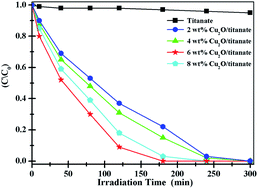
In the present work, we introduce a facile and widely used route to fabricate Cu2O nanocrystal/titanate nanobelt heterojunctions with high yield, good dispersion and tight interaction, and which are self-assembled via the linker molecule 3-mercaptopropionic acid. Their photocatalytic activity for the degradation of methyl orange solution is enhanced by decorating with Cu2O nanocrystals, especially in the visible light region. The degradation rates of 6 wt% Cu2O/titanate heterojunctions are both the highest at 100% after 80 and 180 minutes irradiation under UV and visible light irradiation, while those of the pure titanate nanobelts are only 20% and 3%, respectively. These lower values for the pure titanate nanobelts are due to the p–n heterojunctions suppressing the recombination of electron–hole pairs in the titanate nanobelts, where the Cu2O nanocrystals act as electron traps aiding electron–hole separation. Additionally, a synergistic effect from the tight contact between Cu2O nanocrystals and titanate nanobelts also efficiently enhances the photodegradation of the Cu2O/titanate heterojunctions.

1. Introduction

To date, much attention has been paid to semiconductor photocatalysts with an aim to solve environmental pollution and to make full use of light energy as a key factor in the efficient and mild photodegradation of waste.1–5 Among the photocatalysts, titanate nanomaterials are of great interest since they possess good photocatalytic activity.6–8 However, titanate nanomaterials with a wide band gap (about 3.0 eV) only absorb a small fraction of solar light, and this limits their efficient photocatalytic performance in visible light.

As a p-type semiconductor, Cu2O possesses a direct band gap of 2.0 eV and a high optical absorption coefficient, and is thus considered to be a prospective candidate in visible photocatalysis applications.9 However, its photocatalytic performance is limited by the recombination of the photo-excited electrons and holes.10,11 Due to the matching of the band structure between Cu2O and titanate, the formation of a p–n junction is an effective way to solve the above problems and to improve the photocatalytic performance in visible light.12–15

Recently, Cu2O/TiO2 p–n heterojunction photoelectrodes were prepared via an ultrasonication-assisted sequential chemical bath deposition, which possessed superior photoelectrocatalytic activity and stability in the degradation of Rhodamine B.16 Ultra-small Cu2O nanoparticles were loaded onto TiO2 nanosheets with {001} facets exposed through a one-pot hydrothermal reaction, and displayed excellent visible-light activity, about 3 times that of N-doped TiO2 nanosheets exposed with {001} facets.17 Cu2O/TiO2 nanobelt heterostructures were prepared by the wet precipitation method, and they displayed much higher adsorbability than pure TiO2 nanobelts, although it was difficult to control the interface combination between the Cu2O nanocrystals and the TiO2 nanobelts.18 Lalitha et al. prepared Cu2O/TiO2 nanocomposites and found that they could photogenerate H2 from glycerol and water mixtures under visible light irradiation.19 Huang et al. prepared a heterostructure of TiO2 and smaller Cu2O nanoparticles (2–3 nm) through an alcohol-aqueous based chemical precipitation method,20 which exhibited much better efficiency than TiO2 nanoparticles in the degradation of acid orange under both visible and UV-Vis light irradiation.

However, the key problem remains the difficulty of controlling the metal particle size, dispersion, and composition, etc., especially the combination between the various semiconductor materials, as this influences the effective separation of the photo-excited electrons and holes, which can suppress their direct recombination.21–25 In our previous work, Pt(Au) nanocrystals7,8 and CuInS2 quantum dots26–29 were combined with titanate nanobelts by the bifunctional molecules, which formed a good interface combination.

Following this easy process, Cu2O nanocrystal/titanate nanobelt heterojunctions can now be self-assembled with a high yield, good dispersion and tight interaction, and are expected to possess enhanced photocatalytic activity towards methyl orange solution under visible light irradiation.

2. Experimental

2.1. Synthesis of 1-D titanate nanobelts and Cu2O nanocrystals

The 1-D titanate nanobelts were synthesized according to our previous work.6–8

Cu2O nanocrystals were synthesized by a modified hydrothermal method: 0.06 mol of cupric acetate was added into 600 mL of deionized water, and then 3.6 mL of PEG-400 was added into the solution with vigorous stirring. Then, a mixture of NaOH and hydrazine in a volume ratio of 1[thin space (1/6-em)]:[thin space (1/6-em)]3 was dropped into the solution, and the solution was then transferred into an autoclave. The autoclave was sealed and maintained at 180 °C for 8 h and then cooled down to room temperature. A red brown precipitate was washed several times with distilled water and dried at room temperature. The samples were added to the methanol solution of 3-mercaptopropionic acid (MPA), and the MPA-capped Cu2O nanocrystals were prepared for use in the next step. The Cu2O content was controlled by varying the concentration of the Cu2O nanocrystals. Here, for simplicity, the samples are referred to as (x wt%) Cu2O/titanate.

2.2. Self-assembly process

In the experiment, MPA purchased from Sigma-Aldrich was used as a linker molecule. The prepared titanate nanobelts were heat dried at 100 °C for 5 h to remove H2O molecules from the surface due to the ambient humidity adsorption. They were then put into the methanol solution of MPA and left overnight in a nitrogen-protected environment in a glovebox, and cleaned by toluene solvent several times to remove the extra MPA solvent, after which the carboxylate group bound tightly with the titanate nanobelts. The MPA-treated titanate nanobelt powders (0.4 g) were dispersed in the solution of MPA-capped Cu2O nanocrystals, following sonication for 2 h at room temperature. The final products were separated and washed by toluene and ethanol solvents in that order and by centrifugation, then dried in an oven at 100 °C, and finally annealed at 300 °C for 2 h in air to remove the organic molecules.

2.3. Photocatalytic activity experiments

Before the irradiation, 0.05 g (x wt%) Cu2O/titanate heterojunctions was put into aqueous methyl orange solution (50 mL, 32.73 ppm), and then the suspension was stirred for 2 h in a dark environment to establish an adsorption/desorption equilibrium. The photodegradation rate of Cu2O/titanate heterojunctions was evaluated by examining the concentration variation of methyl orange every 60 minutes under UV and visible light illumination using 125 W high-pressure Hg lamps, which gave UV (200–400 nm) and visible light (400–800 nm) spectra with the main peak located at the 365 nm wavelength. For visible light irradiation, the light source was equipped with an UV cut-off filter, which can remove 99% of UV light with a wavelength between 320 nm and 400 nm. The irradiation light intensity on the samples under UV and visible light illumination was kept constant by adjusting the distance between the lamp and samples, respectively.

2.4. Characterization

The morphologies and microstructures of the samples were characterized by using a scanning electron microscope (SEM) (Zeiss Ultra-55, ZEISS, German), a regular transmission electron microscope (TEM) (JEM2100FEF, JEOL, Japan), and an X-ray diffractometer (XRD) (PertPro, PANalytical, The Netherlands), and the UV-Vis spectra were tested using a UV-2550 spectrophotometer. X-ray photoelectron spectroscopy (XPS) measurements were performed in the Escalabmk-II XPS apparatus (VG Scientific, England) with an Al target. The emission angle between the photoelectron beam and the sample surface was 45°, and the calibration of the binding energy of the electron spectrometer was made by using the maximum adventitious C1s signal at 284.6 eV, with the solution of the full width at half maximum (FWHM) being 0.8 eV.

3. Results and discussion

The typical SEM image of the titanate nanobelts in Fig. 1(a) shows a lot of homogeneous structures with a width of about 70–80 nm and a length of several micrometers. Their crystal structure is also evaluated by the XRD patterns in Fig. 1(b), which shows the diffraction peak at a 2θ value of 8.9°; this characteristic peak implies that the nanobelts are composed of a layered titanate structure of H2Ti5O11·3H2O phase (JCPDS no.: 44-0130).6–8 After decorating with Cu2O nanocrystals, the diffraction peaks at 29.9°, 35.6°, 53.1° and 61.4° correspond to the (110), (111), (211) and (220) planes of the cubic Cu2O phase (JCPDS no.: 78-2076), which indicates the formation of Cu2O phase in the Cu2O/titanate heterojunctions.16–20
image file: c4ra02150a-f1.tif
Fig. 1 Microstructure observation of the samples: (a) SEM image of titanate nanobelts; (b) XRD patterns of titanate nanobelts and various Cu2O/titanate heterojunctions.

Fig. 2 shows the SEM images of the Cu2O/titanate heterojunctions with various Cu2O contents, and shows that the Cu2O nanocrystals with diameters of 7–9 nm are well dispersed on the surface of the titanate nanobelts by the effect of the MPA coupling agent. It is worth mentioning that the deposition content of Cu2O nanocrystals increases with the increasing content of Cu2O/titanate heterojunctions, which actually matches the XRD patterns in Fig. 1(b). For example, in Fig. 2(a) there are only a few Cu2O nanocrystals dispersed onto the surface of the titanate nanobelts, while there are many Cu2O nanocrystals dispersed onto the surface of the titanate nanobelts with the increasing deposition content of Cu2O nanocrystals, especially for the sample of 8 wt% Cu2O/titanate heterojunction. The linking process of the Cu2O nanocrystals further influences the optical and photocatalytic properties of the Cu2O/titanate heterojunction, as Ti–O–Ti bonds have a strong affinity for the carboxylate group of the linker molecules, while the sulfur atom of MPA binds strongly to the Cu2O atom via the S-metal junction.30,31 Therefore, Cu2O nanocrystals bind with the titanate nanobelts through the function of MPA molecules, similar to that of the Pt(Au)/titanate7,8 and CuInS2/titanate heterojunctions.26–29


image file: c4ra02150a-f2.tif
Fig. 2 SEM images of the Cu2O/titanate heterojunctions with various Cu2O contents: (a) 2 wt%; (b) 4 wt%; (c) 6 wt%; (d) 8 wt%.

It is well known that the photocatalytic activity of Cu2O nanocrystals is related to their sizes and phases, as well as to their chemical binding states.32,33 The XPS survey spectra in Fig. 3(a) show that Cu, Ti and O elements coexist. The Cu 2p spectrum in Fig. 3(b) shows the characteristic of the substance Cu1 phase with the 2p1/2 peak located at 953.2 eV. The Ti 2p spectra in Fig. 3(c) illustrate the existence of Ti4+ ions with the 2p1/2 peak located at about 463.90 eV, and located at 463.86 eV after the deposition of Cu2O nanocrystals. The O 1s spectra in Fig. 3(d) show that two chemical states of oxygen coexist, and the peak located at 530.14 eV belongs to the O2− in Ti–O–Ti and Cu–O binding formations, which exist in titanate nanobelts and Cu2O nanocrystals, respectively, while the peak located at 531.97 eV proves the existence of surface-adsorbed hydroxide (OH),33 which is physically adsorbed on the surface due to their unique belt-like structure and high ratio between the length and diameter. From the spectra, there is no obvious peak shift of the O 1s peak after the deposition of Cu2O nanocrystals, however, the relative intensity of the peaks at 530.14 eV to the peak at 531.97 eV increases from 1[thin space (1/6-em)]:[thin space (1/6-em)]2.58 to 1[thin space (1/6-em)]:[thin space (1/6-em)]1.21, which partially originates from the deposition of Cu2O nanocrystals, as well as the increase in the surface-adsorbed hydroxide. It is well known that the adsorbed hydroxide species are quite important for the process of photocatalytic reaction,34,35 as they may produce hydroxyl radical (˙OH) by capturing the photo-excited electrons, which favors the oxidizing of the organic materials.36 Therefore, the increase in hydroxide absorption in Cu2O/titanate heterojunctions favors their photocatalytic reaction, as the physical absorption ability of hydroxide species not only enhances the separation efficiency of photo-excited electrons and holes, but also promotes the transfer of photo-excited electrons to the adsorbed hydroxide species.


image file: c4ra02150a-f3.tif
Fig. 3 XPS observations of 1-D titanate nanobelts and 6 wt% Cu2O/titanate heterojunctions: (a) survey spectrum; (b) Cu 2p spectrum; (c) Ti 2p spectra; (d) O 1s spectra.

UV-Vis spectra are used to characterize the optical absorption of all of the above samples in the wavelength range of 300–800 nm, as shown in Fig. 4. This shows that the Cu2O/titanate heterojunctions possess an obvious enhanced UV and visible light absorption compared to titanate nanobelts; however, the visible light absorption of all Cu2O/titanate heterojunctions is not higher than that of the pure Cu2O nanocrystals. For all of the Cu2O/titanate heterojunctions, the 6 wt% Cu2O/titanate heterojunction achieves the highest optical absorption intensity. The reason lies in the fact that the concentration of oxygen vacancies capturing the electrons formed during the synthesis process, which has an important effect on the light absorption,37,38 and as the formation of the heterojunctions can favor the stability of the oxygen vacancies. Moreover, the band gap of the 6 wt% Cu2O/titanate heterojunctions shifts to 2.57 eV compared with that of the Cu2O nanoparticles (2.0 eV) and titanate nanobelts (3.0 eV).6 Therefore, some energy levels may be produced in the band gap of the titanate nanobelts by the dispersion of Cu2O nanocrystals on the surface of the titanate nanobelts, which may lead to the phenomenon of significantly enhanced optical absorption.


image file: c4ra02150a-f4.tif
Fig. 4 UV-Vis spectra of the various Cu2O/titanate heterojunctions.

The catalytic efficiency of the various Cu2O/titanate heterojunctions is evaluated in terms of the degradation rate of methylene orange (MO) under UV light and visible light irradiation. The ratio of the intensity of MO's absorption bands before and after irradiation (I/I0) is correlated with the irradiation time in Fig. 5 by choosing the absorption peak at 586 nm. To show the confidence level of the photocatalytic performance of the samples, we carried out two independent sets of the photodegradation experiments, which are used to show the error bar in all of the cases in Fig. 5. This shows that the photodegradation rates of the pure titanate nanobelts and Cu2O nanoparticles are about 20% and 73% after 80 minutes UV light irradiation, respectively, and that 6 wt% Cu2O/titanate heterojunction has the best photodegradation efficiency and may totally photodegrade the MO molecules, as shown in Fig. 5(a).


image file: c4ra02150a-f5.tif
Fig. 5 Photodegradation curves of 1-D titanate nanobelts and Cu2O/titanate heterojunctions: (a) under UV light irradiation; (b) under visible light irradiation.

The photodegradation rate of the pure titanate nanobelts is only 3% and 5% after 180 and 300 minutes visible light irradiation, respectively, and the rate for the Cu2O nanoparticles after 180 minutes visible light irradiation is about 81%; while 6 wt% Cu2O/titanate heterojunction has the best photodegradation efficiency and may totally photodegrade the MO molecules after 180 minutes visible light irradiation, as shown in Fig. 5(b). This shows that the reaction rate increases more than that of the pure titanate nanobelts by a factor of 5 under UV light irradiation, and even by a factor of 34 under visible light irradiation, which is quite good compared with other similar reports in the literature.20,21 Therefore, the Cu2O nanocrystals deposited onto the surface of titanate nanobelts can efficiently enhance the photodegradation ability, which results from the fact that the titanate nanobelts may accelerate the separation of the photogenerated electrons and the holes on the Cu2O nanocrystals in the heterojunctions, mainly because in the visible light region, Cu2O nanocrystals are the main active species.20 On the other hand, the excess loading of Cu2O nanocrystals (8 wt%) will decrease the optical absorption due to the shading effect,8,39 and this then decreases the photocatalytic properties, which is consistent with the UV-Vis spectra in Fig. 4.

The photocatalytic performances of pure titanate nanobelts, Cu2O nanocrystals and 6 wt% Cu2O/titanate heterojunction have been investigated in two cycles to check the photocatalytic stability under 80 minutes UV and 180 minutes visible light irradiation, as shown in Fig. 6. It is shown that the activity of 6 wt% Cu2O/titanate heterojunction decreases slightly in the 1st reuse and is kept stable in the next cycle. However, for pure titanate nanobelts, e.g. Cu2O nanocrystals, especially for the pure Cu2O nanocrystals, the activities decrease gradually from 73% and 85% for fresh catalyst to 55% and 64.8% for 2nd reused catalyst under 80 minutes UV and 180 minutes visible light irradiation, separately. This implies that the photocatalytic stability of 6 wt% Cu2O/titanate heterojunction is much better than that of the pure titanate nanobelts and Cu2O nanocrystals, which suggests good potential application in UV and Vis photodegradation.


image file: c4ra02150a-f6.tif
Fig. 6 Photodegradation stability of pure titanate nanobelts, Cu2O nanocrystals and 6 wt% Cu2O/titanate heterojunctions: (a) under 80 minutes UV light irradiation; (b) under 180 minutes visible light irradiation.

It is well known that a typical p–n junction barrier at the interface between the Cu2O nanocrystals and semiconductor titanate nanobelts will be formed,20,21 as the heterojunctions will suppress the recombination of electron–hole pairs in titanate nanobelts, where the Cu2O nanocrystals act as efficient electron traps aiding the electron–hole separation. The possible mechanism of the heterojunctions can be understood by studying the energy band diagram of the heterojunctions, as shown in Fig. 7. In the UV region, both of the Cu2O nanocrystals and titanate nanobelts may be photo-excited to generate electrons under irradiation from the valence band (VB) to the conduction band (CB), which may then migrate to the surface of the heterojunctions. The p–n junction barrier facilitates the electron capture, and will increase the lifetime of the photo-excited electron–hole pairs and retard the electron–hole recombination, thereby enhancing the photocatalytic performance. Then the photo-excited electrons migrate to O2 molecules adsorbed onto the surface of the Cu2O nanocrystals,39 and this subsequently reduces the recombination of the electrons and holes, allowing more opportunities for the electrons to participate in the reduction reaction to form superoxide radicals (O2), which serves as a strong oxidant that can decompose MO molecules effectively. At the same time, the holes created under irradiation on titanate nanobelts participate in the oxidation reaction to produce hydroxyl radicals (˙OH), which are very strong oxidants that favor the parallel decomposition of organic substances.


image file: c4ra02150a-f7.tif
Fig. 7 Energy band diagram of Cu2O/titanate heterojunctions.

Meanwhile, in the visible light region, most of the photo-excited electrons are generated due to the narrow band gap of the Cu2O nanocrystals (2.0 eV), which may diffuse through the Cu2O/titanate interface into the CB of the titanate nanobelts. Moreover, the position of the CB of the Cu2O nanocrystals is considered to be above the CB of titanate nanobelts,20 which may favor the migration of the photo-excited electrons and then accelerate production of superoxide and hydroxyl radicals.

4. Conclusions

Cu2O nanocrystal/titanate nanobelt heterojunctions are self-assembled with the linker molecule of 3-mercaptopropionic acid. After 80 and 180 minutes irradiation under UV and visible light irradiation, the photodegradation efficiency of the pure titanate nanobelts is only 20% and 3%, respectively, while 6 wt% Cu2O/titanate heterojunction has the best photodegradation efficiency and may totally photodegrade the MO molecules. Therefore, the present work provides a novel route to greatly enhance the photocatalytic properties of Cu2O/titanate heterojunctions, especially in the visible light region.

Acknowledgements

This work is supported by the International S&T Cooperation program of China (ISTCP) (no. 2013DFR50710), the National Nature Science Foundation of China (no. 50802070) and the Fundamental Research Funds for the Central Universities (no. 2012-IV-007).

References

  1. J. Zhang, J. H. Xi and Z. G. Ji, J. Mater. Chem., 2012, 22, 17700 RSC.
  2. H. Zhang, D. Y. Tang, L. M. Zhao, Q. L. Bao and K. P. Loh, Appl. Phys. Lett., 2010, 96, 111112 CrossRef PubMed.
  3. J. Zhang, Y. P. Zhang, Y. K. Lei and C. X. Pan, Catal. Sci. Technol., 2011, 1, 273 CAS.
  4. Z. W. Zheng, C. J. Zhao, S. B. Lu, Y. Chen, Y. Li, H. Zhang and S. C. Wen, Opt. Express, 2012, 20, 23201 CrossRef CAS PubMed.
  5. J. Zhang, W. Fu, J. H. Xi, H. He, S. C. Zhao, H. W. Lu and Z. G. Ji, J. Alloys Compd., 2013, 575, 40 CrossRef CAS PubMed.
  6. Y. L. Liu, W. Shu, K. Q. Chen, Z. Y. Peng and W. Chen, ACS Catal., 2012, 2, 2557 CrossRef CAS.
  7. Y. L. Liu, L. Zhong, Z. Y. Peng, Y. Cai, Y. H. Song and W. Chen, CrystEngComm, 2011, 13, 5467 RSC.
  8. Y. L. Liu, W. Shu, Z. Y. Peng, K. Q. Chen and W. Chen, Catal. Today, 2013, 208, 28 CrossRef CAS PubMed.
  9. S. D. Sun, X. P. Song, Y. X. Sun, D. C. Deng and Z. M. Yang, Catal. Sci. Technol., 2012, 2, 925 CAS.
  10. J. Zhang, W. K. Chen, J. H. Xi and Z. G. Ji, Mater. Lett., 2012, 79, 259 CrossRef CAS PubMed.
  11. R. Prasad and P. Singh, Catal. Sci. Technol., 2013, 3, 3326 CAS.
  12. J. Zhang, G. Ma, H. H. Zhu, J. H. Xi and Z. G. Ji, J. Anal. At. Spectrom., 2012, 27, 1903 RSC.
  13. Q. L. Bao, H. Zhang, B. Wang, Z. H. Ni, C. Haley, Y. X. Lim, D. Y. Tang and K. P. Loh, Nat. Photonics, 2011, 5, 411 CrossRef CAS.
  14. S. S. Zhang, S. Q. Zhang, F. Peng, H. M. Zhang, H. W. Liu and H. J. Zhao, Electrochem. Commun., 2011, 13, 861 CrossRef CAS PubMed.
  15. C. S. Dong, M. L. Zhong, T. Huang, M. X. Ma, D. Wortmann, M. Brajdic and I. Kelbassa, ACS Appl. Mater. Interfaces, 2011, 3, 4332 CAS.
  16. M. Y. Wang, L. Sun, Z. Q. Lin, J. H. Cai, K. P. Xie and C. J. Lin, Energy Environ. Sci., 2013, 6, 1211 CAS.
  17. L. C. Liu, X. R. Gu, C. Z. Sun, H. Li, Y. Deng, F. Gao and L. Dong, Nanoscale, 2012, 4, 6351 RSC.
  18. J. Zhang, W. Liu, X. Wang and B. Hu, Appl. Surf. Sci., 2013, 282, 84 CrossRef CAS PubMed.
  19. K. Lalitha, G. Sadanandam, V. D. Kumari, M. Subrahmanyam and B. Sreedhar, J. Phys. Chem. C, 2010, 114, 22181 CAS.
  20. L. Huang, F. Peng, H. Wang, H. Yu and Z. Li, Catal. Commun., 2009, 10, 1839 CrossRef CAS PubMed.
  21. A. Talebian, M. H. Entezari and N. Ghows, Chem. Eng. J., 2013, 229, 304 CrossRef CAS PubMed.
  22. Z. W. Zheng, C. J. Zhao, S. B. Lu, Y. Chen, Y. Li, H. Zhang and S. C. Wen, Opt. Express, 2012, 20, 23201 CrossRef CAS PubMed.
  23. H. Matsui, Y. Saitou, S. Karuppuchay, M. A. Hassan and M. Yoshihara, J. Alloys Compd., 2012, 538, 177 CrossRef CAS PubMed.
  24. Y. Wang, K. Yu, H. H. Yin, C. Q. Song, Z. L. Zhang, S. C. Li, H. Shi, Q. F. Zhang, B. Zhao, Y. F. Zhang and Z. Q. Zhu, J. Phys. D: Appl. Phys., 2013, 46, 75303 Search PubMed.
  25. H. Zhang, S. Virally, Q. L. Bao, K. P. Loh, S. Massar, N. Godbout and P. Kockaert, Opt. Lett., 2012, 37, 1856 CrossRef CAS PubMed.
  26. Z. Y. Peng, Y. L. Liu, Y. H. Zhao, W. Shu, K. Q. Chen and W. Chen, Electrochim. Acta, 2013, 111, 755 CrossRef CAS PubMed.
  27. Z. Y. Peng, Y. L. Liu, W. Shu, K. Q. Chen and W. Chen, Chem. Phys. Lett., 2013, 586, 85 CrossRef CAS PubMed.
  28. Z. Y. Peng, Y. L. Liu, W. Shu, K. Q. Chen and W. Chen, Eur. J. Inorg. Chem., 2012, 32, 5239 CrossRef.
  29. Z. Y. Peng, Y. L. Liu, K. Q. Chen, G. J. Yang and W. Chen, Chem. Eng. J., 2014, 244, 335 CrossRef CAS PubMed.
  30. T. López Luke, A. Wolcott, L. P. Xu, S. W. Chen, Z. H. Wen, J. H. Li, E. De La Rosa and J. Z. Zhang, J. Phys. Chem. C, 2008, 112, 1282 Search PubMed.
  31. I. Mora Seró, S. Giménez, T. Moehl, F. Fabregat Santiago, T. Lana Villareal, R. Gómez and J. Bisquert, Nanotechnology, 2008, 19, 424007 CrossRef PubMed.
  32. Y. C. Pu, Y. C. Chen and Y. J. Hsu, Appl. Catal., B, 2010, 97, 389 CrossRef CAS PubMed.
  33. M. A. Fox and M. T. Dulay, Chem. Rev., 1993, 93, 341 CrossRef CAS.
  34. R. Ma, T. Sasaki and Y. Bando, J. Am. Chem. Soc., 2004, 126, 10382 CrossRef CAS PubMed.
  35. M. R. Hoffmann, S. T. Martin, W. Y. Choi and D. W. Bahnemann, Chem. Rev., 1995, 95, 69 CrossRef CAS.
  36. A. Nakahira, T. Kubo, Y. Yamasaki, T. Suzuki and Y. Ikuhara, Jpn. J. Appl. Phys., 2005, 44, L690 CrossRef CAS.
  37. J. J. Yi, P. Yu and X. X. Xu, Acta Polym. Sin., 2001, 3, 342 Search PubMed.
  38. S. L. Zhang, W. Li, Z. S. Jin, Z. J. Zhang and Z. L. Du, J. Solid State Chem., 2004, 177, 1365 CrossRef CAS PubMed.
  39. F. B. Li and X. Z. Li, Chemosphere, 2002, 48, 1103 CrossRef CAS.

This journal is © The Royal Society of Chemistry 2014
Click here to see how this site uses Cookies. View our privacy policy here.