DOI:
10.1039/C4RA01471E
(Paper)
RSC Adv., 2014,
4, 24356-24362
Paper microfluidics for red wine tasting
Received
19th February 2014
, Accepted 27th May 2014
First published on 27th May 2014
Abstract
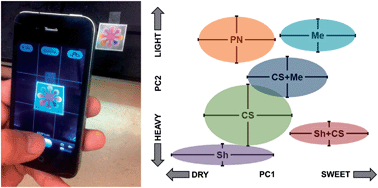
A paper microfluidic chip was designed and fabricated to evaluate the taste of 10 different red wines using a set of chemical dyes. The digital camera of a smartphone captured the images, and its red-green-blue (RGB) pixel intensities were analyzed by principal component analysis (PCA). Using 8 dyes and 2 principal components (PCs), we were able to distinguish each wine by the grape variety and the oxidation status. Through comparing with the flavor map by human evaluation, PC1 seemed to represent the sweetness and PC2 the bodyness of red wine. This superior performance is attributed to: (1) careful selection of commercially available dyes through a series of linear correlation studies with the taste chemicals in red wines, (2) minimization of sample-to-sample variation by splitting a single sample into multiple wells on the paper microfluidics, and (3) filtration of particulate matter through paper fibers. The image processing and PCA procedure can eventually be implemented as a stand-alone smartphone application and can be adopted as an extremely low-cost, disposable, fully handheld, easy-to-use, yet sensitive and specific quality control method for appraising red wine or similar beverage products in resource-limited environments.
Introduction
It is very important for the food and beverage industry to maintain consistency in their products through carefully selected quality control (QC) procedures. “Taste” of these products is typically evaluated for such QC, which largely comes from the human tongue, often assisted by (and sometimes dominated by) the human nose. In the past, such QC procedures have often been performed by human workers, typically by a group of taste panellists.1 Obviously, there exists a huge degree of variance with this approach, often being subject to the influence of a highly experienced worker, or to the health and eating habits of each individual, not to mention the cost and substantial time associated with it.2
An alternative to the taste panelists is the instrument-based taste QC, which has been performed utilizing high performance liquid chromatography (HPLC; to replace the human tongue) and/or gas chromatography-mass spectrometry (GC-MS; to replace the human nose). HPLC and GC-MS are probably the most practiced methods in appraising food/beverage quality, where each individual ingredient is analyzed qualitatively and quantitatively. However, these methods require complex instruments, wet laboratory set-up, and skilled personnel, thus not practical for small-sized food/beverage industry such as small wineries.3 In addition, they focus only on the lead ingredient and do not account for a large number of minor ingredients.1 Since most food and beverage samples are multi-component and contain lots of trace elements that are often difficult to be identified, large number of reagents should be used that can interact with those minor ingredients non-specifically, i.e., “fingerprinting” approach.
A better alternative is the use of non-specific sensor arrays, associated with an appropriate pattern recognition technique, towards taste sensing. This method actually mimics the working mechanism of the human tongue and nose.3,4 Previously, array sensors were made out of conductive coatings of metals or polymers that interacted with each taste chemical to a different extent, and subsequent electrochemical signals from those arrays were evaluated. These are commonly referred to as “electronic tongues.” (It is also possible to use a similar approach to replace a human nose, known as “electronic noses.”) Occasionally, those sensor arrays have been made in conjunction with piezoelectric materials, known as quartz crystal microbalance (QCM) or surface acoustic wave (SAW) devices, such that acoustic signals could be obtained instead of electrochemical signals.5 Several works on electronic tongues have been published for sensing soft drinks6,7 and for appraising wine quality.3,8,9 However, those electrochemical signals do not provide the necessary breadth of chemical information on food/beverage ingredients. Moreover, fabrication of these electronic tongues could still require substantial amount of time and labor, and subsequent use might require skilled personnel, although at a lesser extent compared to the laboratory-based HPLC or GC-MS method. Separate instruments such as an impedance analyzer or a frequency counter would be necessary, making them impossible to be used as portable systems.
A colorimetric sensor array has emerged as an alternative, using a set of colorimetric dyes.10–12 The color change pattern of the dye array upon exposure to multi-component analyte provides a “fingerprint” for the whole sample, and this array system makes relatively easy identification of a wide variety of food/beverage samples.4 Although each dye is not specific to a certain ingredient of food/beverage (or such relationship may be unknown), this should be acceptable for QC purposes as long as the method can chemically discriminate among different samples.
In this paper, we focus on the QC of red wine. Wines are unique in two different aspects. First, wines are typically produced by relatively small firms (wineries), whereas most other commercial food/beverages are produced by multi-national corporations. Second, wines (especially red wines) are much more complex and heterogeneous than any other beverage, and wine composition is influenced by geographic factors (soil and climate), grape varieties, production practices, and so forth.8 In an exceedingly competitive international market, wine producers need to invest in technology to improve product quality to remain competitive.13 Since wines are produced by small firms yet they are very complex and heterogeneous, human evaluation (by the taste panellists) is still the mostly adopted method in appraising wine quality.5
As a low-cost and portable yet sensitive method in appraising the quality of wine, the colorimetric sensor array is probably the best choice, especially considering its ability to account for substantial breadths of chemical information on the taste ingredients. However, such demonstration has not been reported to the best of our knowledge. Perhaps the particulate matters in red wine had some negative impacts in colorimetric detection: it is too “dark” and contains too many particulate matters. Since the typical pore sizes of the filters used for red wine range from a few microns to submicron sizes,14 the diameter of such “particles” can be assumed to be a few micron to submicron. Since visible light (red, green and blue, ranging from 0.4 μm to 0.75 μm, which is in the similar order of magnitude of the size of the particles in red wine) is used for colorimetric sensor arrays, these particles will scatter almost at its maximum under Mie scatter regime,15 greatly undermining the performance of colorimetric sensor arrays.
In this paper, we attempt to use a paper microfluidics16 as a disposable and cheap alternative to a sensor array. A droplet of undiluted red wine flows through chromatographic paper (to eliminate particulate matter from red wine) and split into 8 different wells (each with different colorimetric dye). Since a single sample splits into eight wells on a single paper microfluidics, sample-to-sample variations can be minimized, contributing to enhanced sensitivity and specificity.
A smartphone camera takes the image of paper microfluidics and the areas of interest (eight different circular wells) are selected. Red, green and blue pixel intensities from these areas of interest are obtained, and these multivariate dataset (8 dyes × 3 colors = 24 dimensions) are reduced to two dimensions using the linear pattern recognition technique, in this particular study, principal component analysis (PCA).
PCA has frequently been used in many other taste sensor works.1,3,5,8,13,17 PCA is a linear pattern recognition technique used for analyzing, classifying, and reducing the dimensionality of numerical datasets in a multivariate problem.18 It transforms original variables into a few new variables known as principal components (PCs). Each principal component is a linear combination of the original variables. These PCs account as much as possible for the variability contained in the original data. The first principal component (PC1) accounts for the maximum of the total variables, the second (PC2) is uncorrelated with the first and accounts for the maximum of the residual variance, and so on. PCs are used for showing the classification of the data clusters. The first two PCs construct two dimensional score plots, which show the relationship among the observations. Similar samples will be located close to each other. Hence, the graphical output (two or three dimensional score plots) can be used for determining the difference between groups and comparing this difference to the distribution of pattern within one group.
Such image processing and PCA can eventually be implemented as a stand-alone smartphone application, or within a cloud computing environment, and can eventually be adopted as an extremely low-cost, disposable, fully handheld, easy-to-use, yet sensitive and specific QC method for appraising red wine or similar beverage products, in resource-limited environment.
Materials and method
Dyes, taste chemicals, and red wine samples
All dyes (calconcarboxylic acid, crystal violet, methylene blue, cresol red, methylthymol blue, phenol red, fluorescein, and alizarin) were purchased from Sigma-Aldrich (St. Louis, MO, USA). These 8 dyes were carefully selected from the list of dyes previously reported in similar works,11,12 considering their frequency of use and commercial availability. Additionally, common pH indicators were added (cresol red, crystal violet, and methylene blue) primarily to monitor the acidic ingredients.
To check whether the selected 8 dyes show distinct RGB colorations with response to the ingredients of red wines, the following taste chemicals were selected: major organic acids (acetic acid, citric acid, lactic acid, and tartaric acid), ions (CaCl2, KCl, and NaCl), and sugars (fructose, glucose, and sucrose),19,20 all purchased from Sigma-Aldrich. Visible spectra of each dye to each taste chemical were measured using the USB4000-UV-VIS spectrometer from Ocean Optics (Dunedin, FL, USA), consisting of USB4000 and USB-ISS-UV-VIS from the same company. Each dye solution (1 mM) was mixed with an equal volume of 10 different taste chemicals (1 M, 0.1 M, 10 mM, 1 mM, and 0.1 mM). For each dye, transmittance values at 680 nm (representing red color), 540 nm (representing green color) and 470 nm (representing blue color) were measured for five different concentrations of 10 different taste chemicals, and the coefficients of determination (R2) were evaluated. (We used transmittance, not absorbance, to better explain RGB colorations.)
To compare our results with those of taste panellists, we purchased 6 different red wines (varying the grape species) from a single company (Yellow Tail, Yenda, Australia), who provided the publicly available “flavor map” (by taste panellists). These are Shiraz (Sh), Cabernet Sauvignon (CS), Shiraz 80% + Cabernet Sauvignon 20% (Sh + CS), and Pinot Noir (PN), all bottled in 2012 and purchased/experimented in 2014. The other two from the same vendor are Cabernet Sauvignon 60% + Merlot 40% (CS + Me) and Merlot (Me), bottled in 2013 and purchased/experimented in 2014. These six red wines were used as a “model sample set.”
Another 4 red wine samples from a different company (Lindeman's, Australia) were tested as an “evaluation sample set.” They were Shiraz (Sh2), Cabernet Sauvignon (CS2), Shiraz 67% + Cabernet Sauvignon 33% (Sh + CS2), and Pinot Noir (PN2), all bottled in 2013 and purchased/experimented in 2014.
Fabrication of paper microfluidics
The paper microfluidic channels were fabricated on cellulose chromatography paper (GE Healthcare; Springfield Mill, UK) using SU-8 negative photoresist (Microchem; Newton, MA, USA) diluted with negative resist thinner I (Sigma-Aldrich) in a 10 to 1 ratio. The design of the paper microfluidic chip included a sample inlet (diameter = 7 mm) at the center surrounded by 8 wells (diameter = 4 mm each) (Fig. 1A). The wells and the sample inlet were connected with 2.5 cm × 2.5 cm rectangular “channels.” This layout was printed on a transparency film using a laser printer and used as a mask. The paper was first saturated with the photoresist solution, then dried on a hot plate at 85 °C, and finally UV-exposed for 3 minutes on each side using the aforementioned mask. Sequential rinsing with acetone and isopropyl alcohol was used for developing the pattern.21 The resulting channel was SU-8-free and hydrophilic, allowing the red wine sample to spontaneously flow by capillary action from the sample inlet to each reaction well (Fig. 1B).
 |
| | Fig. 1 (A) Eight different dyes were pre-loaded and dried at each well. (B) A red wine sample (30 μL) is loaded at the center of the paper microfluidic chip. (C) A smartphone takes a digital image of the paper microfluidic chip, after the red wine sample filled the entire channel. (D) Particulate matters of red wine are filtered within paper microfluidic chip. | |
Paper microfluidic assay for red wine samples
Each dye solution (3 μL) was loaded at the designated location, which was in the center of each well, and dried before use (Fig. 1A). The sample inlet was loaded with 30 μL of red wine samples that split into and flowed through 8 channels per wells by capillary action. The sample was mixed with each dye and filled each well entirely within 15 seconds (this fill-up time was very reproducible). Right after this, a digital image was taken using a smartphone camera (5 megapixels, iPhone 4; Cupertino, CA, USA) with both auto-focus and auto-exposure modes (Fig. 1C), in parallel and with 15 cm distance from the paper microfluidic chip. These images were imported into ImageJ software (National institutes of Health; Bethesda, MD, USA). Each image was split into red, green and blue (RGB) images and the average RGB pixel intensities were evaluated from each well. To eliminate the potential effects of different ambient lighting and chip-to-chip variation, all RGB pixel intensities were normalized with that of “white” background of paper.
Principle component analysis (PCA)
Twenty-four color data (8 dyes × 3 colors) were taken from each wine sample (from the 6 model sample set; Yellow Tail) that was loaded on the paper microfluidic chip. Each experiment was replicated three times, each time using different paper microfluidics, dyes, and red wine samples. The color data from the red wine sample was imported into a multivariable analysis software called “The Unscrambler” version 9.7 (CAMO Software AS, Olso, Norway) and PCA was executed. Additional experiments were performed for the 4 evaluation sample set (Lindeman's) in order to validate the developed PCA model. The data from the model sample set were used as a validation set for PCA execution. These experiments were also replicated three times.
Results and discussion
Correlations of RGB color intensities of each dye to the taste chemicals
Prior to PCA, the correlation between the RGB color intensities of each dye and the concentrations of taste chemicals was evaluated, at the fixed wavelengths representing RGB colorations (680 nm for red, 540 nm for green, and 470 nm for blue). Fig. 2 shows the coefficients of determination (R2) for such relationship. Data points closer to 1 show very strong correlations. The number of data points that show R2 > 0.9 and their corresponding colors (red, green or blue) are quite different by each dye. In fact, none of the dyes show any similarity with each other in Fig. 2. This clearly indicates the relative independence of the coefficient of determination to the transmittance with respect to three distinct colors (RGB), indicating the cross-reactivity of dyes to different taste chemicals and the ability to estimate the concentrations of each taste chemical.
 |
| | Fig. 2 Coefficients of determination (R2) between the transmittances of each dye at 680 nm (red), 540 nm (green), and 470 nm (blue) and the concentrations of each taste chemical. Equal volumes of 1 mM dye and 0.1 mM to 1 M taste chemicals were used. | |
Can RGB coloration analysis distinguish different red wines?
To evaluate any possibility of discriminating the red wines purely based on their RGB colorations without using any chemicals, the RGB color intensities of the wine-loaded central area of a paper microfluidic chip (i.e. before the red wine diffused and hit the pre-loaded chemical dyes) were also collected and analysed, for the model sample set (six red wines from Yellow Tail). For each color component, the error bars are mostly overlapping for six different red wines, with the exception of Pinot Noir against Cabernet Sauvignon + Merlot blend (Fig. 3). This result represents a very low chance of discriminating red wines purely from the RGB colorations on the paper fibers, and the necessity for the chemical dyes and PCA.
 |
| | Fig. 3 Red, green and blue color intensities of the wine-loaded paper (before the wine hit the chemical dyes). Sh = Shiraz; CS = Cabernet Sauvignon; CS + Me = Cabernet Sauvignon 60% + Merlot 40%; Sh + CS = Shiraz 80% + Cabernet Sauvignon 20%; Me = Merlot; PN = Pinot Noir. Error bars represents standard errors. | |
Taste assay results with a model sample set
Each fresh wine sample was assayed on the paper microfluidic chip, each time using different paper microfluidic chip. After the wine sample reacted with the pre-loaded dyes, digital images were taken, and split into RGB. The 24 intensity data (8 dyes × 3 colors) from a single sample were transformed into principal components (PCs). The first principal component (PC1) accounts for the maximum of the total variables, the second (PC2) is uncorrelated with the first and accounts for the maximum of the residual variance. PC1 and PC2 were used for the classification of the data clusters and constructed into a two-dimensional score plot. The experiments were repeated three times, each time using different microfluidics, dyes, and red wine samples. x- and y-averaged score plots were constructed in Fig. 4, while the error bars represent standard errors and the ellipses represent the extents of standard errors for each data point. On average, the PC1 and PC2 accounted for 74.76% (PC1: 55.34%, PC2: 19.42%) of the total variances.
 |
| | Fig. 4 Score plot of PCA (average of three experiments using different paper microfluidics, dyes, and red wine samples) for a model sample set (Yellow Tail). x- and y-error bars represent standard errors, and the ellipses represent the extents of standard errors of each data point. The RGB color data from 6 red wines with 8 dyes were imported into Unscrambler version 9.7 for PCA. | |
All 6 fresh red wines from the model sample set (Yellow Tail), Shiraz (Sh), Cabernet Sauvignon (CS), Shiraz 80% + Cabernet Sauvignon 20% (Sh + CS), Cabernet Sauvignon 60% + Merlot 40% (CS + Me), Merlot (Me), and Pinot Noir (PN), fall into different regions in the PCA score plot without most of the standard errors overlapping, demonstrating promising identification of red wines using this method, as well as sensitivity and reproducibility of the assay.
This PCA result was compared with the flavor map provided by the wine producer22 (Fig. 5) and the PCA plot matched the flavor map very well. Pinot Noir and Merlot are characterized as light wines and located at top area in both Fig. 4 and 5. Shiraz is the heaviest and dry wine and located at bottom left in both figures. Shiraz + Cabernet Sauvignon and Merlot are the sweetest wine among six and located at right in both figures. Finally, Cabernet Sauvignon and Cabernet Sauvignon + Merlot are accordingly located at central area in both Fig. 4 and 5. From these results, PC1 can be interpreted as explaining the sweetness (sweet or dry) of red wine, while PC2 the bodyness (light or heavy) of red wines.
 |
| | Fig. 5 The flavor map of Yellow Tail brand red wines. Adapted from http://www.discoveryellowtail.com/fun/flavor-map.php. | |
This superior performance is attributed to: (1) careful selection of dyes as described above (correlation study), (2) minimization of sample-to-sample variation by splitting a single sample into multiple wells on the paper microfluidics, and (3) filtration of particulate matter through paper fibers. The filtration of particulate matter within paper microfluidics can be confirmed from Fig. 1D. After the wine sample was loaded, it created a noticeable, dark red-colored “ring” along the edge of the sample inlet, indicating the filtration of particulate matter. This filtration enabled the elimination or at least minimization of Mie scatter in visible wavelengths by such particulate matter, thus allowing the other taste ingredients to travel towards 8 different wells and react with pre-loaded dyes.
Taste assay results with an evaluation sample set
To validate the developed PCA model, 4 additional red wines from a different vendor (Lindeman's) were tested using the same method described above, again using the paper microfluidics. The resulting RGB intensity data were imported to the PCA model, and the data from the model sample set (the red wines from Yellow Tail; refer to Fig. 4) were selected as a calibration set for PCA execution. Basically, the mathematical model developed by the model sample set was applied to the evaluation sample set, to construct a PCA score plot shown in Fig. 6.
 |
| | Fig. 6 Score plot of PCA (average of three experiments using different paper microfluidics, dyes, and red wine samples) for an evaluation sample set (Lindeman's). x- and y-error bars represent standard errors, and the ellipses represent the extents of standard errors of each data point. | |
Fig. 6 shows a good overall match with Fig. 4, where Pinot Noir is located at the top (light wine), Shiraz at the bottom left (heavy and dry wine), and Shiraz + Cabernet Sauvignon at the right (sweet wine). A small discrepancy can be found, specifically for Shiraz + Cabernet Sauvignon, which can easily be explained in terms of different blending ratios (80% + 20% in Fig. 4 vs. 67% + 33% in Fig. 6). Through this validation experiment, we can conclude that the developed PCA model can distinguish each wine by the grape variety.
PCA loadings distribution plot
Fig. 7 shows the PCA loadings distribution plot from the model sample set (Yellow Tail). Similar to the correlation plots between the dyes and individual taste chemicals (Fig. 2), all 24 data points (8 dyes × 3 colors) are well distributed – none of them show any significant overlaps. Specifically, methylthymol blue in red color (MTB/R) and phenol red in red color (PR/R) shows the highest contribution to PC1, potentially indicating the best dye/color combination in explaining the sweetness of red wine. Cresol red in red color (CR/R) and Phenol red in blue color (PR/B) shows the strongest negative and positive contributions to PC2, respectively, potentially indicating the best dye/color combinations in explaining the lightness (CR/R) and heaviness (PR/B) of red wine.
 |
| | Fig. 7 PCA loadings distribution plot for 8 dyes (CCA = calconcarboxylic acid; CV = crystal violet; MB = methylene blue; CR = cresol red; MTB = methylthymol blue; PR = phenol red; F = fluorescein; A = alizarin) in 3 colors (RGB), from the model sample set data. | |
Oxidized red wine samples
Additional experiments were performed using the red wine samples, with their bottles opened for 24 h in a well-ventilated laboratory. Each bottle was emptied by a half and hand-shaken to introduce oxygen to red wine. Sulphite was not added. The paper microfluidic assays were performed (again repeated for three times). These results are shown in Fig. 8. The PC1 and PC2 accounted for 75.15% (PC1: 51.96%, PC2: 23.19%) of the total variances. The standard errors are much bigger than those with fresh red wine samples, without significant separations. Additionally, all data points in the PCA score plot seemed to be clustered towards the center (origin of the plot). This clustering to the center represents that the paper microfluidic assay was not able to distinguish the difference of oxidized red wine samples. As the red wines continuously react with oxygen in the air, “taste flattening” and “acidification” happens, losing their own flavour.20 And because of this taste flattening and acidification, distinction became quite difficult among different samples. Since this oxidation is the most common problem in maintaining the quality of red wine, during fermentation and/or storage, we can claim that the proposed method may also be utilized as a QC tool in winemaking.
 |
| | Fig. 8 Score plot of PCA (average of three different experiments for each red wine) for 4 different oxidized red wines, assayed on the paper microfluidics. | |
This oxidation assay must be used with caution and should be used only as a QC tool but not as a means to quantify the extent of oxidation, since there could have been many unknown parameters and conditions during this oxidation experiment.
Conclusion
The results shown in Fig. 4, 6 and 8 indicate successful distinction of red wines by their grape varieties and oxidation status. The PCA result was compared with the flavor map and they matched very well. PC1 can be interpreted as explaining the sweetness (sweet or dry), while PC2 the bodyness (light or heavy) of red wine. Minimization of sample-to-sample variation by splitting a single, undiluted red wine sample into 8 different wells, filtering particulate matters by paper fiber, each at exactly the same volume (microfluidic patterning), also contributed to the improved reproducibility and smaller errors, towards better separation in the PCA plot. The image processing and PCA procedure can eventually be implemented as a stand-alone smartphone application and can be adopted as an extremely low-cost, disposable, fully handheld, easy-to-use, yet sensitive and specific quality control method for appraising red wine or similar beverage products in resource-limited environments.
Notes and references
- C. Eckert, M. Pein, J. Reimann and J. Breitkreutz, Sens. Actuators, B, 2013, 182, 294 CrossRef CAS PubMed.
- H. Sun, Z. H. Mo, J. T. S. Choy, D. R. Zhu and Y. S. Fung, Sens. Actuators, B, 2008, 131, 148 CrossRef CAS PubMed.
- M. Gutiérrez, C. Domingo, J. Vila-Planas, A. Ipatov, F. Capdevila, S. Demming, S. Büttgenbach, A. Llobera and C. Jiménez-Jorquera, Sens. Actuators, B, 2011, 156, 695–702 CrossRef PubMed.
- C. Zhang and K. S. Suslick, J. Agric. Food Chem., 2007, 55, 237 CrossRef CAS PubMed.
- M. López de Lerma, A. Bellincontro, T. García-Martínez, F. Mencarelli and J. J. Moreno, Food Res. Int., 2013, 51, 790 CrossRef PubMed.
- J. F. van Staden, M. G. Mashamba and R. I. Stefan, Talanta, 2002, 58, 1109 CrossRef CAS.
- J. K. Abraham, S. Karjathkar, S. Jacesko, V. K. Varadan and J. W. Gardner, Proc. SPIE, 2005, 5763, 414 CrossRef CAS PubMed.
- W. Cynkar, R. Dambergs, P. Smith and D. Cozzolino, Anal. Chim. Acta, 2010, 660, 227 CrossRef CAS PubMed.
- Y. M. Bae and S. I. Cho, Trans. ASABE, 2002, 48, 251 CrossRef.
- N. A. Rakow and K. S. Suslick, Nature, 2000, 406, 710 CrossRef CAS PubMed.
- J. J. Lavigne, S. Savoy, M. B. Clevenger, J. E. Ritchie, B. McDoniel, S. Yoo, E. V. Anslyn, J. T. McDevitt, J. B. Shear and D. Neikirk, J. Am. Chem. Soc., 1998, 120, 6429 CrossRef CAS.
- H. Huiqi, X. Gaixia, Y. Xuesong and W. Ping, Meas. Sci. Technol., 2003, 14, 1040 CrossRef.
- B. T. Weldegergis, A. de Villiers and A. M. Crouch, Food Chem., 2011, 128, 1100 CrossRef CAS PubMed.
- MoreWine!, Filtering Wine, Concord, CA, USA, 2013, http://morewinemaking.com/category/filtering-wine.html Search PubMed.
- H. C. van de Hulst, Light Scattering by Small Particles, John Wiley and Sons, Mineola, NY, 2013 Search PubMed.
- E. J. Maxwell, A. D. Mazzeo and G. M. Whitesides, MRS Bull., 2013, 38, 309 CrossRef CAS.
- C. Zhang, D. P. Bailey and K. S. Suslick, J. Agric. Food Chem., 2006, 54, 4925 CrossRef CAS PubMed.
- H. Zhang and J. Wang, J. Stored Prod. Res., 2007, 43, 489 CrossRef PubMed.
- S. Rovio, K. Sirén and H. Sirén, Food Chem., 2011, 124, 1194 CrossRef CAS PubMed.
- V. Cheynier, R. Schneider, J.-M. Salmon and H. Fulcrand, Reference Module in Chemistry, Molecular Science and Chemical Engineering, Elsevier, NY, 2010, vol. 3, pp. 1119–1172 Search PubMed.
- A. W. Martinez, S. T. Phillips, B. J. Wiley, M. Gupta and G. M. Whitesides, Lab Chip, 2008, 8, 2146 RSC.
- Yellow Tail, Explore Our Flavor Map, Yenda, Australia, 2013, http://www.discoveryellowtail.com/fun/flavor-map.php Search PubMed.
|
| This journal is © The Royal Society of Chemistry 2014 |
Click here to see how this site uses Cookies. View our privacy policy here.