DOI:
10.1039/C4RA01558D
(Paper)
RSC Adv., 2014,
4, 18637-18644
Renewable resource-based polymeric microencapsulation of natural pesticide and its release study: an alternative green approach†
Received
22nd February 2014
, Accepted 25th March 2014
First published on 31st March 2014
Abstract
Recently, the use of renewable sources in synthesizing polymers has been remarkably increased due to numerous reasons, such as finite as well as unreliable petroleum sources and increasing environmental awareness. Considering the need of the day, we are reporting the preparation of polymeric microcapsules based on cardanol as a renewable source by an in situ polymerization technique to encapsulate the biobased core. Comparative study for successful encapsulation of karanja oil by cardanol formaldehyde and conventional phenol formaldehyde-based microcapsules is made. The success of polymerization is characterized by structure and thermal analysis using FTIR and TGA, respectively. Distinctive surface morphologies of the prepared microcapsules are examined by SEM, which confirmed formation of wrinkle-free and globular-shaped microcapsules. The size of prepared microcapsules is determined by a particle-size analyzer. The amount of encapsulated core material released is estimated quantitatively by solvent extraction, and gravimetric and UV spectrophotometric methods. Thus, the current research is oriented towards the exploration of biobased, renewable shell material for the microencapsulation of biobased cores for the structural design of a new generation of pesticide formulations. Therefore, the most recent advancements include an interdisciplinary combination of biobased polymers and agrochemicals, which is a significant requirement for attaining a cleaner global environment.
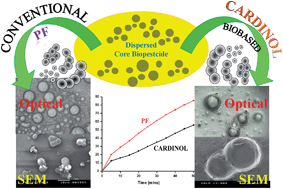
Introduction
In this scenario, the synthesis of polymers from renewable resources has attracted the attention of researchers throughout the globe because of the escalating cost of petrochemicals, increasing demand and concern regarding depletion of the mineral oil sources along with political and environmental concerns.1–5 Although there is a significant response in the development of biopolymers, limitations exist such as the higher cost of renewable polymers and their poor performance, compared with petroleum-based polymers.6 A limited number of successful examples of polymers based on renewable sources include polyurethanes derived from alditols and other polyols such as polyamides, polyesters, polyanhydrides, polyphosphazenes, polysaccharides, benzoxazines, epoxy resins and phenolic resins.7
With consideration for renewable resources, non-toxic and non-volatile cashew nut shell liquid (CNSL) contains a phenolic moiety with a side chain of 15-carbons, and it has been explored considerably more for polymer preparation.8 Attempts regarding biopolymers based on CNSL provided an interesting platform to substitute conventional raw materials of phenol formaldehyde (PF) by using biobased feedstock.6 Although bio-resources have proven their role in the preparation of such polymers as polyesters, polyurethanes, PF and phenolics, their applications as a shell for microencapsulated cores is limited to water-soluble renewable sources only. Research on the preparation of renewable sources based on polymeric shells by using in situ polymerization is not available. Hence, the use of appropriate renewable sources as sustainable feedstocks for thermosetting materials can be considered a novel path for the field of encapsulation.
Encapsulation can be described as enclosing some internal medium with a semi-permeable membrane that controls the exchange between the environment and such internal contents as fragrance oils, cosmetics, self-healing agents, immobilized extraction reagents, and pesticides.9–12 The most recent advancements in the core of biopolymers is focused on applications, which are well established on the basis of petroleum feedstocks and their applications include composites, foams, drug delivery, coatings, etc. Comparatively, encapsulation is among the more recent applications of polymers for protecting, delivering with persistent rate of release, masking of undesired odours, converting liquid components to free-flowing powders and improving the physical or chemical stability of the core. Several reports are available for the encapsulation of cores by different shells; in fact, most of them have covered such routine shells as PF, urea formaldehyde (UF), melamine formaldehyde (MF), polyurea, polyurethane. Due to the requirement in different fields and tailored properties for shells, the search for the development of new shells is a recent topic.13–15
Currently, all polymeric shell materials used for encapsulation by in situ polymerization are based on petroleum feed stock. However, there are reports regarding renewable sources based on cores, including neem and karanja oils. This is the first report regarding efficient encapsulation of a biobased core (karanja oil) by biobased shell-wall material (cardanol based) via in situ polymerization. In addition, our investigation has focused on designing shell components and the release of core substances, wherein both are based on renewable sources.
The continuous application of synthetic organic pesticides in the agricultural field for controlling pests affects bio-diversity, leading to environmental damage affecting living organisms and human health.16,17 Hence as a alternative green approach, agriculturists are now interested in the application of formulated bio-pesticides, which have attracted the attention and interest of those concerned with integrated crop management (ICM) as an efficient method of pest management by developing formulations that are safer and environmentally friendly.18
On parallel ground, neem and karanja oils have proven themselves as effective biobased insect growth-inhibiting pesticides, active materials against insects and repellent materials to insects.19,20 Due to the presence of such sensitive moieties as epoxide rings, carbonyl esters and ‘p’ electrons, the compound may have a short shelf life in an exposed environment, which can be overcome by microencapsulation.21 Because it protects the contents against adverse environmental conditions within inert coating or wall material and prevents the loss of volatile ingredients with the added advantage of controlled release.22–25 The literature reported encapsulation of bio-pesticides, i.e. neem seed and karanja oils by biobased barrier of shell walls, including Ca-alginate,19 starch21,23 and guar gum matrices.26,27 However, the beauty of the current research is the exploration of biobased, cardanol formaldehyde polymeric shell walls as a new shell material by an in situ polymerization technique for the efficient microencapsulation of karanja oil and in the future for other cores.
In cardanol, i.e. two ortho and one para positions would have the same degree of activation as those in phenol. These three possible reactive sites permit the eventual formation of a cross-link network to PF during polymerization as in the case of phenol.6 The potential objective of the current investigation was to develop biobased shells from cardanol for biobased pesticides.
As an exciting achievement, this work demonstrated a framework for an eco-design of biobased polymeric microcapsules based on renewable resources that can be further extended for drugs, self-healing agents, catalysts, among others.
Experimental
Materials
The materials used in experiments consist of phenol, formalin (37 wt% formaldehyde), poly(vinyl alcohol) (PVA), butanol and sodium lauryl sulfate (Loba Chemicals, Mumbai, India), cardanol (Sigma Aldrich, Mumbai, India) and xylene and resorcinol (S d Fine Chemicals Ltd., Mumbai, India). Karanja oil selected as both a core and model bio-pesticide for encapsulation was supplied by Vishal Chem., Mumbai, India. All of the chemicals used were of synthetic grade and used as such in the experiment. Other chemicals such as NH4Cl and HCl used in experiments were of analytical grade.
Preparation of renewable sources based on microcapsules
Reaction schemes for the preparation renewable sources based on (cardanol) novel microcapsules are depicted in Fig. 1. Cardanol-based microcapsules were prepared by adapting an in situ polymerization technique at the interface of the organic and aqueous phases. Typically, 50 mL aqueous solution of PVA (2.5 wt%) was mixed in 50 mL of deionized water in a three-necked round-bottomed flask, which was suspended in an oil bath maintained at ambient temperature. The solution was homogenized by agitation with the help of a mechanical stirrer; 0.45 g (0.0014 mol) of cardanol was added into the solution. 0.16 g (0.0021 mol) of butanol and 0.01 g of sodium lauryl sulfate were then gradually added to the solution under continuous stirring. The solution was adjusted to a pH value of 7.5 by taking appropriate amount of NH4Cl (approx. 0.5 g). After attaining a slight alkaline pH, the reaction mixture was stirred for 5 min to which karanja oil as a bio-pesticide (10 mL) was added slowly to form an emulsion and allowed to stabilize for 30 min under constant agitation. After stabilization of the emulsion, 2.07 g (0.0689 mol) of 37 wt% aqueous solution of formaldehyde was added to it. To initiate a reaction, the emulsion was slowly heated up to 65 °C under stirring at 300 rpm for 2 h. Afterwards, several drops of 5 wt% of HCl were added to it to adjust the pH to around 4. Subsequently, 0.14 g (0.0012 mol) of resorcinol was added to it, and the reaction was continued at the same temperature for about 3 h. The reaction mixture was monitored for the formation of microcapsules under an optical microscope; upon confirmation, the reaction mixture was cooled to room temperature. The prepared polymeric microcapsules from the suspension were recovered by filtration under vacuum, rinsed with water and then dried under vacuum.
 |
| | Fig. 1 Reaction scheme for renewable sources based on cardanol formaldehyde (CF) novel microcapsules. | |
Synthesis of non-biobased microcapsules
The probable reaction scheme for the preparation of non-biobased phenol formaldehyde (PF) microcapsules is given in Fig. S1.† These microcapsules were also fabricated by the same procedure that was adapted for the cardanol based microcapsules i.e. in situ polymerization of phenol, formaldehyde and resorcinol by using an oil-in-water interface emulsion technique. At room temperature, typically 50 mL aqueous solution of PVA (2.5 wt%) was added to 50 mL of deionized water, which was previously placed in a three-necked, round-bottomed flask and suspended in an oil bath. Under constant agitation, 0.94 g (0.0099 mol) of phenol was gradually added to the PVA solution and the pH adjustment to a value of 7–8 by having an appropriate amount of NH4Cl (approx. 0.75 g; 0.0140 mol). To form an emulsion, karanja oil (10 mL) was added slowly to the previous solution and allowed to stabilize for next 30 min under constant stirring at 300 rpm.
After taking 1.61 g (0.0536 mol) of formalin (37 wt% aqueous solution of formaldehyde), the stabilized emulsion was initiated and slowly heated to 65 °C and continued for the next 2 h. The emulsion was then acidified (pH = 4) by adding 2–3 drops of 5 wt% of HCl. After acidification, 0.12 g (0.0010 mol) of resorcinol was added to the emulsion, and the reaction was allowed to continue for next 3 h under the same conditions. Further, the reaction mixture was cooled to room temperature, and microcapsules were separated by filtration under vacuum. The prepared microcapsules were washed with water followed by xylene (to remove suspended oil) and then dried under vacuum.
Analyses of microcapsules
The FTIR spectra of the core and shells were considered to detect chemical changes that took place during microencapsulation of monomers. The FTIR spectra of the isolated core and microcapsules were recorded on a Fourier transform infrared spectrophotometer (FTIR Shimadzu 8400, Japan) by using KBr pellets. Preliminary observations and physical appearance of cardanol- and phenol-based microcapsules were completed on an optical microscope (Labomed Sigma, 2124001, Texas) from 40–100× resolution. The prepared microcapsules were analyzed for their morphological study under a scanning electron microscope (JEOL JSM 6360 and JEOL JSM 5400, Japan). The mean sizes and size distributions of the synthesized microcapsules were determined by suspending microcapsules in distilled water by a laser particle-size analyzer (Mastersizer 2000, M41100167, Malvern, UK) at 25 °C. The thermal behavior of the microcapsules and bio-pesticides was evaluated with a thermo gravimetric analyzer (TGA-50, Shimadzu) in which the samples were heated from room temperature to 600 °C at the heating rate of 10 °C min−1 in an inert nitrogen environment.
Encapsulation yield and loading
The amount of bio-pesticide entrapped in the fabricated microcapsules (novel biobased and non-biobased shells) was determined by xylene extraction of the core material by using a Soxhlet apparatus. The total quantity of core content entrapped by shell materials was determined.28
Controlled release of core (bio-pesticide) through polymeric shells
The controlled release rate of a bio-pesticide encapsulated in microcapsules was quantitatively analyzed by a weight-loss drying method and, subsequently, on a UV spectrophotometer (mini UV, Shimadzu and UV-3600 Spectrophotometer, North America). The vacuum-dried samples of the microcapsule in triplicate were weighed accurately for each analysis. To extract the encapsulated core by xylene (10 mL) at regular time intervals, cross-linked microcapsules were subjected to mechanical jerks by swirling for 5 min and filtered with a Gooch crucible. Quantitatively, the filtrate collected from each interval was diluted to 100 mL in a volumetric flask by using xylene as a solvent. The UV plot of absorbance for the samples extracted at various time intervals and standards were measured in a 1 cm quartz cell by using the mode of spectral measurement in combination with a reference cell containing a xylene. The absorbance of known concentrations of a core was measured in a fixed wavelength measurement mode of UV equipment. Similarly, the absorbance of the extracted core was also determined and quantified accordingly. The UV absorbance of karanja oil (standard and extracted cores) was measured at 230–275, 300–320 and 335–400 nm. As the selected core is soluble in xylene, it was selected as a solvent to investigate and predict the general trend of the release profile. Different solvents, which can easily soluble core, might be used to analyze the release pattern and for forecasting in practical agricultural fields.
Results and discussion
The preparation of novel biobased microcapsules from cardanol and non-biobased microcapsules from simple phenol were completed in our research laboratory. The results obtained for the formation of shells, morphology, particle size and thermal behavior of microcapsules, and the controlled release of the core are subsequently discussed.
FT-IR analysis of microcapsules
The FTIR spectra of core material, i.e. karanja oil as a bio-pesticide, biobased and conventional PF microcapsules loaded with bio-pesticides are shown in Fig. S2.† The characteristic sharp band that appeared at 1743 cm−1 was due to the presence of a carbonyl group of ester in an oil.28 The bands at 1610 and 1513 cm−1 represented the characteristics of the C–C–O asymmetric stretching and C–C stretching of aromatic rings, respectively.29 Broad bands observed in the range of 3000–3150 cm−1 may be due to –OH groups present in polymeric shells.30 The presence of –C–H stretching of the methylene group was confirmed by the appearance of two bands at 2926 and 2852 cm−1.31 The previously mentioned similar bands appeared in the biobased novel, as well as non-biobased PF microcapsules. Further, evidence for the presence of the –OH group of cardanol and phenol with formaldehyde in microcapsule shells came from the appearance of broad bands in the range of 3000–3450 cm−1.
Additionally, the band with increased intensity at 723 cm−1 indicated the frequency of 2,4,6-trisubstituted phenol and substituted cardanol in the prepared microcapsules. The presence of such bands in the case of biobased and non-biobased PF shells confirmed the polymerization of cardanol and phenol. The band at 1348 cm−1 was observed for the phenol –OH in plane bending was also detected for phenol formaldehyde resin.32 The characteristic sharp peak that appeared at 1743 cm−1 did not alter even after the formation of microcapsules, thereby indicating the absence of chemical interactions between a core and a shell.
Thus, the core molecule retained all its functional groups during the processing of novel biobased and non-biobased microcapsules. The same frequencies for functional groups present in FTIR of core and microcapsules demonstrated that core remained inactive for any chemical interaction during polymerization and additionally confirmed the formation of the polymeric barrier, i.e. novel biobased and non-biobased PF as shell materials for the encapsulation of a bio-pesticide.
Surface morphology of microcapsules
Scanning electron microscopy (SEM). SEM images of the new biobased microcapsules are visualized in Fig. 2 by using 10 kV of energy source from a bundle of electron clouds and a magnification of 1–2 times. Biobased microcapsules were seen as an individual sphere with the least aggregations that confirmed the formation of biobased polymeric microcapsules. The surfaces of biobased microcapsules seen in SEM were rough with single, hard sheet-like structures as seen in Fig. 2g–h.
 |
| | Fig. 2 SEM micrographs of biobased microcapsules exposed to 50 °C (a and b) 00 h, (c and d) 48 h, (e and f) 96 h and (g and h) 144 h. | |
The development of rough structures (Fig. S3†) on the surfaces of microcapsules might have acted as a better barrier for the core to be released as compared with smooth and soft surfaces as seen in Fig. S4.†,33
SEM images (Fig. 3) of non-biobased PF microcapsules containing bio-pesticides are given for examining surface morphology. SEM analysis revealed that conventional PF microcapsules were found to be smooth and soft, compared with that of cardanol-based. Phenol-based microcapsules might enable the presence of a sustained releasable membrane.29,30 The smooth surface morphology of the microcapsules could be useful with regard to the protection and sustained release of the interior for the core.29 Additionally, when microcapsules were exposed for longer periods of time, the shrinkages resulted to greater support of the fact of higher release rates of bio-pesticides as a core material, rather than the microcapsules prepared by using cardanol (Fig. S4†).
 |
| | Fig. 3 SEM micrographs of non-biobased PF microcapsules exposed to 50 °C for (a and b) 00 h, (c and d) 48 h, (e and f) 96 h and (g and h) 144 h. | |
Particle-size analysis
The particle-size distribution of the prepared biobased novel and conventional PF microcapsules containing bio-pesticides as a core was evaluated by a particle-size analyzer, and histograms are displayed in Fig. 4. The graphical distribution of the mean diameters for different microcapsules is indicated in Fig. S5.† From the particle-size histogram, it was determined that the biobased microcapsules have broad particle-size distribution in the range of 30–600 μm and mean diameter of about 125 μm. The microcapsules prepared from non-biobased PF had narrow distribution of particle size, i.e. in the range of 5–180 μm with mean diameter of about 30 μm. When we compared mean particle sizes and the distributions of bio- and non-biobased microcapsules, we determined that both values were larger in the case of biobased microcapsules than in that of the non-biobased.
 |
| | Fig. 4 Particle-size histograms: (a) biobased; (b) non-biobased PF microcapsules. | |
The probable reason may be the various size ingredients involved in the reaction systems. As the procedure and all parameters involved remained same for the fabrication of both polymeric microcapsules, we concluded that it would be the only reason for having microcapsules with various particle sizes and distributions in the cases of bio- and conventionally based phenol–formaldehyde microcapsules. It is generally observed that many microcapsules are also being formed on account of the turbulence in fluid flow around the propeller blades.29 On the other hand, conventional phenols are engaged, due to good miscibility and homogenous reaction mass, comparatively than cardanol and resulted in finer microcapsule formation. Particle sizes and shapes are believed to affect release rates,34 smaller-sized microcapsules have higher surface area, thereby releasing the core to a higher extent and that larger size and distribution might result in the delayed release of a bio-pesticide.
Thermogravimetric analysis
In this study, TGA investigation was carried out for a pure core, novel and conventional microcapsules from ambient to 700 °C temperature. Fig. 5 shows a TGA diagram of the novel microcapsules, conventional microcapsules and pure-core material. Both, i.e. pure core (karanja oil) and conventional, microcapsules showed highly similar weight losses with three stages of degradation. Conversely, the novel microcapsules showed only two steps of degradation with progress in temperature.
 |
| | Fig. 5 TGA curves (a) cardanol-based novel microcapsules; (b) phenol–formaldehyde conventional microcapsules; and (c) core bio-pesticides. | |
For a pure-core moiety, the initial stage weight loss of about 28% was observed at 103 °C, which might be due to traces of moisture present in a core (karanja oil). About 24% of second-stage weight loss was attributed to the degradation of karanja oil at 260 °C. With weight loss of approximately 48%, significant changes may occur at the molecular level around 403 °C, which was third-stage degradation. Thermal degradation of the biobased microcapsules was observed in two steps, and the first step started at about 264 °C with approximate weight loss of about 31% due to the presence of active-core karanja oil. The second step of weight loss of around 68% was observed after 420 °C temperature onwards during which the C–C and C–O bonds of the main polymeric chain may be broken.11
Further, conventional phenol–formaldehyde microcapsules experienced three stages of weight loss. The initial stage weight loss around 25% was seen at 225 °C (from 125–270 °C), presumably due to the elimination of formaldehyde and the decomposition of small molecular minor fractions.35 In the case of the second step, decomposition occurred at 350 °C with approximate weight loss of 28% attributed to the degradation of karanja oil, coupled with depolycondensation reaction. The third stage, i.e. a residual weight loss of about 47%, was clearly observed above 415 °C that may be associated to the cracking and degradation of shell-wall material. Not surprising, the thermal stability of the core is evidently enhanced by the shielding effect due to the presence of a polymeric shell because it has already been proven that the capsule shell wall (novel and conventional) provides additional thermal stability to the core.36
Encapsulation yield and oil loading capacity
From the Soxhlet extraction, it was determined that the cardanol-based novel microcapsules had 28% encapsulated yield of core and that of routine PF microcapsules possessed 31% yield, whereas the remaining material had a residual mass contributed by the shell-wall materials of synthesized microcapsules. Thus, the Soxhlet extraction study of encapsulated cores in both types of microcapsules confirmed the presence of the core and also provided information of the encapsulated yields of both microcapsules, which was in agreement with the yield obtained by thermal analysis.
Release experiments
The release rate of encapsulated karanja oil from both types of microcapsules in xylene as a solvent was determined by two different techniques viz. loss on drying and UV spectroscopic methods; results of both are subsequently compared to check any discrepancy.
Release based on loss on drying method
The release rate (%) of bio-pesticide as a core material was calculated by the loss on drying method,30 the results of which are summarized in the Table SI† and represented in Fig. 6. It was evidently observed that the biobased microcapsules showed a delayed release of the core in comparison to routine microcapsules. Moreover, in the case of cardanol based system, the percentage release rate was also slow within defined time interval. Even though the cardanol–formaldehyde resins exhibited a lower content of oil, i.e., oil-holding capacity than that of phenol–formaldehyde resins, slower release may be due to steric hindrance imparted by the presence of a bulky C15 side chain of cardanol.6 Conversely, the absence of any disturbance at the molecular level for routine PF would have triggered the release during a given time period. During the morphological study (SEM), observations made regarding the hard structure of a shell for biobased microcapsules is in full accord with the release rate studied by a loss-on-drying method. Additionally, the lower mean diameter size with narrow particle-size distribution of non-biobased systems may have higher surface areas than that of biobased with broad, particle-sized distribution and comparatively bigger mean diameter size. This may be considered a significant contributing factor for providing large surface areas, which might be responsible for higher shoots of release from non-biobased polymeric shells than biobased polymeric shells. It is critical to design microcapsules to have desirable release profiles. As per the literature, zero and first-order kinetics are achieved for the release of the core from microcapsules. Zero-order release kinetics are attributed to shells with cracks; shells become saturated with the core or by the presence of a very high-loading of the core.37 In our case, it was evident that controlled-release formulations prepared on the basis of microcapsule suspension irrespective of shell materials; the release rate was of the first order, indicating that shells were without cracks and had no saturated core environment.
 |
| | Fig. 6 Release rate from (a) biobased and (b) non-biobased microcapsules. | |
Release based on UV spectroscopic method
UV plots for the extracted core material in a solvent xylene are depicted in Fig. 7. The absorbance data for standard solutions and extracted cores at different intervals are indicated in Tables SII and SIII,† respectively.
 |
| | Fig. 7 UV plots for extracted core material: (a) biobased microcapsules; (b) conventional non-biobased microcapsules. | |
A bio-pesticide, i.e. karanja oil, possessing different types of unsaturations that showed absorbance λmax at 230–275, 300–320 and 335–400 nm, which is in good agreement with the previous reports.38,39 In both types of microcapsules, with successive increases in the time interval, the absorbance (in terms of release) appeared to be linear. In comparison, PF showed a release-rate profile higher than the cardanol-based system, irrespective of the time interval.
From the UV, it can be further inferred that the extracted core at different intervals confirmed the presence of oil, i.e. bio-pesticides present in different concentrations. In addition to this, the extracted core can be quantified by interpolating with standard absorbance on the UV spectrophotometry curve.
The presence of the same core absorbance λmax as such and core-extracted for the UV method verified the conclusion made during the discussion of FTIR; i.e. the core remained inactive during the polymerization reactions of shells. The confirmation regarding the presence of bio-pesticides obtained by a UV method was in agreement with an outcome derived from a loss-on-drying method. This also helped to validate the loss-on-drying method used to determine the release rate of karanja oil as a core.
In addition to this, a higher percentage of crystallinity (Fig. S6†) with ordered structures of biobased novel shells (89.40%, compared with 57.20%) than non-biobased shells creates a straight forward hindrance for the slower release of a biobased core. This is likely attributed to the removal of amorphous components allowing for better alignment of polymeric chains as evident from optical and SEM micrographs.
CNSL holds considerable promise as an excellent biobased monomer for the preparation of microcapsules. The synthesized biobased novel and non-biobased microcapsules were analyzed by FTIR spectroscopy for determining structural changes. The SEM study demonstrated regular spherical shape along with hard film-like structures for the biobased and smooth morphology of non-biobased microcapsules without any agglomeration in both cases. The synthesized microcapsules found good thermal stability, which is necessary for the long-term preservation of the core. A process for the microencapsulation of karanja oil as a bio-pesticide by using in situ polymerization of renewable sources based on cardanol formaldehyde and non-biobased phenol–formaldehyde (PF) in an oil-in-water emulsion has been successfully developed independently in the present investigation to fulfill the requirements for controlled-release applications. The release behavior of bio-pesticides is based on loss on drying and, subsequently, by UV-confirmed faster release of cores from non-biobased and the slower release from biobased microcapsules.
Therefore, the current state of the art technology with an interdisciplinary combination of renewable sources based on polymers and agrochemicals, emphasized by the encapsulation of bio-pesticides like karanja oil for better preservation and an efficiently controlled release application, has been proven as a significant requirement of a cleaner global environment.
Acknowledgements
Authors are thankful to Department of Science and Technology, Government of India, New Delhi for the sanction of INSPIRE Research Fellowship.
Notes and references
- H. P. Bhunia, R. N. Jana, A. Basak, S. Lenka and G. B. Nando, J. Polym. Sci., Part A: Polym. Chem., 1998, 36, 391 CrossRef CAS.
- S. Cheng, I. Dcruz, Z. Yuan, M. Wang, M. Anderson, M. Leitch and C. Xu, J. Appl. Polym. Sci., 2011, 121, 2743 CrossRef CAS.
- D. R. Lu, C. M. Xiao and S. J. Xu, eXPRESS Polym. Lett., 2009, 3(6), 366 CrossRef CAS.
- V. V. Goud, N. C. Pradhan and A. V. Patwardhan, J. Am. Oil Chem. Soc., 2006, 83(7), 635 CrossRef CAS PubMed.
- S. Maiti, D. Ray and D. Mitra, J. Polym. Environ., 2012, 20, 749 CrossRef CAS.
- J. M. Raquez, M. Deleglise, M. F. Lacrampe and P. Krawczak, Prog. Polym. Sci., 2010, 35, 487 CrossRef CAS PubMed.
- C. F. Wang, J. Q. Sun, X. D. Liu, A. Sudo and T. Endo, Green Chem., 2012, 14, 2799 RSC.
- S. I. Kattimuttathu and K. S. Vadi, Ind. Eng. Chem. Res., 2005, 44, 4504 CrossRef.
- B. Pena, C. Panisello, G. Areste, R. G. Valls and T. Gumi, Chem. Eng. J., 2012, 179, 394 CrossRef CAS PubMed.
- D. B. Biesel, Curr. Opin. Colloid Interface Sci., 2011, 16, 3 CrossRef PubMed.
- K. Zhao, Y. Hu, W. Xu, L. Song, B. Wang and H. Feng, Polym. Adv. Technol., 2012, 23(5), 894 CrossRef CAS.
- Y. K. Song and C. M. Chung, Polym. Chem., 2013, 4, 4940 RSC.
- R. K. Hedaoo, P. P. Mahulikar, A. B. Chaudhari, S. D. Rajput and V. V. Gite, Int. J. Polym. Mater. Polym. Biomater., 2013, 63, 1 Search PubMed.
- R. K. Hedaoo, P. D. Tatiya, P. P. Mahulikar and V. V. Gite, Des. Monomers Polym., 2014, 17(2), 111 CrossRef CAS.
- X. Huangab and B. Voit, Polym. Chem., 2013, 4, 435–443 RSC.
- M. D. Lopez, A. Maudhuit, M. J. Villalobos and D. Ponceleta, J. Agric. Food Chem., 2012, 60, 1187–1192 CrossRef CAS PubMed.
- H. M. Nguyen, H. J. Park, I. C. Hwang and J. W. Park, Pest Manage. Sci., 2012, 68, 1062 CrossRef CAS PubMed.
- L. G. Copping and J. J. Menn, Review biopesticides, a review of their action, applications and efficacy, An introduction, in the encyclopedia of agrochemicals, Wiley, New York, 1999 Search PubMed.
- M. Pant, S. Dubey, S. K. Raza and P. K. Patanjali, J. Sci. Ind. Res., 2012, 71, 348 CAS.
- E. S. Chan, Carbohydr. Polym., 2011, 84, 1267 CrossRef CAS PubMed.
- S. A. Riyajan and J. T. Sakdapipanich, Polym. Bull., 2009, 63, 609 CrossRef CAS.
- T. Szaboa, L. M. Nagyb, J. Bognarb, L. Nyikosa and J. Telegdia, Prog. Org. Coat., 2011, 72, 52 CrossRef PubMed.
- A. R. Kulkarni, K. S. Soppimath, T. M. Aminabhavi, A. M. Dave and M. H. Mehta, J. Controlled Release, 2000, 63, 97 CrossRef CAS.
- Z. Zhu and R. Zhuo, Eur. Polym. J., 2001, 37, 1913 CrossRef CAS.
- G. Ruan, S. S. Feng and Q. T. Li, J. Controlled Release, 2002, 84, 151 CrossRef CAS.
- A. Knowles, Microencapsulation (CS). New Developments in Crop Protection Product Formulation, Taylor and Francis Informa UK, Ltd., New York, 2005, pp. 89–114 Search PubMed.
- A. R. Kulkarni, K. S. Soppimath, T. M. Aminabhavi, A. M. Dave and M. H. Mehta, J. Appl. Polym. Sci., 1999, 73, 2437 CrossRef CAS.
- P. D. Taitya, R. K. Hedaoo, P. P. Mahulikar and V. V. Gite, Ind. Eng. Chem. Res., 2013, 52, 1562 CrossRef.
- A. V. Bagle, R. S. Jadhav, V. V. Gite, D. G. Hundiwale and P. P. Mahulikar, Int. J. Polym. Mater. Polym. Biomater., 2013, 62(8), 421 CrossRef CAS.
- R. K. Hedaoo, P. P. Mahulikar and V. V. Gite, Polym.-Plast. Technol. Eng., 2013, 52, 243 CrossRef CAS.
- S. Ozcan, A. Tor, M. E. Aydin, F. Beduk and I. Akin, React. Funct. Polym., 2012, 72, 451 CrossRef CAS PubMed.
- I. Poljansek and M. Krajnc, Acta Chim. Slov., 2005, 52, 238 Search PubMed.
- A. A. Pawar, D. R. Chen and C. Venkataraman, Int. J. Pharm., 2012, 430, 228 CrossRef CAS PubMed.
- J. M. Park and S. J. Park, Macromol. Res., 2010, 18(12), 1191 CrossRef CAS PubMed.
- R. Wang, H. Li, H. Hu, X. He and W. Liu, J. Appl. Polym. Sci., 2009, 113, 1501 CrossRef CAS.
- H. Jin, C. L. Mangun, D. S. Stradley, J. S. Moore, N. R. Sottos and S. R. White, Polymer, 2012, 53, 581 CrossRef CAS PubMed.
- J. M. Lakkis, Encapsulation and Controlled Release Technologies in Food Systems, Blackwell Publishing Ltd., UK, 2007, pp. 1–11 Search PubMed.
- P. A. Shenoy, S. S. Khot, M. C. Chavan, J. V. Takawale and S. Singh, Int. J. Green Pharm., 2010, 4(4), 270 CrossRef PubMed.
- V. K. Gore and P. Satyamoorthy, Anal. Lett., 2000, 33(2), 337 CrossRef CAS.
Footnote |
| † Electronic supplementary information (ESI) available. See DOI: 10.1039/c4ra01558d |
|
| This journal is © The Royal Society of Chemistry 2014 |
Click here to see how this site uses Cookies. View our privacy policy here.