
DOI:
10.1039/C4RA00913D
(Communication)
RSC Adv., 2014,
4, 15597-15601
Synthesis of choline sulfonate buffers and their effect on cytochrome c dissolution and oxidation state†
Received
31st January 2014
, Accepted 18th March 2014
First published on 18th March 2014
Abstract
Seven choline sulfonates with buffering properties were prepared in good yields (74–94%) and high purity by reacting choline hydroxide with different Good's buffers. Choline sulfonate buffers containing hydroxyl group-rich cations appeared to be liquid at room temperature. The dissolution of cytochrome c in the synthesized choline sulfonates was investigated. It was found that complete solubilisation of this heme protein in most of the choline sulfonate buffers can be obtained through addition of 21–31% (w/w%) water. In these hydrated choline sulfonates, cyt c is solubilised in its reduced form.
Introduction
Over the last few decades ionic liquids (ILs) have been re-designed in order to improve their already attractive physicochemical properties and fulfil specific requirements for many applications.1–3 ILs are salts with melting points below 100 °C, usually composed of a large organic cation and an inorganic anion. ILs have been widely recognized as “green” alternatives to molecular solvents. One of the main attractive properties of these molten salts is their extremely low vapour pressure. The combination of organic ions with a variety of anions allows the preparation of distinct ILs, whose properties can be tuned based on their composition.4 One example is the design of ionic liquids that behave as buffers. IL buffers, as the name suggests, are ILs capable of regulating the pH, whether being used as neat solvents or as co-solvents in aqueous or non-aqueous systems. Among the ILs buffers imidazolium and ammonium cations are the most common, and they have been reported as efficient medium for chemical and biological reactions.5–8 Biological reactions are by far the major buffer consumer mainly because biological structures, in particular proteins are very pH sensitive. It is well known that factors such as temperature, pressure, pH and ionic concentration influence the balance of molecular forces in proteins.9 To make proteins more tolerant against these factors, protein engineering has proven to be an useful approach.10 In addition, solvent engineering can be as well a practical strategy. In line with this strategy ILs have been identified as a promising solvents.11,12 The first ionic liquids with buffering characteristics have been reported by Ou et al. 1-Butyl-3-methylimidazolium hydrogen phthalate and hydrogen tartate have been described as potential reagents for buffering pH in non-aqueous media, namely in the hydrogenation of olefins with [RuCl2(PPh3)3].8 Many ionic liquids are associated to stable molecules, but the imidazolium cation in particular is not. The acidity of the imidazolium cation can be disadvantageous under certain conditions, namely strong basic conditions. In contrast, choline-based ionic liquids are more stable. Choline dihydrogenphosphate [Ch][DHP] has been described holding intrinsic proton buffering characteristic.6 This choline salt, though having a melting point above 100 °C,13 is considered to be a near IL since it is liquid at room temperature when hydrated with less than 20% of water.
More recently, hydrated [Ch][DHP] has been described as a protein stabilizing agent.14–16 In particular, for cytochrome c (cyt c) a typical heme protein.17 Inspired by the Fujita et al. work,17 we believe that is possible to enrich protein chemistry by the synthesis of new ionic liquids with the ability to maintain pH and dissolve proteins.
Biological buffers, namely Good's buffers18 represent several advantages over the use of more common buffers such as phosphate, TRIS, borate, glycylglycine among others. Despite phosphate buffers being widely used their simple precipitation represents a disadvantage. Their poor buffering capacity above pH 7 is a limitation as well. In the same direction, TRIS, borate, glycylglycine, among others are for one reason or another even less satisfactory.18 The main advantages and characteristics of Good's buffers are: a pKa between 6.0 and 8.0, high solubility in water, no absorbance at wavelengths longer than 230 nm, no effect on biochemical reactions, and stable against enzymatic and non-enzymatic degradation. Based on these properties Good's buffers seem to be excellent candidates to be used in conjugation with choline cations for the synthesis of IL buffers with enhanced properties.
Herein, we present the synthesis of novel choline sulfonate ionic liquids with buffering properties. These IL buffers combine the same choline cation with different alkylaminomethanesulfonate anions belonging to a special class of compounds known as Good's buffers (Fig. 1). The dissolution of cyt c, a model protein, in these compounds was also investigated.
 |
| | Fig. 1 Chemical structure of choline buffers synthesized in this work. | |
Results and discussion
Our goal was the synthesis of novel ionic liquids with buffering properties, using different Good's buffers as anions. The cation selected was choline, based on the known biocompatibility of choline salts.
The main structural characteristic of Good's buffers is the presence of a sulfonic acid that can be easily neutralized in the presence of a base. Based on this, the synthesis of choline sulfonate buffers was accomplished by neutralizing choline hydroxide, [Ch][OH], with the sulfonic acid of the Good's buffer. [Ch][OH] was prepared by anion exchange of choline chloride, as previously reported.19 From the commercially available Good's buffers, we selected the following ones: N,N-bis(2-hydroxyethyl)-2-aminoethanesulfonic acid (BES), 3-(cyclohexylamino)-1-propanesulfonic acid (CAPS), 3-(N,N-bis[2-hydroxyethyl]amino)-2-hydroxypropanesulfonic acid (DIPSO), 4-(2-hydroxyethyl)-1-piperazinepropanesulfonic acid (EPPS), 2-(N-morpholino)ethanesulfonic acid (MES), β-hydroxy-4-morpholinepropanesulfonic acid (MOPSO) and 2-hydroxy-3-[tris(hydroxymethyl)methylamino]-1-propanesulfonic acid (TAPSO). Choline buffers containing the anions BES, CAPS and MES were synthesised in good yields (89%, 74% and 83%, respectively), and appeared to be solid at room temperature. DSC analysis on their second heating trace (10 °C min−1) gave a melting temperature (Tm) of 89.18 °C for [Ch][MES] and of 100.40 °C for [Ch][CAPS]. It was impossible to determine the Tm for [Ch][BES]. The presence of a hydroxyl group in a beta position to the sulphonic acid group (MOPSO, TAPSO and DIPSO) results in the formation of room temperature ionic liquids. On the other hand, the only hydroxyl group in the piperazine-derivatized Good's buffer (EPPS) is at the opposite side to the sulphonic acid, but the corresponding IL buffer is a room temperature ionic liquid, as well. These compounds were also synthesised in very good yields (79–94%) and high purity. In this case, the DSC analysis gave glass transition temperatures (Tg) between −41.45 and −71.29 °C. The presence of a hydroxyl group must increase hydrogen bonds stabilization and turn them liquid at room temperature. The structure of the compounds was confirmed by 1H, 13C NMR and elemental analysis (see ESI†).
Titration of choline hydroxide with the different sulfonic acids allowed to identify the buffering region of each binary system (see ESI†). The anion variation results in a wide buffer window between pH 5.33 and pH 11.82. These choline buffers show to be in agreement with the pH behaviour of the anion counterpart (Fig. 2).
 |
| | Fig. 2 Choline sulfonate buffers versus Good's buffers pH range. Titration curves for all sulfonic acids versus [Ch][OH] or [Na][OH] are shown in ESI.† | |
The effect of pH on proteins has been widely investigated and one of the most extensively studied systems is cytochrome c from horse heart (Cyt c). Cyt c can exist in different oxidation states depending of the nature of anions, concentration and pH.20 Regarding this, the solubilisation of cyt c in the choline sulfonates prepared can give new insights into the interaction of proteins with IL buffers. We first tried to solubilise cyt c in the neat choline sulfonates. [Ch][MOPSO], [Ch][DIPSO], [Ch][TAPSO] and [Ch][EPPS] were dried at 100 °C for 18 h and then cyt c was added. The mixture was stirred at room temperature for 2 h but no cyt c was dissolved. The next step was to add the minimum amount of water required to solubilise the protein, to each IL buffer (Table 1). In this case, it was possible to solubilise cyt c in the following hydrated choline buffers: [Ch][MOPSO], [Ch][DIPSO], [Ch][TAPSO], [Ch][EPPS], [Ch][BES] and [Ch][MES] with moderate amounts of water (21–31%). Cyt c could not be dissolved in hydrated [Ch][CAPS] containing up to 41% water. These results are in line with the reported by Fujita,17 where hydrated [Ch][DHP] containing 20% of water dissolves cyt c.
Table 1 Amount of water required to dissolve cyt c in choline buffersa
| Choline buffer |
H2O% (w/w) |
| Cytochrome c (0.3 mg) was added to each choline buffer (100 mg). Small amount of water were added to each mixture until the solution became clear. |
| [Ch][BES] |
28 |
| [Ch][DIPSO] |
28 |
| [Ch][EPPS] |
24 |
| [Ch][DHP] |
23 |
| [Ch][MES] |
31 |
| [Ch][MOPSO] |
21 |
| [Ch][TAPSO] |
27 |
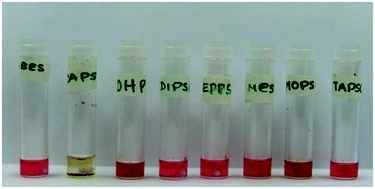
The dissolution of cyt c (0.3 mg) in these hydrated choline buffers (100 mg) gave clear homogeneous solutions as illustrated in Fig. 3.
 |
| | Fig. 3 Dissolution of cytochrome c in different hydrated choline buffers. | |
To confirm the dissolution of cyt c in these choline buffers the visible absorption spectra of cyt c was measured (Fig. 4). Interestingly, the absorption spectra of cyt c in choline buffers ([Ch][MOPSO], [Ch][DIPSO], [Ch][TAPSO], [Ch][EPPS], [Ch][BES], [Ch][MES]) show two distinct peaks at ∼520 and ∼550 nm. The absorption spectra of cyt c in its native oxidized state shows only one intense absorption band around 530 nm called Q-band. This band reflect heme's π–π* transitions associated with the porphyrin ring. However, in the reduced state, the Q-band appears with two peaks (∼520 and ∼550 nm).21,22 As can be observed in Fig. 4, cyt c is solubilised in our choline sulfonate buffers in its reduced form. In opposite direction the absorption spectra of cyt c in [Ch][DHP] shows only one peak at 530 nm. These results seems to indicate that anions play an important role on the oxidation state of cyt c. Interesting, cyt c dissolved in the correspondent Good's buffers does not show the same profile (please see ESI, Fig. S2†). The combination choline–sulfonate Good's buffer seem to be necessary for the cyt c reduction. The use of these choline buffers may well be advantageous over the common reduction protocols, in particular the use of sodium dithionite. The findings reported here illustrate that it is possible to mutually dissolve and reduce cyt c in ionic liquids with buffering properties. To the best of our knowledge there are no reports in the literature showing a similar effect by the use of ionic liquids.
 |
| | Fig. 4 Q-bands of cytochrome c (0.3 mg) in different choline buffers (100 mg) dissolved in the minimal amount of H2O required for its dissolution. | |
Cytochrome c is well-known as an electron-carrying mitochondrial protein. The transition of cytochrome c between the ferrous and ferric states within the cell makes it an efficient biological electron-transporter. Cyt c plays an important role in cellular oxidations in both plants and animals. In vitro the redox ability, quality of cyt c can be measured through a spectroscopic assay.23 An oxidation–reduction experiment using of Fe[K3(CN)6] as oxidizing agent and sodium dithionite as reducing agent results in the cyt c optical density change that can be used to interpret the cyt c redox ability. Cyt c in different choline buffers presented a good quality oxidation–reduction cycle, without losing its ability after 3 cycles (please see Fig. S3, ESI†). These results are a good indication that cyt c dissolved in these choline buffers still plays his electron carrying role.
Concerning the stability and regeneration of these choline buffers, the presence of water showed no significant effect on the thermal stability of those. The DSC analysis revealed no significant changes on melting, crystallization and glass transition temperatures (see Table S2, ESI†). The hydrated choline buffers solutions have demonstrated to be stable up to 1 week at 40 °C. The regeneration of 30% hydrated ionic liquids was accomplished by water evaporation under high vacuum (0.02 mbar) over 2 days at room temperature. The water evaporation profile for each choline buffer (Fig. S4, ESI†), have showed that was possible to regenerate the ionic liquid by removing the full water. Relating to the 1H and 13C NMR experiments, it was observed no structural variations, namely on the ratio between cation and anion, on almost choline buffers before and after the presence of water. The exception was the choline EPPS that gave a different cation–anion ratio after their dissolution in water and evaporation (see ESI†).
Conclusion
In conclusion, choline sulfonates were synthesized in good yields and high purity. These compounds have been shown to retain the buffering action of their lead Good's buffers. They are potential candidates to be used as buffering agents. The solubility of cyt c in the hydrated choline buffers was achieved with success. Interestingly, from visible absorption spectra it was possible to verify that choline buffers can act as cyt c reducing agent. Concerning this effect further investigations namely electrochemical experiments are under evaluation.
Experimental
Synthesis of choline salts
Choline chloride (2.095 g, 15 mmol), dissolved in 150 mL of methanol, was slowly passed through a column filled with 25 g of resin AMBERLITE IRA-400 (OH form). The dripping choline hydroxide solution was collected in an Erlenmeyer containing a slight excess of the desired acid dissolved in methanol. The resulting ionic product was purified following one of the methods described below.
Method A. The methanolic solution was passed through a small column filled with Celite® 577, activated basic aluminium oxide and silica-gel, for removal of unreacted acid and visible particles. After solvent removal by evaporation under reduced pressure, the product was dried in vacuum at room temperature for 3 days.
Method B. The solvent was evaporated under reduced pressure. Unreacted acid was removed by precipitation, after dissolving the product in a minimum amount of methanol (methanol–acetonitrile (1
:
1) for CAPS) followed by cooling and filtration. After solvent removal by evaporation under reduced pressure, the product was dried in vacuum at room temperature for 3 days.
Method C. The solvent was removed by evaporation under reduced pressure, the residue redissolved in a minimum amount of methanol and precipitated with addition of acetone. After recristalization from absolute ethanol, the product was dried in vacuum at room temperature for 3 days.
Choline 2-(N-morpholino)ethanesulfonate [Ch][MES]
Following method A [Ch][MES] was obtained as a white powder (3.720 g, 83%).
DSC: Tc: 72.94 °C; Tm: 89.18, 112.39 °C. 1H NMR δ (ppm): 4.05 (m, 2H), 3.76 (t, 4H), 3.51 (m, 2H), 3.20 (s, 9H), 3.12 (m, 2H), 2.83 (m, 2H), 2.60 (m, 4H). 13C NMR δ (ppm): 67.4, 66.0, 55.6, 53.8, 52.5, 52.2, 47.3. Elemental analysis calcd (%) for C11H26N2O5S: C 44.28, H 8.78, N 9.39; found: C 44.23, H 8.84, N 9.30.
Choline 2-[bis(2-hydroxyethyl)amino]ethanesulfonate [Ch][BES]
Following method A [Ch][BES] was obtained as a white to pale yellow solid (4.236 g, 89%). DSC: Tg: −71.29 °C, Tc and Tm not detected. 1H NMR δ (ppm): 4.09 (m, 2H), 3.72 (t, 4H), 3.55 (m, 2H), 3.23 (s, 9H), 3.15 (m, 2H), 3.06 (m, 2H), 2.76 (t, 4H). 13C NMR δ (ppm): 67.4, 58.6, 55.6, 54.8, 53.8, 48.6, 46.9. Elemental analysis calcd (%) for C11H22N2O6S: C 41.75, H 8.92, N 8.85; found: C 41.58, H 9.22, N 8.76.
Choline 3-(cyclohexylamino)propanesulfonate [Ch][CAPS]
Following method B [Ch][CAPS] was obtained as a white solid (3.606 g, 74%). DSC: Tc: 89.04 °C, Tm: 100.40 °C. 1H NMR δ (ppm): 4.05 (m, 2H), 3.51 (m, 2H), 3.19 (s, 9H), 2.92 (t, 2H), 2.71 (t, 2H), 2.49 (m, 1H), 1.89 (m, 4H), 1.70 (m, 2H), 1.60 (m, 1H), 1.12 (m, 5H). 13C NMR δ (ppm): 67.5, 55.9, 55.6, 53.9, 49.1, 44.1, 31.9, 25.6, 24.6, 24.1. Elemental analysis calcd (%) for C14H32N2O4S: C 51.82, H 9.94, N 8.63; found: C 51.74, H 10.32, N 8.55.
Choline 3-(N-morpholino)-2-hydroxypropanesulfonate [Ch][MOPSO]
Following method A [Ch][MOPSO] was obtained as a yellow viscous liquid (3.916 g, 79%). DSC: Tg: −54.96 °C. 1H NMR δ (ppm): 4.36 (m, 1H), 4.09 (m, 2H), 3.80 (t, 4H), 3.55 (m, 2H), 3.23 (s, 9H), 3.09 (m, 2H), 2.63 (m, 6H). 13C NMR δ (ppm): 67.5, 66.1, 64.2, 63.2, 55.8, 55.6, 53.9, 53.0. Elemental analysis calcd (%) for C12H28N2O6S·3/2H2O: C 40.55, H 8.79, N 7.88; found: C 40.56, H 8.88, N 8.13.
Choline 3-[bis(2-hydroxyethyl)amino]-2-hydroxypropanesulfonate [Ch][DIPSO]
Following method A [Ch][DIPSO] was obtained as a pale yellow viscous liquid (4.739 g, 91%). DSC: Tg: −53.87 °C. 1H NMR δ (ppm): 4.19 (m, 1H), 4.05 (m, 2H), 3.67 (m, 4H), 3.51 (m, 2H), 3.19 (s, 9H), 3.06 (m, 2H), 2.73 (m, 6H). 13C NMR δ (ppm): 67.4, 65.5, 59.7, 58.9, 56.0, 55.6, 55.3, 53.8. Elemental analysis calcd (%) for C12H30N2O7S·4/5H2O: C 39.94, H 8.83, N 7.76; found: C 39.95, H 9.05, N 7.65.
Choline 3-[tris(hydroxymethyl)methylamino]-2-hydroxypropanesulfonate [Ch][TAPSO]
Following method B [Ch][TAPSO] was obtained as a colorless viscous liquid (4.965 g, 91%). DSC: Tg: −41.45 °C. 1H NMR δ (ppm): 4.14 (m, 1H), 4.06 (m, 2H), 3.58 (m, 6H), 3.51 (m, 2H), 3.20 (s, 9H), 3.09 (m, 2H), 2.72 (m, 2H). 13C NMR δ (ppm): 67.4, 67.2, 60.4, 59.9, 55.6, 55.4, 53.8, 45.9. Elemental analysis calcd (%) for C12H30N2O8S·H2O: C 37.88, H 8.48, N 7.36; found: C 38.09, H 8.77, N 7.24.
Choline 3-[4-(2-hydroxyethyl)-1-piperazine]propanesulfonate [Ch][EPPS]
Following method am [Ch][EPPS] was obtained as a pale yellow liquid (5.020 g, 94%). DSC: Tg: −50.71 °C. 1H NMR δ (ppm): 4.05 (m, 2H), 3.72 (t, 2H), 3.51 (m, 2H), 3.19 (s, 9H), 2.90 (t, 2H), 2.57 (m, 8H), 2.49 (m, 4H), 1.92 (m, 2H). 13C NMR δ (ppm): 67.4, 58.8, 58.1, 56.0, 55.6, 53.9, 51.9, 51.4, 49.1, 21.0. Elemental analysis calcd (%) for C14H33N3O5S·2H2O: C 42.95, H 9.53, N 10.73; found: C 43.10, H 9.87, N 10.78.
Choline dihydrogen phosphate [Ch][DHP]
Following method C [Ch][DHP] was obtained as a white solid (2.251 g, 74%). 1H NMR δ (ppm): 4.05 (m, 2H), 3.50 (m, 2H), 3.19 (s, 9H). 13C NMR δ (ppm): 67.4, 55.6, 53.9.
Titration curve and buffer region determination
Choline chloride (2.0943 g), dissolved in 150 mL of Milli-Q water was slowly passed through a column filled with 25 g of resin AMBERLITE IRA-400 (OH). The dripping choline hydroxide solution was collected and titrated with HCl 1 M using phenolphthalein to determine the exact concentration. 10 mL of 0.1 M of sulfonic acids were titrated with [Ch][OH] 0.25 mL min−1. The pH profile was recorded with IRIS NT software from Infors. The electrode was standardized with two aqueous primary standard buffer solutions (pH 4 and 7). The electrode pH limit is 12.
Cytochrome c dissolution
Choline buffers (100 mg) were dried in a Kugerlrohr oven at 100 °C for 18 h. Cytochrome c (0.3 mg) was added to each choline buffers and stirred at room temperature. Small amount of water were added to each mixture until the solution became clear.
Vis-absorption spectra
Recorded at room temperature on a HITACHI U-2000 spectrophotometer in standard 1 cm path-length quartz cuvettes.
Acknowledgements
Financial support for this work was provided by Fundação para a Ciência e Tecnologia (FCT) grants from project PTDC/EBB-BIO/114288/2009 and SFRH/BPD/41175/2007. IBB is funded by grant PEst – OE/EQB/LA0023/2011 from FCT/MCTES.
Notes and references
- J. P. Hallett and T. Welton, Chem. Rev., 2011, 111, 3508–3576 CrossRef CAS PubMed.
- C. A. Angell, Y. Ansari and Z. F. Zhao, Faraday Discuss., 2012, 154, 9–27 RSC.
- J. Dupont, Acc. Chem. Res., 2011, 44, 1223–1231 CrossRef CAS PubMed.
- D. Wei and A. Ivaska, Anal. Chim. Acta, 2008, 607, 126–135 CrossRef CAS PubMed.
- G. Ou, J. Yang, B. He and Y. Yuan, J. Mol. Catal. B: Enzym., 2011, 68, 66–70 CrossRef CAS.
- D. R. MacFarlane, R. Vijayaraghavan, H. N. Ha, A. Izgorodin, K. D. Weaver and G. D. Elliott, Chem. Commun., 2010, 46, 7703–7705 RSC.
- L. Xu, G. Ou and Y. Yuan, J. Organomet. Chem., 2008, 693, 3000–3006 CrossRef CAS.
- G.-N. Ou, M.-X. Zhu, J.-R. She and Y.-Z. Yuan, Chem. Commun., 2006, 4626–4628 RSC.
- K. A. Dill, Biochemistry, 1990, 29, 7133–7155 CrossRef CAS PubMed.
- A. S. Bommarius and M. F. Paye, Chem. Soc. Rev., 2013, 42, 6534–6565 RSC.
- H. Zhao, J. Chem. Technol. Biotechnol., 2010, 85, 891–907 CrossRef CAS.
- H. Weingaertner, C. Cabrele and C. Herrmann, Phys. Chem. Chem. Phys., 2012, 14, 415–426 RSC.
- K. Fujita, D. R. MacFarlane, K. Noguchi and H. Ohno, Acta Crystallogr., Sect. E: Struct. Rep. Online, 2009, 65, o709 CAS.
- D. Constatinescu, C. Herrmann and H. Weingartner, Phys. Chem. Chem. Phys., 2010, 12, 1756–1763 RSC.
- K. Fujita, M. Forsyth, D. R. MacFarlane, R. W. Reid and G. D. Elliott, Biotechnol. Bioeng., 2006, 94, 1209–1213 CrossRef CAS PubMed.
- K. Fujita, D. R. MacFarlane, M. Forsyth, M. Yoshizawa-Fujita, K. Murata, N. Nakamura and H. Ohno, Biomacromolecules, 2007, 8, 2080–2086 CrossRef CAS PubMed.
- K. Fujita, D. R. MacFarlane and M. Forsyth, Chem. Commun., 2005, 4804 RSC.
- N. E. Good, G. D. Winget, W. Winter, T. N. Connolly, S. Izawa and R. M. M. Singh, Biochemistry, 1966, 5, 467–477 CrossRef CAS PubMed.
- A. Rocha, T. Carvalho, P. Vidinha and N. M. T. Lourenco, ChemPlusChem, 2012, 77, 1106–1111 CrossRef CAS.
- C. Indiani, G. de Sanctis, F. Neri, H. Santos, G. Smulevich and M. Coletta, Biochemistry, 2000, 39, 8234–8242 CrossRef CAS PubMed.
- M. Bihari, T. P. Russell and D. A. Hoagland, Biomacromolecules, 2010, 11, 2944–2948 CrossRef CAS PubMed.
- H. Tajima, S. Ikeda, M. Matsuda, N. Hanasaki, J.-W. Oh and H. Akiyama, Solid State Commun., 2003, 126, 579–581 CrossRef CAS.
- M. Spinazzi, A. Casarin, V. Pertegato, L. Salviati and C. Angelini, Nat. Protoc., 2012, 7, 1235–1246 CrossRef CAS PubMed.
Footnote |
| † Electronic supplementary information (ESI) available: Titration curves, 1H, 13C, 31P NMR and redox assay. See DOI: 10.1039/c4ra00913d |
|
| This journal is © The Royal Society of Chemistry 2014 |
Click here to see how this site uses Cookies. View our privacy policy here.