DOI:
10.1039/C3RA47746K
(Paper)
RSC Adv., 2014,
4, 11680-11688
Synthesis, characterization, and photo- and electro-luminescence of Ir(III) complexes containing carrier transporting group-substituted β-diketonate ligand†
Received
18th December 2013
, Accepted 11th February 2014
First published on 14th February 2014
Abstract
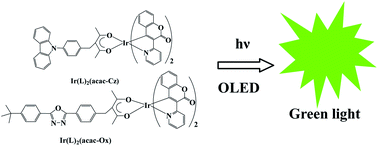
Two new iridium organometallic compounds based on acetylacetone derivative ligands containing carrier-transporting groups, Ir(L)2(acac-Ox) and Ir(L)2(acac-Cz), where L = 3-(pyridin-2-yl)coumarinato N, C4, acac-Ox = 3-(4-(5-(4′-tert-butylphenyl)-1,3,4-oxadiazole)benzyl)-pentane-2,4-dionate and acac-Cz = 3-((4-(9H-carbazol-9-yl)phenyl)methyl)pentane-2,4-dionate, have been successfully synthesized and characterized by elemental analysis, 1H NMR and FT-IR. The structure of the free ligand acac-Ox was established by single-crystal X-ray analysis as a cis-configurational enol of β-diketone. The photophysical properties of the complexes were examined by using UV-vis, photoluminescence spectroscopic analysis. The doped light-emitting devices with a configuration of ITO/MoO3 (2 nm)/NPB (35 nm)/TCTA (5 nm)/CBP:Ir(III) complex (x wt %, 20 nm)/TPBi (40 nm)/LiF (1 nm)/Al (150 nm) were fabricated. The devices based on Ir(L)2(acac-Cz) with a 9 wt% doping concentration showed the best EL efficiency performance, and exhibited green emission with a maximum external quantum efficiency (EQE) of 7.77% and a maximum luminous efficiency of 28.2 cd A−1 at a current density of 2.27 mA cm−2, and a maximum luminance of 6348.7 cd m−2 at 11 V. When the doping concentration is 6 wt%, a maximum brightness of 4230 cd m−2 at 16 V and a maximum current efficiency of 20.33 at 1.23 mA cm−2 and a maximum external quantum efficiency (EQE) of 5.54% were achieved in the devices based on Ir(L)2(acac-Ox). By comparison of the electroluminescent performances of the devices based on Ir(L)2(acac-Ox) and Ir(L)2(acac-Cz), it was shown that the introduction of the hole-transporting group into the ligand improves the performance of Ir(L)2(acac-Cz) doped devices.
1. Introduction
Research on organic light-emitting diodes (OLEDs) has attracted tremendous interest in the last two decades due to their potential applications in low-cost, full-color, flat-panel displays and portable electronic devices.1–4 Phosphorescent organic light-emitting devices (PhOLEDs) based on transition metal complexes have attracted considerable attention because they can harvest singlet and triplet excitons, enabling internal quantum efficiencies approaching 100%.5–7 In the phosphorescent metal complexes, cyclometalated iridium complexes are the most valuable emitting materials due to their high quantum efficiency, brightness, color diversity and short excited-state lifetime.8–14 It is previously found that the color of the emission from cyclometalated Ir(III) complexes can be tuned either through the design and synthesis of cyclometalating ligands9,15,16 or by modulating the ancillary ligands.17,18
Coumarin derivatives can realize easy tuning of energy gaps of the corresponding Ir(III) complexes due to the synthetic possibilities of a large variety of coumarin derivatives, the class of coumarin ligands could be a promising candidate for the preparation of iridium(III) complexes for a variety of photonic applications, such as optical sensing technology19,20 and OLED technology.21–23 Cyclometalated iridium(III) coumarin complexes represent new type of phosphorescence materials for organic lighting emitting diodes (OLEDs), which possess efficient visible absorption, higher quantum yields and higher brightnesses. In our previous works, we have reported some coumarin-based iridium(III) complexes,24,25 in which 3-(pyridin-2-yl)coumarin or 3-(benzothiazol-2-yl)coumarin was used as a cyclometalated ligand and acetylacetonate and thenoyltrifluoroacetonate were used as ancillary monoanionic ligands, respectively. These coumarin-based iridium(III) complexes have been proven to be promising green or reddish orange emitters.
2,5-Diphenyl-1,3,4-oxadiazole and its derivatives have been found to show strong fluorescence and are used as electron-transport materials in electroluminescence devices,26,27 but the efficiency was limited due to their crystallization during the operation of OLEDs. This problem can be mitigated by incorporating the electron-transporting units into the main or as pendants attached to the backbone of a polymer.28,29 In addition, carbazole derivatives have high thermal stability and excellent photophysical property, and have been widely utilized as a functional building block in the fabrication of the organic photoconductors, non-linear optical materials, and photorefractive materials in OLEDs.30–32 In order to improve the carrier transporting property of the emitting materials, the multi-functional electroluminescent small molecules and polymers have been obtained by incorporating light-emitting core and electron- and/or hole-transporting groups into one material to achieve high efficiency.27,33
In this work, two new β-diketone ligands having the carrier-transporting groups (9-phenylcarbazole and 1,3,4-oxadiazole moiety) linked to the intercarbonylic carbon atom of the 1,3-propanedione skeleton through a methylene spacer and their coumarin-based iridium(III) complex, Ir(L)2(acac-Cz) and Ir(L)2(acac-Ox), where L = 3-(pyridin-2-yl)coumarinato, acac-Cz = 3-((4-(9H-carbazol-9-yl)phenyl)methyl)pentane-2,4-dione and acac-Ox = 3-(4-(5-(4′-tert-butylphenyl)-1,3,4-oxadiazole)benzyl)-pentane-2,4-dione, were synthesized and characterized. The photophysical properties of the Ir(III) complexes were examined by using UV-vis, photoluminescence spectroscopes analysis. Furthermore, the electroluminescence devices made using codeposition of the Ir(III) complexes and 4,4′-bis(9-carbazolyl)biphenyl (CBP) films as emitters were fabricated to investigate the electroluminescence properties of the Ir(III) complexes.
The synthetic routes of the ancillary ligands (acac-Ox and acac-Cz) and the Ir(III) complexes were shown in Scheme 1.
 |
| | Scheme 1 Synthetic routes to the ancillary ligands and the Ir(III) complexes. | |
2. Experimental
2.1 Materials and methods
Pyridine-2-acetonitrile were purchased from Alfa Aesar, salicylaldehyde was analytical grade reagent and redistilled before using, IrCl3·nH2O (iridium content > 60.0%) was bought from Shanxi Kaida Chemical Co. Ltd. (China) and used without further purification. Acetylacetone was purchased from Shanghai Jingchun Reagent Co. Ltd. (China). 4,4′-Bis(9-carbazolyl)biphenyl (CBP), 4,4′,4′′-tris(N-3-methylphenyl-N-phenylamino)triphenylamine (m-MTDATA), 1,3,5-tri(N-phenylbenzimidazol-2-yl)benzene (TPBi) and N,N′-bis-(naphthyl)-N,N′-diphenyl-1,1′-biphenyl-4,4′-diamine (NPB) were purchased from Electro-Light Technology Corp., Beijing. 4,4′-Bis(9-carbazolyl)biphenyl (CBP), tris(4-carbazoyl-9-ylphenyl)amine (TCTA), 1,3,5-tri(N-phenylbenzimidazol-2-yl)benzene (TPBi) and N,N′-bis-(naphthyl)-N,N′-diphenyl-1,1′-biphenyl-4,4′-diamine (NPB) were purchased from Electro-Light Technology Corp., Beijing. All other chemicals were analytical grade reagent.
The intermediates, 2-[4-(bromomethyl)phenyl]-5-(4-tert-butylphenyl)-1,3,4-oxadiazole and 9-(4-(bromomethyl)phenyl)-9H-carbazole, were obtained as previously described.34,35 The cyclometalated coumarin ligand (3-(pyridine-2-yl)coumarin, L) and the cyclometalated Ir(III) μ-chlorobridged dimer ((L)2Ir(μ-Cl)2Ir(L)2) were prepared as previously described.36
IR spectra (400–4000 cm−1) were measured on a Shimadzu IRPrestige-21 FT-IR spectrophotometer. 1H NMR spectra were obtained on Unity Varian-500 MHz. C, H, and N analyses were obtained using an Elemental Vario-EL automatic elemental analysis instrument. UV-vis absorption and photoluminescence spectra were recorded on a Shimadzu UV-2550 spectrometer and on a Perkin-Elmer LS-55 spectrometer, respectively. Melting points were measured by using an ×4 microscopic melting point apparatus made in Beijing Taike Instrument Limited Company.
2.2 Synthesis and characterization of the ancillary ligands (acac-Ox and acac-Cz)
2.2.1 acac-Ox. Under N2, a suspension of fresh sodium (0.160 g, 6.96 mmol) in anhydrous toluene (30 mL) was placed in a three-necked flask. The mixture was heated up to 120 °C and stirred vigorously till the sodium was molten and scattered, then acetylacetone (0.696 g, 6.96 mmol) was added into the mixture. The mature was stirred at 120 °C for 3 h, the white sodium salt of β-diketone was precipitated. A solution of 2-[4-(bromomethyl)phenyl]-5-(4-tert-butylphenyl)-1,3,4-oxadiazole (2.584 g, 6.96 mmol) in dry toluene (15 mL) was added dropwise. The reaction mixture was stirred at 120 °C for about 24 h. The mixture was poured into cooled water (100 mL), and then acidified with dilute hydrochloric acid to pH = 3. The mixture was extracted with CH2Cl2 (3 × 100 mL), and the combined organic phase was dried over anhydrous MgSO4. The solvent was removed under reduced pressure and the residue was purified by column chromatography on silica gel with a mixture of ethyl acetate–petroleum ether (1
:
10, v/v) as eluent to obtain acac-Ox as a white solid (2.15 g, 79%). m.p.: 156–158 °C. IR (KBr pellet cm−1): 3437 (ν–OH), 2967 and 2867 (ν–CH3 and ν–CH2–), 1617 (ν–C
O), 1579, 1498, 1417, 1360, 1269, 1192, 1120, 1096, 1016, 982, 958, 943, 848, 757, 724, 561. 1H NMR (CDCl3, δ, ppm): 16.9 (s, 1H, C
C–OH), 8.07 (dd, 4H, J = 8.8, aryl-H), 7.56 (d, 2H, J = 6.4, aryl-H), 7.33 (d, 2H, J = 8.0, aryl-H), 3.75 (s, 2H, –CH2–), 2.17 (s, 3H, O
C–CH3), 2.10 (s, 3H, C
C(OH)–CH3), 1.37 (s, 9H, –CH3). Anal. calc. for C24H26N2O3 (%): C, 73.82; H, 6.71; N, 7.17. Found: C, 73.91; H, 6.67; N, 7.21.
2.2.2 acac-Cz. The preparation of acac-Cz was similar to that described for acac-Ox, which was obtained from the intermediate 9-(4-(bromomethyl)phenyl)-9H-carbazole (3.828 g, 11.38 mmol) and acetylacetone (1.14 g, 11.38 mmol). The crude was purified by chromatography on silica gel using ethyl acetate–petroleum ether (1
:
30, v/v). Yield: 67.5% (3.07 g). m.p.: 114–116 °C. IR (KBr pellet cm−1): 3434 (ν–OH), 2923 and 2856 (ν–CH3 and ν–CH2–), 1603 (ν–C
O), 1512, 1479, 1450, 1364, 1302, 1230, 1183, 1016, 958, 939, 814, 747, 724, 623, 561, 528. 1H NMR (CDCl3, δ, ppm): 16.4 (s, 1H, C
C–OH), 8.13 (d, 2H, J = 8.2, aryl-H), 7.45 (t, 2H, J = 8.8, aryl-H), 7.42–7.35 (m, 6H, aryl-H), 7.30–7.24 (m, 2H, aryl-H), 3.77 (s, 2H, –CH2–), 2.21 (s, 3H, O
C–CH3), 2.17 (s, 3H, C
C(OH)–CH3). Anal. calc. for C24H21NO2 (%): C, 81.10; H, 5.96; N, 3.94. Found: C, 81.23; H, 6.03; N, 3.87.
2.3 Synthesis and characterization of Ir(L)2(acac-Ox) and Ir(L)2(acac-Cz)
2.3.1 Ir(L)2(acac-Ox). The chloro-bridged dimer ((L)2Ir(μ-Cl)2Ir(L)2) (0.50 g, 0.373 mmol), acac-Ox (0.364 g, 0.932 mmol) and sodium carbonate (0.158 g, 8.379 mmol) were refluxed in dichloroethane under nitrogen atmosphere for 24 h. After cooling, a small quantity of water was added. The mixture was extracted with dichloromethane (100 mL × 3). The organic phase was washed with water (2 × 100 mL) and dried over anhydrous MgSO4. After filtering, the filtrate was evaporated to dryness under reduced pressure. The crude was purified by chromatography on silica gel using ethyl acetate–petroleum ether (1
:
2, v/v) as the eluent to give yellow powdery Ir(L)2(acac-Ox) in 73% yield (0.28 g). 1H NMR (CDCl3, δ, ppm): 9.21 (d, 2H, J = 8.4, aryl-H), 8.12–7.96 (m, 8H, aryl-H), 7.57 (d, 2H, J = 8.0, aryl-H), 7.28 (t, 2H, J = 7.6, aryl-H), 7.21 (d, 2H, J = 8.0, aryl-H), 7.15 (t, 2H, J = 6.8, aryl-H), 7.00 (d, 2H, J = 8.0, aryl-H), 6.65 (t, 2H, J = 7.8, aryl-H), 6.11 (d, 2H, J = 8.4, aryl-H), 3.64 (s, 2H, –CH2–), 1.83 (s, 6H, acac-CH3), 1.38 (s, 9H, –CH3). Anal. calc. for C52H41IrN4O7 (%): C, 60.87; H, 4.03; N, 5.46. Found: C, 60.64; H, 4.11; N, 5.53.
2.3.2 Ir(L)2(acac-Cz). The preparation of Ir(L)2(acac-Cz) was similar to that described for Ir(L)2(acac-Ox), which was obtained from the chloro-bridged dimer (0.50 g, 0.373 mmol) and acac-Cz (0.33 g, 0.928 mmol). The crude was purified by chromatography on silica gel using ethyl acetate–petroleum ether (1
:
8, v/v). Yield: 65% (0.24 g). 1H NMR (CDCl3, δ, ppm): 8.67 (d, 2H, J = 8.4, aryl-H), 8.10–7.95 (m, 10H, aryl-H), 7.71 (d, 2H, J = 7.8, aryl-H), 7.44–7.17 (m, 14H, aryl-H), 3.67 (s, 2H, –CH2–), 1.79 (s, 6H). Anal. calc. for C52H36IrN3O6 (%): C, 63.02; H, 3.66; N, 4.24. Found: C, 63.31; H, 3.62; N, 4.18.
2.4 Crystallography
The diffraction data were collected with a Bruker Smart Apex CCD area detector with graphite-monochromatized Mo-Kα radiation (λ = 0.71073 Å) at 188(2) K. The structure was solved by using the program SHELXL and Fourier difference techniques, and refined by full-matrix least-squares method on F2. All hydrogen atoms were added theoretically.
2.5 OLEDs fabrication and characterization
The multilayer OLEDs with a device architecture of ITO/MoO3 (2 nm)/NPB (35 nm)/TCTA (5 nm)/CBP:Ir(III) complex (x wt%, 20 nm)/TPBi (40 nm)/LiF (1 nm)/Al (150 nm) were fabricated by vacuum-deposition method. All organic layers were sequentially deposited without breaking vacuum (2 × 10⁻⁵ Pa). Thermal deposition rates for organic materials, LiF and Al were ∼2 Å s−1, ∼1 Å s−1 and 10 Å s−1, respectively. The active area of the devices was 12 mm2. The EL spectra and Commission Internationale de L'Eclairage (CIE) coordinates were measured on a Hitachi MPF-4 fluorescence spectrometer. The characterization of brightness–current–voltage (B–I–V) were measured with a 3645 DC power supply combined with a 1980A spot photometer and were recorded simultaneously. All measurements were done in the air at room temperature without any encapsulation.
3. Results and discussion
3.1 Syntheses of the ancillary ligands (acac-Ox and acac-Cz) and the Ir(III) complexes
The modification of the β-diketonate ligand can be an efficient way to improve the properties of the metal complexes, such as the photoluminescence efficiency, thermal stability, charge-transport ability, etc. Several β-diketone ligands containing an efficient fluorophore at position 3 of 1,3-propanedione skeleton through a methylene spacer have been reported,37–39 the fluorophore could behave as an antenna which can harvest light and channel energy to the lanthanide-carrying subunit. Although many the Ir(III) complexes containing functional β-diketonate ligands have been reported,40,41 there were few works with the common acetylacetonate ancillary ligands attached carrier-transporting groups in the 3-position.
In this study, two new acetylacetone ligands (acac-Ox and acac-Cz) carrying a carrier-transporting group were designed and synthesized by electrophilic substitution of the intercarbonylic carbon atom. The reaction scheme for preparation of acac-Ox and acac-Cz is shown in Scheme 1. The intermediates 2-[4-(bromomethyl)phenyl]-5-(4-tert-butylphenyl)-1,3,4-oxadiazole and 9-(4-(bromomethyl)phenyl)-9H-carbazole were carried out according to our published procedures.34,35 The ligands acac-Ox and acac-Cz were successfully synthesized by reacting acetylacetone with 2-[4-(bromomethyl)phenyl]-5-(4-tert-butylphenyl)-1,3,4-oxadiazole and 9-(4-(bromomethyl)phenyl)-9H-carbazole in the presence of metal sodium as a base, respectively. The ligands acac-Ox and acac-Cz were purified by column chromatograph and were obtained as white solids. This method leads to higher yield of the target products (>67%).
The complexes Ir(L)2(acac-Ox) and Ir(L)2(acac-Cz) were readily synthesized by reaction of the ancillary ligand acac-Ox and acac-Cz with the chloride-bridged iridium dimer, (L)2Ir(μ-Cl)2Ir(L)2,36 in the presence of Na2CO3. The complexes are airstable orange solids and are soluble in common solvents such as dichloromethane, chloroform, tetrahydrofuran and acetone. The complexes were characterized by 1H NMR and elemental analysis.
3.2 X-ray crystal structure, spectral and structure feature of the ancillary ligand acac-Ox
Suitable crystal of the ancillary ligand acac-Ox was obtained by evaporation of methanol solution. The crystallographic data of acac-Ox is shown in Table 1.
Table 1 Crystallographic data for the ligand acac-Ox
| Empirical formula |
C24H26N2O3 |
| Formula weight |
390.47 |
| Temperature (K) |
188(2) |
| Wavelength (Å) |
0.71073 |
| Crystal system |
Monoclinic |
| Space group |
P2(1)/c |
| Unit cell dimensions |
a = 9.2790 (17) Å alpha = 90° |
| b = 17.285 (3) Å beta = 106.450 (3)° |
| c = 13.653 (2) Å gamma = 90° |
| Volume (Å3), Z |
2100.0 (7), 4 |
| Density (calculated) (g cm−3) |
1.235 |
| Absorption coefficient (mm−1) |
0.082 |
| F (000) |
832 |
| Crystal size (mm) |
0.31 × 0.25 × 0.20 |
| θ range for data collected (°) |
1.92 to 25.03 |
| Limiting indices |
−10 ≤ h ≤ 11, −20 ≤ k ≤ 14, −16 ≤ l ≤ 15 |
| Reflections collected |
12 189 |
| Independent reflections |
3709 (Rint = 0.0991) |
| Absorption correction |
Semi-empirical from equivalents |
| Max. and min. transmission |
0.9838 and 0.9751 |
| Refinement method |
Full-matrix least-squares on F2 |
| Data/restraints/parameters |
3709/12/274 |
| Goodness-of-fit on F2 |
1.034 |
| Final R indices [I > 2σ(I)] |
R1 = 0.0981, wR2 = 0.2287 |
| R indices (all data) |
R1 = 0.1870, wR2 = 0.2775 |
| Largest diff. peak and hole (e Å−3) |
0.374 and −0.343 |
It was well known that β-diketones can exist as keto–enol tautomers, whereas enols can have cis- or trans-configuration. cis-Forms of enols can extraordinarily be stabilized due to the formation of a strong intramolecular hydrogen bond (O–H⋯O) form. The crystal structure of acac-Ox was characterized by single crystal X-ray diffractometry, which reveals that the ligand acac-Ox crystallizes in the cis-keto–enol configuration.
The crystal structure of acac-Ox is given in Fig. 1. The crystal of acac-Ox belongs to the monoclinic space group P2(1)/c, a = 9.2790(17) Å, b = 17.285(3) Å, c = 13.653(2) Å, α = γ = 90°, β = 106.450(3)°, U = 2100.0(7) Å3, Z = 4, Dc = 1.235 g cm−3, μ = 0.082 mm−1. As shown in Fig. 1, the C(20)–C(23) bond length (1.368(7) Å) is shorter than the C(21)–C(22) bond length (1.503(8) Å) and the C(23)–C(24) bond length (1.517(8) Å), which has the C
C characteristic. The C(21)–O(2) bond length (1.264(6) Å) is shorter than the C(23)–O(3) bond length (1.329(6) Å). There is a intramolecular hydrogen bond (O–H⋯O) between the keto-O atom and the enolic hydroxyl H, and the hydrogen bond length is about 1.7 Å. The atoms (C(20), C(21), C(22), C(23), C(24), O(2) and O(3)) of the acetylacetone moiety are arranged on one plane, the atoms C(20), C(19) and C(16) are on a other plane, and these planes form a dihedral angle of 82.6°. In diaryl-1,3,4-oxadiazole moiety, the 1,3,4-oxadiazole ring and two adjacent phenyl rings are not in a coplane, and the dihedral angels between the 1,3,4-oxadiazole ring and two adjacent phenyl rings are 5.2° and 11.2°, respectively.
 |
| | Fig. 1 Crystal structure of the ancillary ligand acac-Ox. | |
The IR spectrum of ligand acac-Ox is characterized by absorption bands at 3437 cm−1 (ν(–OH)), 2967 and 2867 cm−1 (ν(CH2) and ν(CH3)), 1617 (ν(C
O)), 1579 and 1498 and 1417 cm−1 (ν(Ph)), 1400–1100 cm−1 (νas(CCC)) and 1050–900 cm−1 (νs(CCC)). The absorption band at 1617 cm−1 exhibits stretching vibrations of multiple bands of the aromatic rings and enol structures ν(C
O) and ν(C
C). The stretching vibration ν(OH) is detected at 3437 cm−1, which is characteristic of enol structures. The chemical shift of proton of the OH group (16.9 ppm) observed in the 1H NMR spectra of acac-Ox in CDCl3 indicates that the acac-Ox molecule contains a strong intramolecular hydrogen bond.
3.3 UV-vis absorption and photoluminescence of the Ir(III) complexes
The UV-vis absorption and photoluminescence spectra of Ir(L)2(acac-Ox) and Ir(L)2(acac-Cz) were measured in diluted dichloromethane solutions at room temperature, as presented in Fig. 2. In UV-vis absorption spectrum of Ir(L)2(acac-Cz), there are seven obvious absorptions at 224, 240, 278, 338, 392, 421 and 442 nm (the maximal absorption peaks locate at 224 and 240 nm), in which the absorption bands below 380 nm could be attributed to spin-allowed π → π* transition of the ligands and the band around 392 nm can be assigned to the spin-allowed metal-to-ligand charge transfer 1(MLCT) (metal–ligand-charge-transfer), and the bands at the longer wavelength (421 and 442 nm) can be assigned to both spin–orbit coupling enhanced 3(π → π*) and spin-forbidden 3MLCT transitions.42–44 The absorption spectrum of Ir(L)2(acac-Ox) exhibits a stronger absorption band at 281 nm and two shoulder bands at 228 and 340 nm, which can be assigned to the spin-allowed 1(π → π*) transitions of the ligands. Similarly, there are three weaker absorption bands at the longer wavelength (391, 421 and 442 nm) ascribed to the admixture of 1MLCT, 3MLCT and 3(π → π*) states.
 |
| | Fig. 2 Normalized UV-vis absorption and photoluminescence spectra of Ir(L)2(acac-Ox) and Ir(L)2(acac-Cz) in diluted dichloromethane solutions (C = 1 × 10⁻⁶ mol L−1). | |
As shown in Fig. 2, by excitation at 442 nm, the photoluminescence spectra of the complexes Ir(L)2(acac-Ox) and Ir(L)2(acac-Cz) in dichloromethane solutions greatly resemble each other, both of them exhibit green emissions with a maximum main peak (530 nm) and a shoulder peak (569 nm).
The LUMO and HOMO energy levels of Ir(L)2(acac-Ox) and Ir(L)2(acac-Cz) were calculated from cyclic voltammetry (CV) measurements and absorption spectra.41 On the basis of the oxidation potentials together with the extrapolated absorption edge data of Ir(L)2(acac-Ox) and Ir(L)2(acac-Cz), their HOMO and LUMO energy levels can be estimated. For Ir(L)2(acac-Cz), the determined HOMO and LUMO energy levels are −5.19 eV and −2.58 eV, while for Ir(L)2(acac-Ox), the results are −5.14 eV and −2.53 eV.
3.4 Thermal properties of the complexes
Thermogravimetric analysis (TGA) measurement was performed in flowing drying nitrogen atmosphere at the heating rate of 10 °C min−1. The results of TGA measurement of Ir(L)2(acac-Ox) and Ir(L)2(acac-Cz) are shown in Fig. 3. The complex Ir(L)2(acac-Ox) displays good thermal stability up to 300 °C (<2% weight loss). At 326 and 390 °C, there are two sharp weight losses in the TGA curve, it shows that the complex undergoes two large-stage decomposition processes. The thermal stability of the complex Ir(L)2(acac-Cz) is lower than that of the complex Ir(L)2(acac-Ox). The TGA curve of the complex Ir(L)2(acac-Cz) shows 5% weight loss at 280 °C, and sharp weight loss at 307 °C. The complexes meet with the thermal stability requirement of fabrication of OLED luminescence application.
 |
| | Fig. 3 Thermogravimetric analysis (TGA) of the complexes Ir(L)2(acac-Ox) and Ir(L)2(acac-Cz) in nitrogen atmosphere (heating rate 10 °C min−1). | |
3.5 OLEDs performance of Ir(L)2(acac-Ox) and Ir(L)2(acac-Cz)
The devices with a configuration of ITO/MoO3 (2 nm)/NPB (35 nm)/TCTA (5 nm)/CBP:Ir(III) complex (x wt %, 20 nm)/TPBi (40 nm)/LiF (1 nm)/Al (150 nm) were fabricated. The emitting layers are consisted of host materials CBP and dopants of the complexes Ir(L)2(acac-Ox) or Ir(L)2(acac-Cz) at different concentrations (x wt%). NPB and TPBi were used as hole transport and electron transport materials, respectively. MoO3 and LiF were used as the hole-injection layer and the electron-injection layer. A hole-transporting interlayer of TCTA is placed on the anode side of the light-emitting layer, which was used as an electron- and/or exciton-blocking layer, its main function is to facilitate hole injection into CBP from the hole transport layer of NPB. The HOMO level of TCTA is intermediate between those of NPB and CBP. There is a large barrier to hole injection from NPB directly into CBP, whereas there are two smaller barriers for injection from NPB into TCTA and from TCTA into CBP.
The electroluminescence (EL) spectra of the devices based on the Ir(III) complexes (6 wt% dopant concentration) are shown in Fig. 4. When the doping concentration of the complexes is 6 wt%, the shape of EL spectra did not change at different applied voltages. The doped devices of Ir(L)2(acac-Ox) and Ir(L)2(acac-Cz) exhibit green emissions with a maximum main peak at 530 nm and a shoulder peak at 569 nm, it was indicated that the EL spectra of the complexes resemble closely their PL spectra in thin film. The result shows that the EL emissions take place from Ir(L)2(acac-Ox) and Ir(L)2(acac-Cz) molecules. As shown in Fig. 4, there is no EL emission from NPB (450 nm) in the devices, indicating that the excitons were well-localized within the emitting-layer without leakages of charges.
 |
| | Fig. 4 EL spectra of the complexes Ir(L)2(acac-Cz) and Ir(L)2(acac-Ox) at different voltages (6.0 wt%). Device configuration: ITO/NPB/TCTA/CBP:complex (6.0 wt%)/TPBi/LiF/Al. | |
The luminous efficiency vs. the current density and the luminance and the current density vs. the driving voltage characteristics of the devices fabricated with different Ir(L)2(acac-Cz) doping concentrations are shown in Fig. 5. It was found that all devices have higher luminous efficiencies at low current densities, and then the luminous efficiencies fall off at higher current densities. Table 2 summarized the performances of the devices with various Ir(L)2(acac-Cz) doping concentrations in CBP host. The turn-on voltages (Von) of the devices are between 4.1 V and 4.4 V. At a voltage of 11 V, the current density values of 44.4, 81.3, 302.3, 92.9 and 56.1 mA cm−2 were observed in devices with 3, 6, 9, 12 and 24 wt% doping concentrations, respectively. Brightness of 3827.7, 4509.6, 6348.7, 5001.2 and 3624.9 cd cm−2 were obtained at a driving voltage of 11 V. When the doping concentration is over 9%, the current density and the brightness at a given driving voltage decrease. By comparing the performance of different doping concentrations, the device with 9 wt% doping concentration showed the best EL efficiency performance. The device with 9 wt% doping concentration had a maximum efficiency of 28.2 cd A−1 at 2.27 mA cm−2. Even though at 20 mA cm−2, the doped device has an efficiency of 13.34 cd A−1. A maximum external quantum efficiency (EQE) of 7.77% was achieved in the device.
 |
| | Fig. 5 (a) Current efficiency versus current density characteristics and (b) luminance versus voltage and current density versus voltage (inset) curves of the devices based on Ir(L)2(acac-Cz) with different doping concentrations. | |
Table 2 EL performances of the Ir(L)2(acac-Cz) doped devices
| Entry |
Von (V) |
Lmax (cd m−2) |
LEmax (cd A−1) |
LE (cd A−1) (20 mA cm−2) |
EQEmax (%) |
| 3.0 wt% |
4.2 |
4915 |
19.9@3.91 mA cm−2 |
13.13 |
5.48 |
| 6.0 wt% |
4.3 |
6332 |
22.1@2.74 mA cm−2 |
13.61 |
6.09 |
| 9.0 wt% |
4.1 |
6348 |
28.2@2.27 mA cm−2 |
13.34 |
7.77 |
| 12.0 wt% |
4.1 |
5943 |
17.0@2.74 mA cm−2 |
12.12 |
4.68 |
| 24.0 wt% |
4.4 |
4872 |
14.7@4.61 mA cm−2 |
11.25 |
4.05 |
Fig. 6 displays the luminous efficiency vs. the current density characteristics and the current density–luminance–voltage characteristics of the devices fabricated with Ir(L)2(acac-Ox) at different doping concentrations 3, 6, 9, 12 and 24 wt%. The performances of the devices with various Ir(L)2(acac-Ox) doping concentrations in CBP host are summarized in Table 3. The device with 6% doping concentration exhibited the best EL performance. The device had a maximum brightness of 4230 cd m−2 at 16 V and a maximum current efficiency of 20.33 at 1.23 mA cm−2 and a maximum external quantum efficiency (EQE) of 5.54%. When the doping concentration is over 6%, the current density and the brightness at a given driving voltage decrease.
 |
| | Fig. 6 (a) Current efficiency versus current density characteristics and (b) luminance versus voltage and current density versus voltage (inset) curves of the devices based on Ir(L)2(acac-Ox) with different doping concentrations. | |
Table 3 EL performances of the Ir(L)2(acac-Ox) doped devices
| Entry |
Von (V) |
Lmax (cd m−2) |
LEmax (cd A−1) |
LE (cd A−1) (20 mA cm−2) |
EQEmax (%) |
| 3.0 wt% |
4.1 |
3253 |
16.60@1.81 mA cm−2 |
7.95 |
4.52 |
| 6.0 wt% |
4.2 |
4230 |
20.33@1.23 mA cm−2 |
8.89 |
5.54 |
| 9.0 wt% |
4.2 |
4072 |
17.50@1.20 mA cm−2 |
8.71 |
4.77 |
| 12.0 wt% |
4.6 |
3857 |
16.60@1.89 mA cm−2 |
8.73 |
4.52 |
| 24.0 wt% |
5.1 |
3681 |
14.36@1.51 mA cm−2 |
8.18 |
3.91 |
From Fig. 5a and 6a, the luminous efficiencies of the devices based on the Ir(III) complexes decline relatively faster with the increase of current density at low current density, this is probably attributed to the faster increase of triplet–triplet (T–T) annihilation and field-induced quenching effects.45 It is well-known that triplet–triplet annihilation commonly originates from the long lifetime of the triplet excited state, electric-field-induced dissociation of excitons and triplet-polaron annihilation at high current density. In most phosphorescent OLEDs, the phosphorescence decrease at high current density is most likely due to a triplet–triplet annihilation and quenching of triplet excitons by charge carriers (polarons).46
As can be observed from the Tables 2 and 3, compared with the Ir(III) complexes with similar structures, the electroluminescent performance of the devices based on Ir(L)2(acac-Cz) is substantially higher than that of the devices based on Ir(L)2(acac-Ox), which can be mainly explained by the better carrier-injection and carrier-transportation balance, due to the incorporation of an hole-transporting moiety on the Ir(III) complex Ir(L)2(acac-Cz). When a hole-transporting group of carbazole is incorporated, the charge carrier injection balance in the devices is improved, resulting in the effective carrier recombination and, consequently, leading to the improvement of the device performances.
4. Conclusion
Two new iridium complexes containing coumarin derivative as a cyclometalated ligand (L) and the carrier transporting group-substituted β-diketonates (acac-Cz and acac-Ox) as the ancillary ligands, Ir(L)2(acac-Cz) and Ir(L)2(acac-Ox), were successfully synthesized and characterized, which are stable enough to be sublimated during electroluminescent device fabrication. The devices fabricated by the complex Ir(L)2(acac-Cz) possess better performance as compared with those fabricated by similar complex Ir(L)2(acac-Ox). At a Ir(1L)2(acac-Cz) concentration of 9 wt%, a green emitting OLED was achieved with a maximum external quantum efficiency (EQE) of 7.77% and a maximum luminous efficiency of 28.2 cd A−1 at the current density of 2.27 mA cm−2, and a maximum luminance of 6348.7 cd m−2 at 11 V. When the doping concentration is 6 wt%, the device fabricated by the complex Ir(L)2(acac-Ox) exhibited green emission with a maximum brightness of 4230 cd m−2 at 16 V and a maximum current efficiency of 20.33 at 1.23 mA cm−2 and a maximum external quantum efficiency (EQE) of 5.54%. The performance of the devices based on Ir(L)2(acac-Cz) is obviously superior to that of the devices based on Ir(L)2(acac-Ox), indicating that the modification of β-diketonate Ir(III) complex with a hole-transporting moiety of carbazole would lead to the better carrier-injection and carrier-transportation balance and, consequently, to the improvement of the device performances.
Acknowledgements
This work was supported by the National Natural Science Foundation of China (61166003), and also supported by the Program for Changjiang Scholars and Innovative Research Team in University (IRT0629).
References
- C. W. Tang and S. A. VanSlyke, Organic electroluminescent diodes, Appl. Phys. Lett., 1987, 51, 913–915 CrossRef CAS PubMed.
- J. R. Sheats, H. Antoniadis, M. Hueschen, W. Leonard, J. Miller, R. Moon, D. Roitman and A. Stocking, Organic electroluminescent devices, Science, 1996, 273, 884–888 CAS.
- R. H. Friend, R. W. Gymer, A. B. Holmes, J. H. Burroughes, R. N. Marks, C. Taliani, D. D. C. Bradley, D. A. Dos Santos, J. L. Bredas, M. Löglund and W. R. Salaneck, Electroluminescence in conjugated polymers, Nature, 1999, 397, 121–128 CrossRef CAS PubMed.
- J. Shinar and R. Shinar, Organic light-emitting devices (OLEDs) and OLED-based chemical and biological sensors: an overview, J. Phys. D: Appl. Phys., 2008, 41, 133001 CrossRef.
- M. A. Baldo, D. F. O'Brien, Y. You, A. Shoustikov, S. Sibley, M. E. Thompson and S. R. Forrest, Highly efficient phosphorescent emission from organic electroluminescent devices, Nature, 1998, 395, 151–154 CrossRef CAS PubMed.
- M. A. Baldo, M. E. Thompson and S. R. Forest, Phosphorescent materials for application to organic light emitting devices, Pure Appl. Chem., 1999, 71, 2095–2106 CrossRef CAS.
- P. T. Furuta, L. Deng, S. Garon, M. E. Thompson and J. M. J. Frechet, Platinum-Functionalized Random Copolymers for Use in Solution-Processible, Efficient, Near-White Organic Light-Emitting Diodes, J. Am. Chem. Soc., 2004, 126, 15388–15389 CrossRef CAS PubMed.
- X. Gong, J. C. Ostrowski, G. C. Bazan, A. J. Heeger, M. S. Liu and A. K. Y. Jen, Electrophosphorescence from a Conjugated Copolymer Doped with an Iridium Complex: High Brightness and Improved Operational Stability, Adv. Mater., 2003, 15, 45–49 CrossRef CAS.
- Y. You and S. Y. Park, Phosphorescent iridium(III) complexes: toward high phosphorescence quantum efficiency through ligand control, Dalton Trans., 2009, 1267–1282 RSC.
- Z. Q. Chen, Z. Q. Bian and C. H. Huang, Functional Ir(III) complexes and their applications, Adv. Mater., 2010, 22, 1534–1539 CrossRef CAS PubMed.
- L. X. Xiao, Z. J. Chen, B. Qu, J. X. Luo, S. Kong, Q. H. Gong and J. Kido, Recent Progresses on Materials for Electrophosphorescent Organic Light-Emitting Devices, Adv. Mater., 2011, 23, 926–952 CrossRef CAS PubMed.
- M. Cai, Z. Ye, T. Xiao, R. Liu, Y. Chen, R. W. Mayer, R. Biswas, K.-M. Ho, R. Shinar and J. Shinar, Extremely Efficient Indium-Tin-Oxide-Free Green Phosphorescent Organic Light-Emitting Diodes, Adv. Mater., 2012, 24, 4337–4342 CrossRef CAS PubMed.
- A. Haldi, B. Domercq, B. Kippelen, R. D. Hreha, J.-Y. Cho and S. R. Marder, Highly efficient green phosphorescent organic light-emitting diodes with simplified device geometry, Appl. Phys. Lett., 2008, 92, 253502 CrossRef PubMed.
- M. Cai, T. Xiao, E. Hellerich, Y. Chen, R. Shinar and J. Shinar, High-Efficiency Solution-Processed Small Molecule Electrophosphorescent Organic Light-Emitting Diodes, Adv. Mater., 2011, 23, 3590–3596 CrossRef CAS PubMed.
- Y. You, K. S. Kim, T. K. Ahn, D. Kim and S. Y. Park, Direct Spectroscopic Observation of Interligand Energy Transfer in Cyclometalated Heteroleptic Iridium(III) Complexes: A Strategy for Phosphorescence Color Tuning and White Light Generation, J. Phys. Chem. C, 2007, 111, 4052–4060 CAS.
- S. Lamansky, P. Djurovich, D. Murphy, F. Abdel-Razzaq, H. E. Lee, C. Adachi, P. E. Burrows, S. R. Forrest and M. E. Thompson, Highly phosphorescent bis-cyclometalated iridium complexes: synthesis, photophysical characterization, and use in organic light emitting diodes, J. Am. Chem. Soc., 2011, 123, 4304–4312 CrossRef PubMed.
- Y. You and S. Y. Park, Inter-ligand energy transfer and related emission change in the cyclometalated heteroleptic iridium complex: facile and efficient color tuning over the whole visible range by the ancillary ligand structure, J. Am. Chem. Soc., 2005, 127, 12438–12439 CrossRef CAS PubMed.
- Y. Y. Hao, X. X. Guo, L. P. Lei, J. N. Yu, H. X. Xu and B. S. Xu, Multicolor emitting from a single component emitter: new iridium(III) complexes with ancillary ligand 2-(2-hydroxyphenyl)benzothiazole, Synth. Met., 2010, 160, 1210–1215 CrossRef CAS PubMed.
- S. M. Borisov and I. Klimant, Ultrabright oxygen optodes based on cyclometalated iridium(III) coumarin complexes, Anal. Chem., 2007, 79, 7501–7509 CrossRef CAS PubMed.
- S. M. Borisov and I. Klimant, Luminescent nanobeads for optical sensing and imaging of dissolved oxygen, Microchim. Acta, 2009, 164, 7–15 CrossRef CAS.
- X. F. Ren, M. E. Kondakova, D. J. Giesen, M. Rajeswaran, M. Madaras and W. C. Lenhart, Coumarin-based, electron-trapping iridium complexes as highly efficient and stable phosphorescent emitters for organic light-emitting diodes, Inorg. Chem., 2010, 49, 1301–1303 CrossRef CAS PubMed.
- C. Ulbricht, N. Rehmann, E. Holder, D. Hertel, K. Meerholz and U. S. Schubert, Synthesis and Characterization of Oxetane-Functionalized Phosphorescent Ir(III)-Complexes, Macromol. Chem. Phys., 2009, 210, 531–541 CrossRef CAS.
- N. Rehmann, C. Ulbricht, A. Köhnen, P. Zacharias, M. C. Gather, D. Hertel, E. Holder, K. Meerholz and U. S. Schubert, Advanced device architecture for highly efficient organic light-emitting diodes with an orange-emitting crosslinkable iridium(III) complex, Adv. Mater., 2008, 20, 129–133 CrossRef CAS.
- T. Z. Yu, S. D. Yang, J. Meng, Y. L. Zhao, H. Zhang, D. W. Fan, X. Q. Han and Z. M. Liu, Synthesis, Crystal Structure and Photoluminescence of Iridium(III) Coumarin Complexes, Inorg. Chem. Commun., 2011, 14, 159–161 CrossRef CAS PubMed.
- T. Z. Yu, C. C. Zhang, Y. L. Zhao, S. Q. Guo, P. Liu, W. T. Li and D. W. Fan, Synthesis, crystal structure and photoluminescence of a cyclometalated iridium(III) coumarin complex, J. Fluoresc., 2013, 23, 777–783 CrossRef CAS PubMed.
- U. Mitschke and P. Bäuerle, The electroluminescence of organic materials, J. Mater. Chem., 2000, 10, 1471–1507 RSC.
- G. Hughes and M. R. Bryce, Electron-transporting materials for organic electroluminescent and electrophosphorescent devices, J. Mater. Chem., 2005, 15, 94–107 RSC.
- Z. Peng, Z. Bao and M. E. Galvin, Oxadiazole-Containing Conjugated Polymers for Light-Emitting Diodes, Adv. Mater., 1998, 10, 680–684 CrossRef CAS.
- S. Y. Song, M. S. Jang, H. K. Shim, I. S. Song and W. H. Kim, New soluble light-emitting diode polymer containing oxadiazole unit, Synth. Met., 1999, 102, 1116–1117 CrossRef CAS.
- Y. Yamaguchi, T. Ochi, S. Miyamura, T. Tanaka, S. Kobayashi, T. Wakamiya, Y. Matsubara and Z. Yoshida, Rigid molecular architectures that comprise a 1,3,5-trisubstituted benzene core and three oligoaryleneethynylene arms:
Light-emitting characteristics and π conjugation between the arms, J. Am. Chem. Soc., 2006, 128, 4504–4505 CrossRef CAS PubMed. - J. Ding, J. Gao, Y. Cheng, Z. Xie, L. Wang, D. Ma, X. Jing and F. Wang, Highly efficient green-emitting phosphorescent iridium dendrimers based on carbazole dendrons, Adv. Funct. Mater., 2006, 16, 575–581 CrossRef CAS.
- Y. Liu, M. Ishiura, Y. Wang and Z. J. Hou, π-Conjugated aromatic enynes as a single-emitting component for white electroluminescence, J. Am. Chem. Soc., 2006, 128, 5592–5593 CrossRef CAS PubMed.
- A. P. Kulkarni, C. J. Tonzola, A. Batel and S. A. Jenekhe, Electron transport materials for organic light-emitting diodes, Chem. Mater., 2004, 16, 4556–4573 CrossRef CAS.
- T. Z. Yu, J. Meng, Y. L. Zhao, H. Zhang, X. Q. Han and D. W. Fan, Synthesis and rare earth metal ion-sensing properties of aza-crown derivative incorporating with diaryl-1,3,4-oxadiazole, Spectrochim. Acta, Part A, 2011, 78, 396–400 CrossRef PubMed.
- T. Z. Yu, H. F. Chai, Y. L. Zhao, C. C. Zhang, P. Liu and D. W. Fan, Synthesis, crystal structure and photoluminescence of phosphorescent copper(I) complexes containing hole-transporting carbazoly moiety, Spectrochim. Acta, Part A, 2013, 109, 179–185 CrossRef CAS PubMed.
- T. Z. Yu, S. D. Yang, Y. L. Zhao, H. Zhang, D. W. Fan, X. Q. Han and Z. M. Liu, Synthesis, crystal structure and photoluminescent property of an iridium complex with coumarin derivative ligand, Inorg. Chim. Acta, 2011, 379, 171–174 CrossRef CAS PubMed.
- S. N. Podyachev, S. N. Sudakova, A. K. Galiev, A. R. Mustafina, V. Syakaev, R. R. Shagidullin, I. Bauer and A. I. Konovalov, Synthesis of tris(β-diketones) and study of their complexation with some transition metals, Russ. Chem. Bull., Int. Ed., 2006, 55, 2000–2007 CrossRef CAS.
- Y. Li, Z. K. Yu and S. Z. Wu, Efficient copper(II)-catalyzed addition of activated methylene compounds to alkenes, J. Org. Chem., 2008, 73, 5647–5650 CrossRef CAS PubMed.
- M. Uekawa, Y. Miyamoto, H. Hikeida, K. Kaifu and T. Nakaya, Synthesis and luminescent properties of europium complexes, Synth. Met., 1997, 91, 259–262 CrossRef CAS.
- Z. W. Liu, M. Guan, Z. Q. Bian, D. B. Nie, Z. L. Gong, Z. B. Li and C. H. Huang, Red phosphorescent iridium complex containing carbazole-functionalized β-diketonate for highly efficient nondoped organic light-emitting diodes, Adv. Funct. Mater., 2006, 16, 1441–1448 CrossRef CAS.
- T. Z. Yu, Y. Cao, W. M. Su, C. C. Zhang, Y. L. Zhao, D. W. Fan, M. J. Huang, Y. Kan and S. Z. D. Cheng, Synthesis, structure, photo- and electro-luminescence of an iridium(III) complex with a novel carbazole functionalized β-diketone ligand, RSC Adv., 2014, 4, 554–562 RSC.
- H. H. Rho, G. Y. Park, Y. Ha and Y. S. Kim, Synthesis and photophysical studies of iridium complexes having different ligands, Jpn. J. Appl. Phys., 2006, 45, 568–573 CrossRef CAS.
- Z. Bao, A. J. Lovinger and J. Brown, New air-stable n-channel organic thin film transistors, J. Am. Chem. Soc., 1998, 120, 207–208 CrossRef CAS.
- Y. Wang, N. Herron, V. V. Grushin, D. LeCloux and V. Petrov, Highly efficient electroluminescent materials based on fluorinated organometallic iridium compounds, Appl. Phys. Lett., 2001, 79, 449–451 CrossRef CAS PubMed.
- C.-L. Ho, W.-Y. Wong, G.-J. Zhou, B. Yao, Z. Y. Xie and L. X. Wang, Solution-processible multi-component cyclometalated iridium phosphors for high-efficiency orange-emitting OLEDs and their potential use as white light sources, Adv. Funct. Mater., 2007, 17, 2925–2936 CrossRef CAS.
- V. Ern and R. E. Merrifield, Magnetic field effect on triplet exciton quenching in organic crystals, Phys. Rev. Lett., 1968, 21, 609–611 CrossRef CAS.
|
| This journal is © The Royal Society of Chemistry 2014 |
Click here to see how this site uses Cookies. View our privacy policy here.