
Low cost aluminium foil platforms for rapid mass spectrometric differentiation of the fungal pathogen Aspergillus niger mycelium and spores by in situ gold nanosphere accelerated microwave digestion†
Judy Gopalab,
M. Manikandanab and
Hui-Fen Wu*abcde
aDepartment of Chemistry, National Sun Yat-Sen University, Kaohsiung, 804, Taiwan. E-mail: hwu@faculty.nsysu.edu.tw; Fax: +886-7-5253908; Tel: +886-7-5252000-3955
bCenter for Nanoscience and Nanotechnology, National Sun Yat-Sen University, Kaohsiung, 804, Taiwan
cDoctoral Degree Program in Marine Biotechnology, National Sun Yat-Sen University, Kaohsiung, 804, Taiwan
dSchool of Pharmacy, College of Pharmacy, Kaohsiung Medical University, Kaohsiung, 806, Taiwan
eInstitute of Medical Science and Technology, National Sun Yat-Sen University, Kaohsiung, 804, Taiwan
First published on 28th January 2014
Abstract
Fungal analysis involving filamentous pathogens is usually a challenging task. The present work uses aluminium foils as MALDI MS platforms for microwave digestion of whole fungal mycelium and spores belonging to the pathogen, A. niger. The 10 mm2 aluminium foil platforms cut from a 2 USD worth 80 m commercial foil pack, costs about 0.000008 USD per platform. The home made aluminium target holder on which we mount these foils costs only 100 USD, compared to the 600 USD of conventional stainless steel MALDI MS target plates. Hence a 6-times reduction in cost has been achieved using our system. Our results and optimization experiments concluded that a 3 min microwave digestion could lead to significant signals both in the case of mycelium and spores. The signals obtained were reliable and could help in the differentiation between the non-infecting mycelium and the highly infective and contagious sporulation phase. We further used the homemade Au nanospheres, known for their high heat absorption ability, for accelerating the microwave digestion on the Al foil platforms. The fungal analyte (mycelium/spores) when sandwiched between the Al foil on the ventral side and the Au nanospheres on the dorsal side led to significant reduction in the microwave time from 3 min to 30 s.
1 Introduction
Invasive aspergillosis (IA) remains a severe complication and the overall mortality rates range from 29% to 42%.1 It is known that a small number of species of Aspergillus were responsible for IA, Aspergillus fumigatus, heads the list followed by other Aspergillus sps., that include, Aspergillus flavus, Aspergillus niger, Aspergillus terreus and Aspergillus nidulans.2,3 The fungal kingdom includes a wide diversity of members that range from simple unicellular species to more complex and diverse organisms. Fungal cells are typically larger than bacterial cells and have rigid walls resembling that of plant cells. Fungal cell walls normally consist of 80–90% polysaccharide, including a long chain carbohydrate polymer chitin which adds rigidity and structural support to the cells. Proteins, lipids and polyphosphates together with inorganic ions make up the cell wall. The three major groups of fungi are molds, yeasts and mushrooms. Of these the yeast are more closer to bacterial cells and have a simple unicellular morphology and hence mass spectrometry based detection is not a big time challenge. However, the filamentous fungi are the one's that are more complicated and require extensive sample pretreatment. Members of the genus Aspergillus belong to the filamentous fungal group and are placed under phylum Ascomycota featuring the fruiting body called ascus in its sexual life cycle. It also has various differentiated structures of septate hyphae (mycelium) and radiating chains of conidiospores (bearing the conidia-spores) in its asexual life cycle.4 Thus, in such fungi the proteomics of the mycelium and the spores could be distinct. To date, no differentiation in the mass signals in mycelium and spores using MALDI-MS has been reported. It is vital to identify spore signals since in most cases the sporulation phase is the infective phase in the fungal life cycle.Invasive aspergillosis (IA) has a high prevalence in patients with immunocompromised, hematopoietic stem-cell transplants and in those with chronic lung disease.5 Aspergillus fumigatus (A. fumigatus) and several other Aspergillus species (A. flavus, A. terreus, A. niger, and A. versicolor) are the most common pathogens causing IA.6 They invade the lung tissue through the respiratory tract, enter the blood stream and disseminate to other organs in the body.7 Identification of fungi is generally performed using conventional culture techniques which require longer time periods. Mass spectrometry has overcome the need for culturing due to its rapid detection methods employing bacterial cells. Fungi are still a challenge for mass spectrometry, since in most cases they demand extensive sample pretreatments in order to get significant signals during MALDI-MS analysis.
Since its introduction in the late 1980s, matrix-assisted laser desorption/ionization (MALDI) time-of-flight (TOF) mass spectrometry (MS) has found enumerable applications. A number of research groups have used MALDI-TOF MS to identify and characterize bacteria and viruses rapidly. The application of this powerful tool to characterize fungal cells, however, has received comparatively lesser attention. Rapid identification of fungi is of interest in medicine, in which accurate and timely identification of infectious agents play an important role in effective treatment of disease. Identification of fungi is of paramount interest in food science and food production technologies. The current conventional cultivation methods present a major diagnostic challenge because they are time consuming and frequently lead to false species identification owing to ambiguous colony morphology and microscopic features. The morphological examination procedure is complicated and requires a high level of related taxonomic knowledge, professional training and understanding combined with several years of experience.8 The total identification time including culturing time of the conventional methods (morphology of colony and slide culture) is almost 2–14 days depending on the different growth rates of different species. But, as mentioned earlier, although mass offers some relief, fungal proteomics using mass is still limited by sample pretreatment procedures which are tedious and time consuming. Valentine et al.9 report a wide variety of sample pretreatment procedures involve strenuous steps such as: (1) washing (2) sonication and filtration (3) acid treatment (4) acid and heat treatment (5) a Zip tip commercial kit for desalting and concentrating fungal samples (6) 2% ammonium chloride wash and centrifugation. Moreover as these researchers report fungal analysis also demanded selective matrices such as ferulic acid, formic acid, in order to yield significant results.10 Other authors have worked on reducing the pigment melanin which they report to interfere with the mass signals of pigmented fungi.11 While few others have reported simple pretreatments but require longer preparation times and the use of the (conventional) expensive target plates.
We introduce a technique which uses low cost Al foil platforms for microwave digestion of fungal mycelium and spores. We also report the conjugation of heat absorbing gold nanospheres with the microwave digestion to reduce the microwave time to 30 s. The results show that we could extract characteristic highly reproducible peaks without the need for any sample pretreatment or selective matrix in the case of both intact fungal mycelium and spores as well. Differentiating the spore signals from the mycelium is vital since the spores are the infectious agents. Using the above technique, we were able to distinguish mycelium from spores.
2 Experimental
Commercially available aluminium foil was procured from supermarket and cut into 10 mm × 10 mm, 20 mm × 20 mm, 30 mm × 30 mm, 50 mm × 50 mm sized pieces. The potential of these aluminium foil bases of various sizes to serve as microwave digestion platforms (MDP) was evaluated by exposing them to microwave for 3 min. Metals provoking sparking inside a microwave is a well observed household phenomena, it has also been reported by previous workers12 that metals introduced into a microwave trigger sparking (arcing). We conducted preliminary experiments to figure out if smaller sized metals introduced into the microwave provoke arcing. Our results showed that arcing occurred only beyond particular dimensions. Therefore, we have optimized the appropriate Al foil sizes to serve as MDPs.Standard Apsergillus niger var niger (BCRC 30204) was purchased from Bioresource collection and research centre (BCRC), Hsin-Chu, Taiwan. The fungal culture which is generally stored in powdered solid-phase (lyophilized) was recovered by aseptically adding 0.3–0.5 mL of appropriate liquid medium into the vial with a sterile pipette and mixed thoroughly by pipetting up and down. Then 0.1–0.2 mL of the resuspended culture was streaked directly onto sterile potato dextrose agar (PDA) plates (ST Bio. Inc. Taiwan) and incubated at 25 °C overnight (Firstek, Orbital Shaking incubator, Firstek Scientific Co, Ltd). The fungi were then cultured in PD broth R2 medium, after 24 h the mycelium was obtained as spherical units suspended in the medium. These spherical units (two on each Al platform) were picked up using a sterile loop and laid directly onto the Al platforms for microwave digestion. The fungi were grown on agar plates and after 48 h, we could observe that the plate was covered with black spores. The plates were flooded with 10 mL of sterile water and the sides of the Petri dish were gently tapped to release the spores from the mycelium. The suspended spores were pipette out and the spore count in one milliliter was estimated using a haemocytometer. 8 × 10⁶ spores per mL were used for the optimization experiments and finally lower dilutions of spore counts (8 × 10⁴ spores per mL) were also used to verify the efficiency of this technique in case of low spore concentrations.
Gold nanospheres were synthesized for accelerating the microwave digestion efficacy. The synthesis method is a slight deviation from the trisodium citrate method reported elsewhere in detail.13 50 mL of 4 mM trisodium citrate was stirred in a round-bottom flask under reflux. The trisodium citrate solution was heated to boil, and then 0.5 mL of 100 mM NaAuCl4 was added to the boiling solution. The mixture solution was boiled for another 10 min. The color of the boiling solution changed from colorless to wine-red color. The wine-red colored solution containing the gold nanospheres were cooled to room temperature using an ice bath. The synthesized Au nanospheres were characterized using UV-visible spectrophotometer (U3501, Hitachi, Tokyo, Japan) and the shape and size determined using a high resolution transmission electron microscope (HR-TEM, JEOL-3010TEM, Tokyo, Japan).
Fig. S1† gives the overall work flow in the study. The sample preparation for microwave digestion involves, directly transferring two of the spherical mycelium units from the PD broth to the Al foil platforms. Similarly, 50 μL of the spore suspension was laid on the Al foil platforms. One set was retained as such for comparison as control. The control set was used for direct MALDI-MS analysis without any preceding microwave digestion. The microwave digestion time was optimized for the mycelium and spore samples by trials on a range of digestion time intervals ranging from 1–5 min. The procedure for microwave digestion involves the use of a domestic conventional microwave oven. The microwave oven (210 W, 2450 MHz) was purchased from LG electronics (model number MS – 1922G), Taipei, Taiwan. The third set of samples included that involving the Au nanospheres in conjugation with the microwave digestion. In this case the mycelium and spore samples laid on the Al foil platforms were overlaid with Au nanospheres of varying concentrations (0.2 g L−1, 0.4 g L−1, 1 g L−1 and 2 g L−1). This was done in order to optimize the concentration that serves in increasing the efficiency of the microwave digestion. Each microwave digestion consisted of placing one mycelium/spore laden Al platform (overlaid with Au nanospheres in particular conditions) at the centre of the glass turntable inside the microwave for the specified digestion time. Once the digestion time was completed the sample was immediately removed and the next sample was loaded. The details and illustrations of the flow of work during the present study have been represented in Fig. 1.
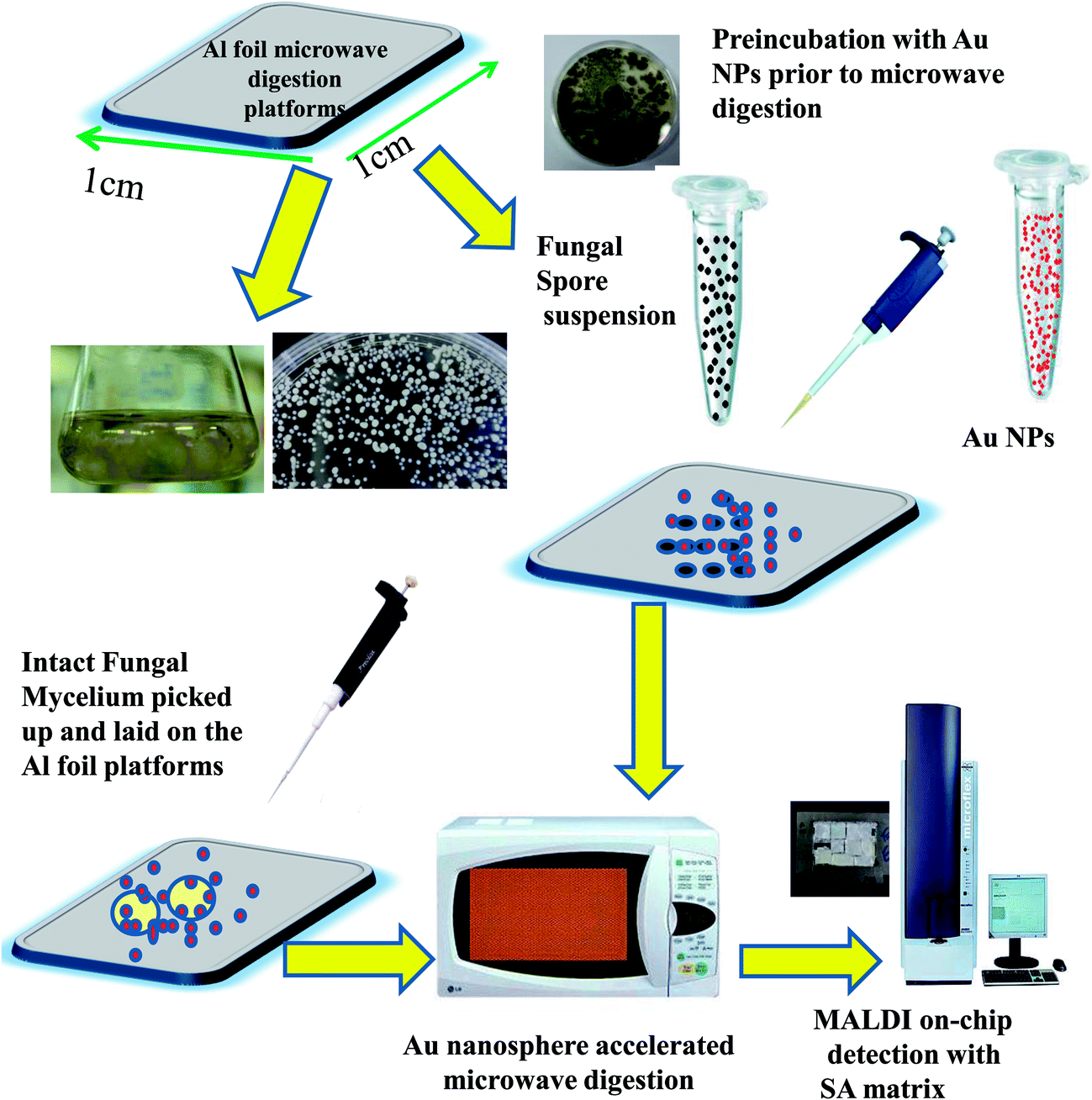 | ||
| Fig. 1 Schematic work flow illustrating the experimental details involved in the study. | ||
Subsequent to microwave digestion the Al foil platforms were mounted onto an aluminium home made target using a double side adhesive tape. The surface was loaded with about 50 μL of 50 mM SA matrix (0.05 M sinapinic acid (SA) in 3![[thin space (1/6-em)]](https://www.rsc.org/images/entities/char_2009.gif) :1 acetonitrile–water containing 0.1% TFA) and air dried before analyzing using MALDI-MS. All mass spectra were obtained in positive ion mode using MALDI-TOF MS (Microflex, Bruker Daltonics, Bremen, Germany). The MALDI source was equipped with a nitrogen laser (337 nm) for irradiation of the fungi and the accelerating voltage was set at +20 kV. All experiments were performed in the linear mode using normal laser energy.
:1 acetonitrile–water containing 0.1% TFA) and air dried before analyzing using MALDI-MS. All mass spectra were obtained in positive ion mode using MALDI-TOF MS (Microflex, Bruker Daltonics, Bremen, Germany). The MALDI source was equipped with a nitrogen laser (337 nm) for irradiation of the fungi and the accelerating voltage was set at +20 kV. All experiments were performed in the linear mode using normal laser energy.
3 Results and discussion
3.1 Characterization of the Au nanospheres
The Au nanospheres synthesized using the modified trisodium citrate method were observed in the size of 15–18 nm. Fig. 2A gives the TEM image of the homemade Au nanospheres which were used in the study. Furthermore, the colloidal solution was investigated with UV-Vis. The position and width of the plasmon band are connected to the diameter and polydispersity of the gold nanospheres and depend on the pH-value of the colloidal solution.14,15 The position of the absorption maxima for the gold nanospheres (Fig. 2B) was observed at 522 nm. It is reported that particle sizes below 12 nm have an absorption maxima below 520 nm, while the particle sizes above 12–13 nm show a wavelength equivalent to more than 520 nm, such as that was seen in our case. This also correlates with our TEM results where we observed that the nanosphere sizes were in the range of 15–18 nm. | ||
| Fig. 2 (A) TEM micrographs of the home made colloidal gold nanospheres inset shows the magnified view of the Au nanospheres. (B) UV-Vis spectra showing the 522 nm peak of the Au nanospheres. | ||
3.2 Optimizing the Al foil microwave platforms and microwave digestion time
The size of the Al foil microwave platform was optimized by exposing them to a microwave oven for 3 min. Sizes ranging from 10 mm2 to 50 mm2 were tested. Table S1† gives the results of this test which indicate that the smallest size (1 mm × 1 mm foils) did not spark even up to 3 min, while sizes exceeding 10 mm2 led to arcing inside the microwave resulting in the foils catching fire and getting burnt. This is vital since if the samples get burnt that would lead to incorrect results. Also sample sizes below 10 mm2 were not attempted since although they do not provoke arcing, their small sizes made them inappropriate for containing the analytes. Thus, all the following studies were conducted on the 10 mm × 10 mm of Al foil platforms.The microwave digestion time was optimized with respect to the fungal mycelium. Fig. S2† gives the MALDI-MS results for the time dependant microwave digestion of A. niger mycelium samples. The results showed that the direct analysis of the intact mycelium in the absence of microwave digestion showed very poor signals (Fig. S2(a)†). However, as evident from the spectra, the microwave digestion was observed to enhance the protein signals without any prior sample pretreatment. Fig. S2(b)† shows the effect of 1 min of microwave digestion; microwave digestion time of 2 min (Fig. S2(c)†) also had a positive effect, 3 min microwave digestion appeared to provide more promising results (Fig. S2(d)†). But longer digestion time of 5 min (Fig. S2(e)†) was not suggested due to signal suppression. So the optimal microwave digestion time was 3 min.
In the case of the spore analysis, on analyzing a spore suspension containing 8 × 10⁶ spores per mL, it was also observed that compared to the direct analysis (Fig. S3(a)†), 1 min (Fig. S3(b)†), 2 min (Fig. S3(c)†) and 3 min (Fig. S3(d)†) of microwave digestions showed enhancement in the spore signals. Similar to the results of the mycelium, microwave time beyond 4 min (Fig. S3(e)†) and 5 min (Fig. S3(f)†) were unfavorable. Hence, in the mycelium and spore analysis, 3 min of microwave digestion time was the optimal condition.
Few reports have shown that the extraction of target species using microwave heating was very efficient.16–19 It is able to release the proteins from the intact tissue systems leading to enhanced detection during analysis. Previously, the microwave digestion20,21 was used as an effective extraction method for plant samples and this techniques was recognized as a safer, faster, reliable and more reproducible method.
3.3 Optimizing the Au nanosphere concentrations for accelerating the microwave digestion
Use of a heat absorbing nanoparticle can act as a good microwave absorber and its presence can accelerate microwave heating, leading to effective extraction. While previous authors have used NP-based microwave extraction for phosphopeptide enrichment during mass spectrometric studies,22,23 we have employed Au nanospheres which are known to be effective heat absorbers.24 Hence, using the heat absorption capacity of the Al foil platforms combined with the Au nanospheres, we have attempted to decrease the microwave digestion time. Fig. 3 gives the MALDI spectra from the Au nanosphere accelerated Al foil MDP. The sample was sandwiched between two different systems which effectively absorb heat such as the Al foil and the Au nanospheres. Thus, we could get highly effective and enhanced signals in 30 s. Four different concentrations (0.2 g L−1, 0.4 g L−1 Au SPs, 1 g L−1 and 2 g L−1) of the Au nanospheres were experimented. As observed from Fig. 3(a) 30 s microwave time without addition of any Au nanospheres significant signals were not obtained. This is understandable, since our previous section showed that 3 min of microwave digestion time could only offer good signals. However, it was observed that on addition of Au nanosphere concentrations beyond 0.4 g L−1 Fig. 3(c) significant enhancement in signals were observed. These signals were observed to enhance the signals even at concentrations of 1 g L−1 (Fig. 3(d)) and 2 g L−1 (Fig. 3(e)). Concentrations beyond 2 g L−1 were not attempted since this lead to flooding of the small Al foils and overflow of the sample. | ||
| Fig. 3 MALDI-MS spectra obtained from A. niger mycelium following (a) microwave digestion of 30 s (b) 0.2 g L−1 (c) 0.4 g L−1 (d) 1 g L−1 (e) 2 g L−1 Au nanosphere combined microwave digestion. | ||
Also for the spore analysis, it was observed that even at low concentration of 8 × 10⁴ spores per mL could be detected on MALDI-MS using the Au nanosphere accelerated microwave digestion on Al foil platforms. Fig. 4 shows the results of direct analysis (without microwave digestion) (Fig. 4(a)) and with the microwave digestion (but without Au nanospheres) (Fig. 4(b)) did not yield any spectra at these low spore concentrations and at 30 s of microwave digestion time.
 | ||
| Fig. 4 MALDI-MS spectra of A. niger spores (concentration 8 × 10⁴ spores per mL) (a) before microwave digestion (direct analysis) and after (b) microwave digestion of 30 s and with (c) 0.2 g L−1 (d) 0.4 g L−1 (e) 1 g L−1 (f) 2 g L−1 Au nanosphere combined microwave digestion. | ||
However, with the addition of 0.2 g L−1 Au nanospheres (Fig 4(c)), some signals appeared and with further addition of 0.4 g L−1 (Fig. 4(d) and 1 g L−1 (Fig. 4(e)) Au nanospheres of good signals were obtained irrespective of the low spore concentration. However, concentrations of 2 g L−1 Fig. 4(f) did not continue the signal enhancement trend because of the spores–Au nanosphere–matrix mixture exceeded the Al platforms, leading to overflow during microwave digestion. Thus, the optimal Au concentrations for both mycelium and spore analysis can be fixed to 1 g L−1 concentrations for ideal results.
As observed from Fig. S4† in the presence of Au NPs only, microwave digestion of the fungal analytes yielded relatively poor signals (Fig. S4(a)†) compared with the synergistic effect of both Au NPs and the Al foil platforms (Fig. S4(b)†). The working principle of this method is transparent and evident, sandwiching the fungal analyte between the Al foil and the Au nanospheres is expected to produce the effect of an insulated heating system leading to efficient conveyance of the heat to the analyte from dorsal and ventral sides. It is well known that materials containing water, for example foods, cells or tissues, readily absorb microwave energy, which is then converted into heat. Thus, the role of the water in the wet fungal analytes on having a positive influence in accelerating the microwave digestion cannot be overlooked. This is the fact, the microwave digestion with Au nanospheres could yield results in 30 s, while in its absence almost a 3 min digestion time was required. Although authors like Alanio, et al.25 and Carolis, et al.26 have reported a simple pretreatment method for analysis of Aspergillus, their method is limited to the use of the expensive conventional stainless steel MALDI target holder. The introduction of the microwave digestion Al platform combined with the Al homemade target holder thus is a low cost alternative to the existing methods.
Fig. S5† gives an illustration suggesting the sandwich heating effect which has led to the accelerated microwave digestion efficacy.
3.4 Application to differentiation of A. niger mycelial and spore proteomics
Since the spore is the infective phase of the fungus, it is ideal that the methodology yields distinctive peaks that would help in the differentiation between mycelium and spores. Fully automated statistical analysis of mass spectra obtained from the mycelium and spore analysis were compared using ClinProTools 2.1 (Bruker Daltonics, Bremen, Germany). Statistical significance of the distinct peaks was determined by Student's T test for the 2 groups. A P value, < 0.001 and < 0.01 between two sets of data indicate that the difference is significant and a P value > 0.05 is considered not significant. The software automated 27 peaks which predominantly occurred in the mycelium and spore analysis. Table 1 gives the elaborate details of the predominant with their mass values. The p values for each of those peaks are also given for the spore and mycelium data. Highly significant p values for specific peaks were obtained which confirmed that those peaks were unique to either the mycelium or the spore analytes. The peaks at 4369, 6267 and 6569 Da were unique to the spores and gave an extremely significant p value of <0.001. In case of the mycelium peaks at 4732, 5058 and 8620 Da yielded significant p values. The overlapping peaks common to mycelium and spore gave no significant p values. Fig. 5A gives the 2D view showing the distinct clustering of the 4732 and 6267 peaks acquired from 20 spectra of mycelium and spore samples. As the graph shows, it is evident that the 4732 peak is specific to mycelium while the 6267 peak was unique to spores. The PCA charts in Fig. 5B indicate that the proteomics of the mycelium (red spots) and spore (green spots) although appear to posses few overlaps but for the most part the results show that the mycelium and spore proteomics were discretely distinct.| Peak number | Mass values (Da ± 15) | P value | Source | Significance |
|---|---|---|---|---|
| 1 | 2176 | >0.5 | Mycelium, spores | Not significant |
| 7 | 2540 | >0.5 | Mycelium, spores | Not significant |
| 9 | 3712 | >0.5 | Mycelium, spores | Not significant |
| 10 | 3729 | >0.5 | Mycelium, spores | Not significant |
| 11 | 4089 | <0.01 | Spores | Significant |
| 13 | 4369 | <0.001 | Spores | Highly significant |
| 14 | 4534 | <0.01 | Mycelium, spores | Significant |
| 15 | 4558 | <0.01 | Mycelium, spores | Significant |
| 16 | 4698 | <0.01 | Spores | Significant |
| 17 | 4732 | <0.001 | Mycelium | Highly significant |
| 18 | 5058 | <0.001 | Mycelium | Highly significant |
| 19 | 6267 | <0.001 | Spore | Highly significant |
| 23 | 6569 | <0.001 | Spore | Highly significant |
| 26 | 8620 | <0.001 | Mycelium | Highly significant |
 | ||
| Fig. 5 (A) 2D graph comparing peak 17 at 4762 Da from mycelium and peak 19 at 6267 Da from spore, indicating no overlap. (B) PCA chart representing the overlap and distinction of peaks in the mycelium (red spots) and spore (green spots). | ||
Conflict of interest
The authors have no conflict of interest.Acknowledgements
We thank National Science Council for financial support. We thank Mr Jhih-Huan Huang (Department of Chemistry, National Sun Yat-Sen University) for providing the nanoparticle used in this study.References
- R. Herbrecht, D. W. Denning, T. F. Patterson, J. E. Bennett, R. E. Greene, J. W. Oestmann, W. V. Kern, K. A. Marr, P. Ribaud, O. Lortholary, R. Sylvester, R. H. Rubin, J. R. Wingard, P. Stark, C. Durand, D. Caillot, E. Thiel, P. H. Chandrasekar, M. R. Hodges, H. T. Schlamm, P. F. Troke and B. de Pauw, N. Engl. J. Med., 2002, 347, 415 CrossRef PubMed.
- T. J. Walsh, E. J. Anaissie, D. W. Denning, R. Herbrecht, D. P. Kontoyiannis, K. A. Marr, V. A. Morrison, B. H. Segal, W. J. Steinbach, D. A. Stevens, J. A. van Burik, J. R. Wingard and T. F. Patterson, Clin. Infect. Dis., 2008, 46, 360 CrossRef PubMed.
- A. Alanio, J.-L. Beretti, B. Dauphin, E. Mellado, G. Quesne, C. Lacroix, A. Amara, P. Berche, X. Nassif and M.-E. Bougnoux, Clin. Microbiol. Infect., 2011, 17(5), 755 Search PubMed.
- T. H. Adams, J. K. Wieser and J. H. Yu, Microbiol. Mol. Biol. Rev., 1998, 62, 54 Search PubMed.
- B. H. Segal, N. Engl. J. Med., 2009, 360, 1884 CrossRef PubMed.
- J. Morgan, K. A. Wannemuehler, K. A. Marr, S. Hadley, D. P. Kontoyiannis, T. J. Walsh, S. K. Fridkin, P. G. Pappas and D. W. Warnock, Med. Mycol., 2005, 43, 58 Search PubMed.
- W. W. Hope, T. J. Walsh and D. W. Denning, 2005, 5, 622.
- D. H. Larone. Medically Important Fungi, a Guide to Identification, 3rd edn, ASM Press, Washington, D.C., 1995, p. 192 Search PubMed.
- N. B. Valentine, J. H. Wahl, M. T. Kingsley and K. L. Wah, Rapid Commun. Mass Spectrom., 2002, 16, 1357 CrossRef PubMed.
- J. Chalupová, M. Raus, M. Sedlářová and M. Sebela, Biotechnol. Adv., 2014, 32, 230 CrossRef PubMed.
- A. D. Buskirk, J. M. Hettick, I. Chipinda, B. F. Law, P. D. Siegel, J. E. Slaven, B. J. Green and D. H. Beezhold, Anal. Biochem., 2011, 1(411), 128 Search PubMed.
- G. Shayeganrad and L. Mashhadi, PIERS Proceedings, Beijing, China, 2009 Search PubMed.
- Y. F. Huang and H. T. Chang, Anal. Chem., 2006, 78, 1493 Search PubMed.
- S. T. Liu, T. Zhu, Y. C. Wang and Z. F. Liu, Mol. Cryst. Liq. Cryst. Sci. Technol., Sect. A, 1999, 337, 248 Search PubMed.
- J. Liu, J. L. Duan, M. E. Toimil-Molares, S. Karim, T. W. Cornelius, D. Dobrev, H. J. Yao, Y. M. Sun, M. D. Hou, D. Mo, Z. G. Wang and R. Neumann, Nanotechnology, 2006, 17, 1926 Search PubMed.
- J. Nieuwenhuize and C. H. Poley-Vos, Analyst, 1991, 116, 351 RSC.
- H. Matusiewicz, R. E. Sturgeon and S. S. Berman, J. Anal. At. Spectrom., 1991, 6, 287 RSC.
- A. M. Paudyn and R. G. Smith, Can. J. Appl. Spectrosc., 1992, 37, 99 Search PubMed.
- H.-M. Kuss and J. J. Fresenius', Anal. Chem., 1992, 343, 793 Search PubMed.
- Y. P. Kalra, D. G. Maynard and F. G. Radford, Can. J. For. Res., 1989, 19, 985 CrossRef.
- A. Abu-Samra, J. S. Morris and S. R. Koirtyohann, Anal. Chem., 1975, 47, 1477 CrossRef.
- H.-Y. Lin, W.-Y. Chen and Y.-C. Chen, Anal. Bioanal. Chem., 2009, 394, 2136 Search PubMed.
- H. Nazim and H.-F. Wu, Anal. Bioanal. Chem., 2011, 400, 3462 Search PubMed.
- J. Chen, B. Wiley, Z. Y. Li, D. Campbell, F. Saeki, H. Cang, L. Au, J. Lee, X. Li and Y. Xia, Adv. Mater., 2005, 17, 2261 Search PubMed.
- A. Alanio, J. L. Beretti, B. Dauphin, E. Mellado, G. Quesne and C. Lacroix, Clin. Microbiol. Infect., 2011, 17, 750 CrossRef CAS PubMed.
- E. De Carolis, B. Posteraro, C. Lass-Flörl, A. Vella, A. R. Florio and R. Torelli, Clin. Microbiol. Infect., 2012, 18, 475 CrossRef CAS PubMed.
Footnote |
| † Electronic supplementary information (ESI) available. See DOI: 10.1039/c3ra46788k |
| This journal is © The Royal Society of Chemistry 2014 |