Mikhail
Iakovlev
*a,
Xiang
You
a,
Adriaan
van Heiningen
ab and
Herbert
Sixta
a
aAalto University School of Chemical Technology, Department of Forest Products Technology, Vuorimiehentie 1, Espoo, Finland. E-mail: mikhail.iakovlev@aalto.fi
bUniversity of Maine, Department of Chemical and Biological Engineering, 5737 Jenness Hall, Orono, ME, USA
First published on 14th November 2013
The study describes SO2–ethanol–water fractionation of spruce as a promising basis for future Biorefineries. The dissolution kinetics of lignin and hemicelluloses as well as the depolymerisation kinetics of cellulose during the fractionation process are expressed in terms of the H-factor, a parameter combining fractionation temperature and duration. The raw material moisture content is shown to have a very small effect on the fractionation kinetics. The liquor-to-wood ratio has little effect on the process during the (delignification) bulk phase, while in the residual phase the effect becomes pronounced. During the latter phase, lower liquor-to-wood ratios lead to higher residual lignin content, lower residual hemicelluloses and pulp viscosity, but higher hemicelluloses removal selectivity. Higher delignification rates and selectivities are obtained at ethanol-to-water ratios close to 1
:
1 (w/w) and high SO2 concentrations (≥12 w/w%). Based on the presented data, the optimum fractionation conditions for the production of paper and viscose-grade dissolving pulps are quantified.
Lignocellulosic biomass is known to exhibit substantial variation in its properties in terms of composition and structure of the individual polymers as well as their distribution in the cell wall. One consequence is that processes suggested for lignocellulosic Biorefineries are often biomass type-specific, with many not suitable to softwoods prevailing in the Northern hemisphere. SO2–organic solvent–water process is among few (if any) exhibiting exceptional flexibility towards biomass type, with the following species and biomass wastes having been successfully utilized – Spruce,4–7 Red pine,4 Jack pine,4 Loblolly pine,4 Balsam fir,4 Douglas fir,4 Larch,5,6,8 Birch,4,5 Beech,7,9 Aspen,4,5 Poplar,9,10 Sugar maple,4 Wheat straw,7 Oil palm empty fruit bunch,11 Sugarcane straw,12 low-quality biomass such as forest residues.13,14
Owing to this omnivorous nature of the process, two principal applications can be suggested. In the first approach, industrial wood chips and also possibly non-wood feedstocks are used to produce cellulose-based materials such as papermaking pulp,15 dissolving pulp,16 nanofibrillated cellulose, etc. Dissolved hemicellulose sugars are utilized as a source for chemical and biochemical transformations, for instance, yeast fermentation to bioethanol. The primary requirement in this approach is to produce pure cellulose with specified limits of impurities – lignin and (for dissolving pulp) hemicelluloses – while maintaining a high enough cellulose degree of polymerisation (reflected in high intrinsic viscosity of the solutions in cellulose solvents such as cupriethylenediamine) to achieve the required final product (paper and dissolving pulp) properties.
In the second approach, low-quality lignocellulosic biomass, for instance, forest residues and also herbaceous crops, is used. Here, cellulose amounts and quality are low, and in case of forest residues it is more challenging to ensure high cellulose purity. Therefore, the cellulose residues after the fractionation are (enzymatically) hydrolysed to glucose, which can be utilized alone or after combining with the hemicellulose sugar stream. At present, yeast fermentation to bioethanol seems to be the most feasible application, and the technology can be easily adopted from the acid sulfite industry practice. Successful acetone–butanol–ethanol (ABE) fermentations of SO2–ethanol–water liquors by Clostridia have also been reported.17
In both approaches, lignin is produced in two fractions – a low-sulfonated fraction, obtained after ethanol evaporation from the spent liquor, as well as lignosulfonates which are separated from the solution remaining after utilization of the dissolved sugars.
SOW fractionation is currently used on a demonstration scale of several tonnes of biomass per day to hydrolyse lignocellulosics to sugar monomers in a patented Biorefinery process termed AVAP by American Process Inc.18
In addition to the acidity, the organic solvent-to-water ratio affects the solubility of lignin and hemicellulose fragments adding complexity to the delignification and hemicellulose removal patterns. For instance, ethanol–water lignin exhibits maximum solubility in solutions containing about 70% ethanol and 30% water, while at 30% ethanol and 70% water, the solubility is only about one fifth of the maximum.29
The (limited) available data on the fractionation response to organic solvent-to-water ratio indicates that delignification rate exhibits a maximum at a certain organic solvent content presumably at the point where the hydrolysis-to-condensation reaction rates ratio is at its maximum. For ethanol, the maximum is observed at EtOH/H2O ratio of about 1
:
1 (w/w), both for SO2-free (poplar, L/W ratio 8 L kg−1, 195 °C, 210 min)28 and SEW (spruce, L/W ratio 5 L kg−1, 15% SO2, 145 °C, 15 min;6 larch heartwood, L/W ratio 6 L kg−1, 15% SO2, 135 °C, 25–105 min)8 systems. For the SO2-free acetic acid–water system, the maximum is shifted to AcOH/H2O ratio of about 7
:
3 (birch and aspen, 145 °C, 3 h)30 presumably due to lower pKa of acetic acid, compared to ethanol.
It should be noted that the organic solvent assumes a role similar to that of a base in acid sulfite pulping in mitigating the acidity of the system. Therefore, similar patterns between the effects of organic solvent-to-water ratio (in SOW fractionation) and amount of bound SO2 (in acid sulfite pulping) can be expected.31 The effect of ethanol-to-water ratio is discussed in Section 3.4.
At SO2 concentrations lower than 12% the bulk delignification rate is proportional to SO2 concentration. The following equation was suggested to express the effect of SO2 concentration on delignification kinetics:31
![]() | (1) |
Despite the warnings of Schorning (the pioneer of SO2–organic solvent–water process, 1957;9 beech, 50 w/w% methanol–water, L/W ratio 10 L kg−1), increasing temperature even at relatively low SO2 concentration (down to 5%) does not lead to a decrease in delignification rate, the latter expected due to lignin condensation. Interestingly, the activation energy even increases from 93 kJ mol−1 at 15% SO2 to 115 kJ mol−1 at 5% SO2 (larch heartwood, 50 w/w% ethanol–water, L/W ratio of 6 L kg−1, 125–155 °C).6
The acidity of SEW systems both in the absence of lignin (expectedly proportional to
) and in its presence seem to change very moderately with increasing SO2 concentration. However, the rates of carbohydrate reactions in the initial phase of fractionation are strongly dependent also on delignification rates as part of hemicelluloses is removed as ligno–carbohydrate complexes (LCCs) while cellulose is protected by lignin.31
In Section 3.5 we present some results on SO2 concentration effect at a low liquor-to-wood ratio of 3 L kg−1.
Finally, Sections 3.6 and 3.7 provide the information on the selectivity of hemicelluloses removal and brightness of the pulps.
| Spruce chips batch | Chip thickness, mm | Drying method | Dry matter content, % | Composition, % based on o.d. wood | ||||||
|---|---|---|---|---|---|---|---|---|---|---|
| Lignin | Cellulose | GGMb | Xb | Acetone extractives | Ash | 1% NaOH soluble “lignin” | ||||
| a Used for most of the experiments. b GGM = Galactoglucomannan; X = Arabino-4-O-methylglucuronoxylan. c Without 4-O-MeGlcA. n.m. – not measured. | ||||||||||
| I | 2–4 | Air-drieda | 93.3 | n.m. | ||||||
| II | 2–6 | Fresh | 48.9 | 27.7 | 39.9 | 18.1 | 7.11 | 1.81 | 0.44 | 0.88 |
| Air-drieda | 92.8 | |||||||||
| III | 2–6 | Fresha | 67.3 | 28.9 | 39.9 | 15.7 | 6.77c | 1.31 | 0.29 | 1.27 |
| Air-dried | 99.5 | |||||||||
1% NaOH extraction was performed on acetone-extracted Wiley-mill ground wood at a solution-to-wood ratio of 100 L kg−1, 25 °C and 1 h, at constant stirring. The residue was washed 4 times with deionised water (each at 100 L kg−1, 25 °C and 5 min; final pH about 8.5). The amount of 1% NaOH soluble phenolic structures (“lignin”) was determined using UV absorbance at 280 nm (extinction coefficient 23 L g−1 cm−1, Iakovlev and van Heiningen 2011; spectrophotometer Shimadzu UV-2550) after 2 times dilution with 0.1 M NaOH (blank solution – 0.1 M NaOH).
| Composition characterisation | Example of preparation of the solution | |||
|---|---|---|---|---|
| Mixeda | As weight ratios SO2/EtOH/H2O | Ethanol ETAX A (96.1 v/v%), mL | Deionised H2O, mL | SO2, g |
| a This characterisation was used in our previous publications.7,20,31,32 In the first column v/v% means volumetric percentage based on the sum of the volumes of ethanol and water. | ||||
| 12 w/w% SO2 in 40.0 v/v% ethanol | 12 : 30.6 : 57.4 |
416 | 584 | 125 |
| 12 w/w% SO2 in 47.5 v/v% ethanol | 12 : 36.9 : 51.1 |
494 | 506 | 123 |
| 12 w/w% SO2 in 55.0 v/v% ethanol | 12 : 43.5 : 44.5 |
572 | 428 | 121 |
| 12 w/w% SO2 in 62.5 v/v% ethanol | 12 : 50.3 : 37.7 |
650 | 350 | 119 |
| 12 w/w% SO2 in 70.0 v/v% ethanol | 12 : 57.3 : 30.7 |
728 | 272 | 117 |
| 6.0 w/w% SO2 in 55.0 v/v% ethanol | 6.0 : 46.4 : 47.6 |
572 | 428 | 56.8 |
| 18 w/w% SO2 in 55.0 v/v% ethanol | 18 : 40.5 : 41.5 |
572 | 428 | 195 |
It should be noted that due to the absence of base, practically all SO2 is present in the fractionation liquor in a free form. The concentration is assumed to be nearly constant throughout fractionation, as about 97% of the initially charged SO2 is recovered from the spent fractionation suspension by distillation.31,32
H-factor (for delignification and hemicelluloses removal) was calculated according to eqn (3) (see Section 3.2), using the activation energy value of EA,Lig = 106.8 kJ mol−1 (equivalent heat-up time 8 min), while HC-factor (for cellulose hydrolysis) is based on the value EA,Cel = 164.9 kJ mol−1 (equivalent heat-up time 13 min).
![]() | (2) |
The details of the procedures are given elsewhere.7,31,32
The term “delignification selectivity” refers to the extent of delignification related to the extent of polysaccharide reactions – hemicelluloses removal and cellulose hydrolysis. Delignification selectivity is higher when higher residual hemicelluloses content/cellulose DP is observed at the same residual lignin content.
The term “selectivity of hemicelluloses removal” refers to the extent of hemicelluloses removal related to the extent of cellulose hydrolysis.
All produced SEW pulps which passed defibration point (i.e. the point along the fractionation, when fibres become liberated from each other; occurring at an H-factor of about 13 h, at SO2/EtOH/H2O = 12
:
43.5
:
44.5, by weight, see the next section) exhibited very low reject content, generally in the range 0.001–0.01%.
Effect of moisture content was studied using two batches of spruce chips (II and III) which were cooked both fresh and air-dried. The amount of water in the green chips was considered in the calculation of the fresh liquor composition and charge. Table 3 shows that both the green and air-dried chips are successfully fractionated, and the initial moisture content has little effect on the properties of the resulting solid and liquid phases provided the composition and amount of the fresh liquor are corrected considering the amount of water in the chips.
:
43.5
:
44.5, by weight, 135 °C)a
| Raw material, fractionation conditions | Spruce II, L/W 6 L kg−1, 80 min (H = 23.1 h) | Spruce III, L/W 6 L kg−1, 100 min (H = 29.5 h) | Spruce III, L/W 3 L kg−1, 100 min (H = 29.5 h) | |||
|---|---|---|---|---|---|---|
| a n.m. – not measured. | ||||||
| Dry matter content of the raw material, % | 48.9 | 92.8 | 67.3 | 99.5 | 67.3 | 99.5 |
| Solid residue yield, % | 50.1 | 51.2 | 47.0 | 49.2 | 46.8 | 48.8 |
| Kappa number | 32.0 | 34.1 | 24.0 | 27.4 | 30.4 | 34.7 |
| Viscosity in CED, mL g−1 | n.m. | n.m. | 1016 | 991 | 877 | 835 |
| Solid residue composition, g per 100 g solid residue | ||||||
| Cellulose | 82.1 | 80.1 | n.m. | |||
| Hemicelluloses | 11.7 | 12.5 | 9.6 | 9.1 | 7.2 | 7.3 |
| Lignin | 5.9 | 6.3 | 4.6 | 5.1 | 5.6 | 6.4 |
| Spent liquor carbohydrates composition, g L −1 (as monosaccharides) | ||||||
| Mannose | 14.3 | 13.3 | n.m. | |||
| Xylose | 6.7 | 6.6 | ||||
| Glucose | 3.8 | 3.5 | ||||
| Total carbohydrates | 34.4 | 32.6 | ||||
Therefore ethanol is able to impregnate very fast both dried and green chips. The reason for this phenomenon is the so-called Marangoni effect whereby a bulk flow (convection) occurs from fluid in a low surface area region (ethanol–water mixtures having relatively low surface tension, close to 30 × 10−3 N m−1 for 50 v/v% ethanol–water at 20 °C)38 to that in a high surface area region (cell-wall capillaries and water, 72.5 × 10⁻³ N m−1 at 20 °C).39,40 However, yields and kappa numbers are somewhat lower for the green chips compared to air-dried chips, which agrees with the results of Kleinert for ethanol–water fractionation.19 It can be explained by hornification, i.e. irreversible decrease in the accessibility of wood matrix resulting from drying.
Summary: Both green and air-dried spruce chips are impregnated very fast with the SEW fractionation liquor, and produce pulps with negligible amount of rejects. Both phenomena are due to the presence of ethanol.
![]() | (3) |
Note, that H-factor 50 h means 156 min of isothermal fractionation at 135 °C, or 51 min at 150 °C, or 18 min at 165 °C. Fig. 1a presents the delignification of three spruce chips batches as a function of H-factor. It is seen that all three batches are delignified with the same rate during the first, faster, phase, called “bulk” delignification. Thus, the residual lignin content can be predicted down to about 1–2% (based on wood) using the following equation:
[Lig] = [Lig]0 exp(−0.095H), R2 = 0.98, | (4) |
![]() | ||
Fig. 1 SEW fractionation kinetics for spruce batches I, II and III at SO2/EtOH/H2O = 12 : 43.5 : 44.5, by weight (see Table 2) and liquor-to-wood ratio 6 L kg−1. (a) delignification, (b and c) cellulose hydrolysis, (d–f) hemicelluloses removal, (g and h) delignification selectivity. H-factor (for delignification, (a), and hemicelluloses removal, (f)) is based on activation energy value of EA,Lig = 106.8 kJ mol−1, while HC-factor (for cellulose hydrolysis, (b and c)) is based on the value EA,Cel = 164.9 kJ mol−1. Equivalent heat-up time for delignification and hemicelluloses removal is 8 min, while that for cellulose hydrolysis is assumed to be 13 min. Fig. 1a–c include some of the data corrected and recalculated from ref. 20 (batch I) and ref. 31 (batch II). Mannan and xylan represent the anhydrosaccharides alone. | ||
Kappa number 30 typical for unbleached softwood paper pulps is achieved at an H-factor of about 24 h (still within bulk delignification phase, for all examined spruce batches).
However, in the residual delignification phase (starting from H = 25–30 h), chips batch III is delignified substantially slower compared to batches I and II. The lowest kappa number values obtained for batch III are 9–10, while for batches I and II, kappa number values of 5.5–8 were common (L/W ratio 6 L kg−1). This may be related to the presence of bark containing polyphenolic acids which are not removed by any solvent, other than alkali.45Table 1 shows that spruce III contains considerably higher amounts of 1% NaOH soluble phenolic substances compared to spruce II (1.27 vs. 0.88%).
The residual phase becomes very important when the process is meant for production of highly pure cellulose, such as viscose-grade dissolving pulps. In acid sulfite process commonly kappa number values of close to 5 are obtained for unbleached pulp (less than 0.5% lignin, based on wood) at a relatively low liquor-to-wood ratio of 3 L kg−1. Fig. 1 shows that residual SEW delignification seems to be less successful, at least in case of chips batch III.
It should be noted that although the H-factor values were calculated based on bulk delignification rates, H-factor appears to describe well also the residual phase (for every spruce batch), which indicates similar activation energy values for the residual delignification.
![]() | (5) |
Assuming a constant polydispersity index, P = DPw/DPn, the equation can be rewritten for weight-average DP values, DPw:
![]() | (6) |
The DPw values are known to be close to the viscosity-average DP values.47 In this work the latter were calculated from the intrinsic viscosity of pulp solutions in cupriethylenediamine (CED). We used the correlation between the viscosity of cellulose tricarbanilates in CED and their DP (determined by light scattering) obtained by Evans and Wallis48 and corrected for the presence of hemicelluloses37 (see eqn (2)).
Similarly to delignification, HC-factor concept can be applied to cellulose hydrolysis (activation energy 164.9 kJ mol−1: HC-factor = 500 h translates into 313 min of isothermal fractionation at 135 °C, 55.7 min at 150 °C or 11.2 min at 165 °C).
It is seen that all the available data (both cellulose DP and viscosity) is described well by the HC-factor (Fig. 1b and c). In fact, in the whole range of conditions (from wood to HC-factor of about 1000 h) cellulose hydrolysis can be represented as a single-stage process (Fig. 1b), although spruce batch III deviates somewhat from the line obtained for spruce batch I. Extrapolating to HC = 0 leads to DPw,0 of about 10
000 corresponding roughly to DP of native wood cellulose. DPw values can be thus determined as follows:
![]() | (7) |
Pulp viscosity can be roughly predicted down to about 500 mL g−1 using the equation:
| [η] = −1.73HC + 1230, R2 = 0.96, | (8) |
It should be noted that at SO2 concentration lower than 12%, initial delays in cellulose SEW hydrolysis were reported and explained by the protection of lignin, which is removed increasingly slower with decreasing SO2 concentration (see eqn (1)).31
The recommended lower limits of the viscosity for the unbleached softwood paper and dissolving grade pulp, about 700 and 500 mL g−1, correspond to HC-factors of 300 and 420 h, respectively.
During the second phase (called “bulk” phase) the removal is substantially slower and is first order in mannan and xylan (i.e. the linear region in Fig. 1d and e). The lower removal rate of glucomannan and xylan during the bulk phase may be related to the morphology of this residual fraction. In effect this fraction consists of glucomannan closely associated with cellulose already in the original wood and that which is “crystallised” onto cellulose during the initial phase. Also in the course of the initial phase most of the labile side units of the wood polysaccharides as well as pectins are removed.
The first-order behaviour during the bulk phase is consistent with SN1 acid hydrolysis, and the kinetics can be expressed as follows:
![]() | (9) |
The rate constants for the hemicelluloses removal are given in Table 4. It is noted that at each temperature the ratio of the removal rates for glucomannan and xylan is constant, about 1.2, indicating the same temperature dependence for both. However, the opposite, i.e. xylan faster hydrolysed than glucomannan, is often observed in acid sulfite cooking.2b,49a Also methyl-β-D-xylopyranoside is hydrolysed 1.6 times faster than methyl-β-D-mannopyranoside.50 However, a similar behaviour as seen in the present study was observed for spruce acid sulfite dissolving pulp.49b Primarily, this highlights that the hydrolysis rates of model compounds do not necessarily correspond to those of the related wood polysaccharides. The presence of 4-O-methylglucuronide side units considerably stabilises wood xylan in both SEW and acid sulfite cooking. Regarding glucomannan it was shown that its retention is highly dependent on the conditions at the beginning of cooking. For instance, mild neutral or slightly alkaline treatment (in a two-stage sulfite cooking) leads to complete deacetylation and galactose units removal while the DP is not significantly reduced. The polymeric state of glucomannan (i.e. linear and long-chain) is said to be the most favourable for crystallisation onto cellulose fibrils and subsequent stabilisation against acid hydrolysis.51 In acid sulfite cooking the conditions in the beginning are milder due to long impregnation at low temperature compared to SEW cooking where the temperature is increased within 15 minutes to the cooking level. Therefore glucomannan stabilisation should decrease in the order: two stage sulfite > acid sulfite > SEW. On the other hand, crystallisation of xylan is less likely51 due to the presence of uronic acid side units, and because of the morphology of softwood cell wall featuring intimate coverage of cellulose by glucomannan, rather than xylan.52 The present results are consistent with these considerations.
:
43.5
:
44.5, by weight)
| Temperature, °C | Mannan | Xylan |
|---|---|---|
| k Man × 103, min−1 | k Xyl × 103, min−1 | |
| 135 | 8.46 | 6.91 |
| 145 | 16.4 | 12.7 |
| 155 | 37.6 | 31.0 |
| 165 | 72.9 | 60.7 |
| E A,Hemi, kJ mol−1 | 108.4 | 110.1 |
| A Hemi, min−1 | 6.07 × 10¹¹ | 8.09 × 10¹¹ |
By applying the Arrhenius equation, the activation energy values for glucomannan and xylan removal in the bulk phase were obtained, 108.4 and 110.1 kJ mol−1, respectively, with excellent correlation coefficients (R2 = 0.99). These values are very close not only to each other but also to that for delignification, 106.8 kJ mol−1. Nevertheless, the straight lines in Fig. 1d and e do not intersect at the equivalent heat-up time (8 minutes) which otherwise would have resulted in a constant delignification selectivity at all temperatures. This is especially important for glucomannan removal (Fig. 1d), and leads to substantially different selectivities at different temperatures as shown in Fig. 1g (apparent activation energy for glucomannan removal is therefore higher and approaching that of cellulose hydrolysis). This phenomenon can be also related to the lower stabilisation degree of glucomannan at higher temperature. In case of xylan the difference in selectivity is smaller (Fig. 1h) as the lines in Fig. 1e approach each other closer at the equivalent heat-up time (8 minutes). The behaviour is also reflected in the H-factor plot (using EA,Lig = 106.8 kJ mol−1, Fig. 1f): H-factor is (conditionally) applicable only to xylan removal. It would be appropriate here to cite Rusten,47 who also argues that the apparent activation energy value for hemicelluloses hydrolysis in spruce acid sulfite pulping is higher than that for cellulose hydrolysis, with the reason being higher stabilisation of glucomannan at lower temperature due to better crystallisation on cellulose.
Therefore, the delignification selectivity is better at lower temperatures mostly due to the fact that more glucomannan is preserved after the initial removal phase (Fig. 1g and h). This is coherent with the earlier observations20,47 that at lower temperature, higher pulp yield is obtained at the same kappa number.
Finally, the third (“residual”) phase is observed: 240 and 320 min at 135 °C points are relatively far from the line corresponding to the bulk phase (see Fig. 1d and e). The difference is especially high for mannan which can be again related to its stabilization through crystallisation on cellulose.51 The evidence for the residual phase is, however, limited to only these three points.
Paper-grade pulps correspond to the bulk hemicellulose removal phase, while dissolving pulps span from the end of the bulk phase to the residual phase. For unbleached softwood viscose-grade acid sulfite pulps, common combined amounts of anhydromannose and anhydroxylose are close to 5% (based on pulp). This value is obtained in SEW fractionation (SO2/EtOH/H2O = 12
:
43.5
:
44.5, by weight, L/W ratio 6 L kg−1) at an H-factor of about 50–75 h (higher H-factors are needed at lower temperatures).
Summary: H-factor concept can be applied to bulk delignification (EA,Lig = 106.8 kJ mol−1) and cellulose hydrolysis (EA,Cel = 164.9 kJ mol−1). The activation energy values for bulk glucomannan and xylan removal are EA,Man = 108.4 kJ mol−1 and EA,Xyl = 110.1 kJ mol−1. Nonetheless, the apparent activation energy values are higher, especially for glucomannan, because initial removal is higher at higher temperatures. This is attributed to higher glucomannan stabilisation at lower temperatures, possibly through “crystallisation” onto cellulose.
Residual delignification proceeds slower for spruce batch III, compared to batches I and II, for unknown reason. A possible explanation is the presence of non-lignin phenolic substances in batch III.
Table 5 includes the properties of the solid and liquid phases obtained from the fractionation of spruce at liquor-to-wood ratio values of 6 to 1 L kg−1 (SO2/EtOH/H2O = 12
:
43.5
:
44.5, by weight, H-factor = 23.1 h, bulk delignification phase). No difference in the fractionation rate and composition of the resulting streams is observed when decreasing the liquor-to-wood ratio to 3 L kg−1 indicating that the process is governed by SO2 concentration in the liquid phase rather than by SO2 charge. Further reduction in liquor-to-wood ratio leads to somewhat slower delignification due to SO2 depletion and/or due to increase in the acidity because of higher lignosulfonic acid concentration. The carbohydrate retention in the solid phase is somewhat lower at lower L/W ratios due to the increased acidity, while their concentration in the liquid phase is practically constant. At a liquor-to-wood ratio of 1 L kg−1 delignification is significantly reduced possibly due to the pronounced condensation favoured by high acidity and/or because of lignin solubility limitation. Dehydration reactions may be responsible for a somewhat lower carbohydrates yield in the liquid phase.
:
43.5
:
44.5, by weight, 135 °C, 80 min, H-factor = 23.1 h)a
| Liquor-to-wood ratio, L kg−1 | 6 | 3 | 2 | 1 |
|---|---|---|---|---|
| a n.d. – not defibrated solid residue. | ||||
| SO2 charge, % on wood | 69 | 34 | 23 | 11 |
| Solid residue yield, % on wood | 51.5 | 50.0 | 49.8 | 55.4 |
| Kappa number | 33.5 | 34.8 | 44.7 | n.d. |
| Lignin content, % on wood | 3.14 | 3.12 | 3.94 | 9.01 |
| Lignin-free yield, % on wood | 48.4 | 46.9 | 45.9 | 46.4 |
| Spent liquor carbohydrates composition, g per 100 g wood (as anhydrosaccharides) | ||||
| Mannose | 9.3 | 9.4 | 9.2 | 9.0 |
| Xylose | 4.0 | 4.0 | 4.0 | 3.7 |
| Glucose | 2.2 | 2.3 | 2.3 | 2.4 |
| Total carbohydrates | 20.5 | 20.6 | 20.4 | 19.5 |
Nevertheless, Fig. 2 shows that in the region of more severe fractionation conditions (residual delignification), the effect of L/W ratio on delignification becomes pronounced resulting in 5–10 units difference in kappa number (L/W ratios 3 vs. 6 L kg−1).
Realizing the importance of liquor-to-wood ratio for fractionation processes, a set of liquor-to-wood ratios (at two sets of conditions) was tested: 3, 4.5, 6 and 9 L kg−1 (Fig. 2b, d and f).
From Fig. 2b, it can be seen that increasing liquor-to-wood ratio (for both sets of conditions) leads to higher delignification because of two possible reasons. Firstly, at higher L/W ratio the acidity of the cooking liquor is lower leading to the decrease in harmful lignin condensation reactions. Secondly, at lower L/W ratios lignin solubility may appear as a limiting factor in delignification. Table 6 provides sulfonation degree of residual lignin of the pulps. It is seen that sulfonation degree at a L/W ratio of 3 L kg−1 is somewhat higher than that at higher L/W ratios which also suggests the lower dissolution-to-sulfonation rates ratio for L/W ratio of 3 L kg−1. It has to be also noted that Mg-based acid sulfite cooking results in much lower residual lignin content even at low L/W ratios. This can be explained by much higher sulfonation degrees as compared to SEW fractionation (S/C9 ratios of about 0.3–0.4 for the residual lignin2c).
:
43.5
:
44.5, by weight, 135 °C, 240 min, H-factor = 74.3 h)
The liquor-to-wood ratio has the opposite effect on carbohydrate reactions compared to delignification (Fig. 2): the lower is the L/W ratio, the higher carbohydrate hydrolysis is observed, and therefore, the lower is the hemicelluloses (both mannan and xylan) retention and the lower is pulp viscosity. The possible reason for the enhanced cellulose depolymerisation and hemicelluloses hydrolysis is the Donnan effect: the distribution of free H3O+ ions between the two phases will be such that the concentration of free H3O+ ions in the cell wall will be higher than the concentration in the liquid phase. Since the lignosulfonic acid group concentration is higher in the case of low L/W ratios, more protons will diffuse inside the cell wall. According to Donnan's theory, the difference in the concentration of H3O+ ions in the two phases can be minimized by the addition of a diffusible salt.
The aforementioned behaviour results in a pronounced negative effect of lower L/W ratios on the delignification selectivity.
Summary: Bulk delignification is unaffected down to a liquor-to-wood ratio of 3 L kg−1. L/W ratio effect becomes pronounced in the later stages of fractionation, corresponding to residual delignification. There, lower L/W ratios lead to higher residual lignin content (possibly due to higher condensation and limited solubility) and lower residual hemicelluloses content and cellulose DP (possibly due to Donnan effect).
![]() | ||
| Fig. 3 Effect of ethanol content (v/v% based on sum of ethanol and water volumes, see Table 2 for clarification; spruce batch III; 12 w/w% SO2). (a) kappa number; (b) residual lignin; (c) pulp intrinsic viscosity in CED; (d) cellulose DP; (e) residual mannan (as anhydromannose); (f) residual xylan (as anhydroxylose). | ||
For all the condition sets, the obtained curves “kappa number vs. ethanol concentration” have the same character exhibiting a minimum close to 55 v/v% ethanol concentration. The effect of ethanol concentration is in accordance with the previous results obtained for both SEW (spruce, 15% SO2, L/W ratio 6 L kg−1,6) and ethanol–water (poplar, L/W ratio 8 L kg−1,28) fractionation. This could be explained as follows: at high ethanol concentrations the acidity is too low and the hydrolytic cleavage of lignin is relatively slow, while at low ethanol concentrations the acidity is too high which leads to pronounced lignin condensation.
However, it should be noted that at L/W ratio of 3 L kg−1 the concentration of formed lignosulfonic acids is about twice as that at L/W ratio of 6 L kg−1. This leads to about twice higher H3O+ concentration at L/W ratio of 3 L kg−1, which would require higher ethanol concentration in order to bring the acidity to the same level as at L/W 6 L kg−1. The location of the minimum is nevertheless the same.
As discussed above, the difference between the lowest values at L/W ratios of 3 and 6 L kg−1 comprise over 5 kappa number units, which is possibly related to the lignin solubility and Donnan effects.
However, it is apparent that both hemicelluloses retention and viscosity are considerably more sensitive to ethanol concentration at L/W ratio of 6 L kg−1 compared to L/W ratio of 3 L kg−1 (Fig. 3c–f). This can be related to the solubility effects (note again considerably lower kappa number values obtained at L/W ratio of 6 L kg−1).
The described patterns result in C-shaped delignification selectivity plots.
Summary: Residual lignin content exhibits a minimum close to 55 v/v% ethanol, while both residual hemicelluloses content and cellulose DP increase monotonously with increasing ethanol concentration. Both effects are presumably due to the decrease in the acidity with increasing ethanol concentration.
In particular, the delignification rate is significantly lower at 6% SO2 compared to 12% SO2 (see ESI, Fig. S1†) presumably due to increase in condensation due to insufficient sulfonation. It is supported by the observation that at 6% SO2, the pulps and spent liquors have more intense colour compared to those obtained at higher SO2 concentrations. It is noted that at 6% SO2 kappa number and lignin content even increase towards the last point, which is another evidence for condensation. This phenomenon of lignin reaccumulation in pulp has not been observed earlier for SEW process (spruce, L/W ratio 6 L kg−1, 135 °C;31 larch heartwood, L/W ratio 6 L kg−1, 125–155 °C).6 On the other hand, increasing SO2 concentration from 12 to 18% leads to only moderate increase in delignification rate (similar to ref. 31).
It can be noted that the lower the SO2 concentration in the SEW liquor, the lower is the rate of cellulose hydrolysis and hemicelluloses removal. The slower hydrolysis of the polysaccharides is explained by two factors.31 Firstly, wood polysaccharides are protected by lignin, and the latter is removed much slower at lower SO2 concentration. Secondly, at lower SO2 concentrations the acidity is lower which is related to the somewhat lower sulfonation degree of dissolved lignin.
Thus, delignification selectivity is substantially affected by SO2 concentration, with acceptable levels achieved at concentrations 12 w/w% or higher.
Summary: SO2 concentration has a pronounced effect on the rates of major reactions, especially when lower than 12 w/w%.
![]() | ||
| Fig. 4 Selectivity of hemicelluloses removal in SEW fractionation (spruce I and III, 6 and 12 w/w% SO2 in 40–70 v/v% ethanol–water). For symbols see Fig. 1a, 2a and S1. Residual hemicelluloses are calculated as a sum of anhydromannose and anhydroxylose. Grey area corresponds to the target properties for the unbleached viscose-grade dissolving pulps. | ||
However, the overall effect of temperature on the selectivity is unclear. There is no agreement on the effect of temperature on hemicelluloses removal selectivity in acid sulfite process, either. For example, Ulfsparre (in ref. 47) showed that at a particular cellulose DP the hemicellulose retention increases with decreasing temperature. Conversely, according to Sixta et al.49c at the same DP value a higher hemicelluloses retention is achieved at higher temperature.
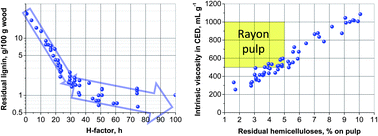
Fig. 4 shows that the purity requirements of viscose-grade dissolving pulp (grey area) are achieved in SEW fractionation.
Kinetics of bulk delignification and cellulose hydrolysis can be linearized using H-factor concept, i.e. combining the effects of temperature and time, as ln([Lig]) = f(H) and 1/DP = f(HC), respectively (using activation energy of 106.8 kJ mol−1 for delignification and 164.9 kJ mol−1 for cellulose hydrolysis). Activation energy of bulk glucomannan removal is 108.4 kJ mol−1, and that of xylan is 110.1 kJ mol−1. However, bulk hemicelluloses removal phase is preceded by the initial phase with higher apparent activation energy, and therefore applying H-factor concept for hemicelluloses removal, in particular glucomannan, is problematic. The observed patterns are in line with the fact that higher delignification selectivity is obtained at lower temperatures. No consistent effect on hemicelluloses removal selectivity (relative to cellulose hydrolysis) was observed.
Due to the absence of base in SEW process, SO2 concentration should be relatively high to avoid lignin condensation. Absence of base also dictates the fact that the adjustment of the acidity has to be performed by changing the ethanol concentration. Delignification rate is the highest at about 55 v/v% ethanol (for both L/W ratios 3 and 6 L kg−1), where the optimum ratio between hydrolytic cleavage and condensation is observed.
Bulk delignification rate is affected neither by the variation in spruce chips nor by the liquor-to-wood ratio within 3–6 L kg−1. Nevertheless, at L/W ratios lower than 3 L kg−1 delignification is impaired. On the other hand, residual delignification is more sensitive to these conditions. For spruce batches I and II, kappa numbers of 5.5–8 are easily obtained (L/W ratio 6 L kg−1), while for spruce batch III, residual delignification is less successful (lowest achieved kappa number was 9 at L/W ratio of 6 L kg−1 and 14 at L/W ratio of 3 L kg−1). This behaviour is contrary to Mg acid-sulfite delignification of spruce where very low kappa number values (about 5) are achieved even at low L/W ratios. Therefore, the importance of residual SEW delignification, including the aspects of lignin solubility and diffusion rates, is apparent.
Hemicelluloses removal and cellulose hydrolysis are faster at lower ethanol concentration and lower liquor-to-wood ratio, due to the higher acidity. Interestingly, the effect of ethanol concentration on the carbohydrate reactions (both hemicelluloses removal and cellulose hydrolysis) is stronger at L/W ratio of 6 L kg−1 than at 3 L kg−1.
ISO brightness is considerably lower at L/W ratio of 3 L kg−1 compared to L/W ratios of 4.5 and 6 L kg−1.
Therefore, when aiming at successful and selective delignification which is generally required in a lignocellulosic Biorefinery, the recommendation is to use high SO2 concentration (at least 12 w/w%), high liquor-to-wood ratio, and the ethanol-to-water ratio of about 1
:
1 (by weight).
For paper pulps, lower temperature is desirable (for instance, 135 °C) in order to preserve high residual hemicelluloses amounts and cellulose molecular weight, but the substantial increase in fractionation duration should be taken into account. H-factor corresponding to kappa number 30 is equal to about 24 h.
For dissolving pulps, where much lower lignin and hemicelluloses content is desired, higher H-factors are recommended, about 50–75 h. Choosing liquor-to-wood ratio should be considered carefully as lower values lead to higher residual lignin but lower residual hemicelluloses at the same cellulose DP.
Based on the fractionation data, SEW pulps can be recommended for paper/tissue and viscose production.
Footnote |
| † Electronic supplementary information (ESI) available. See DOI: 10.1039/c3ra45573d |
| This journal is © The Royal Society of Chemistry 2014 |