
A novel electrocatalytic platform for separation of the overlapping voltammetric responses of AA, DA and UA
Zhonghua Xue†
,
Yanjun Feng†,
Huixia Guo,
Chenxian Hu,
Ahmed Mahmoud idris Mohmed,
Jinshu Li and
Xiaoquan Lu*
Key Laboratory of Bioelectrochemistry & Environmental Analysis of Gansu Province, College of Chemistry & Chemical Engineering, Northwest Normal University, Lanzhou, 730070, P.R. China. E-mail: taaluxq@gmail.com; luxq@nwnu.edu.cn; Fax: +86 931 7971323; Tel: +86 931 7975276
First published on 15th November 2013
Abstract
A novel electrocatalytic platform based on 5,15-bis (p-amino)-tetraphenylporphyrin (BATPP)/α-Al2O3 composites (sensitive materials) coated on glassy carbon electrodes, which was constructed by a simple electrochemical method, is reported. The directly simultaneous electrocatalytic oxidation and selective voltammetric peak separation of a mixture including ascorbic acid (AA), dopamine (DA) and uric acid (UA) in a phosphate buffer solution was investigated. The results showed that the platform resolved the overlapping voltammetric responses of AA, DA and UA with potential differences of 136 mV (AA to DA), 143 mV (DA to UA) and 279 mV (AA and UA) for cyclic voltammetry (CV). These results will open new opportunities for the development of an electrochemical sensor for the simultaneous determination of DA, UA and AA in real sample analyses in future.
Nowadays, improving the selectivity and sensitivity of the monitoring techniques of electrochemical sensors for the target sample has been the focus of considerable research.1–3 For example, the determination of ascorbic acid (AA), uric acid (UA) and dopamine (DA) is of great importance for developing nerve physiology, making a diagnosis and controlling medicine. However, ascorbic acid, dopamine and uric acid coexist in physiological samples and body fluids and therefore electrochemically individual and/or simultaneous determinations of them, on traditional electrodes by electrochemical analysis, are very difficult as the detection electrodes cannot discriminate between them. In particular, their oxidation potentials severely overlap, resulting in overlapping voltammetric responses, making any discrimination between them difficult.4–6 The separation of the overlapping voltammetric responses of DA, UA and AA has therefore been a major goal of electroanalytical researchers.7–9
To circumvent this problem, it is essential to develop a simple and rapid method for their determination in routine analysis such as chemically- and physically-modified electrodes.10,11 Various approaches have been attempted such as conducting polymers,12–14 metal nanoparticles,15,29 carbon nanomaterials,16–18 oxide composites,19 and other nanocomposites.20,21 These reports demonstrated that based on the different electrocatalytic activities of the modified electrode, sensitive and selective methods for the simultaneous determination of DA, UA and AA were set up for routine analysis for the following reasons: (1) they rely on the interactions between the target and modified molecules, or other nanomaterials modified on the electrode surface, to gain voltammetric peak separation and high electrocatalytic activity (for example, electrostatic interactions,22 hydrogen bonds,23–25 π–π stacking26–28 and so on);29 (2) they depend on the desirable and unique geometric structure of the modified electrode surface with good electronic conductivity and effective surface area to resolve these problems with well-defined and well-resolved voltammetric responses.30–33
However, most nanomaterials generally result in non-uniform films and strongly adhere to the electrode surface, without a high-degree of geometrical conformity and controllable thickness. These are particularly important in the manufacture of microsensors.34–36 Porphyrins, as an important class of natural and artificial pigments, play a key role in largely different areas of both fundamental and technological interest. Owing to their highly conjugated system and other specific chemical and physical properties, porphyrins can be electropolymerized into big ring compounds and subsequently used as electroactive agents in catalytic applications for electroanalysis.37–39
In this communication, we investigate the directly simultaneous electrocatalytic oxidation of AA, DA, and UA in a phosphate buffer solution using 5,15-bis(p-amino)-tetraphenylporphyrin (BATPP) and α-Al2O3 nanocomposite material coated glass carbon electrodes, in the hope that well-defined and well-resolved voltammetric responses can be obtained (as shown in Scheme 1). This study constitutes a simple and versatile protocol for the effective voltammetric peak separation of AA, DA, and UA.
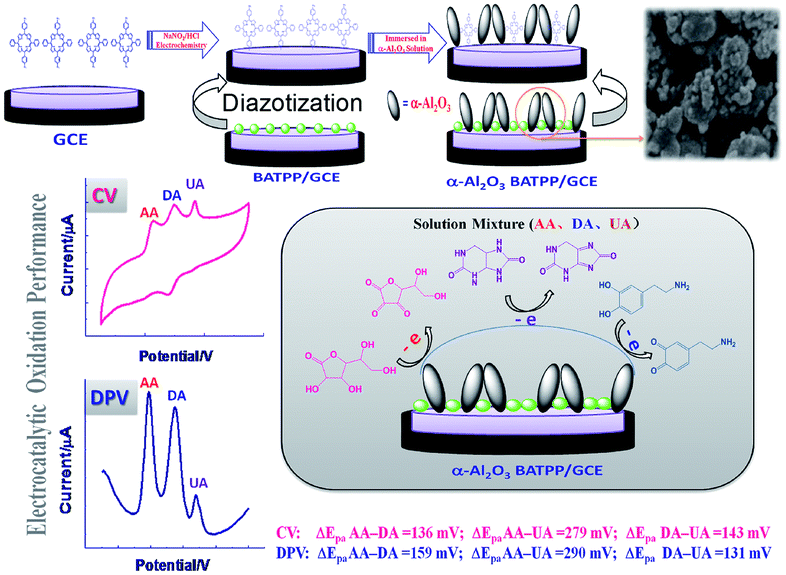 | ||
| Scheme 1 Schematic representation of a sensing platform for the separation of AA, DA and UA. | ||
DA, AA and UA were supplied by Sigma. α-Al2O3 was purchased from CHI (USA). BATPP was synthesized according to the methods previously described in our lab.40,41 All the other chemicals were of analytical grade quality and were used as obtained without further purification.
1 mM BATPP was solubilized in a 0.5 M aqueous HCl solution and added to 1 mM NaNO2 to generate the aryl diazonium salt, at 0 °C for 20 min in an electrochemical cell. For the selective assembly of BATPP onto the GCE surface, scanning in a potential range between 0.6 V and −1.0 V was employed for two cycles at a scan rate of 100 mV s−1. The electrode was then rinsed with Milli-Q water and dried under a stream of argon.42,43 Subsequently, the modified electrode was immersed in 1 mg mL−1 α-Al2O3 solution for 10 h at room temperature to obtain an α-Al2O3 modified surface (α-Al2O3/BATPP/GCE).
Scanning electron microscopy (SEM) was used to observe changes in the morphology of the resulting modified electrodes. As shown in Fig. 1a, the bare GCE presents a well-defined smooth surface nature. After modification by α-Al2O3 (Fig. 1b), BATPP (Fig. 1c) and α-Al2O3/BATPP (Fig. 1d), respectively, the surface underwent great changes. Fig. 1b obviously shows that the α-Al2O3 nanoparticles have been completely dispersed on the electrode surface without any defects for the α-Al2O3 modified electrode. In addition, the coral-shaped BATPP has been completely modified on the electrode for the BATPP/GCE (Fig. 1c). It is clear that the surface roughness of the electrode has increased providing a larger interface area and chemical binding sites. However, it can be observed in Fig. 1d, that the α-Al2O3 nanoparticles are well distributed on the BATPP layers so as to form nanocomposites with a size of about 20–30 nm for the α-Al2O3/BATPP/GCE, which is believed to be capable of enhancing the electrochemical detection of AA, DA, and UA.
 | ||
| Fig. 1 SEM images of bare GCE (a), α-Al2O3/GCE (b), BATPP/GCE (c) and α-Al2O3/BATPP/GCE (d). | ||
The different electrodes were characterized using CV and electrochemical impedance spectroscopy (EIS) in 1 mM and 5 mM of K3[Fe(CN6)]/K4[Fe(CN6)] in a 0.05 M phosphate buffer solution (pH = 7.0), respectively. For the CV responses, the peak-to-peak separations (ΔEp) of the probe are 75, 108 and 302 mV for GCE (curve a), α-Al2O3/GCE (curve b) and α-Al2O3/BATPP/GCE (curve c), respectively. However, the CV response of the probe on BATPP/GCE (curve d) became flat and significantly decreased with a broadened peak potential and little peak current, indicating that the electron transfer (ET) of the probe and the electrode surface was blocked. This can be attributed to the fact that the BATPP formed a spherical structure and a packed film on the electrode surface. The capability of ET of the probe was also investigated by EIS as shown in Fig. 2B. The interfacial electron-transfer resistance (Rct) can be estimated to be 250, 1616, 4421 and 7374 Ω at the GCE, α-Al2O3/GCE, α-Al2O3/BATPP/GCE and BATPP/GCE, respectively, revealing the low ET resistance on the α-Al2O3/BATPP/GCE. The reference impedance model is R(Q(R(W))).
 | ||
| Fig. 2 Cyclic voltammograms (A) and electrochemical impedance spectroscopy measurements (B) of 1 mM and 5 mM K3[Fe(CN6)]/K4 [Fe (CN6)] in a 0.05 M phosphate buffer solution at the bare GCE (a), α-Al2O3/GCE (b), BATPP/GCE (c), and α-Al2O3/BATPP/GCE (d), respectively. | ||
CV was employed to investigate the electrochemical behaviors of the modified electrodes. The CVs of the target of 0.3 mM AA, 0.5 mM DA and 0.05 mM UA in a 0.05 M phosphate buffer solution at the bare GCE, α-Al2O3/GCE, BATPP/GCE and α-Al2O3/BATPP/GCE are shown in Fig. 3A(a)–(d), respectively. For the ternary mixture of AA, DA, and UA, an overlapping oxidation peak can be seen for the bare GCE, α-Al2O3/GCE and BATPP/GCE. In contrast, three well-defined and separated anodic peaks corresponding to the ternary mixture oxidations are clearly observed at the α-Al2O3/BATPP/GCE with potential separations of 136 and 143 mV for AA/DA and DA/UA, respectively, which were enough for the simultaneous determination of them in a mixture. These results show that the α-Al2O3/BATPP/GCE exhibits excellent voltammetric responses for the direct electrocatalytic oxidation and selective voltammetric peak separation for a mixture of AA, DA, and UA. Compared with most reported methods, the present modified electrode possesses high sensitivity and could be employed as a good candidate for practical applications and simultaneous determination of AA, DA, and UA.
 | ||
| Fig. 3 Cyclic voltammetric responses (A) and differential pulse voltammetric responses (B) at the α-Al2O3/BATPP/GCE (a), bare GC (b), α-Al2O3/GCE (c) and BATPP/GCE (d) in a 0.05 M phosphate buffer solution containing 0.3 mM AA, 0.5 mM DA, and 0.05 mM UA. Scan rate: 100 mV s−1. | ||
Furthermore, the differential pulse voltammetry (DPV) of the ternary mixture in the same conditions at the bare GCE, α-Al2O3/GCE, BATPP/GCE and α-Al2O3/BATPP/GCE was measured, and is provided in Fig. 3B(a)–(d), respectively. As with the CV results, three well-separated anodic peaks corresponding to the AA, DA, and UA oxidations are clearly observed at the α-Al2O3/BATPP/GCE with the ΔEp of 159 and 131 mV for AA/DA and DA/UA, respectively.
Meanwhile, the electrocatalytic oxidations of α-Al2O3/BATPP/GCE to single AA, DA and UA were also investigated by CV. Fig. 4 shows the CV responses of 0.3 mM AA (Fig. 4A), 0.5 mM DA (Fig. 4B) and 0.05 mM UA (Fig. 4C) in 0.05 M PBS (PH = 7) at the bare GCE and α-Al2O3/BATPP/GCE, respectively. It can be seen that the α-Al2O3/BATPP/GCE exhibits a negative shift of the anodic potentials and increases current responses for single AA, DA, and UA. At the bare GCE, the oxidation peak of single AA, DA, and UA was rather broad, indicating slow electron transfer kinetics. However, at the modified GCE, a sharp oxidation peak can be observed with the ΔEp of 28 mV and 32 mV for DA and UA, respectively. Furthermore, substantial increases in peak currents were also clearly observed due to improvements in the reversibility of the electron transfer processes, indicating an efficient electrocatalytic oxidation reaction of single AA, DA, and UA at the surface of α-Al2O3/BATPP/GCE. In addition, the as-prepared modified electrode reproducibility (n = 5) was estimated by DPV under the same conditions. The relative standard deviations (R.S.D.) of the potential difference (ΔEp) of AA/DA, AA/UA, and DA/UA was varied at 2.3%, 1.2% and 1.5%, respectively.
 | ||
| Fig. 4 Cyclic voltammetric responses at the α-Al2O3/BATPP/GCE modified GC (a) and bare GC (b) in a 0.05 M phosphate buffer solution containing 0.3 mM AA (A), 0.5 mM DA (B) and 0.05 mM UA (C). Scan rate: 100 mV s−1. | ||
These results clearly show that α-Al2O3/BATPP/GCE exhibits a good electrocatalytic ability towards AA, DA and UA, which is possibly attributed to the large surface area and unique geometric structure of α-Al2O3/BATPP/GCE.
Conclusions
In summary, the simultaneous electrocatalytic oxidation and voltammetric peak separation of AA, DA and UA, on a novel electrocatalytic platform (α-Al2O3/BATPP/GCE), have been investigated by CV and DPV. Due to the large surface area and unique geometric structure of the proposed nanocomposites, they possess high electrocatalytic activity for the oxidation of DA, UA, and AA. The results show that the electrocatalytic platform resolved the overlapping voltammetric responses of AA, DA and UA successfully, which will be beneficial to developing new electrochemical sensors for the simultaneous determination of DA, UA and AA.Acknowledgements
This work is supported by the National Natural Science Foundation of China (no. 21327005, 21265018, 21175108) and the Research Fund for the Doctoral Program of Higher Education of China (20126203120003).Notes and references
- B. J. Privett, J. H. Shin and M. H. Schoenfisch, Anal. Chem., 2010, 82, 4723–4741 CrossRef CAS PubMed.
- H. Dong, C. Li, W. Chen, Q. Zhou, Z. Zeng and J. H. T. Luong, Anal. Chem., 2006, 78, 7424–7431 CrossRef CAS PubMed.
- J. S. Caygill, F. Davis and S. P. J. Higson, Talanta, 2012, 85, 14–29 CrossRef PubMed.
- D. Yuan, X. Yuan, S. Zhou, W. Zou and T. Zhou, RSC Adv., 2012, 2, 8157–8163 RSC.
- Y. Fang and E. Wang, Chem. Commun., 2013, 49, 9526–9539 RSC.
- L. Wu, L. Feng, J. Ren and X. Qu, Biosens. Bioelectron., 2012, 34, 57–62 CrossRef CAS PubMed.
- W.-C. Wu, H.-W. Chang and Y.-C. Tsai, Chem. Commun., 2011, 47, 6458–6460 RSC.
- K. Reddaiah, T. M. Reddy, K. Mallikarjuna and G. Narasimha, Anal. Methods, 2013, 5, 5627–5636 RSC.
- G.-H. Wu, Y.-F. Wu, X.-W. Liu, M.-C. Rong, X.-M. Chen and X. Chen, Anal. Chim. Acta, 2012, 745, 33–37 CrossRef CAS PubMed.
- J.-L. Chang, K.-H. Chang, C.-C. Hu, W.-L. Cheng and J.-M. Zen, Electrochem. Commun., 2010, 12, 596–599 CrossRef CAS PubMed.
- H. R. Zare, N. Nasirizadeh and M. M. Ardakani, J. Electroanal. Chem., 2005, 577, 25–33 CrossRef CAS PubMed.
- Y. Tan, W. Deng, Y. Li, Z. Huang, Y. Meng, Q. Xie, M. Ma and S. Yao, J. Phys. Chem. B, 2010, 114, 5016–5024 CrossRef CAS PubMed.
- H. Wang, T. Li, W. L. Jia and H. Xu, Biosens. Bioelectron., 2006, 22, 664–669 CrossRef CAS PubMed.
- Y.-K. Chih and M.-Ch. Yang, Bioelectrochemistry, 2013, 91, 44–51 CrossRef CAS PubMed.
- T. Selvaraju and R. Ramaraj, Electrochem. Commun., 2003, 5, 667–672 CrossRef CAS.
- C. R. Raj, T. Okajima and T. Ohsaka, J. Electroanal. Chem., 2003, 543, 127–133 CrossRef CAS.
- W. A. El-Said, J. H. Lee, B. K. Oh and J. W. Choi, Electrochem. Commun., 2010, 12, 1756–1759 CrossRef CAS PubMed.
- Y. Zhao, Y. Gao, D. Zhan, H. Liu, Q. Zhao, Y. Kou, Y. Shao, M. Li, Q. Zhuang and Z. Zhu, Talanta, 2005, 66, 51–57 CrossRef CAS PubMed.
- C.-L. Sun, C.-T. Chang, H.-H. Lee, J. Zhou, J. Wang, T.-K. Sham and W.-F. Pong, ACS Nano, 2011, 10, 7788–7795 CrossRef PubMed.
- H.-W. Chang, C.-W. Cheng, C.-Y. Lin, P.-H. Wu and Y.-C. Tsai, Electrochem. Commun., 2012, 15, 38–41 CrossRef CAS PubMed.
- C.-L. Sun, C.-T. Chang, H.-H. Lee, J. Zhou, J. Wang, T.-K. Sham and W.-F. Pong, ACS Nano, 2011, 5, 7788–7795 CrossRef CAS PubMed.
- P. Shakkthivel and S. M. Chen, Biosens. Bioelectron., 2007, 22, 1680–1687 CrossRef CAS PubMed.
- P. Manivel, M. Dhakshnamoorthy, A. Balamurugan, N. Ponpandian, D. Mangalaraj and C. Viswanathan, RSC Adv., 2013, 3, 14428–14437 RSC.
- P. Gai, H. Zhang, Y. Zhang, W. Liu, G. Zhu, X. Zhang and J. Chen, J. Mater. Chem. B, 2013, 1, 2742–2749 RSC.
- K. S. Prasad, G. Muthuraman and J. Zen, Electrochem. Commun., 2008, 10, 559–563 CrossRef PubMed.
- W. Hong, H. Bai, Y. Xu, Z. Yao, Z. Gu and G. Shi, J. Phys. Chem. C, 2010, 114, 1822–1826 CAS.
- Z.-H. Sheng, X.-Q. Zheng, J.-Y. Xu, W.-J. Bao, F.-B. Wang and X.-H. Xia, Biosens. Bioelectron., 2012, 34, 125–131 CrossRef CAS PubMed.
- Z. Wang, J. Xia, L. Zhu, F. Zhang, X. Guo, Y. Li and Y. Xia, Sens. Actuators, B, 2012, 161, 131–136 CrossRef CAS PubMed.
- X. Lin, G. Kang and L. Lu, Bioelectrochemistry, 2007, 70, 235–244 CrossRef CAS PubMed.
- Y. Liu, D. Wang, J. Huang, H. Hou and T. You, Electrochem. Commun., 2010, 12, 1108–1111 CrossRef CAS PubMed.
- J. Zhang and M. Oyama, Electrochem. Commun., 2007, 9, 459–464 CrossRef CAS PubMed.
- K.-C. Lin, T.-H. Tsai and S.-M. Chen, Biosens. Bioelectron., 2010, 26, 608–614 CrossRef CAS PubMed.
- Y. Fang and E. Wang, Chem. Commun., 2013, 49, 9526–9539 RSC.
- D. Bradshaw, A. Garai and J. Huo, Chem. Soc. Rev., 2012, 41, 2344–2381 RSC.
- M. Jurowa, A. E. Schuckman, J. D. Batteas and C. M. Drain, Coord. Chem. Rev., 2010, 254, 2297–2310 CrossRef PubMed.
- M. A. Castriciano, A. Romeo, N. Angelini, N. Micali, A. Longo, A. Mazzaglia and L. M. Scolaro, Macromolecules, 2006, 39, 5489–5496 CrossRef CAS.
- A. D. Schwab, D. E. Smith, B. B. Watts, D. E. Johnston, A. T. Johnson, J. C. Paula and W. F. Smith, Nano Lett., 2004, 47, 1261–1265 CrossRef.
- A. D. L. Escosura-Muniz and A. Merkoc, ACS Nano, 2013, 6, 7556–7583 CrossRef PubMed.
- C. M. Yap, G. Q. Xu and S. G. Ang, Anal. Chem., 2013, 85, 107–113 CrossRef CAS PubMed.
- B. J. Littler, Y. Z. Ciringh and J. S. Lindsey, J. Org. Chem., 1999, 64, 2864–2872 CrossRef CAS PubMed.
- P. D. Rao, B. J. Littler, G. R. Geier and J. S. Lindsey, J. Org. Chem., 2000, 65, 1084–1092 CrossRef CAS PubMed.
- G. Liu, E. Luais and J. J. Gooding, Langmuir, 2011, 27, 4176–4183 CrossRef CAS PubMed.
- A. K. Flatt, B. Chen and J. M. Tour, J. Am. Chem. Soc., 2005, 127, 8918–8919 CrossRef CAS PubMed.
Footnote |
| † Those authors contributed equally. |
| This journal is © The Royal Society of Chemistry 2014 |