


 PLATFORM UPDATE:


New isoxazole-based heterocyclic hybrids with dual antimicrobial and antioxidant bioactivity: integrated synthesis, in vitro assessment, and computational exploration
 c
Mohammed
Chalkha,
*ad
Samir
Chtita,
c
Mourad
A. M. Aboul-Soud,
*f
Mohammed
El Hassouni,
b
John
P. Giesy
ghi
and
Mohamed
El Yazidi
a
c
Mohammed
Chalkha,
*ad
Samir
Chtita,
c
Mourad
A. M. Aboul-Soud,
*f
Mohammed
El Hassouni,
b
John
P. Giesy
ghi
and
Mohamed
El Yazidi
a
Abstract
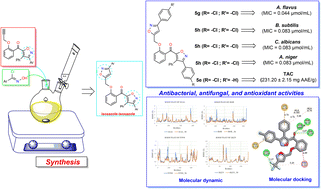
In the present study, novel isoxazole-based hybrid compounds 5a–h were synthesized with satisfactory yields. Their structure was confirmed by FT-IR, NMR (1H, 13C, 2D), and HRMS. The antimicrobial properties of this class of compounds were thoroughly investigated in vitro against a variety of Gram-positive and Gram-negative bacteria as well as different fungi, both yeast and molds. Their antioxidant ability was also assessed by molybdate reduction assay. The compounds showed excellent antifungal activity, particularly against Aspergillus niger and Fusarium oxysporum, equivalent to that of fluconazole. Among the series, 5d was the most potent antibacterial agent against Escherichia coli (minimal inhibitory concentration, MIC = 2.582 µmol mL−1), whereas the highest potency against Bacillus subtilis was found for 5h (MIC = 0.083 µmol mL−1) which was comparable to the efficacy of ampicillin. With respect to the antifungal activity, 5h showed the lowest MIC value against Candida albicans (MIC = 0.083 µmol mL−1) and A. niger (MIC = 0.083 µmol mL−1), and 5g was the most effective against Aspergillus flavus (MIC = 0.044 µmol mL−1). All hybrids were more effective as compared to fluconazole against F. oxysporum (MIC range: 0.43–0.94 µmol mL−1). Furthermore, assessment of their antioxidant potential shows that compounds 5e and 5g exhibit excellent reducing potency. Molecular docking and dynamic simulations demonstrated that compounds 5a–h, especially 5d, interact strongly and stably with key bacterial and fungal proteins, forming hydrogen bonds, hydrophobic interactions, and water bridges, with minimal root-mean-square fluctuations (RMSF), confirming the structural integrity of the complexes. Additionally, in silico predictions of Absorption, Distribution, Metabolism, Excretion, and Toxicity (ADME-Tox) analysis predicted 5d to possess an optimal profile, with high gastrointestinal absorption and minimal toxicity, highlighting it as the lead candidate for the development of broad-spectrum antimicrobial drugs.
 Please wait while we load your content...


