


 PLATFORM UPDATE:


Novel pyridine-heterocycle hybrids: synthesis via Hantzsch and Biginelli reactions, docking simulations, and anticancer activity

Abstract
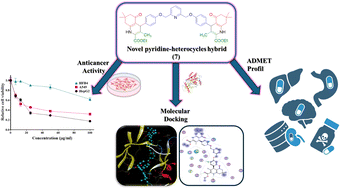
Cancer is a serious global health issue and remains one of the top causes of death worldwide. To overcome the problems of the existing anticancer drugs in terms of specificity and resistance, a new class of hybrid bis-heterocyclic compounds with a pyridine bridge has been designed and synthesized via the Hantzsch reaction. The results of elemental analysis and spectral data were used for the confirmation of the synthesized compounds. Among the tested analogs, the highest cytotoxic activity was shown by compound 7 against the HepG2, A549, and MCF7 cancer cell lines, with IC50 values of 18.07, 14.45, and 30.89 µg mL−1, respectively, while the cytotoxicity against normal fibroblasts was negligible with an IC50 greater than 100 µg mL−1. The structure–activity relationship results emphasized the key role of the molecular planarity and sulfur atom substitution. The results from molecular docking, molecular dynamics simulations, and MM/PBSA and MM/GBSA binding free energy calculations indicated a strong binding of compound 7 with EGFR. The results of the EGFR inhibition assay further strengthened the binding of the EGFR with the mentioned compound. The results from the ADME and toxicological analyses indicated a good pharmacokinetic and safety profile for the compound.
 Please wait while we load your content...


