


 PLATFORM UPDATE:


Flexible and stable PEO-based polymer composite solid electrolyte membranes incorporating NASICON-type Li1.3Al0.3Ti1.7(PO4)3 for high-performance all-solid-state lithium batteries
 *ab
*ab
Abstract
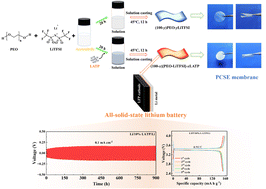
Research on safe, high-energy density all-solid-state lithium batteries (ASSLBs) has been rapidly advancing to address the major safety and functional limitations of conventional batteries utilizing liquid electrolytes. The development of solid electrolytes with high ionic conductivity and a wide electrochemical stability window is therefore crucial for enabling high-performance ASSLBs. In this investigation, flexible polymer composite solid electrolyte (PCSE) membranes were fabricated via a solution casting method using a PEO polymer matrix with optimized LiTFSI salt content, and Li1.3Al0.3Ti1.7(PO4)3 (LATP) ceramic filler. The PCSE membrane containing 10 wt% LATP ceramic filler (10% LATP) exhibited an ionic conductivity of 0.19 × 10⁻³ S cm−1 at 60 °C. The electrochemical stability of the polymer membranes was assessed via lithium stripping-plating experiments at 0.1 mA cm−2. The 10% LATP PCSE membrane demonstrated notable stability for over 900 h without significant voltage fluctuations, confirming its superior interfacial robustness with lithium. The LFP/10% LATP/Li cell at 60 °C delivered a first cycle discharge capacity of 151.6 mAh g−1, compared to 143.4 mAh g−1 for the LFP/20% LiTFSI/Li cell at 0.1C. The cell also showed remarkable rate capability and cycling performance, retaining a high capacity of 103.9 mAh g−1 at 1C with 86.8% capacity retention after 150 cycles. Additionally, the optimized 10% LATP PCSE membrane was also tested with a high-voltage NMC622 cathode, demonstrating its potential applicability in high-voltage ASSLBs.
 Please wait while we load your content...


