


 PLATFORM UPDATE:


Solvent-mediated organocatalytic browning of biogenic indoles enables the formation of zwitterionic nanoparticles
 *a
Chun-Yi
Huang,
a
*a
Chun-Yi
Huang,
a
Abstract
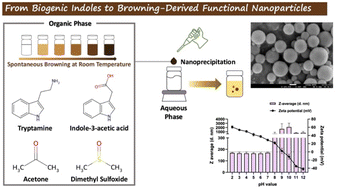
Solvent-mediated browning has recently emerged as a distinctive mode of chemical transformation in solution-phase chemistry. In this study, we extend this concept to biogenic indoles and show that an organocatalytic browning process can be achieved in a mixed DMSO/acetone system under mild, catalyst-free conditions. Tryptamine, a decarboxylated metabolite of L-tryptophan, underwent spontaneous browning despite lacking the zwitterionic framework characteristic of amino acids. Notably, the presence of indole-3-acetic acid (I3AA) markedly intensified the reaction and accelerated mesityl oxide formation, indicating a cooperative catalytic effect on acetone self-condensation. Upon transfer of the browned reaction mixtures into water, the hydrophobic products became supersaturated and spontaneously assembled into uniform nanoparticles via liquid–liquid nanoprecipitation. The resulting browned indole-derived nanoparticles exhibited spherical morphology, pH-responsive surface charge reversal near pH 9, and stable electrostatic association with the model polynucleotide G3139. Overall, this work illustrates how intermolecular interactions and reaction chemistry in organic solvents can be coupled with solvent exchange to drive the bottom-up formation of zwitterionic soft-matter nanostructures, providing a simple and versatile route to biogenic colloidal systems.
 Please wait while we load your content...


