


 PLATFORM UPDATE:


Synthesis and characterization of electroactive chitosan/gelatin/PEDOT:PSS hydrogels with mixed ionic–electronic conductivity for potential wound healing applications
 ab
Nur Hidayah
Shahemi,
a
Kishor Kumar
Sadasivuni
*h
and
Mohd Muzamir
Mahat
*ai
ab
Nur Hidayah
Shahemi,
a
Kishor Kumar
Sadasivuni
*h
and
Mohd Muzamir
Mahat
*ai
Abstract
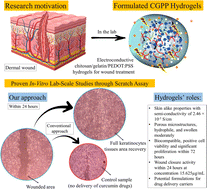
The development of electroactive hydrogels as wound dressings represents a promising strategy to actively promote tissue regeneration by providing structural support, electrical stimulation, and localized therapeutic delivery. Poly(3,4-ethylenedioxythiophene):poly(styrenesulfonate) (PEDOT:PSS), a conductive polymer, offers bioelectrical cues via its conjugated π-orbitals, but its practical application is limited by instability and leaching under physiological conditions. In this study, we aimed to design and characterize chitosan/gelatin/PEDOT:PSS (CGPP) hydrogels with controlled architecture, mixed ionic–electronic conductivity, and degradability suitable for wound-healing applications. Hydrogels were prepared via a cost-effective reverse-casting method using low-melting-point agarose as a sacrificial pore template and were chemically crosslinked for structural stability. Comprehensive characterization, including FESEM, ATR-FTIR spectroscopy, XRD, swelling studies, contact angle measurements, weight loss studies, UV-vis spectroscopy, and electrochemical impedance spectroscopy (EIS), revealed that PEDOT:PSS was successfully integrated into the hydrogel network, producing porous, interconnected architectures with semi-conductive properties (3.78 × 10⁻⁴ to 2.46 × 10⁻³ S cm−1) comparable to native skin tissue. CGPP-4, the formulation with optimal conductivity, exhibited sustained electrical performance over 1 week, was biocompatible, and supported keratinocyte (HaCaT) proliferation and wound closure at biologically relevant concentrations. Incorporation of curcumin further enhanced regenerative outcomes, with 15.625 µg mL−1 identified as the optimal dose for complete re-epithelialization. These results highlight the innovative integration of electroconductivity, controlled degradability, and drug delivery in CGPP hydrogels, establishing them as multifunctional platforms for next-generation bioelectronic wound dressings.
 Please wait while we load your content...


