


 PLATFORM UPDATE:


Thermochemically activated Ficus benghalensis leaf-derived porous activated carbon for sustainable supercapacitor electrodes

Abstract
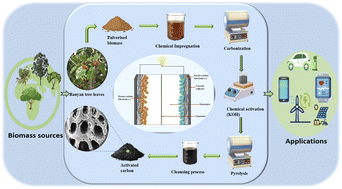
The adoption of renewable energy for mitigating climate change has intensified the demand for energy storage solutions. Embracing the circular economy, the valorisation of agricultural or forest biomass into electrode materials for energy storage systems provides a sustainable and environmentally friendly pathway. Herein, we synthesised an electrode material from dead Ficus benghalensis (Banyan tree) leaves by a thermochemical activation process at 700 °C. Systematic structural and morphological characterisation of the resulting Ficus benghalensis leaf-derived activated carbon (BLC_KOH) exhibited a hierarchical porous structure with a specific surface area of 495.56 m2 g−1. Electrochemical measurements of the BLC_KOH electrode performed in Na2SO4 (1 M) electrolyte in a two-electrode symmetric configuration demonstrated a specific capacitance of 561.22 F g−1 at a current density of 0.2 A g−1. Surface-controlled charge storage was found to be the dominant mechanism at a scan rate of 100 mV s−1 based on Dunn analysis. Exceptional cycling stability with ∼99.99% capacity retention was shown even after 1000 cycles, demonstrating its strong potential as a next-generation energy-storage electrode material. This study demonstrates that Ficus benghalensis leaves can serve as an abundant and renewable precursor for electrode materials, offering a pathway for sustainable and eco-friendly energy storage solutions.
 Please wait while we load your content...


