


 PLATFORM UPDATE:


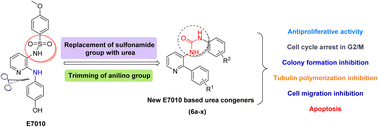
Synthesis and anti-proliferative activity of new E7010 tethered urea congeners as potential tubulin inhibitors and apoptosis inducers

Abstract
A series of twenty-four 1-phenyl-3-(2-phenylpyridin-3-yl)urea congeners (6a–x) have been designed and synthesized. All these compounds were evaluated for their anti-cancer activity against four human cancer cell lines, including prostate cancer (DU-145), lung cancer (A549), cervical cancer (HeLa) and breast cancer (MDA-MB-231). Compound 6q emerged as the most potent in the series, showing consistently strong cytotoxicity against all tested cell lines, with IC50 values ranging from 2.03 to 8.14 µM. Further investigation into the mechanism of action of compound 6q revealed it can arrest cell cycle progression at the G2/M phase. Immunocytochemistry studies showed a notable disruption of microtubule structure in cells treated with 6q. Molecular docking studies provided strong evidence that compound 6q works by binding to the colchicine binding site of β-tubulin, with sequential hydrophilic and hydrophobic interactions. Additionally, the effects of 6q on cell migration and its ability to induce apoptosis in A549 cells were examined using nuclear and mitochondrial staining techniques.
 Please wait while we load your content...


