


 PLATFORM UPDATE:


Molecular insights into the oil-in-water emulsification and demulsification of guanidino-based CO2/N2 switchable surfactants
 a
and
Ling
Lin
*b
a
and
Ling
Lin
*b
Abstract
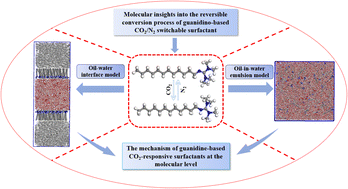
CO2 switchable surfactants show broad application prospects in the treatment of oil-based drilling cuttings due to their reversible ‘active–inactive’ state switching characteristics. This study focuses on the typical guanidinium-based CO2-responsive surfactant dodecyl tetramethyl guanidine (DTMG) and its protonated form (DTMGH), using a full-atom molecular dynamics simulation system to investigate their interfacial behavior and emulsification/demulsification mechanisms. DTMGH was easier to reach saturation at the interface due to the head-based positive charge repulsion. In terms of emulsification, DTMGH distributed more evenly, effectively encapsulating oil droplets to form stable oil-in-water emulsions. In contrast, DTMG cannot effectively maintain the dispersion of oil droplets, ultimately leading to demulsification. DTMGH exhibited stronger interfacial tension-reducing capabilities than DTMG. The DTMGH system formed a thicker interfacial adsorption layer due to the electrostatic repulsion of protonated head groups and hydrophilicity. Protonation transformed N1 from a hydrogen bond acceptor to a donor, weakening N2's hydration capacity, ultimately altering interfacial hydrophilicity and molecular arrangement. Additionally, the intensity of electrostatic repulsion was a key factor regulating surfactant molecule behavior during emulsification and demulsification. Solvent-accessible surface area revealed that the DTMGH system maintains higher surfactant and oil phase dispersion, directly related to emulsion formation. Our study elucidated the mechanism of action of guanidino-based CO2-responsive surfactants at the molecular level, providing a theoretical foundation for the development of more efficient CO2-responsive surfactant systems.
 Please wait while we load your content...


