


 PLATFORM UPDATE:


The application of ICG-based photodynamic therapy combined with nanotechnology in tumor treatment

Abstract
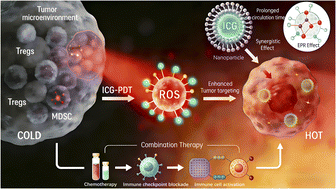
Despite remarkable progress in tumor therapy, key challenges—including the immunosuppressive “cold” tumor microenvironment and treatment resistance—remain unresolved and severely impede clinical outcomes. Indocyanine Green (ICG)-based Photodynamic Therapy (PDT), a modality that activates the photosensitizer ICG to generate reactive oxygen species (ROS), has emerged as a pivotal strategy to rewire “cold” tumors into immunologically responsive “hot” tumors, laying the foundation for effective combination therapies. However, PDT itself faces inherent limitations (e.g., poor light penetration, low ROS generation efficiency), and ICG suffers from specific drawbacks (e.g., poor aqueous stability, rapid systemic clearance), collectively restricting their clinical translation. Nanotechnology has become an indispensable tool to address these synergistic challenges, enabling enhanced tumor targeting, prolonged circulation time, and improved ROS generation efficiency of ICG-based PDT. This review summarizes the latest advancements in ICG-based PDT combined with nanotechnology for cancer treatment and discusses its potential and challenges in synergizing with chemotherapy and immunotherapy to amplify antitumor efficacy.
 Please wait while we load your content...


