


 PLATFORM UPDATE:


To contact or not: an investigation into the polymeric surface interactions with human insulin and their therapeutic implications
 f
and
Sourav
Bhattacharjee
*beghi
f
and
Sourav
Bhattacharjee
*beghi
Abstract
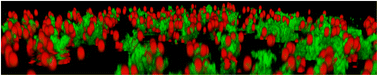
Insulin, a therapeutic peptide used to treat Type I diabetes, interacts with polymers commonly found in healthcare settings via various hydrophobic interactions, which can trigger insulin agglomeration, thereby reducing its bioavailability and therapeutic efficacy. In this study, a fluorescein isothiocyanate (FITC)-labeled human insulin (λex = 490 nm; λem = 498–530 nm) suspension (0.125 mg mL−1, 0.25 mg mL−1, and 0.5 mg mL−1) prepared at pH 3 was interacted with fluorescent amine- (λex = 560 nm; λem = 570–650 nm) and acid-terminated (λex = 625 nm; λem = 640–720 nm) polystyrene particles (1 µm) at 37 °C for t = 2 h, 4 h, 24 h, 48 h, and 72 h. The variable fluorescence lifetime of FITC, driven by pH fluctuations, was used as a molecular pH meter to map pH alterations within insulin agglomerates. Larger agglomerates, with higher lifetime variations, were noticed for the amine-terminated particles, especially at longer timepoints, whereas such fluctuations were relatively subtle in the acid-terminated ones. Regions with lifetime variation spread beyond the adsorbed insulin layer on particles and merged with the peripheral zones of lower lifetimes inside the agglomerates. The results suggest that polymeric surfaces alter insulin's biochemical properties, with probable implications of reduced bioactivity, poor glycemic control, and (potential) additional side effects.
 Please wait while we load your content...


