


 PLATFORM UPDATE:


Nanobiocatalytic upgrading of heavy oil using Geobacillus stearothermophilus and alumina nanoparticles
 *a
Seyyed Mohammad
Mousavi
*bc
and
*a
Seyyed Mohammad
Mousavi
*bc
and
Abstract
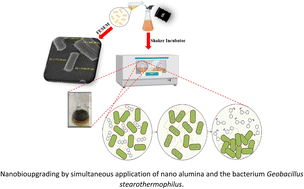
Challenges in heavy oil bioupgrading necessitate innovative approaches. Hence, we delved into the simultaneous application of a bacterium (Geobacillus stearothermophilus) and Al2O3 nanoparticles for heavy oil upgrading at a high temperature. We used the central composite design method within Design Expert software. The initial oil volume, upgrading time, and nanoparticle concentration were the main variables. Aromatic/aliphatic content and oil viscosity were the two independent responses. Results showed that nanoparticles could have accelerated bioupgrading. The zeta potential, FESEM and EDS confirmed the absorption of nano alumina on the bacterial cell due to the formed ion–dipole interaction between alumina and bacterial cells, which could have intensified the entry of heavy oil molecules into the bacterial cell. The best outcomes were observed during 11.86 days, with 26% v/v initial oil and 0.46% W nanoparticles, as indicated by FTIR spectroscopy, which showed a reduction in the aromatic/aliphatic index from 0.29613 to 0.07677 and a decrease in oil viscosity from 480 cp to 144 cp. Moreover, as determined by GC-MS, a remarkable 100% decrease in certain cyclo compounds and a considerable improvement in upgrading efficiencies for some contents such as cyclohexanes were observed. Also, a 14% decrease in asphaltene content was associated with a decrease in the solo use of bacteria. These findings highlight the synergistic efficacy of G. stearothermophilus and alumina in upgrading heavy oil.
 Please wait while we load your content...


