


 PLATFORM UPDATE:


Dibenzo-18-crown-6/poly-2-aminobenzenethiol based potentiometric sensor for diltiazem determination: greenness assessment

Abstract
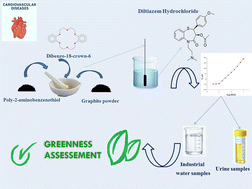
A green, cost-efficient, highly selective, and sensitive carbon paste potentiometric sensor for Diltiazem hydrochloride (DTZ) was developed, described, and employed for drug monitoring. With a detection limit of 4.6 × 10⁻⁷ mol L−1, the developed sensor exhibits a Nernstian slope of 57.4 ± 0.81 mV decade−1 over a linear concentration range of 1.0 × 10⁻⁶ to 1.0 × 10⁻² mol L−1. The prepared sensor was stable over a pH range of 2.0–8.0 and responded rapidly (in less than 10 seconds). Additionally, the sensor showed a 6 weeks lifespan. A conducting polymer of poly-2-aminobenzenethiol was characterized using X-ray diffraction (XRD) and scanning electron microscopy (SEM). The surface properties of the proposed sensor were characterized by electrochemical impedance spectroscopy (EIS). The sensor was successfully applied for the determination of DTZ with acceptable recovery values in pure formulations, pharmaceutical formulations, human urine, and industrial water samples. The effectiveness of the suggested sensor in industrial water and a complicated urine matrix leads to its potential use in hospitals for quick diagnosis of overdose patients and for pharmaceutical industry quality control and assurance. In addition to experimental evaluation, the sensor's greenness, practicality, and analytical performance were comprehensively assessed using the Analytical GREEnness metric (AGREE), the Analytical Eco-scale, the Blue Applicability Grade Index (BAGI), and the Red Analytical Performance Index (RAPI).
 Please wait while we load your content...


