


 PLATFORM UPDATE:


Design, synthesis, and multi-target anticancer evaluation of 1,3-thiazolodin-4-one analogues against breast cancer: mechanistic insights into estrogen metabolism, inflammation, angiogenesis, and oxidative stress
 *cd
*cd
Abstract
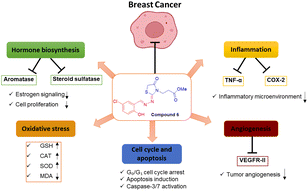
Breast cancer remains a leading cause of mortality in women, underscoring the need for multitarget therapeutic agents. A series of 2,3-disubstituted-1,3-thiazol-4-one derivatives was synthesized and characterized, and their antiproliferative activity was assessed against MDA-MB-231 and MCF-7 cells. Compound 6 was the most active analogue, showing IC50 values of 2.25 ± 0.18 µM and 6.70 ± 0.63 µM, respectively, with superior selectivity and potency compared with doxorubicin. Mechanistic studies demonstrated that compound 6 induced G0/G1 arrest and apoptosis, supported by caspase-3/7 activation. It also inhibited key enzymes in estrogen biosynthesis, including aromatase (IC50 = 38.3 ± 2.3 nM) and steroid sulfatase (IC50 = 12.7 ± 0.76 µM), and selectively suppressed COX-2 (IC50 = 5.38 ± 0.18 µM; SI = 10.44). Strong antioxidant activity (DPPH IC50 = 16.26 ± 0.6 µM) further contributed to its pharmacological profile. In vivo, compound 6 significantly reduced tumor load in the Ehrlich ascites carcinoma model and improved liver, kidney, oxidative stress, and histopathological markers. It also lowered circulating TNF-α and VEGFR-II, indicating additional anti-inflammatory and anti-angiogenic effects. In silico toxicity profiling predicted a favorable safety profile, with no Ames mutagenicity, no hERG inhibition, no skin sensitization, low acute/chronic toxicity, and no predicted CYP450 inhibition. ProTox-III classified compound 6 as inactive toward major organ-toxicity endpoints. Computational studies supported these results: docking and 100-ns MD simulations showed stable binding to aromatase, STS, COX-2, TNF-α, and VEGFR-II. PCA and free-energy landscape analyses revealed early conformational adjustments followed by convergence into compact, low-energy states, consistent with stable ligand–protein interactions. Overall, compound 6 emerges as a promising multitarget lead integrating cytotoxic, hormone-modulatory, anti-inflammatory, antioxidant, and anti-angiogenic activities for potential breast cancer therapy.
 Please wait while we load your content...


