


 PLATFORM UPDATE:


Molecularly imprinted sensor based on CS/MXene/AuNPs synergy for ultra-trace detection of PFOS in water

Abstract
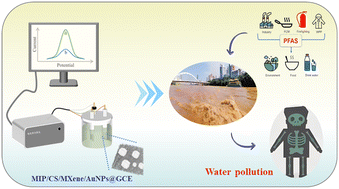
As a key compound widely used in textile, cosmetic, fire protection, and packaging industries, perfluorooctane sulfonic acid (PFOS) pollutes the environment via the hydrological cycle and enters the human body through the food chain, causing severe toxicity to reproductive, endocrine, and liver systems. Thus, highly sensitive detection of trace PFOS in water is crucial for protecting life and health. Based on this, a molecularly imprinted electrochemical sensor based on a chitosan/MXene/gold nanoparticle (CS/MXene/AuNPs) composite was developed for ultra-trace PFOS detection. MXene, with a high specific surface area and excellent conductivity, served as the substrate, enhancing electron transport via in situ AuNP reduction, while CS improved interfacial stability. Using PFOS as a template and pyrrole as the functional monomer, specific imprinted sites were constructed on the electrode via electropolymerization. Synergistic effects of MXene (conductive framework), AuNPs (catalyzing redox), and CS (immobilizing imprinted layer) boosted sensitivity. Results showed a linear range of 1.0 × 101–1.0 × 10⁹ pg mL−1, detection limit of 7.9 pg mL−1 (S/N = 3), and 98.02–102.04% recovery in spiked samples. This strategy provides a selective and low-cost paradigm for monitoring persistent organic pollutants. Furthermore, it holds significant potential for supporting global environmental safety networks, aiding in pollution-induced disease control, and safeguarding ecological security, human health, and sustainable development.
 Please wait while we load your content...


