


 PLATFORM UPDATE:


Algal-based membrane bioreactors: a sustainable Frontier for removing emerging pollutants from wastewater
 *b
*b
Abstract
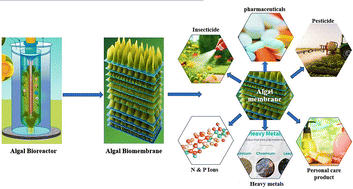
Algal-based membrane bioreactors (AMBRs) have gained attention due to the increasing need for sustainable wastewater treatment methods. These reactors use membrane filtration and algal–bacterial activities to remove pollutants and recover biomass at the same time. This review provides a critical overview of the latest progress in AMBR systems regarding their configuration, membrane materials, pollutant removal mechanisms, and operation performance. Special emphasis has been laid on the chemical and biochemical mechanisms of nutrient and emerging pollutants (EPs) removal, involving adsorption, biodegradation, and photo-oxidative transformation in the algal–bacterial consortia. Further discussion covers the roles of membrane chemistry, surface modification, and fouling behavior concerning physicochemical interactions between EPs, algal metabolites, and membrane surfaces. Comparison data relying on removal efficiencies among different types of AMBR will be analyzed for highlighting the effect of algal strain, reactor design, and operating parameters. Moreover, emerging anti-fouling strategies, economic considerations, and perspectives on biomass valorization is summarized. Contrasting to most of the earlier reviews, this contribution provides a chemistry-oriented synthesis that links material properties to bioprocess mechanisms and reactor performance and may guide future research and optimization of AMBR technology for sustainable wastewater management.
 Please wait while we load your content...


